
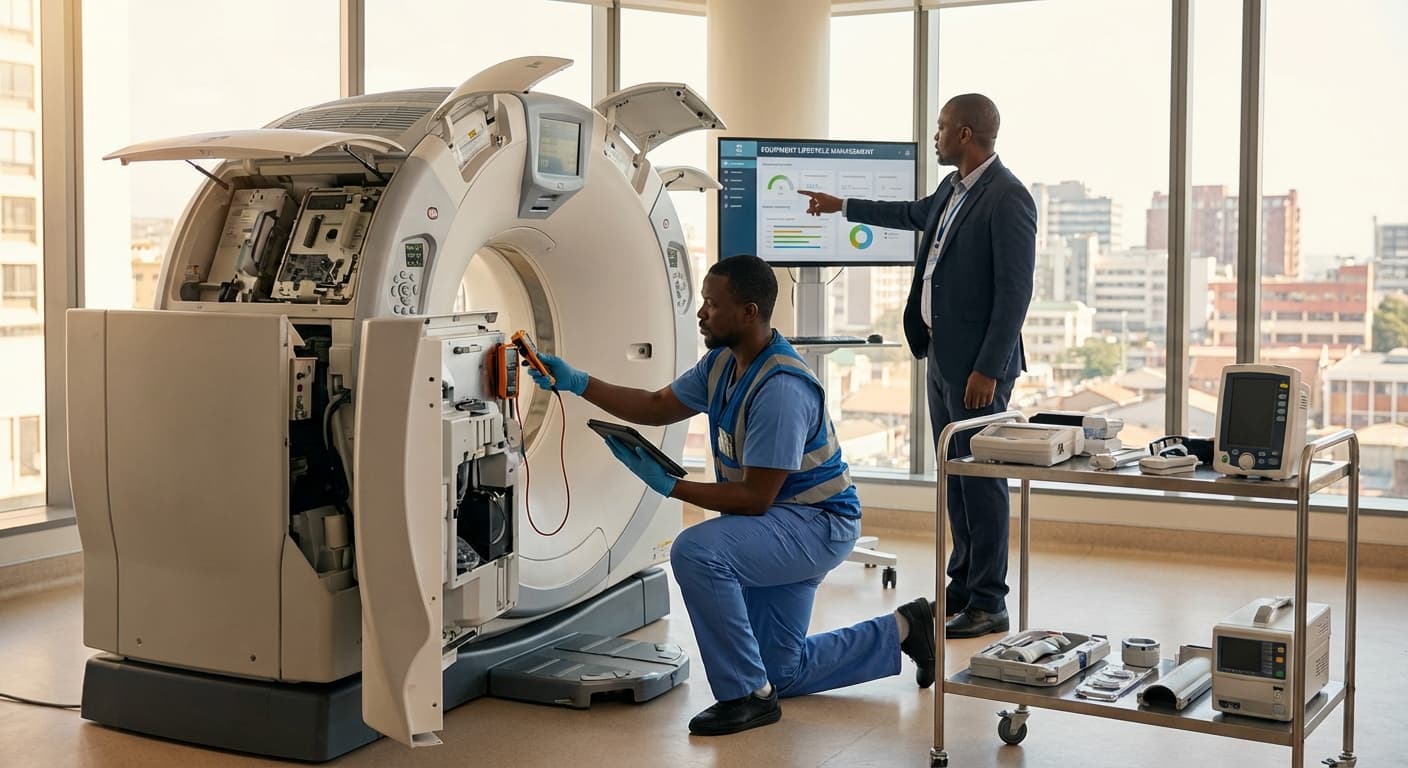
Equipment Replacement Planning & Obsolescence Strategy Service in Guinea-Bissau
Engineering Excellence & Technical Support
Equipment Replacement Planning & Obsolescence Strategy Service High-standard technical execution following OEM protocols and local regulatory frameworks.
Predictive Maintenance Integration
Leveraging advanced data analytics and IoT sensor integration, our service offers predictive maintenance capabilities for critical equipment in Guinea-Bissau. This minimizes unplanned downtime and optimizes maintenance schedules, directly reducing operational costs and extending asset lifespan.
Obsolete Parts Forecasting & Mitigation
We provide robust obsolescence risk assessment for your equipment in Guinea-Bissau, including detailed forecasting of component end-of-life dates. Our strategy includes proactive sourcing of long-lead time spares and exploring alternative solutions to ensure continuous operational readiness and avoid costly production stoppages.
Lifecycle Cost Optimization
Our service meticulously analyzes the total cost of ownership for your equipment in Guinea-Bissau, encompassing initial purchase, maintenance, energy consumption, and eventual replacement. We develop tailored replacement plans that align with your financial projections and operational demands, ensuring maximum return on investment.
What Is Equipment Replacement Planning & Obsolescence Strategy Service In Guinea-bissau?
Equipment Replacement Planning & Obsolescence Strategy Service in Guinea-Bissau pertains to the systematic process of forecasting, scheduling, and executing the replacement of industrial, commercial, or critical infrastructure equipment. It is intrinsically linked to managing technological obsolescence, which refers to the state where existing equipment becomes outdated, inefficient, or unsupported due to advancements in technology, changing regulatory requirements, or dwindling availability of spare parts and maintenance expertise. This service aims to minimize operational disruptions, optimize capital expenditure, mitigate risks associated with equipment failure or obsolescence, and ensure continued compliance and competitiveness.
| Stakeholder Group | Reasons for Needing the Service | Typical Use Cases |
|---|---|---|
| Industrial Manufacturing Companies | To maintain production efficiency, reduce downtime, comply with safety standards, and avoid costs associated with outdated machinery. | Replacing aging assembly lines, upgrading process control systems, procuring new packaging machinery. |
| Energy and Utilities Sector (Power Generation, Water Treatment) | To ensure reliable service delivery, meet evolving environmental regulations, and manage critical infrastructure effectively. | Replacing obsolete turbines, upgrading water purification systems, modernizing grid infrastructure. |
| Telecommunications Providers | To offer cutting-edge services, manage network capacity, and remain competitive in a rapidly evolving technological landscape. | Upgrading base stations, replacing aging switching equipment, deploying new fiber optic infrastructure. |
| Mining and Extractive Industries | To optimize extraction processes, enhance safety, and manage high-value, heavy-duty equipment in challenging environments. | Replacing worn-out mining vehicles, upgrading crushing and grinding equipment, implementing advanced exploration tools. |
| Logistics and Transportation Companies | To improve fleet efficiency, reduce operational costs, and ensure timely delivery of goods. | Replacing aging truck fleets, upgrading warehouse automation systems, procuring specialized transport equipment. |
| Public Sector Entities (Hospitals, Government Agencies) | To maintain essential services, ensure citizen safety, and optimize the use of public funds. | Replacing outdated medical diagnostic equipment, upgrading public transportation fleets, modernizing IT infrastructure. |
Service Components
- Asset Inventory and Condition Assessment: Comprehensive cataloging of all relevant equipment, including age, specifications, maintenance history, and current operational status.
- Performance Monitoring and Analysis: Evaluation of equipment performance against key metrics to identify degradation and predict future reliability.
- Obsolescence Risk Assessment: Identification of equipment at risk of becoming obsolete based on technological trends, manufacturer support lifecycles, and availability of components/expertise.
- Total Cost of Ownership (TCO) Analysis: Calculation of the complete cost associated with owning and operating equipment, including acquisition, maintenance, energy consumption, and disposal.
- Replacement Strategy Development: Formulation of strategic approaches, including phased replacement, technology upgrades, or standardization initiatives.
- Financial Planning and Budgeting: Development of capital expenditure forecasts and budgeting aligned with the replacement plan.
- Vendor and Technology Scouting: Research into emerging technologies and potential replacement vendors, considering local availability and support in Guinea-Bissau.
- Implementation and Project Management: Oversight of the procurement, installation, and commissioning of new equipment.
- Decommissioning and Disposal Management: Planning for the safe and environmentally responsible removal and disposal of retired equipment.
- Knowledge Transfer and Training: Ensuring operational and maintenance personnel are proficient with new equipment.
Who Needs Equipment Replacement Planning & Obsolescence Strategy Service In Guinea-bissau?
Equipment Replacement Planning & Obsolescence Strategy services are crucial for organizations in Guinea-Bissau that rely on critical machinery, technology, and infrastructure to operate. These services help businesses proactively manage the lifecycle of their assets, mitigating risks associated with aging equipment, technological advancements, and supply chain disruptions. By forecasting replacement needs and developing strategies to address obsolescence, companies can ensure operational continuity, optimize capital expenditure, and maintain a competitive edge.
| Target Customer Sector | Key Departments Involved |
|---|---|
| Industrial Operations | Operations & Maintenance, Engineering, Procurement, Finance, IT |
| Telecommunications | Network Operations, Engineering, IT Infrastructure, Procurement, Finance |
| Healthcare | Biomedical Engineering, Facilities Management, IT Department, Procurement, Finance |
| Transportation & Logistics | Fleet Management, Operations, Maintenance, IT, Procurement, Finance |
| Government & Public Utilities | Infrastructure Management, Operations, IT, Procurement, Finance, Planning Departments |
| Financial Institutions | IT Operations, Infrastructure Management, Security, Procurement, Finance |
| Agricultural Cooperatives | Farm Operations, Machinery Maintenance, Procurement, Finance |
Target Customers and Departments in Guinea-Bissau
- Large Industrial Operations (e.g., mining, manufacturing, energy)
- Telecommunications Companies
- Healthcare Providers (hospitals, clinics)
- Transportation and Logistics Firms
- Government Agencies and Public Utilities
- Financial Institutions with extensive IT infrastructure
- Agricultural Cooperatives with specialized machinery
Equipment Replacement Planning & Obsolescence Strategy Service Process In Guinea-bissau
This document outlines the Equipment Replacement Planning & Obsolescence Strategy Service Process in Guinea-Bissau, detailing the workflow from initial client inquiry through the successful execution of the service. The service aims to help organizations in Guinea-Bissau proactively manage their equipment lifecycles, mitigate risks associated with obsolescence, and optimize capital expenditure through strategic replacement planning.
| Stage | Description | Key Activities | Deliverables | Timeline (Typical) |
|---|---|---|---|---|
| The client expresses interest in the service and provides an overview of their equipment management challenges. | Initial contact, understanding client's pain points, preliminary discussion of service objectives. | Understanding of client's needs, confirmation of service applicability, proposal outline. | 1-2 Business Days |
| A thorough understanding of the client's existing equipment, operational environment, and strategic goals is established. | Detailed discussions with stakeholders, site visits (if necessary), identification of specific equipment categories and asset types, defining the scope of work. | Detailed Scope of Work document, agreed-upon objectives and success criteria, identification of key stakeholders. | 2-5 Business Days |
| Gathering comprehensive data on all relevant equipment to understand its current status and history. | Collecting asset registers, maintenance records, purchase dates, original cost, warranties, usage logs, and performance data. Data validation and consolidation. | Comprehensive Equipment Inventory Database, historical performance reports, asset criticality matrix. | 1-3 Weeks (depending on inventory size) |
| Analyzing the collected data to identify equipment at risk of becoming obsolete or underperforming. | Applying obsolescence models (e.g., technology lifecycle curves, end-of-life notifications from manufacturers), assessing parts availability, supportability, and technological relevance. Risk ranking of equipment. | Obsolescence Risk Report, prioritized list of at-risk equipment, identified obsolescence drivers. | 1-2 Weeks |
| Formulating strategic recommendations for equipment replacement, considering various factors. | Developing short-term and long-term replacement plans, evaluating repair vs. replace options, exploring lease vs. purchase models, identifying suitable replacement technologies, defining maintenance and support strategies for remaining assets. | Equipment Replacement Strategy Plan, recommended replacement schedules, technology roadmap, proposed maintenance strategies. | 2-4 Weeks |
| Translating the replacement strategy into actionable financial plans. | Estimating replacement costs, calculating Total Cost of Ownership (TCO) for new equipment, identifying funding sources, developing budget proposals, and ROI analysis for proposed investments. | Capital Expenditure (CAPEX) Budget Proposal, financing recommendations, ROI analysis report. | 1-2 Weeks |
| Assisting the client in the execution of the approved replacement strategy. | Procurement support, vendor management, installation oversight, decommissioning of old equipment, training for new equipment. Project management of the replacement process. | Successfully replaced equipment, updated asset registers, documented training, decommissioned old assets. | Varies significantly based on scope and complexity |
| Ensuring the ongoing effectiveness of the replacement plan and providing feedback for continuous improvement. | Post-implementation review, performance monitoring of new equipment, evaluation of the strategy's effectiveness, identification of lessons learned, and recommendations for future planning cycles. | Performance Review Report, updated obsolescence risk assessment, recommendations for future planning. | Ongoing (e.g., quarterly, annually) |
Service Workflow Stages
- Inquiry & Initial Consultation
- Needs Assessment & Scope Definition
- Data Collection & Inventory Analysis
- Obsolescence Risk Assessment
- Replacement Strategy Development
- Budgeting & Financial Planning
- Implementation & Execution
- Monitoring & Review
Equipment Replacement Planning & Obsolescence Strategy Service Cost In Guinea-bissau
Planning for equipment replacement and developing an obsolescence strategy is a critical service for businesses in Guinea-Bissau, aiming to optimize operational efficiency, minimize downtime, and manage budgetary constraints. The cost of such a service is influenced by several key factors, including the complexity of the business's existing equipment inventory, the scope of the planning required (e.g., annual vs. multi-year), the level of detail in the obsolescence assessment, and the expertise of the service provider. Given Guinea-Bissau's economic landscape, pricing is typically negotiated in local currency, the West African CFA franc (XOF).
| Service Component | Estimated Price Range (XOF) | Notes |
|---|---|---|
| Initial Consultation & Needs Assessment | 50,000 - 150,000 | Covers understanding client needs, initial inventory overview, and scope definition. |
| Equipment Inventory Audit & Data Collation | 100,000 - 500,000+ | Price varies based on the number and complexity of assets. Can be a significant portion of the cost for large inventories. |
| Obsolescence Risk Assessment & Forecasting | 150,000 - 750,000+ | Involves evaluating technology trends, supplier viability, and potential for end-of-life. |
| Replacement Planning & Budgeting (Annual) | 200,000 - 1,000,000+ | Development of a forward-looking plan with cost projections. Higher end for complex or critical equipment. |
| Strategic Obsolescence Management Plan (Multi-year) | 500,000 - 2,500,000+ | Comprehensive strategy for managing equipment lifecycle, risk mitigation, and phased replacement. Includes detailed scenario planning. |
| Development of Replacement Schedule & Prioritization | 100,000 - 400,000 | Focuses on creating a prioritized list of equipment for replacement. |
| Final Report & Presentation | 50,000 - 200,000 | Includes detailed findings, recommendations, and strategic roadmaps. |
| Ad-hoc Support & Consultation | 25,000 - 75,000 (per hour) | For specific questions or minor adjustments to the plan. |
Key Pricing Factors for Equipment Replacement Planning & Obsolescence Strategy Services in Guinea-Bissau:
- Scope and Complexity of Equipment Inventory: The number, types, age, condition, and criticality of the equipment to be assessed significantly impact the time and resources required from the service provider. A larger and more diverse inventory will naturally lead to higher costs.
- Depth of Analysis: The level of detail in the assessment – from basic replacement scheduling to in-depth life-cycle cost analysis, risk assessment for obsolescence, and detailed strategic recommendations – will influence pricing.
- Provider Expertise and Reputation: Experienced consultants or firms with a proven track record in asset management and strategic planning will command higher fees.
- Data Availability and Quality: The ease with which the service provider can access accurate and comprehensive data on the client's equipment (e.g., maintenance logs, purchase history, performance data) will affect the time spent on data collection and validation.
- Project Duration and Timeline: A longer engagement or a compressed timeline requiring expedited work can influence overall cost.
- Customization vs. Standardized Approach: Bespoke solutions tailored to specific business needs will generally be more expensive than standardized assessment methodologies.
- Deliverables Required: The type and format of the final reports, presentations, and strategic documents will also play a role in the pricing.
- Additional Services: Ancillary services such as vendor negotiation, implementation support, or training can add to the overall cost.
Affordable Equipment Replacement Planning & Obsolescence Strategy Service Options
Our Affordable Equipment Replacement Planning & Obsolescence Strategy Service empowers organizations to proactively manage their asset lifecycle, minimize unexpected costs, and ensure operational continuity. We offer flexible value bundles designed to meet diverse needs and budgets, coupled with innovative cost-saving strategies that extend the life of your existing equipment and optimize new investments.
| Service Component | Essential Bundle | Strategic Bundle | Comprehensive Bundle | Cost-Saving Strategies | Description |
|---|---|---|---|---|---|
| Equipment Inventory & Audit | ✓ | ✓ | ✓ | Detailed cataloging of all existing equipment, including age, condition, and maintenance history. | |
| Replacement Cycle Forecasting | ✓ | ✓ | ✓ | Establishing optimal replacement schedules based on asset criticality, usage, and expected lifespan. | |
| Obsolescence Risk Assessment | ✓ | ✓ | Identifying equipment at high risk of becoming obsolete due to technological advancements or end-of-life support. | ||
| Mitigation & Extension Strategies | ✓ | ✓ | ✓ | Developing plans to extend the life of existing equipment through upgrades, refurbishment, or alternative sourcing. | |
| Total Cost of Ownership (TCO) Analysis | ✓ | ✓ | Calculating the complete cost of owning equipment over its lifecycle, including acquisition, operation, maintenance, and disposal. | ||
| Proactive Sourcing & Negotiation | ✓ | ✓ | Leveraging bulk purchasing, strategic vendor partnerships, and early negotiation to secure favorable pricing on replacements. | ||
| Refurbishment & Repair Programs | ✓ | ✓ | Establishing programs to refurbish and repair existing equipment to postpone replacement and reduce capital expenditure. | ||
| Technology Roadmapping | ✓ | ✓ | Aligning equipment replacement with future technology trends and business objectives. | ||
| Budgetary Planning & Allocation | ✓ | ✓ | ✓ | Creating realistic budgets for planned replacements and maintenance. | |
| Training & Knowledge Transfer | ✓ | Equipping your internal teams with the skills to manage equipment lifecycle effectively. |
Value Bundles & Inclusions
- {"title":"Essential Planning Bundle","description":"For organizations seeking foundational replacement planning. Focuses on identifying critical assets and establishing basic replacement cycles."}
- {"title":"Strategic Obsolescence Bundle","description":"Builds upon the Essential Planning Bundle with advanced obsolescence forecasting, risk assessment, and mitigation strategies."}
- {"title":"Comprehensive Asset Lifecycle Bundle","description":"The most robust offering, encompassing complete equipment inventory, detailed replacement planning, proactive obsolescence management, and TCO (Total Cost of Ownership) analysis."}
- {"title":"Customizable Solutions","description":"We understand that every organization is unique. We offer the ability to tailor any bundle or create a bespoke solution to perfectly align with your specific requirements and budget."}
Verified Providers In Guinea-bissau
Navigating healthcare in any country can be challenging, and Guinea-Bissau is no exception. Ensuring you connect with reliable and qualified healthcare providers is paramount to receiving effective and safe medical attention. This is where the verification process becomes crucial, and Franance Health stands out as a leader in credentialing and ensuring the quality of healthcare professionals in Guinea-Bissau.
| Benefit for Patients | Benefit for Providers | Benefit for the Healthcare System |
|---|---|---|
| Peace of mind and assurance of receiving care from qualified professionals. | Enhanced credibility and recognition of their expertise and dedication. | Improved overall quality of healthcare delivery and patient outcomes. |
| Reduced risk of encountering unqualified or unethical practitioners. | Increased patient trust and potential for a larger patient base. | Strengthened public confidence in the healthcare sector. |
| Better access to safe and effective medical treatments. | Opportunities for professional development and adherence to best practices. | Attraction of foreign investment and collaboration in the healthcare sector. |
Why Franance Health Credentials Matter in Guinea-Bissau:
- Rigorous Verification Process: Franance Health employs a comprehensive and multi-faceted approach to verify the credentials of healthcare providers. This includes scrutinizing educational qualifications, professional licenses, certifications, and any relevant postgraduate training.
- Commitment to Ethical Standards: Beyond mere qualifications, Franance Health assesses a provider's adherence to ethical practices and professional codes of conduct. This ensures a commitment to patient well-being and responsible medical care.
- Continuous Monitoring and Re-evaluation: The verification process isn't a one-time event. Franance Health maintains ongoing monitoring and periodic re-evaluation of its accredited providers to ensure they continue to meet high standards of practice.
- Enhanced Patient Trust and Confidence: By providing a clear indication of verified providers, Franance Health empowers patients with the confidence that they are seeking care from legitimate and competent medical professionals.
- Facilitating Access to Quality Care: In a region where access to specialized medical expertise can be limited, Franance Health's verification system helps to identify and highlight those providers who meet international benchmarks, thereby improving access to quality healthcare for the population.
- Promoting Professional Accountability: The rigorous standards set by Franance Health foster a culture of accountability among healthcare practitioners, encouraging them to maintain and improve their skills and ethical practices.
Scope Of Work For Equipment Replacement Planning & Obsolescence Strategy Service
This Scope of Work (SOW) outlines the services to be provided for Equipment Replacement Planning and Obsolescence Strategy. The objective is to develop a comprehensive strategy and actionable plan for proactively managing the lifecycle of critical equipment, minimizing operational risks associated with obsolescence, and optimizing capital expenditure for replacements. The service includes an assessment of current equipment, identification of obsolescence risks, development of a replacement strategy, and a clear roadmap for implementation.
| Deliverable Name | Description | Format | Standard Specifications/Notes | ||||||||||||||||||||||||||||
|---|---|---|---|---|---|---|---|---|---|---|---|---|---|---|---|---|---|---|---|---|---|---|---|---|---|---|---|---|---|---|---|
| Equipment Inventory and Condition Report | Comprehensive catalog of all relevant equipment, including age, condition, maintenance history, criticality, and current vendor support status. | Digital Report (PDF, Excel) | Includes unique asset identifiers, manufacturer, model, serial number, installation date, warranty status, maintenance logs summary, and criticality rating (e.g., High, Medium, Low based on operational impact). Vendor support status (e.g., End-of-Life, End-of-Support date). | Obsolescence Risk Assessment Matrix | Evaluation of each equipment item's risk of obsolescence based on technical limitations, availability of spare parts, manufacturer support, and regulatory compliance. | Digital Report (PDF, Excel) | Quantifies risk on a scale (e.g., Low, Medium, High, Critical) with clear justification for each rating. Identifies key drivers of obsolescence for each item. | Replacement Prioritization Framework | Methodology for prioritizing equipment replacement based on criticality, obsolescence risk, cost of failure, and available budget. | Digital Report (PDF) | Clearly defined criteria and weighting for prioritization. Illustrative examples of prioritized equipment. | Obsolescence Strategy Document | Detailed strategy outlining approaches to manage obsolescence, including proactive replacement, refurbishment, redesign, or alternative solutions. | Digital Report (PDF) | Includes short-term, medium-term, and long-term strategies. Addresses procurement strategies, vendor management, and technology refresh cycles. | Replacement Capital Expenditure (CapEx) Plan | Forecasting of capital requirements for equipment replacement over a defined period (e.g., 3-5 years), aligned with the obsolescence strategy. | Digital Report (Excel) | Detailed breakdown of estimated costs by equipment category, year, and replacement priority. Includes assumptions for cost escalation and inflation. | Implementation Roadmap | Actionable plan detailing the sequence of activities, responsibilities, timelines, and resources required for executing the obsolescence strategy and replacement plan. | Digital Report (PDF, Gantt Chart) | Clear project phases, milestones, dependencies, and assigned ownership. Includes communication plan and change management considerations. | Executive Summary Report | High-level overview of findings, recommendations, and the strategic plan, tailored for senior management. | Digital Report (PDF) | Concise summary of key risks, opportunities, proposed strategy, and projected CapEx. Executive-level recommendations and calls to action. | Technical Workshop and Knowledge Transfer Session | Facilitated sessions to present findings, explain methodologies, and ensure understanding of the strategy and roadmap by the client's team. | In-Person or Virtual Session | Standard presentation materials (e.g., PowerPoint), Q&A facilitation, and documented meeting minutes. Focus on enabling the client's internal team for ongoing management. |
Key Service Components
- Phase 1: Assessment and Analysis
- Phase 2: Strategy Development
- Phase 3: Implementation Roadmap
- Phase 4: Reporting and Knowledge Transfer
Service Level Agreement For Equipment Replacement Planning & Obsolescence Strategy Service
This Service Level Agreement (SLA) outlines the agreed-upon service levels, response times, and uptime guarantees for the Equipment Replacement Planning & Obsolescence Strategy Service. This service is designed to proactively manage the lifecycle of client equipment, ensuring optimal performance, minimizing downtime, and mitigating the risks associated with technological obsolescence.
| Service Component | Response Time (Initial Acknowledgment) | Resolution Time (Target) | Uptime Guarantee |
|---|---|---|---|
| Critical Issue Escalation (e.g., imminent and severe operational risk identified) | 1 Business Hour | 4 Business Hours | N/A (Service is advisory and planning-focused) |
| High Priority Request (e.g., urgent need for obsolescence impact assessment) | 4 Business Hours | 1 Business Day | N/A (Service is advisory and planning-focused) |
| Medium Priority Request (e.g., routine equipment lifecycle review) | 1 Business Day | 3 Business Days | N/A (Service is advisory and planning-focused) |
| Low Priority Request (e.g., general inquiry, information request) | 2 Business Days | 5 Business Days | N/A (Service is advisory and planning-focused) |
| Scheduled Reporting and Strategy Review Meetings | As per agreed schedule | As per agreed schedule | N/A (Service is advisory and planning-focused) |
Service Scope and Objectives
- Proactive identification of equipment nearing end-of-life or end-of-support.
- Development and maintenance of a comprehensive equipment replacement strategy.
- Analysis of obsolescence risks and their potential impact on operations.
- Recommendations for phased replacements and technology upgrades.
- Support in procurement and implementation planning for new equipment.
- Advisory services on managing legacy equipment and software dependencies.
- Regular reporting on equipment lifecycle status and strategic recommendations.
Frequently Asked Questions

Ready when you are
Let's scope your Equipment Replacement Planning & Obsolescence Strategy Service in Guinea-Bissau project in Guinea-Bissau.

Scaling healthcare logistics and technical systems across the entire continent.