
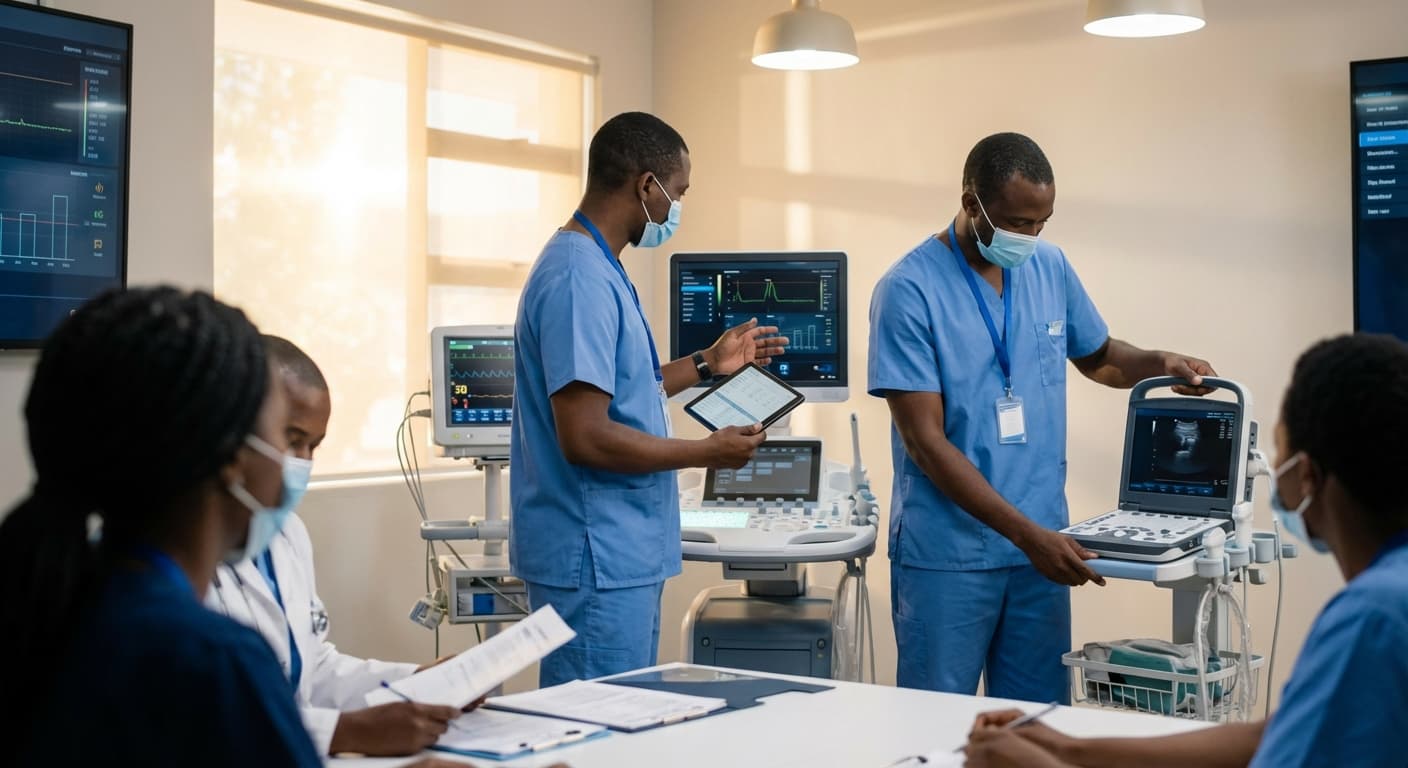
Clinical Needs Assessment for Medical Equipment in Guinea-Bissau
Engineering Excellence & Technical Support
Clinical Needs Assessment for Medical Equipment High-standard technical execution following OEM protocols and local regulatory frameworks.
Needs-Based Procurement Strategy
Prioritizes essential medical equipment based on a comprehensive analysis of disease burden, patient demographics, and existing healthcare infrastructure gaps in Guinea-Bissau. This ensures resources are allocated effectively to address the most critical health challenges and maximize impact.
Interoperability & Sustainability Assessment
Evaluates the compatibility of proposed equipment with existing medical systems and local maintenance capacities. This involves assessing power availability, spare parts logistics, and the availability of trained technical personnel to ensure long-term operational sustainability and minimize obsolescence.
Performance Indicator Integration
Embeds measurable performance indicators within the needs assessment framework to track the impact of procured equipment. This includes baseline data collection for key health outcomes and post-implementation monitoring to demonstrate improved diagnostic accuracy, treatment efficacy, and patient access to care.
What Is Clinical Needs Assessment For Medical Equipment In Guinea-bissau?
A Clinical Needs Assessment for Medical Equipment in Guinea-Bissau is a systematic evaluation process designed to identify and prioritize the medical equipment requirements of healthcare facilities within the country. This service involves a comprehensive analysis of the existing healthcare infrastructure, the current disease burden, the types of medical services offered, and the technological capabilities of healthcare professionals. The primary objective is to ensure that available or procureable medical equipment aligns with the most pressing clinical needs, thereby optimizing resource allocation, improving patient care outcomes, and enhancing the overall effectiveness of the healthcare system. The assessment considers factors such as essential healthcare services, specialized treatment modalities, preventive care needs, and the capacity for maintenance and repair of equipment.
| Who Needs It? | Typical Use Cases | ||
|---|---|---|---|
| Ministry of Public Health (Ministério da Saúde Pública): To inform national health policies, strategic planning, and budget allocation for medical equipment procurement and distribution. | Developing national health sector strategies and investment plans. | Prioritizing procurement of essential medicines and equipment for primary healthcare centers. | Planning for the renovation or expansion of existing health facilities. |
| Healthcare Facility Management (Hospitals, Health Centers): To identify specific equipment deficiencies within their facilities and justify requests for new equipment. | Formulating proposals for donor-funded projects or government grants for equipment upgrades. | Planning for the replacement of obsolete or non-functional medical devices. | Determining the optimal mix of equipment for new specialized units or services. |
| International Development Partners and NGOs: To guide their funding decisions and ensure that procured equipment aligns with the most critical needs identified by local authorities. | Designing and implementing health system strengthening projects. | Allocating resources for specific disease control programs (e.g., maternal and child health, infectious diseases). | Providing humanitarian aid and emergency medical supplies. |
| Medical Equipment Manufacturers and Suppliers: To understand the market demand, identify specific product needs, and tailor their offerings to the context of Guinea-Bissau. | Developing country-specific product catalogs and service offerings. | Responding to tenders and requests for proposals for medical equipment. | Identifying opportunities for partnerships in training and after-sales service. |
| Researchers and Academics: To gather data on healthcare infrastructure and equipment availability for studies on health system performance and accessibility. | Conducting research on the impact of equipment availability on health outcomes. | Identifying research gaps related to medical technology adoption and utilization. |
Key Components of a Clinical Needs Assessment for Medical Equipment in Guinea-Bissau
- Facility Infrastructure Evaluation: Assessing the physical condition, space availability, power supply, and environmental controls of healthcare facilities.
- Human Resources Capacity Assessment: Evaluating the number of trained healthcare professionals, their specializations, and their proficiency in operating specific medical equipment.
- Service Delivery Analysis: Reviewing the range of medical services currently provided and those that are unmet due to equipment limitations.
- Disease Burden and Epidemiological Data Review: Analyzing prevalent diseases, mortality rates, and morbidity patterns to identify equipment needs for diagnosis, treatment, and monitoring.
- Existing Equipment Inventory and Condition Assessment: Cataloging all currently available medical equipment, its functionality, age, and maintenance history.
- Technology Gap Identification: Pinpointing areas where advanced or essential equipment is lacking.
- Procurement and Logistics Feasibility: Assessing the capacity for acquiring, transporting, installing, and maintaining new equipment.
- Training and Support Requirements: Determining the need for training programs for healthcare personnel and the availability of technical support services.
- Cost-Benefit Analysis: Evaluating the financial implications of acquiring specific equipment relative to its expected clinical impact.
Who Needs Clinical Needs Assessment For Medical Equipment In Guinea-bissau?
A clinical needs assessment for medical equipment in Guinea-Bissau is crucial for ensuring that healthcare facilities are equipped with the appropriate, functional, and sustainable medical devices to meet the specific health needs of the population. This assessment identifies gaps in existing equipment, prioritizes needs based on health burdens, and informs procurement and maintenance strategies. It is essential for optimizing resource allocation, improving healthcare service delivery, and ultimately enhancing patient outcomes.
| Target Customer/Entity | Key Departments Involved | Rationale for Needs Assessment |
|---|---|---|
| Ministry of Public Health (MSP) | Planning and Health Information Department, Procurement Department, Technical Services Department, Curative Care Department, Preventive Care Department | National health policy formulation, resource allocation, strategic planning for equipment procurement and maintenance, ensuring equitable access to healthcare. |
| Regional Health Directorates | Regional Planning Units, Regional Technical Support Units, Regional Pharmacy Units | Understanding and addressing specific regional health needs, coordinating equipment distribution and maintenance within their jurisdiction, ensuring local relevance of healthcare services. |
| National Health Directorate | Clinical Services Department, Infrastructure and Equipment Unit, Human Resources Department | Overseeing the implementation of national health strategies, ensuring standards of care, managing the national medical equipment inventory and lifecycle. |
| Hospitals (Central, Regional, District) | Clinical Departments (e.g., Surgery, Internal Medicine, Pediatrics, Obstetrics & Gynecology, Radiology, Laboratory), Biomedical Engineering Department, Pharmacy Department, Supplies and Logistics Department | Identifying specific equipment needs for patient diagnosis, treatment, and care, ensuring availability of functional equipment for specialized procedures, optimizing equipment utilization and maintenance. |
| Health Centers (Centros de Saúde) | General Practitioners' Offices, Nursing Stations, Laboratory Units, Pharmacy Posts, Maternal and Child Health Units | Assessing basic diagnostic and treatment equipment needs for primary healthcare services, ensuring availability of essential equipment for routine consultations, vaccinations, and emergency obstetric care. |
| Specialized Clinics | Relevant Clinical Specializations (e.g., Cardiology, Oncology, Ophthalmology), Technical Support Staff | Identifying and prioritizing highly specialized equipment for specific disease management and treatment protocols, ensuring advanced diagnostic and therapeutic capabilities. |
| Non-Governmental Organizations (NGOs) | Program Management, Technical Advisors, Logistics and Procurement Teams | Determining equipment needs for specific projects or programs (e.g., mobile clinics, disease-specific interventions), aligning equipment with project goals and sustainability plans. |
| International Health Organizations and Donors | Program Officers, Technical Specialists, Procurement and Logistics Teams | Informing funding decisions, ensuring that procured equipment aligns with national priorities and is sustainable, supporting the implementation of health sector reforms. |
Target Customers & Departments for Clinical Needs Assessment in Guinea-Bissau
- Ministry of Public Health (Ministério da Saúde Pública - MSP)
- Regional Health Directorates
- National Health Directorate
- Hospitals (Central, Regional, District)
- Health Centers (Centros de Saúde)
- Specialized Clinics (e.g., Maternity, Pediatrics, Infectious Diseases)
- Non-Governmental Organizations (NGOs) involved in healthcare
- International Health Organizations and Donors
Clinical Needs Assessment For Medical Equipment Process In Guinea-bissau
This document outlines the clinical needs assessment workflow for medical equipment procurement in Guinea-Bissau, from the initial inquiry to the final execution and follow-up. This systematic process ensures that acquired medical equipment aligns with the actual healthcare needs of the population, available infrastructure, and sustainability considerations within the country.
| Stage | Description | Key Activities | Responsible Parties | Output/Deliverable |
|---|---|---|---|---|
| Inquiry & Initial Contact | The process begins with an identified need or a formal request for medical equipment assessment. | Receiving formal requests from healthcare facilities, Ministry of Health, or partner organizations. Initial meetings to understand the scope and context. | Healthcare Facility Staff, Ministry of Health (MoH) Representatives, Implementing Partners | Confirmation of assessment request, preliminary understanding of the request's origin and general scope. |
| Needs Identification & Prioritization | Determining the most critical healthcare needs that can be addressed by medical equipment. | Reviewing national health strategies, disease burden data, existing service gaps. Engaging stakeholders to identify priority areas (e.g., maternal health, infectious diseases, primary care). | MoH, Clinical Experts, Public Health Specialists, Implementing Partners | Prioritized list of health needs and corresponding equipment categories. |
| Data Collection & Analysis | Gathering detailed information about the current state of healthcare services and infrastructure. | Conducting site visits to healthcare facilities, interviewing healthcare professionals, reviewing existing equipment inventory, assessing infrastructure (power, water, space), and analyzing patient data and service utilization. | Assessment Team (including biomedical engineers, clinicians, logistics specialists), Facility Staff | Detailed report on existing infrastructure, equipment inventory (including condition), service capacity, and identified gaps. |
| Equipment Specification & Justification | Defining the specific types, quantities, and technical specifications of the required medical equipment. | Translating identified needs into concrete equipment requirements. Developing detailed technical specifications, considering local context (e.g., environmental conditions, availability of consumables). Justifying each equipment item based on clinical need, impact, and cost-effectiveness. | Clinical Specialists, Biomedical Engineers, Procurement Specialists, MoH | Technical specifications for each piece of equipment, justification documents, estimated quantities. |
| Budgeting & Funding | Estimating the total cost of the equipment, installation, training, and ongoing maintenance, and securing funding. | Developing a comprehensive budget that includes equipment cost, shipping, installation, user training, spare parts, and maintenance plans. Identifying and securing funding sources (government budget, donor grants, NGOs). | Finance Department, Procurement Department, MoH, Implementing Partners | Approved budget, secured funding commitments. |
| Procurement Planning & Execution | Developing and implementing a transparent and efficient procurement plan. | Developing a procurement strategy (tender, direct purchase, etc.), preparing tender documents, evaluating bids, awarding contracts, and managing the logistics of equipment delivery. | Procurement Department, Legal Department, MoH, Implementing Partners | Procurement plan, signed contracts, proof of equipment delivery. |
| Installation & Training | Ensuring proper installation and that end-users are adequately trained to operate and maintain the equipment. | Coordinating with suppliers for equipment installation. Developing and delivering comprehensive training programs for clinical staff and biomedical technicians on equipment operation, basic maintenance, and troubleshooting. | Suppliers, Biomedical Technicians, Clinical Trainers, Facility Staff | Installed and functional equipment, trained personnel, training reports. |
| Monitoring & Evaluation | Tracking the utilization and impact of the acquired equipment and identifying any challenges. | Regular monitoring of equipment usage, performance, and impact on service delivery. Collecting feedback from users. Conducting periodic evaluations to assess the effectiveness of the intervention. | MoH, Implementing Partners, Facility Management | Monitoring reports, evaluation findings, recommendations for improvement. |
| Sustainability & Maintenance Planning | Ensuring the long-term operational viability of the medical equipment. | Developing and implementing a sustainable maintenance plan, including regular servicing, availability of spare parts, and ongoing training for local technicians. Establishing a system for reporting and resolving equipment breakdowns. Planning for eventual replacement. | MoH, Biomedical Engineering Department, Facility Management, Suppliers | Maintenance protocols, spare parts management system, training plans for maintenance personnel, equipment lifecycle management strategy. |
Workflow Stages
- Inquiry & Initial Contact
- Needs Identification & Prioritization
- Data Collection & Analysis
- Equipment Specification & Justification
- Budgeting & Funding
- Procurement Planning & Execution
- Installation & Training
- Monitoring & Evaluation
- Sustainability & Maintenance Planning
Clinical Needs Assessment For Medical Equipment Cost In Guinea-bissau
This assessment identifies critical medical equipment needs in Guinea-Bissau and explores the associated pricing factors and ranges within the local currency (West African CFA franc - XOF). The objective is to provide a foundational understanding for procurement planning, budget allocation, and donor engagement. Procurement of medical equipment in Guinea-Bissau is influenced by a complex interplay of global market dynamics, import duties, local infrastructure, and supplier margins. The CFA franc, pegged to the Euro, provides a degree of exchange rate stability but international pricing is still a primary driver. Factors influencing cost include:
- Equipment Type and Complexity: Basic diagnostic tools will be significantly cheaper than advanced surgical or imaging equipment.
- Brand and Manufacturer: Reputable international brands often come with higher price tags due to perceived quality and after-sales support.
- New vs. Refurbished: Refurbished equipment can offer substantial cost savings but requires careful vetting for reliability and remaining lifespan.
- Import Duties and Taxes: Guinea-Bissau, like many nations, imposes duties and taxes on imported goods, which can significantly inflate the final cost. Specific rates vary by product category.
- Transportation and Logistics: The cost of shipping, insurance, customs clearance, and inland transportation to various health facilities adds to the overall expense. Guinea-Bissau's infrastructure can present logistical challenges.
- Supplier Margins: Local distributors and suppliers will add their profit margins, which can vary.
- After-Sales Service and Training: The cost of installation, maintenance, repair, and user training is often bundled or factored into the initial purchase price, especially for more sophisticated equipment.
- Currency Exchange Rates: While the XOF is pegged to the Euro, fluctuations in the Euro's value against major currencies can indirectly impact international sourcing costs.
Pricing Ranges (Illustrative - in West African CFA Francs - XOF):
It's crucial to understand that these are indicative ranges. Actual prices will fluctuate based on the specific model, supplier, and prevailing market conditions. For precise budgeting, detailed quotes from multiple suppliers are essential.
Challenges in establishing exact ranges:
- Limited Local Market Data: Comprehensive, up-to-date pricing data for medical equipment within Guinea-Bissau is not readily available. Data often relies on international benchmarks adjusted for local factors.
- Variable Supplier Pricing: Prices can differ significantly between various importers and distributors.
- Lack of Standardization: The absence of a strong national procurement system can lead to ad-hoc pricing.
Therefore, the following ranges should be treated as rough estimations and require rigorous verification.
| Pricing Factor | Impact on Cost | Considerations for Guinea-Bissau |
|---|---|---|
| Equipment Type & Complexity | High (e.g., MRI vs. Thermometer) | Prioritize essential, durable, and easy-to-maintain equipment for basic healthcare needs. Avoid highly specialized items unless a clear need and support structure exist. |
| Brand & Manufacturer | Moderate to High (e.g., Siemens vs. local brand) | Balance quality with cost. Explore reputable mid-tier international brands known for reliability and available spare parts. Consider partnerships with manufacturers offering training and support. |
| New vs. Refurbished | Moderate (Refurbished can be 30-70% cheaper) | Thoroughly vet refurbished equipment suppliers. Demand warranties and proof of recent maintenance. Essential for budget-constrained environments but requires careful risk assessment. |
| Import Duties & Taxes | Significant (Varies by HS Code) | Advocate for potential exemptions or reduced rates for essential medical equipment through government or NGO channels. Accurate classification is key. |
| Transportation & Logistics | Moderate to High (Especially for remote areas) | Factor in shipping to Bissau port, customs, and overland transport. Consider bulk purchases to optimize shipping costs. Local logistical expertise is vital. |
| Supplier Margins | Variable (Can add 15-40% or more) | Engage multiple local suppliers and international direct procurement where feasible. Build relationships for potentially better pricing and service over time. |
| After-Sales Service & Training | High (Essential for functional equipment) | Ensure that any purchased equipment comes with clear service agreements, readily available spare parts, and comprehensive user training. This is a critical long-term cost factor. |
Key Medical Equipment Categories and Illustrative Price Ranges (XOF)
- {"items":["Stethoscope","Blood Pressure Monitor (Manual)","Thermometer (Digital)","Otoscope","Ophthalmoscope (Basic)"],"category":"Basic Diagnostic Tools","estimated_range_xof":"20,000 - 150,000"}
- {"items":["Microscope (Compound, Manual)","Centrifuge (Basic, Electric)","Water Bath","pH Meter"],"category":"Laboratory Equipment (Basic)","estimated_range_xof":"200,000 - 1,000,000"}
- {"items":["Portable Ultrasound Machine (Basic)","X-ray Machine (Portable/Basic Unit - often requires significant infrastructure)"],"category":"Imaging Equipment (Entry-Level/Portable)","estimated_range_xof":"3,000,000 - 20,000,000"}
- {"items":["Basic Surgical Set (e.g., Minor Procedure Kit)","Suturing Kit"],"category":"Surgical Instruments (Sets)","estimated_range_xof":"100,000 - 500,000"}
- {"items":["Anesthesia Machine (Manual/Basic)"],"category":"Anesthesia Equipment (Basic)","estimated_range_xof":"2,000,000 - 10,000,000"}
- {"items":["Pulse Oximeter (Handheld)","ECG Machine (Basic, 3-channel)"],"category":"Patient Monitoring","estimated_range_xof":"100,000 - 700,000"}
- {"items":["Infant Warmer","Delivery Table (Basic)"],"category":"Maternal and Child Health","estimated_range_xof":"300,000 - 2,000,000"}
- {"items":["Autoclave (Tabletop/Small)"],"category":"Sterilization Equipment","estimated_range_xof":"500,000 - 3,000,000"}
Affordable Clinical Needs Assessment For Medical Equipment Options
Conducting a clinical needs assessment for medical equipment is a critical step in ensuring optimal patient care and operational efficiency. For healthcare providers operating with budget constraints, an affordable approach is paramount. This involves a thorough understanding of current and future patient demographics, existing equipment capabilities, technological advancements, and importantly, identifying opportunities for cost savings. Value bundles are a strategic way to procure multiple, often complementary, pieces of equipment or services from a single vendor at a reduced overall cost compared to purchasing them individually. This approach can streamline procurement, simplify maintenance agreements, and leverage bulk purchasing power. Cost-saving strategies in medical equipment procurement extend beyond initial purchase price and include considering total cost of ownership (TCO), exploring leasing or financing options, negotiating service contracts effectively, and implementing robust preventative maintenance programs to extend equipment lifespan and minimize costly repairs. Furthermore, standardizing equipment across departments where feasible can lead to economies of scale in purchasing, training, and maintenance.
| Strategy | Description | Potential Benefits |
|---|---|---|
| Value Bundling | Purchasing a package of related equipment or services from a single vendor. | Reduced overall cost, streamlined procurement, simplified vendor management, integrated service. |
| Total Cost of Ownership (TCO) | Evaluating all costs associated with equipment over its lifecycle, including purchase, installation, maintenance, consumables, training, and disposal. | Informed purchasing decisions, avoidance of hidden costs, focus on long-term value rather than just upfront price. |
| Leasing/Financing | Acquiring equipment through lease agreements or financing plans instead of outright purchase. | Lower initial capital outlay, predictable monthly expenses, access to newer technology without large upfront investment. |
| Service Contract Negotiation | Securing comprehensive and cost-effective maintenance and repair agreements with vendors. | Predictable maintenance costs, reduced downtime, extended equipment lifespan, access to expert support. |
| Preventative Maintenance | Implementing regular scheduled maintenance to prevent breakdowns and optimize performance. | Reduced repair costs, extended equipment life, improved reliability, minimized disruption to patient care. |
| Equipment Standardization | Using the same types of equipment across multiple departments or facilities. | Bulk purchasing discounts, simplified training, streamlined maintenance and repair, easier spare parts management. |
| Refurbished/Certified Pre-Owned | Purchasing equipment that has been previously used, refurbished, and certified by the manufacturer or a reputable third party. | Significant cost savings compared to new equipment, often with warranty, environmentally friendly. |
Key Cost-Saving Strategies for Medical Equipment
- Total Cost of Ownership (TCO) Analysis
- Value Bundling
- Leasing and Financing Options
- Negotiated Service Contracts
- Preventative Maintenance Programs
- Equipment Standardization
- Refurbished and Certified Pre-Owned Equipment
- Vendor Consolidation
- Bulk Purchasing
- Efficient Inventory Management
Verified Providers In Guinea-bissau
In Guinea-Bissau, ensuring access to reliable and high-quality healthcare services is paramount. This is where the role of verified providers becomes critical, offering assurance and trust to individuals seeking medical attention. Franance Health stands out as a leading organization in this regard, demonstrating a commitment to excellence and a robust credentialing process that sets them apart. Their dedication to vetting healthcare professionals and facilities ensures that patients receive care from competent and ethical practitioners, ultimately leading to better health outcomes.
| Provider Type | Franance Health Verification Benefits | Key Indicators of Quality |
|---|---|---|
| Hospitals & Clinics | Assurance of modern facilities, adherence to hygiene standards, and well-equipped medical teams. | Accreditation status, patient satisfaction scores, availability of specialized services. |
| Doctors & Specialists | Confirmation of valid medical licenses, specialized training, and a history of ethical practice. | Board certifications, years of experience, peer reviews, continuous professional development. |
| Laboratories & Diagnostic Centers | Verification of accurate testing protocols, quality control measures, and reliable equipment. | Accreditation by relevant health bodies, turnaround time for results, accuracy of reports. |
| Pharmacies | Ensures the availability of genuine medications, proper storage, and knowledgeable pharmaceutical staff. | Compliance with pharmaceutical regulations, availability of essential medicines, pharmacist qualifications. |
Why Franance Health Credentials Matter:
- Rigorous Vetting Process: Franance Health employs a comprehensive and stringent vetting procedure for all providers seeking their accreditation.
- Commitment to Quality: Their credentials signify adherence to the highest standards of medical practice and patient care.
- Patient Safety Focus: The accreditation process prioritizes patient safety, ensuring that providers meet established benchmarks for safe and effective treatment.
- Enhanced Trust and Confidence: Patients can have greater confidence in the quality of care when they see a Franance Health-verified provider.
- Promoting Excellence in Healthcare: By identifying and endorsing top-tier providers, Franance Health contributes to the overall improvement of the healthcare landscape in Guinea-Bissau.
Scope Of Work For Clinical Needs Assessment For Medical Equipment
This Scope of Work (SOW) outlines the requirements for conducting a comprehensive clinical needs assessment for medical equipment. The objective is to identify, prioritize, and specify medical equipment essential for the effective and efficient delivery of healthcare services within the designated clinical departments. This assessment will inform procurement decisions, ensure alignment with clinical workflows, and promote optimal patient care.
| Phase | Activity | Description | Deliverables | Timeline (Weeks) |
|---|---|---|---|---|
| 1 | Project Initiation & Planning | Define project scope, objectives, stakeholders, and methodology. Establish communication protocols and project timelines. | Project Charter, Stakeholder Register, Communication Plan | 2 |
| 2 | Data Collection & Needs Identification | Conduct interviews with clinicians, review patient data, analyze clinical workflows, and survey existing equipment. Identify current equipment utilization and maintenance status. | Needs Assessment Survey Forms, Interview Transcripts, Existing Equipment Inventory Report | 4 |
| 3 | Gap Analysis & Prioritization | Analyze collected data to identify equipment gaps, redundancies, and obsolescence. Prioritize needs based on clinical impact, patient safety, and strategic goals. | Gap Analysis Report, Prioritized Equipment List | 3 |
| 4 | Specification Development | Develop detailed technical specifications, including performance requirements, safety features, integration capabilities, and user interface considerations for each prioritized equipment item. | Technical Specification Documents (per equipment category) | 5 |
| 5 | Budgeting & Procurement Planning | Estimate costs for acquisition, installation, training, and maintenance. Develop a phased procurement strategy and recommendations for budget allocation. | Budget Proposal, Phased Procurement Plan | 2 |
| 6 | Reporting & Presentation | Compile all findings and recommendations into a comprehensive report. Present the report and recommendations to stakeholders. | Final Clinical Needs Assessment Report, Executive Summary, Presentation Deck | 2 |
Key Objectives
- Identify current and future clinical needs for medical equipment across all relevant departments.
- Assess the existing medical equipment inventory for condition, functionality, and suitability.
- Determine gaps in equipment provision and identify critical areas for investment.
- Define technical specifications and performance requirements for new and replacement equipment.
- Prioritize equipment needs based on clinical impact, patient safety, operational efficiency, and budget considerations.
- Develop a phased procurement plan and budget recommendations.
- Ensure compliance with relevant regulatory standards and best practices.
Service Level Agreement For Clinical Needs Assessment For Medical Equipment
This Service Level Agreement (SLA) outlines the guaranteed response times and uptime for the Clinical Needs Assessment service provided for medical equipment. This SLA is designed to ensure prompt and reliable support for healthcare facilities in optimizing their medical equipment procurement and utilization strategies.
| Service Level | Description | Response Time Target (Business Hours) | Uptime Guarantee |
|---|---|---|---|
| Critical Support Request | Urgent issues impacting patient care or critical operational workflows related to equipment needs. | 1 Business Hour (acknowledgement), 4 Business Hours (initial assessment/diagnosis) | 99.5% Availability of the Needs Assessment Team and associated tools |
| Standard Support Request | Non-urgent requests for consultation, preliminary assessments, or follow-up on existing assessments. | 4 Business Hours (acknowledgement), 8 Business Hours (initial assessment/diagnosis) | 99.0% Availability of the Needs Assessment Team and associated tools |
| Information Request | Requests for general information, documentation, or preliminary advice. | 8 Business Hours (acknowledgement), 24 Business Hours (provision of information) | 98.0% Availability of the Needs Assessment Team and associated tools |
Key Service Components
- Clinical Needs Assessment: A comprehensive review and analysis of current and future clinical requirements to determine the most appropriate medical equipment solutions.
- Response Times: Guaranteed maximum timeframes for acknowledging and initiating action on service requests.
- Uptime Guarantees: Commitment to the availability of the assessment service and its associated resources.
Frequently Asked Questions

Ready when you are
Let's scope your Clinical Needs Assessment for Medical Equipment in Guinea-Bissau project in Guinea-Bissau.

Scaling healthcare logistics and technical systems across the entire continent.