
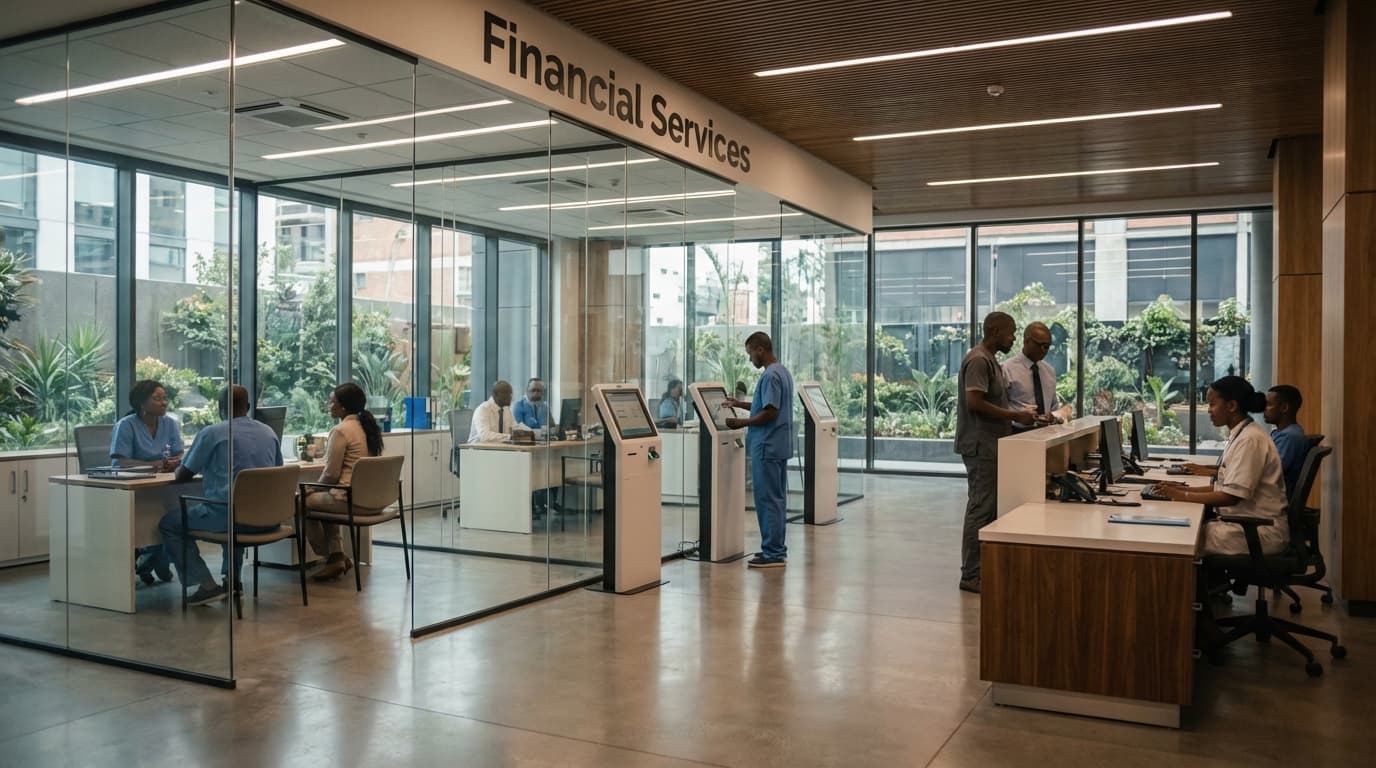
Medical Equipment Financing in Guinea-Bissau
Engineering Excellence & Technical Support
Leasing and financing solutions for medical equipment High-standard technical execution following OEM protocols and local regulatory frameworks.
Accessible Equipment Acquisition
Empowering healthcare providers in Guinea-Bissau with tailored financing solutions to acquire vital medical equipment, improving diagnostic capabilities and patient care through competitive loan terms and flexible repayment schedules.
Growth-Oriented Investment
Facilitating strategic investments in modern medical technology for clinics and hospitals across Guinea-Bissau, enabling expansion of services, enhancement of operational efficiency, and a significant positive impact on public health outcomes.
Reliable Equipment Lifecycle Support
Providing secure and dependable financing for the procurement of durable, high-quality medical equipment, ensuring healthcare institutions in Guinea-Bissau have the necessary tools to maintain operational continuity and deliver consistent, high-standard healthcare.
What Is Medical Equipment Financing In Guinea-bissau?
Medical equipment financing in Guinea-Bissau refers to the provision of capital, typically through loans, leases, or other credit facilities, to facilitate the acquisition of medical devices and technology by healthcare providers within the country. This service addresses the significant capital expenditure required for procuring modern and essential medical infrastructure, which can be a substantial barrier for many institutions, particularly in developing economies.
| Who Needs Medical Equipment Financing? | Typical Use Cases in Guinea-Bissau | ||||
|---|---|---|---|---|---|
| Public Hospitals and Health Centers: | Upgrading diagnostic imaging capabilities (X-ray, ultrasound). | Acquiring essential surgical instruments and operating room equipment. | Establishing or expanding laboratory services (hematology, biochemistry analyzers). | Procuring patient monitoring systems for intensive care units. | Outfitting primary healthcare clinics with basic diagnostic tools and treatment equipment. |
| Private Clinics and Hospitals: | Investing in specialized medical equipment to offer advanced procedures (e.g., cardiology, ophthalmology). | Expanding service offerings to meet growing patient demand. | Replacing aging or obsolete equipment to maintain service quality and patient safety. | Acquiring new technologies to remain competitive. | Setting up new private healthcare facilities. |
| Non-Governmental Organizations (NGOs) and International Aid Agencies: | Equipping facilities for specific public health initiatives (e.g., maternal and child health, infectious disease control). | Providing essential medical tools to remote or underserved populations. | Supporting emergency response and disaster relief efforts with mobile medical units and equipment. | ||
| Research and Training Institutions: | Acquiring advanced equipment for medical education and research purposes. | Facilitating skills development and capacity building for healthcare professionals. |
Key Components of Medical Equipment Financing:
- Loan-based financing: Traditional credit lines where the provider borrows funds to purchase equipment outright. This often involves interest payments and a repayment schedule.
- Leasing: A contractual agreement where the provider uses the equipment for a specified period in exchange for regular payments. Ownership may or may not transfer at the end of the lease term.
- Rent-to-own agreements: Similar to leasing but with an option to purchase the equipment at a predetermined price upon completion of the rental period.
- Asset-backed lending: Financing secured by existing medical assets, allowing for the acquisition of new equipment.
- Vendor financing: Direct financing offered by medical equipment manufacturers or distributors.
- Grants and subsidies: While not strictly financing, these can reduce the overall capital burden and are often sought in conjunction with financing solutions.
Who Needs Medical Equipment Financing In Guinea-bissau?
Medical equipment financing in Guinea-Bissau addresses the critical need for accessible and advanced healthcare. Many healthcare providers, from small clinics to larger hospitals, struggle with the prohibitive upfront costs of modern medical devices. This financing aims to bridge that gap, enabling these institutions to acquire the necessary tools to diagnose, treat, and monitor patients effectively, ultimately improving health outcomes for the population.
| Target Customer | Departments/Areas of Need |
|---|---|
| Public Hospitals and Clinics | Diagnostic imaging (X-ray, Ultrasound), laboratory equipment, surgical instruments, patient monitoring systems, sterilization equipment, primary care equipment. |
| Private Hospitals and Clinics | Advanced diagnostic tools (CT scanners, MRI - if applicable for larger private entities), specialized surgical equipment, modern dental equipment, physiotherapy equipment, electronic health record systems. |
| Diagnostic Laboratories | Automated analyzers (hematology, biochemistry, immunoassay), microscopes, centrifuges, PCR machines, sample preparation equipment. |
| Specialized Medical Centers (e.g., Maternity, Eye Care) | Obstetric and gynecological equipment, neonatal care units, ophthalmic diagnostic and surgical equipment, cardiology equipment (ECG, stress testing). |
| Non-Governmental Organizations (NGOs) providing healthcare services | Basic medical equipment for outreach programs, essential diagnostic tools, mobile clinic equipment, maternal and child health supplies. |
| Community Health Centers | Primary care diagnostic equipment (blood pressure monitors, glucose meters), basic examination tools, essential medication dispensing equipment, basic sterilization units. |
Who Needs Medical Equipment Financing in Guinea-Bissau?
- Public Hospitals and Clinics
- Private Hospitals and Clinics
- Diagnostic Laboratories
- Specialized Medical Centers
- Non-Governmental Organizations (NGOs) providing healthcare services
- Community Health Centers
Medical Equipment Financing Process In Guinea-bissau
This document outlines the typical workflow for medical equipment financing in Guinea-Bissau, from the initial inquiry by a healthcare provider to the final execution of the financing agreement. The process is designed to assess the applicant's financial viability, the suitability of the equipment, and to ensure compliance with local regulations and lender requirements.
| Stage | Description | Key Activities | Responsible Parties | Key Considerations/Documents |
|---|---|---|---|---|
| The healthcare provider expresses interest in financing medical equipment. | Applicant contacts financial institution (bank, leasing company), discusses needs, explores financing options. | Healthcare Provider, Financial Institution Representative | Nature of equipment, required amount, repayment capacity, desired financing structure. |
| Applicant provides necessary documentation for assessment. | Submission of company registration, financial statements, tax clearance, project proposals, equipment quotes. | Healthcare Provider, Financial Institution's Documentation Team | Completeness and authenticity of documents, business plan, economic viability of the project. |
| Financial institution evaluates the applicant's creditworthiness and financial health. | Analysis of financial statements, cash flow projections, credit history, market research, risk assessment. | Financial Institution's Credit Department | Solvency, liquidity, profitability, industry risk, macroeconomic factors in Guinea-Bissau. |
| Assessment of the value, necessity, and marketability of the proposed medical equipment. | Independent appraisal of equipment, verification of supplier credentials, confirmation of import regulations. | Financial Institution's Technical/Appraisal Team, External Appraisers, Regulatory Bodies | Equipment specifications, technical feasibility, market demand, supplier reputation, import duties and taxes. |
| Based on the assessments, the financial institution presents a financing proposal. | Drafting of the loan/lease agreement, outlining interest rates, repayment schedules, collateral requirements, fees. | Financial Institution, Healthcare Provider | Interest rate, loan tenure, repayment flexibility, collateral, covenants, guarantees. |
| Formalization of the financing agreement. | Legal review of the contract by both parties' legal counsel, signing of the agreement. | Healthcare Provider, Financial Institution, Legal Counsel | Clarity of terms, enforceability, compliance with Guinean law, dispute resolution mechanisms. |
| Release of funds and acquisition of the equipment. | Transfer of funds to the supplier or applicant (as per agreement), coordination of equipment delivery and installation. | Financial Institution, Healthcare Provider, Equipment Supplier | Confirmation of delivery, installation, and operational readiness of the equipment. |
| Ongoing management of the financing arrangement. | Regular monitoring of equipment usage and maintenance, timely repayment of installments, communication regarding any issues. | Financial Institution, Healthcare Provider | Compliance with loan covenants, equipment performance, adherence to repayment schedule. |
Key Stages in the Medical Equipment Financing Process:
- Inquiry and Initial Consultation
- Document Submission and Verification
- Credit Assessment and Risk Analysis
- Equipment Appraisal and Due Diligence
- Proposal and Terms Negotiation
- Contractual Agreement and Legal Review
- Disbursement and Equipment Delivery
- Post-Disbursement Monitoring and Repayment
Medical Equipment Financing Cost In Guinea-bissau
Financing medical equipment in Guinea-Bissau presents unique challenges and opportunities. The cost of medical equipment financing is influenced by several factors, primarily the type and sophistication of the equipment, the financial institution's assessment of risk, and prevailing economic conditions within Guinea-Bissau. Due to the nascent state of the healthcare sector and the general economic landscape, financing options may be more limited and potentially come with higher interest rates compared to more developed economies. Local currency (West African CFA franc, XOF) pricing is crucial for businesses operating within the country, and financing structures are typically denominated in this currency.
| Equipment Category | Estimated Financing Cost Range (Annual Interest Rate) | Typical Financing Tenures (Years) | Illustrative Monthly Repayment (Per 1,000,000 XOF Loan) |
|---|---|---|---|
| Basic Diagnostic Equipment (e.g., blood pressure monitors, stethoscopes, basic microscopes) | 18% - 25% | 2 - 4 | Approx. 27,000 - 31,000 XOF |
| Mid-Range Imaging (e.g., X-ray machines, ultrasound devices) | 20% - 30% | 3 - 5 | Approx. 29,000 - 37,000 XOF |
| Specialized Laboratory Equipment (e.g., chemistry analyzers, PCR machines) | 22% - 35% | 3 - 6 | Approx. 30,000 - 43,000 XOF |
| Surgical Instruments and Minor Equipment | 19% - 28% | 2 - 5 | Approx. 28,000 - 35,000 XOF |
| Advanced Medical Systems (e.g., MRI, CT scanners - often through international partnerships or large grants) | Negotiable (potentially lower if bundled with grants or government support), but could be 25% - 40% for pure commercial financing | 5 - 10+ | Highly variable, significant down payments likely required |
Key Pricing Factors for Medical Equipment Financing in Guinea-Bissau
- Equipment Type and Value: The fundamental cost of the medical equipment itself is the primary driver. More advanced and specialized equipment, such as MRI machines or sophisticated surgical robots, will naturally have higher financing costs than basic diagnostic tools or general ward equipment.
- Equipment Age and Condition: New equipment generally commands more favorable financing terms than used or refurbished equipment, as it is perceived as lower risk by lenders.
- Financier's Risk Assessment: Financial institutions (banks, microfinance institutions, or specialized lenders) will assess the borrower's creditworthiness, financial history, and the viability of their business plan. Higher perceived risk will lead to higher interest rates and potentially stricter repayment terms.
- Interest Rates and Fees: The prevailing interest rates in Guinea-Bissau, influenced by the central bank's monetary policy and market liquidity, will directly impact the cost of financing. Additional fees, such as origination fees, processing fees, and insurance premiums, also contribute to the overall cost.
- Loan Tenure and Repayment Schedule: Longer loan terms can result in higher total interest paid, even with a lower annual interest rate. The structure of repayments (e.g., monthly, quarterly) also affects cash flow management for the borrower.
- Economic Stability and Inflation: Fluctuations in the Guinean-Bissau economy, including inflation rates, can influence the cost of financing. Lenders may adjust interest rates to mitigate the impact of inflation on the real value of their returns.
- Collateral and Guarantees: The availability of collateral (e.g., other assets owned by the borrower) or personal guarantees can reduce the lender's risk and potentially lead to more favorable financing terms.
- Supplier Agreements and Warranties: The terms offered by the equipment supplier, including warranties and after-sales service, can indirectly influence financing. A robust warranty might reduce perceived operational risk for the financer.
Affordable Medical Equipment Financing Options
Acquiring essential medical equipment is crucial for healthcare providers, but the upfront costs can be a significant barrier. Fortunately, there are numerous affordable financing options and cost-saving strategies available. Understanding these avenues can empower clinics, hospitals, and private practices to invest in the technology they need without compromising their financial health. This guide explores various financing methods, highlights the benefits of value bundles, and offers practical cost-saving strategies.
| Value Bundle Component | Benefits | Cost-Saving Strategy |
|---|---|---|
| Equipment Purchase/Lease | Access to necessary technology. | Negotiate bulk discounts, consider refurbished or certified pre-owned equipment, compare leasing vs. buying based on usage and depreciation. |
| Maintenance and Service Contracts | Ensures equipment longevity and minimizes downtime. | Bundle with purchase/lease, negotiate longer-term contracts for better rates, compare service plans from independent providers. |
| Training and Installation | Proper operation and setup for optimal performance. | Include in the initial package, utilize online training resources where available, train internal staff to become super-users. |
| Software and IT Integration | Seamless integration with existing practice management systems. | Seek bundled software deals, prioritize interoperability, consider cloud-based solutions for scalability. |
| Consumables and Accessories | Supplies needed for immediate operation. | Negotiate bulk purchase of consumables, explore third-party suppliers for cost-effective options, manage inventory efficiently to avoid overstocking. |
Affordable Medical Equipment Financing Options
- {"title":"Leasing","description":"Leasing allows you to use equipment for a set period with regular payments, avoiding large upfront capital expenditure. Options include operating leases (for shorter-term use) and finance leases (closer to ownership)."}
- {"title":"Loans","description":"Traditional term loans from banks or specialized medical equipment lenders offer ownership of the equipment once the loan is repaid. Interest rates and repayment terms vary."}
- {"title":"Sale-Leaseback","description":"Sell your existing owned equipment to a financing company and then lease it back. This injects capital into your practice while allowing you to continue using the equipment."}
- {"title":"Lines of Credit","description":"A revolving credit line can provide flexibility for purchasing multiple pieces of equipment or for unexpected needs. You only pay interest on the amount drawn."}
- {"title":"Government Grants and Programs","description":"Investigate federal, state, and local grants, especially those aimed at improving healthcare access in underserved areas or promoting specific medical technologies."}
- {"title":"Manufacturer Financing","description":"Many medical equipment manufacturers offer in-house financing or partner with lenders, often with competitive rates and tailored packages."}
- {"title":"Crowdfunding and Peer-to-Peer Lending","description":"For smaller practices or innovative equipment, crowdfunding platforms or P2P lending can be alternative sources of funding."}
Verified Providers In Guinea-bissau
In Guinea-Bissau, ensuring access to reliable and high-quality healthcare is paramount. "Verified Providers" refers to healthcare professionals and institutions that have undergone rigorous credentialing processes to guarantee their competence, ethical practices, and adherence to established standards. Franance Health is a leading organization dedicated to this verification, playing a crucial role in building trust and transparency within the healthcare sector of Guinea-Bissau. Their comprehensive credentialing process ensures that patients are connected with providers who meet the highest benchmarks for medical expertise, patient safety, and ethical conduct, making them the best choice for individuals seeking dependable healthcare services.
| Provider Type | Franance Health Verification Focus | Benefits for Patients |
|---|---|---|
| Doctors (General Practitioners & Specialists) | Medical school accreditation, residency completion, board certifications, license status, peer reviews, ethical standing. | Accurate diagnosis, effective treatment plans, access to specialized expertise, reduced risk of medical errors. |
| Nurses | Nursing education and licensure, practical experience, specialized certifications (e.g., critical care, midwifery). | Skilled and compassionate care, patient education, assistance with recovery, adherence to medical protocols. |
| Hospitals & Clinics | Facility accreditations, adherence to hygiene and safety standards, availability of essential equipment, qualified medical staff, emergency preparedness. | Safe and clean environment, access to necessary medical technologies, coordinated care, emergency response capabilities. |
| Pharmacists | Pharmacy degree and license, knowledge of drug interactions, safe dispensing practices, patient counseling on medication use. | Accurate prescription fulfillment, safe medication management, advice on drug efficacy and side effects, prevention of adverse drug reactions. |
| Diagnostic Laboratories | Accreditation by relevant bodies, quality control measures, accurate and reliable test results, qualified laboratory technicians. | Precise diagnostic information for effective treatment, timely reporting of results, confidence in test accuracy. |
Why Franance Health Verified Providers are the Best Choice:
- Rigorous Qualification Assessment: Franance Health meticulously verifies educational backgrounds, licenses, certifications, and continuous professional development of all healthcare providers.
- Commitment to Ethical Practice: Beyond technical skills, Franance Health assesses a provider's adherence to ethical codes of conduct and patient-centered care principles.
- Enhanced Patient Safety: The verification process includes checks for disciplinary actions, malpractice history, and adherence to safety protocols, significantly reducing risks for patients.
- Access to Competent Professionals: Patients can be confident that they are receiving care from qualified and experienced medical professionals, leading to better health outcomes.
- Building Trust and Transparency: Franance Health's stamp of approval signifies a commitment to excellence, fostering greater trust between patients and healthcare providers.
- Streamlined Healthcare Navigation: By identifying verified providers, Franance Health simplifies the process for individuals to find the right care without compromising on quality.
- Continuous Monitoring: The verification is not a one-time event; Franance Health often implements systems for ongoing monitoring and re-credentialing to ensure sustained quality.
Scope Of Work For Medical Equipment Financing
This Scope of Work (SOW) outlines the requirements for a Medical Equipment Financing program. It details the technical deliverables and standard specifications expected from the financing provider. The objective is to secure funding for the acquisition of new and refurbished medical equipment, ensuring compliance with industry standards and the operational needs of healthcare facilities. This SOW covers the financial and technical aspects of the equipment financing, including equipment lifecycle management, maintenance, and upgrade paths.
| Section | Description | Technical Deliverables | Standard Specifications |
|---|---|---|---|
| Process for submitting financing requests and obtaining approval for medical equipment acquisition. | Completed financing application forms, detailed equipment lists with quotes, financial statements, and facility operational plans. | Adherence to lender's credit and risk assessment criteria. Compliance with applicable financial regulations. |
| Process for sourcing and acquiring approved medical equipment. | Procurement contracts, vendor qualifications, and proof of ownership transfer to the financing entity (if applicable). | Equipment must meet current industry standards (e.g., FDA, CE marking), manufacturer specifications, and facility requirements. New equipment should be under manufacturer warranty. |
| Ensuring proper installation, calibration, and initial testing of acquired equipment. | Installation reports, commissioning certificates, and initial performance validation tests. | Installation by certified technicians. Equipment to be calibrated and tested to manufacturer's specifications and meet clinical performance benchmarks. |
| Provision of ongoing maintenance, repairs, and technical support for the financed equipment. | Service contracts, preventative maintenance schedules, response times for service calls, and repair logs. | Full service contracts including parts and labor. Response times to be defined in SLA. Use of OEM or equivalent parts. Compliance with manufacturer's recommended maintenance intervals. |
| Strategies for managing equipment lifecycle, including upgrades and replacement of obsolete technology. | Equipment upgrade proposals, end-of-life assessments, and disposal plans. | Financing to accommodate technology refresh cycles. Equipment must be upgradeable to meet future clinical demands. Disposal must comply with environmental regulations. |
| Regular reporting on equipment status, performance, and financial reconciliation. | Monthly/quarterly equipment inventory reports, performance reports, service history summaries, and financial statements. | Reports to be provided in a mutually agreed format. Auditing access to records to be granted upon request. Compliance with financial reporting standards. |
| Availability of qualified technical personnel and training for facility staff. | Contact information for technical support, training schedules and materials, and user manuals. | 24/7 technical support availability for critical equipment. Comprehensive training for clinical and technical staff on equipment operation and basic troubleshooting. |
Key Areas Covered by this Scope of Work
- Financing Structure and Terms
- Equipment Specifications and Standards
- Technical Support and Maintenance
- Performance Guarantees and Service Level Agreements (SLAs)
- Reporting and Documentation Requirements
- Security and Compliance
Service Level Agreement For Medical Equipment Financing
This Service Level Agreement (SLA) outlines the guaranteed response times and uptime for the medical equipment financed by [Financing Company Name] (hereinafter referred to as 'Provider') for [Client Name] (hereinafter referred to as 'Client'). This SLA is an integral part of the overarching financing agreement and aims to ensure the continuous availability and optimal performance of critical medical equipment.
| Equipment Type | Response Time Guarantee (Business Hours) | Resolution Time Guarantee (Business Hours) | Uptime Guarantee |
|---|---|---|---|
| Critical Equipment | Within 1 Business Hour | Within 4 Business Hours | 99.5% |
| Standard Equipment | Within 4 Business Hours | Within 8 Business Hours | 98.0% |
Key Definitions
- Critical Equipment: Medical devices identified in the financing agreement as essential for patient care and revenue generation, requiring immediate attention in case of malfunction.
- Standard Equipment: Medical devices identified in the financing agreement as important but not immediately critical for patient care or revenue generation.
- Downtime: The period during which a piece of medical equipment is non-operational due to a malfunction, defect, or required maintenance that directly impacts its intended use.
- Response Time: The maximum allowable time from when the Client reports a malfunction to when the Provider acknowledges the report and initiates troubleshooting or service dispatch.
- Resolution Time: The maximum allowable time from when the Provider initiates troubleshooting or service dispatch to when the equipment is restored to operational status or a temporary workaround is implemented.
- Uptime Guarantee: The minimum percentage of time the equipment is expected to be operational during scheduled operating hours.
Frequently Asked Questions

Ready when you are
Let's scope your Medical Equipment Financing in Guinea-Bissau project in Guinea-Bissau.

Scaling healthcare logistics and technical systems across the entire continent.