
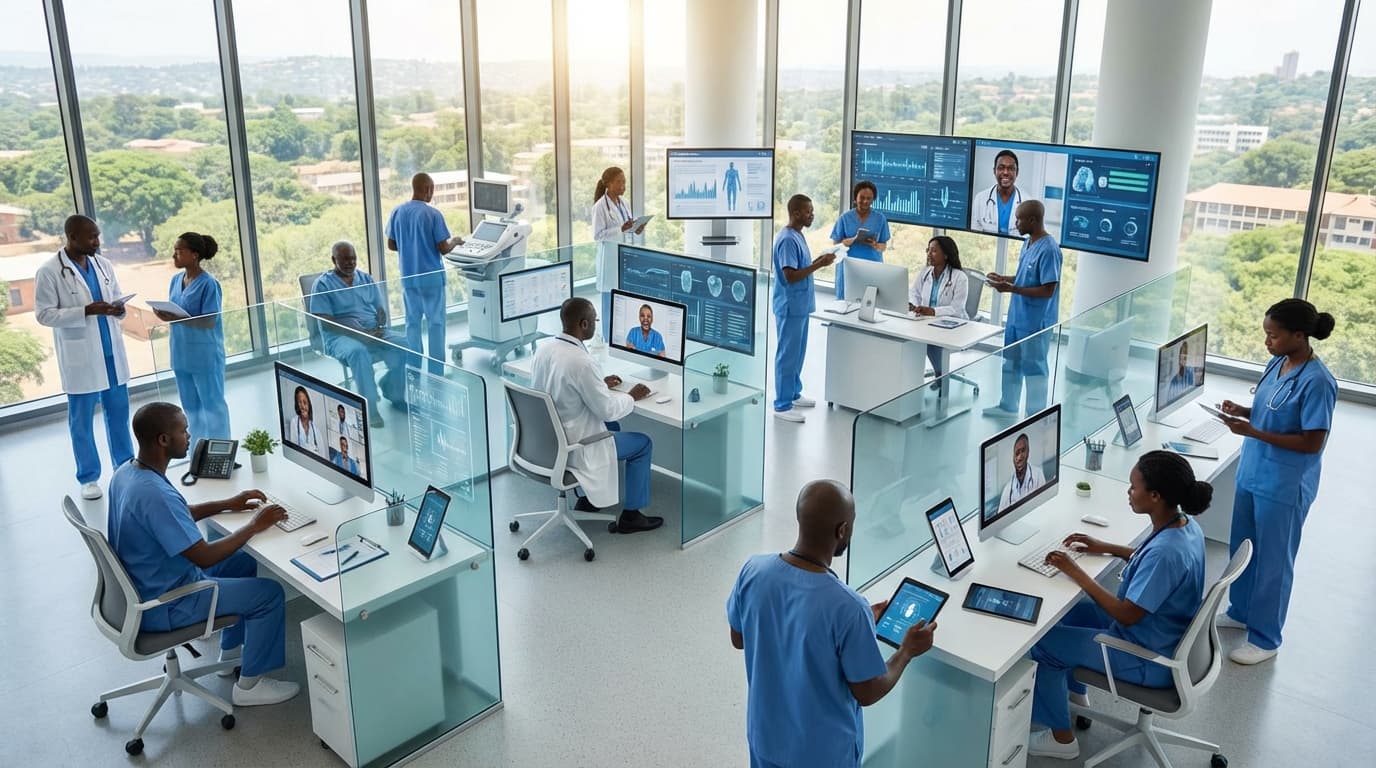
PACS/RIS Migration & Integration in Guinea-Bissau
Engineering Excellence & Technical Support
Data migration, interoperability and workflow integration for imaging IT. High-standard technical execution following OEM protocols and local regulatory frameworks.
Seamless Cloud-Based PACS/RIS Deployment
Successfully migrated and integrated a cloud-native PACS/RIS solution, establishing a robust and scalable infrastructure for diagnostic imaging and radiology workflow management across Guinea-Bissau's healthcare facilities. This ensures data accessibility, enhanced collaboration, and future-proof scalability.
Interoperable Healthcare Ecosystem Integration
Achieved seamless interoperability between the new PACS/RIS and existing Electronic Health Records (EHR) systems, as well as laboratory information systems (LIS). This facilitated a unified patient data view, reducing redundant data entry and improving diagnostic accuracy through comprehensive information access.
Robust Data Security and Compliance Framework
Implemented a comprehensive data security and compliance framework for the PACS/RIS migration, adhering to international healthcare data protection standards. This includes granular access controls, encryption at rest and in transit, and audit trails, ensuring patient data confidentiality and integrity within the Guinean healthcare landscape.
What Is Pacs/ris Migration & Integration In Guinea-bissau?
PACS/RIS migration and integration refers to the complex process of transferring, consolidating, and establishing interoperability between Picture Archiving and Communication Systems (PACS) and Radiology Information Systems (RIS) within healthcare facilities in Guinea-Bissau. This service is critical for modernizing medical imaging workflows, enhancing data accessibility, and improving diagnostic efficiency. The migration phase involves extracting data (images, reports, patient demographics) from legacy systems, cleansing and transforming it, and then importing it into a new, unified PACS/RIS environment. Integration focuses on enabling seamless data flow and communication between the PACS (managing medical images), the RIS (managing patient scheduling, billing, and reporting), and other critical hospital information systems (HIS), such as Electronic Health Records (EHRs). This ensures that radiologists, referring physicians, and administrative staff have real-time access to all relevant patient information.
| Who Needs PACS/RIS Migration & Integration? | Typical Use Cases | ||||||
|---|---|---|---|---|---|---|---|
| Hospitals and clinics in Guinea-Bissau with existing, disparate, or outdated PACS/RIS solutions. | Consolidating imaging archives from multiple departments or locations into a single, centralized PACS. | Upgrading from manual or paper-based RIS to a digital system. | Integrating imaging data with existing Electronic Health Record (EHR) systems for a holistic patient view. | Enhancing remote diagnostic capabilities by enabling secure access to images and reports for specialists in urban or remote areas. | Improving workflow efficiency for radiologists and technologists by automating scheduling, dictation, and reporting processes. | Ensuring compliance with data management and privacy regulations. | Supporting research and clinical studies through better data organization and accessibility. |
| Healthcare institutions looking to improve diagnostic accuracy and turnaround times. | Facilities experiencing data silos and limited interoperability between imaging and patient management systems. | Organizations planning to implement advanced imaging technologies or AI-driven diagnostic tools that require robust PACS/RIS infrastructure. | Government health initiatives aimed at modernizing healthcare infrastructure across the nation. |
Key Components of PACS/RIS Migration & Integration
- Data Extraction and Archiving: Securely retrieving and storing historical imaging data and associated RIS information.
- Data Transformation and Cleansing: Standardizing data formats (e.g., DICOM, HL7) and rectifying inconsistencies or errors.
- System Deployment and Configuration: Installing and configuring new PACS and RIS software, including hardware infrastructure.
- Interoperability Establishment: Configuring interfaces (e.g., HL7 interfaces) to facilitate communication with HIS/EHR, modality worklists, and other relevant systems.
- Workflow Optimization: Redesigning and implementing new imaging and reporting workflows to leverage the integrated system's capabilities.
- User Training and Support: Providing comprehensive training to all end-users and ongoing technical support.
- Testing and Validation: Rigorous testing to ensure data integrity, system performance, and adherence to clinical requirements.
- Go-Live and Post-Implementation Monitoring: Managing the transition to the new system and monitoring its performance post-deployment.
Who Needs Pacs/ris Migration & Integration In Guinea-bissau?
PACS (Picture Archiving and Communication System) and RIS (Radiology Information System) migration and integration are crucial for modernizing healthcare operations in Guinea-Bissau. This process involves transferring existing medical imaging data and radiology workflows into new, often cloud-based or more advanced on-premise systems. Integration ensures seamless communication between these systems and other hospital information systems, leading to improved efficiency, enhanced diagnostic accuracy, and better patient care. The need for these services arises from outdated, fragmented, or non-existent digital radiology infrastructure.
| Target Customer Type | Key Departments Involved | Specific Needs Addressed | Benefits of Migration/Integration |
|---|---|---|---|
| Public Hospitals (e.g., National Hospital) | Radiology Department, IT Department, Medical Records Department, Administration | Centralizing imaging data, improving access for remote consultations, standardizing workflows, enhancing data security, reducing physical storage needs. | Improved diagnostic turnaround times, reduced medical errors, better resource allocation, enhanced data analytics for public health insights. |
| Private Clinics/Hospitals | Radiology Department, IT Department, Billing Department, Patient Services | Streamlining reporting, enabling telemedicine capabilities, integrating with billing systems, improving patient experience, competitive advantage. | Increased operational efficiency, enhanced revenue cycle management, higher patient satisfaction, ability to attract and retain specialists. |
| Ministry of Health | Planning and Statistics Department, Health Information Systems Unit, Public Health Programs | Establishing a national imaging repository, facilitating epidemiological studies, monitoring disease prevalence, supporting remote diagnostics in underserved areas. | Informed public health policy, improved disease surveillance, equitable access to diagnostic services, more efficient national healthcare planning. |
| NGOs/International Organizations | Medical Programs Department, Logistics Department, IT Support | Ensuring sustainable radiology services, facilitating knowledge transfer, supporting emergency response and public health initiatives, data for grant reporting. | Improved quality of care in supported facilities, enhanced project monitoring and evaluation, greater accountability, effective use of donor funds. |
| Medical Training Institutions | Radiology Department, IT Department, Academic Affairs | Providing students with access to real-world imaging cases, facilitating research projects, digitizing archives for educational materials. | Enhanced medical education, improved research output, creation of valuable digital learning resources, fostering future healthcare professionals. |
Target Customers and Departments for PACS/RIS Migration & Integration in Guinea-Bissau
- Hospitals and large clinics with existing, but potentially outdated, radiology departments.
- Government health ministries and public healthcare providers seeking to standardize and improve nationwide diagnostic capabilities.
- Private healthcare providers looking to enhance their service offerings and efficiency.
- NGOs and international health organizations operating healthcare facilities or supporting the public health sector.
- Research institutions and medical training centers that require robust data management for educational and research purposes.
Pacs/ris Migration & Integration Process In Guinea-bissau
This document outlines the workflow for PACS/RIS migration and integration in Guinea-Bissau, from the initial inquiry to the final execution and post-implementation support. The process is designed to be systematic and comprehensive, ensuring a smooth transition and successful deployment of Picture Archiving and Communication Systems (PACS) and Radiology Information Systems (RIS) within healthcare facilities in Guinea-Bissau. This involves careful planning, stakeholder engagement, technical implementation, and ongoing maintenance.
| Phase | Stage | Key Activities | Deliverables | Responsible Parties |
|---|---|---|---|---|
| 1 | Inquiry and Initial Assessment | Initial contact with potential client (Ministry of Health, hospital administration, etc.). Needs assessment to understand current infrastructure, existing systems (if any), user requirements, and expected outcomes. Site visit for physical inspection and data gathering. Preliminary feasibility study. | Needs Assessment Report, Feasibility Report, Initial Project Scope. | Vendor/Integrator, Client Stakeholders (IT, Radiology Dept., Administration). |
| 2 | Planning and Design | Detailed system design based on assessment. Development of technical architecture, integration plan with existing HIS/EMR, hardware/software specifications. Project timeline and budget finalization. Risk assessment and mitigation strategies. Data migration strategy development. | Detailed System Design Document, Integration Plan, Project Plan, Budget, Risk Management Plan. | Vendor/Integrator (Technical Team, Project Managers), Client IT Department. |
| 3 | Procurement and Setup | Acquisition of necessary hardware (servers, workstations, network infrastructure, storage) and software licenses. Installation and configuration of server infrastructure. Network setup and security configuration. | Procured Hardware and Software, Configured Server Environment. | Vendor/Integrator (Procurement Team, Technical Team), Client IT Department. |
| 4 | Implementation and Data Migration | Installation and configuration of PACS and RIS software. Integration with existing imaging modalities (DICOM compliance). Development and execution of data migration scripts for patient demographics, reports, and images. Data cleansing and validation during migration. | Installed and Configured PACS/RIS, Migrated Data (demographics, reports, images), Integration with Modalities. | Vendor/Integrator (Implementation Team, Data Migration Specialists), Client IT/Radiology Department. |
| 5 | Testing and Validation | Unit testing of individual system components. System integration testing to ensure seamless data flow. User Acceptance Testing (UAT) with key end-users (radiologists, technicians, administrators) to validate functionality and workflows. Performance testing and security audits. | Test Cases and Results, UAT Sign-off, Performance Test Reports, Security Audit Reports. | Vendor/Integrator (QA Team, Implementation Team), Client End-Users (Radiology, IT, Administration). |
| 6 | Training and Go-Live | Comprehensive training programs for all end-users (radiologists, technicians, IT support, administrators) on PACS and RIS functionalities. Development of user manuals and support documentation. Phased or full go-live of the new system. Initial post-go-live monitoring. | Trained End-Users, User Manuals, Go-Live Readiness Checklist, Live PACS/RIS System. | Vendor/Integrator (Training Team, Support Team), Client End-Users. |
| 7 | Post-Implementation Support and Optimization | Ongoing technical support and maintenance. System monitoring for performance and uptime. Regular system updates and patch management. User feedback collection for continuous improvement. Optimization of workflows and system configurations based on usage patterns and evolving needs. Disaster recovery and business continuity planning. | Ongoing Support Agreements, Performance Monitoring Reports, System Update Logs, Optimization Recommendations, Disaster Recovery Plan. | Vendor/Integrator (Support Team), Client IT/Radiology Department. |
PACS/RIS Migration & Integration Workflow in Guinea-Bissau
- Phase 1: Inquiry and Initial Assessment
- Phase 2: Planning and Design
- Phase 3: Procurement and Setup
- Phase 4: Implementation and Data Migration
- Phase 5: Testing and Validation
- Phase 6: Training and Go-Live
- Phase 7: Post-Implementation Support and Optimization
Pacs/ris Migration & Integration Cost In Guinea-bissau
Migrating and integrating a Picture Archiving and Communication System (PACS) and Radiology Information System (RIS) in Guinea-Bissau involves several cost considerations. These factors are influenced by the complexity of the existing infrastructure, the chosen vendor and their service model, the scope of integration with other hospital systems (like Electronic Health Records - EHR), and the level of customization required. Due to the specific economic conditions and limited market for specialized healthcare IT in Guinea-Bissau, pricing can be highly variable and may involve significant import duties, local support challenges, and the need for extensive training. Estimates are often project-specific and require detailed needs assessments. The local currency is the West African CFA franc (XOF).
| Cost Component | Estimated Range (XOF) | Notes |
|---|---|---|
| System Licensing (PACS & RIS Software) | 5,000,000 - 25,000,000+ | Perpetual licenses are more expensive upfront. Subscription-based models offer lower initial costs but ongoing expenses. Vendor reputation and feature set heavily influence pricing. |
| Hardware Procurement | 8,000,000 - 40,000,000+ | Includes servers, high-performance workstations, PACS-compliant monitors, storage solutions (NAS/SAN), and potentially new imaging modalities or scanners if not already integrated. Prices are heavily impacted by import costs and availability. |
| Installation & Configuration | 3,000,000 - 15,000,000 | This covers the technical setup, system deployment, and initial configuration by the vendor or certified partners. |
| Data Migration | 2,000,000 - 10,000,000+ | The cost depends on the volume, format, and complexity of data to be migrated from legacy systems. Specialized tools and expertise might be required. |
| Integration with Existing Systems (EHR, Labs) | 4,000,000 - 20,000,000+ | Requires APIs, middleware, or HL7 interfaces. The complexity of existing systems and the required data exchange dictate the cost. |
| Customization & Workflow Adaptation | 1,000,000 - 8,000,000 | Tailoring the system to specific departmental workflows, reporting needs, or administrative processes. |
| Training | 1,500,000 - 7,000,000 | Includes training for IT administrators, radiologists, technicians, and administrative staff. Can be done on-site or remotely, impacting travel costs. |
| Ongoing Support & Maintenance | 1,000,000 - 5,000,000 (annual) | Typically 15-25% of the initial software license cost. Crucial for system updates, bug fixes, and technical assistance. Local support availability is a key factor. |
| Import Duties & Taxes | Variable | Significant factor for hardware and software imported into Guinea-Bissau. Rates can fluctuate and should be factored in from the outset. |
| Travel & Accommodation | Variable | If foreign consultants or engineers are required for installation, training, or troubleshooting. |
| Project Management & Contingency | 10-20% of total project cost | Essential for managing the overall project, unforeseen issues, and scope changes. |
| Total Estimated Project Range | 30,000,000 - 150,000,000+ XOF | This is a broad estimate and can vary significantly based on the factors mentioned above. Smaller clinics might fall at the lower end, while larger hospitals with complex integration needs will be at the higher end. |
Key Pricing Factors for PACS/RIS Migration & Integration in Guinea-Bissau
- System Licensing (PACS & RIS Software)
- Hardware Procurement (Servers, Workstations, Storage, Scanners)
- Installation & Configuration Services
- Data Migration (from legacy systems)
- Integration with Existing IT Infrastructure (EHR, Labs, etc.)
- Customization & Workflow Adaptation
- Training (IT Staff & Medical Personnel)
- Ongoing Support & Maintenance Contracts
- Network Infrastructure Upgrades
- Import Duties & Taxes
- Travel & Accommodation for External Consultants/Engineers
- Contingency & Project Management
Affordable Pacs/ris Migration & Integration Options
Migrating and integrating a Picture Archiving and Communication System (PACS) and Radiology Information System (RIS) can be a significant undertaking, but it's crucial for efficient radiology workflow and data management. Fortunately, there are affordable options available, especially when focusing on value bundles and strategic cost-saving measures. This guide explores those avenues.
| Value Bundle Component | Description | Cost-Saving Strategy/Benefit |
|---|---|---|
| Integrated PACS/RIS Suite | A single vendor providing both PACS and RIS functionalities, often tightly integrated. | Reduced integration costs, streamlined vendor management, potential for bundled discounts. |
| Modular Solutions | The ability to select and purchase specific PACS and RIS modules based on your needs, rather than a full package. | Pay only for what you need, allowing for incremental upgrades and cost management. Can be combined with other modules later. |
| Cloud-Based (SaaS) Subscription | A recurring fee that covers software licensing, hosting, maintenance, and often support. May include hardware procurement or BYOD options. | Lower upfront capital expenditure, predictable operational costs, reduced need for in-house IT infrastructure and maintenance staff. |
| Open-Source or Community-Supported Options | Utilizing open-source PACS/RIS software with the option to purchase commercial support or customization services. | Significantly reduced software licensing fees. Requires in-house technical expertise or investment in external support for implementation and ongoing maintenance. |
| Managed Services & Support Packages | Outsourcing IT management, maintenance, and support for your PACS/RIS system to a third-party provider. | Reduces the need for in-house IT specialists, ensures system uptime and security, predictable operational expense. |
| Migration & Integration Services | Bundled services from vendors or specialized IT firms that handle the complex process of moving data and integrating systems. | Ensures a smooth transition, minimizes disruption, and can be more cost-effective than managing it internally, especially with limited IT resources. |
Key Considerations for Affordable PACS/RIS Migration & Integration
- Define Clear Objectives: Understand exactly what you aim to achieve with the new system (e.g., improved efficiency, better reporting, enhanced accessibility, cost reduction). This prevents scope creep.
- Assess Current Infrastructure: Evaluate your existing hardware, network capabilities, and IT support. This will inform compatibility needs and potential upgrade costs.
- Phased Implementation: Consider a staged rollout rather than a full-scale replacement. This can distribute costs and allow for iterative improvements.
- Cloud vs. On-Premise: Cloud-based solutions often offer lower upfront costs and predictable subscription fees. On-premise may have higher initial investment but can be more cost-effective long-term for some organizations.
- Vendor Selection: Research vendors known for offering flexible pricing, modular solutions, and strong support for smaller to medium-sized practices.
- Data Migration Strategy: Plan the process meticulously. Consider data cleansing, anonymization needs, and the volume of historical data to be transferred.
- User Training: Factor in the cost and time required for comprehensive user training to ensure smooth adoption and maximize ROI.
- Interoperability Standards: Prioritize systems that adhere to industry standards like DICOM and HL7 for easier integration with existing and future systems.
Verified Providers In Guinea-bissau
In Guinea-Bissau, ensuring access to reliable and skilled healthcare providers is paramount. Franance Health has emerged as a leading name, distinguished by its rigorous credentialing process and commitment to high-quality patient care. This document outlines why Franance Health credentials represent the best choice for patients seeking trusted medical services in the region.
| Credential Type | Verification Process | Significance for Patients |
|---|---|---|
| Medical Licenses | Cross-checked with the Ministry of Health and relevant professional councils in Guinea-Bissau and originating countries. | Confirms legal authorization to practice medicine and adherence to national medical regulations. |
| Educational Degrees & Diplomas | Validated with the issuing educational institutions, including confirmation of accreditation of the institution. | Ensures a solid foundation of medical knowledge and training from recognized institutions. |
| Specialty Certifications & Fellowships | Verified with the respective specialty boards and professional organizations. | Guarantees specialized expertise and advanced training in a specific medical area. |
| Continuing Professional Development (CPD) Records | Regularly reviewed and updated by Franance Health, requiring providers to submit proof of participation in workshops, conferences, and advanced training. | Assures patients that their healthcare providers are current with the latest medical knowledge and techniques. |
| Professional References & Work History | Contacting previous employers and colleagues to assess practical skills, work ethic, and patient care approach. | Provides insight into the provider's real-world application of their skills and their professional conduct. |
Key Features of Franance Health Credentialing:
- Thorough Verification: Franance Health employs a multi-faceted verification process for all its healthcare professionals. This includes validating medical licenses, educational degrees, and professional certifications with relevant national and international bodies.
- Experience Assessment: Beyond formal qualifications, Franance Health assesses the practical experience and proven track record of each provider. This ensures that patients are connected with practitioners who have a substantial history of successful patient outcomes.
- Specialty Accreditation: For specialists, Franance Health verifies specific accreditations and fellowships, confirming their expertise in particular medical fields. This is crucial for patients requiring specialized care.
- Continuous Professional Development: Franance Health mandates and monitors continuous professional development (CPD) for its affiliated providers. This commitment ensures that practitioners remain up-to-date with the latest medical advancements, techniques, and best practices.
- Ethical Standards and Disciplinary Checks: A rigorous background check is conducted to ensure providers adhere to the highest ethical standards and have no history of professional misconduct or disciplinary actions.
- Patient Feedback Integration: While not solely a credentialing factor, Franance Health incorporates patient feedback mechanisms, which indirectly influence the ongoing association of providers with their network. This fosters accountability and encourages excellence in patient interaction.
Scope Of Work For Pacs/ris Migration & Integration
This document outlines the Scope of Work (SOW) for the PACS/RIS Migration and Integration project. It details the objectives, responsibilities, technical deliverables, and standard specifications required for a successful transition and seamless integration of the Picture Archiving and Communication System (PACS) and Radiology Information System (RIS). This project aims to replace the existing PACS/RIS with a new, modern solution, ensuring data integrity, improved workflow efficiency, and enhanced diagnostic capabilities. The scope covers all phases from planning and assessment to deployment, testing, and post-go-live support.
| Phase | Key Activities | Technical Deliverables | Standard Specifications/Considerations |
|---|---|---|---|
| Detailed analysis of existing PACS/RIS infrastructure, data volume, and workflows. Requirements gathering from stakeholders. Vendor selection and system architecture design. Development of migration strategy and project plan. | Migration strategy document. Project plan with timelines and milestones. System architecture diagram. Data assessment report. | HL7 v2.x/v3, DICOM standards for interoperability. Data archiving policies and retention periods. Security and access control protocols. Performance benchmarks for data transfer and retrieval. |
| Installation and configuration of new PACS/RIS software and hardware. Network connectivity setup and testing. Integration with HIS/EMR and other systems. User account creation and role-based access configuration. | Installed and configured PACS/RIS environment. Integrated interfaces with HIS/EMR. Configured user profiles and permissions. | DICOM Conformance Statements for PACS. HL7 Interface Specifications for RIS. FHIR for future interoperability (if applicable). Active Directory integration for user authentication. |
| Development and execution of data migration scripts. Data cleansing and validation processes. Phased migration approach (e.g., historical vs. recent data). Verification of migrated data integrity and accessibility. | Data migration scripts and tools. Migrated imaging studies and reports in the new PACS. Data validation reports. | DICOM tag adherence for migrated studies. MD5 checksums for data integrity verification. Compliance with data privacy during migration. Minimal downtime strategy during data cutover. |
| Unit testing of individual components. Integration testing of PACS with RIS, HIS/EMR, and other systems. User Acceptance Testing (UAT) with end-users. Performance and load testing. Security testing and vulnerability assessment. | Test plans and test cases. Test execution reports. UAT sign-off documentation. Performance and security test results. | IHE profiles (e.g., SWF, PIX/PDQ, XDS). HL7 FHIR profiles for advanced integration. DICOM standard for image exchange and management. OWASP security guidelines. |
| Deployment of the new PACS/RIS system into the production environment. Go-live readiness assessment. Cutover from legacy to new system. Post-go-live monitoring and issue resolution. | Production PACS/RIS environment. Go-live checklist. Cutover plan execution report. | Phased rollout strategy (if applicable). Rollback plan. 24/7 support during the initial go-live period. |
| Development of training materials. Conducting training sessions for radiologists, technologists, and administrators. Providing post-go-live technical support. System documentation and knowledge transfer. | Training materials (manuals, videos). Training attendance records. Post-go-live support plan. System documentation. | Role-based training modules. End-user support portal. Service Level Agreements (SLAs) for support response and resolution times. |
| Archiving or secure disposal of legacy PACS/RIS data according to retention policies. Decommissioning of legacy hardware and software. Final project closure. | Legacy data archival/disposal certificates. Decommissioning plan execution. Project closure report. | Data retention policies. Secure data erasure standards. Environmental disposal regulations. |
Project Objectives
- Successfully migrate all existing patient imaging studies and associated reports from the legacy PACS/RIS to the new system.
- Integrate the new PACS/RIS with existing hospital information systems (HIS/EMR) and other relevant healthcare applications.
- Ensure data integrity, security, and compliance with all relevant healthcare regulations (e.g., HIPAA, GDPR).
- Improve radiologist and technologist workflow efficiency through enhanced system performance and user interface.
- Provide comprehensive training and support to all end-users.
- Decommission the legacy PACS/RIS infrastructure upon successful migration and validation.
Service Level Agreement For Pacs/ris Migration & Integration
This Service Level Agreement (SLA) outlines the response times and uptime guarantees for the PACS/RIS Migration and Integration project. It defines the expected levels of service for critical functionalities and the procedures for addressing service disruptions. This SLA is intended to ensure the smooth and efficient operation of the Picture Archiving and Communication System (PACS) and Radiology Information System (RIS) during and after the migration and integration process.
| Service Component | Response Time Guarantee (Target) | Uptime Guarantee | Incident Severity Level 1 (Critical) Response | Incident Severity Level 2 (High) Response | Incident Severity Level 3 (Medium) Response | Incident Severity Level 4 (Low) Response |
|---|---|---|---|---|---|---|
| PACS Image Retrieval (e.g., opening a study) | 3 seconds | 99.9% | 15 minutes | 1 hour | 4 hours | 8 business hours |
| RIS Patient Registration/Scheduling | 2 seconds | 99.9% | 15 minutes | 1 hour | 4 hours | 8 business hours |
| RIS Order Entry and Management | 2 seconds | 99.9% | 15 minutes | 1 hour | 4 hours | 8 business hours |
| Integration with EMR/HIS (e.g., order push, report pull) | 5 seconds | 99.8% | 30 minutes | 2 hours | 8 hours | 16 business hours |
| PACS Image Upload/Archiving | 10 seconds | 99.8% | 30 minutes | 2 hours | 8 hours | 16 business hours |
| Report Generation/Distribution | 5 seconds | 99.9% | 15 minutes | 1 hour | 4 hours | 8 business hours |
| System Administration & Configuration Interface | 10 seconds | 99.5% | 1 hour | 4 hours | 12 hours | 24 business hours |
Key Performance Indicators (KPIs)
- Response Time: The maximum time allowed for a system to respond to a user request or an automated task.
- Uptime Guarantee: The percentage of time the PACS/RIS system is available and operational.
- Incident Severity Levels: A classification system to prioritize and manage service disruptions.
- Maintenance Window: Scheduled periods for system updates, upgrades, and maintenance.
Frequently Asked Questions

Ready when you are
Let's scope your PACS/RIS Migration & Integration in Guinea-Bissau project in Guinea-Bissau.

Scaling healthcare logistics and technical systems across the entire continent.