
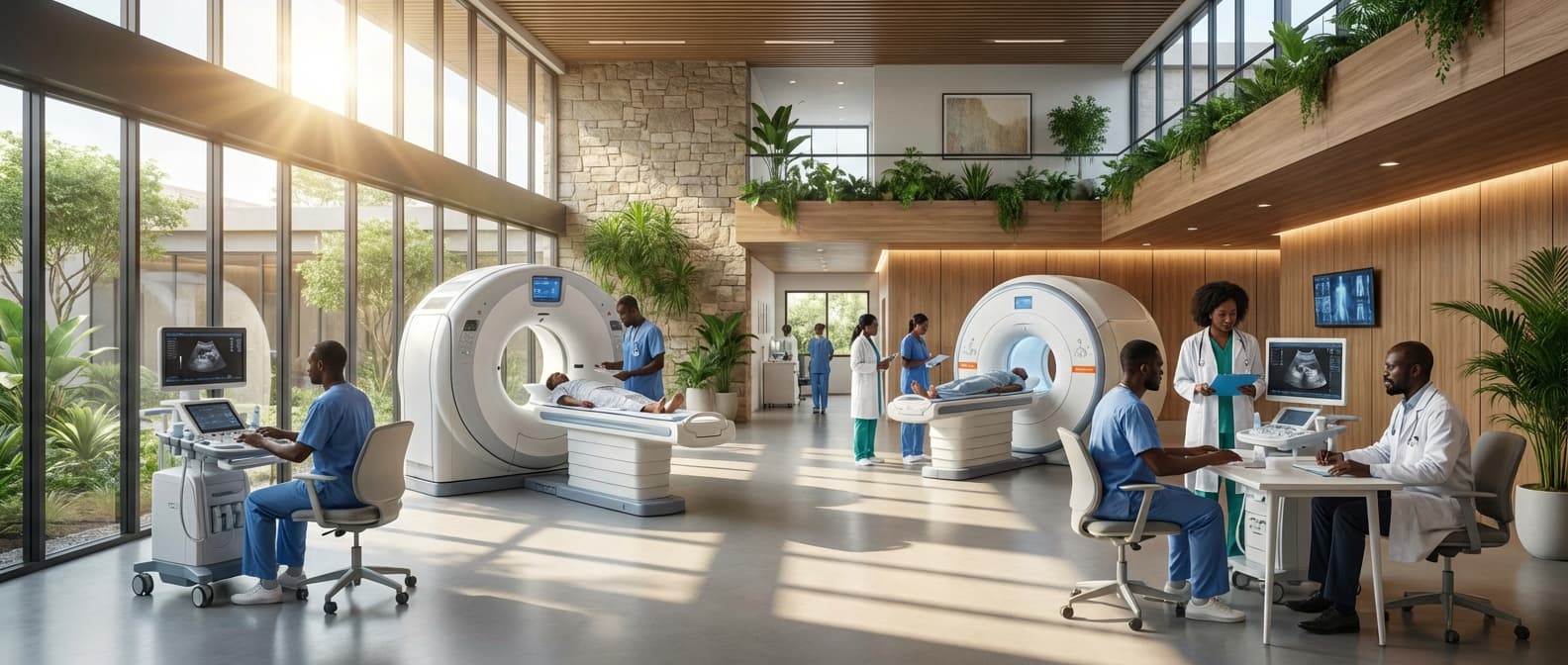
Endoscopy Solutions in Guinea-Bissau
Engineering Excellence & Technical Support
Advanced endoscopic equipment delivering superior visualization and diagnostic precision for minimally invasive procedures. High-standard technical execution following OEM protocols and local regulatory frameworks.
Advanced Endoscopic Imaging
Implementing state-of-the-art flexible endoscopy systems with high-definition resolution and advanced light sources for superior visualization of internal organs, enabling precise diagnosis and early detection of gastrointestinal and respiratory conditions in Guinea-Bissau.
Minimally Invasive Therapeutic Procedures
Facilitating the introduction and training on minimally invasive endoscopic techniques, including polypectomy, dilation, and foreign body retrieval, reducing the need for open surgery and improving patient recovery times for various therapeutic interventions.
Portable Endoscopy for Remote Areas
Deploying ruggedized and portable endoscopy units designed for challenging environments, allowing for critical diagnostic capabilities to reach underserved rural populations in Guinea-Bissau and extend access to specialized gastrointestinal care.
What Is Endoscopy Solutions In Guinea-bissau?
Endoscopy Solutions in Guinea-Bissau refers to the provision and utilization of endoscopic procedures and associated technologies for diagnostic and therapeutic purposes within the healthcare system of the nation. This encompasses the use of flexible or rigid tubes equipped with cameras and light sources (endoscopes) to visualize internal organs and cavities, as well as the instruments employed for interventions during these procedures. The service aims to offer minimally invasive methods for examining and treating a range of gastrointestinal, pulmonary, and other internal conditions, contributing to improved diagnostic accuracy and patient outcomes. Availability and accessibility of these solutions are influenced by factors such as healthcare infrastructure, trained personnel, and the availability of specialized equipment and consumables.
| Service/Procedure | Description | Indications/Use Cases | Target Population/Needs |
|---|---|---|---|
| Gastroscopy (Esophagogastroduodenoscopy - EGD) | Examination of the esophagus, stomach, and duodenum using a flexible endoscope. | Investigating upper gastrointestinal bleeding, dysphagia, heartburn, abdominal pain, suspected peptic ulcers, gastritis, and esophageal or gastric malignancies. Biopsies for Helicobacter pylori detection and histological examination. | Patients presenting with persistent upper GI symptoms, individuals with a history of GI bleeding, or those requiring surveillance for conditions like Barrett's esophagus. |
| Colonoscopy | Examination of the entire colon and rectum using a flexible endoscope. | Screening for colorectal cancer, investigation of lower gastrointestinal bleeding, changes in bowel habits, chronic diarrhea, abdominal pain, and inflammatory bowel disease (IBD) monitoring. Polypectomy for precancerous lesions. | Individuals over a certain age threshold for screening, patients with a family history of colorectal cancer, those experiencing persistent lower GI symptoms, and patients diagnosed with IBD. |
| Bronchoscopy | Direct visualization of the airways (trachea and bronchi) using a flexible endoscope. | Investigating chronic cough, hemoptysis, suspected lung cancer, interstitial lung disease, recurrent pneumonia, and obtaining samples (biopsies, bronchoalveolar lavage) for diagnosis. Therapeutic interventions include removal of foreign bodies or endobronchial lesions. | Patients with persistent respiratory symptoms, suspected or confirmed lung malignancies, or individuals requiring investigation for chronic lung infections. |
| Flexible Sigmoidoscopy | Examination of the lower portion of the colon (sigmoid colon and rectum). | Investigation of rectal bleeding, proctitis, and symptoms localized to the distal colon. Less invasive than full colonoscopy. | Patients with specific symptoms related to the distal bowel, or as a less resource-intensive option for certain investigations. |
| ERCP (Endoscopic Retrograde Cholangiopancreatography) | Uses endoscopy and fluoroscopy to visualize and treat conditions of the bile and pancreatic ducts. | Diagnosis and treatment of gallstones in the bile ducts, strictures, leaks, and tumors of the bile and pancreatic ducts. Therapeutic interventions include stone extraction, sphincterotomy, and stent placement. | Patients with suspected or confirmed obstructive jaundice, cholangitis, or pancreatic duct pathology. |
Key Components of Endoscopy Solutions
- Diagnostic Endoscopy (e.g., gastroscopy, colonoscopy, bronchoscopy) for direct visualization and tissue sampling.
- Therapeutic Endoscopy (e.g., polypectomy, hemostasis, stent placement, dilation) for interventional management of pathologies.
- Endoscopic Equipment (flexible and rigid endoscopes, light sources, video processors, imaging systems).
- Ancillary Instruments (biopsy forceps, snares, injection needles, retrieval devices, dilation balloons).
- Sterilization and Reprocessing Equipment and Protocols.
- Trained Medical Personnel (endoscopists, nurses, technicians).
- Ancillary Diagnostic and Therapeutic Technologies (e.g., ultrasound, advanced imaging integration).
Who Needs Endoscopy Solutions In Guinea-bissau?
Endoscopy solutions are crucial for diagnosing and treating a wide range of gastrointestinal and respiratory conditions. In Guinea-Bissau, where access to advanced medical diagnostics can be limited, these technologies play a vital role in improving patient outcomes. Target customers for endoscopy solutions are primarily healthcare facilities that can leverage these tools for patient care and diagnostic accuracy.
| Customer Type | Key Departments Requiring Endoscopy |
|---|---|
| Hospitals (Public) | Gastroenterology, Pulmonology, General Surgery, Internal Medicine, Emergency Department |
| Hospitals (Private) | Gastroenterology, Pulmonology, General Surgery, Internal Medicine, Gastroenterology Clinics |
| Specialty Clinics | Gastroenterology Department, Pulmonology Department |
| Diagnostic Centers | Diagnostic Imaging Departments, Specialized Endoscopy Units |
| Surgical Centers | Gastrointestinal Surgery, Thoracic Surgery |
Target Customers and Departments for Endoscopy Solutions in Guinea-Bissau
- Hospitals (both public and private)
- Specialty Clinics (e.g., gastroenterology, pulmonology)
- Diagnostic Centers
- Surgical Centers
Endoscopy Solutions Process In Guinea-bissau
This document outlines the workflow for Endoscopy Solutions in Guinea-Bissau, detailing the process from initial inquiry to the final execution of services. The process is designed to be efficient, transparent, and client-focused, ensuring that all needs are met with the highest standards of care and professionalism.
| Stage | Description | Key Activities | Responsible Parties |
|---|---|---|---|
| The process begins when a potential client (hospital, clinic, or individual) expresses interest in endoscopy services. | Initial contact (phone, email, in-person). Discussion of general needs and service offerings. Answering preliminary questions. | Client (Inquirer) Endoscopy Solutions Representative |
| A thorough understanding of the client's specific requirements is established. | Detailed discussion of required procedures, patient volume, equipment needs, facility specifics. Site visit (if necessary). Development of a tailored service proposal outlining scope, timeline, and cost. | Endoscopy Solutions Team Client Stakeholders |
| Formalizing the engagement and agreed-upon terms. | Review and negotiation of the proposal. Signing of a formal contract/agreement. Payment of any upfront deposits. | Endoscopy Solutions Legal/Contracts Team Client Legal/Procurement Team |
| Ensuring all logistical and medical aspects are ready for the procedure. | Scheduling of procedures. Procurement and delivery of necessary equipment and consumables. Briefing of the medical team (both Endoscopy Solutions and client staff). Patient preparation protocols dissemination. | Endoscopy Solutions Operations Team Client Medical Staff |
| The actual delivery of endoscopy services at the client's location. | Deployment of Endoscopy Solutions medical personnel and equipment. Performance of requested endoscopic procedures according to best practices and safety standards. Real-time data collection and documentation. | Endoscopy Solutions Medical Team Client Medical Staff |
| Ensuring continuity of care and providing essential documentation. | Immediate post-procedure patient care handover. Detailed reporting of findings and procedures to the client. Analysis of results and recommendations for further management. | Endoscopy Solutions Medical Team Client Medical Staff |
| Finalizing the financial aspects of the engagement. | Issuance of final invoices based on the contract and services rendered. Processing of payments from the client. | Endoscopy Solutions Finance Department Client Finance Department |
Endoscopy Solutions Workflow in Guinea-Bissau
- Inquiry & Initial Consultation
- Needs Assessment & Proposal Development
- Contract & Agreement
- Pre-Procedure Preparations
- On-site Execution (Procedure)
- Post-Procedure Follow-up & Reporting
- Billing & Payment
Endoscopy Solutions Cost In Guinea-bissau
Endoscopy solutions in Guinea-Bissau, like in many developing nations, are influenced by a complex interplay of factors affecting their cost. These include the availability of specialized medical equipment, the cost of importing these devices and consumables, the expertise and availability of trained medical professionals, and the overall healthcare infrastructure within the country. Prices are typically quoted in West African CFA franc (XOF). While specific, up-to-the-minute pricing data is scarce due to the market's nature, general ranges can be estimated based on common procedures and the factors below.
| Procedure Type (Estimated) | Estimated Cost Range (XOF) |
|---|---|
| Gastroscopy (Upper Endoscopy) | 75,000 - 150,000 |
| Colonoscopy (Lower Endoscopy) | 100,000 - 200,000 |
| Gastroscopy with Biopsy | 90,000 - 180,000 |
| Colonoscopy with Biopsy/Polypectomy | 120,000 - 250,000 |
| Specialized Procedures (e.g., ERCP - highly variable) | 200,000 - 500,000+ |
Key Pricing Factors for Endoscopy Solutions in Guinea-Bissau:
- {"title":"Type of Endoscopic Procedure","description":"The complexity and duration of the procedure are primary drivers of cost. A simple gastroscopy will be significantly less expensive than a complex colonoscopy with biopsy or polyp removal, or more specialized procedures like ERCP (Endoscopic Retrograde Cholangiopancreatography)."}
- {"title":"Equipment and Consumables","description":"The cost of the endoscope itself, along with disposables (biopsy forceps, snares, cleaning brushes, cleaning solutions), constitutes a substantial part of the overall expense. Importing these items into Guinea-Bissau incurs shipping, customs duties, and potential import taxes, all of which add to the final price."}
- {"title":"Medical Professional Fees","description":"The fees charged by the gastroenterologist or surgeon performing the procedure, as well as the costs associated with anesthetists and nursing staff, contribute to the total cost. The availability of highly trained specialists can also influence their rates."}
- {"title":"Facility Charges","description":"The cost of using the hospital or clinic's operating room or procedure suite, including equipment sterilization, post-procedure recovery, and overhead, is factored into the price."}
- {"title":"Geographic Location and Infrastructure","description":"Endoscopy services may be more readily available and potentially more standardized in larger urban centers like Bissau, compared to more remote regions where access might be limited and costs could reflect greater logistical challenges."}
- {"title":"Insurance and Payer Mix","description":"While not as prevalent as in developed countries, the presence of private health insurance or government-sponsored programs can influence pricing structures and patient out-of-pocket expenses."}
- {"title":"Technology and Brand","description":"The sophistication of the endoscopic equipment (e.g., high-definition imaging, advanced therapeutic capabilities) and the brand of the equipment can lead to price variations."}
Affordable Endoscopy Solutions Options
Navigating the costs associated with medical procedures like endoscopy can be a significant concern for patients. Fortunately, several affordable solutions and cost-saving strategies are available. Understanding these options can empower individuals to make informed decisions and reduce their out-of-pocket expenses. This includes exploring value bundles offered by healthcare providers and implementing smart financial planning.
| Cost-Saving Strategy | Description | Potential Savings |
|---|---|---|
| Value Bundles | Pre-packaged services including procedure, anesthesia, and follow-up. | Often a lower overall cost than à la carte pricing. |
| Negotiate Cash Price | Inquire about discounted rates for self-pay patients. | Can lead to significant reductions, especially without insurance. |
| Compare Provider Costs | Research and get quotes from multiple facilities and physicians. | Identify facilities with more competitive pricing. |
| Utilize HSA/FSA Funds | Use pre-tax dollars for medical expenses. | Reduces taxable income, effectively lowering the out-of-pocket cost. |
| Payment Plans | Spread the procedure cost over time. | Improves affordability and cash flow. |
| Insurance Optimization | Use in-network providers and understand your benefits. | Minimizes deductibles, copays, and coinsurance. |
Affordable Endoscopy Solutions Options
- Value Bundles: These packages typically combine the cost of the endoscopy procedure itself with related services, such as pre-operative consultations, anesthesia, and post-procedure follow-up care. Bundling can often result in a lower overall price compared to paying for each service individually.
- Negotiate Pricing: Don't hesitate to inquire about the cash price for the procedure, especially if you are uninsured or plan to pay out-of-pocket. Hospitals and clinics may offer discounts for self-pay patients.
- Compare Provider Costs: Different facilities and physicians will have varying pricing for the same procedure. Research and compare costs across multiple providers in your area. Websites and resources that offer medical procedure cost comparisons can be invaluable.
- Health Savings Accounts (HSAs) & Flexible Spending Accounts (FSAs): If available through your employer, contributing to an HSA or FSA can allow you to set aside pre-tax dollars specifically for medical expenses, including endoscopy. This directly reduces your taxable income.
- Payment Plans: Many healthcare providers offer flexible payment plans to help spread the cost of an endoscopy over time, making it more manageable for your budget.
- Insurance Navigation: Understand your insurance plan's coverage for endoscopy. Verify in-network providers to minimize out-of-network charges. Consult with your insurance provider to clarify deductibles, copayments, and coinsurance before the procedure.
- Generic Medications: If medications are prescribed as part of your endoscopy preparation or recovery, inquire about the availability of generic alternatives, which are typically less expensive.
- Screening vs. Diagnostic Endoscopy: Be aware of the distinction. Screening endoscopies (e.g., for colorectal cancer prevention) may be covered differently by insurance than diagnostic endoscopies performed to investigate specific symptoms.
Verified Providers In Guinea-bissau
Navigating the healthcare landscape in Guinea-Bissau requires trust and assurance. For those seeking reliable and accredited medical services, identifying 'Verified Providers' is paramount. This often involves scrutinizing credentials, accreditations, and affiliations. In this regard, Franance Health stands out as a distinguished entity, representing a benchmark for excellence and patient safety in Guinea-Bissau. Their commitment to rigorous standards and transparent operations makes them a leading choice for individuals and organizations prioritizing quality healthcare.
| Credential/Aspect | Franance Health Standard | Benefit to Patients |
|---|---|---|
| Medical Licensing | All practitioners hold valid and current licenses from relevant national and international medical boards. | Ensures all medical professionals are legally qualified and competent to practice. |
| Specialty Certifications | Doctors and specialists possess board certifications in their respective fields. | Guarantees expertise and in-depth knowledge in specific medical areas. |
| Facility Accreditation | Hospitals and clinics undergo regular inspections and accreditation by recognized healthcare bodies (e.g., Ministry of Health, international organizations). | Confirms adherence to high standards of infrastructure, equipment, hygiene, and patient care services. |
| Quality Management Systems | Implementation of robust quality management systems for continuous improvement in all aspects of service delivery. | Promotes a culture of excellence, aiming to consistently provide the best possible patient outcomes. |
| Insurance and Partnerships | Verified partnerships with reputable insurance providers and international health organizations. | Facilitates smoother access to care, potential cost-sharing, and international patient support. |
Why Franance Health Credentials Matter
- Accreditation and Certification: Franance Health adheres to internationally recognized accreditation standards, ensuring their facilities and personnel meet stringent quality and safety protocols.
- Qualified Medical Professionals: Their network comprises highly trained and experienced doctors, nurses, and specialists, each possessing relevant certifications and ongoing professional development.
- Ethical Practices and Transparency: Franance Health is committed to ethical medical practices, with clear communication, patient-centered care, and transparent pricing structures.
- Technological Advancement: They invest in modern medical equipment and technology, enabling accurate diagnostics and effective treatment options.
- Patient Safety Focus: Rigorous infection control measures, patient safety protocols, and continuous quality improvement initiatives are central to their operations.
Scope Of Work For Endoscopy Solutions
This document outlines the Scope of Work (SOW) for the provision and implementation of Endoscopy Solutions. It details the technical deliverables and standard specifications required to ensure successful integration, functionality, and performance of the endoscopic equipment and associated software. The objective is to provide a comprehensive understanding of the project's requirements and expected outcomes.
| Specification Category | Key Requirements | Standard/Compliance |
|---|---|---|
| Endoscope Quality | High-definition imaging, excellent optical clarity, durability, ergonomic design, variety of tip articulation ranges, biocompatible materials. | ISO 13485, FDA 510(k), CE Marking |
| Imaging System Performance | High resolution (e.g., 1080p or 4K), accurate color reproduction, adjustable brightness and contrast, real-time imaging capabilities, minimal latency. | DICOM compliance (for PACS integration), SMPTE standards |
| Data Management Software | Secure storage and retrieval of images and videos, patient data integration, customizable reporting templates, audit trails, compliance with HIPAA/GDPR. | DICOM, HL7, HIPAA, GDPR |
| Sterilization Compatibility | Compatibility with standard hospital sterilization protocols (e.g., autoclaving, ethylene oxide, high-level disinfection). | Manufacturer's recommendations, relevant ISO standards for medical device sterilization |
| Integration Capabilities | Seamless integration with existing EMR/EHR, PACS, and RIS systems via standard protocols. | HL7, DICOM, FHIR (Fire) standards |
| User Interface (UI) and User Experience (UX) | Intuitive and user-friendly interface, easy navigation, customizable settings, accessibility features. | Usability engineering principles, human factors standards |
| Safety and Electrical Standards | Compliance with electrical safety standards, protection against electrical hazards. | IEC 60601 series |
| Performance and Reliability | Consistent performance under prolonged use, minimal downtime, robust build quality, defined Mean Time Between Failures (MTBF). | Manufacturer specifications, industry benchmarks |
Technical Deliverables
- Endoscope Devices (e.g., flexible, rigid, video, fiber optic)
- Imaging and Recording Systems (e.g., processors, monitors, recorders)
- Illumination Systems (e.g., light sources, cables)
- Insufflation and Suction Equipment
- Ancillary Endoscopic Instruments (e.g., biopsy forceps, snares, graspers)
- Software for Image Management, Archiving, and Reporting (PACS/RIS integration)
- Integration Services for existing hospital IT infrastructure
- Training Materials and Sessions for clinical and technical staff
- User Manuals and Technical Documentation
- Maintenance and Support Plan (post-implementation)
Service Level Agreement For Endoscopy Solutions
This Service Level Agreement (SLA) outlines the response times and uptime guarantees for the Endoscopy Solutions provided by [Your Company Name]. It defines the expected performance levels and the remedies available in case of service degradation.
| Service Component | Uptime Guarantee (Monthly) | Response Time (During Business Hours) | Response Time (Outside Business Hours - if applicable) | Target Resolution Time (Critical Incidents) | Target Resolution Time (Major Incidents) | Target Resolution Time (Minor Incidents) |
|---|---|---|---|---|---|---|
| Endoscopy Solutions Availability | 99.9% | N/A | N/A | Within 4 hours | Within 8 business hours | Within 2 business days |
| Support Ticket Acknowledgment | N/A | Within 2 business hours | Within 4 business hours (for critical issues) | N/A | N/A | N/A |
Definitions
- Endoscopy Solutions: Refers to the [Specific Name of Your Endoscopy Solution, e.g., EndoSight Cloud Platform, EndoSurgical Suite] including all associated software, hardware, and network infrastructure managed by [Your Company Name].
- Uptime: The percentage of time during a calendar month that the Endoscopy Solutions are available and functioning as intended.
- Downtime: The cumulative period during a calendar month when the Endoscopy Solutions are unavailable or not functioning as intended due to reasons within [Your Company Name]'s control.
- Scheduled Downtime: Planned periods of unavailability for maintenance, upgrades, or other routine activities, communicated to the Customer at least [Number] days in advance.
- Emergency Downtime: Unplanned periods of unavailability due to critical issues or unforeseen events.
- Response Time: The maximum time within which [Your Company Name]'s support team will acknowledge and begin to address a reported incident.
- Resolution Time: The time within which [Your Company Name] aims to resolve a reported incident, although actual resolution may vary based on incident complexity.
- Business Hours: [Specify your business hours, e.g., Monday to Friday, 9:00 AM to 5:00 PM Eastern Time], excluding national holidays.
- Critical Incident: An incident that renders the Endoscopy Solutions completely inoperable or significantly impacts core functionalities, preventing the Customer from performing essential procedures.
- Major Incident: An incident that severely degrades the performance of the Endoscopy Solutions, impacting a significant number of users or core functionalities, but not rendering them completely inoperable.
- Minor Incident: An incident that affects a limited number of users or non-essential functionalities, with minimal impact on overall operations.
Frequently Asked Questions

Ready when you are
Let's scope your Endoscopy Solutions in Guinea-Bissau project in Guinea-Bissau.

Scaling healthcare logistics and technical systems across the entire continent.