
Diagnostic Imaging in Guinea-Bissau
Engineering Excellence & Technical Support
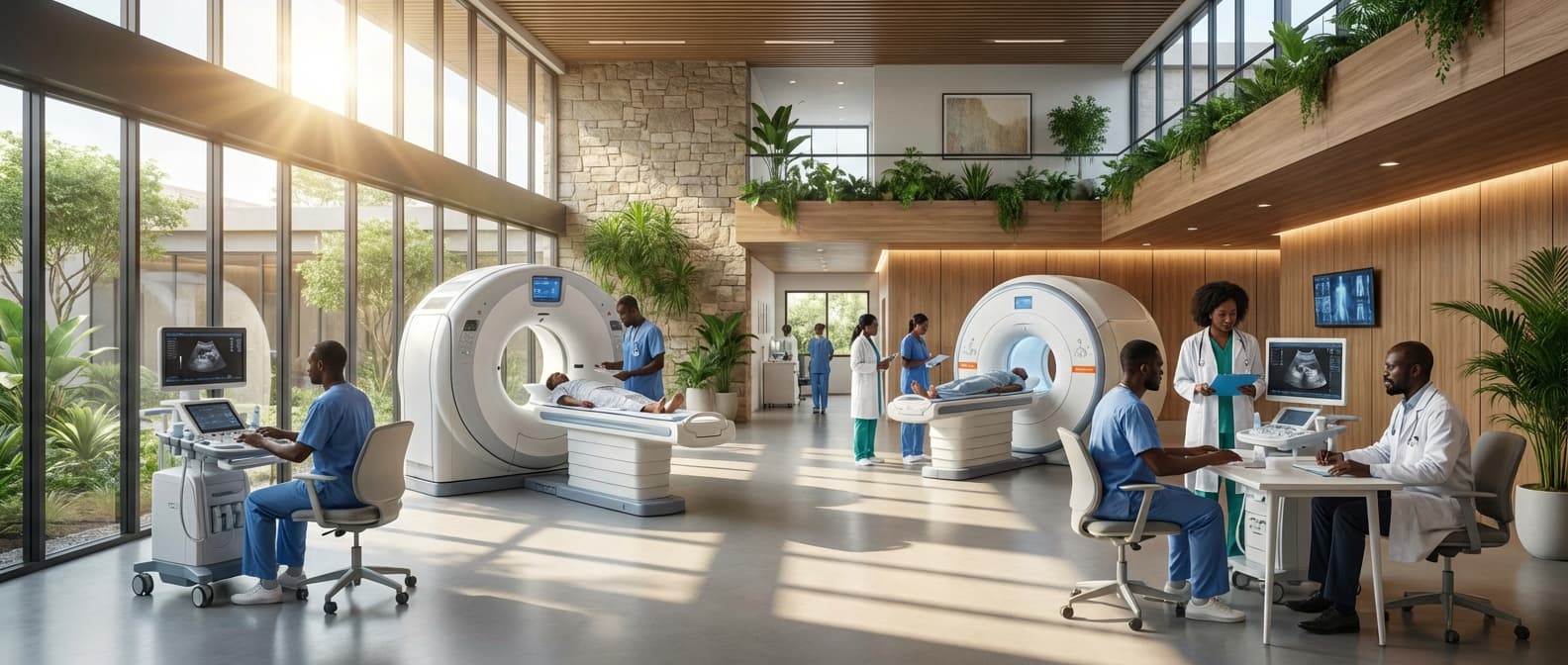
High-resolution imaging systems including CT scanners, MRI, X-ray, and ultrasound technology for accurate clinical diagnosis. High-standard technical execution following OEM protocols and local regulatory frameworks.
Introduction of Digital X-ray & Ultrasound
Deployment of state-of-the-art digital X-ray and ultrasound machines, replacing outdated analog technology. This upgrade significantly improves image quality, reduces radiation exposure for patients and staff, and enables faster diagnostic turnaround times. Remote access to images for expert consultation is also facilitated.
PACS Implementation for Image Archiving & Sharing
Implementation of a Picture Archiving and Communication System (PACS) to digitally store, manage, and retrieve medical images. This eliminates the need for physical films, enhances workflow efficiency, and allows for secure sharing of images between different healthcare facilities within Guinea-Bissau and potentially with international partners for complex cases.
AI-Assisted Diagnostic Support Tools
Integration of Artificial Intelligence (AI) driven software to assist radiologists in detecting subtle abnormalities and prioritizing urgent cases. These tools analyze imaging data for specific conditions (e.g., tuberculosis, pneumonia), acting as a second reader to improve diagnostic accuracy and address the shortage of specialized radiologists.
What Is Diagnostic Imaging In Guinea-bissau?
Diagnostic imaging in Guinea-Bissau refers to the utilization of medical technologies to visualize the internal structures of the human body for the purpose of medical diagnosis, monitoring, and guidance of medical interventions. This service is critical in a healthcare system with limited resources and a high burden of infectious and non-communicable diseases, where access to advanced diagnostic tools can be a significant determinant of patient outcomes. The scope of diagnostic imaging encompasses various modalities, each offering distinct capabilities in depicting anatomical and pathological information. These modalities are employed by trained radiologists, radiographers, and other healthcare professionals to interpret the generated images and provide actionable diagnostic reports to referring physicians. The implementation and accessibility of diagnostic imaging services in Guinea-Bissau are influenced by infrastructural limitations, availability of skilled personnel, and the procurement and maintenance of equipment.
| Who Needs Diagnostic Imaging? | Typical Use Cases | |||||||
|---|---|---|---|---|---|---|---|---|
| Patients presenting with symptoms suggestive of internal pathology (e.g., pain, swelling, fever, neurological deficits). | Diagnosis and staging of infectious diseases such as tuberculosis (chest X-ray), malaria complications (ultrasound of spleen/liver), and parasitic infections. | Trauma patients requiring assessment of fractures, internal bleeding, or organ damage (X-ray, ultrasound, potentially CT if available). | Patients with suspected or confirmed malignancies for initial diagnosis, staging, and treatment monitoring (X-ray, ultrasound, potentially CT/MRI if available). | Pregnant women requiring prenatal screening for fetal anomalies or monitoring of pregnancy complications (ultrasound). | Patients with gastrointestinal complaints to assess for obstruction, perforation, or other abnormalities (X-ray, ultrasound). | Patients with urinary tract issues to evaluate for stones, infections, or structural abnormalities (ultrasound). | Pre-operative assessment to plan surgical interventions and identify anatomical variations. | Post-operative follow-up to assess for complications or healing progress. |
Key Aspects of Diagnostic Imaging in Guinea-Bissau
- Encompasses various medical imaging modalities.
- Aims to visualize internal body structures for diagnosis and monitoring.
- Crucial in resource-limited settings with significant disease burden.
- Requires trained personnel for operation and interpretation.
- Accessibility is impacted by infrastructure and equipment availability.
Who Needs Diagnostic Imaging In Guinea-bissau?
Diagnostic imaging plays a crucial role in healthcare, enabling the diagnosis, monitoring, and treatment of a wide range of conditions. In Guinea-Bissau, where healthcare resources can be limited, understanding who needs diagnostic imaging and within which departments it is most critical is essential for effective resource allocation and improved patient outcomes. The demand for these services spans various patient demographics and medical specialties, underscoring their widespread importance. Target customers range from pregnant women requiring prenatal care to individuals with suspected fractures or internal injuries. Key departments benefiting from and utilizing diagnostic imaging services include general surgery, internal medicine, pediatrics, and emergency care, among others. The strategic implementation and accessibility of diagnostic imaging services are vital for strengthening the overall healthcare infrastructure in Guinea-Bissau.
| Department | Key Diagnostic Imaging Needs |
|---|---|
| Emergency Department | X-rays (fractures, foreign bodies), Ultrasound (internal bleeding, fluid collections), CT scans (head trauma, complex fractures) |
| Internal Medicine | X-rays (chest for pneumonia, tuberculosis), Ultrasound (abdominal organs), CT scans (complex organ assessment) |
| General Surgery | X-rays (pre-operative assessment, post-operative complications), Ultrasound (gallbladder, appendicitis, fluid collections), CT scans (abdominal trauma, abscesses) |
| Pediatrics | X-rays (bone development, respiratory infections), Ultrasound (abdominal organs, urinary tract), CT scans (complex pediatric emergencies) |
| Obstetrics & Gynecology | Ultrasound (fetal viability, growth, position, placental abnormalities), X-rays (pelvic assessment) |
| Orthopedics | X-rays (fractures, dislocations, arthritis), CT scans (complex fractures, surgical planning) |
| Pulmonology | X-rays (chest for lung conditions), CT scans (detailed lung imaging) |
Target Customers for Diagnostic Imaging in Guinea-Bissau
- Pregnant women (for prenatal monitoring)
- Infants and children (for growth, development, and illness assessment)
- Adults with acute injuries (fractures, trauma)
- Adults with chronic illnesses (e.g., cardiovascular disease, respiratory conditions)
- Individuals with suspected infections (e.g., tuberculosis, pneumonia)
- Patients undergoing pre-operative assessment
- Patients requiring post-operative monitoring
- Individuals with neurological symptoms
- Patients with gastrointestinal complaints
- Patients with suspected tumors or masses
Diagnostic Imaging Process In Guinea-bissau
The diagnostic imaging process in Guinea-Bissau, like many resource-limited settings, faces challenges but generally follows a structured workflow aimed at providing crucial diagnostic information to clinicians. The process begins with a clinical inquiry, where a healthcare professional identifies the need for imaging based on patient symptoms and examination findings. This leads to a referral, often a paper-based request, specifying the type of imaging required and the clinical question to be answered. The patient then proceeds to the imaging department, where they are registered and prepared for the examination. Technologists conduct the imaging procedure using available equipment. Following acquisition, images are interpreted by a radiologist (if available) or a qualified clinician, and a report is generated. This report is then transmitted back to the referring physician, who uses it to guide patient management. Challenges in this workflow include limited availability of advanced imaging modalities, intermittent power supply, shortage of trained personnel, and difficulties in equipment maintenance and supply chain management.
| Stage | Description | Key Actors | Potential Challenges |
|---|---|---|---|
| Clinical Inquiry | Healthcare provider identifies the need for imaging based on patient's signs and symptoms. | Doctor, Nurse Practitioner, Clinical Officer | Lack of specialized knowledge, limited diagnostic tools for initial assessment |
| Referral/Request | Formal request for a specific imaging modality and clinical question. | Referring Physician/Clinician | Paper-based system, potential for lost requests, lack of specific imaging expertise to guide request |
| Patient Registration | Patient's details are recorded in the imaging department's system. | Receptionist, Administrative Staff | Manual record-keeping, potential for data entry errors, long waiting times |
| Patient Preparation | Involves explaining the procedure, positioning the patient, and any necessary preparations (e.g., contrast media administration, though less common). | Radiology Technologist | Limited patient education materials, potential for patient anxiety |
| Image Acquisition | Performing the imaging procedure using available equipment (e.g., X-ray, ultrasound). | Radiology Technologist | Equipment malfunction, power outages, limited availability of specific modalities, shortage of consumables (e.g., film, ultrasound gel) |
| Image Interpretation | Analysis of the acquired images to identify abnormalities and provide a diagnosis. | Radiologist, Experienced Clinician | Severe shortage of radiologists, reliance on general practitioners for interpretation, delayed interpretation |
| Report Generation | Formal written report detailing findings and recommendations. | Radiologist, Clinician | Handwritten reports, potential for illegibility, delays in report completion |
| Report Transmission | Delivery of the report to the referring physician. | Messenger, Courier, sometimes digital transfer if systems permit. | Physical delivery can be slow and prone to loss, limited digital infrastructure |
| Clinical Decision Making | The referring physician uses the imaging report to guide further patient management. | Referring Physician/Clinician | Misinterpretation of reports, lack of follow-up options based on findings |
Key Stages in the Diagnostic Imaging Workflow in Guinea-Bissau
- Clinical Inquiry and Assessment
- Referral and Request Generation
- Patient Registration and Preparation
- Image Acquisition
- Image Interpretation
- Report Generation and Transmission
- Clinical Decision Making and Patient Management
Diagnostic Imaging Cost In Guinea-bissau
Diagnostic imaging plays a crucial role in healthcare, but its accessibility in Guinea-Bissau is significantly influenced by cost. The pricing of these services is subject to a complex interplay of factors, including the type of imaging modality, the specific facility, the availability of equipment and trained personnel, and the prevailing economic conditions. As a low-income country, Guinea-Bissau faces challenges in maintaining advanced medical infrastructure, which directly impacts the cost of diagnostic imaging. These costs are typically expressed in the local currency, the West African CFA franc (XOF).
| Imaging Modality | Estimated Cost Range (XOF) | Notes |
|---|---|---|
| X-ray (Standard) | 5,000 - 15,000 | Price can vary for specific types (e.g., chest, bone). |
| Ultrasound (Abdominal/Pelvic) | 7,500 - 20,000 | Obstetric ultrasounds might be slightly higher. |
| CT Scan (e.g., Head, Abdomen) | 30,000 - 75,000+ | Limited availability; often requires travel to larger centers or private clinics. Costs are significantly higher due to complex equipment. |
| MRI (Magnetic Resonance Imaging) | N/A - 100,000+ | Extremely limited or non-existent in most public facilities. If available in private settings, costs would be very high and likely comparable to international rates. |
| Mammography | 10,000 - 25,000 | Availability is a significant factor. |
Key Factors Influencing Diagnostic Imaging Costs in Guinea-Bissau
- Type of Imaging Modality (e.g., X-ray, Ultrasound, CT Scan, MRI)
- Facility Type (Public vs. Private Healthcare Providers)
- Equipment Age and Maintenance Status
- Availability of Specialized Radiologists and Technicians
- Cost of Consumables and Contrast Agents
- Geographic Location within Guinea-Bissau
- Government Subsidies and Healthcare Policies
- Demand and Supply Dynamics
- Import Costs for Equipment and Supplies
Affordable Diagnostic Imaging Options
Diagnostic imaging plays a crucial role in healthcare, but the costs can be a significant concern for patients. Fortunately, there are several ways to make these essential services more affordable. Understanding value bundles and implementing cost-saving strategies can significantly reduce out-of-pocket expenses, ensuring access to necessary medical care without undue financial burden.
| Strategy | Description | How it Saves Money |
|---|---|---|
| Compare Prices | Shop around at different imaging centers and hospitals. Prices for the same procedure can vary significantly. | Directly lowers the cost by choosing a more affordable provider. |
| Ask About Cash Discounts | If you are paying out-of-pocket (uninsured or high deductible), inquire about discounts for paying in full upfront. Many facilities offer these. | Reduces the overall bill by a percentage, sometimes substantial. |
| Inquire About Self-Pay Rates | Similar to cash discounts, some facilities have specific 'self-pay' rates that are lower than their billed insurance rates. | Provides a lower price point for individuals without insurance or who prefer to pay directly. |
| Understand Your Insurance Coverage | Know your deductible, co-pays, and co-insurance. Understand which imaging centers are in-network, as out-of-network costs are much higher. | Avoids surprise bills and ensures you're utilizing the most cost-effective in-network providers. |
| Seek Physician Referrals to Cost-Effective Facilities | Ask your doctor if they can recommend imaging centers that are known for quality and affordability. Some physicians have established relationships with specific centers. | Leverages a physician's knowledge to find a balance between cost and quality. |
| Consider 'Bare Bones' Imaging | If appropriate for your condition, discuss with your doctor if a simpler, less expensive imaging modality can provide the necessary information (e.g., X-ray instead of CT scan where feasible). | Chooses a less expensive technology when it meets diagnostic needs. |
| Negotiate Bills | If you receive a bill that seems too high, don't hesitate to contact the billing department to see if a lower rate or payment plan can be arranged, especially if you've experienced financial hardship. | Potentially reduces the final amount owed or makes it more manageable. |
| Utilize Health Savings Accounts (HSAs) or Flexible Spending Accounts (FSAs) | These pre-tax accounts can be used to pay for eligible medical expenses, including diagnostic imaging, reducing your taxable income. | Saves money by reducing your overall tax burden. |
Affordable Diagnostic Imaging: Value Bundles and Cost-Saving Strategies
- {"title":"What are Value Bundles in Diagnostic Imaging?","description":"Value bundles are packages of related diagnostic imaging services offered at a predetermined, often discounted, price. Instead of paying for each imaging test individually, you pay a single fee for a comprehensive set of procedures that might be needed for a specific condition or part of a treatment plan. This predictability helps in budgeting and can lead to overall savings."}
- {"title":"Benefits of Value Bundles","description":"Value bundles often include pre- and post-imaging consultations, radiologist reports, and sometimes even follow-up imaging. This integrated approach can improve care coordination, reduce the likelihood of unexpected costs, and streamline the patient experience."}
- {"title":"Cost-Saving Strategies for Diagnostic Imaging","description":"Beyond value bundles, several strategies can help lower the cost of diagnostic imaging:"}
Verified Providers In Guinea-bissau
In Guinea-Bissau, ensuring access to reliable and trustworthy healthcare providers is paramount. Franance Health stands out as a leading organization dedicated to verifying and promoting high-quality medical services. Their rigorous credentialing process guarantees that healthcare professionals and facilities meet stringent standards, offering patients peace of mind and confidence in their medical care. Choosing a provider accredited by Franance Health signifies a commitment to safety, expertise, and ethical practice.
| Credential Type | Verification Focus | Benefits for Patients |
|---|---|---|
| Individual Practitioner Credentials | Medical Licenses, Specializations, Continuing Education | Ensures competence and up-to-date knowledge |
| Facility Accreditation | Infrastructure, Equipment, Hygiene Protocols, Staffing Ratios | Guarantees a safe and well-equipped environment for treatment |
| Specialty Certifications | Advanced training and expertise in specific medical fields | Provides access to specialized care with proven proficiency |
Why Franance Health Credentials Matter
- Uncompromising Quality Standards: Franance Health meticulously vets providers, ensuring they adhere to international best practices in patient care, safety, and hygiene.
- Verified Expertise: Their credentialing process confirms the qualifications, experience, and licensing of medical professionals, assuring patients they are in capable hands.
- Enhanced Patient Safety: By focusing on infrastructure, equipment, and operational protocols, Franance Health accreditation minimizes risks and promotes a secure healthcare environment.
- Ethical Practice Assurance: Franance Health promotes ethical conduct and transparency, giving patients confidence in the integrity of the services received.
- Access to Trusted Networks: Their verified providers form a network of reliable healthcare options, simplifying the search for quality medical assistance in Guinea-Bissau.
Scope Of Work For Diagnostic Imaging
This Scope of Work (SOW) outlines the requirements for providing comprehensive diagnostic imaging services. It details the technical deliverables, standard specifications, and performance expectations necessary to ensure high-quality patient care and efficient operational workflows. The scope encompasses the provision of imaging modalities, associated technologies, and ongoing support to meet the diagnostic needs of the healthcare facility.
| Category | Description | Standard Specification / Requirement | Deliverable Type |
|---|---|---|---|
| Imaging Equipment | Provision and installation of state-of-the-art diagnostic imaging equipment for each specified modality. | Equipment must meet current ACR (American College of Radiology) and regulatory body standards (e.g., FDA, local health authorities). Minimum resolution, detector size, and patient throughput specifications will be detailed for each modality. | Installed Equipment, User Manuals, Calibration Certificates |
| Picture Archiving and Communication System (PACS) | Implementation and integration of a robust PACS for image storage, retrieval, and distribution. | Must support DICOM (Digital Imaging and Communications in Medicine) standards. Secure data storage with minimum retention periods as per regulatory requirements. High availability and disaster recovery plan. | PACS Software, Server Infrastructure, Integration Documentation |
| Radiology Information System (RIS) | Deployment and integration of a RIS for workflow management, scheduling, reporting, and billing. | Must integrate seamlessly with PACS and EMR/EHR systems. HL7 (Health Level Seven) compliance for data exchange. | RIS Software, User Training Materials, Integration Specifications |
| Workstations and Viewing Stations | Supply and setup of high-resolution diagnostic and review workstations for radiologists and referring physicians. | Monitors must meet DICOM Part 14 grayscale display function standards. Adequate processing power and graphics capabilities for efficient image manipulation. | Diagnostic Workstations, Review Stations, Monitor Calibration Reports |
| Network Infrastructure | Ensure adequate network bandwidth and reliability for image transfer and system access. | Secure, high-speed network connectivity (wired and wireless) capable of handling large image files. Compliance with healthcare network security standards. | Network Assessment Report, Configuration Documentation |
| Maintenance and Support | Comprehensive preventive maintenance, corrective maintenance, and technical support for all imaging equipment and systems. | 24/7 technical support availability for critical issues. Defined response and resolution times. Regular performance monitoring and reporting. | Service Level Agreements (SLAs), Maintenance Schedules, Support Logs |
| Training | Provide comprehensive training for clinical staff (radiologists, technologists) and IT personnel on the operation and maintenance of all systems. | Training programs tailored to user roles. Documentation of training completion for all personnel. | Training Manuals, Training Attendance Records, Competency Assessments |
| Quality Assurance | Establish and implement a robust quality assurance program for all imaging procedures and equipment. | Adherence to ACR practice guidelines and national quality standards. Regular audits and performance evaluations. | QA Protocols, Audit Reports, Performance Metrics |
| Data Migration | Migration of existing imaging data from legacy systems to the new PACS. | Secure and accurate migration process with minimal downtime. Verification of data integrity post-migration. | Data Migration Plan, Migration Completion Report, Data Validation Reports |
Key Imaging Modalities Included
- X-ray (General Radiography, Fluoroscopy, Mammography)
- Computed Tomography (CT)
- Magnetic Resonance Imaging (MRI)
- Ultrasound (Diagnostic, Doppler, Echocardiography)
- Nuclear Medicine (PET/CT, SPECT/CT)
- Interventional Radiology
Service Level Agreement For Diagnostic Imaging
This Service Level Agreement (SLA) outlines the performance standards and guarantees for diagnostic imaging services provided by [Provider Name] to [Client Name]. It covers response times for urgent and routine requests, as well as uptime guarantees for the Picture Archiving and Communication System (PACS) and associated diagnostic imaging hardware.
| Service Component | Metric | Urgent Request | Routine Request | Uptime Guarantee | Definition |
|---|---|---|---|---|---|
| Diagnostic Imaging Procedures | Initiation Time (from request received) | Within 2 hours | Within 24 hours | N/A | Time from when a valid imaging request is received by the provider to the scheduled or actual start of the imaging procedure. |
| Radiologist Preliminary Report (for urgent cases) | Turnaround Time (from image acquisition completion) | Within 1 hour | N/A | N/A | Time from the completion of image acquisition for an urgent case to the availability of a preliminary report from a radiologist. |
| Radiologist Final Report (for routine cases) | Turnaround Time (from image acquisition completion) | N/A | Within 48 hours | N/A | Time from the completion of image acquisition for a routine case to the availability of the final, signed report from a radiologist. |
| PACS System Availability | Uptime | N/A | N/A | 99.8% | Percentage of time the PACS system is accessible and operational during scheduled service hours (e.g., 24/7/365). |
| Imaging Modality Availability (e.g., MRI, CT, X-ray) | Uptime | N/A | N/A | 99.5% | Percentage of time individual imaging modalities are functional and available for use during scheduled operational hours. |
Key Service Level Objectives (SLOs)
- Response Times: Timely commencement of diagnostic imaging procedures to ensure patient care is not delayed.
- Uptime Guarantees: High availability of imaging systems to support continuous clinical operations.
- Reporting: Regular reporting on performance against SLOs.
- Escalation: Defined procedures for addressing and resolving service failures.
Frequently Asked Questions

Ready when you are
Let's scope your Diagnostic Imaging in Guinea-Bissau project in Guinea-Bissau.

Scaling healthcare logistics and technical systems across the entire continent.