
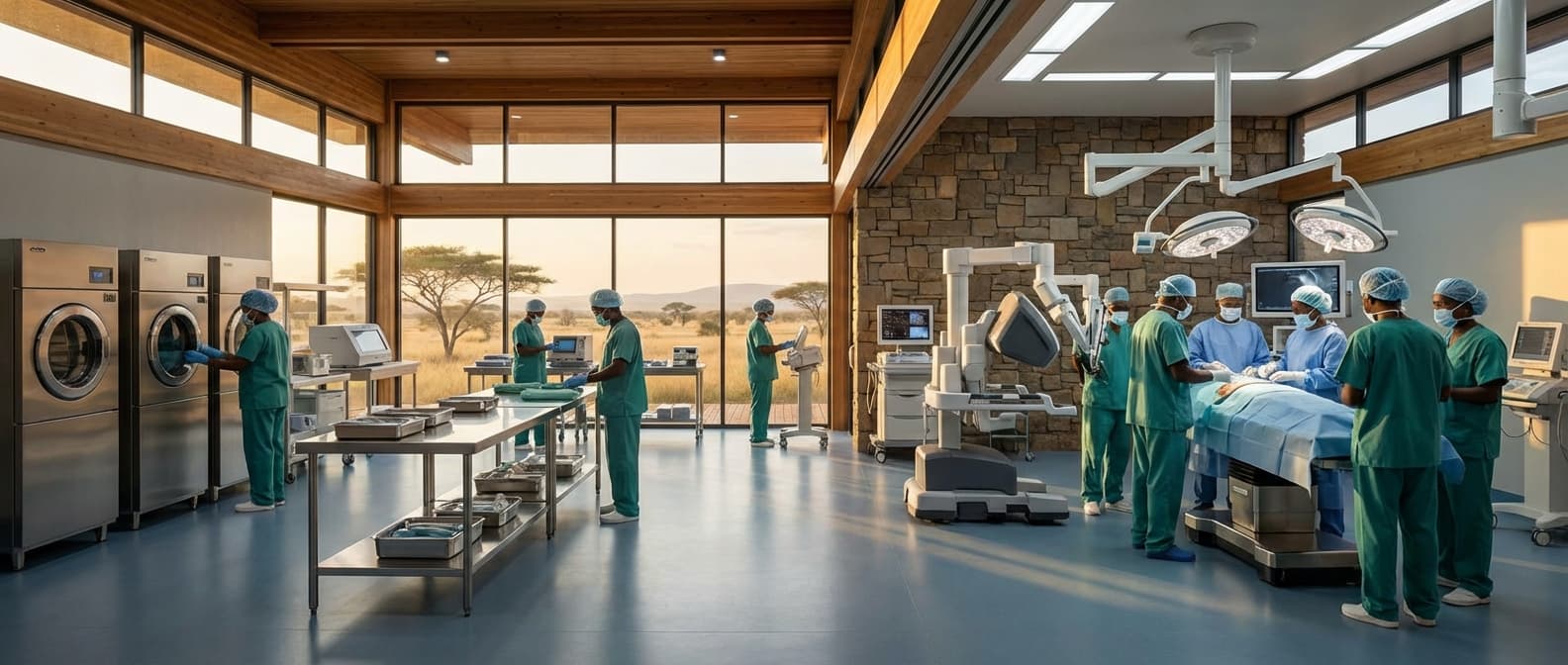
Medical Gas System Design & Installation in Guinea-Bissau
Engineering Excellence & Technical Support
Medical gas pipeline systems: O2, N2O, air, vacuum High-standard technical execution following OEM protocols and local regulatory frameworks.
Critical Care Infrastructure Resilience
Ensured the seamless integration of high-pressure medical gas manifold systems for oxygen and nitrous oxide, featuring redundant supply lines and automatic changeover valves. This design guarantees uninterrupted critical gas delivery during emergencies, bolstering patient care capabilities in facilities across Guinea-Bissau.
Advanced Medical Gas Piping Standards
Implemented medical gas piping infrastructure adhering to stringent international standards (e.g., ISO 7396-1), utilizing high-purity copper tubing and specialized brazing techniques. This meticulous approach minimizes leakages and contamination risks, ensuring the delivery of safe and reliable medical gases to patient bedside outlets.
Zone-Specific Gas Delivery Systems
Designed and installed specialized zone-specific medical gas outlets (e.g., MRI suite oxygen, surgical theater anesthetic gas scavenging) with integrated flow control and alarm systems. This ensures precise gas delivery, enhanced patient safety, and compliance with the unique requirements of different clinical environments in Guinea-Bissau.
What Is Medical Gas System Design & Installation In Guinea-bissau?
Medical gas system design and installation in Guinea-Bissau refers to the comprehensive process of planning, engineering, and constructing piped medical gas systems within healthcare facilities. This involves the precise selection, sizing, and integration of pipelines, valves, alarms, outlets, and central supply sources for various medical gases, ensuring their safe, reliable, and compliant delivery to patient care areas. The design phase necessitates adherence to international standards (e.g., NFPA 99, HTM 02-01) and local regulatory requirements, considering factors such as gas purity, pressure regulation, flow rates, and emergency provisions. Installation is performed by specialized technicians trained in handling pressurized gas systems, focusing on leak prevention, system integrity, and functionality testing. The service encompasses a range of medical gases, including but not limited to, medical oxygen, medical air, medical vacuum, nitrous oxide, and carbon dioxide, each serving distinct critical functions in patient treatment and diagnosis.
| Who Needs Medical Gas System Design & Installation? | Typical Use Cases | |||
|---|---|---|---|---|
| Hospitals (all sizes, from small clinics to large tertiary care centers) | Oxygen therapy for respiratory distress, pneumonia, and critical care. | Mechanical ventilation support. | Anesthesia delivery during surgical procedures (e.g., nitrous oxide). | Suctioning of bodily fluids for patient comfort and airway management (medical vacuum). |
| Surgical Centers and Operating Theatres | Anesthesia administration. | Ventilation and oxygenation of patients. | Surgical suction. | |
| Intensive Care Units (ICUs) and Neonatal ICUs (NICUs) | Continuous high-flow oxygen delivery. | Mechanical ventilation and respiratory support. | Specialized gas mixtures for premature infants. | High-volume suctioning. |
| Emergency Rooms and Trauma Centers | Immediate oxygen administration. | Cardiopulmonary resuscitation (CPR) support. | Airway management and suctioning. | |
| Dental Clinics (for conscious sedation) | Nitrous oxide administration for anxiety relief and pain management during procedures. | |||
| Laboratories and Research Facilities (requiring specific medical-grade gases) | Calibration of medical equipment. | Gas chromatography and other analytical procedures. | ||
| New Healthcare Facility Construction and Renovation Projects | Integrating medical gas systems as a fundamental infrastructure requirement. | Upgrading outdated or non-compliant systems in existing facilities. |
Key Components and Considerations in Medical Gas System Design & Installation:
- Central Gas Supply: Source selection (e.g., liquid oxygen tanks, air compressors, vacuum pumps, gas cylinders) and manifold systems.
- Distribution Network: Pipeline materials (copper), sizing calculations, pressure reduction stations, and isolation valves.
- Patient Outlet Stations: Wall-mounted or ceiling-mounted units for gas connection, incorporating pressure indicators and flow control.
- Alarm Systems: Monitoring of pressure, flow, and purity with audible and visual alerts for critical deviations.
- Emergency Power and Backup: Ensuring uninterrupted supply during power outages, often via secondary sources or cylinder banks.
- System Testing and Commissioning: Rigorous verification of integrity, performance, and compliance with safety standards.
- Documentation and Training: Provision of as-built drawings, operational manuals, and staff training on system use and maintenance.
Who Needs Medical Gas System Design & Installation In Guinea-bissau?
The design and installation of medical gas systems are crucial for the effective functioning and patient safety within healthcare facilities. In Guinea-Bissau, these specialized services are essential for a range of institutions and departments that rely on a consistent and safe supply of medical gases like oxygen, medical air, nitrous oxide, and vacuum. These systems ensure that medical professionals have immediate access to life-saving gases for respiratory support, anesthesia, and other critical medical procedures.
| Customer Type | Key Departments/Areas of Need | Primary Gas Requirements | Importance of Professional Design & Installation |
|---|---|---|---|
| Hospitals (Public) | ICU, OR, ER, General Wards, Respiratory Therapy | Oxygen, Medical Air, Vacuum, Nitrous Oxide | Ensures uninterrupted supply for critical care, patient safety, compliance with national health standards. |
| Hospitals (Private) | Same as Public Hospitals, potentially with specialized units (e.g., Cardiac, Neuro) | Oxygen, Medical Air, Vacuum, Nitrous Oxide, Specialty Gases | High-quality, reliable systems for premium patient care, competitive advantage, and patient trust. |
| Clinics and Health Centers | Minor Procedure Rooms, Observation Areas, Basic Emergency Care | Oxygen, Medical Air (potentially portable), Vacuum | Provides essential respiratory support and suction capabilities for common procedures and emergencies. |
| Surgical Centers | Operating Rooms, Recovery Rooms | Oxygen, Nitrous Oxide, Medical Air, Vacuum | Crucial for anesthesia delivery, patient monitoring, and post-operative care. |
| Intensive Care Units (ICU) | Ventilator support, continuous monitoring | High-purity Oxygen, Medical Air, Vacuum | Life-support systems rely heavily on precise and reliable gas mixtures and suction. |
| Operating Rooms/Theaters | Anesthesia stations, surgical field, patient recovery | Oxygen, Nitrous Oxide, Medical Air, Vacuum | Safe administration of anesthetic gases and effective management of surgical sites. |
| Emergency Departments (ER) | Resuscitation bays, trauma areas, observation | Oxygen, Medical Air, Vacuum | Immediate access to life-saving gases for trauma, respiratory distress, and resuscitation. |
| Government Health Agencies | Policy development, infrastructure planning, regulatory oversight | N/A (focus on standards and guidance) | Ensures uniformity, safety, and efficacy of medical gas systems across the nation. |
Target Customers and Departments in Guinea-Bissau Requiring Medical Gas System Design & Installation
- Hospitals (Public and Private)
- Clinics and Health Centers
- Surgical Centers
- Intensive Care Units (ICUs)
- Operating Rooms/Theaters
- Emergency Departments
- Maternity Wards
- Pediatric Wards
- Pulmonology Departments
- Anesthesiology Departments
- Rehabilitation Centers
- Research Laboratories within Medical Institutions
- Veterinary Hospitals (if treating companion animals requiring medical gases)
- Government Health Ministries and Agencies (for infrastructure development and standards)
Medical Gas System Design & Installation Process In Guinea-bissau
The design and installation of medical gas systems in Guinea-Bissau follow a structured workflow, ensuring compliance with national regulations and international standards, while accounting for local logistical challenges. This process is critical for the safe and efficient delivery of essential medical gases within healthcare facilities. The workflow typically begins with an initial inquiry and culminates in a fully operational and certified system.
| Stage | Description | Key Activities | Considerations for Guinea-Bissau |
|---|---|---|---|
| Inquiry & Initial Consultation | The process begins when a healthcare facility (hospital, clinic) expresses interest in a new or upgraded medical gas system. | Initial discussions about requirements, scope of work, budget, and timeline. Introduction of potential solutions and manufacturers. | Identifying reliable communication channels and establishing initial trust. Understanding the client's immediate needs and potential future expansion. |
| Needs Assessment & Site Survey | A thorough evaluation of the facility's current and future medical gas requirements. | Assessing the number and types of outlets needed per ward, operating theatre, ICU, etc. Examining existing infrastructure, power supply, and potential installation routes. Determining gas types and quantities required (oxygen, medical air, vacuum, nitrous oxide, etc.). | Accessibility of the site for survey teams. Availability of reliable site plans and building schematics. Assessment of local material availability and potential import complexities. |
| Conceptual Design & Quotation | Developing an initial system design based on the needs assessment and providing a cost estimate. | Developing preliminary layouts for pipework, central plant location (compressors, vacuum pumps, oxygen concentrators/tanks), and outlet locations. Creating a preliminary bill of materials. Submitting a formal quotation. | Estimating lead times for equipment and materials considering international shipping and customs clearance. Quoting for potential delays and contingencies due to infrastructure variability. |
| Detailed Design & Engineering | Developing comprehensive technical drawings and specifications for the system. | Producing detailed engineering drawings (pipework schematics, plant room layouts, outlet point details). Selecting specific equipment and components. Preparing technical submittals for client approval. Ensuring compliance with relevant standards (e.g., HTM 02-01, NFPA 99, and any applicable national standards). | Engaging qualified engineers with experience in similar environments. Ensuring designs are robust and consider maintenance accessibility in a potentially resource-constrained setting. Local regulatory review if applicable. |
| Procurement & Logistics | Sourcing and acquiring all necessary equipment, materials, and components. | Placing orders with manufacturers. Managing international shipping, customs clearance, and local transportation to the site. Ensuring quality control of delivered items. | Navigating import duties, taxes, and customs procedures. Establishing relationships with reliable shipping agents. Planning for potential delays at ports. Securing local transportation from the port to the installation site. |
| Installation & Commissioning | The physical construction and testing of the medical gas system. | Installation of pipework, central plant equipment, alarms, and terminal units. Pressure testing, leak detection, and flushing of the pipework. System commissioning and functional testing. Performance verification. | Availability of skilled local labor for installation, supervised by experienced expatriate technicians. Ensuring adequate power supply for testing. Contingency planning for equipment malfunctions or material shortages during installation. |
| Training & Handover | Educating facility staff on the operation and maintenance of the system. | Providing comprehensive training to medical and maintenance staff on system operation, safety procedures, and routine maintenance. Handing over all documentation, including as-built drawings and operation manuals. | Tailoring training materials to the literacy levels and technical understanding of the local staff. Providing training in a language accessible to the users. Ensuring practical, hands-on training. |
| Post-Installation Support & Maintenance | Ongoing support and services after the system is operational. | Providing warranty support, spare parts, and periodic maintenance services. Troubleshooting and repair of any issues that may arise. | Establishing a reliable system for spare parts supply and technical support. Considering the need for long-term capacity building of local maintenance personnel. Defining clear service level agreements (SLAs). |
Key Stages of Medical Gas System Design & Installation in Guinea-Bissau
- Inquiry & Initial Consultation
- Needs Assessment & Site Survey
- Conceptual Design & Quotation
- Detailed Design & Engineering
- Procurement & Logistics
- Installation & Commissioning
- Training & Handover
- Post-Installation Support & Maintenance
Medical Gas System Design & Installation Cost In Guinea-bissau
Designing and installing a medical gas system in Guinea-Bissau involves a range of costs influenced by several key factors. These systems are critical for healthcare facilities, providing essential gases like oxygen, medical air, and vacuum. The complexity of the installation, the type and quantity of gases required, the size of the facility, the quality of materials and equipment specified, and the labor costs all contribute to the overall price. Furthermore, the availability of specialized technicians and adherence to international standards (often adapted locally) can impact project timelines and expenses. Fluctuations in the exchange rate of the Guinean Peso (GWP) against major currencies like the Euro or USD can also affect the cost of imported components and expertise. Due to the specialized nature of this work and the limited number of providers in Guinea-Bissau, costs can be higher than in more developed markets.
| System Component/Service | Estimated Cost Range (GWP) | Notes |
|---|---|---|
| System Design & Engineering | 300,000 - 1,000,000+ | Varies with facility size and complexity. May include consultancy fees. |
| Central Gas Plant Equipment (Oxygen Concentrator/Generator, Air Compressor, Vacuum Pumps) | 5,000,000 - 25,000,000+ | Depends on capacity, technology, and brand. Imported costs significant. |
| Medical Gas Manifolds & Changeover Systems | 1,500,000 - 7,000,000+ | For cylinder gas management. Number and type of gases influence cost. |
| Piping Network (Copper, fittings, insulation) | 4,000,000 - 15,000,000+ | Based on linear meters, diameter, and material quality. Significant labor component. |
| Alarm Systems & Monitoring | 800,000 - 3,000,000 | Essential for safety and compliance. |
| Medical Gas Outlets & Control Panels | 1,000,000 - 5,000,000+ | Per outlet/panel. Varies by type and manufacturer. |
| Installation Labor (Skilled Technicians) | 2,000,000 - 8,000,000+ | Hourly or project-based. May require bringing in expatriate specialists. |
| Testing, Commissioning & Certification | 500,000 - 2,000,000 | Crucial for ensuring safety and functionality. |
| Project Management & Contingency | 1,000,000 - 4,000,000+ | Typically a percentage of the total project cost. |
| Total Estimated Project Cost (Small to Medium Facility) | 18,100,000 - 65,000,000+ GWP | This is a very broad estimate. Actual costs can be higher or lower. |
| Total Estimated Project Cost (Large Facility/Complex System) | 60,000,000 - 150,000,000+ GWP | Significant variations possible based on specific requirements. |
Key Pricing Factors for Medical Gas System Design & Installation in Guinea-Bissau
- Scope of the Project: Number of wards, operating rooms, ICU units, and emergency departments to be served.
- Types and Quantities of Gases: Oxygen, medical air, nitrous oxide, vacuum, nitrogen, etc., and the required flow rates and pressures.
- System Complexity: Centralized plant versus modular units, complexity of piping network, integration with existing infrastructure.
- Equipment Quality and Brands: Choice of medical gas manifolds, regulators, alarms, outlets, piping, and cylinders.
- Material Specifications: Grade and type of piping (e.g., copper, stainless steel), insulation, and corrosion resistance requirements.
- Labor Costs: Skilled labor rates for design, installation, testing, and commissioning, including specialized medical gas technicians.
- Certification and Compliance: Costs associated with meeting national and international standards (e.g., NFPA 99, ISO 7396-1).
- Testing and Commissioning: Rigorous testing to ensure system integrity, purity of gases, and proper functioning.
- Project Management and Supervision: Fees for overall project oversight.
- Location and Accessibility: Challenges in transporting materials and personnel to remote or less accessible healthcare facilities.
- Import Duties and Taxes: On imported equipment and materials.
- Contingency: Buffer for unforeseen issues during installation.
Affordable Medical Gas System Design & Installation Options
Designing and installing a medical gas system can be a significant investment. However, with careful planning and exploration of available options, healthcare facilities can achieve cost-effectiveness without compromising safety or compliance. This involves understanding different design approaches, leveraging value bundles, and implementing strategic cost-saving measures throughout the project lifecycle.
| Value Bundle Option | Description | Cost-Saving Strategy | Benefits |
|---|---|---|---|
| Integrated Design-Build Packages | Combines design, engineering, procurement, and construction into a single contract. | Streamlined project management, reduced coordination issues, early cost certainty. | Faster project completion, lower administrative overhead, single point of accountability. |
| Turnkey Solutions | Offers a complete, ready-to-operate system, from initial consultation to final commissioning. | Minimizes internal resource allocation, expertise leverage, reduced risk of design flaws. | Expedited installation, predictable outcomes, focus on core healthcare operations. |
| Equipment & Installation Bundles | Bundles the purchase of major equipment (compressors, vacuum pumps, manifolds) with professional installation services. | Bulk purchasing discounts, coordinated logistics, reduced installation time. | Potential for equipment cost savings, simplified procurement, warranty coordination. |
| Long-Term Service Agreements (with Design/Install) | Includes ongoing maintenance and support as part of the initial design and installation contract. | Predictable operational costs, proactive maintenance to prevent failures, extended equipment lifespan. | Reduced unplanned downtime, optimized system performance, budget predictability. |
| Modular & Pre-Fabricated Systems | Utilizes pre-assembled modules or components that can be quickly installed on-site. | Reduced on-site labor, minimized disruption to facility operations, higher quality control in factory settings. | Faster installation, lower site preparation costs, improved safety during installation. |
Key Considerations for Affordable Medical Gas System Design & Installation
- Understanding System Requirements: Accurately assessing the gas types, quantities, and outlet locations needed is crucial to avoid over-engineering and unnecessary costs.
- Phased Implementation: For larger facilities or those with budget constraints, consider a phased approach to installation, prioritizing critical areas first.
- Material Selection: Researching and selecting durable yet cost-effective piping materials, valves, and regulators can lead to long-term savings.
- Modular System Designs: Exploring modular components can offer flexibility and scalability, allowing for easier expansion or upgrades in the future, potentially reducing retrofitting costs.
- Standardization: Adopting standardized components and designs across the facility can simplify maintenance and reduce the need for specialized parts.
- Energy Efficiency: Incorporating energy-efficient compressors and vacuum pumps can significantly reduce operational costs over the system's lifespan.
- Preventative Maintenance Planning: A robust preventative maintenance plan from the outset can minimize costly emergency repairs and extend equipment life.
Verified Providers In Guinea-bissau
Navigating healthcare in Guinea-Bissau requires a commitment to quality and trust. When seeking medical services, especially those with international standards in mind, identifying Verified Providers is paramount. Franance Health has established itself as a leading entity in ensuring access to high-quality healthcare within Guinea-Bissau. Their rigorous credentialing process, commitment to patient safety, and focus on internationally recognized medical practices make them a beacon of reliability for both local and international patients. Understanding their credentials and the value they bring is crucial for making informed healthcare decisions in the region.
| Provider Aspect | Franance Health Standard | Benefit for Patients |
|---|---|---|
| Medical Expertise | Verified qualifications and continuous training | Access to skilled and up-to-date medical professionals. |
| Facility Quality | Adherence to safety and hygiene standards | Treatment in a secure and well-maintained environment. |
| Treatment Protocols | Alignment with evidence-based medicine | Receiving care based on the latest medical research and best practices. |
| Patient Rights | Emphasis on informed consent and confidentiality | Empowerment and protection of individual patient data and choices. |
| Continuity of Care | Facilitation of seamless transitions and referrals | Ensured comprehensive care throughout the patient's medical journey. |
Key Franance Health Credentials and What They Mean:
- {"title":"International Accreditation Alignment","description":"Franance Health prioritizes partner facilities and providers that adhere to or are working towards international accreditation standards. This signifies a commitment to operational excellence, patient safety protocols, and quality management systems that are recognized globally."}
- {"title":"Rigorous Medical Professional Vetting","description":"All healthcare professionals affiliated with Franance Health undergo a comprehensive vetting process. This includes verification of medical licenses, certifications, specialized training, and continuous professional development records."}
- {"title":"Patient Safety and Quality Assurance Protocols","description":"Franance Health mandates that their network providers implement robust patient safety measures, infection control protocols, and quality assurance programs. This is essential for minimizing risks and ensuring positive patient outcomes."}
- {"title":"Ethical Medical Practice Standards","description":"A core tenet of Franance Health is the promotion of ethical medical practices. They ensure that all affiliated providers adhere to principles of patient confidentiality, informed consent, and non-discrimination."}
- {"title":"Partnerships with Reputable Institutions","description":"Franance Health actively collaborates with reputable local and international medical institutions, research bodies, and healthcare organizations. These partnerships foster knowledge exchange and the adoption of best practices."}
Scope Of Work For Medical Gas System Design & Installation
This Scope of Work (SOW) outlines the requirements for the comprehensive design and installation of a medical gas system. The project encompasses all phases from initial design and engineering through to final commissioning and handover. The objective is to deliver a safe, reliable, and compliant medical gas system meeting all relevant national and local codes, standards, and the specific needs of the facility. The SOW details the technical deliverables, standard specifications, and the expected responsibilities of the vendor and client.
| Deliverable Category | Specific Deliverables | Description | Applicable Standards |
|---|---|---|---|
| Design & Engineering | Conceptual Design Report | Initial layout, gas selection, and preliminary system architecture. | NFPA 99, Local Building Codes |
| Design & Engineering | Detailed Design Drawings (CAD) | Includes piping layouts, schematics, equipment specifications, and room data sheets. | NFPA 99, ASSE Series Standards, Manufacturer Data Sheets |
| Design & Engineering | Bill of Materials (BOM) | Comprehensive list of all materials, equipment, and components required. | Project Specifications |
| Design & Engineering | Design Calculations | Includes pressure drop, flow rate, and pipe sizing calculations. | NFPA 99, Engineering Principles |
| Design & Engineering | 3D Model (Optional) | Visual representation of the system for clash detection and visualization. | Industry Best Practices |
| Procurement & Fabrication | Material Submittals | For all piping, fittings, valves, regulators, and other components. | NFPA 99, ASTM Standards, Manufacturer Certifications |
| Procurement & Fabrication | Equipment Submittals | For all gas sources (cylinders, manifolds, bulk storage), compressors, vacuum pumps, alarms, and outlets. | NFPA 99, UL Listing, CE Marking |
| Procurement & Fabrication | Shop Drawings | Detailed drawings for prefabricated components and assemblies. | Project Specifications |
| Installation | Piping Installation | Installation of all main lines, branch lines, and risers for each medical gas service. | NFPA 99, ASSE 6010 |
| Installation | Equipment Installation | Installation of gas sources, regulators, alarms, outlets, and control panels. | NFPA 99, Manufacturer Instructions |
| Installation | Purging and Cleaning | Thorough purging and cleaning of all installed piping to remove contaminants. | NFPA 99 |
| Testing, Commissioning & Training | Pressure Testing | Hydrostatic or pneumatic testing of all piping systems. | NFPA 99 |
| Testing, Commissioning & Training | Leak Testing | Testing for leaks in all piping, connections, and equipment. | NFPA 99, ASSE 6030 |
| Testing, Commissioning & Training | Piping Verification | Ensuring correct gas identification and pressure at all outlets. | NFPA 99, ASSE 6030 |
| Testing, Commissioning & Training | System Performance Testing | Verifying proper operation of all system components and alarms. | NFPA 99 |
| Testing, Commissioning & Training | Commissioning Report | Detailed report documenting all testing and commissioning activities and results. | NFPA 99 |
| Testing, Commissioning & Training | Operator Training | Comprehensive training for facility staff on system operation, maintenance, and emergency procedures. | NFPA 99 |
| Project Closeout & Handover | As-Built Drawings | Updated drawings reflecting the final installed system. | Project Specifications |
| Project Closeout & Handover | Operations & Maintenance (O&M) Manuals | Detailed manuals for all installed equipment and system components. | Manufacturer Specifications |
| Project Closeout & Handover | Warranties and Guarantees | Documentation of all product and workmanship warranties. | Contractual Agreement |
| Project Closeout & Handover | Final Inspection and Sign-off | Client acceptance of the completed project. | Project Contract |
Key Project Phases and Deliverables
- Phase 1: Design & Engineering
- Phase 2: Procurement & Fabrication
- Phase 3: Installation
- Phase 4: Testing, Commissioning & Training
- Phase 5: Project Closeout & Handover
Service Level Agreement For Medical Gas System Design & Installation
This Service Level Agreement (SLA) outlines the guaranteed response times and uptime for the design and installation of medical gas systems. It aims to ensure the reliability and availability of critical medical gas infrastructure for healthcare facilities.
| Service Component | Uptime Guarantee | Response Time (Emergency) | Response Time (Non-Emergency) | Resolution Time (Critical System Failure) | Resolution Time (Non-Critical Issue) |
|---|---|---|---|---|---|
| Design Phase Review & Approvals | N/A (Design phase is project-based, not continuous uptime) | 4 Business Hours | 8 Business Hours | N/A | 2 Business Days |
| Installation Phase | N/A (Installation is a discrete project phase) | 2 Business Hours (During active installation) | 4 Business Hours (During active installation) | N/A | 1 Business Day (During active installation) |
| Commissioning & Testing | N/A (Commissioning is a discrete project phase) | 2 Business Hours | 4 Business Hours | N/A | 1 Business Day |
| Post-Installation Support (Warranty Period - System Functionality) | 99.9% Uptime (Excluding scheduled maintenance) | 1 Business Hour | 4 Business Hours | 8 Business Hours | 2 Business Days |
Key Definitions
- Medical Gas System: Refers to the design, procurement, installation, and commissioning of all components of the medical gas pipeline system, including outlets, alarms, regulators, and associated piping.
- Downtime: Any period during which the medical gas system is non-operational or performing below specified operational parameters, impacting patient care.
- Response Time: The maximum time allowed from the initiation of a support request to the commencement of our team's engagement.
- Resolution Time: The maximum time allowed to restore the medical gas system to full operational status after a Downtime event.
- Critical System Failure: A complete and unrecoverable failure of the medical gas system impacting the delivery of essential medical gases to patient care areas.
- Non-Critical Issue: Any issue that does not immediately impact patient care but requires attention to maintain system integrity and performance.
Frequently Asked Questions

Ready when you are
Let's scope your Medical Gas System Design & Installation in Guinea-Bissau project in Guinea-Bissau.

Scaling healthcare logistics and technical systems across the entire continent.