
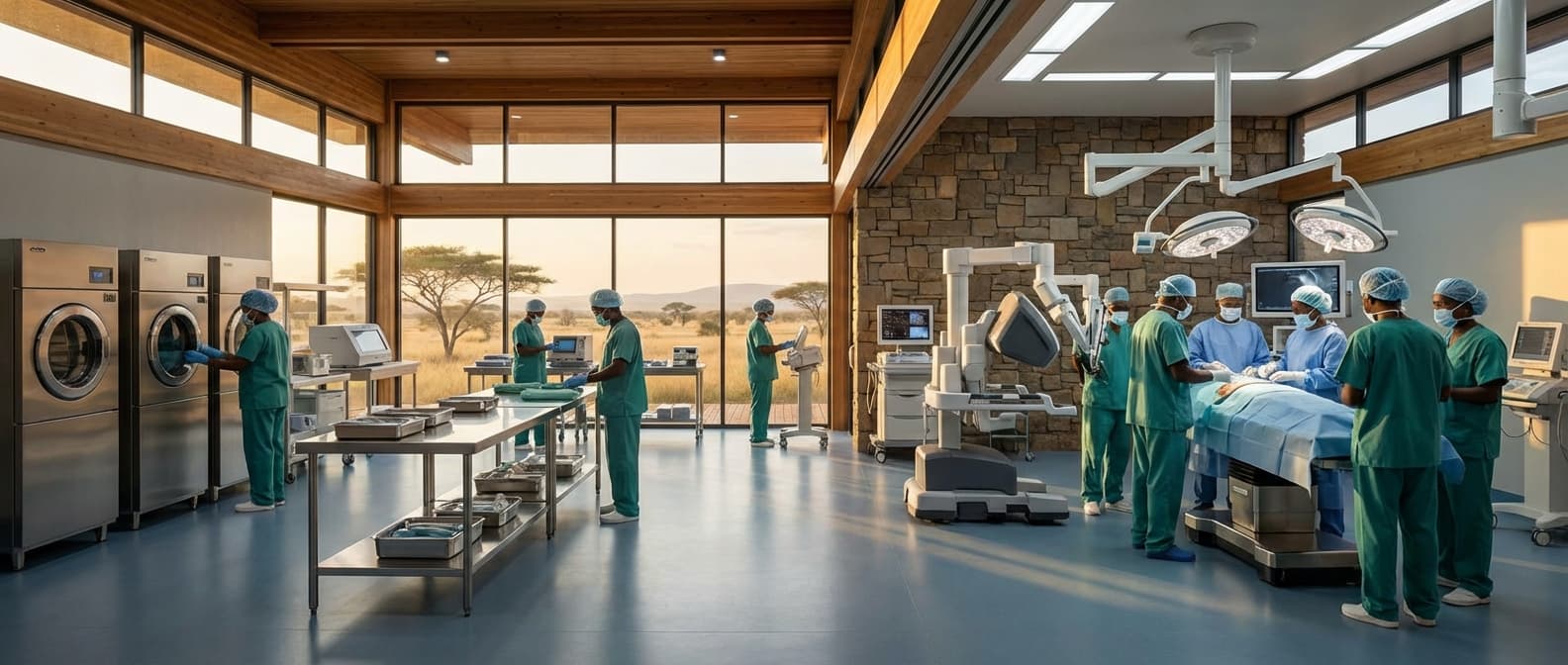
Endoscopy Reprocessing Validation in Guinea-Bissau
Engineering Excellence & Technical Support
AER validation, SOP development and compliance High-standard technical execution following OEM protocols and local regulatory frameworks.
Streamlined Validation Protocols
Developed and implemented standardized validation protocols for high-level disinfection and sterilization of endoscopes, ensuring consistent adherence to international guidelines and regulatory requirements within Guinea-Bissau's healthcare facilities.
Robust Testing Methodologies
Established robust and reproducible testing methodologies, including biological and chemical indicator monitoring, to validate the efficacy of reprocessing cycles for various endoscope types, thereby minimizing the risk of healthcare-associated infections.
Data-Driven Performance Tracking
Implemented a systematic data collection and analysis framework to track reprocessing validation outcomes, identify trends, and drive continuous improvement initiatives in endoscopy reprocessing practices across Guinea-Bissau.
What Is Endoscopy Reprocessing Validation In Guinea-bissau?
Endoscopy reprocessing validation in Guinea-Bissau refers to the systematic process of confirming that flexible and rigid endoscopes, along with their accessories, are effectively cleaned and disinfected (reprocessed) to a standard that eliminates or significantly reduces the risk of transmitting infectious agents to subsequent patients. This validation is a critical component of infection prevention and control protocols within healthcare facilities in Guinea-Bissau performing endoscopic procedures. It ensures that established reprocessing protocols are consistently adhered to and that the implemented methods achieve the required level of microbial inactivation.
| Who Needs Endoscopy Reprocessing Validation? | Typical Use Cases | |||
|---|---|---|---|---|
| Hospitals and clinics in Guinea-Bissau equipped with flexible or rigid endoscopes for diagnostic or therapeutic procedures. | Endoscopy suites where procedures such as gastroscopy, colonoscopy, bronchoscopy, and cystoscopy are performed. | Surgical centers requiring reprocessing of endoscopes used in minimally invasive surgery. | Any healthcare facility that utilizes reusable endoscopes and is committed to patient safety and infection control standards. | |
| Pre-implementation validation of a new reprocessing protocol or the introduction of new reprocessing equipment (e.g., a new AER model). | Periodic validation to ensure ongoing compliance and efficacy of established reprocessing procedures, often as part of an annual or biannual quality assurance program. | Post-incident validation following any equipment malfunction, changes in reprocessing personnel, or observed deviations from standard operating procedures. | Validation following a change in the type of detergents or disinfectants used in the reprocessing cycle. | Validation as a requirement for accreditation or regulatory compliance, if applicable within the Guinean healthcare system. |
Key Aspects of Endoscopy Reprocessing Validation
- Verification of Cleaning Efficacy: Assesses the removal of organic debris and microbial load from the endoscope's internal lumens and external surfaces.
- Assessment of Disinfection/Sterilization Efficacy: Confirms that the chosen disinfection or sterilization process effectively inactivates a broad spectrum of microorganisms, including bacteria, viruses, fungi, and spores, as appropriate for the device's intended use.
- Validation of Reprocessing Equipment: Ensures that automated endoscope reprocessors (AERs) and other equipment used in the reprocessing cycle are functioning within specified parameters.
- Monitoring of Reagent Efficacy: Verifies the effectiveness of cleaning detergents and disinfection/sterilization agents.
- Documentation and Record-Keeping: Establishes a robust system for recording all reprocessing steps, validation results, and maintenance activities.
- Staff Training and Competency Assessment: Confirms that personnel involved in reprocessing are adequately trained and demonstrate competency in the established protocols.
- Environmental Monitoring: In some advanced settings, this may include monitoring the reprocessing environment for microbial contamination.
Who Needs Endoscopy Reprocessing Validation In Guinea-bissau?
Endoscopy reprocessing validation is crucial for patient safety and infection prevention in healthcare facilities. This validation process ensures that endoscopes are thoroughly cleaned and disinfected according to established protocols, thereby eliminating the risk of transmitting infections between patients. Facilities in Guinea-Bissau performing endoscopic procedures must adhere to these standards to maintain a high level of patient care and prevent healthcare-associated infections (HAIs).
| Department | Rationale for Validation | Specific Endoscopic Procedures |
|---|---|---|
| Gastroenterology | High volume of procedures requiring close contact with digestive tract; potential for high-risk microbial transmission. | Upper endoscopy (EGD), Colonoscopy, Sigmoidoscopy, Endoscopic Retrograde Cholangiopancreatography (ERCP) |
| Pulmonology | Procedures involving the respiratory system; risk of transmitting respiratory pathogens. | Bronchoscopy |
| Urology | Procedures within the urinary tract; risk of transmitting urinary tract pathogens. | Cystoscopy, Ureteroscopy |
| Gynecology | Procedures involving the reproductive organs; risk of transmitting sexually transmitted infections or other pathogens. | Hysteroscopy |
| Surgery (General/Specialty) | Used in minimally invasive surgeries; requires stringent reprocessing to prevent surgical site infections. | Laparoscopy, Arthroscopy (though often considered a separate category, reprocessing principles are similar) |
| Infection Control Department | Responsible for overseeing and ensuring compliance with infection prevention guidelines, including reprocessing protocols. | All endoscopic procedures |
| Central Sterile Supply Department (CSSD)/Sterilization Units | Directly responsible for the cleaning, disinfection, and sterilization of medical devices, including endoscopes. | All endoscopic procedures |
Target Customers and Departments Requiring Endoscopy Reprocessing Validation in Guinea-Bissau
- Hospitals
- Specialized Clinics
- Outpatient Surgical Centers
- Any facility offering diagnostic or therapeutic endoscopic procedures
Endoscopy Reprocessing Validation Process In Guinea-bissau
The endoscopy reprocessing validation process in Guinea-Bissau is a critical multi-step procedure designed to ensure that flexible endoscopes are cleaned and disinfected to a standard that prevents patient-to-patient transmission of infections. This process begins with a formal inquiry, progresses through planning and preparation, culminates in on-site execution and verification, and concludes with reporting and follow-up. The workflow is structured to maintain rigorous quality control at each stage.
| Stage | Key Activities | Responsible Parties | Expected Outcomes |
|---|---|---|---|
| Initial request for validation, defining scope (e.g., specific endoscopes, reprocessing methods), identifying existing protocols and challenges. | Healthcare facility management, Ministry of Health representatives, potential external validation teams (e.g., WHO, NGOs). | Clear understanding of the validation scope and objectives; identification of specific needs and resource gaps. |
| Development of a detailed validation protocol based on international guidelines (e.g., WHO, CDC) and local context; outlining steps, testing methods (microbiological, chemical indicators), and data collection tools. | Validation team, clinical engineers, infection control specialists, nursing staff. | A comprehensive, documented validation plan that addresses all aspects of reprocessing; clear criteria for success. |
| Ensuring availability of necessary equipment (e.g., test kits, sampling tools), consumables, and trained personnel; conducting training sessions on protocol adherence, sampling techniques, and data recording. | Healthcare facility administration, Ministry of Health, validation team. | Adequately resourced facility and a competent, trained team ready for execution. |
| Direct observation of the entire reprocessing workflow (pre-cleaning, manual cleaning, high-level disinfection/sterilization, rinsing, drying, storage); collection of environmental samples, endoscope surface swabs, and processing solutions for microbiological testing; verification of equipment functionality and adherence to manufacturer instructions. | Validation team, nursing staff, biomedical technicians. | Real-time assessment of reprocessing practices; collection of objective data for analysis. |
| Systematic collection of all collected data (e.g., test results, observation logs, temperature/time recordings); statistical analysis to determine compliance with predefined standards and identify deviations. | Validation team, data analysts. | Quantifiable evidence of reprocessing effectiveness and identification of specific areas of non-compliance. |
| Compilation of a comprehensive report detailing findings, including compliance rates, identified risks, and root causes of non-compliance; provision of specific, actionable recommendations for improvement. | Validation team. | A clear, evidence-based report that guides corrective actions; actionable recommendations for enhanced reprocessing. |
| Implementation of recommended corrective actions; re-validation or routine monitoring to ensure sustained compliance; integration of findings into ongoing training and quality improvement initiatives. | Healthcare facility management, infection control committee, Ministry of Health. | Sustained high-quality reprocessing; reduction in reprocessing-related infections; continuous improvement of patient safety. |
Endoscopy Reprocessing Validation Workflow in Guinea-Bissau
- Inquiry and Needs Assessment
- Planning and Protocol Development
- Resource Mobilization and Training
- On-Site Execution and Monitoring
- Data Collection and Analysis
- Validation Reporting and Recommendations
- Follow-up and Continuous Improvement
Endoscopy Reprocessing Validation Cost In Guinea-bissau
Endoscopy reprocessing is a critical process for preventing healthcare-associated infections. The cost of validating this reprocessing in Guinea-Bissau can vary significantly due to several factors. These include the complexity and type of endoscopes being validated, the specific reprocessing equipment and chemicals used, the laboratory performing the validation, and the extent of the validation required (e.g., initial validation, re-validation, or validation of changes). Local currency pricing is not readily available in public databases, making precise figures difficult to ascertain. However, we can discuss the general pricing factors and potential ranges based on common practices and the economic context of Guinea-Bissau. Factors influencing cost include the number of tests performed (e.g., biological indicators, chemical residue testing, leak testing), the personnel involved, and overhead costs of the validation service provider. Given the limited availability of specialized services and potential import costs for validation materials, prices may be higher compared to more developed economies. It's crucial for healthcare facilities in Guinea-Bissau to obtain direct quotes from accredited laboratories or specialized service providers to determine accurate validation costs.
| Cost Component | Potential Pricing Factor | Estimated Range (Local Currency - e.g., GNF) | Notes |
|---|---|---|---|
| Initial Validation Package (per endoscope) | Includes initial set of tests (biological indicators, etc.) | Could range from 50,000 GNF to 200,000 GNF or more | Highly dependent on the number of tests and lab fees. |
| Routine Re-validation (per endoscope, annual/bi-annual) | Fewer tests compared to initial validation | Potentially 30,000 GNF to 120,000 GNF | May involve repeat biological indicator testing. |
| Specific Tests (e.g., biological indicator) | Cost of single biological indicator and associated lab processing | Estimated 10,000 GNF to 30,000 GNF per test | Bulk purchasing might reduce per-unit cost. |
| Chemical Residue Testing | Analysis of disinfectant residue on endoscope surfaces | Could be 15,000 GNF to 40,000 GNF per test | Requires specialized laboratory equipment. |
| Validation Service Provider Fees/Overhead | Covers personnel, equipment, and administrative costs | Often bundled into package prices, but can be a significant portion | Varies greatly by provider's operational costs. |
| Logistics and Transportation | Costs of transporting endoscopes and samples to the lab | Can add 5,000 GNF to 20,000 GNF or more per shipment | Significant in a country with potentially challenging infrastructure. |
Factors Influencing Endoscopy Reprocessing Validation Costs in Guinea-Bissau
- Type and complexity of endoscopes (e.g., flexible vs. rigid, number of channels)
- Specific reprocessing methods and chemicals employed (e.g., high-level disinfection vs. sterilization)
- Scope of validation required (e.g., initial setup, routine re-validation, process change)
- Number and type of validation tests (biological indicators, chemical residue analysis, leak testing)
- Accreditation and expertise of the validation laboratory or service provider
- Geographical location within Guinea-Bissau (affecting transportation and logistics)
- Availability of qualified personnel for performing validation procedures
- Cost of imported validation materials and reagents
Affordable Endoscopy Reprocessing Validation Options
Ensuring the effectiveness and safety of endoscopic reprocessing is paramount, but the validation process can represent a significant financial undertaking for healthcare facilities. This document explores affordable validation options, emphasizing the strategic use of value bundles and cost-saving strategies to achieve compliance without exorbitant expenditure.
| Cost-Saving Strategy | Description | Potential Benefit |
|---|---|---|
| Negotiate Bulk Discounts | When contracting for multiple validation services or for extended periods, leverage negotiation power to secure volume-based discounts from service providers. | Reduced per-service cost, predictable annual expenditure. |
| Leverage In-House Capabilities (Where Appropriate) | For basic validation tasks or monitoring that doesn't require specialized equipment or external accreditation, consider if some aspects can be performed by trained internal staff. This requires careful assessment of expertise and regulatory compliance. | Reduced reliance on external vendors, direct control over processes. |
| Partner with Multiple Facilities | If feasible, collaborate with other smaller healthcare facilities to pool resources and negotiate better rates with validation service providers. This creates a larger client base for vendors. | Shared cost burden, increased bargaining power. |
| Phased Validation Approach | Instead of a complete overhaul of validation all at once, implement a phased approach. Prioritize critical areas and gradually validate other components over time, spreading the cost across fiscal years. | Improved cash flow management, less immediate financial strain. |
| Focus on Risk-Based Validation | Prioritize validation efforts on the highest-risk areas and processes based on scope of practice, instrument complexity, and patient population. This ensures critical compliance without overspending on less critical aspects. | Optimized resource allocation, efficient use of validation budget. |
| Explore Vendor-Specific Promotions and Programs | Many validation service providers offer introductory discounts, loyalty programs, or special promotions. Staying informed about these can lead to significant savings. | Reduced upfront or ongoing costs through opportunistic purchasing. |
| Standardize Reprocessing Practices | Implementing standardized, evidence-based reprocessing protocols across the facility can simplify validation needs by reducing variability and the number of unique scenarios requiring separate validation. | Simplified validation protocols, potentially reduced validation scope and cost. |
Key Value Bundles for Affordable Endoscopy Reprocessing Validation
- {"title":"Comprehensive Reprocessing Validation Package","description":"This bundle typically includes validation of the entire reprocessing workflow, from initial cleaning through high-level disinfection/sterilization. It often encompasses performance testing of automated endoscope reprocessors (AERs), manual cleaning efficacy testing, and potentially biological indicator testing for sterilization processes. Purchasing these services as a package can offer a discounted rate compared to individual service procurement."}
- {"title":"Routine Monitoring and Revalidation Subscription","description":"Many vendors offer subscription models for ongoing validation support. These packages can include periodic revalidation of AERs, periodic testing of disinfectants/sterilants, and scheduled environmental monitoring. This shifts validation from a large, infrequent capital expense to a more predictable operational cost, allowing for better budgeting."}
- {"title":"Disinfectant/Sterilant Efficacy Bundle","description":"This focuses specifically on the validation of the chemical agents used in the reprocessing cycle. It may include testing the efficacy of disinfectants against specific microorganisms, assessing their compatibility with endoscopes, and verifying concentration and contact times. Bundling these tests can be more cost-effective than individual efficacy studies."}
- {"title":"AER Performance & Safety Validation Bundle","description":"This bundle is dedicated to the validation of automated endoscope reprocessors. It covers essential aspects like leak testing, cycle completeness verification, and ensuring that the AER meets manufacturer specifications and regulatory requirements. Grouping these AER-specific tests can lead to economies of scale for the service provider, translating to lower costs for the facility."}
- {"title":"Staff Training & Competency Assessment Package","description":"While not strictly a validation of equipment, validating the competency of staff involved in reprocessing is a crucial aspect of overall safety and compliance. Bundling training programs with competency assessments can streamline the process and potentially offer a more cost-effective solution than separate training and evaluation services."}
Verified Providers In Guinea-bissau
In Guinea-Bissau's healthcare landscape, identifying reliable and skilled medical professionals is paramount. Franance Health stands out as a beacon of quality, offering a network of verified providers committed to excellent patient care. This document outlines the rigorous credentialing process employed by Franance Health and explains why their network represents the most trusted choice for healthcare services in the region.
| Provider Type | Franance Health Verification | Why They Are the Best Choice |
|---|---|---|
| General Practitioners | Certified with verified licenses and ongoing training. | Access to up-to-date medical knowledge and patient-centered care. |
| Specialists (e.g., Cardiologists, Pediatricians) | Rigorous review of specialized training, fellowships, and board certifications. | Expert diagnosis and treatment for complex medical conditions with proven expertise. |
| Surgeons | Extensive verification of surgical credentials, experience, and successful procedure history. | Highly skilled and experienced surgeons ensuring safe and effective surgical outcomes. |
| Nurses | Verification of nursing degrees, licenses, and specialized certifications. | Compassionate and skilled nursing care with a focus on patient well-being. |
| Diagnostic Technicians | Certification and training in operating advanced medical equipment. | Accurate and reliable diagnostic results essential for proper treatment planning. |
Franance Health Credentialing Process
- Thorough vetting of educational qualifications and certifications.
- Verification of medical licenses and regulatory compliance.
- Comprehensive background checks and professional history review.
- Assessment of clinical experience and areas of specialization.
- Ongoing performance monitoring and patient feedback analysis.
Scope Of Work For Endoscopy Reprocessing Validation
This Scope of Work (SOW) outlines the requirements for the validation of the endoscopy reprocessing procedures. The objective is to ensure that the adopted reprocessing protocols effectively eliminate microbial contamination and are compliant with all relevant regulatory standards and guidelines. The validation process will encompass multiple phases, including initial process development, performance qualification, and ongoing monitoring.
| Deliverable/Activity | Description | Acceptance Criteria/Standard | Timeline (Weeks from Project Start) |
|---|---|---|---|
| Validation Plan Document | Detailed plan outlining the validation strategy, scope, methodology, responsibilities, and timelines for the endoscopy reprocessing validation. | Approved by key stakeholders and regulatory affairs. Clearly defines scope, objectives, and methodologies. | 1-2 |
| Process Development Report | Documentation of the development and optimization of the manual and automated reprocessing steps, including selection of cleaning agents, disinfectants, and equipment. | Demonstrates efficacy of cleaning and disinfection against relevant bioburden. Supported by bench studies and initial testing. | 2-6 |
| Performance Qualification Protocol | Detailed protocol for testing the validated reprocessing process under simulated and actual use conditions. Includes sampling plans, testing methodologies, and success criteria. | Includes simulated use testing (e.g., spiked endoscopes), biological indicator testing, and chemical indicator testing. Clearly defined acceptance criteria for microbial reduction and indicator results. | 6-8 |
| Performance Qualification Report | Comprehensive report detailing the execution of the PQ protocol, including all raw data, statistical analysis, and deviations. Presents evidence of process reproducibility and effectiveness. | Demonstrates consistent achievement of all acceptance criteria defined in the PQ protocol. Includes full data sets from all validation runs. | 8-12 |
| Standard Operating Procedures (SOPs) for Endoscopy Reprocessing | Developed and finalized SOPs for all steps of the endoscopy reprocessing workflow, reflecting the validated process. | SOPs are clear, concise, and actionable, directly reflecting the validated steps and materials. Includes visual aids where appropriate. | 10-14 |
| Training Materials for Reprocessing Personnel | Development of comprehensive training materials to ensure all personnel understand and can execute the validated reprocessing procedures. | Materials cover all aspects of the SOPs, including safety, proper use of equipment and chemicals, and troubleshooting. Includes competency assessments. | 12-15 |
| Validation Summary Report | An overarching report summarizing the entire validation effort, including the validation plan, process development findings, PQ results, and conclusions. | Provides a clear and concise overview of the validation, supporting the decision of process validation. References all supporting documentation. | 15-16 |
| Certificate of Validation | Formal document certifying that the endoscopy reprocessing process has been validated and meets all specified requirements. | Signed by authorized personnel, stating the scope of validation, date of completion, and validity period. | 16 |
| Periodic Monitoring Plan and Reports | Plan for ongoing monitoring of the reprocessing process to ensure continued compliance. Includes scheduled testing, audits, and corrective actions. | Plan outlines frequency and methodology for ongoing monitoring. Reports demonstrate continued process effectiveness and adherence to SOPs. | Ongoing (post-validation) |
Technical Deliverables
- Validation Plan Document
- Process Development Report
- Performance Qualification Protocol
- Performance Qualification Report (including raw data and analysis)
- Standard Operating Procedures (SOPs) for Endoscopy Reprocessing
- Training Materials for Reprocessing Personnel
- Validation Summary Report
- Certificate of Validation
- Periodic Monitoring Plan and Reports
Service Level Agreement For Endoscopy Reprocessing Validation
This Service Level Agreement (SLA) outlines the response times and uptime guarantees for the Endoscopy Reprocessing Validation service. This service ensures that the automated validation processes for endoscope reprocessing meet defined performance metrics, contributing to patient safety and operational efficiency.
| Service Component | Response Time Target | Uptime Guarantee | Definition/Scope |
|---|---|---|---|
| Automated Validation Process Execution | 98% of validations to complete within 30 minutes of cycle end. | 99.5% availability during scheduled operating hours. | The time from the completion of an endoscope reprocessing cycle to the final validation result being generated and recorded. |
| System Availability for New Validation Requests | 99.9% availability during scheduled operating hours. | 99.9% availability during scheduled operating hours. | The system's ability to accept and initiate new validation processes without unscheduled downtime. |
| Critical Issue Notification | Immediate notification for system failures or major validation anomalies. | N/A | Alerts generated for any detected failures in the validation hardware, software, or critical process steps that would prevent successful validation. |
| Standard Issue Resolution | Resolution or workaround within 4 business hours for non-critical validation errors. | N/A | Addressing issues that do not immediately halt the validation process but require attention to maintain optimal performance and accuracy. |
| Reporting and Audit Trail Access | Real-time access to validation reports and audit trails. | 99.9% availability during scheduled operating hours. | Ensuring that users can access historical and current validation data for compliance and review purposes. |
Key Performance Indicators (KPIs) for Endoscopy Reprocessing Validation
- Automated validation completion within defined timeframes.
- System uptime to support continuous reprocessing validation.
- Accuracy and reliability of validation results.
- Timely notification and resolution of any validation failures or system issues.
Frequently Asked Questions

Ready when you are
Let's scope your Endoscopy Reprocessing Validation in Guinea-Bissau project in Guinea-Bissau.

Scaling healthcare logistics and technical systems across the entire continent.