
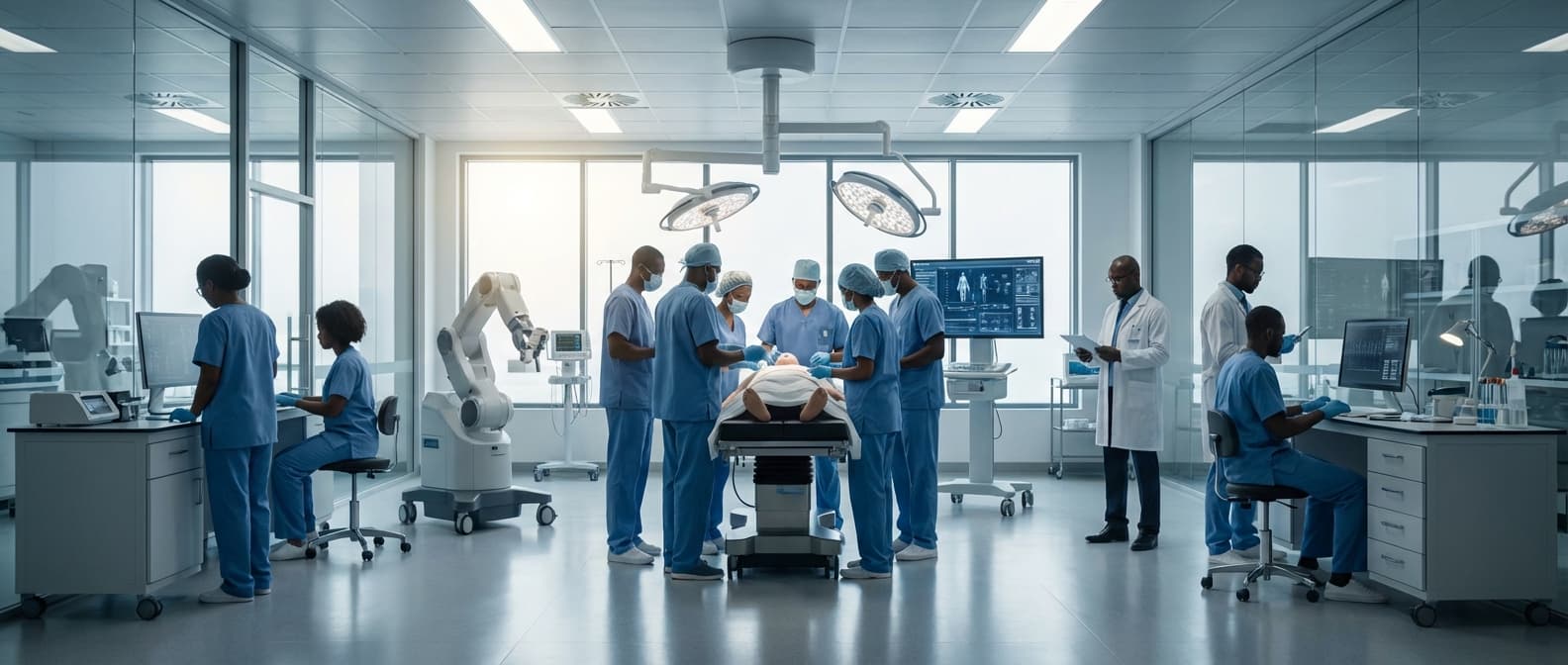
Managed Equipment Service (MES) in Guinea-Bissau
Engineering Excellence & Technical Support
Long‑term equipment provision with uptime SLAs and lifecycle management. High-standard technical execution following OEM protocols and local regulatory frameworks.
Proactive Remote Equipment Monitoring
Leveraging advanced IoT sensors and a secure cloud platform, MES provides real-time, 24/7 monitoring of critical infrastructure. This allows for early detection of anomalies and predictive maintenance, minimizing downtime and ensuring continuous operation of essential equipment across Guinea-Bissau's vital sectors.
Optimized Parts & Service Logistics
MES implements a sophisticated supply chain management system designed for Guinea-Bissau's unique logistical challenges. This includes localized warehousing, efficient inventory control, and streamlined transportation for critical spare parts and skilled technicians, ensuring rapid response times and reduced operational costs.
Data-Driven Performance Analytics
Our MES platform captures and analyzes operational data from all managed equipment. This generates actionable insights into performance trends, energy consumption, and maintenance effectiveness, empowering stakeholders in Guinea-Bissau to make informed decisions, optimize asset utilization, and enhance overall operational efficiency.
What Is Managed Equipment Service (Mes) In Guinea-bissau?
Managed Equipment Service (MES) in Guinea-Bissau refers to a comprehensive outsourcing model where a third-party provider takes responsibility for the procurement, installation, maintenance, operation, and eventual disposal of specific capital equipment for an organization. This service is designed to alleviate the burden of capital expenditure, operational management, and technological obsolescence from the client, allowing them to focus on their core competencies. MES providers typically offer a service level agreement (SLA) that guarantees uptime, performance, and support for the managed equipment, often on a pay-per-use or fixed monthly fee basis. This model shifts the risk and complexity of equipment ownership to the MES provider.
| Who Needs MES? | Typical Use Cases in Guinea-Bissau | |||||
|---|---|---|---|---|---|---|
| Healthcare Sector: Hospitals, clinics, and diagnostic centers requiring advanced medical imaging equipment (MRI, CT scanners), laboratory instruments, and patient monitoring systems. | Mining & Natural Resources: Companies involved in exploration and extraction needing specialized heavy machinery, drilling equipment, and processing units. | Telecommunications: Mobile network operators and internet service providers requiring base stations, transmission equipment, and network infrastructure. | Energy Sector: Power generation facilities and distribution networks needing turbines, transformers, and control systems. | Agriculture: Large-scale farming operations requiring advanced agricultural machinery, irrigation systems, and processing equipment. | Government & Public Services: Agencies responsible for infrastructure development, logistics, and public safety requiring specialized vehicles, communication systems, and IT hardware. | Manufacturing & Industrial: Factories and production facilities seeking to upgrade or outsource the management of production lines, specialized machinery, and quality control equipment. |
Key Components of Managed Equipment Service (MES):
- Equipment Sourcing & Procurement: Identifying, selecting, and acquiring the necessary equipment based on client requirements and industry best practices.
- Installation & Integration: Deploying, configuring, and integrating equipment into existing infrastructure, ensuring seamless operation.
- Operational Management: Overseeing the day-to-day use of the equipment, including scheduling, resource allocation, and performance monitoring.
- Preventive & Corrective Maintenance: Implementing scheduled maintenance programs to minimize downtime and responding promptly to equipment failures.
- Technical Support & Troubleshooting: Providing expert assistance to resolve technical issues and ensure optimal equipment performance.
- Consumables & Spare Parts Management: Procuring, stocking, and managing the supply of all necessary consumables and replacement parts.
- Performance Monitoring & Reporting: Continuously tracking equipment performance against agreed-upon metrics and providing regular reports to the client.
- Technology Refresh & Obsolescence Management: Planning for and executing upgrades or replacements of equipment to maintain technological relevance and efficiency.
- Decommissioning & Disposal: Safely and responsibly removing and disposing of equipment at the end of its lifecycle.
Who Needs Managed Equipment Service (Mes) In Guinea-bissau?
Managed Equipment Service (MES) is a comprehensive solution designed to optimize the performance, reliability, and cost-effectiveness of medical equipment within healthcare facilities. In Guinea-Bissau, where healthcare infrastructure can face significant challenges, MES offers a vital pathway to ensure consistent access to functional and well-maintained medical devices, thereby improving patient care and outcomes.
| Target Customer | Key Departments Benefiting from MES |
|---|---|
| Public Hospitals (e.g., Hospital Central de Bissau) | Radiology, Surgery, Intensive Care Units (ICU), Emergency Room, Laboratories, Obstetrics & Gynecology |
| Regional/District Health Centers | Maternity Wards, General Outpatient Departments, Diagnostic Labs (basic) |
| Private Clinics and Hospitals | All departments requiring consistent equipment functionality, especially those offering specialized services. |
| Maternal and Child Health Centers | Pediatrics, Neonatal Intensive Care Units (NICU), Labor & Delivery rooms |
| Diagnostic Laboratories (e.g., National Public Health Laboratory) | Microbiology, Hematology, Biochemistry, Molecular Diagnostics |
| NGO-run Health Facilities | Primary healthcare services, specialized clinics (e.g., HIV/AIDS, malaria treatment) |
| Government Health Ministries/Agencies | Procurement departments, planning and policy divisions, national health programs |
Who Needs Managed Equipment Service (MES) in Guinea-Bissau?
- Healthcare facilities facing challenges with equipment maintenance and repair.
- Organizations seeking to improve the uptime and reliability of their medical equipment.
- Hospitals and clinics aiming to control and predict equipment-related operational costs.
- Institutions looking to leverage advanced technology and expertise for equipment management.
- Government health ministries and NGOs focused on strengthening healthcare delivery systems.
- Facilities where skilled biomedical technicians are scarce or difficult to retain.
Managed Equipment Service (Mes) Process In Guinea-bissau
The Managed Equipment Service (MES) process in Guinea-Bissau, like in many other regions, is a structured approach to ensuring that medical equipment is procured, installed, maintained, and eventually replaced in a cost-effective and efficient manner. This workflow is crucial for healthcare facilities in Guinea-Bissau to provide reliable patient care with up-to-date technology. The process typically begins with an identified need or an inquiry and culminates in the full execution of the service agreement, encompassing all stages of the equipment lifecycle.
| Phase | Key Activities | Responsible Party | Key Considerations for Guinea-Bissau |
|---|---|---|---|
| Inquiry & Needs Assessment | Identifying equipment gaps, defining service requirements. | Healthcare Facility (Ministry of Health, Hospitals) | Prioritizing essential equipment for public health needs; understanding local infrastructure limitations. |
| Tender/Proposal Development & Evaluation | Issuing RFP, receiving and evaluating proposals. | Healthcare Facility (Procurement Committee) | Ensuring transparency and fairness; evaluating proposals based on long-term value and sustainability. |
| Contract Negotiation & Award | Finalizing terms, pricing, and SLAs. | Healthcare Facility & MES Provider | Clear contractual clauses on currency fluctuations, import duties, and dispute resolution. |
| Procurement, Logistics & Installation | Sourcing, shipping, customs, installation, and commissioning. | MES Provider | Navigating complex customs procedures; ensuring robust transportation to remote areas; adequate site preparation. |
| Operational Management & Maintenance | Preventive and corrective maintenance, spare parts, consumables. | MES Provider | Ensuring availability of spare parts in a challenging logistics environment; training local technicians for immediate support. |
| Training & Capacity Building | User training, technical training for local staff. | MES Provider | Tailoring training to literacy levels; ensuring sustainability of knowledge transfer. |
| Performance Monitoring & Reporting | Tracking KPIs, reporting on service delivery. | MES Provider & Healthcare Facility | Establishing clear reporting mechanisms; ensuring data accuracy for decision-making. |
| Upgrades, Replacements & Decommissioning | Lifecycle management, responsible disposal. | MES Provider & Healthcare Facility | Planning for technological obsolescence; adhering to environmental regulations for disposal. |
Managed Equipment Service (MES) Workflow in Guinea-Bissau
- Inquiry & Needs Assessment: The process starts with a healthcare facility (e.g., Ministry of Health, a specific hospital) identifying a need for new medical equipment, upgrades, or a comprehensive equipment management solution. This can be initiated through a formal request, a tender process, or direct engagement with MES providers.
- Supplier Identification & Pre-qualification: Potential MES providers are identified. These could be local companies with service capabilities or international firms with experience in similar markets. They are typically pre-qualified based on their technical expertise, financial stability, experience, and adherence to international standards.
- Tender/Proposal Development: Once a need is clearly defined and potential providers are identified, a formal tender document or Request for Proposal (RFP) is issued. This document outlines the specific equipment required, service level agreements (SLAs), performance indicators, pricing models, and contractual terms. MES providers then submit detailed proposals addressing these requirements.
- Evaluation & Selection: Submitted proposals are rigorously evaluated by a committee representing the healthcare facility. Criteria usually include technical compliance, proposed service and maintenance plans, cost-effectiveness (total cost of ownership), supplier track record, and proposed training programs.
- Contract Negotiation & Award: The chosen MES provider enters into detailed contract negotiations with the healthcare facility. This stage finalizes all terms and conditions, including pricing, payment schedules, equipment specifications, warranty periods, maintenance response times, spare parts availability, and exit strategies.
- Equipment Procurement & Logistics: Upon contract award, the MES provider is responsible for the procurement of the specified equipment. This involves sourcing from reputable manufacturers, managing international shipping, customs clearance, and transportation to the designated sites within Guinea-Bissau.
- Installation & Commissioning: Once the equipment arrives, the MES provider's qualified technicians install and commission it. This includes rigorous testing to ensure that the equipment functions according to manufacturer specifications and meets the required clinical standards. Proper calibration and initial user training are also conducted at this stage.
- Operational Management & Maintenance: This is the core of the MES. The provider takes responsibility for the day-to-day operational management, including routine preventive maintenance, corrective maintenance for breakdowns, supply of consumables and spare parts, and ensuring equipment uptime as per the SLA.
- User Training & Capacity Building: MES providers often include ongoing training for healthcare professionals on the safe and effective use of the equipment. This can also extend to training local biomedical technicians for basic maintenance and troubleshooting, building local capacity.
- Performance Monitoring & Reporting: Regular performance monitoring is conducted to track key indicators such as equipment uptime, maintenance response times, and user satisfaction. The MES provider submits regular reports to the healthcare facility, demonstrating adherence to the SLA and identifying any areas for improvement.
- Equipment Upgrades & Replacements: As equipment reaches the end of its lifecycle, or as technology advances, the MES provider, in consultation with the healthcare facility, plans for upgrades or replacements. This ensures that the facility always has access to modern and functional medical technology.
- Decommissioning & Disposal: At the end of the contract or equipment lifespan, the MES provider is responsible for the safe decommissioning and environmentally sound disposal of old equipment, in compliance with relevant regulations.
Managed Equipment Service (Mes) Cost In Guinea-bissau
Managed Equipment Service (MES) in Guinea-Bissau, particularly for critical healthcare equipment, presents a unique landscape influenced by several pricing factors. The cost of MES is not standardized and can vary significantly based on the type and complexity of the equipment, the service provider's expertise and global reach, the service level agreement (SLA) terms, and the prevailing economic conditions within Guinea-Bissau. Factors such as the lifespan of the equipment, the availability of spare parts locally, the need for specialized training for technicians, and the geographical remoteness of the facility requiring service all contribute to the final cost. Furthermore, the overall risk associated with operating in the region, including logistical challenges and potential currency fluctuations, can also be factored into pricing models. It's important to note that official, publicly available price lists for MES in Guinea-Bissau are scarce due to the bespoke nature of these contracts. Therefore, the following discussion outlines general pricing factors and provides estimated ranges in local currency, the West African CFA franc (XOF), with the understanding that these are indicative and actual quotes will require detailed assessment.
| Equipment Category (Indicative) | Estimated Annual MES Cost Range (XOF) | Notes |
|---|---|---|
| Basic Diagnostic Equipment (e.g., X-ray, Ultrasound, ECG machines) | 500,000 - 2,500,000 | Includes preventive maintenance, basic repairs, and common spare parts. Costs can be lower for simpler, more common models. |
| Mid-Range Medical Equipment (e.g., Ventilators, Anesthesia machines, Endoscopy units) | 1,500,000 - 7,000,000 | Covers more complex systems requiring specialized technician skills and a broader range of spare parts. Uptime guarantees significantly impact pricing. |
| Advanced Imaging & Surgical Equipment (e.g., CT Scanners, MRI machines, Laser surgical systems) | 5,000,000 - 25,000,000+ | These are high-cost, complex systems requiring highly specialized engineers, global logistics for parts, and stringent service level agreements. Costs can be significantly higher for newer, cutting-edge technology. |
| Laboratory Equipment (e.g., Analyzers, Microscopes) | 750,000 - 4,000,000 | Depends on the complexity of the analyzers and the volume of testing. Calibration and consumable management can be included. |
| General Hospital Furniture & Non-Clinical Equipment (e.g., Beds, Sterilizers) | 200,000 - 1,000,000 | Typically focused on maintenance and repair of mechanical and electrical components. Less complex and lower risk. |
Key Pricing Factors for MES in Guinea-Bissau
- Equipment Type and Complexity: More sophisticated and specialized medical equipment (e.g., MRI machines, advanced surgical robots) will command higher MES costs due to specialized technician skills, training requirements, and potentially higher spare part costs.
- Service Level Agreement (SLA) Scope: The extent of services covered (e.g., preventive maintenance, corrective maintenance, parts replacement, uptime guarantees, training) directly impacts pricing. Comprehensive SLAs with rapid response times will be more expensive.
- Equipment Age and Lifespan: Older equipment may require more frequent repairs and specialized parts, leading to higher maintenance costs. The remaining expected lifespan of the equipment will also influence long-term service contracts.
- Spare Parts Availability and Logistics: The cost and ease of procuring spare parts for specific equipment models are critical. If parts need to be imported, customs duties, shipping costs, and lead times will add to the overall expense.
- Technician Expertise and Training: MES providers may need to fly in highly specialized technicians for certain equipment, incurring travel and accommodation costs. Conversely, investing in local technician training can reduce long-term costs but requires upfront investment.
- Geographical Location of Facility: Remote or hard-to-reach locations within Guinea-Bissau will incur higher logistical costs for service visits, including transportation and potentially overnight stays for technicians.
- Provider's Global Reach and Reputation: Established international MES providers may have higher overheads but can also offer economies of scale and access to a wider network of expertise and parts.
- Currency Fluctuations and Economic Stability: Guinea-Bissau's economy and the stability of the XOF can influence pricing. Providers may incorporate a buffer to mitigate risks associated with currency devaluation.
- Downtime Penalties and Uptime Guarantees: Contracts with strict uptime guarantees and associated penalties for non-compliance will typically be priced higher to reflect the provider's commitment and risk.
- Contract Duration: Longer-term MES contracts often offer more favorable pricing per unit compared to shorter, ad-hoc service agreements, allowing for better resource planning by the provider.
Affordable Managed Equipment Service (Mes) Options
Managed Equipment Service (MES) can be a cost-effective solution for businesses to access and maintain essential equipment without the burden of outright ownership. Affordable MES options often leverage value bundles and strategic cost-saving measures. Value bundles typically combine equipment leasing, maintenance, support, and sometimes even consumables or software into a single, predictable monthly payment. This simplifies budgeting and ensures all aspects of equipment operation are covered. Cost-saving strategies within MES include economies of scale achieved by the provider, predictive maintenance to prevent costly downtime, standardized equipment choices, and flexible contract terms that align with actual usage needs. Negotiating favorable terms and understanding the total cost of ownership (TCO) are crucial for maximizing savings.
| Cost-Saving Strategy | Description | Benefit |
|---|---|---|
| Predictive Maintenance | Utilizing data and sensors to anticipate equipment failures and schedule maintenance proactively. | Reduces unexpected downtime, extends equipment lifespan, and lowers emergency repair costs. |
| Standardization | Opting for a limited range of reliable, commonly used equipment models. | Simplifies inventory management for the provider, leading to better bulk purchasing power and reduced training/support costs. |
| Usage-Based Contracts | Structuring contracts based on actual equipment usage (e.g., print volumes, operating hours). | Ensures you only pay for what you use, avoiding overpayment for underutilized assets. |
| Lease vs. Purchase Analysis | Carefully evaluating the total cost of ownership over the equipment's lifecycle compared to outright purchase. | Identifies the most financially advantageous option, which is often leasing through MES for many businesses. |
| Negotiation and Bundling | Actively negotiating contract terms and leveraging bundled services. | Can secure more favorable pricing and add value to the overall service package. |
| Energy Efficiency | Selecting energy-efficient equipment and optimizing usage. | Lowers operational costs through reduced electricity consumption. |
Key Components of Affordable MES Value Bundles
- Equipment Leasing/Rental: Access to the latest technology without significant upfront capital expenditure.
- Comprehensive Maintenance and Repair: Scheduled servicing, proactive checks, and on-demand repairs to minimize downtime.
- Technical Support and Troubleshooting: Expert assistance to resolve operational issues quickly.
- Consumables Management (Optional): Including ink, toner, paper, or other necessary supplies.
- Software and Firmware Updates: Ensuring equipment runs optimally and securely.
- Asset Tracking and Reporting: Visibility into equipment usage, performance, and lifecycle.
- End-of-Life Management: Responsible decommissioning and disposal of equipment.
Verified Providers In Guinea-bissau
Ensuring access to quality healthcare is paramount, and in Guinea-Bissau, identifying Verified Providers is crucial for public health and individual well-being. Franance Health has established itself as a leader in this domain, offering a comprehensive suite of services backed by rigorous credentialing and a commitment to excellence. This makes them a standout choice for those seeking reliable and effective healthcare solutions in the region. Their dedication to verification processes instills confidence and guarantees a higher standard of care.
| Credentialing Aspect | Franance Health's Approach | Benefit to Patients |
|---|---|---|
| Licensure and Certifications | Thorough verification of all medical licenses and board certifications against Guinean and international standards. | Ensures all practitioners are legally qualified and possess the necessary expertise. |
| Professional Experience | Detailed review of past employment, clinical experience, and peer references. | Guarantees that providers have practical, hands-on experience in relevant medical fields. |
| Ethical Conduct and Background Checks | Implementation of robust background checks and adherence to strict ethical codes of conduct. | Protects patients from malpractice and unethical practices, fostering trust. |
| Continuous Professional Development | Mandatory participation in ongoing training and education programs for all affiliated providers. | Keeps medical professionals updated on the latest medical advancements and techniques. |
| Specialty Expertise Validation | Specific verification of credentials and experience for specialized medical services. | Ensures patients receive expert care for complex medical conditions. |
Key Strengths of Franance Health:
- Rigorous Provider Vetting and Credentialing
- Commitment to International Healthcare Standards
- Extensive Network of Qualified Medical Professionals
- Focus on Patient Safety and Outcomes
- Adaptability to Local Healthcare Needs
Scope Of Work For Managed Equipment Service (Mes)
This document outlines the Scope of Work (SOW) for a Managed Equipment Service (MES) contract, detailing the technical deliverables and standard specifications required for the successful implementation and ongoing management of a comprehensive equipment service program. The MES aims to provide a reliable, cost-effective, and efficient solution for the client's medical equipment lifecycle management, ensuring optimal performance, safety, and compliance.
| Deliverable | Description | Standard Specifications/Key Performance Indicators (KPIs) |
|---|---|---|
| Equipment Inventory and Asset Management System | Establish and maintain a comprehensive, real-time database of all managed equipment, including details on make, model, serial number, location, acquisition date, warranty status, service history, and clinical use. | 99.5% inventory accuracy; Inclusion of all new equipment within 5 business days; Regular (e.g., quarterly) inventory audits. |
| Preventive Maintenance (PM) Program | Develop and execute a scheduled PM program based on manufacturer recommendations, regulatory requirements, and clinical risk assessments to ensure equipment reliability and safety. | PM completion rate of 98% within scheduled windows; Adherence to manufacturer-recommended PM intervals and procedures; Documentation of all PM activities and results. |
| Corrective Maintenance (CM) and Repair Services | Provide prompt and efficient repair services for equipment malfunctions to minimize downtime. | Average response time for critical equipment: < 4 hours; Average repair time for critical equipment: < 24 hours; Mean Time Between Failures (MTBF) improvement of X% within Y months; Availability of key spare parts on-site or within Z hours. |
| Calibration Services | Perform regular calibration of equipment to ensure accuracy and compliance with relevant standards. | Calibration accuracy within manufacturer tolerances and/or regulatory requirements; Traceability to national/international standards; Calibration certificates issued for all calibrated equipment. |
| Performance Verification and Testing | Conduct periodic performance verification and testing to confirm equipment is operating within specifications. | Performance verification conducted according to established protocols; Results documented and reviewed; Identification and remediation of performance deviations. |
| Equipment Decommissioning and Disposal | Manage the safe and environmentally responsible decommissioning and disposal of end-of-life equipment. | Adherence to all relevant environmental and data security regulations; Proper documentation of disposal processes; Certified disposal partners where applicable. |
| Parts and Consumables Management | Manage inventory and procurement of spare parts and consumables to support maintenance activities. | Optimized inventory levels to minimize stockouts and holding costs; Procurement lead times within agreed-upon targets; Cost savings through strategic sourcing and bulk purchasing. |
| Staff Training and Competency Assessment | Provide training to clinical and technical staff on the proper use, care, and basic troubleshooting of managed equipment. | Training programs developed and delivered based on equipment type and user roles; Competency assessments conducted and documented; Reduction in user-induced equipment failures by X%. |
| Regulatory Compliance and Reporting | Ensure all managed equipment complies with relevant local, national, and international regulations (e.g., FDA, CE, Joint Commission). | Zero major regulatory non-compliance findings related to managed equipment; Timely submission of all required reports (e.g., PM completion, incident reports); Proactive identification and mitigation of compliance risks. |
| Risk Management and Safety Audits | Implement a proactive risk management program to identify and mitigate potential equipment-related hazards. | Regular safety audits conducted (e.g., quarterly); Identification and remediation of X% of identified risks within agreed timelines; Incident reporting and root cause analysis process in place. |
| Technology Integration and Data Management | Integrate with client's existing IT infrastructure (e.g., EMR, CMMS) for seamless data exchange and reporting. | Successful integration with specified systems; Data integrity and security maintained; Availability of real-time equipment status and performance data through agreed-upon dashboards or reports. |
| Continuous Improvement and Optimization | Establish a framework for ongoing review and improvement of the MES program based on performance data and client feedback. | Regular performance reviews (e.g., monthly/quarterly business reviews); Identification and implementation of at least X process improvements per year; Client satisfaction scores above Y%. |
Technical Deliverables
- Equipment Inventory and Asset Management System
- Preventive Maintenance (PM) Program
- Corrective Maintenance (CM) and Repair Services
- Calibration Services
- Performance Verification and Testing
- Equipment Decommissioning and Disposal
- Parts and Consumables Management
- Staff Training and Competency Assessment
- Regulatory Compliance and Reporting
- Risk Management and Safety Audits
- Technology Integration and Data Management
- Continuous Improvement and Optimization
Service Level Agreement For Managed Equipment Service (Mes)
This Service Level Agreement (SLA) outlines the guaranteed response times and uptime for the Managed Equipment Service (MES) provided by [Your Company Name]. This agreement aims to ensure the reliable and efficient operation of the client's equipment throughout the contract period.
| Service Component | Severity Level | Response Time Guarantee | Uptime Guarantee |
|---|---|---|---|
| Equipment Availability | Critical | 1 Hour (during Service Hours) | 99.5% |
| Equipment Availability | Major | 2 Hours (during Service Hours) | 99.7% |
| Equipment Availability | Minor | 4 Business Hours (during Service Hours) | 99.9% |
| Preventative Maintenance | N/A | Scheduled as per Maintenance Plan | N/A |
| Software Updates/Patches | N/A | Scheduled and communicated in advance | N/A |
Key Definitions
- Managed Equipment Service (MES): The comprehensive service provided by [Your Company Name] for the monitoring, maintenance, and support of designated equipment.
- Service Hours: The period during which support and maintenance services are actively provided, typically [e.g., 9:00 AM to 5:00 PM Local Time, Monday to Friday, excluding public holidays].
- Downtime: Any period where the designated equipment is unavailable for its intended use due to a hardware failure, software malfunction, or issues directly attributable to the MES.
- Response Time: The maximum time allowed for [Your Company Name] to acknowledge a reported issue and initiate troubleshooting or remediation efforts after receiving a notification from the client.
- Uptime Guarantee: The minimum percentage of time the designated equipment is expected to be operational and available during the Service Hours.
- Critical Incident: An event that renders the primary function of the equipment completely inoperable, causing significant business disruption.
- Major Incident: An event that significantly degrades the performance or functionality of the equipment, impacting multiple users or core operations.
- Minor Incident: An event that causes minor disruption, affects a limited number of users, or impacts non-critical functionalities.
Frequently Asked Questions

Ready when you are
Let's scope your Managed Equipment Service (MES) in Guinea-Bissau project in Guinea-Bissau.

Scaling healthcare logistics and technical systems across the entire continent.