
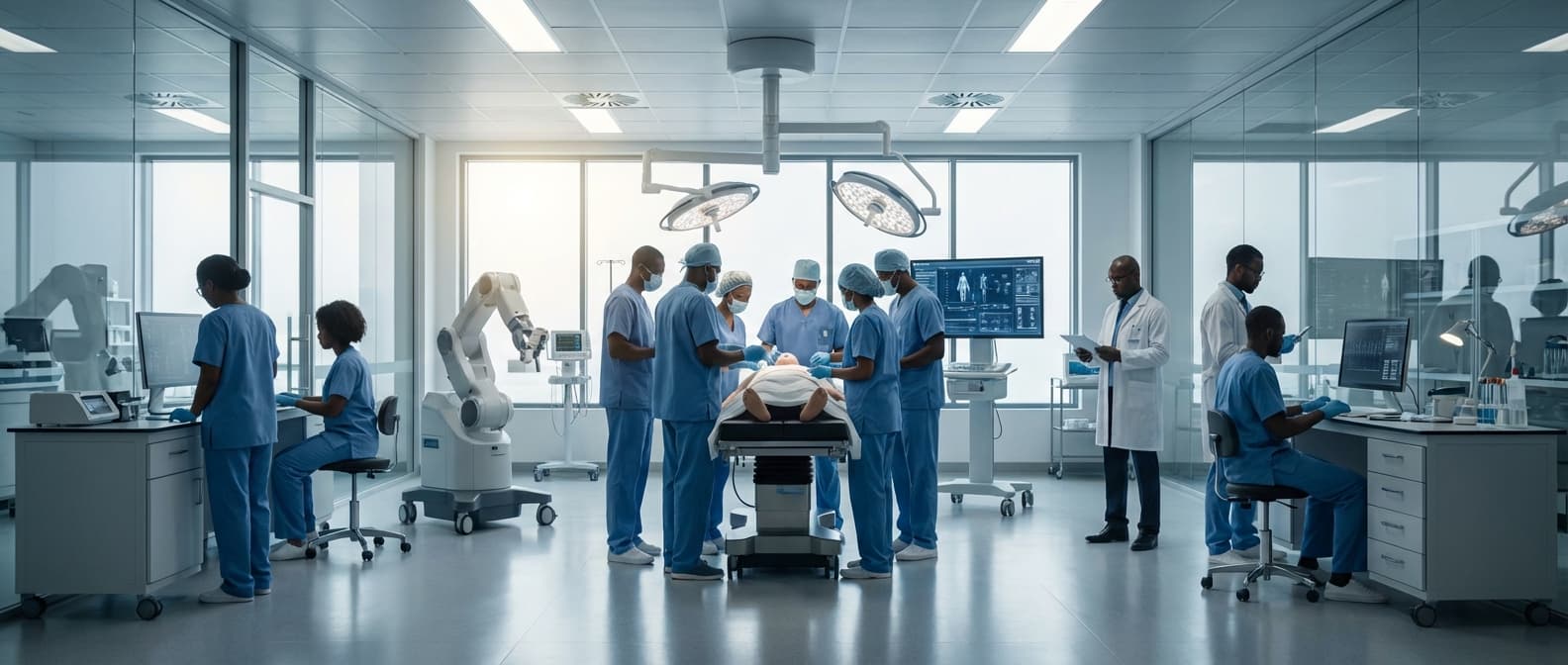
Calibration & Electrical Safety Testing in Guinea-Bissau
Engineering Excellence & Technical Support
Equipment calibration and IEC safety testing High-standard technical execution following OEM protocols and local regulatory frameworks.
Precision Instrument Calibration for Reliable Measurements
Ensuring the accuracy of critical measurement instruments through rigorous calibration services, vital for the integrity of infrastructure and industrial processes across Guinea-Bissau.
Comprehensive Electrical Safety Assessments
Minimizing risks and ensuring compliance with international standards through thorough electrical safety testing and inspections, safeguarding personnel and assets in the nation's growing economy.
Certified Compliance & Quality Assurance
Providing accredited calibration and testing services that guarantee adherence to regulatory requirements and promote a culture of quality and safety in Guinea-Bissau's key sectors.
What Is Calibration & Electrical Safety Testing In Guinea-bissau?
Calibration and electrical safety testing are critical services designed to ensure the accurate performance and safe operation of electrical and electronic equipment. Calibration involves the systematic comparison of a measuring instrument's readings to a known standard, adjusting it to minimize deviations and guarantee traceability to national or international metrological standards. This process verifies that the instrument's output is correct within specified tolerances. Electrical safety testing, on the other hand, assesses equipment for potential hazards such as electric shock, fire, and explosion. It typically involves evaluating insulation resistance, ground continuity, leakage currents, and dielectric strength to confirm compliance with relevant safety regulations and standards. In Guinea-Bissau, as globally, these services are essential for maintaining product quality, ensuring worker and public safety, facilitating international trade, and meeting regulatory requirements.
| Who Needs Calibration & Electrical Safety Testing? | Typical Use Cases |
|---|---|
| Manufacturing Industries: (e.g., food processing, pharmaceuticals, electronics, textiles) |
|
| Healthcare Facilities: (hospitals, clinics, diagnostic centers) |
|
| Research and Development Laboratories: |
|
| Service and Maintenance Providers: |
|
| Commercial Enterprises: (e.g., retail, hospitality, offices) |
|
| Government and Regulatory Bodies: |
|
| Utilities and Power Generation: |
|
Key Aspects of Calibration & Electrical Safety Testing:
- Calibration:
- Purpose: To ensure measurement accuracy and traceability.
- Process: Comparison against a traceable standard, adjustment, and certification.
- Outcome: A certificate of calibration documenting the results and uncertainty.
- Electrical Safety Testing:
- Purpose: To identify and mitigate electrical hazards.
- Process: Performance of various tests (e.g., insulation resistance, ground bond, leakage current, dielectric strength).
- Outcome: A safety test report or certification indicating compliance with applicable standards.
Who Needs Calibration & Electrical Safety Testing In Guinea-bissau?
Calibration and electrical safety testing are crucial for ensuring the accuracy, reliability, and safety of equipment across various sectors in Guinea-Bissau. These services are vital for organizations that depend on precise measurements, the safe operation of electrical devices, and compliance with industry standards and regulations. The demand stems from a need for operational efficiency, risk mitigation, and a commitment to quality and safety for both personnel and the public.
| Customer Type | Key Departments/Functions Requiring Service |
|---|---|
| Hospitals & Clinics | Medical Equipment Maintenance, Laboratory Services, Radiology, Anesthesia |
| Industrial Facilities | Production, Quality Control, Maintenance, Engineering |
| Energy Providers | Operations, Maintenance, Metering, Safety |
| Telecommunications Companies | Network Operations, Field Services, R&D |
| Food & Beverage Processors | Quality Assurance, Production, Engineering |
| Educational Institutions | Physics Labs, Chemistry Labs, Engineering Departments, Technical Workshops |
| Government Agencies | Weights & Measures, Environmental Protection, Public Health, Infrastructure Development |
| Construction Companies | Site Management, Equipment Maintenance, Safety Officers |
| Transportation & Logistics Firms | Fleet Management, Warehouse Operations, Maintenance |
| SMEs & Service Providers | Repair Shops, Electrical Contractors, HVAC Technicians |
Target Customers and Departments for Calibration & Electrical Safety Testing in Guinea-Bissau
- {"title":"Healthcare Sector","description":"Hospitals, clinics, and diagnostic laboratories rely heavily on accurately functioning medical equipment. Calibration ensures diagnostic tools (e.g., blood pressure monitors, ECG machines, laboratory analyzers) provide correct readings, crucial for patient care. Electrical safety testing is paramount for all medical devices to prevent electrical hazards to patients and staff."}
- {"title":"Industrial Manufacturing & Processing","description":"Factories and processing plants use a wide array of instruments for measuring temperature, pressure, flow, and quality. Calibration of these instruments guarantees product consistency and adherence to specifications. Electrical safety testing is essential for machinery and electrical systems to prevent accidents and downtime."}
- {"title":"Energy Sector (Power Generation & Distribution)","description":"Power plants and electricity distribution companies require accurate calibration of measurement devices (e.g., meters, transformers) for efficient power management and billing. Electrical safety testing of power generation equipment, substations, and distribution networks is critical for preventing grid failures and ensuring worker safety."}
- {"title":"Telecommunications","description":"Companies involved in mobile and fixed-line telecommunications need calibrated equipment for signal strength, frequency, and data transmission testing. Electrical safety of network infrastructure and user devices is also important."}
- {"title":"Agriculture & Food Production","description":"In sectors like food processing, calibration of temperature, humidity, and pH meters is vital for product quality and safety. Electrical safety testing of processing equipment and cold storage facilities is also a concern."}
- {"title":"Research & Development / Educational Institutions","description":"Universities, research centers, and vocational training institutes utilize scientific instruments that require regular calibration for accurate experimental results. Electrical safety of laboratory equipment and teaching aids is a fundamental requirement."}
- {"title":"Government & Public Services","description":"Various government departments, including those responsible for weights and measures, environmental monitoring, and public works, require calibrated equipment for regulatory enforcement and service delivery. Electrical safety testing of public infrastructure and government facilities is also crucial."}
- {"title":"Construction & Infrastructure","description":"Construction companies often use calibrated measuring tools (e.g., levels, distance meters) and require electrical safety checks on construction site equipment and temporary power installations."}
- {"title":"Transportation & Logistics","description":"Companies involved in shipping, aviation, and road transport may require calibration of weighbridges, fuel dispensers, and other measuring instruments. Electrical safety of their vehicles and facilities is also a consideration."}
- {"title":"Small & Medium Enterprises (SMEs)","description":"Many smaller businesses, especially those involved in repair, maintenance, or specialized services, will benefit from calibration and safety testing to ensure their tools are accurate and their operations are safe."}
Calibration & Electrical Safety Testing Process In Guinea-bissau
This document outlines the typical workflow for calibration and electrical safety testing services in Guinea-Bissau, from the initial client inquiry to the final execution and delivery of results. The process is designed to ensure accuracy, compliance, and client satisfaction.
| Stage | Description | Key Activities | Responsible Party | Potential Challenges/Considerations |
|---|---|---|---|---|
| Inquiry & Information Gathering | The client initiates contact to request calibration and/or electrical safety testing services. | Client explains needs, types of equipment, quantity, desired turnaround time. Service provider gathers preliminary information about the client's facility and existing documentation (if any). | Client, Service Provider | Lack of specific equipment details, unclear requirements, language barriers (if applicable). |
| Quotation & Proposal Development | Based on the gathered information, the service provider prepares a detailed quote and/or proposal. | Costing of services, estimation of time required, identification of necessary standards and methodologies, outlining scope of work, terms and conditions. | Service Provider | Inaccurate cost estimation due to incomplete information, competitive pricing pressures. |
| Agreement & Scheduling | The client reviews and accepts the quotation/proposal, leading to a formal agreement and scheduling of the service. | Contract signing, payment arrangements (deposit/advance), agreement on date and time for execution, logistical coordination (access, power, etc.). | Client, Service Provider | Delays in client approval, scheduling conflicts, availability of specialized personnel or equipment. |
| Pre-Testing Preparations | Both parties prepare for the on-site testing. | Service Provider: Mobilizes technicians, gathers testing equipment, calibration certificates for their own equipment. Client: Ensures equipment is accessible, powered, and any relevant operational manuals are available. | Service Provider, Client | Logistical issues with transport of equipment, unexpected equipment malfunctions, lack of client preparedness. |
| On-Site Testing Execution | The service provider's qualified technicians perform the calibration and/or electrical safety tests. | Following established procedures and relevant national/international standards (e.g., IEC, ISO). Data logging, visual inspections, functional tests, measurement of electrical parameters (voltage, current, resistance, insulation resistance, etc.). | Service Provider | Unforeseen equipment issues, environmental conditions impacting testing, safety hazards, equipment failures during testing. |
| Data Analysis & Reporting | The collected data is analyzed, and a comprehensive report is generated. | Comparison of measured values against specifications/standards, identification of deviations or failures, documentation of test results, preparation of calibration certificates or safety compliance reports. | Service Provider | Complex data interpretation, need for specialized software, potential discrepancies in results. |
| Certification & Delivery | The final reports and certificates are delivered to the client. | Issuance of accredited calibration certificates, safety compliance certificates, or detailed test reports. This may involve physical copies and/or digital formats. | Service Provider | Delays in report generation, incorrect information in certificates, client dissatisfaction with results. |
| Post-Testing Follow-up | A period of follow-up to ensure client satisfaction and address any further needs. | Answering client queries, addressing concerns about the results, scheduling re-testing if necessary, seeking feedback for service improvement. | Service Provider, Client | Unresolved client issues, lack of clear communication, missed opportunities for repeat business. |
Calibration & Electrical Safety Testing Workflow
- Inquiry & Information Gathering
- Quotation & Proposal Development
- Agreement & Scheduling
- Pre-Testing Preparations
- On-Site Testing Execution
- Data Analysis & Reporting
- Certification & Delivery
- Post-Testing Follow-up
Calibration & Electrical Safety Testing Cost In Guinea-bissau
Calibration and electrical safety testing are crucial for ensuring the accuracy and reliability of medical equipment, laboratory instruments, and other critical devices in Guinea-Bissau. The costs associated with these services are influenced by several factors, including the complexity of the device, the type of calibration or testing required, the expertise of the service provider, and the location of the testing. Due to the developing nature of the healthcare and industrial sectors in Guinea-Bissau, specialized services like these can sometimes incur higher costs or require sourcing external expertise, which might be reflected in the pricing. It's important for organizations to budget for these essential maintenance and safety checks to prevent equipment failure, ensure patient safety, and maintain regulatory compliance where applicable.
| Service Type | Estimated Cost Range (GNF - Guinean Franc) | Notes |
|---|---|---|
| Basic Electrical Safety Testing (per device) | 50,000 - 150,000 GNF | Covers essential checks like earth continuity, insulation resistance, and leakage current. May vary significantly based on device type. |
| Standard Calibration (e.g., thermometer, pH meter, basic scales) | 75,000 - 200,000 GNF | Includes verification against known standards. Price increases with the precision required. |
| Advanced Medical Equipment Calibration (e.g., vital signs monitor, infusion pump) | 150,000 - 500,000+ GNF | Requires specialized knowledge and equipment. May involve functional tests in addition to calibration. |
| Laboratory Instrument Calibration (e.g., spectrophotometer, centrifuge) | 200,000 - 700,000+ GNF | Depends heavily on the sophistication and accuracy requirements of the instrument. |
| On-Site Service Call Fee | 75,000 - 200,000 GNF | A flat fee for the technician's visit, separate from the testing/calibration cost. May be waived if multiple services are performed at the same location. |
| Comprehensive Service Package (e.g., Annual Maintenance Contract) | Negotiable (significant discount per item) | Includes multiple calibration and safety tests over a period, offering cost savings and planned maintenance. |
Factors Influencing Calibration & Electrical Safety Testing Costs in Guinea-Bissau:
- Device Complexity: Simple devices (e.g., basic thermometers) will generally be less expensive to calibrate than complex medical equipment (e.g., MRI machines, ventilators) or specialized laboratory analyzers.
- Type of Service: Basic calibration might be more affordable than comprehensive performance verification, electrical safety testing (e.g., leakage current, insulation resistance), or a combination of both.
- Number of Devices: Bulk discounts are often available for testing multiple devices from the same facility.
- On-Site vs. Off-Site Testing: If testing requires specialized equipment or a controlled environment only available at a service provider's facility, it will involve additional costs for transportation and potential downtime.
- Service Provider Expertise & Reputation: Highly qualified and experienced technicians or accredited calibration laboratories may charge more for their services.
- Geographic Location: The cost of travel and logistics for technicians to reach remote areas within Guinea-Bissau can add to the overall price.
- Urgency: Expedited testing services may come with a premium charge.
- Certification & Documentation: The level of detail and accreditation of the calibration certificates provided can also influence cost.
- Importation of Specialized Equipment: If a service provider needs to import specific calibration equipment for a particular device, this cost might be passed on.
Affordable Calibration & Electrical Safety Testing Options
Maintaining accurate instrument calibration and ensuring electrical safety are paramount for operational efficiency, product quality, and regulatory compliance. However, these essential services can represent a significant cost for businesses. This guide outlines affordable calibration and electrical safety testing options, focusing on value bundles and cost-saving strategies to help you manage your budget effectively without compromising on quality or safety.
| Strategy | Description | Benefits | Considerations |
|---|---|---|---|
| Value Bundling | Combining multiple calibration and safety testing services into a single package at a reduced price. For instance, bundling calibration for a group of instruments with annual electrical safety checks for your facility. | Significant cost reduction compared to individual services, streamlined scheduling, consolidated invoicing, potential for preferred pricing. | Requires careful assessment of your actual needs to avoid paying for unnecessary services. Ensure the bundle covers the most critical equipment and tests. |
| Scheduled Maintenance Programs | Establishing a regular, pre-planned schedule for calibration and safety testing. This could involve quarterly, semi-annual, or annual agreements. | Predictable budgeting, prevents last-minute rushes and associated premium costs, ensures continuous compliance, often comes with discounted rates for committed clients. | Requires commitment and accurate forecasting of equipment usage and testing needs. Flexibility might be limited if needs change drastically. |
| In-House vs. Outsourced Analysis | Evaluating whether certain calibration or safety checks can be performed by trained internal staff versus relying solely on external service providers. | Potentially lower direct costs for routine, simple tests if you have the right equipment and trained personnel. Faster turnaround for basic checks. | Requires investment in training, calibration equipment, and ongoing competency verification for staff. Risk of internal bias or lack of specialized knowledge for complex tests. May not be cost-effective for infrequent needs. |
| Tiered Service Levels | Opting for different levels of service based on the criticality of the instrument or equipment. For example, high-priority equipment might receive premium, faster calibration, while less critical items can be on a standard schedule. | Optimizes spending by allocating resources where they are most needed, ensures critical assets are always calibrated and safe, avoids overspending on non-essential items. | Requires clear categorization of equipment criticality and a robust asset management system. |
| Off-Peak Scheduling | Arranging for calibration and testing services during your facility's downtime or off-peak hours. | Reduced labor costs for service providers (and potentially for your staff involved), minimal disruption to operations, can be easier to schedule larger batches of equipment. | May require some operational flexibility. Service provider availability might be limited during these times. |
| Negotiating Volume Discounts | If you have a large number of instruments or frequent testing needs, negotiate discounts based on the volume of services purchased. | Direct cost savings on individual services when purchasing in bulk. | Requires a significant and consistent testing volume. Understand the provider's pricing structure for different volumes. |
| Leveraging Manufacturer Warranties & Support | Check if your equipment manufacturers offer calibration services or bundled testing as part of extended warranties or support packages. | Potentially included at no extra cost or at a reduced rate, familiar with your specific equipment. | May be limited to specific equipment brands or types. Ensure the scope of service meets your needs. |
| Digital Record Keeping & Automation | Implementing digital systems for managing calibration schedules, results, and safety certifications. | Reduces administrative overhead, minimizes errors, facilitates easy retrieval of records for audits, provides real-time status updates, and helps identify underutilized or over-utilized equipment. | Requires an initial investment in software and potentially training. |
Why Calibration and Electrical Safety Testing Matter
- Accuracy & Precision: Ensures your measurements are reliable, leading to better decision-making and product quality.
- Compliance: Meets industry standards and regulatory requirements (e.g., ISO, FDA, OSHA).
- Safety: Identifies potential hazards in electrical equipment, preventing accidents and injuries.
- Reduced Downtime: Proactive testing helps prevent equipment failures and costly downtime.
- Cost Savings: Prevents waste, rework, and product recalls due to inaccurate measurements or safety issues.
Verified Providers In Guinea-bissau
In Guinea-Bissau, ensuring access to quality healthcare is paramount. Identifying and trusting healthcare providers is a critical step for individuals and organizations seeking reliable medical services. This document outlines the importance of verified providers, with a particular focus on Franance Health credentials and why they stand out as a superior choice for healthcare needs in the region.
| Credential/Attribute | Description | Franance Health Advantage |
|---|---|---|
| Medical Licensure and Registration | Ensures providers meet the minimum legal requirements to practice medicine in Guinea-Bissau. | Franance Health rigorously verifies all medical licenses and registrations for their network, ensuring compliance with national health regulations. |
| Professional Qualifications and Education | Confirms that healthcare professionals possess the necessary academic and training backgrounds for their respective specializations. | Franance Health scrutinizes educational records and certifications, prioritizing providers with advanced degrees and specialized training relevant to international healthcare standards. |
| Clinical Experience and Competency | Assesses the practical experience and proven ability of providers in delivering effective patient care. | Franance Health evaluates the clinical experience of its network members, often looking for a history of successful patient outcomes and demonstrated proficiency in various medical procedures. |
| Adherence to Ethical Standards and Best Practices | Ensures providers operate with integrity, professionalism, and follow established medical ethics and guidelines. | Franance Health embeds a commitment to ethical practice and patient-centered care into its vetting process, selecting providers who uphold the highest moral and professional standards. |
| Compliance with International Health Standards | Confirms that providers are familiar with and implement globally recognized protocols for diagnosis, treatment, and patient safety. | Franance Health actively partners with providers who demonstrate a commitment to aligning their services with international best practices, crucial for expatriates and those seeking globally recognized care. |
| Background Checks and Reputational Review | Verifies the professional history of providers, ensuring no disciplinary actions or adverse findings that could compromise patient trust. | Franance Health conducts thorough background checks and reputational reviews to ensure the integrity and trustworthiness of every provider in their network. |
Why Verified Providers Matter in Guinea-Bissau:
- Patient Safety: Verified providers adhere to strict standards of practice, reducing the risk of errors and ensuring safe patient care.
- Quality of Care: Credentialing processes often assess the expertise, experience, and qualifications of healthcare professionals, guaranteeing a higher standard of medical treatment.
- Trust and Reliability: For both individuals and organizations, verified providers offer peace of mind, knowing they are engaging with legitimate and competent healthcare professionals.
- Accountability: Verified providers are typically subject to regulatory oversight, making them accountable for their actions and the quality of services they deliver.
- Access to Specialized Services: Verification can help identify providers with specific expertise, ensuring patients can access the specialized care they require.
Scope Of Work For Calibration & Electrical Safety Testing
This Scope of Work (SOW) outlines the requirements for the calibration of laboratory equipment and the electrical safety testing of electrical equipment. The objective is to ensure the accuracy, reliability, and safety of these instruments through rigorous testing and adherence to relevant industry standards. This SOW details the technical deliverables and the standard specifications that will be followed.
| Category | Item | Description | Standard Specification | Deliverable |
|---|---|---|---|---|
| Calibration | Specific Instrument (e.g., Digital Multimeter) | Calibration of the instrument's functions (voltage, current, resistance) across its specified ranges. | ISO/IEC 17025, manufacturer's recommended calibration intervals and procedures, NIST traceability (if applicable). | Calibration Certificate detailing measured values, uncertainties, calibration date, and next calibration due date. |
| Calibration | Specific Instrument (e.g., Oscilloscope) | Calibration of timebase, voltage accuracy, trigger functions, and probe compensation. | ISO/IEC 17025, manufacturer's recommended calibration intervals and procedures, NIST traceability (if applicable). | Calibration Certificate detailing measured values, uncertainties, calibration date, and next calibration due date. |
| Calibration | General Laboratory Equipment (e.g., Balances, Pipettes, Temperature Probes) | Calibration of specified measurement parameters according to manufacturer specifications and relevant standards. | ISO/IEC 17025, manufacturer's recommended calibration intervals, relevant ASTM or ISO standards (e.g., ASTM E617 for balances, ISO 8655 for pipettes). | Calibration Certificate detailing measured values, uncertainties, calibration date, and next calibration due date. |
| Electrical Safety Testing | General Electrical Equipment (e.g., Power Supplies, Test Rigs) | Performance of electrical safety tests including Earth Continuity, Insulation Resistance, and Leakage Current tests. | IEC 60950, IEC 61010, UL 61010, or relevant regional safety standards. | Electrical Safety Test Report documenting test parameters, pass/fail status for each test, and equipment identification. |
| Electrical Safety Testing | Medical Electrical Equipment (if applicable) | Performance of electrical safety tests as per medical device regulations, including applied parts testing. | IEC 60601-1 series, FDA QSR (if applicable). | Medical Electrical Equipment Safety Test Report documenting test parameters, pass/fail status for each test, and equipment identification. |
Scope of Work Details
- Calibration of specified laboratory equipment to ensure measurement accuracy and traceability to national or international standards.
- Electrical safety testing of specified electrical equipment to verify compliance with safety regulations and prevent hazards to users and equipment.
- Provision of detailed calibration certificates for all calibrated equipment.
- Provision of electrical safety test reports for all tested equipment.
- Adherence to all relevant industry standards and best practices throughout the testing process.
- Prompt and clear communication regarding test progress, findings, and any issues encountered.
Service Level Agreement For Calibration & Electrical Safety Testing
This Service Level Agreement (SLA) outlines the agreed-upon response times and uptime guarantees for Calibration and Electrical Safety Testing services provided by [Your Company Name] to [Client Name]. This SLA is intended to ensure consistent and reliable service delivery, minimizing operational disruptions for the client.
| Service Level | Priority Level | Response Time | Resolution Time (Target) | Uptime Guarantee |
|---|---|---|---|---|
| Calibration & Electrical Safety Testing Service Availability | Critical (Service Outage) | 1 Hour during Business Hours; 4 Hours outside Business Hours | Within 8 Business Hours | 99.8% (Monthly) |
| Calibration & Electrical Safety Testing Service Availability | High (Significant Impact) | 2 Business Hours | Within 1 Business Day | N/A (Covered by Critical) |
| Calibration & Electrical Safety Testing Service Availability | Medium (Minor Impact) | 4 Business Hours | Within 2 Business Days | N/A (Covered by Critical) |
| Support & Inquiries (Non-technical) | Standard | 8 Business Hours | Within 1 Business Day | N/A |
Definitions
- Calibration: The process of comparing measurement data from a device with data from a measurement standard of known accuracy. Calibration confirms the accuracy of a measuring instrument.
- Electrical Safety Testing: The process of verifying that electrical equipment meets relevant safety standards and regulations to prevent hazards like electric shock or fire.
- Downtime: Any period during which the Calibration and Electrical Safety Testing services are unavailable to the Client.
- Response Time: The maximum time allowed for [Your Company Name] to acknowledge and begin addressing a reported issue.
- Resolution Time: The maximum time allowed for [Your Company Name] to resolve a reported issue to the Client's satisfaction.
- Uptime Guarantee: The minimum percentage of time that the Calibration and Electrical Safety Testing services are expected to be available to the Client.
- Business Hours: [Specify your business hours, e.g., Monday to Friday, 9:00 AM to 5:00 PM, excluding public holidays in [Client's Location].]
Frequently Asked Questions

Ready when you are
Let's scope your Calibration & Electrical Safety Testing in Guinea-Bissau project in Guinea-Bissau.

Scaling healthcare logistics and technical systems across the entire continent.