
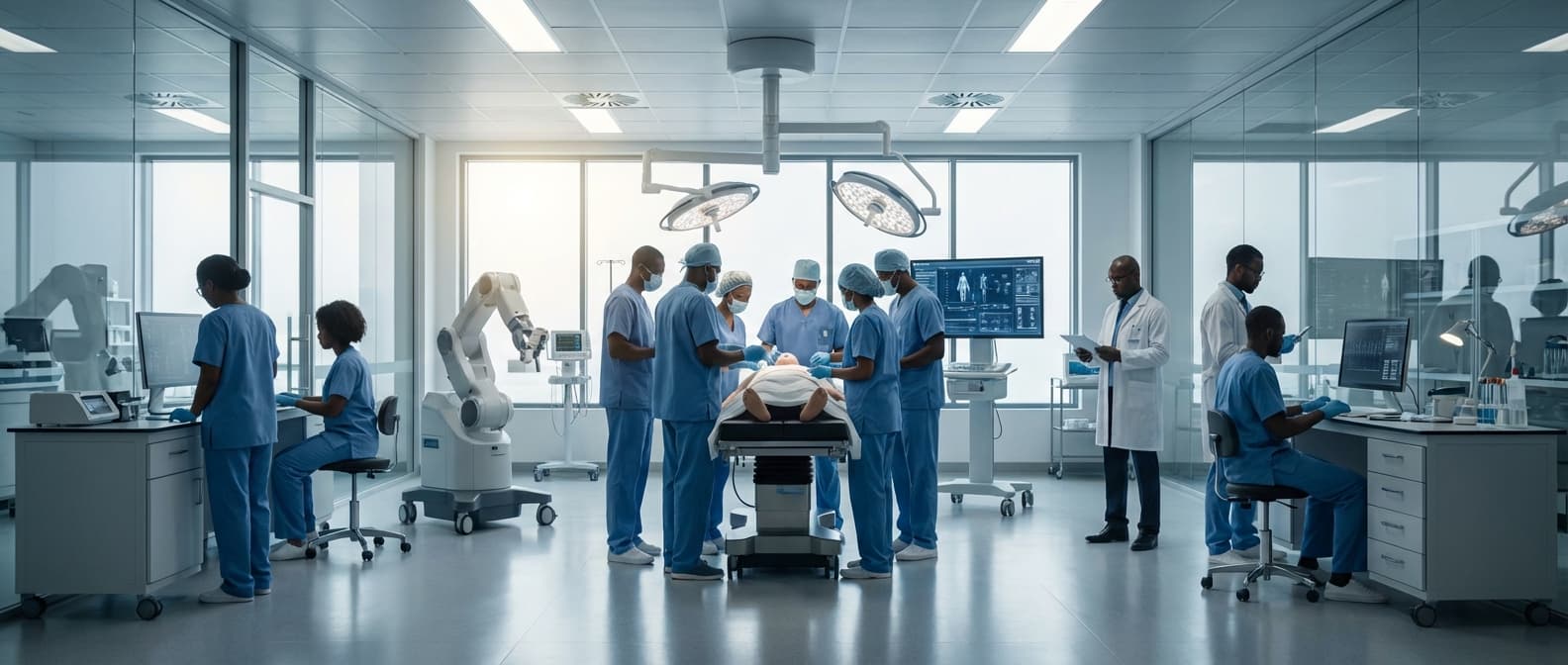
Biomedical Engineering Consulting in Guinea-Bissau
Engineering Excellence & Technical Support
Equipment selection, procurement and implementation consulting High-standard technical execution following OEM protocols and local regulatory frameworks.
Healthcare Infrastructure Modernization
Our biomedical engineering consultants in Guinea-Bissau are adept at assessing existing healthcare facilities, identifying critical gaps, and designing comprehensive plans for modernization. This includes the strategic procurement, installation, and commissioning of essential medical equipment, optimizing workflows, and ensuring compliance with international healthcare standards to elevate the quality of patient care.
Diagnostic & Laboratory Equipment Integration
We specialize in the selection, implementation, and maintenance of advanced diagnostic and laboratory equipment tailored to the specific needs and resource availability in Guinea-Bissau. Our expertise ensures seamless integration with existing systems, proper calibration, and user training, thereby enhancing diagnostic accuracy and turnaround times for crucial medical tests.
Medical Device Regulatory Compliance & Safety
Navigating the complexities of medical device regulations is crucial. Our team provides expert guidance on regulatory compliance for the importation and use of medical devices in Guinea-Bissau. We focus on establishing robust safety protocols, risk management frameworks, and effective maintenance programs to ensure the safe and reliable operation of all medical technology within healthcare institutions.
What Is Biomedical Engineering Consulting In Guinea-bissau?
Biomedical Engineering Consulting in Guinea-Bissau encompasses the application of engineering principles and methodologies to the healthcare sector, with a specific focus on the unique challenges and opportunities present in Guinea-Bissau. This service involves providing expert technical advice, strategic planning, and practical solutions related to medical devices, healthcare infrastructure, and biomedical technology adoption. Consultants analyze existing systems, identify areas for improvement, and recommend evidence-based strategies to enhance healthcare delivery, patient safety, and operational efficiency within the country's healthcare ecosystem. The scope can range from the procurement and maintenance of medical equipment to the design and implementation of health information systems and the development of local capacity in biomedical technology management. The aim is to bridge the gap between technological advancements and accessible, effective healthcare services.
| Stakeholder | Need for Biomedical Engineering Consulting | Typical Use Cases |
|---|---|---|
| Ministry of Public Health | Developing national health technology policies, strategic planning for healthcare infrastructure, ensuring equitable access to medical devices, and overseeing regulatory frameworks. | Developing a national medical device inventory and lifecycle management strategy, designing procurement guidelines for essential medical equipment, advising on the establishment of national repair and maintenance centers, and implementing health information system standards. |
| Public and Private Healthcare Facilities (Hospitals, Clinics) | Optimizing the use of existing medical equipment, planning for new technology acquisition, ensuring equipment reliability and safety, improving operational workflows, and complying with local and international standards. | Conducting equipment needs assessments, developing preventative maintenance programs, advising on the selection and installation of new diagnostic imaging or surgical equipment, implementing patient safety protocols related to medical devices, and optimizing ward layouts for efficient equipment utilization. |
| International Development Organizations and NGOs | Assisting in the implementation of health projects, ensuring the sustainability of donated medical equipment, building local technical capacity, and conducting feasibility studies for new healthcare initiatives. | Providing technical oversight for the installation and commissioning of medical equipment in newly built or renovated facilities, developing training curricula for local biomedical technicians, assessing the long-term maintenance requirements of donated equipment, and evaluating the impact of technological interventions on health outcomes. |
| Local Biomedical Technology Companies and Service Providers | Enhancing technical expertise, developing business strategies, improving service quality, and understanding regulatory requirements. | Offering advanced training in specialized medical equipment repair, advising on quality management systems for service delivery, supporting the development of local manufacturing capabilities for essential medical supplies, and navigating import/export regulations for medical devices. |
| Research and Academic Institutions | Facilitating access to and utilization of advanced medical technologies for research and education, and contributing to local innovation in healthcare technology. | Advising on the setup and maintenance of specialized laboratory equipment for medical research, collaborating on the development of simulation-based training tools for healthcare professionals, and supporting the integration of new technologies into medical curricula. |
Key Areas of Biomedical Engineering Consulting in Guinea-Bissau
- Medical Equipment Procurement and Management
- Healthcare Facility Planning and Design
- Biomedical Technology Assessment and Adoption
- Maintenance and Repair Strategies for Medical Devices
- Healthcare Information Systems Integration
- Regulatory Compliance and Standards Implementation
- Training and Capacity Building for Biomedical Personnel
- Biomedical Waste Management Solutions
Who Needs Biomedical Engineering Consulting In Guinea-bissau?
Biomedical Engineering Consulting in Guinea-Bissau is a critical and emerging field, aimed at enhancing the quality, accessibility, and sustainability of healthcare services. The need arises from the inherent complexities of medical technology, the necessity for efficient and safe healthcare infrastructure, and the drive to adopt modern solutions in a developing healthcare landscape. Consulting services can address a wide range of challenges, from equipment procurement and maintenance to regulatory compliance and strategic planning for healthcare facilities.
| Customer Type | Key Needs Addressed by Consulting | Specific Departments Involved |
|---|---|---|
| Hospitals and Clinics (Public & Private) | Equipment selection & procurement, maintenance strategies, infrastructure planning, quality & safety standards, regulatory compliance. | Biomedical Engineering, Procurement, Clinical Engineering, Infection Control, Quality Assurance, IT, Administration. |
| Ministry of Health | National health infrastructure planning, equipment standardization, policy development for medical technology, regulatory framework establishment, capacity building. | Health Infrastructure, Medical Supplies, Planning & Information, Regulatory Affairs, Public Health Programs. |
| NGOs & International Aid Agencies | Needs assessments for medical equipment, project implementation support for healthcare facilities, sustainable equipment management, training of local staff. | Program Management, Logistics, Technical Support, Monitoring & Evaluation. |
| Educational & Research Institutions | Laboratory equipment setup and maintenance, simulation center development, research facility planning, curriculum development support. | Medical Training, Research & Development, Laboratory Management, Facilities Management. |
| Private Healthcare Investors | Feasibility studies for new facilities, equipment planning for diverse services, operational efficiency strategies, compliance with national and international standards. | Project Development, Operations Management, Investment Planning. |
| Medical Device Manufacturers/Suppliers | Regulatory pathway navigation, local market entry strategy, service network development, after-sales support optimization. | Sales & Marketing, Technical Service, Regulatory Compliance, After-Sales Service. |
Target Customers and Departments for Biomedical Engineering Consulting in Guinea-Bissau:
- {"title":"Hospitals and Clinics","departments":["Biomedical Engineering Department (if existing, otherwise management)","Procurement and Logistics","Clinical Engineering","Infection Control","Quality Assurance","IT Department (for integration of medical devices with hospital systems)","Administration and Management"],"description":"Both public and private healthcare institutions are primary beneficiaries. This includes general hospitals, specialized clinics (e.g., maternity, cardiology), and smaller health centers across the country."}
- {"title":"Ministry of Health","departments":["Department of Health Infrastructure and Equipment","Department of Medical Supplies and Pharmaceuticals","Department of Planning and Health Information","Regulatory Affairs Unit","Public Health Programs"],"description":"The national governing body for health services plays a crucial role in shaping healthcare policy, infrastructure development, and resource allocation."}
- {"title":"Non-Governmental Organizations (NGOs) and International Aid Agencies","departments":["Program Management","Logistics and Operations","Technical Support","Monitoring and Evaluation"],"description":"Organizations involved in delivering healthcare services, implementing health projects, and providing humanitarian aid."}
- {"title":"Educational and Research Institutions","departments":["Medical Training Programs","Research and Development","Laboratory Management","Facilities Management"],"description":"Universities, medical schools, and research centers involved in training healthcare professionals and conducting medical research."}
- {"title":"Private Healthcare Investors and Developers","departments":["Project Development","Operations Management","Investment Planning"],"description":"Individuals or companies looking to establish or expand private healthcare facilities."}
- {"title":"Medical Device Manufacturers and Suppliers","departments":["Sales and Marketing","Technical Service and Support","Regulatory Compliance","After-Sales Service"],"description":"Companies involved in importing, distributing, and servicing medical equipment."}
Biomedical Engineering Consulting Process In Guinea-bissau
Biomedical Engineering Consulting in Guinea-Bissau, while a nascent field, follows a structured workflow to ensure efficient and impactful engagement. This process is designed to address the unique challenges and opportunities within the Guinean healthcare landscape, from initial client contact to the successful implementation of solutions. The workflow emphasizes clear communication, thorough assessment, collaborative problem-solving, and sustainable outcomes. Key phases include understanding the client's needs, conducting a comprehensive needs assessment, developing tailored solutions, securing necessary approvals and resources, implementing the proposed interventions, and providing ongoing support and evaluation.
| Phase | Description | Key Activities | Deliverables/Outcomes |
|---|---|---|---|
| Inquiry and Initial Consultation | The starting point where a potential client (e.g., Ministry of Health, hospital, NGO) expresses a need for biomedical engineering services. | Receive inquiry, schedule initial meeting, discuss broad requirements, understand organizational context. | Understanding of client's general needs, initial assessment of project feasibility. |
| Needs Assessment and Scoping | A detailed investigation to precisely define the client's challenges, existing infrastructure, and specific requirements. | Site visits, interviews with stakeholders, equipment inventory, assessment of maintenance capacity, identification of gaps. | Comprehensive needs assessment report, clear definition of project scope and objectives. |
| Proposal Development | Crafting a detailed plan outlining the proposed solution, methodology, timeline, budget, and expected outcomes. | Solution design, technical specifications, resource estimation, risk assessment, cost breakdown. | Detailed project proposal, including technical and financial components. |
| Contracting and Agreement | Formalizing the engagement through a legally binding contract outlining terms, responsibilities, and payment schedules. | Negotiation of contract terms, legal review, signing of agreement. | Signed contract and mutual understanding of project parameters. |
| Implementation Planning | Developing a granular plan for executing the proposed solution, including logistics, procurement, and stakeholder coordination. | Detailed project schedule, procurement strategy, logistics plan, stakeholder engagement strategy, risk mitigation plan. | Approved implementation plan. |
| Execution and Installation | The phase where the actual work is carried out, including procurement, installation, and initial setup of equipment or systems. | Equipment procurement, transportation, installation, configuration, initial testing. | Successfully installed and functional equipment/systems. |
| Training and Capacity Building | Equipping local staff with the knowledge and skills to operate, maintain, and repair the new equipment or systems. | Development of training materials, delivery of hands-on training, assessment of competency. | Trained personnel, improved local capacity for equipment management. |
| Monitoring, Evaluation, and Handover | Tracking progress against objectives, assessing the impact of the intervention, and formally transferring ownership and responsibility. | Regular progress reporting, performance monitoring, final evaluation, documentation of project outcomes, formal handover. | Project completion report, evaluation findings, successful handover to client. |
| Post-Implementation Support | Providing ongoing technical assistance, troubleshooting, and potentially further training to ensure long-term sustainability. | Remote or on-site technical support, spare parts management advice, refresher training. | Sustained functionality of equipment/systems, client satisfaction. |
Biomedical Engineering Consulting Workflow in Guinea-Bissau
- Inquiry and Initial Consultation
- Needs Assessment and Scoping
- Proposal Development
- Contracting and Agreement
- Implementation Planning
- Execution and Installation
- Training and Capacity Building
- Monitoring, Evaluation, and Handover
- Post-Implementation Support
Biomedical Engineering Consulting Cost In Guinea-bissau
Biomedical engineering consulting costs in Guinea-Bissau are influenced by a variety of factors, leading to a range of pricing that can be difficult to pinpoint precisely without specific project details. These costs are typically presented in the local currency, the West African CFA franc (XOF). The complexity and scope of the project are paramount. For instance, a simple assessment of existing medical equipment will be considerably less expensive than the design and implementation of a new hospital wing or a specialized diagnostic facility. The experience and reputation of the consulting firm or individual also play a significant role. Highly sought-after experts with a proven track record will command higher fees. The duration of the consultancy is another key determinant; longer engagements naturally incur higher total costs. Furthermore, the specific expertise required is critical. Consulting on regulatory compliance, medical device procurement, clinical engineering services, or technology integration will all have different pricing structures. Travel and accommodation expenses within Guinea-Bissau or for consultants traveling to the country can also add to the overall cost, especially for remote or challenging locations. Finally, the urgency of the project can sometimes influence pricing, with rush projects potentially incurring premium fees. Due to the nascent stage of specialized biomedical engineering services in Guinea-Bissau, local consulting expertise might be limited, potentially leading to reliance on international consultants whose rates are generally higher and would be converted to XOF for billing.
| Service Type (Example) | Estimated Daily Rate (XOF) | Estimated Project Cost (XOF) |
|---|---|---|
| Basic Equipment Assessment/Audit (Short-term) | 40,000 - 80,000 | 200,000 - 500,000 |
| Medical Equipment Procurement Advisory (Medium-term) | 60,000 - 120,000 | 500,000 - 2,000,000 |
| Clinical Engineering Department Setup/Optimization (Long-term) | 80,000 - 150,000+ | 2,000,000 - 10,000,000+ |
| New Facility Design/Planning Consultation (Complex, Long-term) | 100,000 - 200,000+ | 5,000,000 - 50,000,000+ |
| Regulatory Compliance & Certification Assistance | 70,000 - 130,000 | 300,000 - 1,500,000 |
Key Factors Influencing Biomedical Engineering Consulting Costs in Guinea-Bissau:
- Project Scope and Complexity
- Consultant's Experience and Reputation
- Duration of the Consultancy
- Specific Expertise Required (e.g., regulatory, procurement, clinical engineering, technology)
- Travel and Accommodation Expenses
- Project Urgency
- Availability of Local Expertise vs. International Consultants
Affordable Biomedical Engineering Consulting Options
Biomedical engineering consulting can be a significant investment, but there are ways to access expert advice without breaking the bank. This guide explores affordable options, focusing on value bundles and effective cost-saving strategies. Understanding these approaches can empower you to leverage specialized knowledge for your product development, regulatory compliance, or market analysis needs, even with limited resources.
| Strategy/Bundle Type | Description | Benefits | Considerations |
|---|---|---|---|
| Phase-Specific Bundles | Combines services for a particular stage (e.g., initial feasibility, design verification, regulatory submission prep). | Streamlined process, predictable costs for a defined stage, expertise tailored to the phase. | May require additional bundles for subsequent phases, ensuring the chosen bundle truly covers all necessary tasks. |
| Regulatory Compliance Package | Includes services for navigating FDA, CE Mark, or other regulatory pathways, encompassing documentation review, strategy development, and submission support. | Ensures adherence to critical regulations, reduces compliance risks, potentially speeds up market entry. | Scope needs to be clearly defined to avoid unexpected costs; requires proactive involvement from your team. |
| Product Development Lite | Focuses on specific aspects like prototyping guidance, material selection, or design for manufacturability (DFM) advice. | Cost-effective for targeted development challenges, leverages expert insights for crucial early decisions. | May not cover end-to-end product development; requires clear definition of deliverables. |
| Freelancer Engagement (Hourly/Project) | Hiring an independent consultant on an hourly basis or for a fixed project fee. | High flexibility, direct access to expertise, often lower overheads than firms. | Requires careful vetting of credentials and experience; project scope management is crucial. |
| Skill-Sharing Agreements | Formal or informal agreements where consultants share expertise in exchange for other valuable considerations (e.g., equity, future work, case studies). | Significant cost reduction, potential for long-term partnerships. | Requires careful negotiation and clear understanding of expectations; equity arrangements can be complex. |
| On-Demand Expert Network Subscription | Access to a pool of consultants for short, focused consultations via a subscription model. | Pay-as-you-go flexibility, access to diverse expertise, cost-effective for quick queries. | May have limitations on consultation length or depth; not suitable for extensive project work. |
| Remote Collaboration Tools | Utilizing video conferencing, project management software, and cloud-based document sharing. | Eliminates travel costs, enables wider consultant selection, facilitates asynchronous work. | Requires reliable internet access and effective communication protocols; potential for misinterpretation without face-to-face interaction. |
Affordable Biomedical Engineering Consulting Options
- Value Bundles: These are pre-packaged service offerings that combine multiple consulting tasks at a potentially reduced rate compared to individual service procurement. They are designed to address common project phases or needs.
- Freelance & Independent Consultants: Engaging individual consultants often offers more flexibility and lower overheads than larger firms, leading to competitive pricing.
- Specialized Niche Firms: Smaller, highly specialized firms may offer expertise in a very specific area at a more accessible price point than broad-scope consultancies.
- University & Academic Partnerships: Collaborating with university research labs or professors can provide access to cutting-edge knowledge and talent, often at a more affordable rate, especially for research-oriented projects.
- On-Demand & Project-Based Engagements: Opting for consulting services tailored to specific, short-term projects rather than long-term retainers can control costs effectively.
- Remote Consulting: Leveraging remote communication tools significantly reduces travel expenses and can open up a wider pool of consultants globally, often with lower cost of living adjustments.
- Mentorship & Advisory Programs: Some organizations or incubators offer access to experienced biomedical engineers for mentorship and guidance at a fraction of the cost of full consulting engagements.
Verified Providers In Guinea-bissau
In Guinea-Bissau, identifying reliable and credentialed healthcare providers is paramount for individuals seeking quality medical services. Franance Health has emerged as a leading name, distinguished by its stringent verification processes and commitment to excellence. This section outlines why their network of providers represents the best choice for healthcare in the region.
| Provider Type | Verification Criteria | Franance Health Assurance |
|---|---|---|
| Doctors (General & Specialists) | Medical Degree Verification, License to Practice, Board Certifications, Peer Reviews, Criminal Background Checks | Guaranteed to be licensed, qualified, and in good standing. |
| Nurses | Nursing Degree/Diploma, Professional Nursing License, Clinical Experience | Ensured to possess formal training and practical experience. |
| Hospitals & Clinics | Licensing by Ministry of Health, Accreditation Status, Infrastructure and Equipment Standards, Infection Control Protocols | Certified to meet established healthcare facility standards. |
| Diagnostic Laboratories | Accreditation, Quality Control Measures, Equipment Calibration Records, Staff Qualifications | Verified for accuracy, reliability, and adherence to laboratory standards. |
Why Franance Health Providers Stand Out
- Rigorous Credentialing: Franance Health employs a multi-layered approach to verify the qualifications, licenses, and professional standing of every provider in their network. This ensures that patients are treated by competent and experienced medical professionals.
- Commitment to Patient Safety: Patient well-being is at the core of Franance Health's operations. Their verification process includes checks on disciplinary actions and adherence to ethical medical practices, minimizing risks for patients.
- Access to Specialized Care: Through their verified network, Franance Health facilitates access to a wide range of specialists, ensuring that patients can find the precise medical expertise they need, from general practitioners to highly specialized surgeons.
- Transparency and Trust: Franance Health believes in fostering trust through transparency. Their verification process provides patients with the assurance that they are engaging with legitimate and qualified healthcare professionals.
- Continuous Quality Monitoring: Beyond initial verification, Franance Health maintains ongoing monitoring of provider performance and patient feedback, ensuring a consistently high standard of care across their network.
Scope Of Work For Biomedical Engineering Consulting
This Scope of Work (SOW) outlines the consulting services to be provided by [Consulting Firm Name] (hereinafter referred to as 'Consultant') to [Client Name] (hereinafter referred to as 'Client') in the field of Biomedical Engineering. The project aims to [briefly state project objective, e.g., develop a novel medical device, optimize a manufacturing process, conduct regulatory compliance assessment]. This SOW details the technical deliverables, standard specifications, and associated activities. All work will be conducted in accordance with relevant industry standards and best practices.
| Deliverable | Description | Standard Specification / Reference | Timeline (Weeks) |
|---|---|---|---|
| Feasibility Study Report | Comprehensive analysis of project feasibility, market assessment, technical viability, and preliminary risk assessment. | ISO 13485:2016 (Quality Management Systems for Medical Devices), relevant industry market research reports. | 4 |
| Conceptual Design Document | Detailed description of the proposed solution, including system architecture, functional requirements, and user interface concepts. | IEC 62366-1:2015 (Application of Usability Engineering to Medical Devices), IEEE 11073 (Medical Device Communications Standards). | 6 |
| Detailed Design Specifications | Engineering drawings, schematics, bill of materials (BOM), software architecture, and manufacturing process flow diagrams. | ASME Y14 Series (Engineering Drawing and Related Documentation Practices), IPC standards (for electronics). | 10 |
| Prototype Build and Verification Reports | Documentation of prototype construction, including materials used, manufacturing processes, and verification testing results against design specifications. | ISO 14971:2019 (Application of Risk Management to Medical Devices), relevant ASTM standards for material testing. | 8 |
| Validation Protocol and Report | Plan and results of user testing, clinical validation (if applicable), and performance validation against intended use and requirements. | FDA 21 CFR Part 820 (Quality System Regulation), EU MDR 2017/745 (Medical Device Regulation). | 12 |
| Regulatory Submission Documentation | Preparation of documentation required for regulatory submissions (e.g., 510(k) premarket notification, CE marking technical file). | FDA Guidance Documents, harmonized European standards. | 15 |
| Final Project Report | Summary of project activities, outcomes, lessons learned, and recommendations for future development or implementation. | Client-defined format, project management best practices. | 2 |
Project Phases and Activities
- Phase 1: Needs Assessment and Feasibility Study
- Phase 2: Design and Development
- Phase 3: Prototyping and Testing
- Phase 4: Regulatory Compliance and Documentation
- Phase 5: Project Closeout and Knowledge Transfer
Service Level Agreement For Biomedical Engineering Consulting
This Service Level Agreement (SLA) outlines the guaranteed response times and uptime for Biomedical Engineering Consulting services provided by [Your Company Name] to [Client Name]. This agreement is effective as of [Start Date].
| Service Type | Response Time Target (during Service Hours) | Response Time Target (outside Service Hours - Emergency Only) | Uptime Guarantee |
|---|---|---|---|
| Critical Issue Support | 1 hour | 2 hours | 99.5% |
| High Priority Issue Support | 2 hours | 4 hours | 99.5% |
| Normal Priority Issue Support | 8 business hours | Not guaranteed | 99.5% |
| Client Portal / Knowledge Base Access | N/A (System Availability) | N/A (System Availability) | 99.8% |
Key Service Definitions
- Service Hours: Standard business hours are defined as Monday to Friday, 9:00 AM to 5:00 PM [Time Zone], excluding national holidays.
- Emergency Support: Emergency support is available 24 hours a day, 7 days a week, for critical issues impacting patient safety or essential clinical operations.
- Critical Issue: An issue that prevents a core biomedical device or system from functioning, directly impacting patient care or safety.
- High Priority Issue: An issue that significantly degrades the performance of a biomedical device or system, impacting multiple users or a specific department's workflow.
- Normal Priority Issue: An issue that affects a non-critical function of a biomedical device or system, or a minor performance degradation.
- Uptime Guarantee: Refers to the percentage of time that core consulting services and access to our client portal are available and operational.
Frequently Asked Questions

Ready when you are
Let's scope your Biomedical Engineering Consulting in Guinea-Bissau project in Guinea-Bissau.

Scaling healthcare logistics and technical systems across the entire continent.