
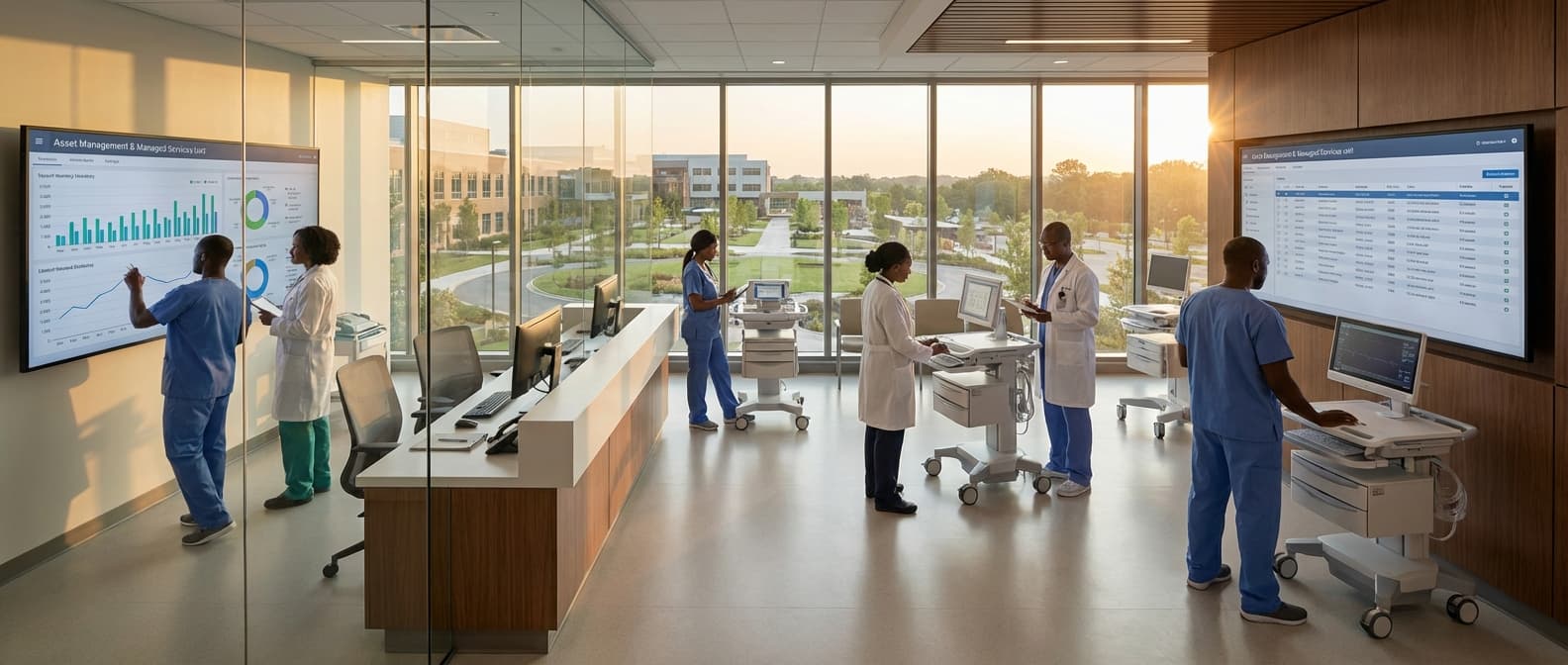
Maintenance KPI Reporting Service (Uptime/MTBF/MTTR) in Guinea-Bissau
Engineering Excellence & Technical Support
Maintenance KPI Reporting Service (Uptime/MTBF/MTTR) High-standard technical execution following OEM protocols and local regulatory frameworks.
Enhanced Uptime Visibility
Leverage real-time Uptime tracking to pinpoint critical asset performance across Guinea-Bissau's infrastructure. Our service provides granular data, enabling proactive identification of potential failures and minimizing costly downtime in key sectors.
Optimized Mean Time Between Failures (MTBF)
Gain actionable insights into equipment reliability. By analyzing historical failure data and maintenance patterns, our service helps Guinea-Bissau industries predict and prevent recurring issues, thereby significantly extending Mean Time Between Failures and improving operational efficiency.
Streamlined Mean Time To Repair (MTTR)
Accelerate repair processes and reduce operational disruption. Our reporting service identifies bottlenecks in maintenance workflows, allowing for faster diagnosis and resolution of equipment failures. This optimization leads to a reduced Mean Time To Repair, ensuring swift return to full operational capacity throughout Guinea-Bissau.
What Is Maintenance Kpi Reporting Service (Uptime/mtbf/mttr) In Guinea-bissau?
Maintenance KPI Reporting Service (Uptime/MTBF/MTTR) in Guinea-Bissau refers to a specialized offering focused on the systematic collection, analysis, and presentation of key performance indicators (KPIs) related to the operational availability and reliability of assets and systems within organizations operating in Guinea-Bissau. This service leverages data-driven insights to quantify and improve maintenance effectiveness. The core KPIs typically include: Uptime (the percentage of time a system or asset is operational and available for use), Mean Time Between Failures (MTBF) (the average time elapsed between one failure of a repairable system and the commencement of the next failure), and Mean Time To Repair (MTTR) (the average time required to repair a failed component or system).
| Use Case | Description | Relevant KPIs | Impact/Benefit |
|---|---|---|---|
| Critical Infrastructure Uptime Assurance | Ensuring continuous availability of essential services like electricity, internet, and water supply. | Uptime, MTTR (minimizing downtime during outages). | Preventing economic losses, maintaining public safety, and ensuring service continuity. |
| Manufacturing Production Efficiency | Maximizing output by minimizing unplanned equipment stoppages on production lines. | Uptime, MTBF (increasing intervals between breakdowns), MTTR (reducing repair duration). | Increased production throughput, reduced waste, improved product quality, and enhanced profitability. |
| Asset Reliability and Longevity | Proactively identifying and addressing potential failure points in machinery and equipment. | MTBF (identifying trends in failure rates), MTTR (optimizing repair strategies). | Extended asset lifespan, reduced premature replacements, and minimized capital expenditure. |
| Maintenance Cost Optimization | Analyzing maintenance activities and their impact on asset performance to identify cost-saving opportunities. | Uptime (optimizing maintenance schedules), MTTR (reducing labor and parts costs). | Lowered operational costs, better resource allocation for maintenance teams. |
| Fleet Management and Logistics Optimization | Ensuring vehicle and vessel availability for efficient delivery and transportation operations. | Uptime (of fleet vehicles), MTBF (for individual vehicles), MTTR (for repairs). | Improved delivery schedules, reduced transportation costs, enhanced customer satisfaction. |
| Predictive Maintenance Implementation | Using KPI trends to forecast potential failures and schedule maintenance proactively. | MTBF (as an input for predictive models), Uptime (as a target). | Reduced emergency repairs, minimized production disruptions, optimized spare parts inventory. |
Who Needs Maintenance KPI Reporting Service (Uptime/MTBF/MTTR) in Guinea-Bissau?
- Organizations in Guinea-Bissau operating critical infrastructure (e.g., power generation, telecommunications, water treatment, transportation).
- Manufacturing facilities reliant on continuous production processes.
- Mining and oil & gas operations with extensive equipment fleets and remote sites.
- Logistics and transportation companies managing fleets of vehicles and vessels.
- Healthcare institutions where equipment availability directly impacts patient care.
- Government agencies responsible for maintaining public services and facilities.
- Businesses seeking to optimize operational expenditure (OPEX) and capital expenditure (CAPEX) related to asset management.
- Companies aiming to enhance regulatory compliance and safety standards through proactive maintenance.
Who Needs Maintenance Kpi Reporting Service (Uptime/mtbf/mttr) In Guinea-bissau?
A Maintenance KPI Reporting Service specializing in Uptime, Mean Time Between Failures (MTBF), and Mean Time To Repair (MTTR) is crucial for organizations in Guinea-Bissau that rely heavily on the consistent and efficient operation of their physical assets. These businesses face significant financial and operational risks when equipment malfunctions or experiences downtime. By providing data-driven insights into maintenance performance, this service empowers them to optimize their maintenance strategies, reduce operational costs, and improve overall productivity.
| Industry Sector | Target Customers | Key Departments Benefiting |
|---|---|---|
| Mining & Extractive Industries | Mining companies, quarry operators, resource extraction firms | Operations, Maintenance, Engineering, Reliability, Production |
| Agriculture & Agribusiness | Large-scale farms, food processing plants, agricultural equipment suppliers | Farm Management, Processing Operations, Equipment Maintenance, Supply Chain |
| Energy & Utilities | Power generation facilities (hydro, thermal), water treatment plants, distribution networks | Operations & Control, Plant Maintenance, Grid Management, Asset Management |
| Manufacturing & Industrial Production | Factories, assembly plants, processing facilities (e.g., textiles, cement) | Production, Plant Management, Maintenance, Quality Control, Engineering |
| Logistics & Transportation | Port authorities, shipping companies, fleet management operations | Operations, Fleet Maintenance, Logistics Management, Asset Utilization |
| Telecommunications | Mobile network operators, internet service providers, infrastructure providers | Network Operations Center (NOC), Field Maintenance, Technical Operations, Infrastructure Management |
| Construction & Infrastructure Development | Major construction firms, infrastructure project management | Project Management, Equipment Management, Site Operations, Maintenance |
Target Customers and Departments in Guinea-Bissau
- Industries with critical infrastructure and operational reliance on machinery.
- Organizations focused on improving asset reliability and longevity.
- Companies aiming to reduce unscheduled downtime and its associated costs.
- Businesses seeking to benchmark their maintenance performance against industry standards.
- Entities committed to proactive and predictive maintenance approaches.
Maintenance Kpi Reporting Service (Uptime/mtbf/mttr) Process In Guinea-bissau
This document outlines the workflow for the Maintenance KPI Reporting Service (Uptime/MTBF/MTTR) in Guinea-Bissau. The service aims to provide clients with accurate and timely reporting on key maintenance performance indicators, enabling them to optimize their asset management strategies. The process begins with an initial inquiry and concludes with the delivery of comprehensive KPI reports.
| Stage | Description | Key Activities | Deliverables | Responsible Party | Timeline (Estimated) |
|---|---|---|---|---|---|
| Client Inquiry & Initial Consultation | Prospective clients express interest in maintenance KPI reporting services. | Understand client's needs, existing systems, and desired KPIs. Discuss service capabilities and potential benefits. Initial qualification of the client. | Understanding of client requirements, preliminary scope discussion. | Sales/Business Development Team, Prospective Client | 1-3 Business Days |
| Scope Definition & Service Agreement | Formalizing the services to be provided and the terms of engagement. | Detailed discussion on specific KPIs (Uptime, MTBF, MTTR), data sources, reporting frequency, and service level agreements (SLAs). Drafting and signing of the service agreement. | Signed Service Agreement, Defined Scope of Work, Agreed KPIs, Reporting Schedule. | Sales/Business Development Team, Legal Team, Client | 3-7 Business Days |
| Data Collection Planning & Tooling | Establishing the methodology and tools for data acquisition. | Identifying and mapping data sources (e.g., CMMS, SCADA, manual logs). Defining data extraction methods (APIs, manual input templates, direct database access). Setting up or configuring data collection tools/platforms. | Data Collection Plan, Configured Data Collection Tools, Access Credentials (if applicable). | Technical Team (Data Engineers/Analysts), Client's IT/Maintenance Department | 5-10 Business Days |
| Data Collection & Validation | Gathering raw maintenance data from the client's systems. | Executing data extraction processes. Performing initial data quality checks for completeness, accuracy, and consistency. Identifying and flagging any data anomalies. | Raw Maintenance Data, Data Validation Reports, List of Data Issues. | Technical Team (Data Engineers/Analysts), Client's Maintenance Personnel | Ongoing (per reporting cycle), typically 1-5 Business Days per cycle |
| KPI Calculation & Analysis | Processing the validated data to derive the agreed-upon maintenance KPIs. | Applying formulas for Uptime, Mean Time Between Failures (MTBF), and Mean Time To Repair (MTTR). Performing trend analysis, identifying outliers, and generating insights from the KPI data. | Calculated KPI values, Initial Analysis of Trends and Performance. | Technical Team (Data Analysts/Engineers) | 2-4 Business Days (per reporting cycle) |
| Report Generation | Compiling the calculated KPIs and analysis into a comprehensive report. | Creating visual representations of KPIs (charts, graphs). Adding narrative explanations of performance. Structuring the report according to client-specific templates or best practices. | Draft Maintenance KPI Report (including Uptime, MTBF, MTTR metrics and analysis). | Technical Team (Data Analysts/Report Writers) | 2-3 Business Days (per reporting cycle) |
| Report Review & Delivery | Presenting the generated report to the client for their review and acceptance. | Sharing the draft report with the client. Conducting review meetings to discuss findings and answer questions. Incorporating client feedback. Finalizing and delivering the official report. | Final, Approved Maintenance KPI Report, Presentation Materials (if applicable). | Account Manager, Technical Team, Client | 3-5 Business Days (per reporting cycle) |
| Feedback & Continuous Improvement | Gathering client feedback to enhance the service. | Soliciting formal and informal feedback on the report's clarity, accuracy, and usefulness. Identifying areas for improvement in data collection, analysis, or reporting. Implementing changes for future reporting cycles. | Client Feedback Summary, Action Plan for Service Improvement. | Account Manager, Technical Team, Client | Ongoing (post-delivery) |
Workflow Stages
- Client Inquiry & Initial Consultation
- Scope Definition & Service Agreement
- Data Collection Planning & Tooling
- Data Collection & Validation
- KPI Calculation & Analysis
- Report Generation
- Report Review & Delivery
- Feedback & Continuous Improvement
Maintenance Kpi Reporting Service (Uptime/mtbf/mttr) Cost In Guinea-bissau
The cost of Maintenance KPI Reporting Services, specifically focusing on Uptime, Mean Time Between Failures (MTBF), and Mean Time To Repair (MTTR), in Guinea-Bissau is influenced by several key factors. These services are crucial for optimizing operational efficiency and minimizing downtime in various industries. The pricing structure typically involves a combination of initial setup, ongoing reporting, and potential consultation. Due to the developing economic landscape and limited availability of specialized service providers within Guinea-Bissau, costs can be higher than in more established markets. Furthermore, the complexity of the client's operations, the volume and type of equipment being monitored, and the desired level of detail and frequency of reporting will significantly impact the overall expenditure. For businesses operating in Guinea-Bissau, it's essential to understand these pricing dynamics to budget effectively for these critical maintenance analytics.
| Service Component | Typical Cost Range (GMD) | Notes |
|---|---|---|
| Initial Setup & Configuration (per site/system) | 75,000 - 250,000 GMD | Includes system assessment, initial data integration, and basic dashboard setup. Varies greatly based on complexity and automation. |
| Monthly Reporting Fee (Basic) | 40,000 - 120,000 GMD | Covers standard weekly/monthly reports on Uptime, MTBF, MTTR for a defined set of assets. Assumes some level of automated data collection. |
| Monthly Reporting Fee (Advanced/Customized) | 100,000 - 300,000+ GMD | Includes in-depth analysis, predictive maintenance insights, custom report generation, and more frequent reporting cycles. |
| On-site Consultation/Audits (per day) | 50,000 - 150,000 GMD | For detailed equipment assessments, problem diagnosis, or implementation support. May include travel expenses. |
| Data Integration/Sensor Installation (per asset) | 30,000 - 100,000 GMD | Cost for integrating existing systems or installing new sensors for automated data capture. Highly variable. |
| Training & Support (per session/user) | 20,000 - 60,000 GMD | Training clients on how to interpret reports and use the reporting platform. |
Key Pricing Factors for Maintenance KPI Reporting Services in Guinea-Bissau
- Scope of Services: The breadth of KPIs covered (Uptime, MTBF, MTTR, etc.) and the depth of analysis provided.
- Data Collection Method: Manual data input versus automated sensor integration and real-time monitoring systems.
- Number of Assets/Equipment: The sheer volume of machinery or systems requiring monitoring.
- Complexity of Operations: The sophistication of the client's industrial processes and the interconnectedness of their equipment.
- Reporting Frequency and Detail: Daily, weekly, monthly reports, and the level of granularity in the data presented.
- Service Provider's Expertise and Reputation: The experience, qualifications, and track record of the reporting service.
- Geographic Location and Accessibility: For on-site assessments or support, travel costs within Guinea-Bissau can be a factor.
- Technology Infrastructure: Requirements for data storage, analysis software, and reporting platforms.
- Customization Needs: Tailoring reports and dashboards to specific client requirements.
- Contract Duration: Longer-term contracts might offer volume discounts.
- Local vs. International Providers: International providers may charge higher rates, but could offer more advanced expertise.
Affordable Maintenance Kpi Reporting Service (Uptime/mtbf/mttr) Options
Our Affordable Maintenance KPI Reporting Service focuses on providing essential uptime, Mean Time Between Failures (MTBF), and Mean Time To Repair (MTTR) reporting to optimize your maintenance operations. We understand that budget is a critical factor, so we've developed flexible value bundles and cost-saving strategies to ensure you receive maximum benefit without breaking the bank. Our service leverages automated data collection and intuitive dashboards to deliver actionable insights.
| Service Level | Key Features | Target Audience | Estimated Monthly Cost (USD) |
|---|---|---|---|
| Basic Uptime Tracker | Automated Uptime Monitoring, Daily/Weekly Availability Reports | Small Businesses, Facilities with Single Critical Assets | $75 - $150 |
| Standard MTBF/MTTR Essentials | Uptime Monitoring, MTBF & MTTR Calculations, Asset Failure Frequency Reports, Average Repair Time Reports | Medium-Sized Operations, Multiple Critical Assets | $150 - $300 |
| Premium Performance Suite | All Standard Features + Trend Analysis, Failure Pattern Identification, Predictive Alerts, Custom Report Generation, Priority Support | Larger Organizations, Complex Machinery, Proactive Maintenance Focus | $300 - $600+ |
Value Bundles
- Basic Uptime Tracker: Ideal for smaller operations or those just starting with KPI reporting. Includes automated tracking of equipment uptime and basic reporting on overall availability.
- Standard MTBF/MTTR Essentials: Builds on the Basic bundle by incorporating detailed MTBF and MTTR calculations for key assets. Provides insights into failure frequency and repair duration.
- Premium Performance Suite: Our most comprehensive offering. Includes all features of the Standard bundle, plus advanced trend analysis, root cause identification support, predictive maintenance indicators, and custom reporting options. Best for organizations seeking deep operational insights and proactive maintenance strategies.
Verified Providers In Guinea-bissau
In Guinea-Bissau, ensuring access to reliable and safe healthcare services is paramount. Verified healthcare providers play a crucial role in this, offering a guarantee of quality and adherence to established standards. Among these, Franance Health stands out for its comprehensive credentialing process and its unwavering commitment to patient well-being. Their rigorous vetting ensures that all affiliated practitioners meet stringent criteria, making them the best choice for individuals seeking trusted medical care in the region.
| Credentialing Component | Franance Health's Standard | Benefit to Patients |
|---|---|---|
| Medical License Verification | Mandatory and up-to-date. | Ensures providers are legally qualified to practice. |
| Professional Education & Training | Verified degrees and specialized training. | Confirms providers possess the necessary knowledge and skills. |
| Clinical Experience Assessment | Review of practice history and areas of expertise. | Connects patients with experienced practitioners. |
| Background Checks | Thorough checks for any disciplinary actions. | Safeguards against unqualified or unethical practitioners. |
| Continuous Professional Development | Requirement for ongoing learning and skill enhancement. | Guarantees providers stay current with medical advancements. |
Why Franance Health is the Premier Choice for Verified Providers in Guinea-Bissau:
- Rigorous Credentialing and Verification: Franance Health employs a multi-faceted approach to verify the qualifications, licenses, and professional standing of every provider in their network.
- Commitment to Quality of Care: Beyond basic credentials, Franance Health assesses providers based on their clinical experience, patient feedback, and adherence to best medical practices.
- Patient Safety First: The credentialing process is designed with patient safety as the utmost priority, identifying and partnering with only those providers who demonstrate a strong ethical framework and a commitment to safe medical procedures.
- Comprehensive Network: Franance Health offers access to a diverse range of medical specialists and facilities, ensuring that patients can find the most appropriate care for their specific needs.
- Transparency and Trust: By providing verified provider information, Franance Health fosters transparency and builds trust, empowering patients to make informed decisions about their healthcare.
Scope Of Work For Maintenance Kpi Reporting Service (Uptime/mtbf/mttr)
This Scope of Work (SOW) outlines the requirements for a Maintenance KPI Reporting Service focused on Uptime, Mean Time Between Failures (MTBF), and Mean Time To Repair (MTTR). The service aims to provide consistent, accurate, and actionable reporting to support maintenance operations and drive improvements in equipment reliability and availability.
| Section | Description | Technical Deliverables | Standard Specifications |
|---|---|---|---|
| Establishing secure and reliable methods for collecting maintenance data from various sources (e.g., CMMS, SCADA, sensor logs). Ensuring data integrity and accuracy through validation rules. |
|
|
| Developing and implementing algorithms to accurately calculate Uptime, MTBF, and MTTR based on ingested data. This includes defining failure events, repair durations, and operational states. |
|
|
| Designing and delivering user-friendly reports and dashboards that present KPI data clearly and effectively. Enabling trend analysis and identification of performance bottlenecks. |
|
|
| Implementing a robust and scalable data storage solution to house raw and processed KPI data. Ensuring data security, privacy, and efficient retrieval. |
|
|
| Providing ongoing support, maintenance, and continuous improvement for the reporting service. Ensuring the service meets evolving business needs. |
|
|
Key Performance Indicators (KPIs) to be Reported
- Uptime: Percentage of time equipment is operational and available for use.
- Mean Time Between Failures (MTBF): Average time elapsed between inherent failures of repairable items, under specific conditions.
- Mean Time To Repair (MTTR): Average time required to repair a failed component or system.
Service Level Agreement For Maintenance Kpi Reporting Service (Uptime/mtbf/mttr)
This Service Level Agreement (SLA) defines the performance standards and guarantees for the Maintenance KPI Reporting Service, specifically focusing on Uptime, Mean Time Between Failures (MTBF), and Mean Time To Repair (MTTR). It outlines response times for incidents affecting the reporting service and guarantees the availability of the reporting platform.
| Service Element | Uptime Guarantee | MTBF Target | MTTR Target | Response Time (Critical Incident) | Response Time (Major Incident) | Response Time (Minor Incident) |
|---|---|---|---|---|---|---|
| Maintenance KPI Reporting Service | 99.9% (excluding scheduled maintenance) | 2500 hours | 4 hours | 15 minutes (acknowledgment), 1 hour (resolution attempt) | 30 minutes (acknowledgment), 4 hours (resolution attempt) | 1 hour (acknowledgment), 8 business hours (resolution attempt) |
Key Performance Indicators (KPIs) and Definitions
- {"title":"Uptime","description":"The percentage of time the Maintenance KPI Reporting Service is operational and accessible for users to view and generate reports. This excludes scheduled maintenance windows."}
- {"title":"Mean Time Between Failures (MTBF)","description":"The average time that elapses between the repair of a failure and the next failure of the Maintenance KPI Reporting Service. A higher MTBF indicates greater reliability."}
- {"title":"Mean Time To Repair (MTTR)","description":"The average time it takes to repair a failure of the Maintenance KPI Reporting Service, from the moment the incident is detected and reported until the service is fully restored. A lower MTTR indicates faster recovery."}
Frequently Asked Questions

Ready when you are
Let's scope your Maintenance KPI Reporting Service (Uptime/MTBF/MTTR) in Guinea-Bissau project in Guinea-Bissau.

Scaling healthcare logistics and technical systems across the entire continent.