
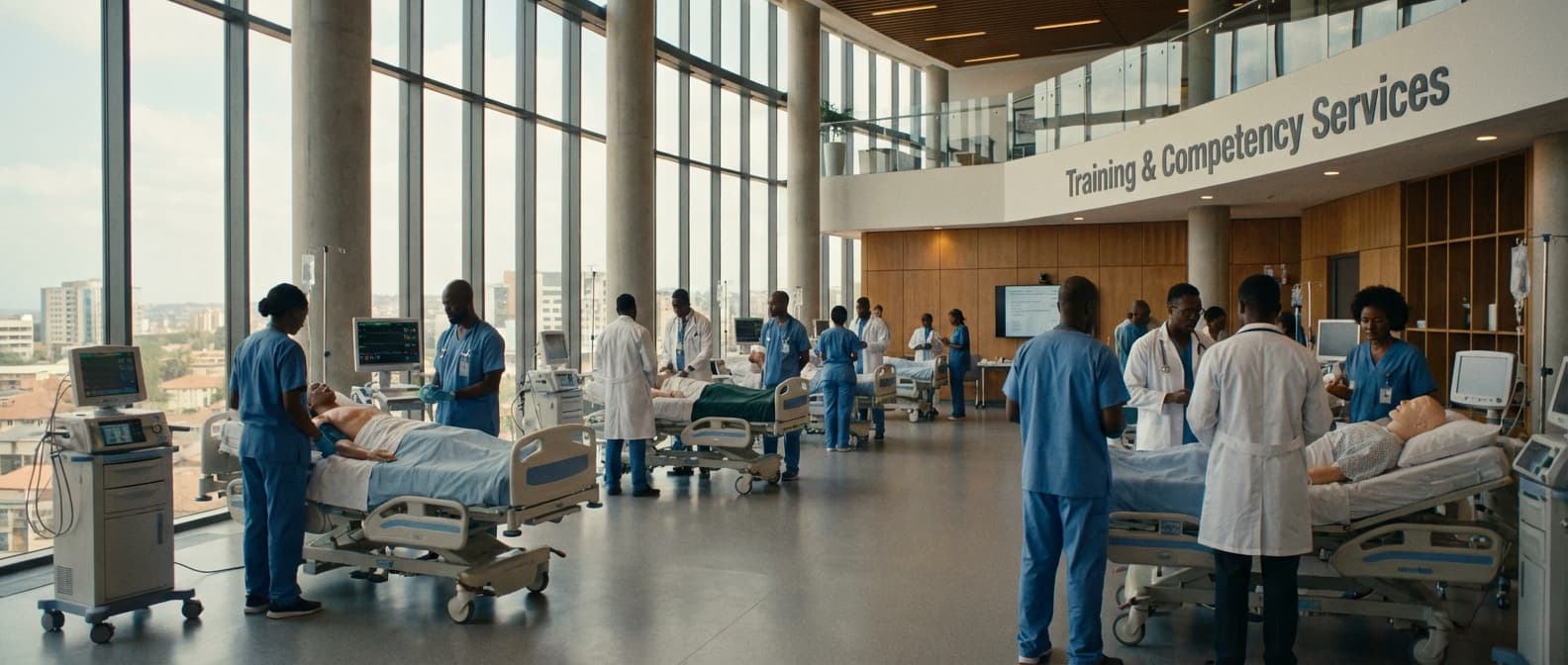
Ultrasound Application Training Service (Protocol-Based) in Ghana
Engineering Excellence & Technical Support
Ultrasound Application Training Service (Protocol-Based) High-standard technical execution following OEM protocols and local regulatory frameworks.
Ghana-Centric Ultrasound Protocols
Our training curriculum is meticulously designed with specific Ghanaian healthcare needs and common pathologies in mind. We offer practical, protocol-based training that directly addresses the diagnostic challenges faced by healthcare professionals across various regions of Ghana, ensuring relevance and immediate applicability.
Hands-On Proficiency with Diverse Equipment
Gain practical expertise by training on a range of ultrasound machines commonly found in Ghanaian healthcare facilities. Our protocol-driven approach emphasizes standardized scanning techniques, equipping trainees to confidently operate and achieve diagnostic quality images regardless of the specific equipment available.
Empowering Local Expertise & Credentialing
Achieve internationally recognized protocol-based ultrasound proficiency with our accredited training. We focus on building sustainable local capacity, empowering Ghanaian sonographers and clinicians with the skills and credentials to deliver high-quality diagnostic services, ultimately improving patient care outcomes across the nation.
What Is Ultrasound Application Training Service (Protocol-based) In Ghana?
Ultrasound Application Training Service (Protocol-Based) in Ghana refers to a specialized educational program designed to equip medical professionals with the knowledge and practical skills necessary to perform diagnostic ultrasound examinations according to standardized protocols. This service focuses on the systematic acquisition of ultrasound images and data, ensuring consistency, accuracy, and reproducibility of findings across different practitioners and institutions within Ghana. The training emphasizes adherence to established protocols, which are predefined sequences of transducer manipulation, imaging planes, and measurements required for specific anatomical regions or pathological conditions. This approach standardizes the diagnostic process, facilitates interdisciplinary communication, and enhances the quality of patient care.
| Typical Use Cases | Description of Application |
|---|---|
| Abdominal Ultrasound | Protocol-based training for scanning the liver, gallbladder, spleen, pancreas, kidneys, and aorta to identify structural abnormalities, masses, and fluid collections. |
| Obstetric Ultrasound | Standardized protocols for evaluating fetal growth, anatomy, amniotic fluid volume, placental position, and maternal pelvic organs throughout pregnancy. |
| Gynecological Ultrasound | Application of protocols for assessing the uterus, ovaries, and fallopian tubes for conditions such as fibroids, cysts, and ectopic pregnancies. |
| Echocardiography | Training in standardized views and measurements of cardiac chambers, valves, and blood flow to diagnose various cardiac pathologies. |
| Vascular Ultrasound | Protocol-driven assessment of arteries and veins for conditions like deep vein thrombosis (DVT), arterial stenosis, and aneurysms. |
| Musculoskeletal (MSK) Ultrasound | Adherence to protocols for imaging tendons, ligaments, muscles, and joints to diagnose injuries, inflammation, and degenerative changes. |
| Thyroid and Breast Ultrasound | Standardized approaches for evaluating nodules, masses, and diffuse parenchymal disease in the thyroid gland and breast tissue. |
Who Needs Ultrasound Application Training Service (Protocol-Based) in Ghana?
- Radiologists and Radiographers (Diagnostic Medical Sonographers) seeking to enhance or specialize their ultrasound skills.
- Obstetricians and Gynecologists requiring proficiency in gynecological and obstetric ultrasound assessments.
- Cardiologists and Cardiac Technicians aiming to master echocardiography protocols.
- General Practitioners and Internists interested in point-of-care ultrasound (POCUS) or basic diagnostic imaging.
- Physiotherapists and Sports Medicine Practitioners involved in musculoskeletal ultrasound.
- Medical Students and Junior Doctors undergoing postgraduate training in radiology or relevant specialties.
- Healthcare institutions in Ghana (hospitals, clinics, diagnostic centers) aiming to standardize their ultrasound services and improve diagnostic accuracy.
Who Needs Ultrasound Application Training Service (Protocol-based) In Ghana?
This document outlines the essential need for Protocol-Based Ultrasound Application Training Services in Ghana. Such training is crucial for ensuring the safe, effective, and standardized application of ultrasound technology across various healthcare settings. By adhering to established protocols, practitioners can improve diagnostic accuracy, optimize patient care, and reduce the risk of errors. The training caters to a diverse range of healthcare professionals who utilize or will utilize ultrasound as a diagnostic tool.
| Customer Type | Primary Departments Requiring Training | Rationale for Training Need |
|---|---|---|
| Hospitals (Public & Private) | Radiology/Diagnostic Imaging, Obstetrics & Gynecology, Cardiology, Emergency Medicine, Urology, Anesthesiology, General Surgery, Pediatrics | To ensure consistent and accurate diagnostic imaging, improve patient management, and standardize ultrasound procedures across different specialties. |
| Polyclinics and Health Centers | General Practice, Midwifery, Obstetrics, Internal Medicine | To equip primary healthcare providers with essential ultrasound skills for point-of-care diagnostics, early detection, and appropriate patient referral, thereby expanding access to diagnostic services. |
| Diagnostic Imaging Centers | Radiology, Sonography | To enhance the skills of sonographers and radiologists, ensure adherence to standardized protocols for various ultrasound examinations, and improve the quality of reports. |
| Specialized Clinics | Obstetrics & Gynecology, Cardiology, Urology, Gastroenterology, Vascular Surgery | To provide in-depth, protocol-driven training for specialized ultrasound applications relevant to their specific patient populations and diagnostic needs. |
| Tertiary and Teaching Hospitals | All departments utilizing ultrasound, especially advanced specialties | To ensure practitioners are up-to-date with the latest protocol-based techniques, complex case management, and the use of advanced ultrasound modalities. |
| Medical Training Institutions | Radiology Departments, Ob/Gyn Departments, Medical Schools | To integrate comprehensive, protocol-based ultrasound education into the curriculum, producing well-trained future healthcare professionals proficient in ultrasound diagnostics. |
| Individual Practitioners | N/A (focus on specific specialties) | To offer professional development opportunities for practitioners seeking to enhance their ultrasound skills and knowledge in specific areas. |
Target Customers and Departments in Ghana Requiring Ultrasound Application Training Service (Protocol-Based)
- Hospitals (both public and private)
- Polyclinics and Health Centers
- Diagnostic Imaging Centers
- Specialized Clinics (e.g., Obstetrics & Gynecology, Cardiology, Urology)
- Tertiary and Teaching Hospitals
- Medical Training Institutions (Universities, Colleges of Health Sciences)
Ultrasound Application Training Service (Protocol-based) Process In Ghana
This document outlines the standard workflow for the Ultrasound Application Training Service (Protocol-Based) offered in Ghana. This service focuses on providing hands-on, protocol-driven training for healthcare professionals on specific ultrasound applications. The process is designed to be systematic, ensuring all necessary steps are covered from initial inquiry to successful training execution and follow-up.
| Stage | Description | Key Activities | Deliverables/Outcomes |
|---|---|---|---|
| Initial contact and understanding of client's training requirements. | Receive inquiry, schedule consultation, gather information on application needs, target audience, and existing skill sets. | Documented training needs, confirmed scope of training. |
| Formalizing the training offer and securing commitment. | Develop detailed training proposal, present proposal, negotiate terms, sign training agreement, finalize payment schedule. | Approved training proposal, signed contract, confirmed financial commitment. |
| Logistical and administrative setup for the training. | Schedule training dates, confirm venue and equipment availability, prepare training materials (handouts, protocols, slides), communicate with participants, conduct pre-assessment (optional). | Confirmed training schedule, prepared training environment, organized training materials, registered participants. |
| Delivery of the protocol-based ultrasound application training. | Conduct theoretical lectures, practical scanning sessions using protocols, case study discussions, trainer-led demonstrations, participant practice. | Knowledge transfer, skill development in specific ultrasound applications, adherence to protocols. |
| Assessing learning outcomes and formalizing completion. | Administer post-training assessments (written/practical), collect participant feedback, review performance, issue certificates of completion. | Assessment results, participant feedback report, certified participants. |
| Ensuring sustained learning and addressing ongoing needs. | Provide post-training support (e.g., Q&A sessions, troubleshooting), offer ongoing consultation, facilitate advanced training options. | Reinforced learning, improved clinical practice, satisfied client. |
Ultrasound Application Training Service (Protocol-Based) Process in Ghana
- The process begins with an inquiry from a healthcare facility or individual seeking ultrasound application training.
- A detailed needs assessment is conducted to understand the specific ultrasound applications, target audience, existing skill levels, and desired learning outcomes.
- A customized training proposal is developed, outlining the specific protocols to be covered, training duration, location, trainer qualifications, and associated costs.
- Upon acceptance of the proposal, a formal agreement is signed, and payment terms are finalized.
- Pre-training activities commence, including scheduling the training dates, logistical arrangements (venue, equipment, materials), and participant pre-assessment (if applicable).
- The training execution phase involves the delivery of theoretical and practical sessions focused on the agreed-upon ultrasound protocols.
- Post-training evaluation is conducted through assessments, feedback forms, and practical demonstrations to gauge learning effectiveness.
- Certification is issued to participants who successfully complete the training and meet the required performance standards.
- Follow-up support and ongoing consultation are offered to reinforce learning and address any emerging challenges.
Ultrasound Application Training Service (Protocol-based) Cost In Ghana
This document outlines the cost of Ultrasound Application Training Services (Protocol-Based) in Ghana, discussing key pricing factors and providing estimated cost ranges in Ghanaian Cedi (GHS). The demand for skilled sonographers in Ghana is steadily increasing across various healthcare sectors, driving the need for specialized training. Protocol-based training is particularly valuable as it ensures standardized, efficient, and accurate ultrasound examinations, adhering to established clinical guidelines.
| Training Scope/Level | Estimated Cost Range (GHS) | Typical Inclusions/Notes |
|---|---|---|
| Basic Ultrasound Principles & Introduction to Protocols (e.g., General Abdominal/Obstetric Basics) | 1,500 - 3,000 | 1-3 days. Covers fundamental physics, machine operation, basic scanning planes, and introduction to common protocols. May include limited hands-on time. |
| Intermediate Ultrasound Application Training (e.g., Comprehensive Obstetric, Focused Abdominal) | 3,000 - 6,000 | 3-5 days. Deeper dive into specific protocols, advanced techniques, common pathologies. More extensive supervised hands-on scanning. May include case reviews. |
| Advanced/Specialized Ultrasound Application Training (e.g., Vascular, Musculoskeletal, Advanced POCUS, Echocardiography Basics) | 5,000 - 10,000+ | 5+ days. Highly specialized protocols, complex case discussions, significant hands-on practice with expert supervision. Often requires prior foundational knowledge. |
| On-site/Customized Hospital Training (Per Day/Per Module) | 2,000 - 5,000+ | Varies greatly based on duration, scope, number of participants, and customization needs. Often includes on-site equipment assessment and tailored protocol implementation. |
Key Pricing Factors for Ultrasound Application Training Services in Ghana:
- Training Provider Reputation and Expertise: Established institutions with experienced sonographers and a proven track record often command higher fees due to their credibility and the quality of their training.
- Duration and Intensity of Training: Longer and more intensive courses, typically involving more hands-on practice and theoretical knowledge, will naturally be more expensive.
- Specific Ultrasound Applications Covered: Training focused on specialized areas like obstetric, abdominal, vascular, musculoskeletal, or point-of-care ultrasound (POCUS) may vary in cost. Highly specialized or niche applications can sometimes be more expensive due to limited availability of trainers and resources.
- Hands-on Practice Opportunities: The amount of supervised, practical scanning time allocated to trainees is a significant cost driver. Access to functional ultrasound machines and real patient cases is crucial and impacts pricing.
- Training Location and Venue: Training conducted at well-equipped medical facilities or dedicated training centers with advanced equipment might be priced higher than courses offered in less resource-intensive settings.
- Trainer-to-Trainee Ratio: A lower ratio ensures more individualized attention and feedback, which generally leads to a higher per-trainee cost.
- Accreditation and Certification: Training programs leading to recognized certifications from professional bodies might incur additional costs associated with examination fees and administrative processes.
- Inclusion of Learning Materials: The provision of comprehensive study guides, e-books, access to online resources, and assessment tools will influence the overall cost.
- Customization of Training: Tailoring the curriculum to the specific needs of a hospital or clinic can involve higher costs due to the development and adaptation efforts.
- Group vs. Individual Training: Bulk bookings or corporate training packages for multiple participants may offer discounted rates compared to individual enrollment.
Affordable Ultrasound Application Training Service (Protocol-based) Options
Our Affordable Ultrasound Application Training Service (Protocol-Based) is designed to empower healthcare professionals with practical, protocol-driven skills in ultrasound imaging. We understand the importance of specialized training and the need for cost-effective solutions. This service focuses on standardized protocols, ensuring consistent and accurate image acquisition across various applications. We offer flexible training options and value bundles to maximize your investment and provide significant cost savings.
| Service Component | Description | Potential Cost Savings |
|---|---|---|
| Core Application Packages | Bundled training for fundamental ultrasound applications. | Up to 15% discount compared to individual modules. |
| Advanced Specialty Add-ons | Adding specialized modules to existing packages. | 10% discount for the first add-on, 20% for subsequent add-ons. |
| Group Enrollment (5+ participants) | Training for multiple individuals from the same institution. | 25% discount per participant. |
| Hybrid Learning (Online + In-Person) | Pre-recorded online modules combined with limited in-person practical sessions. | Reduces on-site training days by up to 40%, saving on travel and accommodation. |
| Custom Training Solutions | Tailored curriculum and scheduling for institutional needs. | Negotiable rates based on volume and specific requirements, maximizing ROI. |
Value Bundles and Cost-Saving Strategies
- Core Application Packages: Bundled training for common ultrasound modalities (e.g., Abdominal, OB/GYN, Cardiac) at a reduced combined price compared to individual module costs.
- Advanced Specialty Modules: Option to add specialized modules (e.g., Vascular, Musculoskeletal, Emergency Medicine) to core packages with tiered discounts for multiple additions.
- Team Training Discounts: Significant savings for groups or entire departments enrolling in training, encouraging a standardized skill set across your institution.
- Early Bird Registration: Reduced pricing for registrations completed well in advance of the training dates.
- Online Learning Integration: Combination of in-person workshops with pre-recorded online modules for foundational knowledge, reducing on-site training duration and associated travel costs.
- Train-the-Trainer Programs: Empowering key personnel within your organization to deliver ongoing, in-house training, creating a sustainable and cost-effective training solution.
- Refresher & Advanced Courses: Discounted rates for existing clients seeking to update their skills or pursue advanced applications.
- Customizable Training Plans: For larger organizations, we can tailor training programs to specific needs, optimizing content and cost for maximum ROI.
Verified Providers In Ghana
In Ghana's rapidly evolving healthcare landscape, identifying trusted and qualified medical providers is paramount. Franance Health stands out as a premier platform dedicated to connecting individuals with verified healthcare professionals. Our rigorous credentialing process ensures that all listed providers meet the highest standards of education, experience, and ethical practice, offering patients peace of mind and access to exceptional care.
| Provider Type | Key Credentials Verified | Benefits of Choosing Franance Health |
|---|---|---|
| General Practitioners | MBChB/MBBS, Ghana Medical and Dental Council (GMDC) Registration, Valid Practicing License | Access to primary care physicians with proven track records, continuity of care. |
| Specialist Physicians (e.g., Cardiologists, Dermatologists, Pediatricians) | MBChB/MBBS, Postgraduate Specialization Certificates (e.g., FWACP, MRCP), GMDC Registration, Valid Practicing License | Direct access to highly skilled specialists, accurate diagnosis and treatment for complex conditions. |
| Surgeons | MBChB/MBBS, Postgraduate Surgical Training/Fellowships, GMDC Registration, Valid Practicing License | Confidence in experienced surgical teams, adherence to best surgical practices. |
| Dentists | BDS, Ghana Dental Association (GDA) Membership, Valid Practicing License | Reliable dental care from qualified professionals committed to oral health. |
| Pharmacists | BPharm, Pharmacy Council of Ghana Registration, Valid Practicing License | Trustworthy dispensing of medications and expert pharmaceutical advice. |
Why Franance Health Providers are the Best Choice:
- Comprehensive Vetting Process: We meticulously verify academic qualifications, professional licenses, and work history of every provider.
- Focus on Expertise and Specialization: Our network includes specialists across a wide range of medical fields, ensuring you find the right expert for your needs.
- Commitment to Patient Safety: We prioritize providers who adhere to the strictest safety protocols and ethical guidelines.
- User-Friendly Access to Care: Franance Health simplifies the process of finding and booking appointments with trusted medical professionals.
- Continuous Quality Assurance: We actively monitor patient feedback and provider performance to maintain our high standards.
Scope Of Work For Ultrasound Application Training Service (Protocol-based)
This Scope of Work (SOW) outlines the requirements for a protocol-based Ultrasound Application Training Service. The service will equip healthcare professionals with the knowledge and practical skills to effectively utilize ultrasound equipment according to established protocols for specific diagnostic applications. The training will focus on hands-on proficiency, image optimization, and accurate interpretation within defined clinical scenarios.
| Technical Deliverable | Description | Standard Specifications/Requirements | Format/Delivery |
|---|---|---|---|
| Training Curriculum Document | Comprehensive outline of all training modules, learning objectives, and assessment methods for each ultrasound application. | Clearly defined modules, learning objectives aligned with clinical practice, competency-based assessment criteria. Minimum 2 weeks prior to training commencement. | Digital (PDF) |
| Ultrasound Protocol Manuals | Detailed, step-by-step guides for performing ultrasound examinations according to established clinical protocols for each targeted application (e.g., abdominal, cardiac, obstetric, vascular). | Includes: patient preparation, transducer selection, probe positioning, scanning planes, image acquisition parameters, normal and abnormal findings, reporting templates. Up-to-date with current guidelines. | Digital (PDF) and Print (optional) |
| Practical Training Sessions | Hands-on supervised training utilizing ultrasound equipment and phantoms/models (if applicable) to practice scanning techniques and protocol adherence. | Minimum 1:4 trainer-to-trainee ratio. Sufficient training time allocated per application (e.g., 4-8 hours). Access to functional ultrasound machines with relevant probes. | In-person |
| Case Study Review Sessions | Guided analysis of representative ultrasound cases that illustrate the application of trained protocols and the interpretation of findings. | Diverse range of normal and abnormal cases. Facilitated discussion and Q&A. Minimum 1 hour per application. | In-person |
| Competency Assessment Tools | Methods for evaluating trainee proficiency in applying protocols and acquiring diagnostic-quality images. May include practical scanning assessments, written quizzes, or case-based evaluations. | Clear scoring rubrics. Standardized assessment procedures. Post-training feedback provided to trainees. | Print and Digital (for scoring) |
| Training Attendance and Competency Certificates | Formal documentation verifying successful completion of the training program and demonstration of competency. | Includes trainee name, training dates, covered applications, and statement of competency achievement. Issued upon successful assessment. | Digital (PDF) and Print (optional) |
| Post-Training Support (Optional) | Limited duration support for protocol clarification or technical guidance after initial training. | Defined support period (e.g., 1 month). Email or phone support. Response within 2 business days. | Email/Phone |
Key Training Areas:
- Theoretical understanding of ultrasound physics and instrumentation specific to the target applications.
- Detailed review and practical application of pre-defined ultrasound protocols for each modality.
- Image acquisition techniques, including transducer manipulation, gain and depth adjustments, and focus control.
- Artifact identification and mitigation strategies.
- Image optimization for diagnostic quality.
- Basic interpretation of ultrasound findings within the context of the specific protocol.
- Documentation and reporting standards related to ultrasound examinations.
- Introduction to quality assurance and safety considerations in ultrasound imaging.
Service Level Agreement For Ultrasound Application Training Service (Protocol-based)
This Service Level Agreement (SLA) outlines the guaranteed response times and uptime for the Ultrasound Application Training Service (Protocol-Based), hereafter referred to as 'the Service'. This SLA is an addendum to the Master Service Agreement (MSA) between [Your Company Name] (Provider) and [Client Company Name] (Client).
| Metric | Definition | Service Level Objective (SLO) | Measurement Method |
|---|---|---|---|
| Response Time - Support Request | The maximum time allowed for the Provider to acknowledge and begin addressing a reported issue or inquiry related to the Service. | Tier 1 (Urgent - Critical Functionality Failure): 1 hour Tier 2 (High - Significant Performance Degradation): 4 business hours Tier 3 (Medium - Minor Issue/Inquiry): 8 business hours | Automated ticket system timestamps for initial acknowledgment and subsequent updates. Urgent requests will be flagged by the Client through a designated priority system. |
| Uptime Guarantee | The percentage of time the core training platform and its essential functionalities are accessible and operational for scheduled training sessions. | 99.5% (measured monthly) | Monitoring of the training platform's availability via independent, third-party uptime monitoring tools. Downtime is defined as the inability of a Client to initiate or participate in a scheduled training session due to issues with the Provider's platform. |
| Scheduled Training Availability | The availability of the training platform and instructors for pre-booked training sessions within agreed-upon timeframes. | 100% of scheduled training sessions will commence within 15 minutes of the scheduled start time, barring unforeseen critical system failures impacting all users. | Review of training session logs and communication records. |
| Session Access Time | The time taken for a user to successfully connect to a scheduled training session after receiving login credentials or access instructions. | < 5 minutes (under normal network conditions for both Provider and Client) | User-reported metrics and internal platform diagnostics. |
Service Scope
- The Service encompasses remote, on-demand training sessions for specific ultrasound protocols and applications. This includes, but is not limited to, guidance on image acquisition, optimization, and interpretation for pre-defined clinical scenarios.
- Training sessions will be delivered via a secure, web-based conferencing platform utilizing screen sharing and audio/video capabilities.
- Support for troubleshooting issues directly related to the training platform and access to training materials is included.
- This SLA does not cover on-site training, hardware maintenance, or troubleshooting of the Client's ultrasound equipment.
Frequently Asked Questions

Ready when you are
Let's scope your Ultrasound Application Training Service (Protocol-Based) in Ghana project in Ghana.

Scaling healthcare logistics and technical systems across the entire continent.