
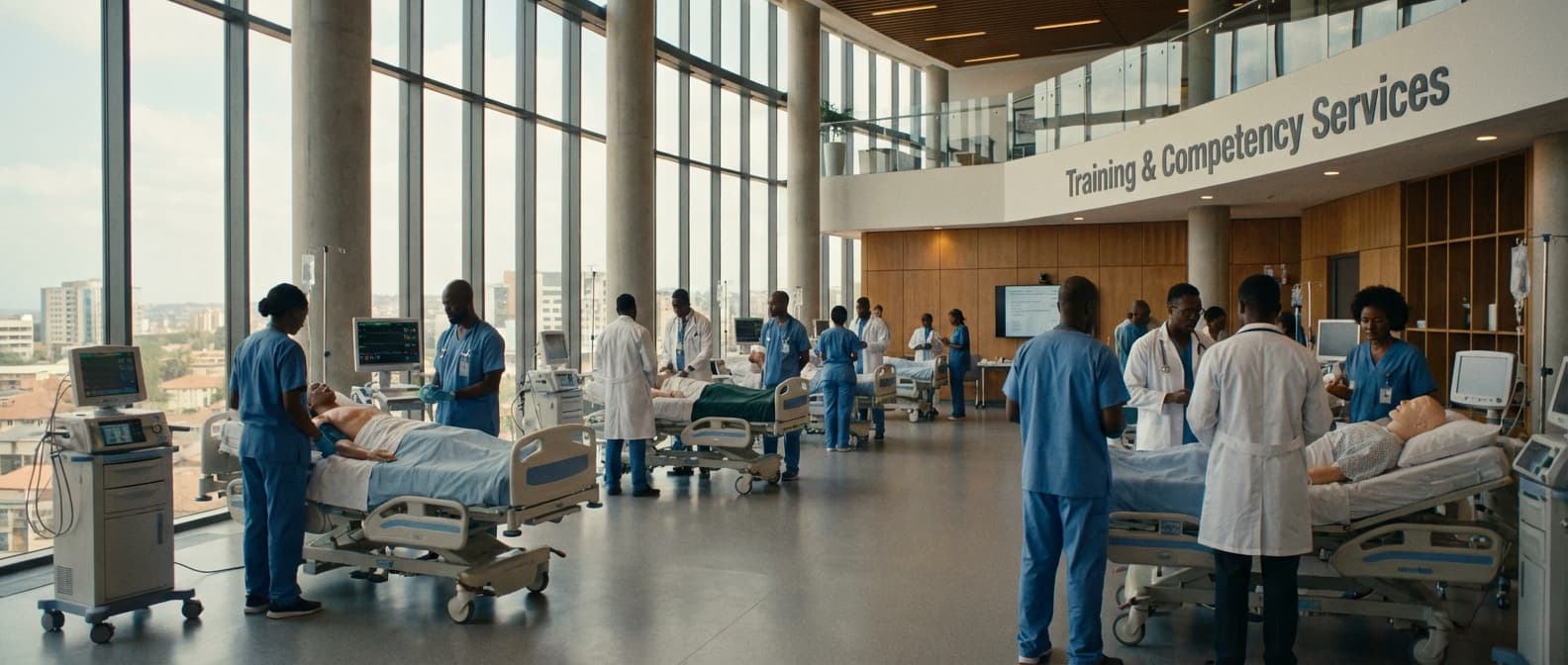
MRI Operator Training Service (Radiographers) in Ghana
Engineering Excellence & Technical Support
MRI Operator Training Service (Radiographers) High-standard technical execution following OEM protocols and local regulatory frameworks.
Advanced MRI Techniques for Ghana
Our training program provides hands-on experience with cutting-edge MRI sequences, including advanced neuroimaging, musculoskeletal, and cardiac applications. Learn to optimize protocols and interpret complex scans, enhancing diagnostic accuracy and patient care in Ghana's healthcare landscape.
Patient Safety & Quality Assurance
Master essential patient safety protocols, including screening, contraindications, and emergency response procedures specific to MRI. Learn to maintain image quality through artifact reduction techniques and proper equipment handling, ensuring the highest standards of care for all patients in Ghana.
MRI Physics & Safety in the Ghanaian Context
Gain a foundational understanding of MRI physics, magnetohydrodynamics, and radiofrequency principles. Our training addresses specific safety concerns and best practices for operating MRI scanners in diverse Ghanaian environments, ensuring a safe and effective imaging workflow.
What Is Mri Operator Training Service (Radiographers) In Ghana?
MRI Operator Training Service (Radiographers) in Ghana refers to specialized educational programs and practical skill development designed to equip radiographers with the requisite knowledge and competencies to safely and effectively operate Magnetic Resonance Imaging (MRI) scanners. This service is critical for ensuring high-quality diagnostic imaging and patient safety within healthcare facilities in Ghana.
| Who Needs It | Typical Use Cases | ||||
|---|---|---|---|---|---|
| Newly Qualified Radiographers: To gain foundational skills in MRI operation immediately upon entering the workforce. | Existing Radiographers Seeking Specialization: For radiographers looking to transition into or expand their expertise in MRI imaging. | Radiographers in Facilities Acquiring MRI Technology: To train personnel before or concurrent with the installation of new MRI equipment. | Radiographers in Training Institutions: As part of accredited diagnostic radiography curricula to ensure graduates are MRI-competent. | Radiographers in Remote or Underserved Areas: To build capacity and improve access to advanced diagnostic imaging services. | |
| Neurological Imaging: Diagnosis of strokes, brain tumors, multiple sclerosis, epilepsy, and spinal cord disorders. | Musculoskeletal Imaging: Evaluation of joint injuries (ligament tears, cartilage damage), bone tumors, and soft tissue abnormalities. | Abdominal and Pelvic Imaging: Assessment of organs like the liver, kidneys, pancreas, uterus, and ovaries for lesions, inflammation, and structural anomalies. | Cardiovascular Imaging: Diagnosis of congenital heart disease, cardiomyopathies, and vascular abnormalities. | Oncological Imaging: Staging and monitoring of cancer treatment efficacy across various body systems. | Breast Imaging: Detection and characterization of breast lesions, particularly in high-risk individuals. |
Service Involves
- Theoretical Instruction: Comprehensive coverage of MRI physics, principles of image formation, magnetic field interactions, radiofrequency pulse sequences, artifact recognition and mitigation, safety protocols (including screening and contraindications for MRI), and radiation protection (though MRI is non-ionizing, safety is paramount).
- Practical Hands-on Training: Supervised operation of actual MRI scanners, encompassing patient positioning, protocol selection and optimization, image acquisition, parameter adjustments, and post-processing techniques.
- Image Interpretation Fundamentals: Basic understanding of how to identify normal anatomy and common pathologies on MRI scans, facilitating communication with radiologists and contributing to preliminary assessments.
- Quality Assurance and Control: Training on routine maintenance checks, troubleshooting common equipment issues, and adhering to quality imaging standards.
- Patient Care and Communication: Emphasis on patient preparation, managing claustrophobia, explaining procedures, and ensuring patient comfort and consent.
- Advanced Imaging Techniques: Depending on the program's scope, training may include specialized sequences for neurological, musculoskeletal, cardiovascular, or oncological imaging.
Who Needs Mri Operator Training Service (Radiographers) In Ghana?
In Ghana, a robust understanding of MRI operations is crucial for effective diagnostic imaging. This is where dedicated MRI Operator Training Services for Radiographers become indispensable. These services cater to a range of healthcare professionals and institutions, ensuring they possess the skills and knowledge to operate MRI scanners safely, efficiently, and to produce high-quality diagnostic images. The demand is driven by the increasing adoption of MRI technology across the nation's healthcare sector, aiming to enhance diagnostic accuracy and patient care.
| Target Customer/Department | Key Needs Addressed | Benefits of Training |
|---|---|---|
| **Public Hospitals (e.g., Korle Bu Teaching Hospital, Komfo Anokye Teaching Hospital) | Operating advanced MRI scanners, ensuring patient safety, accurate image acquisition for a high patient volume. | Improved diagnostic accuracy, reduced scan retakes, enhanced patient throughput, compliance with safety standards. |
| **Private Hospitals and Diagnostic Centers (e.g., Nyaho Medical Centre, Lister Hospital) | Maintaining a competitive edge, offering specialized MRI services, adhering to international quality standards. | Enhanced service offerings, increased client satisfaction, improved reputation for advanced diagnostics. |
| **Ministry of Health & Regional Health Directorates | Ensuring standardized MRI services across public health facilities, capacity building for remote or underserved areas, effective resource allocation. | Uniform quality of care, improved access to MRI diagnostics nationwide, efficient utilization of medical imaging resources. |
| **Tertiary/Teaching Hospitals (in addition to public) | Training future radiographers, conducting research utilizing MRI, managing complex cases. | Development of skilled workforce, contribution to medical research, expertise in handling diverse patient populations and conditions. |
| **New MRI Facility Setups | Establishing new MRI departments, onboarding new staff, setting up protocols and safety procedures. | Smooth operational launch, immediate competency of staff, robust safety framework from inception. |
Target Customers and Departments for MRI Operator Training Services in Ghana
- Radiographers/Radiologic Technologists: The primary recipients of this training, responsible for the day-to-day operation of MRI scanners.
- Radiology Department Heads/Managers: To oversee and ensure the competency of their MRI operator staff, and to manage the efficient functioning of the MRI unit.
- Hospital Administrators/Procurement Officers: For institutions investing in new MRI equipment or seeking to upgrade the skills of their existing radiology teams.
- Medical Physicists: To ensure a comprehensive understanding of the physics and safety aspects of MRI operation.
- Academic and Training Institutions: Universities and colleges offering radiography programs can integrate specialized MRI training into their curriculum.
Mri Operator Training Service (Radiographers) Process In Ghana
This document outlines the typical workflow for an MRI Operator Training Service targeting radiographers in Ghana. The process encompasses all stages from initial inquiry to the successful completion of the training program.
| Stage | Description | Key Activities | Responsible Parties | Deliverables/Outcomes |
|---|---|---|---|---|
| Initial contact from a radiographer or their institution expressing interest in MRI operator training. | Receive inquiry (email, phone, website form), gather information on current skill level, specific MRI system experience (if any), desired learning outcomes, preferred training duration and format (on-site, off-site, blended). | Prospective Trainee/Institution, Training Provider Sales/Consultant | Understanding of trainee needs, preliminary training scope. |
| Formalizing the training offering based on the identified needs. | Develop a customized training proposal outlining curriculum, modules, duration, trainers, methodology, resources, venue requirements (if applicable), and pricing. Provide a detailed quotation. | Training Provider (Curriculum Developer, Sales) | Training proposal, detailed quotation. |
| Formalizing the commitment between the trainee/institution and the training provider. | Review and negotiation of proposal/quotation, signing of a formal training agreement or contract, outlining terms, conditions, payment schedules, cancellation policies, and intellectual property rights. | Prospective Trainee/Institution, Training Provider Management | Signed training agreement/contract. |
| Setting the stage for effective training delivery. | Finalize training schedule, confirm venue (if applicable), procure/prepare training materials (manuals, presentations, case studies), ensure trainer availability and readiness, confirm trainee logistics (travel, accommodation if applicable), send pre-course information to trainees. | Training Provider (Logistics Coordinator, Trainers), Trainee | Confirmed training schedule, prepared training materials, confirmed trainee participation. |
| The core of the service where learning takes place. | Conduct theoretical sessions (MRI physics, safety, protocols, image interpretation), practical demonstrations on MRI simulators or actual scanners, hands-on practice sessions, case study reviews, Q&A sessions, interactive workshops. | Training Provider (Certified Trainers) | Trained radiographers with improved MRI operation skills and knowledge. |
| Evaluating the trainee's comprehension and proficiency. | Administer theoretical assessments (quizzes, exams) and practical assessments (demonstrating skills, image acquisition competency). Award certificates upon successful completion of all assessment components. | Training Provider (Assessors, Trainers) | Assessment results, training certificates. |
| Ensuring continued learning and gathering feedback. | Provide post-training support (e.g., email support for queries, access to online resources), conduct post-training evaluation surveys to gather feedback on training effectiveness, trainer performance, and curriculum relevance. Identify areas for future improvement. | Training Provider (Customer Support, Management), Trainee | Trainee satisfaction feedback, training program improvement insights. |
| Financial settlement for the training services rendered. | Issue invoices according to the agreed payment schedule, process payments from the trainee/institution, reconcile accounts. | Training Provider (Finance Department), Trainee/Institution | Completed financial transaction. |
MRI Operator Training Service (Radiographers) Process in Ghana
- Inquiry & Needs Assessment
- Proposal Development & Quotation
- Agreement & Contract
- Pre-Training Preparations
- Training Delivery
- Assessment & Certification
- Post-Training Support & Evaluation
- Billing & Payment
Mri Operator Training Service (Radiographers) Cost In Ghana
The cost of MRI Operator Training services for radiographers in Ghana can vary significantly based on several key factors. These include the duration and intensity of the training program, the reputation and accreditation of the training institution, the expertise of the instructors, the inclusion of practical hands-on experience with MRI equipment, and the geographical location within Ghana where the training is offered. Furthermore, the specific curriculum covered, such as advanced techniques or specialized MRI applications, can influence the price. Group discounts for institutions or multiple trainees are also common.
| Training Program Type | Estimated Cost Range (GHS) |
|---|---|
| Basic MRI Operator Workshop (1-3 days) | 800 - 2,500 |
| Intermediate MRI Training (1-2 weeks) | 2,000 - 7,000 |
| Advanced/Specialized MRI Training (2-4 weeks or modular) | 5,000 - 15,000+ |
| Comprehensive Certification Programs (multiple modules over months) | 10,000 - 30,000+ |
Factors Influencing MRI Operator Training Costs in Ghana:
- Duration of the training program (e.g., short courses vs. comprehensive certifications)
- Accreditation and reputation of the training provider
- Qualifications and experience of the instructors
- Level of practical, hands-on training with MRI equipment
- Curriculum scope (e.g., basic operation vs. specialized sequences)
- Inclusion of study materials and assessments
- Location of training within Ghana (major cities may have higher costs)
- Group discounts for multiple trainees or institutional partnerships
- On-site vs. off-site training arrangements
- Post-training support and certification fees
Affordable Mri Operator Training Service (Radiographers) Options
Our Affordable MRI Operator Training Service is designed specifically for radiographers seeking to gain or enhance their skills in Magnetic Resonance Imaging. We understand the financial and time constraints faced by healthcare professionals and institutions. This service offers comprehensive training packages focused on practical application and cost-effectiveness, ensuring you receive high-quality education without breaking the bank. We provide flexible learning options, including online modules, in-person workshops, and blended learning approaches. Our curriculum covers essential MRI physics, patient safety protocols, image acquisition techniques, and quality control measures, all delivered by experienced MRI professionals.
| Training Package | Included Components | Typical Cost Range (USD) | Cost-Saving Feature |
|---|---|---|---|
| Foundational MRI Operator (Online) | Core MRI Physics, Safety, Basic Protocols, Image Artifacts | $500 - $1,200 | Highly accessible, no travel costs |
| Comprehensive MRI Operator (Blended) | Online modules + 3-day in-person practical workshop | $1,500 - $3,000 | Reduces overall instructor time and facility costs |
| Specialty MRI Module (e.g., Neuro) | Advanced protocols, specific pathologies, advanced imaging techniques (online or in-person) | $700 - $1,800 | Focuses training on immediate job needs |
| Group Training (5+ participants) | Tailored curriculum (online or blended), dedicated instructor support | Customizable, significant per-participant discount | Bulk enrollment savings |
| Annual Subscription (Individual) | Access to all core online modules, quarterly webinars, updated content | $800 - $1,500/year | Continuous learning at a fixed annual budget |
Value Bundles & Cost-Saving Strategies for Radiographer MRI Operator Training
- Early Bird Registration Discounts: Secure your spot in upcoming training sessions at a reduced rate by registering well in advance of the course start date.
- Group Training Packages: Organizations enrolling multiple radiographers can benefit from significant discounts, making in-house training more accessible and cost-effective.
- Blended Learning Options: Combine self-paced online modules with shorter, intensive in-person practical sessions to reduce travel and accommodation expenses while maximizing learning retention.
- Modular Training Approach: Break down comprehensive MRI training into smaller, specialized modules. Radiographers can choose to focus on specific areas (e.g., neuro MRI, musculoskeletal MRI) if their immediate needs are more focused, leading to lower upfront costs.
- Subscription-Based Access: For ongoing professional development, consider our subscription models that provide continuous access to updated training materials, online resources, and periodic refresher courses at a predictable annual cost.
- Partnerships with Professional Organizations: We collaborate with radiographer associations to offer exclusive member discounts, further reducing the investment in your professional growth.
- Simulation-Based Training Integration: Where applicable, we incorporate advanced simulation software, which can reduce the need for extensive machine time and associated costs during the initial learning phases.
- Post-Training Support & Mentorship: Our value extends beyond the formal training. We offer affordable post-training mentorship programs that can help trainees troubleshoot issues and solidify their skills, preventing costly mistakes and accelerating competence.
- Referral Program: Existing trainees or institutions can receive credits or discounts for referring new participants to our programs.
Verified Providers In Ghana
In Ghana's evolving healthcare landscape, identifying trusted and qualified medical professionals is paramount. Franance Health stands out as a leading platform dedicated to verifying healthcare providers, ensuring patients have access to the highest quality care. This commitment to rigorous credentialing sets them apart, offering a crucial layer of assurance in a market where trust is vital. Choosing a provider listed on Franance Health means opting for expertise, ethical practice, and a patient-centered approach, ultimately leading to better health outcomes.
| Verification Aspect | What Franance Health Assesses | Benefit to Patients |
|---|---|---|
| Educational Background | Accreditation of medical schools, degrees obtained, and specialization certifications. | Ensures providers have the foundational knowledge and advanced training required. |
| Professional Licensing | Verification of current and valid licenses from relevant Ghanaian medical boards. | Guarantees providers are legally authorized to practice medicine. |
| Clinical Experience | Review of past practice history, including any disciplinary actions or complaints. | Provides insight into a provider's practical experience and professional conduct. |
| Specialty Board Certifications | Confirmation of board certifications in specific medical specialties. | Helps patients identify experts in particular areas of medicine. |
| Ethical Standards & Patient Feedback | Assessment of adherence to medical ethics and consideration of patient testimonials (where applicable). | Promotes a patient-centered and trustworthy healthcare experience. |
Why Franance Health Verified Providers are the Best Choice:
- Rigorous Credentialing Process: Franance Health employs a multi-faceted verification system that scrutinizes educational qualifications, professional licenses, and practice history of every provider.
- Commitment to Quality: Beyond basic qualifications, verification includes assessing adherence to ethical standards and patient care protocols, ensuring a high level of service.
- Enhanced Patient Trust and Safety: Patients can have confidence knowing that providers have met stringent criteria, reducing the risk of encountering unqualified practitioners.
- Access to Specialized Expertise: Franance Health helps identify specialists across various medical fields, connecting patients with the most suitable professionals for their needs.
- Streamlined Healthcare Navigation: The platform simplifies the search for reliable healthcare, saving patients time and reducing the stress associated with finding a trustworthy doctor or facility.
- Continuous Monitoring and Updates: Franance Health doesn't just verify once; they maintain ongoing checks to ensure providers remain up-to-date with their credentials and continue to meet standards.
Scope Of Work For Mri Operator Training Service (Radiographers)
This Scope of Work (SOW) outlines the requirements for providing MRI Operator Training Services to radiographers. The training will cover theoretical knowledge and practical skills necessary for the safe and effective operation of MRI scanners, including image acquisition, protocol selection, patient preparation, and quality assurance. The objective is to equip radiographers with the competence to perform MRI examinations independently and to a high standard. The training will adhere to established industry best practices and regulatory requirements.
| Deliverable Type | Description | Standard Specification/Requirement | Verification Method |
|---|---|---|---|
| Training Curriculum | Comprehensive training program covering all listed modules. | Curriculum to be developed in consultation with the client and reviewed by experienced MRI professionals. Must include learning objectives, content outlines, and assessment strategies. | Curriculum document review and approval by the client. |
| Training Materials | All necessary training resources for participants. | Includes lecture notes, presentations, case studies, practical guides, and access to relevant online resources. Materials must be up-to-date and clearly presented. | Review of training materials by the client prior to delivery. |
| Practical Training Sessions | Hands-on experience with MRI scanner operation. | Supervised practical sessions on a functional MRI scanner, covering patient positioning, protocol selection, image acquisition, and troubleshooting. Minimum of X hours of hands-on time per participant. | Observation checklists, participant feedback forms, and trainer sign-off on completed practical tasks. |
| Competency Assessment | Evaluation of radiographers' understanding and practical skills. | Includes written examinations, practical skill assessments (e.g., performing a simulated scan), and case study analysis. Passing score of X% required for each component. | Review of assessment results and competency reports by the client. |
| Certification | Formal recognition of successful completion of the training. | Certificate of completion awarded to participants who successfully pass all competency assessments. | Issuance of official certificates to qualified participants. |
| Post-Training Support | Ongoing support for radiographers after initial training. | Includes limited remote support for protocol questions, troubleshooting, and refresher guidance for a period of Y weeks/months post-training. | Tracking of support requests and resolution rates. |
| Trainer Qualifications | Experienced and qualified MRI professionals. | Trainers must possess at least Z years of clinical MRI experience and relevant teaching qualifications or certifications. | Curriculum vitae and verification of qualifications for all assigned trainers. |
Key Training Modules
- Principles of MRI Physics and Image Formation
- MRI Safety (Static Magnetic Fields, RF Fields, Gradient Fields, Screening, Contraindications)
- MRI Scanner Hardware and Software Operation
- Patient Preparation and Communication
- Contrast Agent Administration and Safety
- Common MRI Pulse Sequences and Their Applications
- Image Acquisition Techniques and Optimization
- Protocol Development and Management
- Image Post-Processing and Analysis
- Artifact Recognition and Troubleshooting
- Quality Assurance and Quality Control (QA/QC) Procedures
- Introduction to Advanced MRI Techniques (e.g., fMRI, Diffusion, Perfusion)
- Ethical Considerations and Legal Aspects of MRI Practice
Service Level Agreement For Mri Operator Training Service (Radiographers)
This Service Level Agreement (SLA) outlines the response times and uptime guarantees for the MRI Operator Training Service provided to certified radiographers. The goal of this SLA is to ensure timely support and consistent availability of the training platform.
| Service Component | Response Time (Business Hours) | Uptime Guarantee |
|---|---|---|
| General Platform Access & Navigation | 2 Business Hours | 99.5% |
| Core Training Module Functionality (e.g., Video playback, quiz submission) | 4 Business Hours | 99.5% |
| Technical Support (Login issues, error messages) | 2 Business Hours | N/A (Support is responsive, uptime applies to platform availability) |
| Scheduled Maintenance (Announced in advance) | N/A (Pre-scheduled, not considered downtime) | N/A |
Key Service Metrics
- Response Time: The maximum allowable time for the Service Provider to acknowledge and begin addressing a reported issue.
- Uptime Guarantee: The minimum percentage of time the MRI Operator Training Service platform is expected to be available and functional for users.
Frequently Asked Questions

Ready when you are
Let's scope your MRI Operator Training Service (Radiographers) in Ghana project in Ghana.

Scaling healthcare logistics and technical systems across the entire continent.