
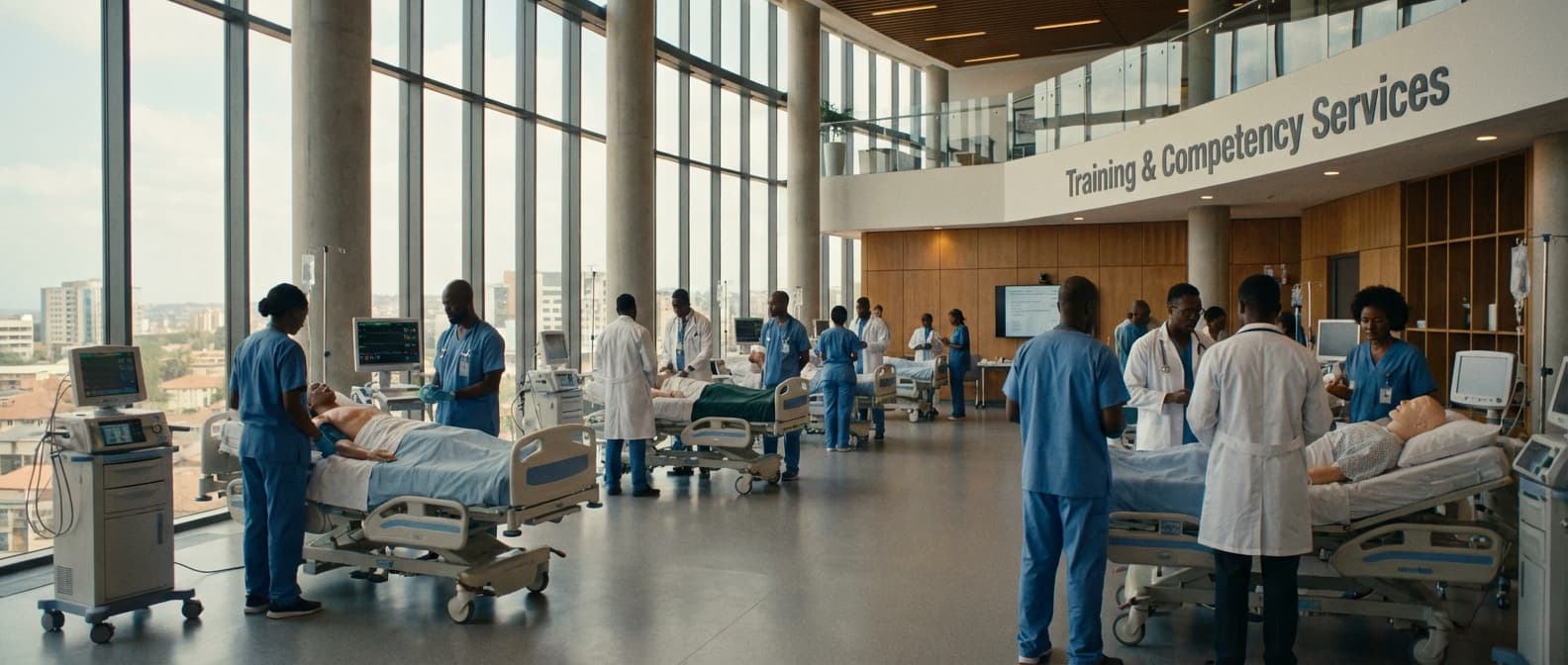
CT Operator Training Service (Radiographers) in Ghana
Engineering Excellence & Technical Support
CT Operator Training Service (Radiographers) High-standard technical execution following OEM protocols and local regulatory frameworks.
Advanced Image Optimization & Quality Assurance
Master cutting-edge techniques for CT image acquisition, including advanced reconstruction algorithms and artifact reduction, ensuring superior diagnostic image quality and minimizing radiation dose for patients in Ghana.
Specialized CT Protocols & Application Training
Gain hands-on expertise in implementing and adapting specialized CT protocols for diverse clinical applications such as neuroimaging, abdominal imaging, and cardiovascular CT, tailored to the diagnostic needs of healthcare facilities in Ghana.
Radiation Safety & Compliance Excellence
Achieve proficiency in international radiation safety standards and local regulatory requirements in Ghana, ensuring the highest level of patient and staff protection during CT examinations and responsible resource management.
What Is Ct Operator Training Service (Radiographers) In Ghana?
CT Operator Training Service (Radiographers) in Ghana refers to specialized educational programs designed to equip radiographers with the requisite knowledge and practical skills for operating Computed Tomography (CT) scanners safely and effectively within the Ghanaian healthcare landscape. This service is crucial for ensuring diagnostic imaging quality, patient safety, and adherence to international standards and local regulatory requirements. The training encompasses theoretical understanding of CT physics, cross-sectional anatomy, image acquisition protocols, radiation safety, image processing, quality assurance, and post-processing techniques. Practical components involve hands-on experience with CT equipment, troubleshooting common issues, and developing proficiency in various scanning modalities and patient positioning strategies relevant to clinical practice in Ghana.
| Who Needs CT Operator Training Service? | Typical Use Cases | ||||||||||||
|---|---|---|---|---|---|---|---|---|---|---|---|---|---|
| Newly graduated radiographers in Ghana entering CT departments. | Initial certification and competency assessment for CT operation. | Radiographers transitioning from other imaging modalities (e.g., X-ray, Ultrasound) to CT. | Experienced radiographers requiring upskilling on new CT technologies or advanced protocols. | Healthcare facilities in Ghana acquiring new CT scanners and requiring staff training. | Radiographers seeking to specialize in specific CT applications (e.g., interventional CT, cardiac CT). | ||||||||
| Diagnostic imaging departments in government and private hospitals. | Diagnostic imaging centers and clinics with CT capabilities. | Tertiary referral centers and teaching hospitals. | Medical research institutions conducting CT-based studies. | Emergency departments requiring rapid diagnostic imaging for trauma and acute conditions. | Oncology centers for staging and treatment monitoring. | Neurology and cardiology departments for specialized CT applications. | Abdominal imaging for diagnosis of various pathologies (e.g., appendicitis, diverticulitis, pancreatitis, renal masses). | Thoracic imaging for lung nodule detection, pneumonia, and pulmonary embolism. | Oncological imaging for tumor detection, staging, and response assessment. | Trauma imaging for assessment of injuries to the head, spine, and internal organs. | Vascular imaging (CT angiography) for assessment of aneurysms, dissections, and occlusive diseases. | Urological imaging for kidney stones, tumors, and structural abnormalities. | Musculoskeletal imaging for complex fractures, joint pathology, and bone tumors. |
Key Components of CT Operator Training Service (Radiographers) in Ghana:
- CT Physics and Principles: Understanding X-ray generation, beam attenuation, detectors, reconstruction algorithms (e.g., filtered back-projection, iterative reconstruction), and image artifacts.
- Anatomy and Physiology: Comprehensive study of cross-sectional anatomy relevant to CT imaging across different body regions.
- CT Imaging Protocols: Development and application of standardized protocols for various examinations (e.g., head, chest, abdomen, pelvis, musculoskeletal), including contrast media administration and timing.
- Radiation Safety and Protection: Principles of ALARA (As Low As Reasonably Achievable), dose monitoring, shielding, and compliance with Ghana's radiation protection regulations.
- Patient Care and Management: Patient preparation, assessment, positioning, monitoring during scanning, and management of potential adverse reactions to contrast agents.
- Image Acquisition and Quality Assurance: Optimal parameter selection, artifact reduction techniques, and routine quality control procedures to ensure diagnostic image quality.
- Image Processing and Post-Processing: Basic image manipulation (windowing, leveling), advanced processing techniques (multiplanar reconstructions - MPR, maximum intensity projections - MIP, 3D reconstructions), and understanding of PACS/RIS integration.
- Equipment Operation and Troubleshooting: Familiarization with specific CT scanner models, routine maintenance checks, and identification/resolution of common operational issues.
- Ethical and Legal Considerations: Adherence to professional ethics, patient confidentiality, and understanding of relevant healthcare legislation in Ghana.
Who Needs Ct Operator Training Service (Radiographers) In Ghana?
CT operator training is crucial for ensuring the safe, effective, and efficient use of CT scanners in healthcare facilities across Ghana. This specialized training is vital for radiographers who are directly responsible for operating this complex imaging equipment. It enhances their skills in patient positioning, scan parameter selection, image acquisition, artifact reduction, and radiation safety protocols. By investing in CT operator training, healthcare providers can improve diagnostic accuracy, reduce repeat scans, minimize radiation exposure to patients and staff, and ultimately contribute to better patient outcomes. The demand for such services is driven by the increasing adoption of CT technology in Ghana, the need to maintain high standards of medical imaging practice, and regulatory requirements for qualified personnel.
| Department/Area | Specific Needs Addressed by CT Operator Training | Examples of Facilities |
|---|---|---|
| Radiology/Medical Imaging Department | Core CT operation, protocol development, image interpretation basics, quality assurance, radiation safety. | All hospitals and diagnostic centers with CT scanners. |
| Emergency Departments | Rapid CT scanning protocols for trauma and acute conditions, patient management during scans. | Major hospitals, especially those with high patient influx. |
| Oncology Departments | CT for treatment planning (radiotherapy), staging of cancers, monitoring treatment response. | Cancer centers, teaching hospitals, and larger private hospitals. |
| Neurology/Neurosurgery Departments | Specialized CT protocols for stroke, brain tumors, head injuries, and post-operative imaging. | Hospitals with dedicated neurology and neurosurgery services. |
| Cardiology/Cardiac Surgery Departments | Cardiac CT angiography for coronary artery disease assessment (if scanner capabilities allow). | Advanced private hospitals and specialized cardiac units. |
| Paediatric Departments | Paediatric CT protocols, radiation dose reduction techniques for children, and patient sedation considerations. | Children's hospitals and hospitals with significant paediatric patient populations. |
Target Customers for CT Operator Training Service (Radiographers) in Ghana
- Public Hospitals (Government-funded)
- Private Hospitals and Diagnostic Centers
- Teaching Hospitals and University Medical Centers
- Specialized Clinics and Imaging Centers
- Non-governmental Organization (NGO) Healthcare Facilities
- Ministry of Health and Regional Health Directorates (for capacity building initiatives)
Ct Operator Training Service (Radiographers) Process In Ghana
This document outlines the workflow for CT Operator Training Services specifically for Radiographers in Ghana. The process begins with an initial inquiry from a prospective client (e.g., a hospital, clinic, or individual radiographer) and culminates in the successful completion of the training program. The workflow emphasizes clear communication, personalized training plans, and adherence to Ghanaian regulatory standards.
| Phase | Key Activities | Responsible Parties | Deliverables | Notes |
|---|---|---|---|---|
| Inquiry & Initial Contact | Client expresses interest, Service provider receives inquiry. | Prospective Client, Training Provider | Initial Request/Inquiry Form | Timely response is crucial. |
| Needs Assessment & Consultation | Discuss training needs, skill gaps, equipment, objectives. On-site visit may be required. | Training Provider (Consultant/Trainer), Client Representative (e.g., Radiology Manager) | Needs Assessment Report, Training Requirements Document | Tailoring the training to specific needs. |
| Proposal Development | Drafting a comprehensive training proposal, including curriculum, schedule, costs, and trainers. | Training Provider (Sales/Training Department) | Formal Training Proposal | Must be clear, detailed, and competitive. |
| Agreement & Contract Finalization | Negotiating terms, signing contract, securing down payment (if applicable). | Training Provider, Prospective Client | Signed Training Agreement/Contract | Legal review may be advisable. |
| Pre-Training Preparation | Confirming dates, participants, logistics. Distributing pre-reading materials. Setting up training environment. | Training Provider (Admin/Logistics), Client (Participant Coordination) | Training Schedule, Participant List, Pre-course Materials | Ensures smooth commencement of training. |
| Training Delivery | Conducting theoretical sessions, practical demonstrations, hands-on practice on CT scanners, case studies. | Certified CT Trainer(s), Trainee Radiographers | Knowledge transfer, Skill development | Must adhere to Ghanaian regulatory guidelines for CT operation. |
| Assessment & Evaluation | Quizzes, practical skill assessments, final examination. | Certified CT Trainer(s), Trainee Radiographers | Assessment Results, Performance Feedback | Objective and fair evaluation. |
| Certification | Issuing certificates to successful candidates. | Training Provider | CT Operator Training Certificate | Certificate should be recognized by relevant Ghanaian bodies. |
| Post-Training Support & Follow-up | Answering queries, providing remote assistance, potential site visits, follow-up assessments. | Training Provider (Support Team/Trainers), Client | Support Documentation, Follow-up Reports | Ensures sustained competency and client satisfaction. |
| Feedback & Improvement | Collecting feedback from clients and participants, analyzing feedback, implementing improvements. | Training Provider (Quality Assurance Team) | Feedback Analysis Report, Training Program Updates | Continuous quality enhancement. |
CT Operator Training Service (Radiographers) Workflow in Ghana
- Inquiry & Initial Contact: The process starts when a potential client expresses interest in CT operator training for radiographers.
- Needs Assessment & Consultation: A detailed discussion to understand the client's specific requirements, current skill levels of radiographers, available CT equipment, and desired training outcomes.
- Proposal Development: Based on the needs assessment, a customized training proposal is created, outlining the curriculum, duration, location, trainers, costs, and expected learning objectives.
- Agreement & Contract Finalization: Upon acceptance of the proposal, a formal agreement or contract is signed, detailing the terms and conditions of the training service.
- Pre-Training Preparation: This includes scheduling training dates, confirming participant numbers, ensuring access to necessary equipment and training facilities, and distributing pre-course materials.
- Training Delivery (Theory & Practical): The core of the service, involving a blend of theoretical lectures, hands-on practical sessions on CT scanners, and case study discussions.
- Assessment & Evaluation: Continuous assessment throughout the training and a final evaluation (e.g., written exams, practical skill demonstrations) to gauge competency.
- Certification: Upon successful completion of the training and passing all assessments, certified CT operators receive a training certificate.
- Post-Training Support & Follow-up: Offering ongoing support, answering queries, and potentially scheduling follow-up sessions or advanced training as needed.
- Feedback & Improvement: Gathering feedback from participants and clients to continuously improve the training program.
Ct Operator Training Service (Radiographers) Cost In Ghana
Training radiographers to become CT operators in Ghana involves specialized skills and knowledge, leading to a cost that varies based on several factors. These factors can include the reputation and accreditation of the training institution, the duration and intensity of the course, the specific curriculum covered (e.g., basic CT, advanced techniques, specific modalities), and whether the training is conducted in-house at a healthcare facility or externally. The cost can also be influenced by the inclusion of practical, hands-on experience with CT scanners, as well as the provision of study materials and certification exams. Generally, a comprehensive CT operator training program for radiographers in Ghana can range from GHS 5,000 to GHS 15,000 or more. Shorter, introductory workshops might be at the lower end of this spectrum, while more extensive, accredited programs with significant practical components will command higher fees.
| Training Program Type | Estimated Cost Range (GHS) | Typical Duration | Key Features |
|---|---|---|---|
| Basic CT Operation Workshop | 5,000 - 8,000 | 1-3 days | Introduction to CT principles, basic scan protocols, patient positioning. |
| Comprehensive CT Operator Certification Course | 8,000 - 15,000 | 1-4 weeks (full-time) | In-depth theory, advanced protocols, contrast media management, radiation safety, practical scanning sessions (simulator or supervised). Accreditation often included. |
| Specialized CT Modality Training (e.g., Cardiac CT, Interventional CT) | 10,000 - 20,000+ | Variable (often modular) | Focus on specific advanced applications, requires foundational CT knowledge. May involve specialized software and advanced imaging techniques. |
Key Pricing Factors for CT Operator Training in Ghana
- Institution's Reputation and Accreditation: Well-established and accredited training centers often have higher fees due to their recognized quality and standards.
- Course Duration and Intensity: Longer and more intensive programs covering a broader scope of CT principles and applications will be more expensive.
- Curriculum Scope: Training focused on basic CT operation will be less costly than programs that include advanced imaging techniques, contrast administration, or specialized CT applications (e.g., cardiac CT, interventional CT).
- Practical/Hands-on Experience: Access to functional CT scanners for practical training is a significant cost driver. Programs offering extensive simulator or real-patient scanning time will typically charge more.
- Study Materials and Resources: The provision of comprehensive textbooks, online resources, and other learning materials can influence the overall cost.
- Certification and Examination Fees: Costs associated with accredited certification exams at the end of the training program are often included or added separately.
- Location and Facility Costs: The operational costs of the training facility, including rent, equipment maintenance, and utilities, are factored into the pricing.
- Instructor Expertise: Highly experienced and qualified instructors, particularly those with clinical CT experience, may command higher fees, which are passed on to trainees.
- In-house vs. External Training: Training conducted within a hospital or clinic for its own staff might have different cost structures compared to open enrollment courses offered by external providers.
Affordable Ct Operator Training Service (Radiographers) Options
This guide outlines affordable CT operator training service options specifically for radiographers, focusing on value bundles and cost-saving strategies to enhance expertise without excessive financial burden. Investing in continuous professional development for CT operators is crucial for maintaining high standards of patient care, ensuring accurate diagnostic imaging, and keeping pace with technological advancements. We explore various approaches to make this essential training accessible and cost-effective.
| Training Approach | Typical Cost Range (per radiographer, indicative) | Value Proposition / Cost-Saving Strategies |
|---|---|---|
| Online/E-learning Modules (Basic & Advanced CT Principles) | $200 - $1,500 | Highly scalable, accessible anytime/anywhere. Cost-effective for foundational knowledge. Look for bundled module discounts. |
| Manufacturer-Provided CT Training (On-site or Remote) | $500 - $3,000+ | Tailored to specific scanner models, ensuring optimal equipment utilization. Negotiate training as part of equipment purchase or service contracts. Group discounts are common. |
| Third-Party Training Providers (Blended Learning) | $700 - $2,500 | Often combine online theory with practical workshops or simulation. Can be more flexible than manufacturer-only training. Seek bundled packages for multiple courses or radiographers. |
| University/Academic Continuing Education Programs | $300 - $1,000 per credit/course | Offers a structured academic approach. May be eligible for tuition reimbursement or grants. Focus on specific course offerings relevant to CT. |
| CT Simulation Training (Software/Hardware) | $1,000 - $5,000+ (initial setup, per site) | Provides hands-on practice without patient risk or scanner downtime. Long-term cost savings through reduced errors and efficient workflow. Consider shared simulation resources with other facilities. |
| "Train-the-Trainer" Programs | $1,500 - $4,000+ | Empowers internal staff to deliver training, reducing reliance on external providers. Significant long-term cost reduction. Invest in experienced trainers. |
| Professional Society Workshops/Conferences (CT Focus) | $300 - $1,000 (per event) | Offers focused learning on specific CT techniques and best practices. Often includes networking opportunities. Look for early-bird registration discounts and group rates. |
Key Considerations for Affordable CT Operator Training
- Define Training Needs: Clearly identify the specific CT skills and knowledge gaps your radiographers require. This prevents overspending on irrelevant modules.
- Assess Existing Resources: Evaluate if any in-house expertise or existing equipment can be leveraged for training purposes.
- Prioritize Accreditation & Recognition: Ensure training programs are accredited by recognized bodies to validate the acquired skills and meet professional requirements.
- Explore Online vs. In-Person: Online courses often offer lower costs and greater flexibility, while in-person training provides hands-on experience.
- Understand Certification Requirements: Factor in the costs associated with certification exams and any ongoing continuing education credits.
- Leverage Group Discounts: Training multiple radiographers simultaneously can often unlock significant cost savings.
- Consider Simulation Training: While upfront costs can vary, CT simulators can provide safe, repeatable practice environments, potentially reducing the need for extensive scanner time.
- Look for Vendor-Specific Training: CT scanner manufacturers often offer training packages that can be integrated with equipment purchases or maintenance agreements.
- Evaluate "Train-the-Trainer" Programs: Investing in a few key individuals to become internal trainers can be a long-term cost-saving strategy.
Verified Providers In Ghana
In Ghana's burgeoning healthcare landscape, identifying genuinely qualified and ethical healthcare providers is paramount for ensuring quality patient care. Franance Health stands out as a leading platform committed to verifying the credentials of healthcare professionals, offering a transparent and trustworthy directory for individuals seeking medical assistance. This rigorous verification process distinguishes them from other platforms, ensuring that users connect with certified and competent practitioners. Franance Health's dedication to patient well-being and the integrity of medical services makes them the premier choice for navigating Ghana's healthcare system.
| Provider Type | Typical Credentials Verified | Franance Health Advantage |
|---|---|---|
| Doctors (Specialists & General Practitioners) | MBChB/MD, Specialist Postgraduate Degrees (e.g., FWACS, FACS), Medical Council Registration, Valid Practicing License | Ensures all doctors are fully licensed and possess accredited specialist qualifications. |
| Nurses (RN, RGN, etc.) | Diploma/Degree in Nursing, Nursing and Midwifery Council Registration, Valid Practicing Certificate | Guarantees nurses have completed accredited training and are registered with the governing body. |
| Pharmacists | B.Pharm, Pharmacy Council Registration, Valid Practicing License | Confirms pharmacists are qualified to dispense medication and provide pharmaceutical care. |
| Dentists | BDS, Dental Council Registration, Valid Practicing License | Ensures dental professionals are properly qualified and licensed to practice dentistry. |
| Therapists (Physiotherapists, etc.) | Degree in relevant therapy, Professional Body Registration, Valid Practicing License | Verifies that therapists have the necessary academic and professional qualifications for their practice. |
Why Franance Health is the Best Choice for Verified Providers in Ghana:
- Rigorous Credential Verification: Franance Health employs a stringent process to confirm the qualifications, licenses, and certifications of all listed healthcare professionals.
- Focus on Patient Safety and Trust: By providing a directory of verified providers, Franance Health prioritizes patient safety and builds trust in the healthcare system.
- Comprehensive Provider Directory: Access a wide range of medical specialties and healthcare professionals, all pre-vetted for your peace of mind.
- Transparency and Accessibility: The platform offers clear information about provider credentials and specialties, making it easy to find the right care.
- Commitment to Ethical Practice: Franance Health champions ethical medical practices by partnering with providers who adhere to the highest professional standards.
Scope Of Work For Ct Operator Training Service (Radiographers)
This Scope of Work outlines the requirements for providing CT Operator Training Services specifically for Radiographers. The training will equip certified radiographers with the advanced knowledge and practical skills necessary to operate Computed Tomography (CT) scanners safely, efficiently, and to a high diagnostic standard. This includes understanding CT physics, image acquisition protocols, patient safety, contrast media administration, image processing, quality assurance, and troubleshooting. The training will be delivered through a combination of theoretical instruction, practical hands-on sessions, and competency-based assessments.
| Section | Description | Technical Deliverables | Standard Specifications |
|---|---|---|---|
| Theoretical Training | In-depth theoretical modules covering CT physics, principles of image formation, scanner hardware, radiation biology, and patient management. | Comprehensive training manuals, lecture notes, slide presentations, and e-learning modules. | Modules aligned with current professional body recommendations (e.g., ARRT, HCPC) and relevant scientific literature. Minimum of 30 hours of theoretical instruction. |
| Practical Hands-on Training | Supervised practical sessions on actual CT scanners, focusing on patient positioning, protocol selection, image acquisition, and artifact recognition. | Demonstration of scanner operation, hands-on practice with patient simulation and, where feasible and ethical, with consenting actual patients under strict supervision. | Minimum of 50 hours of supervised practical training across various CT scanner models (if applicable). Training to cover a minimum of 10 common clinical scenarios. |
| Protocol Development & Optimization | Training on selecting, modifying, and developing CT imaging protocols for specific anatomical regions and clinical indications. | Template protocols for common examinations, guidance on protocol optimization for dose reduction and image quality. | Protocols to adhere to ALARA principles and diagnostic efficacy. Training to include an understanding of iterative reconstruction techniques. |
| Patient Safety & Contrast Administration | Comprehensive instruction on radiation safety, patient preparation, screening for contraindications, and management of adverse events related to contrast media. | Protocols for contrast media administration (e.g., injection rates, volumes, types), emergency response plans, and patient monitoring guidelines. | Training to comply with guidelines from professional organizations (e.g., ACR, ESR) regarding contrast media safety and radiation protection. |
| Image Processing & Post-processing | Training on image reconstruction parameters, windowing techniques, multiplanar reformation (MPR), maximum intensity projection (MIP), and other post-processing functionalities. | Demonstration of advanced visualization techniques and interpretation aids. | Proficiency in producing diagnostically relevant images for interpretation by radiologists. Understanding of different reconstruction algorithms. |
| Quality Assurance & Control | Training on performing routine QA checks, understanding QC phantoms, and troubleshooting common image quality issues. | Checklists for daily, weekly, and monthly QA procedures, guidelines for acceptance testing, and calibration procedures. | QA procedures to meet regulatory requirements and ensure consistent image quality. Familiarity with CTDIvol and DLP measurements. |
| Assessment & Certification | Evaluation of theoretical knowledge and practical skills through written examinations, practical assessments, and case study analysis. | Competency checklists, examination papers, and a formal certificate of completion. | Assessment results to demonstrate satisfactory achievement of learning outcomes. Pass mark of 80% for theoretical and 90% for practical assessments. |
| Ongoing Support & Resources | Provision of reference materials, access to online resources, and potentially post-training support. | Digital library access, troubleshooting guides, and contact information for technical support. | Resources to be up-to-date and relevant to current CT technology and best practices. |
Key Objectives of CT Operator Training
- To provide a comprehensive understanding of CT physics principles and their application in image acquisition.
- To train radiographers on operating various CT scanner models and functionalities.
- To ensure proficiency in developing and implementing appropriate imaging protocols for diverse clinical indications.
- To emphasize patient safety, including radiation protection measures, contraindication identification, and emergency procedures.
- To cover the safe and effective administration of intravenous contrast media.
- To develop skills in advanced image processing, reconstruction techniques, and post-processing applications.
- To instill a strong understanding of quality assurance (QA) and quality control (QC) procedures for CT imaging.
- To equip radiographers with troubleshooting skills for common CT equipment and imaging issues.
- To ensure compliance with all relevant regulatory standards and professional best practices.
Service Level Agreement For Ct Operator Training Service (Radiographers)
This Service Level Agreement (SLA) outlines the commitment of [Your Company Name] ('Provider') to [Client Organization Name] ('Client') for the provision of CT Operator Training Services specifically for Radiographers. This SLA defines response times for support requests and uptime guarantees for the training platform/delivery.
| Service Component | Service Level Objective (SLO) | Measurement Method |
|---|---|---|
| Technical Support - Critical Incident (e.g., platform inaccessible, unable to start/complete training) | Response Time: 1 hour (24/7 availability) | Time from initial support ticket submission to first acknowledgment and engagement by support personnel. |
| Technical Support - High Priority Incident (e.g., module malfunctioning, significant content error) | Response Time: 4 business hours | Time from initial support ticket submission to first acknowledgment and engagement by support personnel. |
| Technical Support - Standard Incident (e.g., query about course content, minor platform bug) | Response Time: 8 business hours | Time from initial support ticket submission to first acknowledgment and engagement by support personnel. |
| Training Platform Uptime (for online modules and virtual sessions) | 99.5% Uptime (measured monthly) | Percentage of scheduled training time the platform is accessible and fully functional. Excludes scheduled maintenance. |
| Scheduled Maintenance | Maximum 4 hours per month, communicated 7 days in advance | Downtime explicitly planned for system updates and improvements. Performed during off-peak hours where possible. |
| Instructor Availability (for scheduled live sessions) | 99% availability | Instructor present and prepared to start scheduled live training sessions at the designated time. |
Scope of Services
- CT Operator Training Course Modules (e.g., basic CT principles, advanced techniques, safety protocols).
- Delivery of training content (e.g., online modules, instructor-led sessions, blended learning).
- Technical support for the training platform (if applicable).
- Access to training materials and resources.
- Certification upon successful completion of the training program.
Frequently Asked Questions

Ready when you are
Let's scope your CT Operator Training Service (Radiographers) in Ghana project in Ghana.

Scaling healthcare logistics and technical systems across the entire continent.