
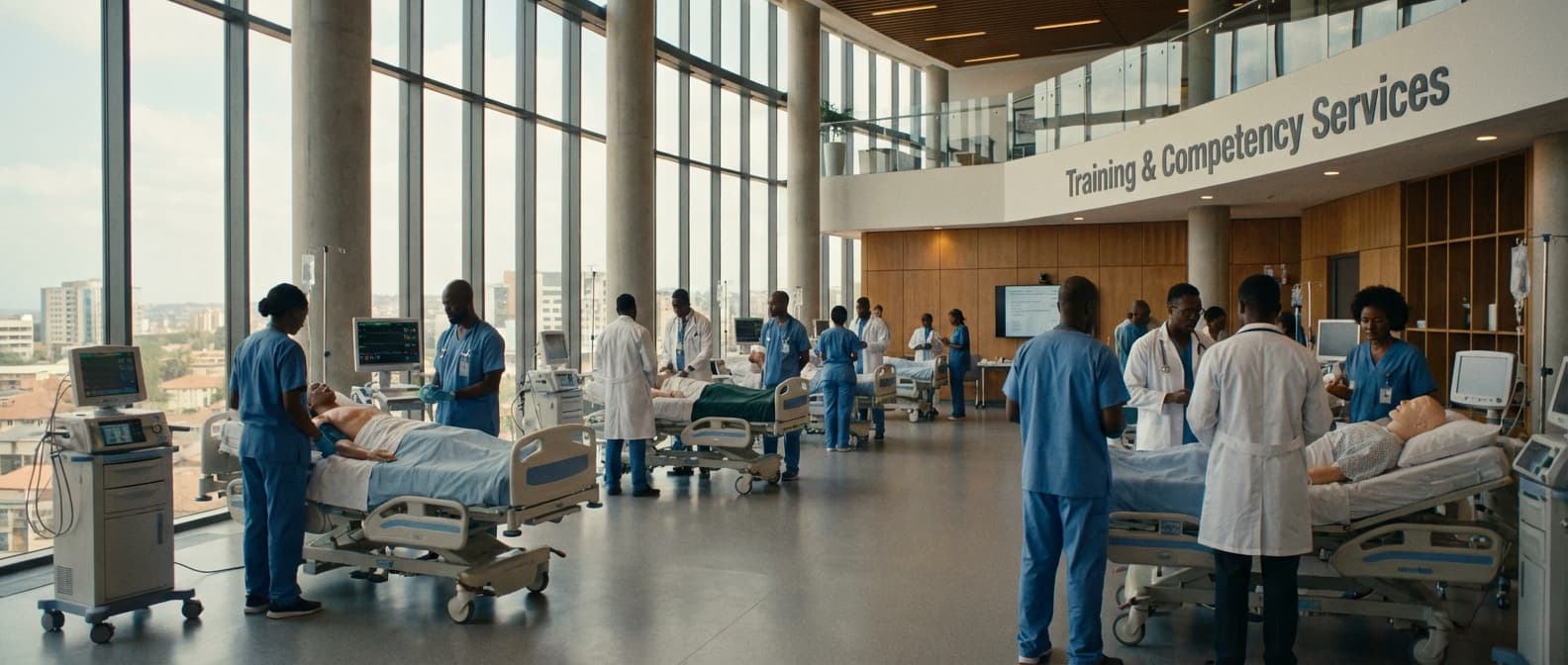
Anesthesia Workstation User Training Service in Ghana
Engineering Excellence & Technical Support
Anesthesia Workstation User Training Service High-standard technical execution following OEM protocols and local regulatory frameworks.
Mastering Advanced Anesthesia Delivery
Gain in-depth knowledge of the sophisticated ventilation modes, precise drug delivery systems, and real-time patient monitoring capabilities of modern anesthesia workstations. Our training empowers your clinical team to optimize patient care and enhance safety protocols.
Proactive Troubleshooting & Maintenance
Learn essential troubleshooting techniques and preventative maintenance strategies to ensure your anesthesia workstation operates reliably. Minimize downtime and maximize operational efficiency with hands-on guidance from our expert trainers.
Ensuring Regulatory Compliance & Best Practices
Understand and implement the latest regulatory requirements and international best practices for anesthesia workstation use and maintenance in Ghana. Our training ensures your facility adheres to the highest standards of patient safety and quality assurance.
What Is Anesthesia Workstation User Training Service In Ghana?
Anesthesia Workstation User Training Service in Ghana refers to specialized educational programs designed to equip healthcare professionals, primarily anesthesiologists, anesthetists, and operating room nurses, with the comprehensive knowledge and practical skills required to safely and effectively operate modern anesthesia workstations. These workstations are complex, integrated medical devices that deliver anesthetic gases, monitor patient vital signs, and facilitate ventilation during surgical and other medical procedures. The training aims to ensure users can accurately set up, calibrate, troubleshoot, and utilize the full spectrum of features offered by specific anesthesia workstation models, thereby optimizing patient safety, procedural efficiency, and adherence to clinical protocols within the Ghanaian healthcare landscape.
| User Group | Rationale for Training | Typical Use Cases |
|---|---|---|
| Anesthesiologists | Advanced understanding of complex anesthetic delivery and patient management, ensuring optimal patient outcomes and safe practice. | Performing general anesthesia, monitored anesthesia care (MAC), and regional anesthesia procedures in diverse surgical settings; managing complex patient physiology. |
| Certified Registered Nurse Anesthetists (CRNAs) / Anesthetists | Ensuring competent operation of the workstation for safe anesthetic administration and patient monitoring, complementing the anesthesiologist's role. | Administering anesthesia under supervision or independently in various surgical specialties, intensive care units, and emergency departments. |
| Operating Room (OR) Nurses | Facilitating seamless workflow, pre-operative setup, intra-operative support, and immediate post-operative care related to the anesthesia workstation. | Preparing the OR, setting up the anesthesia machine, ensuring availability of supplies, responding to basic alarms, and assisting the anesthesia provider. |
| Biomedical Engineers/Technicians | Understanding the technical specifications, calibration procedures, and basic maintenance requirements for effective troubleshooting and preventive maintenance. | Installation, calibration, preventive maintenance, and repair of anesthesia workstations to ensure continuous operational readiness and patient safety. |
| Healthcare Facility Administrators/Procurement Managers | Informed decision-making during equipment acquisition, budgeting for training, and ensuring compliance with healthcare standards. | Evaluating and selecting appropriate anesthesia workstation models; allocating resources for training and ongoing professional development. |
Key Components of Anesthesia Workstation User Training:
- Device Familiarization and Anatomy: Understanding the physical components, interfaces, and architecture of the specific anesthesia workstation model.
- Principles of Gas Delivery and Control: In-depth knowledge of vaporizers, flow meters, blending systems, and their operational parameters.
- Ventilation Modes and Management: Comprehensive training on various mechanical ventilation modes (e.g., volume-controlled, pressure-controlled, synchronized intermittent mandatory ventilation), their application, and parameter optimization.
- Patient Monitoring Integration: Understanding how the workstation interfaces with and displays vital signs data (e.g., ECG, SpO2, NIBP, EtCO2, temperature) and alarm management.
- Anesthetic Agent Management: Proper handling, filling, and calibration of anesthetic vaporizers, as well as understanding agent delivery precision.
- Safety Features and Alarm Systems: Identification, interpretation, and response protocols for all built-in safety features and audible/visual alarms.
- Troubleshooting and Maintenance: Basic diagnostic procedures, error code interpretation, and routine maintenance tasks to ensure optimal device functionality.
- Emergency Procedures and Backup Systems: Training on operating backup systems and protocols for managing equipment malfunctions during critical situations.
- Integration with Other Medical Devices: Understanding interoperability with ventilators, anesthesia vaporizers, and patient monitors.
- Regulatory Compliance and Best Practices: Adherence to national and international standards for anesthesia delivery and device usage.
- Hands-on Practice and Simulation: Practical sessions using actual or simulated workstations to reinforce theoretical knowledge and develop proficiency.
Who Needs Anesthesia Workstation User Training Service In Ghana?
This training service is crucial for ensuring the safe and effective operation of anesthesia workstations in healthcare facilities across Ghana. Improper use of these advanced medical devices can lead to patient harm, equipment malfunction, and significant financial losses. Therefore, targeted training is essential for a range of professionals and departments.
| Target Customer Segment | Primary Departments Requiring Training | Key Roles/Personnel |
|---|---|---|
| Public Hospitals | Anesthesia Department, Operating Theatres, Intensive Care Units (ICUs), Recovery Rooms, Emergency Departments | Anesthesiologists, Certified Registered Nurse Anesthetists (CRNAs), Anesthesia Residents, Operating Room Nurses, ICU Nurses, Biomedical Engineers/Technicians |
| Private Hospitals & Clinics | Anesthesia Department, Operating Rooms, Surgical Suites, Day Surgery Units | Anesthesiologists, Anesthesia Nurses, Surgeons (for oversight), Biomedical Technicians |
| Specialized Medical Centers | Cardiothoracic Surgery Anesthesia, Neurosurgery Anesthesia, Transplant Anesthesia, Critical Care Units | Highly specialized Anesthesiologists, Critical Care Physicians, Senior Anesthesia Nurses, Biomedical Engineers |
| Teaching Hospitals & Medical Schools | Anesthesiology Training Programs, Simulation Centers, Clinical Departments | Medical Students, Anesthesia Residents, Faculty Anesthesiologists, Simulation Instructors |
| Government Health Agencies | Procurement & Logistics Departments, Training & Capacity Building Units, Biomedical Engineering Departments | Health Policy Makers, Program Managers, Biomedical Engineers, Training Coordinators |
| Medical Equipment Suppliers | Sales & Technical Support Teams, Field Service Engineers | Sales Representatives, Technical Trainers, Biomedical Service Engineers |
Target Customers and Departments for Anesthesia Workstation User Training Service in Ghana
- Hospitals (Public and Private): Ranging from large tertiary referral centers to smaller district hospitals and private clinics.
- Specialized Medical Centers: Including cardiac centers, neurosurgery units, and intensive care units (ICUs) where complex anesthesia procedures are performed.
- Teaching Hospitals and Medical Schools: For the training of future anesthesiologists, nurse anesthetists, and other medical professionals.
- Government Health Agencies and Ministries of Health: For capacity building initiatives and ensuring standardized training across the public healthcare sector.
- Medical Equipment Suppliers and Distributors: To provide after-sales support and training to their clients.
- Non-Governmental Organizations (NGOs) involved in healthcare delivery in Ghana.
Anesthesia Workstation User Training Service Process In Ghana
This document outlines the Anesthesia Workstation User Training Service Process implemented in Ghana. It details the workflow from the initial inquiry by a healthcare facility to the successful execution and completion of the training program. The process aims to ensure that healthcare professionals are proficient in operating anesthesia workstations, thereby enhancing patient safety and improving the quality of anesthetic care.
| Stage | Description | Key Activities | Responsible Party | Deliverables/Outcomes |
|---|---|---|---|---|
| Inquiry and Needs Assessment | Initial contact from a healthcare facility requesting anesthesia workstation training. | Healthcare facility expresses interest. Service provider gathers information on the type of anesthesia workstation, number of participants, existing user knowledge, and specific training requirements. Clarification of objectives and expected outcomes. | Healthcare Facility (Requester) Service Provider (Trainer) | Understanding of training scope. Identification of specific training needs. Initial contact established. |
| Proposal and Quotation | Development and submission of a tailored training proposal and cost estimate. | Service provider designs a training program based on needs assessment. Detailed curriculum, training methodology (lectures, hands-on, simulation), duration, and location are outlined. Cost breakdown for training fees, materials, travel, and accommodation (if applicable). Proposal and quotation submitted to the facility. | Service Provider (Trainer) | Comprehensive training proposal. Detailed quotation. Clear understanding of service scope and costs. |
| Agreement and Scheduling | Formalization of the training agreement and scheduling of the training dates. | Review and acceptance of the proposal and quotation by the healthcare facility. Signing of a service agreement or contract. Joint determination of training dates and times, considering the facility's operational schedule. Confirmation of participant list. | Healthcare Facility (Client) Service Provider (Trainer) | Signed service agreement. Confirmed training schedule. Participant roster. |
| Pre-Training Preparation | Logistical arrangements and preparation of training materials and resources. | Service provider prepares training manuals, presentation slides, and any simulation equipment. Ensures availability of the anesthesia workstation(s) for hands-on practice. Confirms venue logistics (classroom, power supply, projector). Communicates pre-reading materials or pre-requisites to participants (if any). | Service Provider (Trainer) | Training materials ready. Training venue prepared. Anesthesia workstation(s) accessible for training. |
| Training Execution | Delivery of the anesthesia workstation user training program. | Conducting theoretical sessions covering workstation features, safety protocols, and troubleshooting. Facilitating hands-on practical sessions with the anesthesia workstation. Utilizing simulation scenarios to replicate real-life clinical situations. Interactive Q&A sessions and group discussions. | Service Provider (Trainer) Participants (Trainees) | Knowledge transfer. Development of practical skills. Increased confidence in workstation operation. |
| Post-Training Evaluation and Support | Assessment of training effectiveness and provision of ongoing support. | Administering post-training assessments (written and practical) to evaluate learning. Collecting feedback from participants and the facility on the training program. Providing immediate post-training support for any emergent queries. Offering access to troubleshooting guides or technical support channels. | Service Provider (Trainer) Healthcare Facility (Client) | Training assessment results. Participant and facility feedback. Initial post-training support provided. |
| Certification and Follow-up | Issuance of certificates and scheduling of future follow-up if required. | Issuing certificates of completion to participants who successfully pass the assessments. Scheduling periodic follow-up sessions or refresher courses as needed. Maintaining a record of trained personnel and training dates. Potentially offering ongoing technical support contracts or maintenance agreements. | Service Provider (Trainer) Healthcare Facility (Client) | Certificates of completion issued. Established follow-up plan (if any). Record of trained users. |
Key Stages in the Anesthesia Workstation User Training Service Process
- Inquiry and Needs Assessment
- Proposal and Quotation
- Agreement and Scheduling
- Pre-Training Preparation
- Training Execution
- Post-Training Evaluation and Support
- Certification and Follow-up
Anesthesia Workstation User Training Service Cost In Ghana
The cost of Anesthesia Workstation User Training services in Ghana can vary significantly based on several key factors. This training is crucial for ensuring the safe and effective operation of anesthesia machines, which are vital for patient care during surgical procedures. The pricing structure is influenced by the training provider, the complexity and specific model of the anesthesia workstation, the duration and depth of the training program, and the location of the training (on-site at a healthcare facility or at the training provider's premises). Additional costs may include trainer travel expenses, accommodation, and the provision of training materials or simulation equipment.
| Training Scope | Estimated Range (GHS) | Notes |
|---|---|---|
| Basic User Training (1-2 days) | 2,500 - 6,000 | Covers fundamental operation, patient setup, and basic safety features for standard workstations. |
| Intermediate User Training (3-4 days) | 5,000 - 12,000 | Includes advanced functions, ventilation modes, and common troubleshooting for more complex machines. |
| Advanced/Specialized Training (5+ days) | 10,000 - 25,000+ | Focuses on specific advanced features, maintenance, or specialized applications. Costs can escalate significantly with highly complex equipment or custom modules. |
| On-site Training (Variable) | Add 10% - 30% to base cost | Includes trainer travel, accommodation, and potential per diem, depending on location within Ghana. |
| Group Training (Per Session) | Negotiable | Rates often decrease per participant for larger groups. Always inquire about bulk discounts. |
Key Pricing Factors for Anesthesia Workstation User Training in Ghana:
- Training Provider: Reputable medical equipment suppliers or specialized training institutions often command higher fees due to their expertise, certified trainers, and comprehensive curriculum.
- Anesthesia Workstation Model & Complexity: Training for advanced, multi-functional anesthesia workstations will typically be more expensive than for simpler models. The specific features and technologies involved dictate the training requirements.
- Duration and Depth of Training: Short, introductory sessions will be less costly than in-depth, hands-on training that covers troubleshooting, maintenance, and advanced functionalities. The number of training days is a primary cost driver.
- Location of Training: On-site training at a hospital or clinic often incurs additional costs for travel and accommodation for the trainers, potentially making it more expensive than centralized training at the provider's facility.
- Number of Participants: While some providers might offer a per-participant fee, others may charge a flat rate for a group, making it more cost-effective for larger teams. Negotiating group rates is common.
- Training Materials and Equipment: The cost of providing hands-on practice with actual workstations or high-fidelity simulators can add to the overall price.
- Certification: Training programs that lead to recognized certifications may have a higher cost due to the assessment and accreditation processes involved.
- Customization: Tailored training programs designed to meet the specific needs of a particular healthcare facility or department might be priced differently than standard offerings.
- Ongoing Support/Refresher Courses: While not part of initial user training, the cost of future refresher courses or advanced modules can also influence the perception of value.
Affordable Anesthesia Workstation User Training Service Options
Providing accessible and effective user training for affordable anesthesia workstations is crucial for ensuring patient safety and optimizing clinical workflows. This service aims to empower healthcare professionals with the knowledge and skills to operate these cost-effective anesthesia delivery systems confidently and efficiently. We offer flexible training solutions designed to meet the diverse needs of healthcare facilities, prioritizing both comprehensive learning and financial prudence.
| Cost-Saving Strategy | Description | Implementation Benefit |
|---|---|---|
| Group Discounts | Offering reduced per-participant costs for larger training groups within a single facility or for multiple facilities from the same organization. | Lower overall training expenditure per staff member; maximizes training reach within a budget. |
| Off-Peak Scheduling | Scheduling training during non-peak operational hours or slower periods to minimize disruption and potentially negotiate lower rates. | Reduced opportunity cost for clinical staff, potentially lower facility usage fees if applicable. |
| Blended Learning Approach | Combining cost-effective remote learning modules (videos, webinars) with targeted, shorter onsite sessions for hands-on practice. | Significant reduction in travel and accommodation costs associated with purely onsite training. |
| Modular Training Customization | Allowing clients to select only the specific modules they need, rather than a one-size-fits-all package, to avoid paying for unnecessary content. | Tailored training that focuses on essential skills, leading to efficient learning and reduced training time. |
| Annual Training Contracts | Committing to a year of training services, which can include a set number of sessions or unlimited remote support, often at a discounted annual rate. | Predictable budgeting, consistent skill development, and preferential scheduling opportunities. |
| Leveraging Train-the-Trainer Programs | Investing in a train-the-trainer program to build internal expertise, thereby reducing future external training costs significantly. | Long-term cost reduction, improved internal knowledge retention, and faster onboarding of new staff. |
Value Bundles for Affordable Anesthesia Workstation User Training
- {"title":"Basic Onsite Training Bundle","features":["Onsite instructor-led training","Core workstation functionality","Safety protocols and checks","Basic troubleshooting","Certificate of completion per participant"],"description":"Ideal for smaller clinics or initial team training. Includes instructor-led sessions at your facility, covering essential workstation operation, setup, safety checks, and basic troubleshooting. Limited to a defined number of participants."}
- {"title":"Comprehensive Onsite Training Bundle","features":["All features of Basic Bundle","Advanced feature training (e.g., ventilation modes, drug calculations)","Hands-on case simulations","Integration with other equipment","Q&A sessions with experienced trainers","Customizable modules based on facility needs"],"description":"For larger departments or facilities requiring in-depth knowledge. Extends the basic bundle with advanced features, case simulation practice, and specialized application modules. Suitable for a broader range of users and skill levels."}
- {"title":"Remote Training & Support Bundle","features":["Live virtual instructor-led sessions","Access to a library of pre-recorded training videos","Interactive online modules and quizzes","Remote troubleshooting support","Regular update training for new features"],"description":"A cost-effective solution for geographically dispersed teams or for ongoing learning. Leverages virtual platforms for live training sessions, pre-recorded modules, and remote expert support. Reduces travel costs and downtime."}
- {"title":"Train-the-Trainer Program","features":["In-depth training for selected personnel","Training materials and best practices for delivery","Mentorship from our expert trainers","Certification as an internal trainer","Reduced cost per trained employee over time"],"description":"Empowers your internal staff to become subject matter experts and deliver ongoing training within your organization. This maximizes long-term training efficiency and reduces reliance on external trainers."}
Verified Providers In Ghana
Navigating Ghana's healthcare landscape can be challenging, especially when seeking reliable and qualified medical professionals. This is where verified providers, particularly those associated with Franance Health, stand out. Franance Health meticulously vets its network of healthcare professionals, ensuring they meet stringent criteria for expertise, ethical practice, and patient care. This rigorous credentialing process provides a crucial layer of trust and assurance for patients seeking quality medical services.
| Credential Type | Description of Verification | Benefit to Patient |
|---|---|---|
| Medical Licenses | Confirmation of valid and current registration with Ghana's Medical and Dental Council. | Ensures the provider is legally authorized to practice medicine. |
| Specialization Certifications | Verification of postgraduate training and board certifications in their respective fields. | Guarantees expertise in specific medical areas for more effective treatment. |
| Professional Experience | Review of a minimum number of years in practice and documented case experience. | Indicates a depth of practical knowledge and problem-solving skills. |
| Reputation and Ethics | Background checks and assessment of patient feedback and adherence to ethical guidelines. | Ensures a commitment to patient safety and professional integrity. |
| Continuing Professional Development (CPD) | Proof of participation in ongoing educational activities and skill enhancement. | Confirms the provider stays updated with the latest medical advancements and techniques. |
Why Franance Health Represents the Best Choice in Ghana:
- Rigorous Vetting Process: Franance Health goes beyond basic licensing to assess a provider's experience, specialization, and commitment to ongoing professional development.
- Patient-Centric Approach: Verified providers are known for their dedication to patient well-being, prioritizing clear communication, empathy, and personalized treatment plans.
- Access to Quality Care: By partnering with Franance Health, patients gain access to a curated network of specialists and general practitioners known for their high standards.
- Enhanced Trust and Safety: The verification process significantly reduces the risk of encountering unqualified or unethical practitioners, offering peace of mind to patients and their families.
- Streamlined Healthcare Experience: Franance Health aims to simplify the process of finding and accessing healthcare, connecting patients with the right providers efficiently.
Scope Of Work For Anesthesia Workstation User Training Service
This Scope of Work (SOW) outlines the requirements for providing Anesthesia Workstation User Training Services. The objective is to equip end-users with the necessary knowledge and skills to safely and effectively operate the anesthesia workstation. This SOW details the technical deliverables, standard specifications, and expected outcomes of the training program.
| Deliverable | Description | Standard Specifications | Acceptance Criteria |
|---|---|---|---|
| Training Curriculum Development | Creation of a comprehensive training curriculum tailored to the specific anesthesia workstation model(s) and intended user roles (e.g., anesthesiologists, nurse anesthetists, residents). | Includes theoretical modules, practical demonstrations, hands-on exercises, and assessment tools. Curriculum must align with manufacturer guidelines and relevant clinical standards. Minimum of 8 hours of content per user group. | Curriculum reviewed and approved by the client's clinical lead. Content accuracy verified against manufacturer documentation. |
| Training Delivery | Conducting instructor-led training sessions for specified user groups. Training can be delivered on-site, remotely, or in a hybrid format. | Sessions to be conducted by certified and experienced trainers. Class sizes not to exceed 10 participants per instructor to ensure adequate individual attention. Each session must include dedicated time for Q&A and practical application. | Participant attendance logs maintained. Post-training evaluation forms completed by participants. Confirmation of successful completion of practical exercises. |
| Training Materials | Provision of high-quality, easy-to-understand training materials for participants. | Includes user manuals (digital or hard copy), quick reference guides, presentation slides, and case study examples. Materials must be specific to the workstation model and written in clear, concise language. | Materials are provided to all participants prior to or at the start of the training session. Content accuracy and completeness verified. |
| Hands-on Practice Sessions | Dedicated sessions for participants to gain practical experience with the anesthesia workstation under supervised conditions. | Utilize functional or simulated anesthesia workstations. Scenarios should cover common clinical situations. Trainer to provide real-time feedback and guidance. | Observation and assessment of participant proficiency in performing key tasks. Successful completion of a set of pre-defined practical competencies. |
| Competency Assessment | Evaluation of participant understanding and practical skills following the training. | Includes a written knowledge assessment and a practical skills checklist/observation. Passing score of 80% for the written assessment and demonstration of all required practical skills. | Assessment results documented for each participant. Certificate of completion issued upon successful assessment. |
| Post-Training Support | Provision of limited post-training support to address user queries and reinforce learning. | Includes a designated contact person or email for a period of 30 days post-training to answer questions related to workstation operation. FAQs document based on common queries. | Response time for inquiries not to exceed 2 business days. Documentation of support provided. |
| Training Report | A comprehensive report summarizing the training activities and outcomes. | Includes details of sessions conducted, participant numbers, assessment results, and any identified areas for improvement. Report submitted within 7 days of training completion. | Report reviewed and accepted by the client's project manager. |
Training Program Objectives
- To ensure users can perform pre-use checks and system startup procedures.
- To enable users to understand and configure essential ventilation modes and parameters.
- To train users on the safe administration of anesthetic agents and monitoring of patient physiological parameters.
- To equip users with the ability to identify and respond to common system alarms and troubleshoot basic issues.
- To familiarize users with advanced features and functionalities of the anesthesia workstation.
- To ensure compliance with institutional policies and best practices for anesthesia delivery.
Service Level Agreement For Anesthesia Workstation User Training Service
This Service Level Agreement (SLA) outlines the service levels, response times, and uptime guarantees for the Anesthesia Workstation User Training Service provided by [Your Company Name] (hereinafter referred to as "Provider"). This SLA is an integral part of the Master Service Agreement between the Provider and [Client Company Name] (hereinafter referred to as "Client").
| Service Component | Service Level Objective (SLO) | Measurement Method | Escalation Procedure |
|---|---|---|---|
| Training Session Availability | 99.5% of scheduled training sessions will be delivered as planned. | Tracking of scheduled vs. delivered sessions via booking system. Client notification within 48 hours of any confirmed cancellation or rescheduling. | Level 1: Training Coordinator. Level 2: Service Delivery Manager. |
| Trainer Availability | Certified trainers will be available for scheduled sessions. In case of trainer unavailability, a suitable replacement will be provided or the session rescheduled with a minimum of 7 days' notice. | Monitoring of trainer assignments and availability by the Training Coordinator. Client confirmation of rescheduling. | Level 1: Training Coordinator. Level 2: Service Delivery Manager. |
| Response Time for Training Inquiries (during business hours) | 90% of inquiries will receive an initial response within 4 business hours. | Tracking of inquiry timestamps and response times within the designated support ticketing system. | Level 1: Training Coordinator. Level 2: Support Manager. |
| Response Time for Post-Training Support (during business hours) | 95% of technical inquiries related to trained content will receive an initial response within 8 business hours. | Tracking of inquiry timestamps and response times within the designated support ticketing system. | Level 1: Dedicated Post-Training Support Specialist. Level 2: Training Manager. |
| Training Material Availability | Training materials will be accessible to enrolled participants throughout the training period and for a defined access period post-completion (e.g., 30 days for online modules). | Verification of access to online portals and delivery of physical materials. | Level 1: Training Coordinator. Level 2: IT Support (for portal issues). |
Scope of Service
- Provision of comprehensive training programs for the operation and maintenance of the Anesthesia Workstation.
- Delivery of training via approved methods, including but not limited to on-site sessions, remote virtual training, and self-paced online modules.
- Availability of certified trainers with expertise in the Anesthesia Workstation.
- Provision of training materials in agreed-upon formats.
- Post-training support for up to 30 days following the completion of a training session, covering technical inquiries related to the trained content.
Frequently Asked Questions

Ready when you are
Let's scope your Anesthesia Workstation User Training Service in Ghana project in Ghana.

Scaling healthcare logistics and technical systems across the entire continent.