
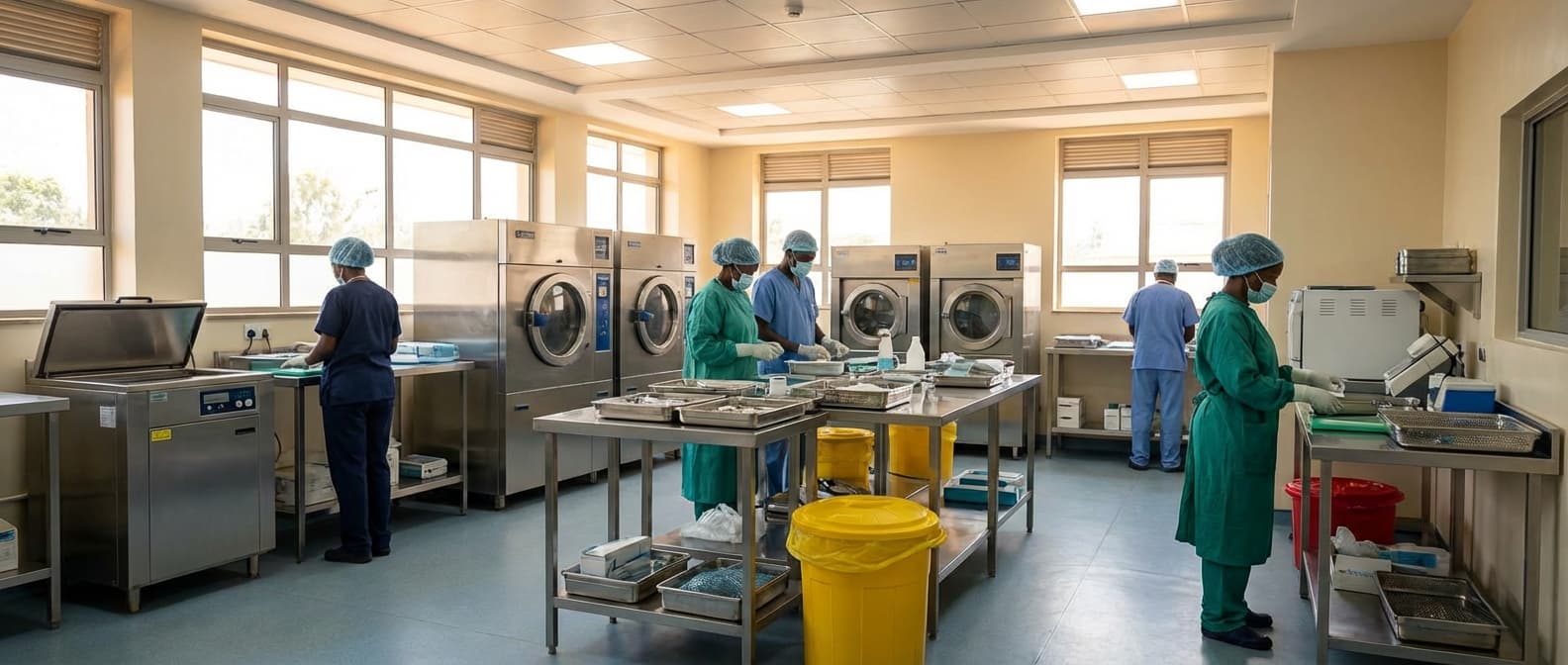
Medical Equipment Decontamination Service (Pre-Repair/Pre-Relocation) in Ghana
Engineering Excellence & Technical Support
Medical Equipment Decontamination Service (Pre-Repair/Pre-Relocation) High-standard technical execution following OEM protocols and local regulatory frameworks.
Advanced Bioburden Assessment
Utilizing state-of-the-art diagnostic tools, we perform meticulous bioburden analysis to identify and quantify microbial contamination on medical devices before repair or relocation, ensuring a comprehensive understanding of the decontamination needs.
Automated Disinfection Protocols
Leveraging automated and validated disinfection cycles with EPA-approved agents, we guarantee consistent and effective elimination of pathogens, exceeding industry standards for pre-repair and pre-relocation decontamination of critical medical equipment.
Traceable Sterilization Documentation
We provide complete, auditable documentation of the decontamination process, including sterilization records and certificates of assurance, offering complete peace of mind and regulatory compliance for equipment destined for repair or relocation across Ghana.
What Is Medical Equipment Decontamination Service (Pre-repair/pre-relocation) In Ghana?
Medical Equipment Decontamination Service (Pre-Repair/Pre-Relocation) in Ghana refers to the specialized process of cleaning, disinfecting, and/or sterilizing medical devices prior to their transport for repair or relocation. This service is critical for preventing the transmission of infectious agents and ensuring the safety of technicians, maintenance personnel, and recipients of the equipment at its new destination. It is a procedural prerequisite mandated by safety regulations and best practices within healthcare facilities and the medical equipment service industry.
| Who Needs This Service | Typical Use Cases | Rationale |
|---|---|---|
| Healthcare Facilities (Hospitals, Clinics, Diagnostic Centers) in Ghana | Medical equipment requiring repair by original manufacturers or third-party service providers. | To protect service technicians from exposure to biohazardous materials and prevent cross-contamination during handling and repair. |
| Medical Equipment Manufacturers and Service Providers operating in or serving Ghana | Transfer of equipment between facilities for maintenance or servicing. | Ensuring compliance with occupational health and safety regulations and maintaining a sterile work environment for their personnel. |
| Organizations involved in the relocation of medical facilities or departments within Ghana | Moving specialized medical equipment (e.g., imaging machines, surgical instruments, patient monitors) to a new location. | Preventing the inadvertent spread of pathogens to the new environment and safeguarding the health of staff involved in the relocation. |
| Procurement and Logistics Departments managing medical equipment assets in Ghana | Sending equipment for calibration, upgrades, or decommissioning. | Mitigating risk of infection transmission and ensuring the integrity of the equipment throughout its lifecycle management. |
Key Components of Medical Equipment Decontamination (Pre-Repair/Pre-Relocation)
- Initial Assessment and Classification: Determining the level of contamination risk based on the equipment's usage and the type of procedures it was involved in (e.g., invasive vs. non-invasive).
- Gross Decontamination: Removal of visible soil, blood, and other organic matter using appropriate cleaning agents and manual or automated methods.
- Disinfection/Sterilization: Application of chemical disinfectants or employing physical sterilization methods (e.g., autoclaving, ethylene oxide sterilization, hydrogen peroxide gas plasma) to eliminate or inactivate microorganisms.
- Rinsing and Drying: Thorough rinsing to remove residual cleaning/disinfection agents and meticulous drying to prevent microbial regrowth and potential damage to the equipment's internal components.
- Packaging and Containment: Secure packaging of the decontaminated equipment in appropriate materials (e.g., sterile wraps, sealed containers) to maintain its decontamination status during transit.
- Documentation: Comprehensive record-keeping of the decontamination process, including the methods used, chemicals employed, dates, and personnel involved, for traceability and compliance.
Who Needs Medical Equipment Decontamination Service (Pre-repair/pre-relocation) In Ghana?
Ensuring the safety and integrity of medical equipment is paramount in Ghana's healthcare sector. Before any medical device undergoes repair or relocation, a thorough decontamination process is crucial. This prevents the spread of infectious agents, protects service technicians, and ensures the equipment is free from contaminants that could interfere with diagnostic or therapeutic functions. This service is indispensable for a wide range of healthcare facilities and the specific departments within them.
| Target Customer Type | Key Departments Requiring Decontamination | Specific Equipment Examples (Pre-Repair/Pre-Relocation) | Rationale for Decontamination |
|---|---|---|---|
| Hospitals (Government and Private) | Operating Theatres/Surgical Suites | Surgical instruments, Endoscopes, Anesthesia machines, Ventilators | Preventing cross-contamination of surgical sites and protecting staff handling instruments. Eliminating bioburden that could affect repair precision. |
| Hospitals (Government and Private) | Intensive Care Units (ICUs) | Ventilators, Infusion pumps, Patient monitors, Dialysis machines | Minimizing risk of healthcare-associated infections (HAIs) to vulnerable patients. Protecting technicians from infectious agents. |
| Hospitals (Government and Private) | Emergency Departments (ERs) | Defibrillators, ECG machines, Trauma equipment, Stretchers | Rapid turnaround time requires quick decontamination. Preventing spread of pathogens from high-risk patient encounters. |
| Hospitals (Government and Private) | Maternity and Neonatal Units | Incubators, Phototherapy units, Fetal monitors, Ultrasound machines | Protecting neonates from infections, especially those with compromised immune systems. Maintaining sterile environment. |
| Hospitals (Government and Private) | Radiology and Imaging Departments | X-ray machines, CT scanners, MRI machines, Ultrasound probes | Preventing transfer of biological fluids or particles that could affect image quality or damage sensitive components during repair. |
| Hospitals (Government and Private) | Sterilization and CSSD (Central Sterile Supply Department) | Autoclaves, Sterilizers, Washing machines | Ensuring instruments are truly sterile for repair. Protecting personnel from residual contaminants. |
| Clinics and Health Centers | General Treatment Rooms | Blood pressure monitors, Stethoscopes, Minor surgical tools, Diagnostic kits | Maintaining hygiene standards in smaller facilities. Protecting staff and patients. |
| Clinics and Health Centers | Dental Clinics | Dental handpieces, Ultrasonic scalers, X-ray units | Preventing transmission of oral pathogens. Ensuring proper functioning of specialized dental equipment. |
| Diagnostic Laboratories | Microbiology and Pathology Labs | Microscopes, Centrifuges, Blood analyzers, PCR machines | Preventing contamination of samples and reagents. Protecting lab personnel and equipment integrity. |
| Research Institutions | Biomedical Research Labs | Specialized incubators, Gene sequencers, Cell culture equipment | Maintaining research integrity by preventing cross-contamination. Protecting valuable research equipment. |
| Medical Equipment Suppliers and Service Providers | Repair and Maintenance Workshops | All types of medical equipment received for servicing | Protecting their technicians from exposure to hazardous biological agents. Ensuring a clean and safe working environment. Meeting contractual obligations for equipment handling. |
| Non-Governmental Organizations (NGOs) involved in healthcare | Mobile Clinics and Field Hospitals | Portable diagnostic equipment, Minor surgical kits, Water purification units | Operating in diverse and potentially unhygienic environments. Ensuring equipment functionality and safety for both staff and beneficiaries. |
Target Customers and Departments in Ghana Requiring Medical Equipment Decontamination Service (Pre-Repair/Pre-Relocation)
- Hospitals (Government and Private)
- Clinics and Health Centers
- Diagnostic Laboratories
- Research Institutions
- Medical Equipment Suppliers and Service Providers
- Non-Governmental Organizations (NGOs) involved in healthcare
Medical Equipment Decontamination Service (Pre-repair/pre-relocation) Process In Ghana
The Medical Equipment Decontamination Service (Pre-Repair/Pre-Relocation) process in Ghana is a crucial step to ensure the safety of technicians, the integrity of the equipment, and to prevent the spread of infections. This service is typically engaged before medical devices are sent for repair or relocation within healthcare facilities. The workflow is designed to be systematic and efficient, encompassing initial contact, assessment, decontamination, and final handover.
| Stage | Key Activities | Responsible Parties | Deliverables/Outcomes |
|---|---|---|---|
| Inquiry & Initial Contact | Identification of need, Contacting provider, Sharing basic info | Healthcare Facility, Decontamination Service Provider | Initial awareness of service need, Contact established |
| Service Request & Information Gathering | Formal request, Detailed equipment info, Reason for decontamination | Healthcare Facility, Decontamination Service Provider | Service request form, Detailed equipment list |
| Risk Assessment & Quotation | Risk evaluation, Protocol selection, Fee calculation | Decontamination Service Provider | Quotation, Service agreement terms |
| Scheduling & Logistics Planning | Date confirmation, Collection/visit arrangement, Transport planning | Healthcare Facility, Decontamination Service Provider | Agreed schedule, Logistics plan |
| Preparation | PPE donning, Area setup, Material gathering | Decontamination Service Provider | Ready work environment, Decontamination supplies |
| Pre-Cleaning | Visual inspection, Removal of gross contamination | Decontamination Service Provider | Visibly clean equipment surface |
| Decontamination Execution | Application of chosen decontamination method (disinfection/sterilization) | Decontamination Service Provider | Effectively decontaminated equipment |
| Verification & QC | Visual check, Indicator use (if applicable), Process logging | Decontamination Service Provider | Confirmed decontamination efficacy |
| Documentation & Certification | Issuance of certificate/report | Decontamination Service Provider | Decontamination Certificate/Report |
| Handover | Safe packaging, Transfer of equipment | Decontamination Service Provider, Healthcare Facility | Decontaminated equipment ready for next stage |
| Invoicing & Feedback | Final billing, Service review | Decontamination Service Provider, Healthcare Facility | Payment processed, Service improvement insights |
Medical Equipment Decontamination Service Workflow in Ghana
- 1. Inquiry & Initial Contact:
- Healthcare facility (hospital, clinic, diagnostic center) identifies a need for decontamination for equipment scheduled for repair or relocation.
- Facility contacts an authorized decontamination service provider in Ghana (e.g., through phone, email, or a designated portal).
- Basic information about the equipment (type, estimated quantity, reason for decontamination) is shared.
- 2. Service Request & Information Gathering:
- Decontamination service provider formally acknowledges the inquiry and requests detailed information.
- This includes specific equipment models, serial numbers, intended destination (repair workshop or new location), and any known biological hazards or contaminants.
- A service request form or quotation is typically generated.
- 3. Risk Assessment & Quotation:
- Based on the gathered information, the service provider conducts a preliminary risk assessment.
- This considers the type of equipment, potential contaminants (e.g., blood, bodily fluids, infectious agents), and the required decontamination protocols.
- A detailed quotation is provided, outlining the scope of work, service fees, estimated timelines, and terms and conditions.
- 4. Scheduling & Logistics Planning:
- Upon acceptance of the quotation, the service provider and the healthcare facility agree on a schedule for decontamination.
- Logistics are planned for equipment collection (if applicable) or for the decontamination team to visit the facility.
- Necessary permits or documentation for transport (if needed) are arranged.
- 5. On-Site/Off-Site Decontamination Preparation:
- If On-Site: The decontamination team arrives at the healthcare facility with appropriate Personal Protective Equipment (PPE), decontamination agents (disinfectants, sterilants), and specialized equipment (e.g., fogging machines, UV-C light systems).
- If Off-Site: Equipment is safely packaged and transported to the service provider's dedicated decontamination facility.
- The work area is prepared, ensuring adequate ventilation and containment to prevent cross-contamination.
- 6. Equipment Assessment & Pre-Cleaning:
- A visual inspection of the equipment is performed to identify visible soiling or contamination.
- Gross decontamination is carried out to remove any bulk material, such as blood or debris, using appropriate cleaning agents.
- 7. Decontamination Process Execution:
- The primary decontamination method is applied based on the risk assessment and equipment type. Common methods include:
- **High-Level Disinfection:** Using chemical disinfectants (e.g., glutaraldehyde, peracetic acid) to kill microorganisms, including some spores.- **Sterilization:** More rigorous processes like autoclaving (steam under pressure), ethylene oxide (EtO) sterilization, or hydrogen peroxide plasma sterilization for critical equipment.- **Surface Decontamination:** Wiping down or fogging surfaces with EPA-approved disinfectants.- **UV-C Light Disinfection:** Utilizing ultraviolet germicidal irradiation for surface decontamination.- Adherence to manufacturer's instructions for decontamination and equipment compatibility is paramount.
- 8. Post-Decontamination Verification & Quality Control:
- Visual inspection to confirm the absence of visible contamination.
- Where applicable, biological or chemical indicators may be used to verify the efficacy of the decontamination process.
- Documentation of the decontamination process, including batch numbers of disinfectants, exposure times, and operator details.
- 9. Documentation & Certification:
- A decontamination certificate or report is issued, detailing the equipment decontaminated, methods used, date of service, and confirmation of successful decontamination.
- This certificate is crucial for the receiving party (repair workshop or new location) as proof of safety.
- 10. Equipment Handover & Logistics for Next Stage:
- Decontaminated equipment is safely packaged for transport to the repair workshop or its new location.
- If the service was on-site, the equipment is handed back to the facility's designated personnel.
- If off-site, arrangements are made for the return of the decontaminated equipment.
- 11. Final Invoice & Feedback:
- The service provider issues the final invoice for the services rendered.
- Feedback may be solicited from the healthcare facility to assess service quality and identify areas for improvement.
Medical Equipment Decontamination Service (Pre-repair/pre-relocation) Cost In Ghana
The cost of medical equipment decontamination services in Ghana, particularly for pre-repair or pre-relocation purposes, is influenced by several factors. These factors determine the overall price, which is typically quoted in Ghanaian Cedi (GHS). The goal of this service is to ensure that equipment is free from biological and chemical contaminants before it undergoes maintenance or is moved to a new location, protecting both technicians and the environment. Understanding these pricing elements is crucial for healthcare facilities and repair centers when budgeting for such services.
| Equipment Category | Typical Decontamination Cost Range (GHS) | Notes |
|---|---|---|
| Small Diagnostic Equipment (e.g., Stethoscopes, BP Monitors, Thermometers) | 150 - 400 | Manual cleaning with approved disinfectants. Basic level of decontamination. |
| Medium-Sized Equipment (e.g., Portable Ultrasounds, ECG Machines, Infusion Pumps) | 400 - 1,200 | May involve more thorough cleaning, possibly surface sterilization. Requires careful handling of internal components if accessible. |
| Large Diagnostic/Therapeutic Equipment (e.g., X-ray Machines, CT Scanners - non-invasive areas) | 1,000 - 3,500+ | Requires specialized knowledge and potentially more extensive cleaning. Focus on external surfaces and accessible ports. |
| Surgical Equipment (Sterilizable Instruments - as part of a larger service) | Included in overall service or priced per instrument set (e.g., 50 - 200 per set) | Typically involves high-level disinfection or sterilization. Often a part of surgical tray preparation or post-use cleaning. |
| Complex/Specialized Equipment (e.g., Anesthesia Machines, Ventilators, MRI/CT internal components if accessible) | 2,500 - 8,000+ (can be significantly higher) | Requires highly skilled technicians, specialized decontamination agents, and potentially longer downtime. Exact pricing highly variable based on specific model and contamination. |
| On-site vs. Off-site Decontamination | On-site may incur travel fees (variable); Off-site includes transport costs (variable) | Logistics and convenience factor into the pricing. |
| Emergency/Expedited Service | +20% - 50% of standard cost | For urgent needs requiring immediate attention. |
Key Pricing Factors for Medical Equipment Decontamination in Ghana
- Type and Complexity of Medical Equipment: Different equipment has varying levels of complexity in terms of its construction, materials, and the types of contaminants it might harbor. Larger, more intricate machines (e.g., MRI scanners, complex surgical robots) require more time, specialized agents, and expertise than smaller, simpler devices (e.g., stethoscopes, blood pressure monitors).
- Degree of Contamination: The severity of contamination is a primary driver of cost. Equipment that has been exposed to highly infectious biological agents (e.g., during an outbreak) or hazardous chemicals will necessitate more rigorous and potentially longer decontamination protocols, often involving higher-grade disinfectants or sterilization methods.
- Decontamination Method Used: The specific techniques employed significantly impact pricing. Methods can range from manual cleaning with approved disinfectants to more advanced techniques like steam sterilization, UV-C light irradiation, or even chemical vapor sterilization. Each method has its own associated costs for equipment, consumables, and labor.
- Required Turnaround Time: Urgent decontamination services, especially those needed for immediate repairs or critical relocations, often incur premium charges due to the need for expedited scheduling and resource allocation.
- Volume of Equipment: If a facility requires decontamination for a large number of medical devices, service providers may offer volume-based discounts, leading to a lower per-unit cost. Conversely, decontaminating a single specialized piece of equipment might have a higher individual price.
- Location and Accessibility: The geographical location of the medical facility or the equipment's current site can influence costs. Service providers may factor in travel time, fuel, and logistics, especially for remote or difficult-to-access areas within Ghana.
- Specialized Training and Certifications: Decontamination technicians often require specialized training and certifications to handle various types of medical equipment and chemical agents safely and effectively. The cost of maintaining these skilled personnel is reflected in the service pricing.
- Consumables and Reagents: The cost of disinfectants, sterilizing agents, personal protective equipment (PPE) for technicians, and any specialized cleaning materials are direct expenses that contribute to the overall service fee.
- Regulatory Compliance: Adherence to national and international health and safety regulations, as well as specific protocols for certain types of medical waste or equipment, can add complexity and cost to the decontamination process.
Affordable Medical Equipment Decontamination Service (Pre-repair/pre-relocation) Options
Maintaining the hygiene and safety of medical equipment is paramount, especially before it undergoes repair or relocation. Our Affordable Medical Equipment Decontamination Service offers cost-effective solutions tailored to your needs. We understand the importance of a clean environment for effective repairs and safe transportation, and we provide a range of options to ensure your equipment is prepared without breaking the bank. This service is crucial for preventing cross-contamination, ensuring technician safety during repairs, and meeting regulatory compliance during equipment transfers. Investing in decontamination upfront can prevent costly delays and complications down the line.
| Service Level | Description | Typical Equipment | Estimated Cost Range (USD - subject to assessment) |
|---|---|---|---|
| Basic Decontamination | Surface cleaning and disinfection to remove visible contaminants and common pathogens. | Non-invasive devices, small portable equipment, accessories. | $50 - $150 per unit |
| Standard Decontamination | Thorough cleaning, disinfection of critical surfaces, and basic inspection for external damage. | Imaging accessories, patient monitoring devices, infusion pumps. | $150 - $300 per unit |
| Advanced Decontamination | Includes standard decontamination plus specialized cleaning of complex internal or external components, and fogging/vaporization for hard-to-reach areas. | Surgical instruments, anesthesia machines, ventilators. | $300 - $700+ per unit |
| Customized Solutions | Tailored decontamination protocols based on specific equipment, bioburden, and regulatory requirements. | Highly specialized or high-risk equipment. | Custom Quote Required |
Value Bundles & Cost-Saving Strategies
- {"title":"Tiered Decontamination Packages","description":"We offer tiered packages based on the complexity and type of equipment. This allows you to select the most appropriate level of service for your budget and the specific decontamination needs."}
- {"title":"Volume Discounts","description":"The more equipment you need decontaminated, the more you save. We provide attractive discounts for bulk decontamination services, making it cost-effective for larger projects or ongoing needs."}
- {"title":"Scheduled Service Agreements","description":"For facilities with regular equipment turnover or maintenance schedules, our service agreements offer predictable pricing and priority scheduling at a reduced rate compared to ad-hoc services."}
- {"title":"Combined Repair & Decontamination Packages","description":"When you combine our decontamination service with your chosen repair provider (or our partnered repair services), you can unlock further savings through bundled pricing."}
- {"title":"Pre-Assessment & Quoting","description":"We offer free initial assessments to provide accurate quotes, ensuring there are no hidden costs. Understanding the scope upfront allows for better budgeting."}
- {"title":"Eco-Friendly Decontamination Methods","description":"Utilizing environmentally conscious decontamination agents and processes can sometimes lead to lower disposal costs and a more sustainable operational model, which we pass on as savings."}
- {"title":"Mobile Decontamination Units","description":"For large equipment or facilities where moving the equipment is challenging, our mobile units can perform decontamination on-site, saving on transportation costs and minimizing disruption."}
Verified Providers In Ghana
In Ghana's rapidly evolving healthcare landscape, the distinction between genuine and fraudulent medical service providers can be challenging for consumers. This is where the importance of verified providers and trusted credentials, such as those offered by Franance Health, becomes paramount. Franance Health stands out by rigorously vetting its network of healthcare professionals and facilities, ensuring that patients receive safe, effective, and high-quality care. Their commitment to transparency and patient well-being positions them as the premier choice for those seeking reliable medical services in Ghana.
| Credential Type | Verification Standard | Patient Benefit |
|---|---|---|
| Medical Licenses | Up-to-date and valid registration with the Ghana Medical and Dental Council (GMDC) or relevant regulatory bodies. | Ensures providers meet the minimum legal and educational requirements to practice medicine. |
| Professional Qualifications | Verification of degrees, certifications, and specializations from accredited institutions. | Confirms that providers possess the necessary expertise and training for their field. |
| Practice History and Background Checks | Review of any disciplinary actions, malpractice claims, or ethical concerns. | Minimizes the risk of encountering unqualified or problematic practitioners. |
| Facility Accreditation (for hospitals/clinics) | Compliance with national healthcare standards and quality assurance protocols. | Ensures a safe, hygienic, and well-equipped environment for medical treatment. |
| Franance Health Endorsement | Active participation in Franance Health's vetting and quality assurance programs. | Provides an additional layer of assurance and a clear indicator of trusted providers. |
Why Franance Health Represents the Best Choice for Verified Providers in Ghana:
- Rigorous Credentialing Process: Franance Health employs a comprehensive vetting system that scrutinizes the qualifications, licenses, and practice history of all affiliated healthcare providers and institutions. This meticulous approach guarantees that only legitimate and competent professionals are part of their network.
- Commitment to Quality of Care: Beyond basic verification, Franance Health emphasizes the delivery of high-quality medical services. This includes ensuring adherence to ethical standards, patient safety protocols, and modern medical practices.
- Patient-Centric Approach: Franance Health prioritizes the patient experience, aiming to connect individuals with providers who are not only skilled but also empathetic and responsive to their needs.
- Transparency and Trust: By clearly identifying and endorsing verified providers, Franance Health builds a foundation of trust, allowing patients to make informed decisions with confidence.
- Access to Specialized Services: The network often includes a diverse range of specialists and facilities, ensuring that patients can find the specific care they require, from general practitioners to specialized surgeons and diagnostic centers.
Scope Of Work For Medical Equipment Decontamination Service (Pre-repair/pre-relocation)
This Scope of Work (SOW) outlines the requirements for medical equipment decontamination services. The service is intended to be performed prior to the equipment being sent for repair or relocation. This ensures the safety of personnel handling the equipment during these subsequent processes and prevents the potential spread of infectious agents. The decontamination process will adhere to established industry best practices and regulatory guidelines. Technical deliverables include a decontamination certificate, a waste disposal manifest, and a detailed service report. Standard specifications cover the required cleaning agents, equipment, personnel qualifications, and safety protocols.
| Category | Specification | Details/Requirements |
|---|---|---|
| Decontamination Agents | Approved Cleaning Solutions | Must be hospital-grade, EPA-approved disinfectants and virucides effective against a broad spectrum of pathogens. Specific agents will be selected based on equipment material compatibility and the suspected nature of contamination. A list of approved agents and their Material Safety Data Sheets (MSDS) will be maintained. |
| Decontamination Methods | Surface Wiping, Immersion (if applicable), Fogging | Methods will be tailored to the specific equipment type and its components. All processes will prioritize thoroughness and prevent damage to sensitive electronics or mechanical parts. Contact times for disinfectants will be strictly followed as per manufacturer guidelines. |
| Personnel Qualifications | Trained Technicians | Personnel performing decontamination must be trained in infection control, hazardous material handling, and the safe use of cleaning agents and personal protective equipment (PPE). Proof of training and certification may be required. |
| Personal Protective Equipment (PPE) | Mandatory Use | Technicians will wear appropriate PPE, including gloves (nitrile or neoprene), eye protection (safety glasses or face shield), lab coats or disposable gowns, and respiratory protection (if required by the cleaning agents or suspected contaminants). |
| Equipment Handling | Careful and Safe | Equipment will be handled with care to avoid damage. All cables, accessories, and removable parts will be addressed during the decontamination process. If the equipment contains internal components that may be a biohazard risk, specific protocols for internal decontamination may be required and communicated. |
| Environmental Controls | Controlled Area | Decontamination will ideally be performed in a designated, well-ventilated area with appropriate containment measures to prevent the spread of contaminants. Proper waste disposal procedures will be followed for all contaminated materials. |
| Documentation | Traceable Records | All decontamination activities will be meticulously documented, including the date, time, technician, equipment details, agents used, and any observations. This documentation will be integral to the service report. |
| Regulatory Compliance | Adherence to Guidelines | All decontamination procedures will comply with relevant guidelines from organizations such as OSHA, CDC, and EPA, as well as any specific institutional policies and procedures. |
| Pre-Decontamination Assessment | Visual Inspection | A brief visual inspection may be conducted prior to decontamination to identify obvious gross contamination that might influence the choice of cleaning agents or methods. |
Technical Deliverables
- Decontamination Certificate: A signed and dated certificate confirming the equipment has undergone the specified decontamination process. This certificate will include the equipment serial number, model, date of decontamination, and the name/signature of the performing technician.
- Waste Disposal Manifest: If any biohazardous or chemically contaminated waste is generated during the decontamination process, a manifest detailing the type, quantity, and disposal method will be provided, adhering to all local and national hazardous waste regulations.
- Detailed Service Report: A comprehensive report documenting the decontamination process. This report will include: identification of the equipment, specific decontamination agents and methods used, areas of focus during cleaning, confirmation of any visible contamination removal, any challenges encountered, and recommendations for future decontamination procedures if applicable.
Service Level Agreement For Medical Equipment Decontamination Service (Pre-repair/pre-relocation)
This Service Level Agreement (SLA) outlines the guaranteed response times and uptime for the Medical Equipment Decontamination Service provided by [Your Company Name] (hereinafter referred to as 'Provider') for pre-repair and pre-relocation decontamination of medical equipment. This SLA is between the Provider and [Client Company Name] (hereinafter referred to as 'Client').
| Service Type | Equipment Classification | Response Time Target | Uptime Guarantee |
|---|---|---|---|
| Pre-Repair/Pre-Relocation Decontamination | Critical Equipment | Within 4 business hours of confirmed Service Request | 99.5% during scheduled operating hours |
| Pre-Repair/Pre-Relocation Decontamination | Non-Critical Equipment | Within 8 business hours of confirmed Service Request | 99.0% during scheduled operating hours |
| Scheduled Decontamination (Client-Initiated) | All Equipment | As per mutually agreed schedule during booking | N/A (Service is scheduled and expected) |
Key Definitions
- Decontamination Service: The process of cleaning, disinfecting, and/or sterilizing medical equipment to render it safe for handling, repair, or relocation.
- Service Request: A formal request submitted by the Client to the Provider for decontamination of medical equipment.
- Response Time: The maximum allowable time from the initiation of a confirmed Service Request to the commencement of decontamination activities by the Provider.
- Uptime Guarantee: A commitment by the Provider to ensure the availability of the decontamination service during agreed-upon operating hours, minimizing unexpected service interruptions.
- Downtime: Any period during which the decontamination service is unavailable due to the Provider's fault or scheduled maintenance for which proper notification was not given.
- Critical Equipment: Medical equipment designated by the Client as essential for immediate patient care, where any delay in decontamination would have a severe impact on operations.
- Non-Critical Equipment: Medical equipment where decontamination delays would have a minimal or manageable impact on patient care or operations.
Frequently Asked Questions

Ready when you are
Let's scope your Medical Equipment Decontamination Service (Pre-Repair/Pre-Relocation) in Ghana project in Ghana.

Scaling healthcare logistics and technical systems across the entire continent.