
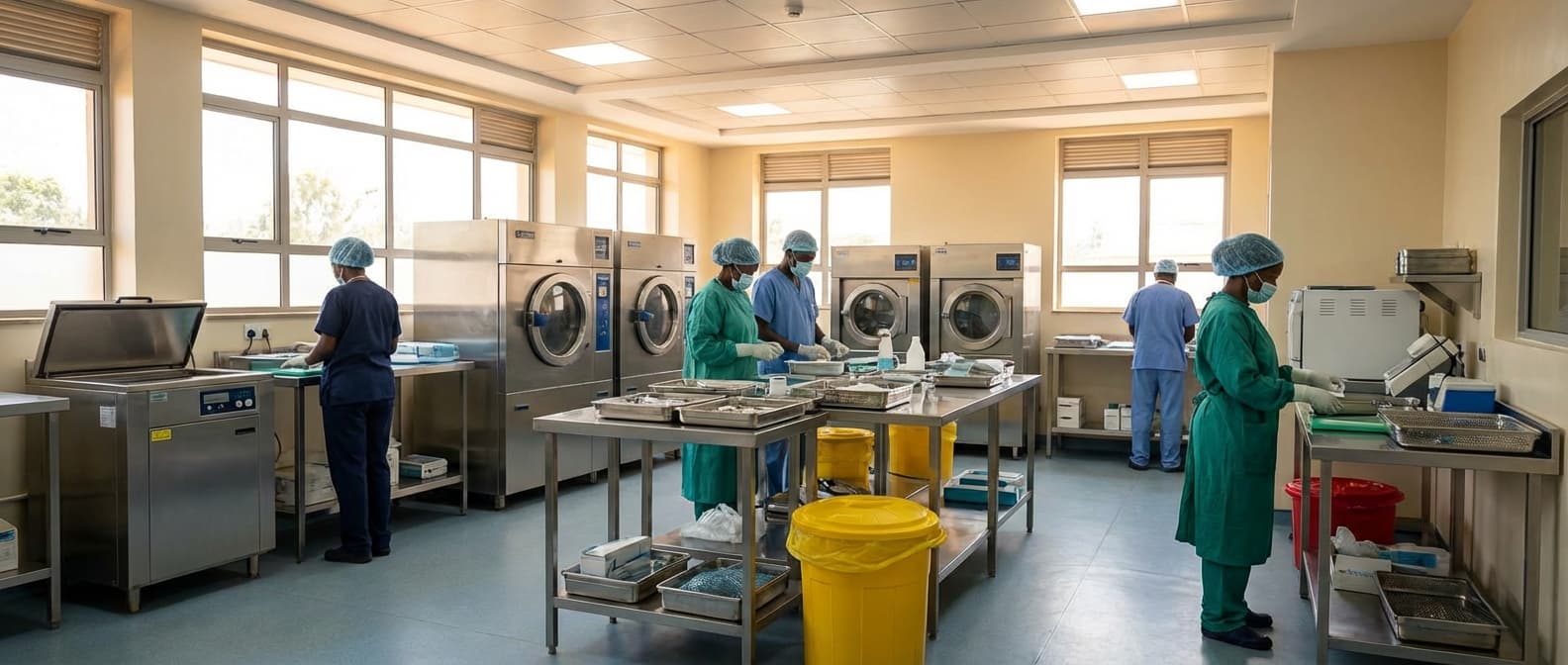
Infection-Control Readiness Support Service for Reusable Equipment in Ghana
Engineering Excellence & Technical Support
Infection-Control Readiness Support Service for Reusable Equipment High-standard technical execution following OEM protocols and local regulatory frameworks.
Advanced Sterilization Process Assurance
Leveraging real-time monitoring and data analytics of sterilization cycles (e.g., autoclaving, chemical sterilization) for reusable medical equipment. Our service ensures that each cycle meets stringent international standards, providing verifiable records and immediate alerts for any deviations, thus guaranteeing the inactivation of infectious agents before re-deployment.
End-to-End Equipment Traceability
Implementing a robust digital tracking system from cleaning and disinfection to sterilization and distribution. Utilizing unique identifiers and blockchain technology, we provide an immutable audit trail for every piece of reusable equipment, minimizing the risk of mix-ups, ensuring proper handling, and enabling rapid identification in the event of a recall or outbreak.
Standardized Infection Control Training & Competency
Delivering context-specific, evidence-based training modules for healthcare personnel on the safe handling, cleaning, disinfection, and sterilization of reusable medical equipment. Our program includes practical simulations and validated competency assessments, ensuring adherence to protocols and fostering a culture of safety to prevent healthcare-associated infections.
What Is Infection-control Readiness Support Service For Reusable Equipment In Ghana?
Infection-Control Readiness Support Service for Reusable Equipment in Ghana is a specialized program designed to ensure that healthcare facilities adhere to stringent infection prevention and control (IPC) standards for their reusable medical devices. This service focuses on establishing and maintaining robust protocols for the decontamination, sterilization, and safe storage of instruments and equipment that are used repeatedly on patients. Its primary objective is to mitigate the risk of healthcare-associated infections (HAIs) by preventing the transmission of pathogens through improperly processed reusable medical items.
| Service Aspect | Description | Target Audience | Typical Use Cases |
|---|---|---|---|
| SOP Development & Implementation | Creating, adapting, and ensuring adherence to evidence-based protocols for cleaning, disinfection, and sterilization. | All healthcare facilities with reusable medical equipment, including hospitals, clinics, and specialized surgical centers. | A new surgical theater is established; existing SOPs for surgical instruments are outdated; inconsistent disinfection practices are observed. |
| Personnel Training & Capacity Building | Educating and evaluating the skills of staff responsible for equipment reprocessing, including nurses, technicians, and environmental services personnel. | Newly hired staff, existing reprocessing teams, and management overseeing IPC. | Introduction of new sterilization technology; observed errors in manual cleaning protocols; need for refresher training on universal precautions. |
| Equipment Assessment & Validation | Evaluating the functionality and suitability of sterilization equipment (e.g., autoclaves, washer-disinfectors) and ensuring their proper validation and maintenance. | Facilities with existing or planned sterilization equipment. | A hospital's autoclave is failing quality control tests; a new clinic is procuring its first sterilization unit; routine maintenance is overdue. |
| Process Auditing & Compliance Monitoring | Regularly inspecting reprocessing workflows, documentation, and compliance with national and international IPC guidelines. | Healthcare facilities at all levels of care. | Preparation for accreditation or licensing; response to increased HAI rates; periodic internal quality improvement initiatives. |
| Infrastructure & Workflow Optimization | Advising on the physical layout and operational flow of reprocessing areas to enhance efficiency and minimize contamination risks. | Facilities undergoing renovation or expansion; units with suboptimal reprocessing spaces. | Designing a new Central Sterile Supply Department (CSSD); improving the workflow in a busy operating room's instrument cleaning area; establishing a dedicated decontamination zone. |
Key Components of the Service
- Assessment of existing IPC infrastructure and practices for reusable equipment.
- Development and implementation of Standard Operating Procedures (SOPs) for cleaning, disinfection, and sterilization.
- Provision of training and competency assessment for healthcare personnel involved in reprocessing.
- Guidance on the selection, maintenance, and validation of sterilization equipment.
- Supply chain management recommendations for appropriate cleaning agents, disinfectants, and sterilization consumables.
- Surveillance and monitoring of reprocessing outcomes and compliance.
- Auditing and quality assurance of IPC processes for reusable equipment.
- Support for the establishment of dedicated reprocessing units or improved workflows.
Who Needs Infection-control Readiness Support Service For Reusable Equipment In Ghana?
In Ghana, robust infection prevention and control (IPC) is paramount for healthcare facilities, particularly when dealing with reusable medical equipment. Ensuring the safe and effective reprocessing of these instruments is critical to preventing healthcare-associated infections (HAIs). This requires specialized knowledge, adherence to stringent protocols, and adequate resources. Therefore, infection-control readiness support services for reusable equipment are vital for a range of healthcare providers and their respective departments to maintain the highest standards of patient safety and operational efficiency.
| Target Customer | Key Departments Requiring Support | Rationale for Support |
|---|---|---|
| Hospitals (Public and Private) | Central Sterile Supply Department (CSSD) / Sterilization and Disinfection Unit, Operating Theatres (Surgical Wards), Intensive Care Units (ICUs), Emergency Departments (ER), Outpatient Departments (OPDs), Maternity Wards, Dental Departments, Endoscopy Units | High volume of reusable instruments, diverse equipment types, critical patient populations, need for standardized reprocessing protocols, regulatory compliance, and staff training. |
| Polyclinics and Health Centers | Treatment Rooms, Minor Procedure Areas, Dental Units (if applicable), Laboratory Units | Limited resources and specialized staff, need for basic but effective reprocessing solutions, ensuring safety for common procedures, and building foundational IPC capacity. |
| Surgical Centers and Day Clinics | Operating Rooms, Pre-operative and Post-operative Areas, Sterilization Bays | Focus on scheduled surgical procedures, maintaining high standards for surgical instrument reprocessing, efficient turnaround times for equipment, and preventing surgical site infections. |
| Specialized Medical Facilities (e.g., Dental Clinics, Endoscopy Units) | Dental Treatment Rooms, Endoscopy Procedure Rooms, Instrument Cleaning and Sterilization Areas | Specific reprocessing requirements for specialized instruments (e.g., dental drills, endoscopes), high risk of transmission for certain infections, and need for tailored training and equipment maintenance. |
| Rehabilitation Centers | Therapy Rooms (e.g., physiotherapy, occupational therapy), Hydrotherapy Pools (if applicable) | Reprocessing of equipment used for patient care and therapy (e.g., massage tools, mobility aids, hydrotherapy equipment), preventing cross-contamination between patients, and ensuring a hygienic environment. |
Target Customers and Departments for Infection-Control Readiness Support Service for Reusable Equipment in Ghana
- Hospitals (Public and Private)
- Polyclinics and Health Centers
- Surgical Centers and Day Clinics
- Specialized Medical Facilities (e.g., Dental Clinics, Endoscopy Units)
- Rehabilitation Centers
Infection-control Readiness Support Service For Reusable Equipment Process In Ghana
This document outlines the workflow for the Infection-Control Readiness Support Service for Reusable Equipment Processes in Ghana. It details the steps from the initial inquiry by a healthcare facility to the final execution and reporting of the support service. The service aims to enhance the infection prevention and control practices related to the reprocessing of reusable medical equipment in Ghanaian healthcare settings.
| Phase | Activity | Description | Responsible Party | Deliverables/Outcomes |
|---|---|---|---|---|
| Phase 1: Inquiry & Initial Contact | Facility Expresses Interest | A healthcare facility in Ghana identifies a need for support in their reusable equipment processing and infection control practices and contacts the service provider. | Healthcare Facility | Initial request or inquiry submitted. |
| Initial Consultation | A preliminary discussion to understand the facility's general needs, challenges, and objectives regarding reusable equipment reprocessing. | Service Provider & Healthcare Facility | Mutual understanding of basic needs and potential scope. | |
| Phase 2: Needs Assessment & Scope Definition | Detailed Needs Assessment | A comprehensive on-site or remote assessment of current practices, infrastructure, human resources, and challenges in reusable equipment reprocessing and infection control. | Service Provider | Detailed report on existing practices, identified gaps, and areas for improvement. |
| Scope Finalization | Collaborative definition of the specific services to be provided, objectives, timelines, and key performance indicators based on the needs assessment. | Service Provider & Healthcare Facility | Agreed-upon scope of work and objectives. | |
| Phase 3: Proposal Development & Agreement | Proposal Submission | The service provider submits a detailed proposal outlining the proposed interventions, methodology, timelines, resources, and budget. | Service Provider | Formal service proposal. |
| Contract Negotiation & Signing | Discussion and agreement on the terms and conditions of the service, leading to the signing of a formal contract or Memorandum of Understanding (MOU). | Service Provider & Healthcare Facility | Signed contract/MOU. | |
| Phase 4: Pre-Assessment & Baseline Data Collection | Baseline Assessment | Conducting a detailed assessment to establish baseline data on key infection control indicators related to reusable equipment processing (e.g., sterilization rates, availability of supplies, staff competency). | Service Provider | Baseline data report. |
| Tool & Material Preparation | Preparing all necessary training materials, checklists, audit tools, and any equipment required for the intervention. | Service Provider | Ready-to-use training and assessment materials. | |
| Phase 5: On-site Support & Training Delivery | Infection Control Training | Delivering targeted training sessions to healthcare staff on best practices in cleaning, disinfection, sterilization, and sterile storage of reusable medical equipment. | Service Provider | Trained healthcare staff. |
| Process Improvement Support | Providing hands-on guidance and support to implement improved workflows, standard operating procedures (SOPs), and quality assurance mechanisms. | Service Provider | Revised SOPs and improved workflows. | |
| Resource & Infrastructure Assessment | Advising on the optimal use of existing resources and recommending improvements for infrastructure related to reprocessing. | Service Provider | Recommendations for resource and infrastructure optimization. | |
| Phase 6: Post-Intervention Assessment & Monitoring | Post-Intervention Audit | Conducting an audit to assess the immediate impact of the interventions and identify any areas requiring further attention. | Service Provider | Post-intervention audit findings. |
| Ongoing Monitoring | Establishing a system for regular (e.g., weekly, monthly) monitoring of key infection control indicators by the facility staff, with support from the service provider. | Healthcare Facility & Service Provider | Data collection and initial analysis. | |
| Phase 7: Reporting & Recommendations | Progress Reporting | Providing regular progress reports to the facility management on the implementation of recommendations and observed improvements. | Service Provider | Interim progress reports. |
| Final Report | Compiling a comprehensive final report detailing the project's activities, outcomes, achievements against objectives, and lessons learned. | Service Provider | Final project report with data analysis. | |
| Recommendations for Sustainability | Providing specific recommendations for sustaining the improvements and ensuring long-term infection control readiness. | Service Provider | Actionable recommendations for sustainability. | |
| Phase 8: Follow-up & Sustained Support | Follow-up Visits (Optional) | Scheduled follow-up visits to assess the long-term impact, address any emerging challenges, and provide further guidance. | Service Provider | Assessment of long-term sustainability. |
| Capacity Building for Mentorship | Training internal champions within the facility to provide ongoing mentorship and support to their colleagues. | Service Provider | Internal capacity for ongoing support. | |
| Knowledge Sharing & Network Building | Facilitating knowledge sharing among facilities and building a network for continuous learning and support in infection control. | Service Provider | Established network for ongoing learning. |
Workflow for Infection-Control Readiness Support Service
- Inquiry & Initial Contact
- Needs Assessment & Scope Definition
- Proposal Development & Agreement
- Pre-Assessment & Baseline Data Collection
- On-site Support & Training Delivery
- Post-Intervention Assessment & Monitoring
- Reporting & Recommendations
- Follow-up & Sustained Support
Infection-control Readiness Support Service For Reusable Equipment Cost In Ghana
The cost of infection-control readiness support services for reusable medical equipment in Ghana is influenced by a variety of factors, making specific pricing ranges difficult to pinpoint without detailed project scope. However, understanding these factors is crucial for budgeting and planning. Key pricing determinants include the volume and complexity of equipment to be serviced, the level of decontamination and sterilization required, the frequency of service, the geographic location within Ghana, and the specific expertise and accreditations of the service provider. Governmental regulations and the need for specialized consumables also play a significant role. Service providers may offer tiered packages, from basic cleaning and inspection to comprehensive sterilization and validation, with corresponding price variations. The current economic climate, including inflation and currency fluctuations (GHS to USD), will also impact the local currency pricing.
| Service Component | Estimated Cost Range (GHS) - Low | Estimated Cost Range (GHS) - High | Notes |
|---|---|---|---|
| Basic Cleaning & Inspection (Per Equipment/Set) | 50 | 200 | Covers manual cleaning and visual inspection for damage/residue. |
| Disinfection (Per Equipment/Set) | 100 | 400 | Utilizes chemical disinfectants, level depends on equipment type. |
| Sterilization (e.g., Autoclaving) (Per Equipment/Set) | 200 | 800 | Includes steam sterilization, cost varies with equipment size and cycle. |
| Specialized Sterilization (e.g., ETO) (Per Equipment/Set) | 500 | 2,000+ | For heat-sensitive equipment, higher cost due to gas and safety protocols. |
| Equipment Validation & Testing (Per Equipment/Batch) | 300 | 1,500 | Ensures sterilization effectiveness through biological/chemical indicators. |
| On-Site Support (Daily Rate per Technician) | 400 | 1,000 | For larger facilities requiring dedicated on-site personnel. |
| Consumables & Disposables (Per Service) | 20 | 150 | Varies based on the volume and type of chemicals/indicators used. |
| Training & Consultation (Per Session/Day) | 500 | 2,500 | For staff training on infection control protocols and equipment handling. |
| Comprehensive Support Package (Monthly Retainer - Small Facility) | 2,000 | 7,000 | Includes a combination of services based on agreed scope. |
| Comprehensive Support Package (Monthly Retainer - Large Facility) | 8,000 | 25,000+ | Tailored to meet the extensive needs of larger healthcare institutions. |
Key Pricing Factors for Infection-Control Readiness Support Services in Ghana
- Scope of Services: Basic cleaning vs. advanced sterilization, validation, and maintenance.
- Type and Volume of Equipment: Number and complexity of reusable medical devices (e.g., surgical instruments, endoscopes, respiratory equipment).
- Frequency of Service: One-time deep clean, regular scheduled maintenance, or on-demand support.
- Geographic Location: Accessibility and logistical costs for service delivery across different regions in Ghana.
- Service Provider Expertise and Accreditation: Level of training, certifications, and adherence to international standards.
- Consumables and Disposables: Cost of disinfectants, sterilants, cleaning agents, and single-use items.
- Regulatory Compliance: Costs associated with meeting specific Ghanaian health regulations and standards.
- Technological Requirements: Use of advanced sterilization technologies (e.g., autoclaves, ethylene oxide) and their maintenance.
- Staffing and Training: Cost of skilled personnel to perform the services.
- Reporting and Documentation: Requirements for detailed service records and validation reports.
Affordable Infection-control Readiness Support Service For Reusable Equipment Options
Our Affordable Infection-Control Readiness Support Service for Reusable Equipment Options provides comprehensive assistance to healthcare facilities, ensuring they have robust protocols and resources in place to safely manage and reprocess reusable medical devices. We understand the critical importance of infection prevention while also recognizing the financial pressures faced by many organizations. Our service is designed to be cost-effective by offering flexible value bundles and implementing smart cost-saving strategies. By partnering with us, facilities can enhance patient safety, comply with regulatory requirements, and optimize their operational efficiency, all without significant upfront investment.
| Cost-Saving Strategy | Description | Benefit |
|---|---|---|
| Tiered Service Levels: | Our value bundles are structured with different tiers of support, allowing clients to select the level of service that best fits their budget and immediate needs. Starting with more fundamental support and scaling up as required. | Avoids overspending on unnecessary services. Allows for phased implementation and budget management. |
| Shared Expertise & Resources: | We leverage our team of infection control specialists and provide access to a library of standardized training materials and best practice guides, reducing the need for individual facilities to develop these from scratch. | Significantly lowers the cost of expert consultation and in-house training development. |
| Preventative Maintenance & Optimization: | Our service includes proactive assessments and recommendations for equipment maintenance and workflow optimization. This helps prevent costly equipment failures, reprocessing errors, and associated patient safety incidents. | Reduces downtime, minimizes reprocessing waste, and prevents expensive corrective actions and potential litigation. |
| Bulk Purchasing & Vendor Negotiation: | While not directly providing supplies, our expertise in reusable equipment can inform smart purchasing decisions and provide leverage for negotiating better terms with equipment and reprocessing solution vendors. | Leads to reduced capital expenditure and ongoing operational costs for consumables and services. |
| Regulatory Compliance Assistance: | We help facilities navigate complex regulatory requirements, reducing the risk of non-compliance, which can result in fines, penalties, and reputational damage. | Avoids costly fines and sanctions, ensuring uninterrupted operations and maintaining a strong reputation. |
| Remote Support & Digital Tools: | Utilizing digital platforms for training, policy dissemination, and consultation minimizes travel expenses and allows for more frequent and accessible support. | Reduces travel costs and enables more agile and responsive support. |
Value Bundles to Meet Diverse Needs
- Essential Readiness Bundle: Focuses on core components of infection control for reusable equipment, including policy review, basic training modules, and essential equipment assessment. Ideal for facilities with established processes seeking to fine-tune or validate their current practices.
- Comprehensive Compliance Bundle: Expands on the Essential Bundle by adding advanced training, detailed risk assessments, vendor management support, and assistance with documentation for accreditation. Suitable for facilities aiming for higher levels of compliance and looking to proactively address potential gaps.
- Optimized Operations Bundle: Includes all elements of the Comprehensive Bundle, plus process optimization analysis, technology integration consulting (e.g., tracking systems), and ongoing performance monitoring. Designed for facilities seeking to maximize efficiency, reduce reprocessing errors, and achieve significant cost savings through streamlined workflows.
- Customizable Solutions: For organizations with unique challenges or specific needs, we offer tailor-made bundles. Our experts will work with you to define the scope and components of a personalized support package.
Verified Providers In Ghana
In Ghana's burgeoning healthcare landscape, distinguishing between genuine and less-than-reputable providers can be a challenge for patients. This is where the importance of verified providers and trusted platforms like Franance Health becomes paramount. Franance Health acts as a crucial intermediary, rigorously vetting healthcare facilities and professionals to ensure they meet stringent quality and ethical standards. This verification process not only assures patients of receiving safe and effective care but also empowers them to make informed decisions about their health. Choosing a provider credentialed through a reputable platform like Franance Health offers peace of mind, transparency, and access to quality medical services, making them the best choice for individuals seeking reliable healthcare in Ghana.
| Verification Aspect | Franance Health's Role | Patient Benefit |
|---|---|---|
| Licensing and Accreditation | Confirms legal operational permits and recognized industry certifications. | Ensures the facility and its staff are legally authorized and meet professional standards. |
| Clinical Competency | Assesses the qualifications, experience, and ongoing training of medical professionals. | Guarantees patients receive care from skilled and knowledgeable practitioners. |
| Infrastructure and Equipment | Evaluates the availability and maintenance of necessary medical facilities and technology. | Ensures access to appropriate diagnostic and treatment resources. |
| Patient Safety Protocols | Reviews infection control, emergency preparedness, and patient data security measures. | Minimizes risks and ensures a safe treatment environment. |
| Patient Feedback and Reviews | Collects and analyzes patient experiences to maintain high satisfaction levels. | Provides insights into the patient experience and reinforces commitment to service excellence. |
Key Benefits of Choosing Verified Providers via Franance Health:
- Assurance of Quality and Safety: Franance Health's verification process includes checks on infrastructure, equipment, staff qualifications, and adherence to best practices, guaranteeing a higher standard of care.
- Ethical Practice and Transparency: Verified providers are committed to ethical conduct and transparent billing, protecting patients from potential exploitation.
- Access to Specialized Expertise: Franance Health often highlights providers with specific specializations and advanced capabilities, ensuring patients find the right care for their needs.
- Improved Patient Outcomes: By partnering with competent and well-equipped facilities, Franance Health contributes to better diagnoses, effective treatments, and ultimately, improved patient health outcomes.
- Streamlined Healthcare Journey: The platform simplifies the process of finding and booking appointments with trusted medical professionals, reducing stress and saving valuable time.
- Patient Trust and Confidence: Knowing a provider has been vetted by a recognized entity like Franance Health instills confidence and trust, crucial for a positive healthcare experience.
Scope Of Work For Infection-control Readiness Support Service For Reusable Equipment
This Scope of Work (SOW) outlines the services to be provided by a qualified vendor to enhance the infection-control readiness for reusable medical equipment within [Healthcare Facility Name]. The service will focus on evaluating, optimizing, and documenting processes related to the cleaning, disinfection, and sterilization of reusable medical devices, ensuring compliance with current guidelines and best practices. The objective is to minimize the risk of healthcare-associated infections (HAIs) transmitted via contaminated reusable equipment.
| Technical Deliverable | Description | Standard Specifications / Compliance Requirements |
|---|---|---|
| Current State Assessment Report | A comprehensive report detailing the existing processes, equipment inventory, staff knowledge, and observed practices related to reusable equipment reprocessing. | Includes workflow mapping, SWOT analysis of current practices, identification of potential risks, and baseline metrics where applicable. Adherence to ISO 9001 principles for process assessment. |
| Gap Analysis and Risk Assessment Report | Identifies discrepancies between current practices and established guidelines (e.g., CDC, WHO, AAMI, local regulations), along with a quantitative or qualitative risk assessment of identified gaps. | Benchmarked against the latest versions of relevant infection control guidelines and standards. Risk assessment methodology should be clearly defined. |
| Revised/New Standard Operating Procedures (SOPs) | Development or revision of detailed, step-by-step SOPs for the entire lifecycle of reusable equipment, from point-of-use cleaning to storage after reprocessing. | SOPs must be clear, concise, and compliant with applicable national and international standards (e.g., AAMI ST79 for sterilization, CDC guidelines for disinfection). Must include clear visual aids where appropriate. |
| Technology and Consumables Recommendations Report | Evaluation and recommendations for appropriate cleaning agents, disinfectants, sterilants, and reprocessing equipment, considering efficacy, cost-effectiveness, and user safety. | Recommendations based on manufacturer's validated efficacy claims, regulatory approvals (e.g., FDA clearance, CE marking), and compatibility with equipment materials. Consideration of environmental impact. |
| Staff Training Program and Materials | Development of a comprehensive training program and associated materials (presentations, handouts, quizzes) for all relevant personnel involved in reusable equipment reprocessing. | Training content aligned with updated SOPs and relevant infection control guidelines. Must include practical demonstrations and competency assessments. Adult learning principles applied. |
| Competency Assessment Tools | Development of tools and methods to assess and document staff competency in performing reprocessing tasks according to SOPs. | Tools may include written tests, direct observation checklists, or simulated scenarios. Must demonstrate the ability of staff to consistently and correctly perform tasks. |
| Monitoring and Auditing Plan | A framework for ongoing monitoring and periodic auditing of reusable equipment reprocessing processes to ensure sustained compliance and identify areas for continuous improvement. | Includes recommended frequency of audits, key performance indicators (KPIs) to track, and reporting mechanisms. Should align with accreditation requirements (e.g., The Joint Commission). |
| Final Project Report and Implementation Guidance | A summary report of all activities undertaken, including achievements against objectives, final recommendations, and a phased implementation plan for the recommended changes. | The report should provide actionable steps and timelines for implementation, with clear ownership assigned for each action item. Includes a sustainability plan. |
Key Objectives
- Assess current workflows and practices for reusable equipment processing.
- Identify gaps and non-compliance with national/international infection control standards.
- Provide recommendations for process improvements and staff training.
- Develop or update Standard Operating Procedures (SOPs) for reusable equipment reprocessing.
- Evaluate and recommend appropriate cleaning, disinfection, and sterilization technologies and supplies.
- Ensure proper storage and handling of reprocessed reusable equipment.
- Facilitate staff training and competency assessment.
- Support the development of a robust monitoring and auditing program.
Service Level Agreement For Infection-control Readiness Support Service For Reusable Equipment
This Service Level Agreement (SLA) outlines the response times and uptime guarantees for the Infection-Control Readiness Support Service for Reusable Equipment. This service is designed to ensure timely assistance and consistent availability of critical support functions related to the proper handling, reprocessing, and storage of reusable medical equipment to maintain infection control standards.
| Service Component | Response Time Guarantee | Uptime Guarantee |
|---|---|---|
| 24/7 Remote Monitoring and Alerting | Alerts delivered within 15 minutes of detection. | 99.9% uptime for monitoring systems. |
| On-demand Technical Support (Remote) | Initial response (acknowledgment and triage) within 30 minutes during business hours (8 AM - 6 PM local time, Mon-Fri). | Remote support access available 99.5% of the time during business hours. |
| On-demand Technical Support (On-site) | Dispatch of technician within 4 business hours for critical equipment failures impacting patient care, for clients within 50 miles radius. | On-site support is not subject to a strict uptime guarantee but is prioritized based on criticality. |
| Proactive Maintenance Scheduling | Notification of scheduled maintenance at least 7 days in advance. | N/A (scheduled events) |
| Troubleshooting Infection Control Breaches (Remote) | Initial response and guidance within 1 hour during business hours. | Remote guidance availability 99.5% of the time during business hours. |
| Guidance on Best Practices | Response to inquiries within 24 business hours. | N/A (information-based service) |
Key Service Components
- 24/7 Remote Monitoring and Alerting for reprocessing equipment status.
- On-demand technical support for reprocessing equipment malfunctions.
- Proactive maintenance scheduling and coordination.
- Assistance with troubleshooting infection control breaches related to equipment.
- Guidance on best practices for equipment cleaning, disinfection, and sterilization.
Frequently Asked Questions

Ready when you are
Let's scope your Infection-Control Readiness Support Service for Reusable Equipment in Ghana project in Ghana.

Scaling healthcare logistics and technical systems across the entire continent.