
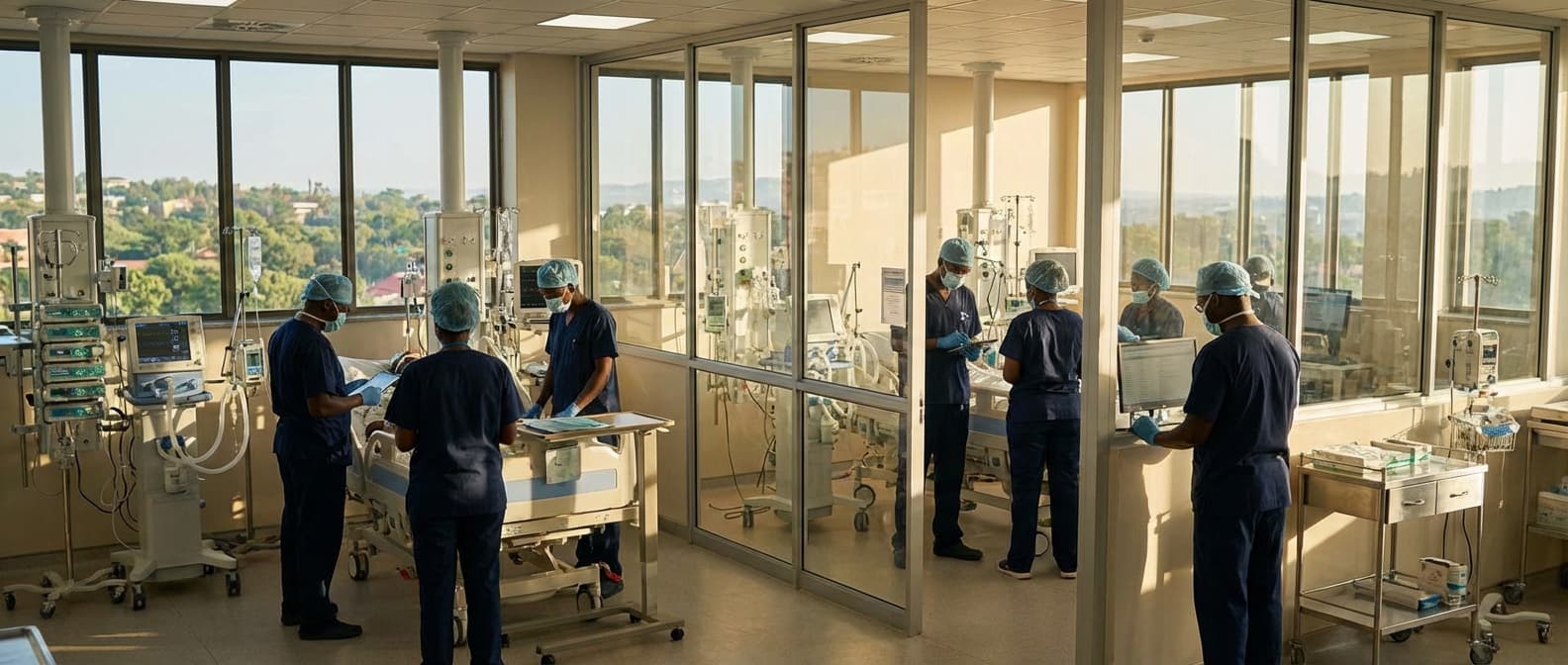
Ventilator Fleet Management & PM in Ghana
Engineering Excellence & Technical Support
Preventive maintenance and fleet management for ICU ventilators High-standard technical execution following OEM protocols and local regulatory frameworks.
Proactive PM Scheduling & Compliance
Implemented a cloud-based system for real-time scheduling, tracking, and compliance monitoring of preventative maintenance (PM) for the entire ventilator fleet across Ghana. This ensures critical equipment is always operational and meets regulatory standards, reducing unexpected downtime and enhancing patient care.
Predictive Failure Analysis
Leveraged machine learning algorithms on operational data from ventilators to predict potential component failures. This allows for targeted, preemptive repairs and part replacements, significantly minimizing emergent breakdowns and optimizing fleet availability for critical medical needs nationwide.
Centralized Remote Fleet Oversight
Established a secure, centralized platform for remote monitoring of all ventilators in Ghana. This provides real-time status updates, performance diagnostics, and alert notifications to technicians, enabling rapid response to issues and efficient resource allocation for repairs and servicing, even in remote locations.
What Is Ventilator Fleet Management & Pm In Ghana?
Ventilator Fleet Management & Preventive Maintenance (PM) in Ghana refers to the systematic organization, monitoring, and upkeep of a portfolio of mechanical ventilators within healthcare facilities and emergency response organizations. This comprehensive service ensures that ventilators are operationally ready, calibrated, and compliant with regulatory standards, thereby maximizing their lifespan and minimizing critical failures during patient care. It encompasses a range of activities from initial procurement and deployment to routine servicing, repair, and eventual decommissioning.
| Who Needs Ventilator Fleet Management & PM? | Typical Use Cases |
|---|---|
| Hospitals (Public and Private): Including intensive care units (ICUs), operating rooms, emergency departments, and general wards requiring mechanical ventilation support. | Routine patient care requiring ventilatory support for acute respiratory failure, post-operative recovery, and chronic respiratory conditions. |
| District Hospitals and Health Centers: Especially those with limited in-house biomedical engineering capacity. | Management of ventilators deployed for public health initiatives, outreach programs, and in resource-limited settings. |
| Emergency Medical Services (EMS) and Ambulance Providers: For transport ventilators and readiness during critical incidents. | Deployment during mass casualty events, natural disasters, or public health emergencies requiring surge capacity in ventilation. |
| Specialized Medical Centers (e.g., Pediatric Hospitals, Cardiac Centers): Requiring specific types of ventilators and advanced monitoring. | Ensuring the availability and optimal performance of specialized ventilators for critical patient populations. |
| Government Health Agencies and Ministries of Health: For national stockpiles and public health infrastructure. | Facilitating the efficient utilization and maintenance of ventilators procured for national health security and pandemic preparedness. |
| Non-Governmental Organizations (NGOs) and International Aid Organizations: Involved in healthcare delivery and infrastructure development. | Supporting healthcare projects in underserved regions and ensuring the sustainability of medical equipment. |
| Biomedical Engineering Departments and Service Providers: Offering outsourced maintenance and management solutions. | Providing specialized expertise and services to healthcare facilities lacking internal capacity. |
Key Components of Ventilator Fleet Management & PM in Ghana:
- Inventory Management: Tracking all ventilators, including serial numbers, purchase dates, location, maintenance history, and current status.
- Preventive Maintenance (PM) Scheduling: Developing and executing a schedule for regular, manufacturer-recommended servicing to identify and rectify potential issues before they lead to failure.
- Calibration and Testing: Ensuring ventilators meet specified performance parameters through regular calibration and functional testing.
- Repair and Troubleshooting: Promptly diagnosing and repairing malfunctioning ventilators by trained biomedical engineers or technicians.
- Parts and Consumables Management: Maintaining an adequate stock of critical spare parts and consumables to facilitate timely repairs and PM.
- Performance Monitoring & Data Analysis: Collecting data on ventilator usage, performance, and failure rates to inform maintenance strategies and identify trends.
- Regulatory Compliance: Ensuring all maintenance and operational activities adhere to national and international medical device regulations.
- Training and Education: Providing training to clinical staff on proper ventilator operation and basic troubleshooting, and to biomedical personnel on advanced maintenance and repair.
- End-of-Life Management: Planning for and executing the decommissioning and disposal of ventilators reaching their end-of-life.
- Disaster Preparedness & Contingency Planning: Integrating ventilator availability and maintenance into broader emergency response plans.
Who Needs Ventilator Fleet Management & Pm In Ghana?
Ventilator fleet management and preventative maintenance (PM) are critical for ensuring the reliable and effective operation of essential medical equipment like ventilators. In Ghana, this service is vital for a range of healthcare institutions and government bodies responsible for public health. The goal is to minimize downtime, extend the lifespan of ventilators, ensure patient safety, and optimize resource allocation. This leads to better patient outcomes, reduced operational costs, and a more resilient healthcare system.
| Target Customer Group | Key Departments/Units Involved | Primary Needs Addressed by Fleet Management & PM |
|---|---|---|
| Public Hospitals (Tertiary, Regional, District) | Intensive Care Units (ICUs), Respiratory Therapy Departments, Biomedical Engineering Departments, Procurement Departments | Ensuring continuous availability of functioning ventilators, proactive identification of potential failures, compliance with safety standards, optimizing maintenance schedules, managing spare parts inventory. |
| Private Healthcare Facilities | Critical Care Units, Biomedical Services, Administration | Maximizing return on investment for expensive equipment, minimizing patient care disruptions, maintaining reputation for quality care, adhering to manufacturer's recommendations. |
| Government Health Agencies (MOH, GHS) | National Health Planning, Public Health Emergencies, Procurement, Clinical Services | Establishing national standards for ventilator maintenance, monitoring the status of the national ventilator fleet, facilitating resource allocation during health crises, ensuring equitable access to functional equipment across the country. |
| Emergency Services (Ambulance Services) | Operations, Logistics, Maintenance | Ensuring ventilators used in transit are fully operational and safe, minimizing response delays due to equipment failure, training staff on basic equipment checks. |
| Training & Research Institutions | Medical Simulation Centers, Research Labs, Teaching Hospitals affiliated | Maintaining reliable equipment for training healthcare professionals, ensuring accuracy of research data that relies on ventilator function, providing hands-on experience with well-maintained devices. |
| NGOs & Humanitarian Organizations | Program Implementation, Logistics, Medical Teams | Ensuring the longevity and efficacy of donated or procured ventilators, supporting healthcare delivery in underserved areas, providing sustainable equipment solutions. |
Target Customers & Departments for Ventilator Fleet Management & PM in Ghana
- Tertiary Referral Hospitals (e.g., Korle-Bu Teaching Hospital, Komfo Anokye Teaching Hospital)
- Regional Hospitals
- District Hospitals
- Private Hospitals and Clinics with critical care units
- University Medical Schools (for training and research facilities)
- Ministry of Health (MOH) - National Health Directorate
- Ghana Health Service (GHS) - Directorate of Clinical Care
- National Ambulance Service
- Disaster Preparedness and Management Agencies (for emergency response)
- Non-Governmental Organizations (NGOs) involved in healthcare provision
Ventilator Fleet Management & Pm Process In Ghana
This document outlines the workflow for Ventilator Fleet Management and Preventative Maintenance (PM) processes in Ghana, detailing the journey from an initial inquiry to the successful execution of services. The process is designed to ensure the optimal functionality and lifespan of the ventilator fleet, guaranteeing readiness for patient care.
| Stage | Description | Key Activities | Responsible Parties | Output/Outcome |
|---|---|---|---|---|
| Inquiry & Initial Request | The process begins when a need for ventilator service (PM or repair) is identified. | Submission of service request form/email, detailing equipment ID, location, and nature of the issue. | Healthcare Facility Staff, Biomedical Engineering Department (if applicable) | Formal Service Request documented. |
| Needs Assessment & Prioritization | The request is reviewed to understand the urgency and scope of the required service. | Reviewing request details, assessing equipment criticality, determining urgency (e.g., routine PM vs. critical failure). | Centralized Fleet Management Unit (CFMU), Ministry of Health (MoH) representatives | Prioritized list of service requests, assessment of PM schedule adherence. |
| Scheduling & Resource Allocation | Once prioritized, the service is scheduled and resources are assigned. | Identifying available PM slots, assigning qualified technicians, allocating necessary tools and spare parts. | CFMU, Authorized Service Provider (ASP) scheduling team | Confirmed service schedule, assigned technician(s), preliminary parts list. |
| Procurement & Logistics | Ensuring all necessary parts, consumables, and travel arrangements are in place. | Ordering required spare parts and consumables from approved suppliers, arranging for technician travel and accommodation (if needed). | CFMU procurement team, ASP logistics team | Spare parts and consumables procured, travel arrangements confirmed. |
| Execution of PM/Repair | The scheduled maintenance or repair is performed on the ventilator(s). | Performing diagnostic checks, executing planned maintenance tasks, replacing faulty components, testing functionality and safety. | Trained and certified Technicians (from CFMU or ASP) | Ventilator serviced/repaired, functional and safety checks completed. |
| Documentation & Reporting | All service activities are meticulously recorded for record-keeping and analysis. | Completing service reports, updating equipment maintenance logs, recording parts used and time spent. | Technicians, CFMU administrative staff | Comprehensive service records, updated maintenance history for each ventilator. |
| Follow-up & Feedback | Ensuring client satisfaction and identifying areas for process improvement. | Confirming successful completion with the healthcare facility, collecting feedback on service quality, analyzing PM data for trends. | CFMU, Healthcare Facility Management | Resolved service issue, captured feedback for continuous improvement, data for fleet performance analysis. |
Workflow Stages
- Inquiry & Initial Request
- Needs Assessment & Prioritization
- Scheduling & Resource Allocation
- Procurement & Logistics
- Execution of PM/Repair
- Documentation & Reporting
- Follow-up & Feedback
Ventilator Fleet Management & Pm Cost In Ghana
Managing a ventilator fleet in Ghana involves significant operational and maintenance costs. These costs are influenced by a variety of factors, making precise pricing difficult to pinpoint without specific details. However, understanding these pricing factors is crucial for budgeting and resource allocation in healthcare facilities across Ghana. The overall cost is a function of the ventilator's initial purchase price (or lease), ongoing maintenance, spare parts, consumables, and the specialized training required for biomedical technicians.
Key pricing factors influencing ventilator fleet management and preventive maintenance (PM) costs in Ghana include:
- Ventilator Type and Technology: High-end, feature-rich ventilators (e.g., those with advanced modes, integrated monitoring, and non-invasive capabilities) will naturally have higher acquisition and maintenance costs compared to simpler, basic models.
- Age and Condition of Equipment: Older ventilators, especially those nearing the end of their service life, often require more frequent and costly repairs. The overall condition of the fleet significantly impacts PM expenditure.
- Manufacturer and Brand: Different manufacturers have varying pricing structures for their equipment, spare parts, and service contracts. Established brands might have higher initial costs but potentially more reliable parts and support.
- Service and Maintenance Contracts: The decision to have an in-house biomedical engineering team or to outsource maintenance to third-party providers or the manufacturer's service agents heavily influences PM costs. Service contracts often provide predictable annual costs but can be expensive.
- Availability and Cost of Spare Parts: The scarcity or abundance of genuine spare parts in Ghana directly impacts repair costs. Imported parts may incur import duties, taxes, and shipping fees, driving up prices.
- Biomedical Technician Expertise and Training: The availability of skilled and trained biomedical technicians is critical. Training programs for new technologies or specialized repair techniques add to the overall cost.
- Location and Logistics: For facilities in remote areas, the cost of transporting technicians and parts can be a significant factor. Maintenance schedules may need to account for travel time and associated expenses.
- Usage Intensity and Environmental Factors: Ventilators used intensively or in challenging environmental conditions (e.g., high humidity, dust) may require more frequent servicing and replacement of parts.
- Consumables: Beyond the ventilator itself, the cost of essential consumables like filters, breathing circuits, and humidifiers needs to be factored into the operational budget. These are often recurring costs.
- Warranty Periods: The duration and coverage of manufacturer warranties can significantly offset initial PM costs, but once a warranty expires, the responsibility and cost shift to the facility.
Pricing Ranges in Local Currency (Ghana Cedi - GHS):
Providing exact pricing ranges for ventilator fleet management and PM in Ghana is challenging due to the aforementioned factors and the dynamic nature of pricing. However, based on industry understanding and typical healthcare budget allocations, we can offer estimated ranges for annual PM per ventilator.
It's important to note that these are rough estimates and can vary widely.
- Basic Ventilator (Annual PM): GHS 2,000 - GHS 8,000
- Intermediate Ventilator (Annual PM): GHS 5,000 - GHS 15,000
- Advanced/Critical Care Ventilator (Annual PM): GHS 10,000 - GHS 30,000+
These figures typically cover scheduled maintenance, basic part replacements (e.g., filters, seals), and labor. Unscheduled repairs due to component failure or damage would incur additional, often substantial, costs, which can range from a few hundred to several thousand Ghanaian Cedis depending on the severity and cost of the replacement part.
Fleet-wide management costs would involve aggregating these per-unit costs and adding administrative overhead, inventory management for spare parts, and training expenses. For a medium-sized hospital with a fleet of 10-20 ventilators, annual PM and basic operational costs could range from GHS 50,000 to GHS 300,000+, excluding major repair expenses or initial acquisition.
It is highly recommended that healthcare institutions in Ghana obtain specific quotes from manufacturers, local service providers, and conduct thorough needs assessments to develop accurate budgets for their ventilator fleet management and PM requirements.
| Ventilator Category | Estimated Annual Preventive Maintenance (PM) Range (GHS) |
|---|---|
| Basic Ventilator | 2,000 - 8,000 |
| Intermediate Ventilator | 5,000 - 15,000 |
| Advanced/Critical Care Ventilator | 10,000 - 30,000+ |
Key Pricing Factors for Ventilator Fleet Management & PM in Ghana
- Ventilator Type and Technology
- Age and Condition of Equipment
- Manufacturer and Brand
- Service and Maintenance Contracts
- Availability and Cost of Spare Parts
- Biomedical Technician Expertise and Training
- Location and Logistics
- Usage Intensity and Environmental Factors
- Consumables
- Warranty Periods
Affordable Ventilator Fleet Management & Pm Options
Optimizing ventilator fleet management and preventative maintenance (PM) is crucial for healthcare facilities to ensure patient safety, operational efficiency, and cost control. This document outlines affordable options, emphasizing value bundles and effective cost-saving strategies.
| Value Bundle Component | Description | Cost-Saving Strategy/Benefit |
|---|---|---|
| Comprehensive PM Program | Includes scheduled inspections, calibration, cleaning, and replacement of wear-and-tear parts. | Reduces unexpected downtime, extends equipment lifespan, prevents costly emergency repairs, and ensures patient safety. |
| Extended Warranty/Service Contracts | Covers repairs and parts for a defined period beyond the manufacturer's initial warranty. | Predictable maintenance costs, protection against unforeseen repair expenses, and potential for bundled PM services. |
| On-Site Biomedical Technician Support (Partial or Full) | Dedicated or shared access to skilled technicians for PM, troubleshooting, and minor repairs. | Faster response times, reduced travel costs for external vendors, potential for customized service plans. |
| Access to Refurbished/CPO Ventilators with PM Inclusion | Acquiring certified pre-owned equipment with a service package that includes ongoing PM. | Significant capital expenditure savings compared to new units, proven reliability, and integrated maintenance for peace of mind. |
| Remote Monitoring Software & Training | Software for real-time equipment status and alerts, coupled with training for staff to interpret data. | Early detection of issues, proactive problem-solving, reduced on-site visits, and improved operational awareness. |
| Training & Knowledge Transfer | Education for internal clinical and biomedical staff on basic ventilator operation, troubleshooting, and PM procedures. | Empowers internal teams, reduces reliance on external support for minor issues, fosters a culture of ownership. |
Key Components of Affordable Ventilator Fleet Management & PM Options
- Proactive Preventative Maintenance (PM): Regular, scheduled maintenance to identify and address potential issues before they lead to equipment failure. This is the cornerstone of cost-effective management.
- Remote Monitoring & Diagnostics: Utilizing technology to track ventilator performance, identify anomalies, and even diagnose issues remotely, reducing the need for immediate on-site service calls.
- Certified Pre-Owned (CPO) Ventilators: Acquiring high-quality, refurbished ventilators that have undergone rigorous testing and certification, offering a significant cost reduction compared to new equipment.
- Leasing & Rental Agreements: Flexible options that allow facilities to access the latest technology without large upfront capital expenditures, with PM often included in the contract.
- Third-Party Service Providers: Partnering with specialized biomedical service companies that can offer competitive pricing for PM and repair services, often with faster turnaround times.
- Internal Biomedical Engineering Department Optimization: Investing in training and equipping internal teams to handle a greater portion of PM and minor repairs, reducing reliance on external vendors.
- Strategic Inventory Management: Maintaining an optimal number of ventilators, balancing the need for readiness with the cost of underutilized assets.
- Data Analytics for Predictive Maintenance: Leveraging data from ventilator usage and PM history to predict potential failures and schedule maintenance proactively.
Verified Providers In Ghana
Navigating the healthcare landscape in Ghana can be challenging, with many providers offering a range of services. However, for those seeking reliable, high-quality medical care, identifying verified providers is paramount. Franance Health stands out as a leading platform committed to connecting individuals with trusted healthcare professionals. Their rigorous credentialing process ensures that all listed providers meet stringent standards for expertise, experience, and ethical practice. By prioritizing verified providers, patients can feel confident in the quality of care they receive, leading to better health outcomes and peace of mind. Franance Health's dedication to transparency and patient well-being makes them the optimal choice for anyone looking for exceptional healthcare services in Ghana.
| Provider Type | Key Credentials Verified | Franance Health Advantage |
|---|---|---|
| General Practitioners | Medical Degree (MBChB/MD), Ghana Medical and Dental Council (GMDC) Registration, Practicing License, Verifiable Experience. | Franance Health verifies GMDC registration and ensures active practicing licenses. Access to a wider network of reputable GPs. |
| Specialists (e.g., Cardiologists, Dermatologists, Pediatricians) | MBChB/MD, Post-graduate specialization qualification (e.g., FWACP, MRCGP), GMDC Registration, Specialty Board Certification (where applicable), Extensive clinical experience in their field. | Franance Health confirms specialist qualifications and board certifications, connecting you with highly specialized care. |
| Surgeons | MBChB/MD, Surgical Residency completion, Fellowship (if applicable), GMDC Registration, Proven surgical track record and patient outcomes. | Verification of surgical credentials and experience ensures you are in safe hands for surgical procedures. |
| Dentists | Bachelor of Dental Surgery (BDS), Ghana Dental Association (GDA) Registration, Practicing License, Specializations (e.g., Orthodontics, Periodontics). | Franance Health checks GDA registration and licenses for reliable dental care. |
| Nurses (Registered Nurses, Midwives) | Diploma/Degree in Nursing/Midwifery, Nursing and Midwifery Council of Ghana (NMCG) Registration, Practicing License. | Ensures qualified and licensed nursing and midwifery professionals are available. |
Why Choose Franance Health Verified Providers?
- Ensured Quality of Care: All providers undergo a thorough vetting process.
- Experienced Professionals: Access to highly qualified and experienced medical practitioners.
- Ethical Standards: Commitment to upholding the highest ethical guidelines in healthcare.
- Patient Safety: Prioritizing patient well-being and safety above all else.
- Streamlined Access: Easy and convenient platform to find and book appointments.
- Trust and Reliability: Building confidence through verified credentials and positive patient feedback.
Scope Of Work For Ventilator Fleet Management & Pm
This Scope of Work (SOW) outlines the requirements for Ventilator Fleet Management and Preventative Maintenance (PM) services, ensuring the optimal performance, reliability, and safety of the organization's critical respiratory care equipment. This document details the technical deliverables and standard specifications required for successful execution of these services.
| Technical Deliverable | Description | Standard Specification/Requirement |
|---|---|---|
| PM Schedule and Procedures | Detailed schedule of all required preventative maintenance tasks for each ventilator model, along with documented procedures for each task. | PM schedule to be based on manufacturer recommendations, industry best practices, and regulatory guidelines. Procedures must include checklists, calibration requirements, and functional tests. Documented evidence of PM completion (e.g., service reports, logs) must be provided within 5 business days of completion. |
| Calibration and Performance Verification Reports | Documented results of all calibration and performance verification tests performed during PM. | Reports must include pre- and post-calibration readings, acceptable tolerance ranges, and technician certification. All calibrations must meet or exceed manufacturer specifications and relevant standards (e.g., IEC 60601-1). |
| Repair Service Turnaround Time (TAT) | Maximum acceptable time for diagnosing and repairing reported ventilator malfunctions. | Critical equipment failures: 4-hour on-site response, 24-hour repair completion. Non-critical failures: 24-hour response, 72-hour repair completion. TAT measured from initial notification to successful repair and functional testing. |
| Parts and Consumables Management | Procedures for sourcing, stocking, and utilizing approved replacement parts and consumables. | Only OEM-approved or equivalent quality parts and consumables to be used. Maintain an inventory of critical spare parts sufficient to meet TAT requirements. Provide a list of stocked parts and their associated part numbers. |
| Fleet Inventory Database | A comprehensive and up-to-date database of all managed ventilators. | Database to include: unique asset tag, manufacturer, model, serial number, purchase date, warranty status, last PM date, next PM due date, location, service history, and cost tracking. Database to be accessible to authorized personnel and updated within 2 business days of any change. |
| Performance Monitoring Reports | Regular reports on ventilator fleet performance, including uptime, failure rates, and maintenance costs. | Monthly reports summarizing key performance indicators (KPIs) such as: overall fleet uptime percentage, mean time between failures (MTBF) per model, mean time to repair (MTTR) per model, number of PMs completed, number of corrective maintenance interventions, and total maintenance cost. Reports to be submitted by the 5th business day of the following month. |
| Service Technician Qualifications and Certifications | Evidence of qualifications and certifications for all service personnel performing work on the ventilator fleet. | Technicians must possess appropriate certifications (e.g., biomedical equipment technician - BMET), manufacturer-specific training, and documented experience. Provide copies of relevant certifications and training records. |
| Root Cause Analysis (RCA) Reports | For significant or recurring failures, a detailed RCA must be performed and documented. | RCA reports to identify the underlying cause of the failure, implemented corrective actions, and recommendations for preventing recurrence. Reports to be submitted within 7 business days of failure identification. |
| Safety and Compliance Documentation | All work performed must adhere to relevant safety standards and regulatory requirements. | Maintain documentation demonstrating compliance with healthcare regulations (e.g., Joint Commission, CMS), infection control protocols, and equipment safety standards (e.g., electrical safety testing). Ensure all work is performed in a manner that minimizes risk to patients and staff. |
| End-of-Life Management Plan | A plan for the responsible disposal or decommissioning of ventilators at the end of their operational life. | Plan to address asset tracking, data sanitization, environmentally compliant disposal methods, and any associated costs. Compliance with local and national regulations for electronic waste disposal. |
Key Service Components
- Preventative Maintenance (PM) Program Development and Execution
- Corrective Maintenance and Repair Services
- Asset Inventory and Tracking Management
- Performance Monitoring and Reporting
- Training and Support for On-site Staff
- Compliance and Regulatory Adherence
Service Level Agreement For Ventilator Fleet Management & Pm
This Service Level Agreement (SLA) outlines the terms and conditions for the comprehensive management and preventive maintenance (PM) of the hospital's ventilator fleet. It defines response times for critical events and establishes uptime guarantees to ensure patient care continuity.
| Service Category | Response Time (Critical) | Response Time (Non-Critical) | Uptime Guarantee |
|---|---|---|---|
| Ventilator Malfunction (Life-Sustaining Mode) | 15 minutes (initial diagnosis) | 2 hours (full repair) | 99.5% (excluding scheduled PM) |
| Ventilator Malfunction (Non-Life-Sustaining Mode) | 1 hour (initial diagnosis) | 4 hours (full repair) | 98.0% (excluding scheduled PM) |
| Preventive Maintenance (Scheduled) | N/A | As per agreed schedule | N/A |
| Emergency Parts Replacement | 2 hours (delivery) | 24 hours (delivery) | N/A |
Scope of Services
- Proactive preventive maintenance scheduling and execution for all ventilators.
- On-demand repair services for ventilator malfunctions.
- Routine calibration and performance verification.
- Inventory management and replacement of consumable parts.
- Record-keeping and documentation of all service activities.
- Fleet status monitoring and reporting.
- Emergency response for critical equipment failures.
Frequently Asked Questions

Ready when you are
Let's scope your Ventilator Fleet Management & PM in Ghana project in Ghana.

Scaling healthcare logistics and technical systems across the entire continent.