
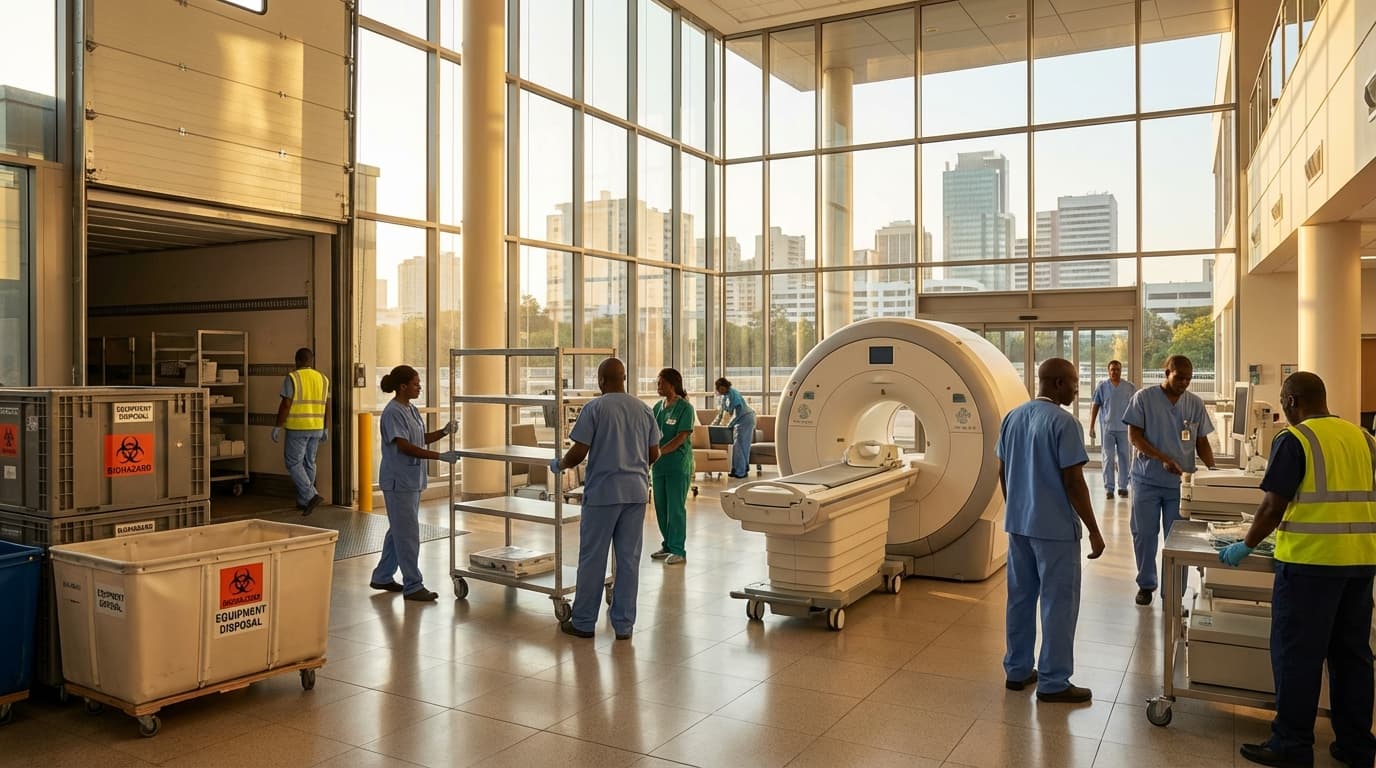
Medical Equipment Relocation Service (Move & Re-Install) in Ghana
Engineering Excellence & Technical Support
Medical Equipment Relocation Service (Move & Re-Install) High-standard technical execution following OEM protocols and local regulatory frameworks.
Specialized Medical Equipment Transport
Our fleet is equipped with climate-controlled, vibration-dampened vehicles and specialized handling equipment to ensure the safe and secure transit of sensitive medical devices like MRI machines, X-ray units, and laboratory equipment across Ghana, maintaining operational integrity from pickup to delivery.
Certified Re-Installation & Calibration
Our team of manufacturer-certified biomedical engineers expertly decommissions, transports, and meticulously re-installs your medical equipment. We perform comprehensive calibration, testing, and certification to ensure full operational readiness and compliance with Ghanaian health regulations immediately upon re-activation.
Comprehensive Risk Mitigation & Compliance
We implement a robust risk management strategy, including site surveys, detailed logistical planning, and full insurance coverage, to minimize potential disruptions and ensure all relocation activities adhere strictly to Ghanaian healthcare standards and safety protocols, safeguarding your valuable assets and patient care continuity.
What Is Medical Equipment Relocation Service (Move & Re-install) In Ghana?
Medical Equipment Relocation Service (Move & Re-Install) in Ghana refers to a specialized, comprehensive logistical and technical operation involving the safe, secure, and compliant transportation of medical devices and machinery from one location to another within Ghana, followed by their professional setup and verification of functionality at the new site. This service is designed to minimize disruption to healthcare operations and ensure the continued availability of critical diagnostic, therapeutic, and life-support equipment.
| Who Needs This Service? | Typical Use Cases | ||
|---|---|---|---|
| Hospitals (Public and Private) | Renovations or expansions requiring temporary or permanent relocation of imaging suites (MRI, CT, X-ray), operating theaters, laboratories, or entire departments. | Relocation of a hospital or clinic facility to a new site. | Mergers or acquisitions involving consolidation of medical facilities and equipment. |
| Diagnostic Imaging Centers | Upgrading or relocating specialized imaging equipment such as Ultrasound, Mammography, or Endoscopy units. | Establishment of new satellite imaging centers. | |
| Specialized Clinics (e.g., Cardiology, Oncology, Dialysis) | Moving complex diagnostic or therapeutic machinery like Cath Lab equipment, linear accelerators, or dialysis machines. | Reorganizing clinical workflows requiring equipment repositioning. | |
| Research Institutions and Universities | Relocating advanced laboratory equipment for research projects or departmental restructuring. | Setting up new research facilities. | |
| Medical Equipment Manufacturers and Distributors | Delivery and installation of newly purchased equipment at client sites. | Retrieval, refurbishment, and re-deployment of equipment. | |
| Government Health Agencies | Transferring equipment between public health facilities for resource optimization or disaster response. | Establishing or equipping new public health centers. |
Service Inclusions and Phases
- Planning and Assessment: Site surveys of both origin and destination, risk assessment for equipment and personnel, development of a detailed relocation plan, scheduling, and compliance checks with regulatory requirements (e.g., Ghana Health Service regulations).
- Decommissioning and Preparation: Safe disconnection of power, utilities, and ancillary systems. Proper disassembly (if required) and preparation for transport, including cleaning, sterilization (where applicable), and protection of sensitive components.
- Specialized Packing and Handling: Use of bespoke packaging materials, anti-static measures, shock-absorbing solutions, and climate-controlled transport options to safeguard delicate and high-value medical equipment during transit.
- Secure Transportation: Deployment of trained personnel and specialized vehicles equipped to handle the weight, dimensions, and fragility of medical apparatus. Adherence to strict chain-of-custody protocols.
- De-packing and Positioning: Careful unloading and placement of equipment at the designated location within the new facility, adhering to architectural layouts and ergonomic considerations.
- Re-installation and Reconnection: Professional reassembly, reconnection to power, data, and other essential utilities. Calibration and configuration to meet manufacturer specifications.
- Testing and Validation: Comprehensive functional testing, performance verification, and calibration checks to ensure the equipment operates within its intended parameters and meets clinical efficacy standards. This may involve phantom testing or simulated use scenarios.
- Documentation and Handover: Provision of detailed reports on the relocation process, including pre- and post-relocation status, testing results, and any maintenance recommendations. Formal handover to the client's technical or clinical staff.
- Training (Optional): Refresher training for personnel on the re-installed equipment, if necessary.
Who Needs Medical Equipment Relocation Service (Move & Re-install) In Ghana?
In Ghana, the specialized services of medical equipment relocation and re-installation are crucial for a variety of entities that handle sensitive and high-value medical technology. This includes organizations that are expanding, renovating, relocating their facilities, or upgrading their existing medical infrastructure. The intricate nature of medical equipment requires expert handling, precise transportation, and accurate re-installation to ensure continued functionality and patient safety. Without specialized services, the risks of damage, costly downtime, and potential regulatory non-compliance are significantly high.
| Target Customer/Department | Specific Needs/Reasons for Relocation/Re-installation | Key Equipment Types Involved |
|---|---|---|
| Hospitals (Public & Private) | Facility expansion, renovation, departmental consolidation, replacement of old infrastructure, upgrades to new technology, emergency preparedness relocations. | MRI scanners, CT scanners, X-ray machines, Ultrasound machines, Linear accelerators, Surgical equipment (operating tables, anesthesia machines), ICU equipment (ventilators, patient monitors), Laboratory analyzers. |
| Diagnostic Imaging Centers | Moving to a larger facility, upgrading to higher resolution equipment, opening new branches, merging with other centers. | MRI scanners, CT scanners, X-ray machines (digital, mobile), Ultrasound machines, Mammography units, PET scanners. |
| Specialty Clinics (e.g., Cardiology, Oncology, Dental) | Relocation due to lease expiry, expansion of services, integration of new specialized equipment, cosmetic upgrades. | Echocardiography machines, Cath lab equipment, Linear accelerators, Radiation therapy equipment, Dental chairs, X-ray units (dental specific), Endoscopy equipment. |
| Research Institutions & Universities (Medical Faculties) | Setting up new research labs, upgrading experimental equipment, relocating equipment for collaborative projects, establishing new teaching facilities. | Microscopes (electron, confocal), Spectrophotometers, DNA sequencers, Flow cytometers, Cell culture incubators, Animal imaging systems. |
| Government Health Agencies & Ministries | Centralizing operations, establishing new public health facilities, distributing equipment to underserved areas, decommissioning old government health assets. | Various public health equipment, mobile clinics, basic diagnostic tools, administrative IT infrastructure related to health records. |
| NGOs in Healthcare | Setting up new clinics or outreach programs, relocating equipment for mobile health units, responding to disaster relief needs. | Portable X-ray units, ultrasound machines, basic laboratory kits, sterilization equipment, first-aid equipment. |
| Medical Equipment Manufacturers & Distributors | Initial installation of new equipment at customer sites, decommissioning and relocation of older units for servicing or resale, site preparation for new installations. | All types of medical equipment as part of their product lines, including installation and calibration services. |
| Ambulatory Surgical Centers | Relocating to a more convenient location, expanding surgical capacity, upgrading surgical suites, remodeling existing facilities. | Surgical tables, anesthesia machines, laparoscopic towers, electrosurgical units, patient monitoring systems. |
Who Needs Medical Equipment Relocation Service (Move & Re-Install) in Ghana?
- Hospitals (Public and Private)
- Diagnostic Imaging Centers
- Specialty Clinics (e.g., Cardiology, Oncology, Dental)
- Research Institutions & Universities (with medical faculties)
- Government Health Agencies & Ministries
- Non-Governmental Organizations (NGOs) involved in healthcare
- Medical Equipment Manufacturers & Distributors (for installations)
- Ambulatory Surgical Centers
- Rehabilitation Centers
- Veterinary Clinics (with advanced diagnostic equipment)
Medical Equipment Relocation Service (Move & Re-install) Process In Ghana
This document outlines the comprehensive workflow for a Medical Equipment Relocation Service (Move & Re-Install) in Ghana. It details the process from the initial client inquiry to the successful completion of the relocation and re-installation, ensuring minimal disruption and adherence to industry standards. The service caters to healthcare facilities, research institutions, and private practitioners requiring the safe and efficient transfer of sophisticated medical machinery.
| Stage | Description | Key Activities | Responsible Parties | Deliverables/Outcomes |
|---|---|---|---|---|
| The client contacts the relocation service provider to express their need for medical equipment relocation. | Receive initial client request, understand scope of relocation (equipment type, quantity, locations), preliminary discussion on timelines and client expectations. | Client, Relocation Service Provider (Sales/Consultation Team) | Initial understanding of client needs, preliminary scope definition. |
| A thorough inspection of both the origin and destination sites is conducted to assess logistical challenges and requirements. | On-site visit(s), detailed inventory of equipment, measurement of access points (doors, corridors, elevators), identification of power, ventilation, and structural requirements, risk assessment for each piece of equipment, environmental considerations (temperature, humidity). | Relocation Service Provider (Technical Team, Logistics Specialists) | Detailed equipment inventory, site suitability report, identification of potential challenges, logistical plan outline. |
| Based on the site survey, a comprehensive quotation is prepared, and upon agreement, a formal contract is signed. | Develop detailed quotation including labor, materials, transportation, insurance, and any specialized services, client review and negotiation, contract finalization and signing, payment schedule agreement. | Relocation Service Provider (Sales/Management), Client | Formal quotation, signed contract, agreed payment terms. |
| Detailed logistical planning and preparation of all necessary resources for the move. | Develop detailed move schedule, assign specialized teams (e.g., engineers for complex equipment), procure specialized packing materials, arrange for necessary permits (if any), coordinate with facility management at both sites, pre-move client briefing. | Relocation Service Provider (Project Manager, Technical Team, Logistics Team) | Comprehensive move plan, appointed project team, acquired materials and resources, confirmed access and schedules. |
| Safe and professional disconnection and dismantling of medical equipment from its operational environment. | Qualified technicians disconnect power and auxiliary connections, follow manufacturer's de-installation procedures, secure moving parts, label all components and cables. | Relocation Service Provider (Specialized Technicians/Engineers) | Safely de-installed and labeled equipment, ready for packaging. |
| Secure packaging of equipment for transit and transportation to the new location. | Utilize specialized anti-static, shock-absorbent, and climate-controlled packaging, custom crating for delicate items, secure loading onto specialized transport vehicles, adherence to transportation regulations and safety protocols. | Relocation Service Provider (Packaging Specialists, Logistics Team) | Properly packed and secured equipment, safe transportation to the destination. |
| Professional re-assembly and connection of medical equipment at the new facility. | Unpack and carefully position equipment, reconnect power and auxiliary systems, reassemble according to manufacturer's specifications, ensure all safety features are engaged. | Relocation Service Provider (Specialized Technicians/Engineers) | Equipment physically in place and connected at the new location. |
| Verification of equipment functionality and accuracy post-installation. | Perform diagnostic tests, run operational checks, conduct calibration using certified equipment and procedures, ensure equipment meets performance standards. | Relocation Service Provider (Certified Technicians/Engineers), potentially Client's Biomedical Engineers | Certified functional and calibrated equipment. |
| Formal handover of the relocated and operational equipment to the client, accompanied by all relevant documentation. | Demonstrate functionality to the client, provide signed completion certificate, handover all installation and calibration reports, user manuals, and warranty information. | Relocation Service Provider (Project Manager), Client | Client acceptance of relocated equipment, complete documentation package. |
| Provision of ongoing support and addressing any immediate post-relocation concerns. | Address any client queries, provide minor adjustments if needed within a specified warranty period, gather client feedback for service improvement. | Relocation Service Provider (Customer Support, Technical Team) | Client satisfaction, identification of areas for service enhancement. |
Key Stages of the Medical Equipment Relocation Process
- Inquiry & Initial Consultation
- Site Survey & Assessment
- Quotation & Agreement
- Planning & Preparation
- De-installation
- Packaging & Transportation
- Re-installation
- Testing & Calibration
- Handover & Documentation
- Post-Relocation Support
Medical Equipment Relocation Service (Move & Re-install) Cost In Ghana
Moving and re-installing medical equipment in Ghana can be a complex process, and the costs are highly variable. Several factors influence the final price, making it crucial to get detailed quotes from specialized service providers. These costs typically encompass the entire scope of the service, from initial assessment and dismantling to safe transportation, re-installation, calibration, and testing of the equipment at its new location. It's important to note that Ghana's currency is the Ghanaian Cedi (GHS).
| Equipment Category | Estimated Cost Range (GHS) | Notes |
|---|---|---|
| Small Equipment (e.g., ECG machines, patient monitors, small centrifuges) | 2,000 - 8,000 | Includes basic dismantling, transport within a city, and re-installation. May vary based on specific model and fragility. |
| Medium Equipment (e.g., basic X-ray units, anesthesia machines, ultrasound machines) | 8,000 - 30,000 | Requires more careful handling, potentially specialized lifting equipment, and skilled technicians for re-installation. Inter-city moves will increase costs significantly. |
| Large/Complex Equipment (e.g., CT scanners, MRI scanners, advanced laboratory analyzers, large surgical tables) | 30,000 - 150,000+ | Highly specialized handling, significant dismantling and re-installation by engineers, secure transport, and extensive testing. Costs can escalate rapidly for very large or sensitive equipment over long distances. |
| Specialized Laboratory Equipment (e.g., gene sequencers, high-precision microscopes) | 10,000 - 70,000+ | Precision is key. Requires highly skilled technicians, climate-controlled transport if necessary, and meticulous calibration upon arrival. |
Key Pricing Factors for Medical Equipment Relocation in Ghana
- Type and Size of Equipment: Larger, more complex, and heavier machines like MRI scanners, CT scanners, or large X-ray units will naturally incur higher costs due to specialized handling, larger transport vehicles, and more extensive re-installation procedures.
- Distance of Relocation: The geographical distance between the old and new site is a primary cost driver. Longer distances mean increased fuel consumption, driver time, potential overnight stays for the crew, and wear and tear on vehicles.
- Accessibility of Sites: The ease of access to both the pick-up and delivery locations significantly impacts costs. Difficult terrain, narrow entrances, multiple flights of stairs, or lack of adequate loading/unloading facilities will require more manual labor, specialized equipment (e.g., cranes, forklifts), and more time.
- Dismantling and Re-installation Complexity: Some equipment requires intricate dismantling and re-assembly processes, often involving specialized technicians. The expertise and time required for this phase will be reflected in the overall cost. This includes checking connections, power supplies, and operational readiness.
- Need for Specialized Technicians and Engineers: For highly sensitive or complex equipment, specialized technicians or engineers may be required to oversee dismantling, transportation, and especially re-installation and calibration. Their fees will add to the total.
- Insurance Coverage: Adequate insurance for the valuable medical equipment during transit is essential. The cost of comprehensive insurance will be factored into the service fee.
- Additional Services: This can include services like site preparation at the new location, disposal of old packaging materials, decontamination procedures, and extensive testing or certification post-installation.
- Urgency of the Move: If the relocation needs to be expedited, rush fees may apply. This often involves overtime for staff and potentially higher rental costs for specialized transport or equipment.
- Time of Year/Demand: While less common, periods of high demand for relocation services might see slight fluctuations in pricing.
Affordable Medical Equipment Relocation Service (Move & Re-install) Options
Relocating medical equipment requires specialized care and expertise to ensure its safety and functionality. Our Affordable Medical Equipment Relocation Service offers comprehensive move and re-install solutions designed to minimize disruption and maximize value. We understand the critical nature of your medical assets and provide tailored services to meet your specific needs and budget.
| Value Bundle Name | Included Services | Ideal For | Potential Savings |
|---|---|---|---|
| Basic Move Package | Professional packing of standard equipment, secure transportation, basic re-installation (plug and play). | Smaller clinics, practices with less complex machinery, budget-conscious clients. | Lower upfront cost compared to premium bundles. |
| Comprehensive Care Bundle | Includes Basic Move Package plus specialized crating for delicate items, on-site equipment assessment, basic calibration verification upon re-installation. | Medium-sized practices, facilities with a mix of standard and moderately complex equipment. | Reduced risk of damage, less downtime due to pre-installation checks. |
| Full-Service Relocation Suite | Includes Comprehensive Care Bundle plus full decommissioning, professional unpacking and placement, advanced re-installation with certified technician calibration (if applicable), initial operational testing. | Hospitals, large medical centers, facilities with high-value, highly sensitive equipment. | Minimized disruption, guaranteed operational readiness, peace of mind with expert handling. |
Our Affordable Medical Equipment Relocation Service Options:
- Standard Move & Re-Install: Our core service includes professional packing, secure transportation, and expert re-installation of your medical equipment at your new location. This option is ideal for standard equipment and provides a reliable, cost-effective solution.
- Specialized Equipment Handling: For sensitive or complex machinery (e.g., MRI machines, CT scanners, laboratory centrifuges), we offer enhanced handling protocols, including specialized crating, climate-controlled transport, and certified technician re-calibration. This ensures the integrity of high-value equipment.
- Decommissioning & Commissioning: We can manage the entire process, from safely decommissioning your equipment at the old site to fully commissioning it at the new location, including testing and calibration to ensure operational readiness.
Verified Providers In Ghana
In Ghana's evolving healthcare landscape, identifying trustworthy and high-quality healthcare providers is paramount for individuals and organizations seeking reliable medical services. Verified providers stand out due to their adherence to stringent standards, commitment to patient safety, and dedication to ethical practices. Franance Health, a prominent entity in this space, distinguishes itself through its rigorous credentialing process and its network of highly qualified professionals. This commitment ensures that all affiliated providers have met specific benchmarks for education, experience, licensing, and ongoing professional development, offering patients peace of mind and access to superior care.
| Provider Attribute | Franance Health Verification | Benefit to Patient |
|---|---|---|
| Professional Licensing & Certification | Rigorous verification of all active and valid licenses and certifications. | Ensures providers meet minimum legal and professional requirements. |
| Educational Background & Training | Thorough review of medical school, residency, and specialized training credentials. | Confirms foundational knowledge and specialized expertise. |
| Clinical Experience & Track Record | Assessment of past performance, peer reviews, and patient feedback where applicable. | Indicates proven ability to deliver effective patient care. |
| Adherence to Ethical Standards | Verification of commitment to medical ethics and professional conduct. | Promotes trust and integrity in the provider-patient relationship. |
| Continuing Professional Development | Encourages and verifies participation in ongoing medical education and training. | Ensures providers stay abreast of the latest medical advancements and best practices. |
Why Franance Health Represents the Best Choice for Verified Providers in Ghana:
- Uncompromising Credentialing Standards: Franance Health meticulously vets each provider, going beyond basic licensing to ensure a deep understanding of their expertise, track record, and ethical conduct.
- Commitment to Patient-Centric Care: Verified providers within the Franance Health network are selected not only for their clinical skills but also for their dedication to patient well-being, communication, and personalized treatment plans.
- Access to a Diverse Network: Franance Health offers a broad spectrum of specialists and general practitioners across various medical disciplines, ensuring that all healthcare needs can be met by trusted professionals.
- Quality Assurance and Continuous Improvement: The organization implements ongoing quality monitoring and encourages continuous professional development among its providers, guaranteeing that patients receive the most up-to-date and effective treatments.
- Enhanced Patient Trust and Safety: By partnering with Franance Health, patients gain access to a curated list of providers who have demonstrated a proven commitment to excellence, minimizing risks and maximizing positive health outcomes.
Scope Of Work For Medical Equipment Relocation Service (Move & Re-install)
This Scope of Work (SOW) outlines the requirements for a comprehensive Medical Equipment Relocation Service, encompassing the safe disconnection, packing, transportation, unpacking, and re-installation of various medical devices. The objective is to ensure minimal disruption to clinical operations, maintain equipment integrity, and facilitate a seamless transition for patient care.
| Phase | Description | Technical Deliverables | Standard Specifications |
|---|---|---|---|
| Phase 1: Planning and Assessment | Detailed site survey, equipment inventory, risk assessment, and development of a detailed relocation plan. |
|
|
| Phase 2: Disconnection and Preparation | Safe disconnection of all power, data, and utility connections. Preparation of equipment for transport (e.g., securing movable parts, defueling if applicable). |
|
|
| Phase 3: Packing and Loading | Careful packing of equipment using appropriate materials to prevent damage during transit. Secure loading onto specialized transport vehicles. |
|
|
| Phase 4: Transportation | Safe and timely transport of equipment from the origin to the destination site. |
|
|
| Phase 5: Unpacking and Placement | Careful unpacking of equipment at the destination site and precise placement according to the provided layout. |
|
|
| Phase 6: Re-installation and Reconnection | Reconnection of all power, data, and utility lines. Initial setup and testing of equipment. |
|
|
| Phase 7: Calibration and Certification | Performance of necessary calibrations to ensure accuracy and functionality. Issuance of certification confirming proper installation and operation. |
|
|
| Phase 8: Documentation and Handover | Final documentation of the entire relocation process, including checklists, test results, and certifications. Formal handover to the client. |
|
|
Key Objectives
- Ensure the safe and secure handling of all medical equipment throughout the relocation process.
- Minimize downtime of critical medical equipment.
- Maintain the calibration and functionality of all relocated devices.
- Adhere to all relevant safety, regulatory, and environmental standards.
- Provide clear and timely communication to all stakeholders.
- Document all phases of the relocation process.
Service Level Agreement For Medical Equipment Relocation Service (Move & Re-install)
This Service Level Agreement (SLA) outlines the response times and uptime guarantees for the Medical Equipment Relocation Service (Move & Re-Install). It is designed to ensure minimal disruption to patient care and operational continuity during equipment transfers.
| Service Component | Response Time (for critical incidents) | Uptime Guarantee (post-re-installation) |
|---|---|---|
| Critical Equipment Failure (e.g., life support) | 2 hours (on-site presence) | 99.9% within 24 hours of re-installation completion |
| High-Priority Equipment Malfunction (e.g., imaging, diagnostics) | 4 hours (on-site presence) | 99.0% within 48 hours of re-installation completion |
| Non-Critical Equipment Issue (e.g., ancillary devices) | 8 business hours (remote troubleshooting/assessment) | 98.0% within 72 hours of re-installation completion |
| Scheduled Maintenance/Preventive Checks (post-re-installation) | As per pre-agreed schedule (typically within 1 week) | N/A (Focus on proactive maintenance) |
| Response to Relocation Project Commencement | 1 business day (for confirmation and initial planning) | N/A |
Scope of Service
- Pre-move consultation and planning.
- Safe and secure packing and dismantling of medical equipment.
- Transportation of medical equipment to the new location.
- Unpacking and re-installation of medical equipment.
- Functional testing and calibration post-installation.
- Documentation of relocation process and equipment status.
Frequently Asked Questions

Ready when you are
Let's scope your Medical Equipment Relocation Service (Move & Re-Install) in Ghana project in Ghana.

Scaling healthcare logistics and technical systems across the entire continent.