
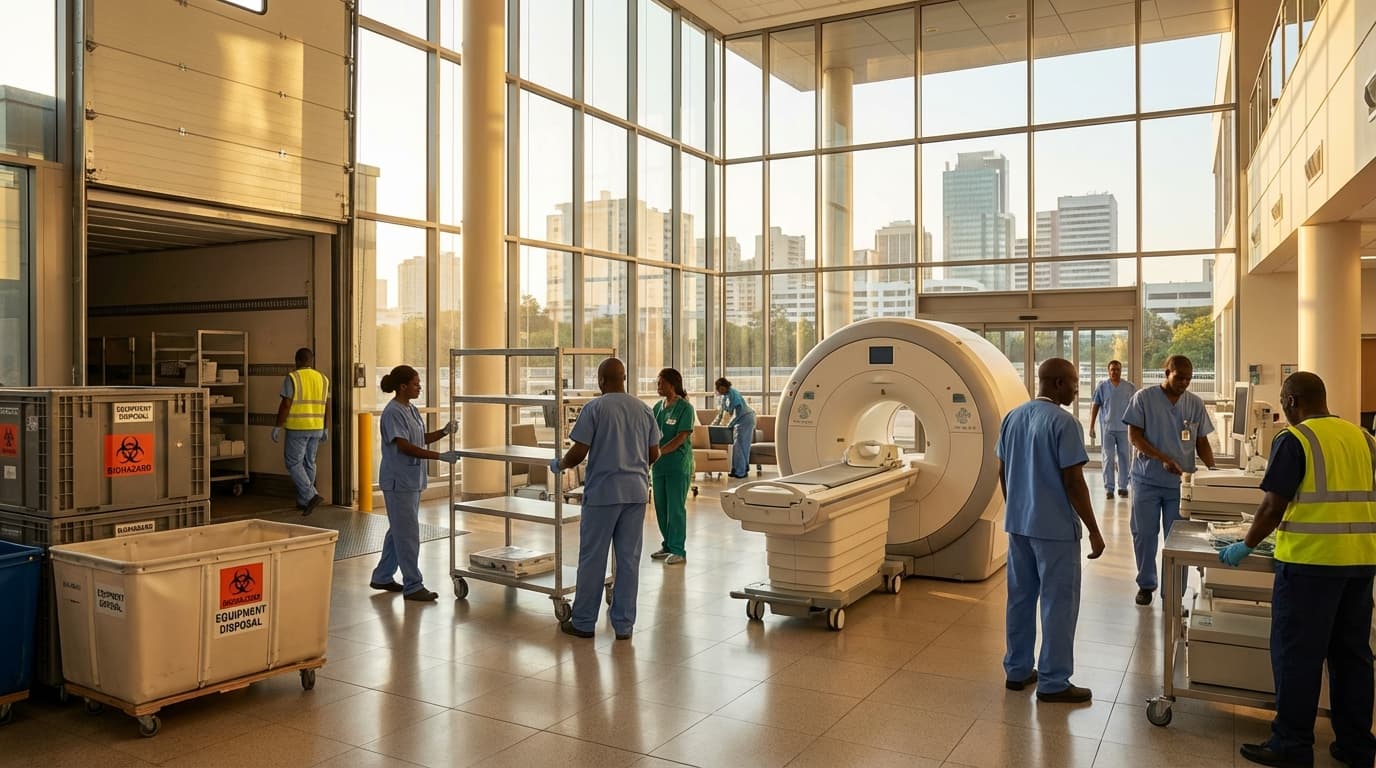
Decommissioning Service for Medical Devices in Ghana
Engineering Excellence & Technical Support
Decommissioning Service for Medical Devices High-standard technical execution following OEM protocols and local regulatory frameworks.
Regulatory Compliance Assurance
Ensuring all medical device decommissioning activities in Ghana adhere strictly to the Ghana Health Service (GHS) regulations and relevant international standards. We provide comprehensive documentation for seamless regulatory approval and audit readiness.
Secure Data Eradication & Chain of Custody
Implementing state-of-the-art data sanitization techniques to permanently erase sensitive patient information from medical devices, preventing data breaches. We maintain a verifiable chain of custody throughout the entire decommissioning process for maximum security.
Environmentally Responsible Disposal & Recycling
Prioritizing sustainable practices by managing the disposal and recycling of medical devices in an environmentally sound manner, minimizing waste, and adhering to Ghana's environmental protection guidelines. We focus on responsible material recovery and disposal.
What Is Decommissioning Service For Medical Devices In Ghana?
Decommissioning service for medical devices in Ghana refers to the comprehensive and systematic process of safely and effectively removing medical equipment from active service. This involves ensuring that the device is rendered inoperable, data is securely erased, and the physical components are disposed of or recycled in an environmentally responsible and compliant manner. The primary objective is to prevent unauthorized use, protect patient data, mitigate environmental hazards, and adhere to national and international regulatory standards for medical waste management and asset disposal.
| Who Needs Decommissioning Service? | Typical Use Cases | |||||||
|---|---|---|---|---|---|---|---|---|
| Hospitals and Clinics: Public and private healthcare facilities that regularly upgrade or replace medical equipment. | End-of-Life Equipment: Devices that have reached their operational lifespan and can no longer be repaired or maintained economically. | Technological Obsolescence: Equipment that has been superseded by newer, more advanced technologies and is no longer supported by manufacturers. | Damage or Malfunction: Devices that are severely damaged or have irreparable malfunctions. | Relocation or Closure: Healthcare facilities undergoing relocation or permanent closure. | Consolidation of Services: Merging or centralizing medical equipment inventories. | Regulatory Audits and Compliance: Healthcare providers needing to demonstrate compliance with equipment disposal regulations. | Research and Educational Institutions: Facilities using medical devices for teaching and research that are no longer required. | Medical Device Manufacturers/Distributors: Companies involved in buy-back programs or end-of-life management of their products. |
| Upgrading Imaging Equipment: Decommissioning old X-ray machines, CT scanners, or MRI units when new models are installed. | Replacing Laboratory Analyzers: Disposing of outdated diagnostic equipment. | Phasing Out Anesthesia Machines: Removing older anesthesia delivery systems due to safety or efficiency concerns. | Disposing of Surgical Instruments: Decommissioning of specialized or obsolete surgical tools. | Retiring Patient Monitoring Systems: Removing legacy vital signs monitors. | Securing and Disposing of Defunct Medical Software/Hardware: Decommissioning devices with embedded software or hard drives containing patient data. | Managing Expired or Damaged Medical Consumables/Accessories: While not 'devices' per se, related items often require compliant disposal alongside equipment. |
Key Stages of Medical Device Decommissioning in Ghana:
- Assessment and Planning: Evaluating the device's condition, intended decommissioning method (disposal, recycling, refurbishment), and regulatory requirements. This stage includes creating a detailed decommissioning plan.
- Data Security and Erasure: Implementing robust data sanitization protocols to ensure all Protected Health Information (PHI) and sensitive operational data are irretrievably removed from the device's memory, adhering to data privacy laws.
- Disabling and Neutralization: Physically disabling the device to prevent reactivation. This may involve removing critical components, rendering power sources inoperable, or applying specific neutralization techniques based on the device's nature (e.g., for devices containing radioactive isotopes or hazardous chemicals).
- Environmental Disposal/Recycling: Managing the disposal of components in accordance with Ghana's environmental regulations for medical waste. This includes segregation, proper packaging, and transport to licensed disposal or recycling facilities. Emphasis is placed on recovering reusable parts and minimizing landfill waste.
- Documentation and Certification: Maintaining thorough records of the entire decommissioning process, including inventory lists, data erasure verification, disposal certificates, and any relevant permits. This documentation serves as proof of compliance.
- Regulatory Compliance: Ensuring adherence to all relevant Ghanaian legislation, such as the Environmental Protection Agency (EPA) Act, Public Health Act, and any specific regulations pertaining to medical waste and equipment disposal.
Who Needs Decommissioning Service For Medical Devices In Ghana?
Decommissioning services for medical devices in Ghana are essential for a variety of healthcare facilities and organizations that are upgrading, replacing, or closing down equipment. Proper decommissioning ensures data security, environmental compliance, and safe disposal of potentially hazardous materials.
| Customer Type | Relevant Departments/Stakeholders | Reasons for Decommissioning |
|---|---|---|
| Public Hospitals | Biomedical Engineering Department, IT Department, Procurement Department, Administration, Environmental Health & Safety | Equipment upgrade, replacement due to age/malfunction, facility renovation/closure, compliance with new regulations |
| Private Hospitals | Biomedical Engineering Department, IT Department, Administration, Finance Department, Compliance Officer | Technological advancement, expansion of services, cost-efficiency, space optimization, sale or merger of facilities |
| Diagnostic Laboratories | Lab Manager, IT Department, Quality Assurance Department, Operations Manager | Replacement with newer technology, outdated equipment, increased testing volume requiring advanced machines, lab closure |
| Government Health Agencies | Procurement Division, Planning and Monitoring Department, Regulatory Affairs, IT Security | National equipment replacement programs, standardization initiatives, data privacy mandates, disposal of seized or confiscated equipment |
| Research Institutions | Research Principal Investigators, Lab Technicians, IT Department, Facilities Management | Project completion, transition to new research areas, equipment no longer supported, compliance with research ethics and data retention policies |
| NGOs Providing Healthcare | Program Managers, Logistics Department, Finance Department, Medical Staff | Project phase-out, resource reallocation, equipment donation from other sources, improvement of service delivery |
Target Customers for Medical Device Decommissioning Services in Ghana
- Public Hospitals and Clinics
- Private Hospitals and Clinics
- Diagnostic Laboratories
- Specialty Medical Centers (e.g., imaging centers, dialysis units)
- Government Health Agencies and Ministries
- Research Institutions and Universities with Medical Programs
- Non-Governmental Organizations (NGOs) providing healthcare services
- Medical Equipment Suppliers and Distributors (for end-of-life management or trade-ins)
- Healthcare Facilities undergoing renovations or closures
Decommissioning Service For Medical Devices Process In Ghana
This document outlines the standard workflow for decommissioning medical devices in Ghana, from the initial inquiry to the final execution of the service. The process ensures responsible and compliant disposal of medical equipment, adhering to national regulations and environmental best practices. The workflow is structured to provide clarity and accountability at each stage, involving key stakeholders like healthcare facilities, the service provider, and regulatory bodies.
| Stage | Description | Key Activities | Responsible Party | Documentation/Deliverables |
|---|---|---|---|---|
| The healthcare facility identifies the need for decommissioning and contacts a qualified service provider. | Contacting service provider, initial discussion of needs, scope of work, and device types. Request for proposal/quotation. | Healthcare Facility | Inquiry letter/email, Request for Quotation (RFQ) |
| The service provider assesses the request and provides a detailed proposal and cost estimate. | Site visit (if necessary), inventory of devices, risk assessment, detailed decommissioning plan, cost breakdown, timeline. | Decommissioning Service Provider | Proposal document, Quotation, Site assessment report (if applicable) |
| Upon acceptance of the proposal, a formal contract is established. | Negotiation of terms, signing of contract/Service Level Agreement (SLA), payment terms. | Healthcare Facility & Decommissioning Service Provider | Signed Contract/SLA, Purchase Order (PO) |
| Detailed planning, coordination with regulatory bodies, and notification of relevant authorities. | Finalizing decommissioning plan, scheduling, obtaining necessary permits/approvals from EPA, notifying MoH. | Decommissioning Service Provider (with Healthcare Facility cooperation) | Final Decommissioning Plan, Permit applications, Official notification letters |
| The physical process of safely removing, disabling, and preparing devices for disposal. | Safe disconnection, dismantling, decontamination (if required), removal of hazardous components (e.g., batteries, fluids), serialization/tagging of devices. | Decommissioning Service Provider | Decommissioning logs, photos/videos of process, inventory of removed components |
| Proper handling and secure transportation of decommissioned devices and their components. | Segregation of waste streams (e.g., hazardous, recyclable), secure packaging, transportation by licensed carriers to authorized facilities. | Decommissioning Service Provider | Waste manifests, Transportation permits, Certificates of disposal for specific waste streams |
| The actual disposal or recycling of medical devices at approved facilities. | Disposal at licensed landfills, incineration (for hazardous waste), or recycling of components according to regulations. | Decommissioning Service Provider (managing authorized facilities) | Certificates of Destruction/Disposal, Recycling reports |
| Providing comprehensive reports to the healthcare facility and relevant authorities. | Compilation of all documentation, final report detailing the entire process, certificates of decommissioning and disposal. | Decommissioning Service Provider | Final Decommissioning Report, Certificates of Decommissioning, Certificates of Disposal, Waste Audit Reports |
| Review of the process and maintenance of records for compliance and future reference. | Internal review by service provider, archiving of all documentation by both parties, confirmation of regulatory compliance. | Healthcare Facility & Decommissioning Service Provider | Archived records, Compliance confirmation documents |
Key Stakeholders Involved
- Healthcare Facility (e.g., Hospital, Clinic)
- Medical Device Decommissioning Service Provider
- Environmental Protection Agency (EPA) Ghana
- Ministry of Health (MoH) Ghana
- Ghana Standards Authority (GSA) (potentially for certification/reporting)
Decommissioning Service For Medical Devices Cost In Ghana
Decommissioning medical devices in Ghana involves a multi-faceted process that requires specialized knowledge, adherence to safety protocols, and responsible disposal. The cost of these services is influenced by a variety of factors, making it difficult to provide a single fixed price. Understanding these pricing elements is crucial for healthcare facilities and medical device providers to budget effectively. Costs are typically quoted in Ghanaian Cedi (GHS).
| Device Category | Estimated Cost Range (GHS) | Typical Included Services |
|---|---|---|
| Small, non-electronic consumables (e.g., examination gloves, sterile dressings) | Negotiable based on volume, often bundled with larger contracts | Segregation and disposal as biohazardous waste |
| Basic diagnostic tools (e.g., stethoscopes, blood pressure monitors, manual centrifuges) | 500 - 2,000 | Dismantling, segregation, and disposal of non-hazardous components; potential for recycling of some materials |
| Mid-range electronic devices (e.g., patient monitors, ECG machines, basic ultrasound) | 2,000 - 8,000 | Dismantling, segregation of hazardous components (e.g., batteries, circuit boards), data sanitization (if applicable), disposal according to regulations |
| Large, complex imaging equipment (e.g., X-ray machines, CT scanners, basic MRI) | 10,000 - 50,000+ | Specialized dismantling, handling of hazardous materials (e.g., lead shielding, refrigerants), secure data destruction, transportation to licensed disposal facilities, certification |
| Very high-end specialized equipment (e.g., advanced MRI/CT, linear accelerators, robotic surgery systems) | 50,000 - 200,000+ | Highly specialized dismantling requiring manufacturer-trained technicians, extensive environmental controls, complex waste management, rigorous data sanitization, specialized transportation, comprehensive regulatory compliance documentation |
| Laboratory equipment (e.g., autoclaves, incubators, analytical instruments) | 1,500 - 10,000 | Dismantling, cleaning, safe disposal of chemicals or biological residues, segregation of electronic components, waste disposal |
Key Pricing Factors for Medical Device Decommissioning in Ghana:
- Device Type and Complexity: The nature of the medical device significantly impacts costs. Simple, non-electronic devices like examination tables or basic diagnostic tools are generally less expensive to decommission than complex, high-tech equipment such as MRI scanners, CT scanners, or sophisticated surgical robots. The latter require more specialized dismantling, data sanitization (if applicable), and potentially more hazardous waste management.
- Condition and Size of the Device: A device that is in good working order and can be easily dismantled will incur lower labor costs. Conversely, a heavily damaged or very large device may require more effort, specialized equipment for removal, and potentially higher transportation costs.
- Decommissioning Scope: The specific services included in the decommissioning package will affect the price. This can range from basic dismantling and waste disposal to comprehensive services including data wiping of embedded storage, environmental impact assessments, and certification of proper disposal.
- Data Security and Sanitization Requirements: For devices containing patient data (e.g., imaging machines, electronic health records systems), secure data wiping or destruction is paramount and often a significant cost component. Compliance with data privacy regulations will dictate the methods used.
- Environmental Regulations and Disposal Methods: Ghana has regulations governing the disposal of medical waste, particularly hazardous materials. The chosen disposal method (e.g., specialized incineration, secure landfill, recycling of certain components) will influence costs. Compliance with these regulations adds to the overall expense.
- Location of the Device: The physical location of the medical device within Ghana can impact transportation and logistics costs. Decommissioning a device in a remote area might be more expensive due to travel time and fuel expenses compared to a device located in a major urban center like Accra or Kumasi.
- Service Provider Expertise and Certifications: Reputable decommissioning service providers who are certified and have a proven track record of safe and compliant operations may charge a premium for their expertise and adherence to industry standards.
- Urgency of the Service: Emergency or expedited decommissioning services may incur additional charges due to the need for rapid mobilization of resources.
- Potential for Resale or Refurbishment: If certain components or the entire device have residual value and can be resold or refurbished, this might offset some of the decommissioning costs. However, this is less common for truly end-of-life equipment.
Affordable Decommissioning Service For Medical Devices Options
Decommissioning medical devices is a critical step in their lifecycle, ensuring data security, environmental compliance, and proper disposal. Affordable options are essential for healthcare providers of all sizes. This involves securely erasing data, physically dismantling devices, and responsibly managing waste. Understanding the various service tiers and adopting strategic approaches can significantly reduce costs.
| Service Component | Description | Typical Cost Factor | Cost-Saving Opportunities |
|---|---|---|---|
| Data Sanitization/Wiping | Securely removing all sensitive data from device storage (e.g., hard drives, memory cards). | Per device, per drive, method complexity (e.g., software vs. physical destruction). | Standardized wiping methods, bulk processing, utilizing services that offer certification. |
| Physical Destruction | Physically destroying storage media (shredding, crushing) to prevent data recovery. | Per device, per drive, level of destruction (e.g., particle size). | Bundling with data wiping, on-site vs. off-site destruction. |
| Asset Tracking & Reporting | Documenting device inventory, serial numbers, and decommissioning status. | Per device, complexity of reporting, integration with existing systems. | Standardized reporting, opting for providers with robust tracking platforms. |
| Recycling & Disposal | Responsible management of device components, including hazardous materials and e-waste. | Per pound/ton, device complexity, hazardous material handling. | Bulk disposal, vendor take-back programs, exploring eco-friendly recycling partners. |
| Logistics & Transportation | Safe and secure transport of devices from the healthcare facility to the decommissioning site. | Distance, volume, specialized equipment needs. | Consolidating shipments, scheduling pick-ups during off-peak hours, negotiating transport rates. |
| Certifications & Compliance | Providing documentation proving compliance with regulations (e.g., HIPAA, EPA, NIST). | Per audit, per certificate, complexity of required compliance. | Choosing providers with established compliance protocols, pre-negotiated audit support. |
Value Bundles and Cost-Saving Strategies for Affordable Medical Device Decommissioning
- {"items":["Basic Decommissioning Bundle: Includes secure data wiping (e.g., DoD 5220.22-M or NIST 800-88 compliant), chain of custody documentation, and basic waste disposal. Ideal for lower-risk devices or when internal resources are available for physical handling.","Standard Decommissioning Bundle: Adds physical destruction of storage media (hard drives, SSDs), basic recycling of non-hazardous components, and certificates of destruction. Suitable for most general medical equipment.","Comprehensive Decommissioning Bundle: Includes all standard services plus specialized handling of hazardous materials, comprehensive recycling of all device components, asset tracking and reporting, and compliance audits. Best for high-risk devices, sensitive data, or when complete regulatory adherence is paramount.","Volume-Based Bundles: Discounts applied for decommissioning a large quantity of devices within a specific timeframe. This is excellent for organizations undergoing significant equipment turnover or facility upgrades.","Subscription/Retainer Bundles: Recurring service agreements providing regular decommissioning at a fixed monthly or annual cost, offering predictable budgeting and priority service. Often includes scheduled pick-ups and inventory management."],"title":"Value Bundles: Maximizing Efficiency and Savings","description":"Service providers often offer bundled packages that combine multiple decommissioning tasks at a reduced price compared to individual services. These bundles are designed to streamline the process and offer comprehensive solutions."}
- {"items":["Internal Preparation: Pre-sorting devices by type, segregating those with sensitive data, and preparing basic inventory can reduce on-site service time and associated labor costs.","Negotiate Service Level Agreements (SLAs): Clearly define service expectations, turnaround times, and reporting requirements to avoid unexpected charges and ensure efficient service delivery.","Leverage Vendor Buy-Back Programs: Some medical device manufacturers offer credit or discounts for returned end-of-life equipment, which can offset decommissioning costs.","Prioritize Data Security Needs: Understand the data sensitivity of each device. Not all devices require the highest level of data erasure; tailoring erasure methods can save time and resources.","Consolidate Decommissioning Projects: Grouping decommissioning tasks from multiple departments or facilities into a single project can achieve economies of scale and reduce logistical expenses.","Explore Local Recycling Options: For non-hazardous components, research local certified e-waste recyclers. While specialized medical device decomposers are recommended for data security, this can be an option for less critical parts after data erasure.","Seek Multiple Quotes: Always compare pricing and service offerings from several reputable decommissioning providers before making a decision.","Consider Reuse/Refurbishment: If devices are still functional and compliant, explore certified refurbishment and resale options. This is the most cost-effective and environmentally friendly approach.","Long-Term Planning: Integrate decommissioning costs into the initial procurement budget for new equipment to avoid unexpected expenses later."],"title":"Cost-Saving Strategies: Smart Approaches to Decommissioning","description":"Beyond choosing the right bundle, proactive strategies can further lower the overall cost of medical device decommissioning."}
Verified Providers In Ghana
In Ghana's dynamic healthcare landscape, ensuring access to verified and credentialed providers is paramount for patient safety and quality care. Franance Health stands out as a premier platform dedicated to connecting individuals with trusted medical professionals. Their rigorous vetting process and commitment to transparency make them a leading choice for anyone seeking reliable healthcare services in Ghana. Understanding Franance Health's credentials and the stringent standards they uphold reveals why they represent the best choice for patients.
| Credential Type | Franance Health Verification Process | Patient Benefit |
|---|---|---|
| Medical Licenses & Certifications | Official verification with relevant Ghanaian medical boards and licensing authorities. | Ensures providers are legally qualified and authorized to practice medicine. |
| Professional Experience & Qualifications | Review of academic transcripts, residency completion, and professional portfolios. | Confirms providers possess the necessary skills and knowledge for their specialty. |
| Background Checks | Thorough checks for any disciplinary actions or criminal records. | Protects patients from potentially unsafe or unethical practitioners. |
| Specialty Accreditation | Confirmation of board certifications and recognition within specific medical fields. | Allows patients to confidently select specialists for their conditions. |
| Patient Reviews & Feedback | Collection and moderation of patient experiences and ratings. | Provides real-world insights into provider performance and patient satisfaction. |
Franance Health Credentials and Why They Represent the Best Choice
- Rigorous Provider Vetting: Franance Health implements a multi-faceted verification process for all healthcare professionals listed on their platform. This includes thorough background checks, verification of medical licenses and certifications, and assessment of professional experience and qualifications.
- Specialty and Expertise Validation: The platform ensures that providers are accurately represented in their respective specialties and areas of expertise, allowing patients to easily find the right doctor for their specific needs.
- Patient-Centric Approach: Franance Health prioritizes patient well-being by providing transparent access to provider profiles, including their educational background, professional history, and patient reviews, fostering informed decision-making.
- Continuous Quality Monitoring: Beyond initial credentialing, Franance Health engages in ongoing monitoring to ensure that providers maintain their professional standards and adhere to ethical practices.
- Partnerships with Reputable Institutions: Franance Health often collaborates with accredited medical institutions and professional bodies in Ghana, further solidifying the credibility of their listed providers.
- User-Friendly Platform: The intuitive design of the Franance Health platform makes it easy for users to search, compare, and book appointments with verified healthcare professionals, streamlining the healthcare access process.
- Commitment to Data Security and Privacy: Franance Health adheres to strict data protection protocols, ensuring the confidentiality and security of patient information.
Scope Of Work For Decommissioning Service For Medical Devices
This document outlines the Scope of Work (SOW) for the decommissioning of medical devices, encompassing the technical deliverables and standard specifications required to ensure safe, compliant, and environmentally responsible removal and disposal. The service provider will be responsible for all aspects of the decommissioning process, from initial planning to final documentation, adhering to relevant industry standards and regulations.
| Technical Deliverable | Standard Specification / Requirement | Description | Verification Method |
|---|---|---|---|
| Decommissioning Plan | ISO 13485 (Quality Management Systems for Medical Devices), HIPAA (Health Insurance Portability and Accountability Act) | A detailed plan outlining the process, timelines, resources, risk assessment, and safety protocols for each device or group of devices. | Review and approval by the client's authorized representative prior to commencement. |
| Device Inventory and Verification Report | Client's Asset Management System, Manufacturer's Specifications | A comprehensive list of all devices to be decommissioned, including make, model, serial number, location, and current status. | Cross-referencing with client's asset records and physical verification on-site. |
| Data Sanitization Certificate | NIST SP 800-88 Rev. 1 (Guidelines for Media Sanitization), HIPAA | A certificate confirming that all sensitive data stored on the medical device has been irretrievably erased or destroyed according to approved methods (e.g., overwriting, degaussing, physical destruction). | On-site witnessed data sanitization (where applicable), independent audit of sanitization logs, and issuance of a certificate. |
| Physical Dismantling Procedure | OSHA (Occupational Safety and Health Administration) Standards, Manufacturer's Service Manuals | Documented procedures for the safe and systematic dismantling of medical devices, including the handling of hazardous materials and components. | Adherence to documented procedures and on-site supervisor observation. |
| Hazardous Material Manifest/Report | EPA (Environmental Protection Agency) Regulations, RCRA (Resource Conservation and Recovery Act) | A manifest or report detailing the identification, quantity, and destination of any hazardous materials removed during decommissioning (e.g., mercury, batteries, refrigerants). | Tracking and confirmation of disposal by licensed hazardous waste facilities. |
| Certificate of Disposal/Recycling | ISO 14001 (Environmental Management Systems), Local Environmental Regulations | A certificate from an accredited recycling facility confirming the responsible and environmentally sound disposal or recycling of device components, particularly metals and plastics. | Review of waste transfer notes and receipts from certified recycling partners. |
| Decommissioning Completion Report | Client Specifications, Project Management Best Practices | A final report summarizing all decommissioning activities, including a list of devices decommissioned, data sanitization certificates, disposal manifests, and any deviations from the plan. | Client review and acceptance of the final report. |
| Service Provider Qualifications and Certifications | Industry-Recognized Certifications (e.g., Certified Biomedical Equipment Technicians - CBET, ISO 9001) | Proof of qualified personnel and adherence to quality and environmental management systems. | Submission of relevant certifications and evidence of training. |
Key Stages and Activities
- Decommissioning Planning and Assessment
- Device Identification and Inventory
- Data Sanitization and Destruction
- Physical Dismantling and Removal
- Environmental Disposal and Recycling
- Documentation and Certification
- Post-Decommissioning Review
Service Level Agreement For Decommissioning Service For Medical Devices
This Service Level Agreement (SLA) outlines the response times and uptime guarantees for the decommissioning service of medical devices provided by [Your Company Name] (hereinafter referred to as "Provider") to [Client Company Name] (hereinafter referred to as "Client"). This SLA is an integral part of the Master Service Agreement (MSA) between the Provider and the Client.
| Service Component | Response Time Target | Uptime Guarantee | Measurement Period |
|---|---|---|---|
Definitions
- {"title":"Decommissioning Service","description":"The comprehensive process of safely and securely removing medical devices from service, including data sanitization, physical removal, and appropriate disposal or remarketing in accordance with all relevant regulations and client policies."}
- {"title":"Response Time","description":"The maximum time elapsed from the moment a support request is initiated by the Client to the moment the Provider acknowledges the request and begins to address it."}
- {"title":"Uptime Guarantee","description":"The guaranteed availability of critical support systems necessary for initiating and managing decommissioning requests. This SLA focuses on the availability of the Client Portal/Ticketing System and the communication channels used for urgent requests."}
- {"title":"Business Hours","description":"Monday to Friday, 9:00 AM to 5:00 PM in the Client's primary time zone ([Specify Time Zone]), excluding public holidays observed by the Provider."}
- {"title":"Critical Incident","description":"An event that renders the decommissioning service entirely unavailable or significantly impairs its core functionality, preventing the initiation of new decommissioning requests or impacting ongoing critical processes."}
Frequently Asked Questions

Ready when you are
Let's scope your Decommissioning Service for Medical Devices in Ghana project in Ghana.

Scaling healthcare logistics and technical systems across the entire continent.