
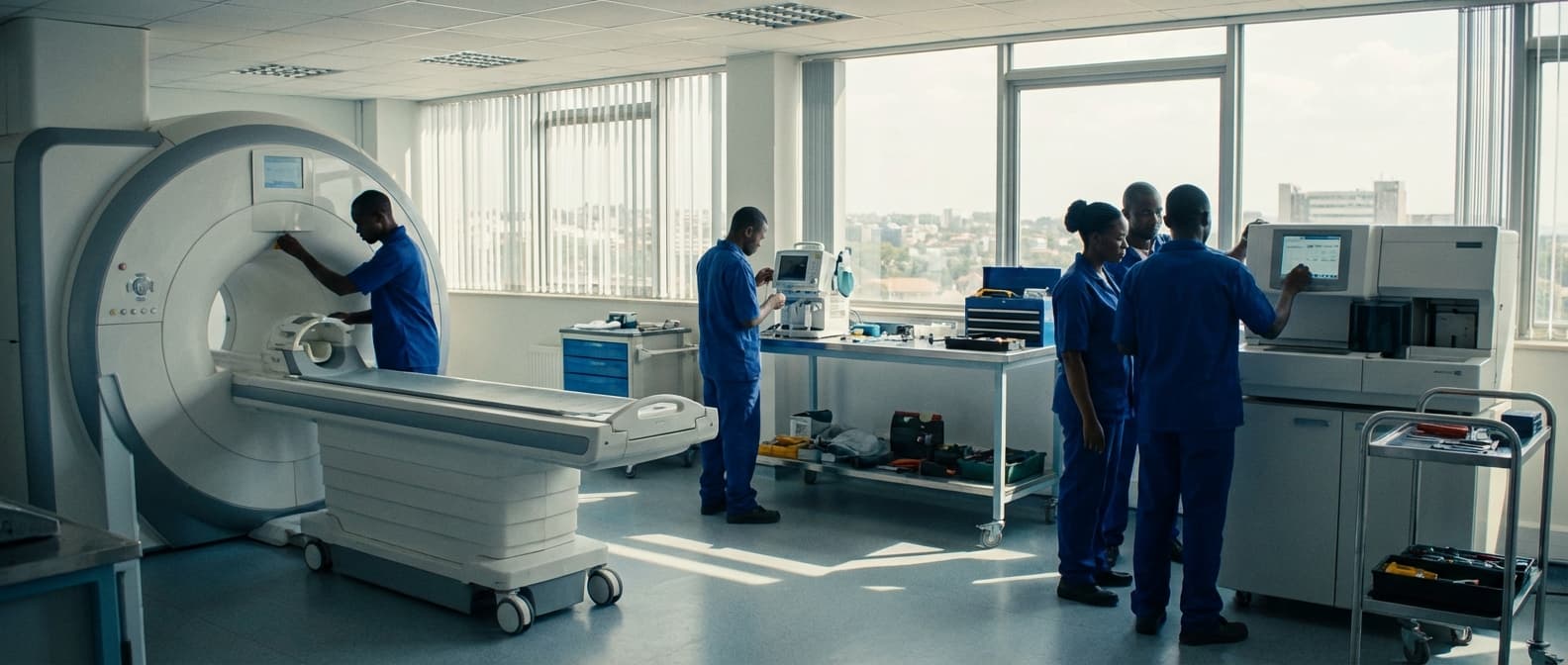
Planned Shutdown Coordination Service for Critical Equipment in Ghana
Engineering Excellence & Technical Support
Planned Shutdown Coordination Service for Critical Equipment High-standard technical execution following OEM protocols and local regulatory frameworks.
Optimized Downtime Minimization
Leverage advanced predictive analytics and real-time sensor data to accurately forecast optimal shutdown windows, minimizing production losses and maximizing operational efficiency for critical equipment across Ghana's key industries.
Integrated Risk Mitigation Framework
Implement a comprehensive risk assessment and mitigation plan, encompassing detailed safety protocols, contingency planning, and expert resource allocation, ensuring zero compromise on safety and asset integrity during planned shutdowns of critical infrastructure.
Seamless Stakeholder Synchronization
Facilitate transparent and real-time communication across all stakeholders, from plant operations and maintenance teams to external vendors and regulatory bodies, ensuring a cohesive and synchronized approach to executing complex planned shutdowns in Ghana.
What Is Planned Shutdown Coordination Service For Critical Equipment In Ghana?
Planned Shutdown Coordination Service for Critical Equipment in Ghana refers to a specialized, structured process designed to manage and execute temporary deactivations (shutdowns) of essential operational machinery and systems. This service is paramount for industries reliant on continuous uptime and high reliability of their critical assets, ensuring that scheduled maintenance, upgrades, or repairs are performed with minimal disruption to production, safety, and regulatory compliance. The service encompasses meticulous planning, precise execution, and thorough post-shutdown verification. It involves a comprehensive lifecycle approach, from initial notification and scope definition to resource allocation, risk assessment, safety protocols, and stakeholder communication. The objective is to transform potentially disruptive events into controlled, efficient, and value-adding operational interludes.
| Entity Requiring Service | Rationale for Need | Typical Use Cases |
|---|---|---|
| Power Generation & Distribution Utilities (e.g., Volta River Authority, ECG, NEDCo) | Ensuring grid stability, preventing blackouts, maintaining asset integrity of turbines, transformers, switchgear, and transmission lines. Compliance with energy sector regulations. | Scheduled maintenance of hydro/thermal turbines, transformer oil analysis and replacement, switchgear inspection and refurbishment, grid infrastructure upgrades, boiler maintenance. |
| Mining Operations (e.g., Gold Fields, AngloGold Ashanti, Asanko) | Maximizing ore processing throughput, maintaining safety in hazardous environments, extending the lifespan of heavy machinery (crushers, conveyors, haul trucks), ensuring compliance with environmental and safety standards. | Overhaul of SAG/AG mills, conveyor belt replacement, large-scale hydraulic system servicing on haul trucks, plant inspection and component replacement, tailings management system maintenance. |
| Oil & Gas Sector (Upstream, Midstream, Downstream) | Maintaining operational integrity of processing plants, pipelines, and offshore/onshore facilities. Preventing leaks and ensuring safety in high-risk environments. Meeting production targets and regulatory requirements. | Refinery unit turnarounds (e.g., FCC, CDU/VDU), pipeline integrity checks and repairs, offshore platform maintenance, storage tank inspections and cleaning, gas processing plant overhauls. |
| Large-Scale Manufacturing & Industrial Plants (e.g., Cement, Food & Beverage, Textiles) | Minimizing production downtime, optimizing equipment performance, ensuring product quality, and adhering to occupational health and safety standards. | Overhaul of kilns and mill drives in cement plants, packaging line servicing, boiler and refrigeration system maintenance, major equipment component replacements (e.g., gearboxes, pumps). |
| Telecommunications Infrastructure Providers | Maintaining network reliability and performance of critical transmission equipment, data centers, and base stations. Ensuring seamless service delivery to subscribers. | Hardware upgrades in central offices, data center cooling system maintenance, critical battery bank replacements, antenna and tower structural integrity checks. |
| Water & Wastewater Treatment Facilities | Ensuring continuous supply of potable water and effective treatment of wastewater. Maintaining the operational integrity of pumps, filtration systems, and treatment tanks. | Pump station overhauls, clarifier mechanism servicing, filtration media replacement, disinfection system maintenance, pipeline inspection and relining. |
Key Components of Planned Shutdown Coordination Service
- Scope Definition & Objective Setting: Clearly defining the work to be performed, the equipment involved, and the desired outcomes (e.g., improved efficiency, extended lifespan, compliance).
- Detailed Planning & Scheduling: Developing a granular work breakdown structure, sequencing activities, estimating durations, and establishing a precise timeline with critical path analysis.
- Resource Management: Identifying and allocating necessary personnel (skilled technicians, engineers, contractors), specialized tools, equipment, and materials.
- Risk Assessment & Mitigation: Proactively identifying potential hazards (safety, operational, environmental) and developing robust mitigation strategies and contingency plans.
- Permit to Work (PTW) System Integration: Ensuring all necessary permits for various work activities are secured and managed throughout the shutdown period.
- Safety Management & Compliance: Implementing rigorous health, safety, and environmental (HSE) protocols, including pre-shutdown safety briefings, work site inspections, and emergency response procedures, adhering to relevant Ghanaian regulations.
- Stakeholder Communication & Management: Establishing clear communication channels with all affected parties (operations, maintenance, management, external regulators, suppliers) to ensure awareness and alignment.
- Execution Oversight & Control: Supervising the work in real-time, managing progress against the schedule, resolving issues promptly, and ensuring quality of workmanship.
- Post-Shutdown Verification & Recommissioning: Conducting thorough inspections, testing, and functional checks to ensure equipment is restored to operational readiness and performance standards are met.
- Documentation & Reporting: Maintaining comprehensive records of all activities, findings, deviations, and lessons learned for future reference and continuous improvement.
Who Needs Planned Shutdown Coordination Service For Critical Equipment In Ghana?
Planned Shutdown Coordination Services are crucial for organizations in Ghana that rely on critical equipment for their operations. These services ensure that essential maintenance, repairs, and upgrades are performed efficiently and with minimal disruption to production, service delivery, or revenue generation. Without proper coordination, unplanned downtime can lead to significant financial losses, reputational damage, and safety hazards. This service is vital for any entity where the failure or unavailability of key machinery or systems can have severe consequences.
| Target Customer Segment | Key Departments Requiring Coordination |
|---|---|
| Manufacturing Companies | Production, Maintenance, Engineering, Operations, Quality Control, Health & Safety |
| Oil & Gas | Operations, Maintenance, Engineering, HSE (Health, Safety, and Environment), Drilling |
| Utilities (Power, Water) | Operations, Network Maintenance, Engineering, Asset Management, Customer Service, HSE |
| Mining | Mine Operations, Plant Maintenance, Engineering, Geology, HSE |
| Telecommunications | Network Operations, Field Maintenance, Engineering, IT, Customer Support |
| Healthcare Institutions | Biomedical Engineering, Facilities Management, IT, Clinical Departments, Administration |
| Transportation & Logistics | Operations, Maintenance, Engineering, Safety & Security, IT |
Target Customers in Ghana
- Manufacturing Companies (Food & Beverage, Textiles, Pharmaceuticals, Automotive, Heavy Industry)
- Oil & Gas Exploration and Production Companies
- Power Generation and Distribution Utilities
- Mining and Extractive Industries
- Telecommunications Providers
- Water and Wastewater Treatment Facilities
- Large-Scale Agriculture and Agribusiness
- Transportation and Logistics Hubs (Airports, Ports)
- Hospitals and Healthcare Institutions (Critical medical equipment)
- Large Financial Institutions (Data centers and IT infrastructure)
- Government Agencies (with critical infrastructure responsibilities)
Planned Shutdown Coordination Service For Critical Equipment Process In Ghana
The Planned Shutdown Coordination Service for Critical Equipment Process in Ghana is a structured approach to ensure minimal disruption and maximum efficiency when planned maintenance or upgrades are required for vital machinery. This service guides stakeholders through a comprehensive workflow, from the initial inquiry to the successful execution and post-execution review. The process prioritizes safety, resource allocation, communication, and adherence to schedules.
| Stage | Description | Key Activities | Responsible Parties | Deliverables |
|---|---|---|---|---|
| The process begins when a stakeholder identifies the need for a planned shutdown of critical equipment. | Submit formal request, identify equipment, initial impact assessment, preliminary safety review. | Equipment Owner/Department, Maintenance Department | Initial shutdown request, preliminary impact report, preliminary risk assessment. |
| A detailed plan is developed, outlining the specific tasks, duration, and resources required for the shutdown. | Define shutdown scope (maintenance, upgrade, inspection), identify dependencies, create detailed work procedures, develop risk management plan, establish communication protocols, obtain necessary permits. | Maintenance Planning Team, Operations Department, Safety Officers, Engineering Department, Procurement | Detailed shutdown plan, work breakdown structure (WBS), risk assessment and mitigation plan, communication plan, permit applications. |
| All necessary personnel, equipment, and materials are identified, procured, and scheduled for the shutdown period. | Identify required personnel (internal/external), secure specialized tools and equipment, procure spare parts and consumables, develop detailed schedule with timelines and milestones, coordinate with other departments/external stakeholders. | Procurement Department, Logistics, Human Resources, Maintenance Department, Operations Department | Resource list, procurement orders, equipment rental agreements, finalized shutdown schedule, stakeholder confirmation. |
| All preparatory work is completed to ensure a smooth and safe execution of the shutdown. | Conduct pre-shutdown safety briefing and training, ensure availability of safety equipment, isolate and secure the equipment, perform pre-shutdown inspections and tests, communicate shutdown schedule to all affected parties, establish site access procedures. | Site Supervisors, Safety Officers, Maintenance Technicians, Operations Personnel | Completed training records, safety equipment checklist, isolation certificates, pre-shutdown inspection reports, communication logs. |
| The actual maintenance, repair, or upgrade work is performed according to the detailed plan and schedule. | Execute work tasks as per WBS, adhere to safety procedures, conduct regular progress monitoring, manage deviations from the plan, document all activities and findings, ensure continuous communication among teams. | On-site Teams (Maintenance, Operations, Contractors), Site Supervisors, Project Managers, Safety Officers | Completed work orders, daily progress reports, incident reports (if any), photographic/video evidence of work done. |
| The equipment is tested and verified to ensure it is safe and operational before being returned to service. | Perform post-shutdown inspections and tests, conduct performance validation, obtain sign-off from relevant stakeholders, re-integrate equipment into operations, communicate successful completion of shutdown. | Quality Assurance, Engineering Department, Operations Department, Maintenance Department | Post-shutdown test reports, performance validation certificates, handover documents, operational readiness confirmation. |
| A comprehensive report is compiled, detailing the entire shutdown process, lessons learned, and recommendations for future improvements. | Compile final shutdown report, analyze downtime and costs, identify lessons learned, document best practices, provide recommendations for future shutdowns, archive all relevant documentation. | Project Management Office, Maintenance Planning Team, Finance Department | Final shutdown report, cost analysis, lessons learned document, recommendations for improvement, archived project records. |
Planned Shutdown Coordination Service Workflow for Critical Equipment in Ghana
- Inquiry and Initial Assessment
- Scope Definition and Planning
- Resource Mobilization and Scheduling
- Pre-Shutdown Preparations
- Execution of Planned Shutdown
- Post-Shutdown Verification and Handover
- Reporting and Documentation
Planned Shutdown Coordination Service For Critical Equipment Cost In Ghana
Coordinating planned shutdowns for critical equipment in Ghana involves a multifaceted approach to cost. This service is essential for ensuring asset longevity, preventing catastrophic failures, and optimizing operational efficiency. The pricing is not standardized and can vary significantly based on several factors. Key considerations include the scope and complexity of the shutdown, the duration of the planned outage, the criticality of the equipment, the availability of specialized labor and equipment, and the geographical location within Ghana. For instance, shutdowns in remote mining operations might incur higher logistical costs than those in urban industrial zones. The service provider's experience, reputation, and the level of service offered (e.g., basic coordination vs. full project management with execution) also play a crucial role in determining the final cost.
| Service Tier | Typical Scope | Estimated Cost Range (GHS) | Key Considerations |
|---|---|---|---|
| Basic Coordination | Scheduling, communication, resource allocation planning, basic risk identification. | 5,000 - 25,000 | Suitable for smaller, less complex shutdowns with in-house execution capabilities. |
| Standard Project Management | Includes basic coordination plus detailed planning, vendor management, safety oversight, progress monitoring, and reporting. | 20,000 - 75,000 | Appropriate for medium-sized shutdowns with moderate complexity. |
| Comprehensive Project Management & Execution Support | Full project lifecycle management, direct supervision of execution teams, advanced risk mitigation, specialized technical support, and detailed post-shutdown analysis. | 60,000 - 250,000+ | Ideal for large-scale, highly complex, or critical equipment shutdowns requiring significant external expertise. |
| Specialized Equipment/Turnaround Management | Focus on major overhauls or plant-wide turnarounds involving significant capital investment and extensive coordination of multiple trades and disciplines. | Negotiable (Often a percentage of project value or fixed fee starting from 200,000+) | Requires highly specialized experience and is typically quoted on a project-by-project basis. |
Key Pricing Factors for Planned Shutdown Coordination Services in Ghana
- Scope and Complexity of the Shutdown: The number and type of equipment requiring shutdown, the extent of maintenance or upgrade work, and the interconnectivity of systems.
- Duration of the Planned Outage: Longer shutdowns naturally incur higher labor and standby costs.
- Equipment Criticality: Higher criticality often means more stringent safety protocols, specialized personnel, and faster turnaround requirements, potentially increasing costs.
- Labor Requirements: The need for specialized technicians, engineers, supervisors, and the number of personnel required.
- Availability of Specialized Equipment and Tools: Rental or purchase costs for specialized machinery, diagnostic tools, and safety equipment.
- Logistics and Transportation: Costs associated with moving personnel, equipment, and materials to and from the site, especially in remote locations.
- Geographical Location: Accessibility and infrastructure in the specific region of Ghana where the shutdown is taking place.
- Service Provider's Expertise and Reputation: Experienced and reputable providers may command higher fees.
- Level of Service Provided: Basic coordination, project management, execution, or a combination.
- Safety and Environmental Compliance: Costs associated with implementing strict safety measures and environmental protocols.
- Contingency Planning and Risk Management: Resources allocated for unforeseen issues and emergency response.
- Reporting and Documentation: The extent and detail of post-shutdown reports and documentation required.
Affordable Planned Shutdown Coordination Service For Critical Equipment Options
Our Affordable Planned Shutdown Coordination Service is designed to minimize downtime and maximize efficiency during critical equipment maintenance. We offer flexible value bundles and implement proven cost-saving strategies to ensure your planned shutdowns are as economical and effective as possible.
| Cost-Saving Strategy | Description | Benefit |
|---|---|---|
| Optimized Scheduling & Sequencing | Developing detailed, logical work sequences to minimize parallel activities and idle time. Utilizing critical path analysis. | Reduces overall shutdown duration, leading to lower labor and overhead costs. Maximizes resource utilization. |
| Proactive Vendor Management | Securing competitive bids, consolidating vendors where possible, and negotiating long-term service agreements. | Achieves significant cost reductions on contracted services and materials. Ensures timely availability of specialized resources. |
| Inventory Optimization | Working with clients to identify critical spare parts and ensure they are on-site before the shutdown, preventing delays. | Avoids costly delays and expedited shipping charges associated with unexpected part failures. Reduces holding costs for non-essential inventory. |
| Risk Mitigation & Contingency Planning | Identifying potential risks and developing proactive mitigation plans and backup strategies. | Prevents costly rework, accidents, and extended downtime due to unforeseen issues. |
| Technology Integration (Optional) | Leveraging digital tools for real-time communication, progress tracking, and documentation. | Improves efficiency, reduces errors, and provides better visibility, leading to quicker decision-making and problem resolution. |
| Standardized Work Procedures | Developing and implementing standardized procedures for common tasks to improve efficiency and consistency. | Reduces training time and ensures tasks are completed correctly the first time, minimizing rework. |
Key Value Bundles
- Basic Shutdown Planning: Includes initial risk assessment, basic scheduling, vendor coordination, and on-site supervision for smaller operations.
- Standard Shutdown Management: Builds on basic planning with detailed work package development, comprehensive safety management, real-time progress tracking, and post-shutdown reporting.
- Premium Comprehensive Coordination: Encompasses all standard features plus advanced predictive maintenance integration, critical spare parts management, root cause analysis support, and custom reporting dashboards.
- Customizable Packages: Tailor a bundle to your specific needs, combining elements from different tiers for optimal value and coverage.
Verified Providers In Ghana
In Ghana, navigating the healthcare landscape can be challenging, making it crucial to identify and engage with verified providers. Franance Health stands out as a premier organization committed to ensuring the highest standards of care. This dedication is reflected in their rigorous credentialing process, which meticulously vets healthcare professionals and facilities. By prioritizing transparency and quality, Franance Health empowers individuals with access to reliable and trustworthy medical services. Their commitment to excellence not only elevates the patient experience but also contributes to the overall improvement of healthcare delivery within Ghana. When seeking medical attention, choosing a Franance Health-credentialed provider means opting for assurance, expertise, and a patient-centered approach.
| Provider Type | Franance Health Credentialing Focus | Benefits for Patients |
|---|---|---|
| Hospitals and Clinics | Infrastructure, equipment, staff qualifications, patient safety protocols, infection control. | Access to well-equipped facilities with competent medical teams, ensuring a safe and effective treatment environment. |
| Specialist Doctors | Medical licenses, board certifications, years of experience, continuous professional development, ethical conduct. | Consultation with highly qualified specialists in their respective fields, providing expert diagnosis and treatment. |
| Diagnostic Laboratories | Accreditation, quality control measures, technology, accuracy of results, turnaround time. | Reliable and accurate diagnostic testing, crucial for timely and correct medical interventions. |
| Pharmacies | Licensing, drug sourcing and storage, dispensing accuracy, pharmacist qualifications, patient counseling. | Access to genuine medications dispensed by qualified pharmacists, with proper guidance on usage. |
| Emergency Medical Services | Ambulance availability and equipment, paramedic training, response times, coordination with healthcare facilities. | Prompt and efficient emergency medical response, ensuring critical care is delivered without delay. |
Why Franance Health Credentials Matter:
- Rigorous Vetting Process: Franance Health employs a comprehensive evaluation system for all its affiliated providers, ensuring they meet stringent quality and ethical benchmarks.
- Commitment to Patient Safety: Credentials signify a provider's adherence to best practices in patient care and safety protocols.
- Access to Qualified Professionals: Choosing a Franance Health-verified provider guarantees access to skilled and experienced medical practitioners.
- Enhanced Trust and Reliability: The certification offers peace of mind, assuring patients they are receiving care from reputable and accountable sources.
- Improved Healthcare Outcomes: By partnering with top-tier providers, Franance Health contributes to better health results for the Ghanaian population.
- Standardization of Care: Their credentialing process helps establish a consistent level of quality across a network of healthcare services.
Scope Of Work For Planned Shutdown Coordination Service For Critical Equipment
This Scope of Work (SOW) outlines the services required for the coordination of planned shutdowns for critical equipment within the client's facility. The objective is to ensure a safe, efficient, and well-managed shutdown process that minimizes downtime and disruption to operations while adhering to all relevant technical standards and specifications.
| Technical Deliverable | Description | Standard Specification Reference | Format/Output |
|---|---|---|---|
| Detailed Shutdown Plan | Comprehensive document outlining all activities, timelines, resources, responsibilities, and risk mitigation strategies for each planned shutdown. | Internal Client Procedures, ISO 9001:2015 | PDF, Project Management Software |
| Shutdown Schedule | Gantt chart or similar visual representation detailing the sequence and duration of all shutdown activities. | Critical Path Method (CPM) principles | Microsoft Project, Primavera P6 |
| Risk Assessment and Mitigation Plan | Identification of potential hazards associated with the shutdown activities and proposed measures to mitigate these risks. | OSHA 1910.147 (Lockout/Tagout), HAZOP Studies | Word Document, Risk Register |
| Permit-to-Work System Integration | Ensuring all activities are conducted under a robust Permit-to-Work system, including isolation permits, hot work permits, etc. | Client's Site Safety Procedures, API RP 75 | Digital Permit System, Logbooks |
| Isolation and De-isolation Procedures | Detailed step-by-step procedures for the safe isolation of energy sources and the subsequent safe re-energization of equipment. | Client's Lockout/Tagout Procedures, IEC 61511 | Procedure Documents, Checklists |
| Vendor and Contractor Management Plan | Guidelines for selection, onboarding, performance monitoring, and offboarding of external service providers. | Client's Procurement Policies, ISO 44001 | Word Document, Vendor Qualification Forms |
| Spare Parts and Materials Management Log | Tracking of all spare parts and materials required for the shutdown, including inventory levels, procurement status, and usage. | Client's Inventory Management System | Spreadsheet, ERP System Integration |
| Progress Tracking and Reporting | Regular updates on shutdown progress, including any deviations from the plan, issues encountered, and corrective actions taken. | Earned Value Management (EVM) principles | Daily/Weekly Reports, Dashboards |
| Post-Shutdown Review Report | Comprehensive analysis of the shutdown's success, lessons learned, identification of areas for improvement, and recommendations for future shutdowns. | Root Cause Analysis (RCA) methodologies | Word Document, Presentation |
| As-Built Documentation Updates | Incorporation of any changes made to equipment or systems during the shutdown into the existing documentation. | Client's Document Control Procedures, CAD Standards | Updated P&IDs, Schematics, Manuals |
Key Objectives of the Planned Shutdown Coordination Service:
- Develop and maintain a comprehensive shutdown schedule for all critical equipment.
- Coordinate activities between various departments, vendors, and contractors involved in the shutdown.
- Ensure all necessary permits, licenses, and safety approvals are obtained prior to shutdown commencement.
- Oversee the safe isolation and de-isolation of critical equipment.
- Facilitate the execution of maintenance, repair, and inspection activities.
- Manage spare parts and material logistics for the shutdown.
- Monitor progress and address any issues or deviations from the plan in real-time.
- Conduct post-shutdown reviews and generate comprehensive reports.
Service Level Agreement For Planned Shutdown Coordination Service For Critical Equipment
This Service Level Agreement (SLA) outlines the terms and conditions for the Planned Shutdown Coordination Service provided for critical equipment. It defines the response times for critical incident escalation and the uptime guarantees associated with the coordination service itself, not the critical equipment's operational uptime. The goal is to ensure efficient and timely communication and planning during scheduled maintenance and shutdown events for critical infrastructure.
| Service Component | Uptime Guarantee | Response Time (Business Hours) | Response Time (After Hours/Weekends/Holidays) |
|---|---|---|---|
| Planned Shutdown Coordination Platform Availability | 99.5% (excluding scheduled maintenance) | 2 Business Hours | 4 Business Hours |
| Dedicated Shutdown Coordinator Availability (during scheduled shutdown windows) | N/A (Coordination is event-driven) | 30 Minutes (for immediate critical coordination issues) | 1 Hour (for immediate critical coordination issues) |
| Communication Channel Availability (e.g., dedicated chat, portal) | 99.0% | 1 Business Hour | 2 Business Hours |
Key Definitions
- Critical Equipment: Equipment designated as essential for the core operations of the client, where unplanned downtime or extended planned downtime has significant financial, safety, or operational impact.
- Planned Shutdown: A scheduled interruption of service for critical equipment for maintenance, upgrades, or repairs, coordinated through this service.
- Coordination Service: The communication and planning management provided by the service provider to facilitate efficient and effective planned shutdowns.
- Critical Incident: An event that significantly hinders the coordination of a planned shutdown, such as a failure in communication channels, critical data loss related to planning, or an immediate escalation of a previously unaddressed coordination issue.
- Response Time: The maximum allowed time from the initiation of a support request (via designated channels) to the first acknowledgment and engagement by the service provider's support team.
- Uptime Guarantee: The percentage of time the Planned Shutdown Coordination Service is available and functioning as intended, excluding scheduled maintenance windows for the coordination service itself.
Frequently Asked Questions

Ready when you are
Let's scope your Planned Shutdown Coordination Service for Critical Equipment in Ghana project in Ghana.

Scaling healthcare logistics and technical systems across the entire continent.