
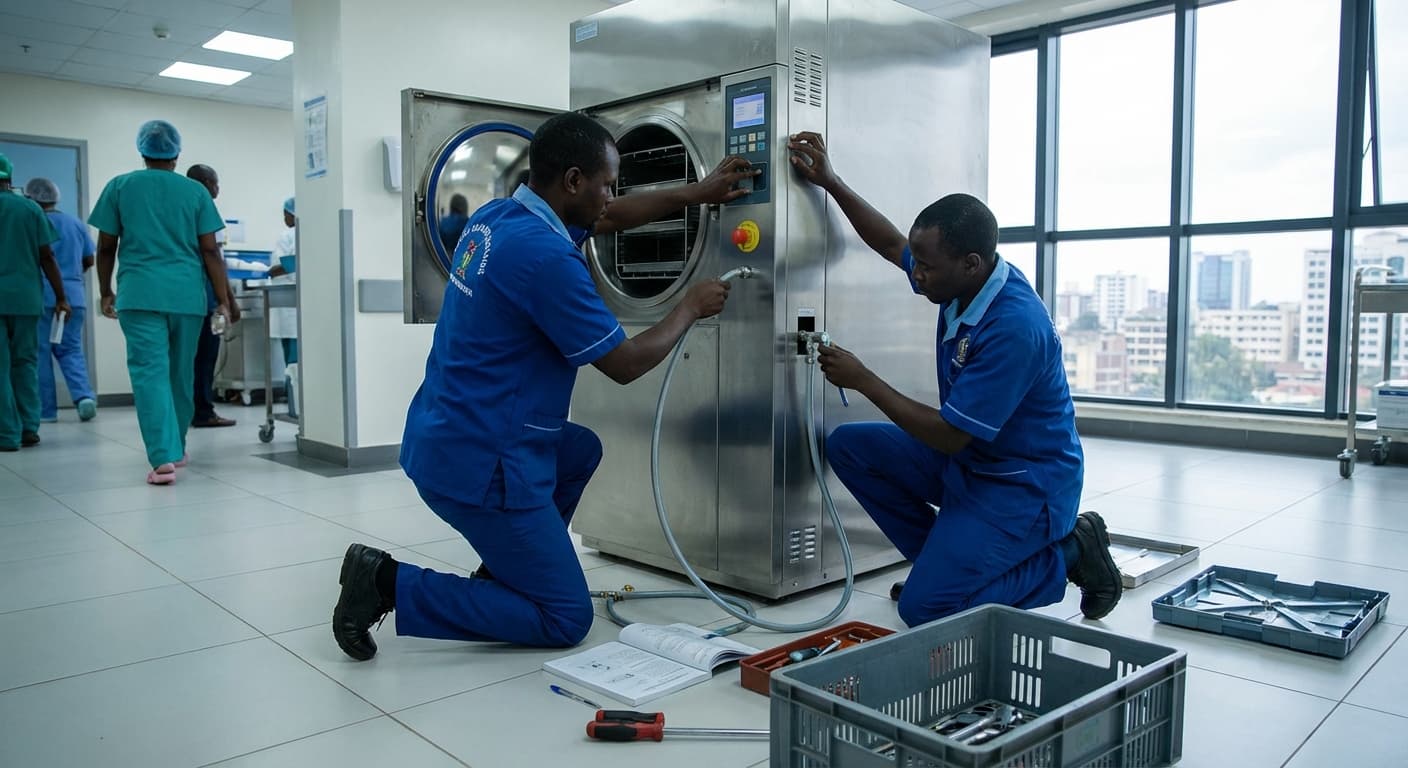
Autoclave & Sterilizer Installation Service in Ghana
Engineering Excellence & Technical Support
Autoclave & Sterilizer Installation Service High-standard technical execution following OEM protocols and local regulatory frameworks.
Expert Installation & Commissioning
Our certified technicians in Ghana ensure flawless autoclave and sterilizer installation, guaranteeing optimal performance and regulatory compliance from day one. We handle everything from site assessment to initial run-through, providing peace of mind for your critical medical or laboratory operations.
Precision Calibration & Validation
We offer precise calibration and validation services for all autoclave and sterilizer models in Ghana. Ensuring accurate temperature, pressure, and cycle times is paramount for effective sterilization. Our meticulous approach guarantees your equipment meets the highest international standards for safety and efficacy.
Rapid On-Site Support & Troubleshooting
Experiencing an issue with your autoclave or sterilizer in Ghana? Our skilled technical team provides rapid on-site support and expert troubleshooting. We minimize downtime with efficient diagnostics and repairs, restoring your essential sterilization capabilities quickly and effectively.
What Is Autoclave & Sterilizer Installation Service In Ghana?
Autoclave & Sterilizer Installation Service in Ghana refers to the professional provision of expertise and labor required for the proper setup, commissioning, and initial operational verification of autoclaves and other sterilization equipment within healthcare facilities, laboratories, and other professional settings in Ghana. This service ensures that the installed equipment functions according to manufacturer specifications, meets regulatory compliance standards, and is safe for intended use. It encompasses a comprehensive process from initial site assessment to final handover, guaranteeing optimal performance and longevity of the sterilization units.
| Who Needs Autoclave & Sterilizer Installation Service in Ghana? | Typical Use Cases |
|---|---|
| Healthcare Facilities: Hospitals (public and private), clinics, dental practices, diagnostic laboratories, veterinary clinics. | Sterilization of Medical Instruments: Surgical tools, dental instruments, diagnostic equipment, laboratory glassware, gowns, and other reusable medical supplies to prevent the transmission of pathogens. |
| Research and Development Laboratories: Biotechnology labs, pharmaceutical research facilities, academic research institutions. | Decontamination of Laboratory Equipment and Materials: Autoclaving biohazardous waste, sterilizing culture media, instruments, and glassware in a controlled environment. |
| Cosmetic and Beauty Salons: Nail salons, tattoo parlors, piercing studios. | Sterilization of dụng cụ: Ensuring hygiene and safety by sterilizing tools and equipment used in procedures that come into contact with skin or bodily fluids. |
| Food and Beverage Industry (Specific Applications): Certain specialized food processing or packaging operations requiring sterilization. | Sterilization of Packaging Materials or Products: Ensuring product safety and extended shelf life by sterilizing specific components or final products. |
| Industrial Applications (Specialized): Industries requiring high-level sterilization for manufacturing processes. | Sterilization of Components: Ensuring the sterility of critical components in manufacturing processes where contamination is a critical concern. |
Key Components of Autoclave & Sterilizer Installation Service:
- Site Assessment and Planning: Evaluating the installation location for power, water, drainage, ventilation, and spatial requirements. Developing a detailed installation plan.
- Equipment Delivery and Unpacking: Safe transport and careful unpacking of the sterilization unit to prevent damage.
- Physical Installation: Mounting the unit, connecting essential utilities (power, water, steam, drainage), and ensuring proper ventilation.
- Plumbing and Electrical Connections: Adhering to local codes and manufacturer guidelines for secure and safe connections to the facility's infrastructure.
- System Calibration and Configuration: Setting operational parameters, cycle protocols, and software configurations as per the specific application and manufacturer recommendations.
- Testing and Commissioning: Conducting rigorous performance tests, including cycle validation and efficacy checks, to confirm the sterilizer's ability to achieve required sterilization parameters (e.g., temperature, pressure, time).
- Operator Training: Providing comprehensive training to facility staff on the correct operation, maintenance, safety procedures, and troubleshooting of the installed equipment.
- Documentation and Handover: Supplying all necessary installation records, calibration certificates, user manuals, and warranty information. Formal handover to the client.
- Post-Installation Support (Optional): Offering initial troubleshooting and support immediately following the installation.
Who Needs Autoclave & Sterilizer Installation Service In Ghana?
Ensuring proper sterilization of medical equipment is paramount to patient safety and preventing the spread of infections. Autoclave and sterilizer installation services in Ghana are essential for a wide range of healthcare facilities and related organizations. This service ensures that critical sterilization equipment is set up correctly, calibrated, and ready for optimal performance, minimizing downtime and the risk of sterilization failures. From initial site assessment and plumbing/electrical work to final testing and user training, professional installation guarantees that these vital devices operate efficiently and meet stringent regulatory standards.
| Customer Type | Key Departments Requiring Installation | Specific Needs/Concerns |
|---|---|---|
| Hospitals | Central Sterile Supply Department (CSSD), Operating Theatres, Dental Clinics, Emergency Rooms, Outpatient Departments | High volume sterilization, compliance with national health regulations, integration with existing infrastructure, redundancy for critical equipment. |
| Clinics & Health Centers | Treatment Rooms, Minor Procedure Areas, Laboratory Units | Space optimization, reliable operation for routine procedures, budget-conscious solutions, training for nursing staff. |
| Dental Practices | Sterilization Room, Treatment Rooms | Compact units suitable for smaller spaces, efficient turnaround for dental instruments, user-friendly operation for dental assistants. |
| Veterinary Clinics | Surgical Suites, Treatment Rooms | Sterilization of surgical instruments, kennels, and equipment; specialized needs for animal care. |
| Laboratories | Microbiology Labs, Research Labs, Pathology Labs | Sterilization of glassware, media, and instruments; precision and reliability for scientific procedures. |
| Surgical Centers | Sterilization Room, Operating Rooms | Rapid sterilization cycles for urgent cases, stringent infection control protocols, maintenance contracts. |
| Beauty & Tattoo Parlors | Sterilization Area | Compliance with health and safety regulations for reusable equipment, public perception of hygiene, training on proper usage. |
| Educational Institutions | Dental/Medical Simulation Labs, Research Facilities | Training of future healthcare professionals, safe and effective demonstration of sterilization techniques. |
Target Customers & Departments for Autoclave & Sterilizer Installation in Ghana
- Hospitals (Government and Private)
- Clinics and Health Centers
- Dental Practices
- Veterinary Clinics and Hospitals
- Laboratories (Medical and Research)
- Surgical Centers
- Dialysis Centers
- Pharmaceutical Manufacturing Facilities
- Beauty and Tattoo Parlors (requiring medical-grade sterilization)
- Educational Institutions (Medical and Dental Schools)
- Non-Governmental Organizations (NGOs) operating healthcare facilities
Autoclave & Sterilizer Installation Service Process In Ghana
This document outlines the comprehensive workflow for Autoclave & Sterilizer Installation Services in Ghana, guiding clients from their initial inquiry to the successful completion of the installation. Our process is designed for clarity, efficiency, and to ensure client satisfaction throughout every stage. We emphasize thorough planning, professional execution, and robust post-installation support.
| Phase | Step | Description | Key Activities | Deliverables/Outcomes | Typical Timeline |
|---|---|---|---|---|---|
| Phase 1: Inquiry & Consultation | 1.1 Initial Inquiry | Client expresses interest in autoclave/sterilizer installation services. | Contacting the service provider via phone, email, or website form. Providing basic information about the need. | Acknowledgement of inquiry, initial understanding of client needs. | 1-2 Business Days |
| 1.2 Needs Assessment & Consultation | Detailed discussion to understand the client's specific requirements, application, and site context. | Gathering information on equipment type, capacity, intended use, existing infrastructure, budget, and preferred timeline. Technical consultation with experts. | Clear understanding of project scope, identification of potential challenges and solutions. | 2-4 Business Days | |
| Phase 2: Site Assessment & Planning | 2.1 On-site Visit | A qualified technician visits the client's location to evaluate the installation site. | Assessing space availability, power supply, water and drainage, ventilation requirements, structural integrity, and accessibility. Measuring dimensions. | Detailed site report, identification of any required modifications or additional infrastructure. | 3-7 Business Days (depending on location and complexity) |
| 2.2 Technical Planning & Design | Developing a comprehensive installation plan based on site assessment and client requirements. | Creating technical drawings, identifying optimal equipment placement, planning utility connections, defining safety protocols, and scheduling installation activities. | Detailed installation plan, technical specifications, risk assessment report. | 2-5 Business Days | |
| Phase 3: Quotation & Agreement | 3.1 Proposal & Quotation | Presenting a detailed proposal outlining the scope of work, equipment, materials, labor, and associated costs. | Including a clear breakdown of costs, payment terms, warranty information, and service level agreements. | Comprehensive quotation document. | 2-3 Business Days |
| 3.2 Contract & Agreement | Formalizing the service agreement between the client and the service provider. | Review and signing of the contract, including all agreed-upon terms and conditions. | Signed service contract. | 1-3 Business Days | |
| Phase 4: Procurement & Logistics | 4.1 Equipment & Material Procurement | Sourcing and purchasing the required autoclave/sterilizer unit and any necessary installation materials. | Ordering equipment from reputable manufacturers/suppliers, acquiring pipes, fittings, electrical components, and other consumables. | Procured equipment and materials ready for delivery. | Varies based on equipment availability (typically 2-8 weeks) |
| 4.2 Logistics & Delivery | Coordinating the transportation and delivery of the equipment and materials to the client's site. | Arranging for safe and timely delivery, ensuring all items are accounted for and in good condition. | Equipment and materials delivered to the installation site. | 1-3 Business Days | |
| Phase 5: Installation & Commissioning | 5.1 Site Preparation | Ensuring the installation area is ready according to the approved plan. | Carrying out any minor modifications, cleaning the site, and setting up necessary safety measures. | Installation site prepared and ready. | 0.5-1 Business Day |
| 5.2 Equipment Installation | Skilled technicians install the autoclave/sterilizer unit according to manufacturer specifications and industry best practices. | Mounting the unit, connecting to utilities (power, water, drainage), ensuring proper ventilation, and securing the equipment. | Autoclave/sterilizer physically installed. | 1-5 Business Days (depending on complexity) | |
| 5.3 Commissioning & Testing | Thorough testing and calibration of the installed equipment to ensure optimal performance and safety. | Conducting functional tests, leak tests, temperature and pressure calibration, and performance verification cycles. Running diagnostic checks. | Equipment fully functional and calibrated. Commissioning report. | 1-3 Business Days | |
| Phase 6: Training & Handover | 6.1 Operator Training | Providing comprehensive training to the client's staff on the operation and basic maintenance of the autoclave/sterilizer. | Demonstrating operational procedures, safety guidelines, cycle selection, error handling, and basic troubleshooting. | Trained personnel capable of operating the equipment. | 0.5-1 Business Day |
| 6.2 Final Handover & Documentation | Formally handing over the installed and commissioned equipment to the client. | Providing all relevant documentation, including user manuals, warranty certificates, commissioning reports, and service agreements. Ensuring client satisfaction. | Client receives all necessary documentation and confirms acceptance of the installed unit. | 0.5 Business Day | |
| Phase 7: Post-Installation Support & Maintenance | 7.1 Warranty Period | Providing support and addressing any issues that may arise during the warranty period. | Responding to client inquiries, troubleshooting problems, and coordinating any necessary repairs or adjustments. | Continued operational assurance. | As per warranty terms |
| 7.2 Maintenance Services | Offering ongoing maintenance and servicing to ensure long-term reliability and performance of the equipment. | Scheduling preventative maintenance, providing emergency repair services, and offering replacement parts. Potential for service contracts. | Optimized equipment lifespan and reduced downtime. | Ongoing (based on service agreement) |
Autoclave & Sterilizer Installation Service Workflow in Ghana
- Phase 1: Inquiry & Consultation
- Phase 2: Site Assessment & Planning
- Phase 3: Quotation & Agreement
- Phase 4: Procurement & Logistics
- Phase 5: Installation & Commissioning
- Phase 6: Training & Handover
- Phase 7: Post-Installation Support & Maintenance
Autoclave & Sterilizer Installation Service Cost In Ghana
The cost of autoclave and sterilizer installation services in Ghana can vary significantly based on several factors. These machines are crucial for ensuring sterile environments in healthcare facilities, laboratories, and other specialized industries. When seeking installation, understanding the pricing structure is essential for budgeting and selecting the right service provider. The local currency for these services is the Ghanaian Cedi (GHS).
| Service Type | Estimated Cost Range (GHS) | Notes |
|---|---|---|
| Small Benchtop Autoclave/Sterilizer Installation | GHS 500 - GHS 1,500 | Includes basic power and water connections for units up to 100 liters. May not include complex plumbing or ventilation. |
| Medium-Sized Autoclave/Sterilizer Installation | GHS 1,200 - GHS 3,500 | Suitable for units between 100-300 liters. May involve more extensive plumbing, electrical work, and potentially minor structural adjustments. Includes initial testing. |
| Large/Industrial Autoclave/Sterilizer Installation | GHS 3,000 - GHS 10,000+ | For units above 300 liters. Can involve significant plumbing, steam generation integration, ventilation systems, drainage, and substantial electrical upgrades. Often includes comprehensive testing and initial user training. |
| On-site Assessment & Quotation | GHS 100 - GHS 300 | Some providers offer this service, with the fee often deductible from the final installation cost if their services are engaged. |
| Additional Plumbing/Electrical Work | GHS 200 - GHS 1,000+ | Variable, depending on the extent of modifications needed to meet the sterilizer's requirements. |
| Calibration and Validation (Post-Installation) | GHS 300 - GHS 1,000 | Crucial for ensuring accuracy and compliance. Costs can increase for more rigorous validation protocols. |
| User Training | GHS 150 - GHS 500 | Per session or per group, depending on the provider's structure. |
Factors Influencing Autoclave & Sterilizer Installation Costs in Ghana
- Type and Size of the Unit: Larger, more complex autoclaves and sterilizers (e.g., industrial-grade steam sterilizers) will generally incur higher installation costs than smaller, tabletop units.
- Complexity of Installation: This includes the number of connections required (water, electricity, drainage, steam), the need for specialized ventilation, and any structural modifications to the installation site.
- Location of Installation: Accessibility to the installation site, especially in remote areas or within densely populated urban centers with traffic, can impact labor and transportation costs.
- Existing Infrastructure: If the site lacks the necessary power, water supply, or drainage, additional infrastructure development will add to the overall cost.
- Brand and Model of the Equipment: Some manufacturers may have specific installation requirements or recommend certified technicians, which can influence pricing.
- Additional Services: This might include initial calibration, system testing, user training, and warranty activation. Some installers bundle these, while others charge separately.
- Service Provider's Expertise and Reputation: Highly experienced and reputable installation companies with specialized certifications may charge a premium for their services.
- Urgency of the Installation: Rush installations might come with additional fees.
- Dismantling and Re-installation: If the unit is being moved from one location to another within Ghana, the cost will include dismantling and reassembly.
- Permits and Approvals: Depending on local regulations, certain installation projects might require permits, which can add to the cost.
Affordable Autoclave & Sterilizer Installation Service Options
Investing in a reliable autoclave or sterilizer is crucial for maintaining hygiene and safety standards, particularly in healthcare, veterinary, laboratory, and beauty industries. While the initial equipment cost can be significant, opting for professional installation services ensures optimal performance, longevity, and compliance. This guide explores affordable autoclave and sterilizer installation service options, highlighting value bundles and cost-saving strategies to make this essential service accessible.
| Installation Service Type | Typical Features | Value Proposition | Cost-Saving Strategy |
|---|---|---|---|
| Standard Installation | On-site setup, basic connection to utilities (power, water/drain if applicable), initial function test. | Essential for basic operational readiness. | Often included with equipment purchase or offered at a competitive flat rate. Inquire about bundled deals with the autoclave/sterilizer purchase. |
| Comprehensive Installation | Includes standard features plus site assessment, custom plumbing/electrical work (if needed), integration with existing systems, advanced calibration, and user training. | Ideal for complex setups or new facilities, ensuring optimal performance and user competency. | Can be more cost-effective in the long run by preventing future issues. Negotiate a package price for comprehensive services, especially when purchasing multiple units. |
| Maintenance & Installation Bundles | Combines initial installation with a scheduled preventative maintenance plan (e.g., annual checks, filter replacements). | Proactive approach to equipment care, maximizing uptime and preventing costly breakdowns. | Bundled plans often offer a discount compared to purchasing installation and maintenance separately. Ask about long-term service agreements. |
| Manufacturer-Direct Installation | Provided by the autoclave/sterilizer manufacturer's certified technicians. | Guarantees adherence to manufacturer specifications and often includes extended warranties. | May be more expensive upfront but can save on repair costs and warranty claims in the long run. Compare quotes with independent installers. |
| Independent Installer / Third-Party Service | Installation and servicing by specialized, certified technicians not directly employed by the manufacturer. | Can offer competitive pricing and flexible scheduling. | Obtain multiple quotes from reputable independent installers. Check for certifications and customer reviews. Negotiate rates, especially for smaller businesses. |
Benefits of Professional Autoclave & Sterilizer Installation
- Ensures proper functionality and calibration for effective sterilization.
- Minimizes the risk of equipment malfunction, costly repairs, and downtime.
- Adheres to safety regulations and industry standards.
- Extends the lifespan of your equipment.
- Provides peace of mind and operational continuity.
Verified Providers In Ghana
In the Ghanaian healthcare landscape, ensuring access to reliable and high-quality medical services is paramount. This is where verified providers, particularly those adhering to stringent credentialing processes like Franance Health, stand out. Franance Health's commitment to vetting its network of healthcare professionals and facilities ensures that patients receive care that is not only accessible but also meets the highest standards of competence and ethical practice. This rigorous credentialing process involves comprehensive background checks, verification of licenses and certifications, peer reviews, and ongoing performance monitoring. By choosing a provider credentialed by Franance Health, individuals gain peace of mind, knowing they are engaging with healthcare professionals who have demonstrated a commitment to excellence and patient safety. This dedication translates into better health outcomes, reduced risk of medical errors, and an overall more positive healthcare experience.
| Credentialing Aspect | Franance Health's Approach | Benefit to Patients |
|---|---|---|
| License and Certification Verification | Thorough checking of all relevant medical licenses and certifications against official regulatory bodies. | Ensures providers are legally qualified and possess the necessary expertise. |
| Education and Training Review | Verification of academic qualifications and specialized training programs. | Confirms providers have received appropriate foundational and advanced medical education. |
| Work History and Experience | Examination of past employment records and duration of practice. | Assesses practical experience and professional trajectory. |
| Professional References and Peer Review | Seeking feedback from other healthcare professionals and potentially conducting peer assessments. | Offers insights into a provider's clinical skills and professional reputation. |
| Background Checks | Includes checks for any disciplinary actions or malpractice claims. | Safeguards against providers with a history of unethical or harmful practices. |
| Ongoing Performance Monitoring | Regular review of patient feedback and clinical outcomes. | Ensures continued adherence to high standards and identification of areas for improvement. |
Why Franance Health Credentials Represent the Best Choice:
- Rigorous Vetting Process: Franance Health employs a multi-faceted approach to credentialing, ensuring all providers meet strict qualification criteria.
- Enhanced Patient Safety: The focus on verified qualifications and ethical conduct significantly reduces the risk of substandard care.
- Improved Quality of Care: Access to credentialed providers means you are more likely to receive effective and evidence-based treatment.
- Trust and Reliability: Franance Health's stamp of approval provides a strong indicator of a provider's legitimacy and competence.
- Peace of Mind: Knowing your healthcare provider has undergone thorough verification offers invaluable reassurance.
Scope Of Work For Autoclave & Sterilizer Installation Service
This Scope of Work (SOW) outlines the requirements for the professional installation of a new Autoclave and Sterilizer system. The service will encompass all necessary activities to ensure the safe, efficient, and compliant operation of the equipment, from site preparation to final commissioning and handover. This document details the technical deliverables, standard specifications, and responsibilities of both the service provider and the client.
| Phase | Description | Technical Deliverables | Standard Specifications |
|---|---|---|---|
| Initial site visit to assess installation location, utility availability, access routes, and confirm equipment dimensions against site constraints. Develop detailed installation plan. | Site survey report, installation plan, risk assessment report. | Compliance with manufacturer's installation manual, local building codes, and safety regulations. Adequate space clearance around equipment (as per manufacturer's recommendations). |
| Preparation of the installation area including necessary structural modifications (if any), utility connections preparation (electrical, plumbing, ventilation), and ensuring adequate environmental conditions (temperature, humidity). | Prepared utility connection points, cleaned installation area, completed minor structural modifications (if agreed). | Electrical: Appropriate voltage, amperage, and circuit protection. Plumbing: Potable water supply meeting specified pressure and quality, drainage system with appropriate trap. Ventilation: Adequate air exchange rate as per manufacturer's requirements. |
| Receipt of the Autoclave and Sterilizer at the site, unboxing, inspection for transit damage, and precise positioning within the prepared installation area. | Unboxed and inspected equipment, correctly positioned for installation. | Equipment protected from damage during transit and handling. Accurate placement according to the installation plan. |
| Mechanical and electrical connection of the Autoclave and Sterilizer to the prepared utility points. Sealing of all connections to prevent leaks. Installation of any required accessories or ancillary equipment. | Fully connected and secured Autoclave and Sterilizer system. All utility connections made and tested for integrity. | All connections made by qualified technicians. Use of appropriate materials and connectors (e.g., food-grade piping for water). Electrical wiring to code. Proper grounding. |
| Energizing the system, performing initial function tests, running calibration cycles, and executing performance validation tests as per manufacturer's guidelines and relevant standards. | Operational Autoclave and Sterilizer system, successful completion of all test cycles, calibration certificates, performance validation report. | Tests conducted according to manufacturer's operational manual and industry best practices (e.g., ISO 13485, FDA guidelines where applicable). All critical parameters (temperature, pressure, time) verified. |
| Providing comprehensive training to client's designated personnel on equipment operation, routine maintenance, safety procedures, and troubleshooting. Formal handover of the installed system and all documentation. | Trained client personnel, User Manual, Maintenance Manual, Installation & Commissioning report, warranty information, all relevant certifications. | Training tailored to user roles. Clear and concise documentation provided in an accessible format. Client sign-off on successful installation and training. |
| Compilation and submission of all necessary documentation, including installation reports, test results, calibration certificates, and any required regulatory compliance documentation. | Complete set of as-built drawings (if applicable), installation and commissioning report, test logs, calibration certificates, safety compliance certificates. | Documentation adheres to manufacturer's requirements and relevant regulatory bodies. All certifications are valid and traceable. |
Key Objectives
- Ensure safe and compliant installation of the Autoclave and Sterilizer system.
- Verify proper integration with existing utilities (power, water, drainage, ventilation).
- Confirm functionality and performance meet manufacturer specifications.
- Provide comprehensive training to client personnel.
- Deliver all required documentation and certifications.
Service Level Agreement For Autoclave & Sterilizer Installation Service
This Service Level Agreement (SLA) outlines the terms and conditions for Autoclave & Sterilizer Installation Services provided by [Your Company Name]. It defines response times for service requests and uptime guarantees for the installed equipment, ensuring optimal performance and minimal disruption for our clients.
| Service Event | Response Time Target (Business Hours) | Uptime Guarantee (Post-Installation) |
|---|---|---|
| Critical Equipment Failure (Loss of Sterilization Capability) | 2 Business Hours | 98.5% Uptime (excluding scheduled maintenance) |
| Non-Critical Equipment Malfunction (Affecting Performance but not Sterilization) | 4 Business Hours | 99.0% Uptime (excluding scheduled maintenance) |
| Routine Service/Preventative Maintenance Request | 8 Business Hours | N/A (as per agreed schedule) |
| General Inquiry/Technical Support | 24 Business Hours | N/A |
Scope of Service
- Installation of new autoclaves and sterilizers.
- Decommissioning and removal of old equipment (if applicable).
- Initial testing and calibration of newly installed units.
- User training on operation and basic maintenance.
- Emergency technical support for critical equipment failures.
Frequently Asked Questions

Ready when you are
Let's scope your Autoclave & Sterilizer Installation Service in Ghana project in Ghana.

Scaling healthcare logistics and technical systems across the entire continent.