
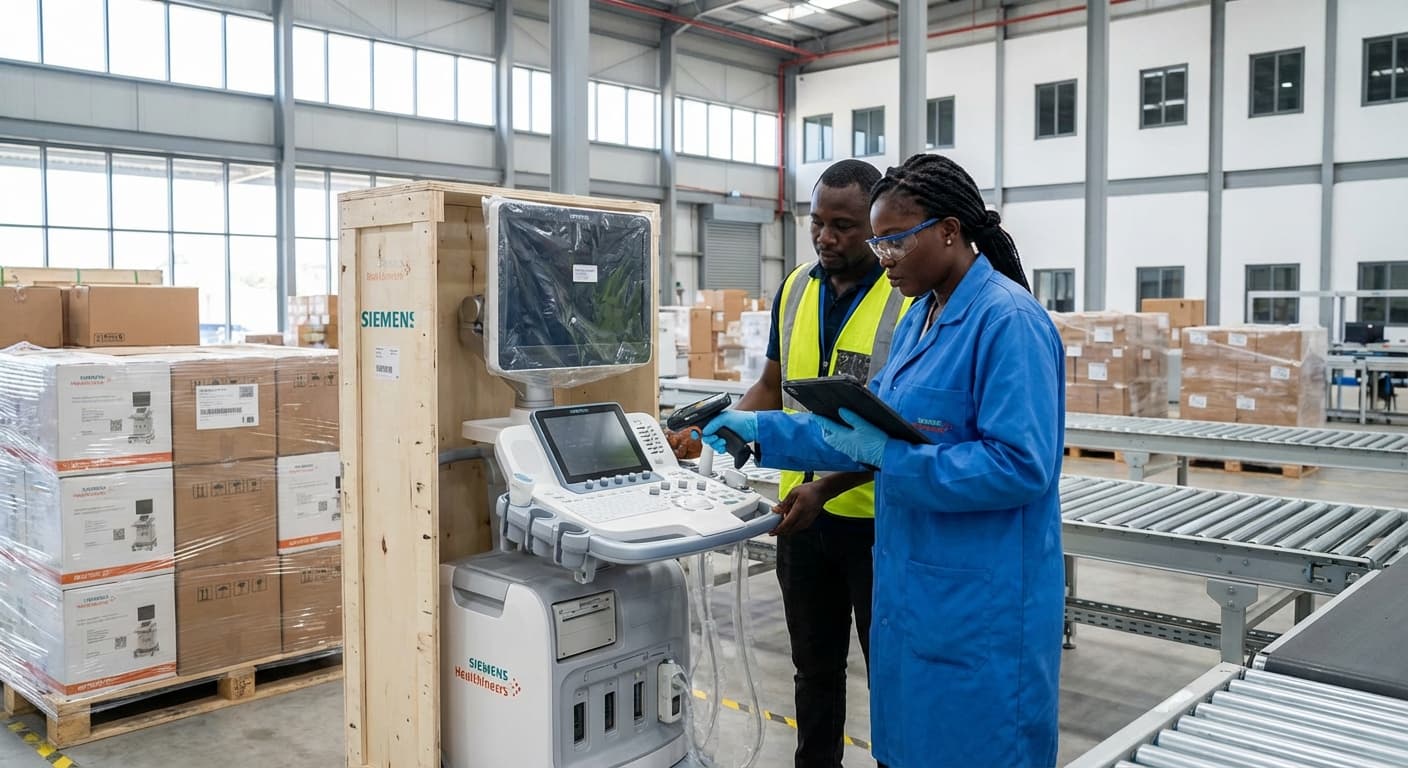
Warehouse Receiving Inspection Service (Medical Equipment) in Ghana
Engineering Excellence & Technical Support
Warehouse Receiving Inspection Service (Medical Equipment) High-standard technical execution following OEM protocols and local regulatory frameworks.
Comprehensive Quality Assurance & Compliance Checks
Our expert technicians meticulously inspect all incoming medical equipment against stringent international and Ghanaian regulatory standards (e.g., FDA Ghana), verifying product integrity, functionality, and safety. This includes detailed visual inspections, component verification, and documentation review to ensure full compliance and prevent counterfeit or substandard items.
Advanced Serialization & Traceability Systems
Leveraging state-of-the-art barcode scanning and serialization technologies, we ensure precise tracking and tracing of every medical device from receipt. This robust system guarantees full accountability, aids in inventory management, and facilitates rapid recall management if necessary, enhancing supply chain security for critical healthcare assets.
Functional & Performance Validation
Beyond visual checks, our service includes hands-on functional testing and performance validation of medical equipment. We simulate operational conditions and conduct essential performance tests to confirm that each device meets its intended specifications and is ready for deployment, minimizing the risk of in-field failures and ensuring patient safety.
What Is Warehouse Receiving Inspection Service (Medical Equipment) In Ghana?
Warehouse Receiving Inspection Service (Medical Equipment) in Ghana refers to a specialized quality assurance process undertaken upon the arrival of medical equipment at a designated warehouse facility within Ghana. This service aims to verify that the received medical equipment conforms to pre-defined specifications, contractual agreements, and regulatory standards before it is accepted into inventory and subsequently distributed. The inspection process systematically assesses various attributes of the equipment, ensuring its integrity, functionality, and compliance. This proactive measure mitigates risks associated with damaged, counterfeit, non-conforming, or substandard medical devices entering the healthcare supply chain.
| Stakeholder | Necessity of Service | Typical Use Cases |
|---|---|---|
| Healthcare Facilities (Hospitals, Clinics, Laboratories): | Crucial for ensuring the safety, efficacy, and reliability of medical equipment used for patient care. Prevents the use of faulty or substandard devices that could lead to misdiagnosis, treatment errors, or patient harm. Compliance with regulatory requirements for procurement and inventory management. | Receiving new diagnostic imaging equipment, surgical instruments, laboratory analyzers, patient monitoring systems, and essential medical supplies. |
| Medical Equipment Distributors and Importers: | Essential for maintaining product quality and customer trust. Mitigates financial losses due to rejected shipments or product recalls. Ensures compliance with import regulations and contractual obligations with manufacturers. Optimizes inventory management by accepting only verified goods. | Importing bulk shipments of medical devices from international manufacturers, receiving equipment for distribution to various healthcare providers, and managing stock for tender-based projects. |
| Government Procurement Agencies (e.g., Ministry of Health, Ghana Health Service): | Ensures accountability and efficient use of public funds. Guarantees that procured medical equipment meets specified standards and is fit for purpose. Prevents the acceptance of counterfeit or substandard items in national health programs. | Receiving large consignments of medical equipment procured through national tenders for public health facilities, managing the supply chain for essential medicines and equipment during health emergencies. |
| Non-Governmental Organizations (NGOs) and Humanitarian Aid Organizations: | Critical for ensuring the effective deployment of donated or purchased medical equipment in underserved areas. Verifies the quality and suitability of equipment for the intended use in challenging environments. | Receiving medical equipment for health projects in rural communities, supporting disaster relief efforts with essential medical supplies and devices. |
| Third-Party Logistics (3PL) Providers: | Essential for providing a comprehensive warehousing and logistics solution that includes quality control. Enhances their service offering and ensures compliance with client requirements for the handling of sensitive medical equipment. | Managing the warehousing and distribution of medical equipment on behalf of manufacturers, distributors, or healthcare providers, and conducting receiving inspections as part of their service agreement. |
Key Components of Warehouse Receiving Inspection for Medical Equipment
- Documentation Verification: Review of accompanying shipping manifests, invoices, purchase orders, certificates of origin, quality certifications (e.g., ISO, CE marking), and import permits to ensure accuracy and completeness.
- Physical Inspection: Visual examination of the packaging for any signs of damage, tampering, or environmental compromise. Inspection of the equipment itself for physical defects, cosmetic flaws, and correct model/serial number identification.
- Quantity Verification: Reconciliation of the received quantity against the documented quantities on the shipping documents and purchase orders.
- Labeling and Identification: Confirmation that all labeling (e.g., product name, model number, serial number, expiry date, manufacturer information) is present, legible, and accurate.
- Functional Testing (as applicable): Basic operational checks to ascertain if the equipment powers on and performs fundamental functions, depending on the complexity and type of equipment. This may involve simulated use or connection to power sources.
- Accessory and Consumable Verification: Inspection of all included accessories, spare parts, user manuals, and consumables to ensure they are present, correct, and in good condition.
- Storage Condition Assessment: Evaluation of the receiving warehouse environment to ensure it meets the recommended storage conditions (temperature, humidity, light exposure) for the specific medical equipment.
- Regulatory Compliance Check: Verification of adherence to Ghanaian regulatory requirements for medical equipment, including registration with the Food and Drugs Authority (FDA) Ghana and relevant import regulations.
- Documentation of Non-Conformances: Detailed recording and reporting of any discrepancies, damages, or deviations found during the inspection process.
Who Needs Warehouse Receiving Inspection Service (Medical Equipment) In Ghana?
In Ghana, businesses and organizations that handle, store, or distribute medical equipment are prime candidates for warehouse receiving inspection services. This specialized service ensures that incoming medical equipment meets required quality standards, specifications, and regulatory compliance before it enters the supply chain and is made available for use. This is critical for patient safety, operational efficiency, and avoiding costly errors and recalls.
| Target Customer | Relevant Departments/Roles |
|---|---|
| Importers and Distributors of Medical Equipment | Procurement, Logistics/Warehouse Management, Quality Assurance, Sales |
| Hospitals and Healthcare Facilities | Procurement/Purchasing, Biomedical Engineering, Materials Management, Clinical Departments (e.g., Surgery, ICU, Radiology), Pharmacy |
| Medical Equipment Manufacturers (with local warehousing) | Quality Control, Production, Logistics, Warehousing |
| Government Agencies (involved in public health procurement) | Procurement Units, Ministry of Health Departments (e.g., Medical Stores, Public Health), Regulatory Bodies |
| Non-Governmental Organizations (NGOs) and Humanitarian Aid Organizations | Procurement, Logistics, Program Management, Medical Supply Chain |
| Third-Party Logistics (3PL) Providers handling medical equipment | Warehouse Operations, Quality Control, Client Account Management |
| Research Institutions and Laboratories | Lab Management, Procurement, Research Operations |
Who Needs Warehouse Receiving Inspection Service (Medical Equipment) in Ghana?
- Importers and Distributors of Medical Equipment
- Hospitals and Healthcare Facilities
- Medical Equipment Manufacturers (with local warehousing)
- Government Agencies (involved in public health procurement)
- Non-Governmental Organizations (NGOs) and Humanitarian Aid Organizations
- Third-Party Logistics (3PL) Providers handling medical equipment
- Research Institutions and Laboratories
Warehouse Receiving Inspection Service (Medical Equipment) Process In Ghana
This document outlines the standard workflow for Warehouse Receiving Inspection Services for Medical Equipment in Ghana, from the initial inquiry to the final execution and reporting. The process is designed to ensure the quality, safety, and compliance of imported medical equipment upon arrival at the designated warehouse.
| Stage | Description | Key Activities | Responsible Parties | Documentation/Deliverables |
|---|---|---|---|---|
| The process begins when a client (e.g., importer, distributor, manufacturer) requires inspection services for incoming medical equipment at a warehouse in Ghana. | Client contacts the inspection service provider with details of the consignment (type of equipment, quantity, origin, expected arrival date, warehouse location). | Client, Inspection Service Provider | Initial inquiry details, Service Request Form |
| This stage involves understanding the client's specific needs and establishing the scope of work, costs, and timelines. | Provider reviews the inquiry, assesses scope, provides a quotation. Upon acceptance, a service agreement or contract is signed, outlining terms, fees, and inspection criteria. The provider may request relevant documentation (e.g., import permits, manufacturer specifications, Bills of Lading). | Inspection Service Provider, Client | Quotation, Service Agreement/Contract, Inspection Checklist (draft) |
| The core of the service, where the inspection takes place at the designated warehouse. | Trained inspectors visit the warehouse on the agreed date. They visually inspect the condition of the packaging and the equipment itself. This includes checking for damages, verifying quantities against shipping documents, confirming model numbers, serial numbers, and ensuring the equipment matches the declared specifications. Functional checks (if agreed and feasible) may be performed. | Inspection Service Provider (Inspectors), Warehouse Staff (for access and assistance) | Inspection Notes, Photographic Evidence, Preliminary Findings |
| Detailed reporting of the inspection findings to the client. | Inspectors compile a comprehensive report detailing the inspection process, observations (including any discrepancies, damages, or non-conformities), and recommendations. The report is reviewed internally by the inspection service provider. | Inspection Service Provider (Inspectors, Supervisors) | Detailed Inspection Report, Certificate of Inspection (if applicable), Photographic Log |
| Concluding the service and ensuring all aspects are addressed. | The final report is submitted to the client. Any identified issues may require corrective actions by the client or further investigation. Once the client acknowledges and accepts the report (or actions are taken to resolve discrepancies), the service is considered closed. Invoicing and payment are processed. | Inspection Service Provider, Client | Final Inspection Report, Invoices, Payment Records |
Key Stages of Warehouse Receiving Inspection Service
- Inquiry & Service Request
- Pre-Inspection Planning & Agreement
- On-Site Inspection Execution
- Reporting & Documentation
- Follow-up & Closure
Warehouse Receiving Inspection Service (Medical Equipment) Cost In Ghana
Understanding the cost of warehouse receiving inspection services for medical equipment in Ghana is crucial for businesses involved in the import, distribution, and storage of these critical items. These services are vital to ensure the integrity, functionality, and compliance of medical equipment upon arrival, preventing potential risks to patient safety and regulatory adherence. The pricing for such specialized inspections is influenced by a variety of factors, leading to a range of costs in Ghanaian Cedis (GHS).
| Inspection Type/Complexity | Estimated Cost Range (GHS) | Notes |
|---|---|---|
| Basic Visual Inspection & Documentation Review (Per Unit/Pallet) | 150 - 400 GHS | Covers initial visual checks, verification of shipping documents, and basic damage assessment. Suitable for less complex, lower-risk items. |
| Standard Functional Check (Per Unit) | 300 - 700 GHS | Includes basic visual inspection plus a check of essential operational functions. Applicable to general medical devices and equipment. |
| In-depth Inspection & Basic Functional Testing (Per Unit) | 500 - 1,500 GHS | More comprehensive checks, including detailed condition assessment, verification of accessories, and testing of key operational parameters. For moderately complex equipment. |
| Specialized/Complex Equipment Inspection (Per Unit) | 1,000 - 5,000+ GHS | For highly sophisticated medical devices requiring specialized knowledge, tools, and potentially manufacturer-specific protocols. Cost is highly variable. |
| Bulk Inspection (Per Visit/Day Rate) | 1,500 - 6,000+ GHS | For large volumes of equipment inspected on-site. Often a daily rate or project-based fee, can be more cost-effective per unit for high volumes. |
| Regulatory Compliance Audit (Per Equipment Type/Category) | 2,000 - 8,000+ GHS | Focuses on ensuring equipment meets specific Ghanaian regulatory requirements (e.g., FDA standards), including documentation and labeling. May involve multiple units. |
| Expedited/Rush Service Surcharge | 20% - 50% of base cost | Additional fee for urgent inspection requests. |
Key Pricing Factors for Warehouse Receiving Inspection Services (Medical Equipment) in Ghana:
- Type and Complexity of Medical Equipment: Highly specialized, sensitive, or complex medical equipment (e.g., imaging machines, surgical robots) will naturally incur higher inspection costs due to the specialized knowledge, tools, and time required.
- Volume of Equipment: The number of units or pallets to be inspected significantly impacts the overall cost. Larger volumes may benefit from bulk discounts, while smaller, ad-hoc inspections might have higher per-unit rates.
- Scope of Inspection: The depth and breadth of the inspection are primary cost drivers. This can range from basic visual checks and documentation verification to in-depth functional testing, calibration verification, and detailed condition assessments.
- Required Certifications and Documentation: Inspections mandated by specific regulatory bodies (e.g., Ghana Food and Drugs Authority - FDA) or requiring specific certifications for the inspectors will influence pricing.
- Urgency and Turnaround Time: Rush inspections or those requiring expedited reporting will typically come with a premium charge.
- Location of the Warehouse: Accessibility and remoteness of the warehouse can affect travel costs and logistics for the inspection team, thus influencing the final price.
- Experience and Reputation of the Inspection Service Provider: Established and reputable inspection agencies with a proven track record in medical equipment are likely to command higher fees due to their expertise and reliability.
- Additional Services: Services beyond basic inspection, such as sampling, laboratory testing, packaging integrity checks, or immediate reporting of non-conformities, will add to the cost.
- Market Demand and Competition: The general demand for these services in Ghana and the competitive landscape among inspection providers can also play a role in pricing.
Affordable Warehouse Receiving Inspection Service (Medical Equipment) Options
Seeking an affordable warehouse receiving inspection service for your medical equipment is crucial for ensuring product integrity, compliance, and efficient supply chain management. This service verifies that incoming shipments match purchase orders, are free from damage or defects, and meet regulatory requirements before being stored or distributed. Finding cost-effective solutions involves understanding value bundles and implementing smart cost-saving strategies.
| Value Bundle Component | Description | Cost-Saving Strategy & Benefit |
|---|---|---|
| Standard Inspection Package | Covers essential checks: PO verification, visual damage inspection, lot/serial number recording. | Strategy: Bulk discounts for frequent inspections, longer-term contracts. Benefit: Predictable costs, streamlined process, reduces individual inspection costs. |
| Enhanced Inspection Package | Includes standard checks plus basic functional testing and detailed documentation review. | Strategy: Tiered pricing based on complexity, bundled with storage. Benefit: Prevents costly returns of non-functional equipment, ensures regulatory compliance without additional specialized services. |
| Customized Inspection Solutions | Tailored to specific equipment types, regulatory needs, or client preferences. | Strategy: Negotiate based on volume and customization level, partner with specialized third-party providers. Benefit: Pay only for necessary services, optimize inspection depth, leverage external expertise cost-effectively. |
| On-Demand Inspection | Service provided as needed, without long-term commitment. | Strategy: Compare pricing across multiple providers, negotiate rates for consistent but infrequent needs. Benefit: Flexibility, suitable for fluctuating volumes, avoids fixed costs. |
| Technology Integration | Leveraging mobile apps, barcode scanners, and cloud-based reporting for real-time data capture. | Strategy: Providers offering integrated solutions may offer better overall value. Benefit: Reduced administrative overhead, faster reporting, improved accuracy, fewer manual errors leading to costly rework. |
| Training & Certification | Inspection personnel are trained on medical equipment specifics and relevant regulations. | Strategy: Providers with certified staff may have higher upfront costs but prevent future compliance issues. Benefit: Minimizes risk of regulatory non-compliance and associated fines or product recalls. |
| Audit Support | Assistance with internal or external audits related to receiving processes. | Strategy: Included as a value-add in premium bundles. Benefit: Saves time and resources during audit preparation, ensures readiness. |
Key Components of Medical Equipment Receiving Inspections:
- Verification against Purchase Orders (PO): Ensuring quantities, item numbers, and descriptions match.
- Visual Inspection for Damage: Checking for dents, scratches, cracks, broken seals, or any signs of mishandling.
- Lot/Serial Number Traceability: Recording and verifying lot and serial numbers for recall and inventory purposes.
- Documentation Review: Inspecting accompanying paperwork like Certificates of Analysis (CoA), packing lists, and shipping manifests.
- Basic Functional Checks (if applicable): For some equipment, simple power-on tests or essential function verification may be included.
- Compliance Checks: Ensuring labeling, packaging, and documentation adhere to relevant medical device regulations (e.g., FDA, CE).
- Temperature and Humidity Monitoring (if applicable): Verifying storage conditions during transit and initial receipt.
- Segregation of Non-Conforming Goods: Identifying and quarantining any items that fail inspection.
Verified Providers In Ghana
In Ghana's burgeoning healthcare landscape, identifying reliable and high-quality medical providers is paramount. Franance Health stands out as a leader, meticulously vetting and credentialing healthcare professionals and facilities to ensure that patients receive superior care. Their rigorous selection process guarantees that all Franance Health verified providers meet stringent standards for expertise, ethics, and patient safety. This commitment to excellence makes them the best choice for anyone seeking dependable healthcare services in Ghana.
| Credential | Franance Health Verification Process | Benefit to Patients |
|---|---|---|
| Medical Licenses & Certifications | Verified by Franance Health against official registries and issuing bodies. | Ensures providers are legally qualified and possess current credentials. |
| Professional Experience & Expertise | Franance Health reviews educational backgrounds, training history, and areas of specialization. | Connects patients with specialists best suited for their specific medical needs. |
| Ethical Conduct & Patient Feedback | Franance Health considers ethical standing and any available patient testimonials or feedback. | Promotes a patient-friendly environment and ensures providers adhere to high ethical standards. |
| Facility Standards (if applicable) | For facilities, Franance Health assesses infrastructure, equipment, and adherence to health regulations. | Guarantees access to safe and well-equipped healthcare settings. |
Why Franance Health Verified Providers are the Best Choice:
- Uncompromising Quality Standards: Franance Health employs a multi-faceted vetting process that includes reviewing medical licenses, certifications, training, and peer reviews.
- Patient-Centric Approach: Verified providers are committed to patient well-being, ethical practices, and transparent communication.
- Access to Leading Professionals: Franance Health curates a network of highly skilled doctors, specialists, and healthcare institutions across various disciplines.
- Enhanced Trust and Reliability: Patients can have confidence knowing that any provider listed through Franance Health has undergone thorough due diligence.
- Streamlined Healthcare Navigation: Franance Health simplifies the process of finding the right healthcare provider, saving patients time and reducing stress.
Scope Of Work For Warehouse Receiving Inspection Service (Medical Equipment)
This Scope of Work (SOW) outlines the requirements for the Warehouse Receiving Inspection Service for Medical Equipment. The service includes the thorough inspection of incoming medical equipment to ensure it meets specified technical and quality standards before being accepted into the warehouse inventory. This SOW details the technical deliverables and standard specifications that will be adhered to throughout the inspection process.
| Inspection Area | Standard Specification | Technical Deliverable |
|---|---|---|
| Documentation Review | All incoming shipments must be accompanied by: Purchase Order (PO), Packing List, Manufacturer's Certificate of Conformance (CoC), Serial Number Manifest, and relevant regulatory certifications (e.g., FDA clearance, CE marking). | Verified and archived copies of all required documentation for each received item. Report on any missing or incomplete documentation. |
| Visual Inspection (External) | Equipment packaging should be intact, free from damage (tears, punctures, water stains). Labels must be legible and accurately reflect product identification, serial numbers, and lot numbers. No signs of tampering. | Visual inspection report detailing condition of packaging, labels, and external appearance of the equipment. Photographic evidence of any damage. |
| Physical Inspection (Equipment) | Confirm correct equipment model, configuration, and accessories as per PO. Verify physical condition: no scratches, dents, or signs of prior use. Check for presence and condition of all specified accessories and manuals. | Confirmation of correct equipment and accessories received. Detailed report on physical condition with photographic evidence of any blemishes. |
| Identification Verification | Verify that serial numbers and lot numbers on the equipment match those on the packing list and any accompanying documentation. Ensure unique identification for each unit. | Report confirming serial number and lot number traceability. Mismatch report if discrepancies are found. |
| Functional Testing (Basic) | For powered equipment: verify power on/off functionality, basic indicator lights, and initial operational checks as per manufacturer's guidelines or provided test procedures (e.g., start-up sequence, basic diagnostic checks). No advanced calibration or performance tests at this stage. | Report on basic functional test results. List of any initial operational anomalies observed. |
| Accessories and Consumables | Verify all listed accessories, cables, adapters, spare parts, and initial consumables are present, undamaged, and compatible with the main equipment as per the PO. | Inventory of received accessories and consumables. Report on any missing or damaged items. |
| Labeling and Markings | Ensure all required labeling is present and legible, including: manufacturer's name, model number, serial number, electrical ratings, safety certifications (e.g., UL, CE), and warnings. If applicable, check for UDI (Unique Device Identification) compliance. | Verification checklist of all essential labels and markings. Report on any non-compliant or missing labels. |
| Cleanliness | Equipment and its packaging should be free from dust, dirt, and any foreign contaminants. Especially critical for sterile packaging. | Assessment of cleanliness. Report on any significant contamination found. |
| Storage Conditions (Initial Check) | While not a full environmental assessment, a brief check to ensure no obvious signs of extreme temperature or humidity damage to packaging or equipment that would compromise integrity. | Observation notes on potential environmental impact on received goods. |
Key Stages of Receiving Inspection
- Pre-receipt Verification
- On-arrival Inspection
- Detailed Technical Inspection
- Documentation Review
- Discrepancy Reporting and Resolution
Service Level Agreement For Warehouse Receiving Inspection Service (Medical Equipment)
This Service Level Agreement (SLA) outlines the performance standards for the Warehouse Receiving Inspection Service provided for Medical Equipment. It defines the agreed-upon response times and uptime guarantees to ensure efficient and reliable handling of incoming medical equipment.
| Service Component | Response Time Target | Uptime Guarantee |
|---|---|---|
| Inspection Initiation (after arrival notification) | Within 2 business hours | 99.5% Uptime during standard operating hours (Monday-Friday, 8 AM - 6 PM local time) |
| Discrepancy Notification (for urgent issues) | Within 1 business hour of identification | N/A (Focus on immediate notification) |
| Inspection Report Availability | Within 4 business hours of inspection completion | 99.0% Uptime during standard operating hours |
| System Availability (for inspection-related queries/updates) | N/A (Focus on overall system availability) | 99.7% Uptime during standard operating hours |
Key Performance Indicators (KPIs) for Warehouse Receiving Inspection Service
- Timely initiation of receiving inspections upon arrival of medical equipment.
- Accurate and thorough documentation of inspection findings.
- Prompt communication of any discrepancies or issues identified during inspection.
- Consistent availability of the inspection service to meet operational demands.
Frequently Asked Questions

Ready when you are
Let's scope your Warehouse Receiving Inspection Service (Medical Equipment) in Ghana project in Ghana.

Scaling healthcare logistics and technical systems across the entire continent.