
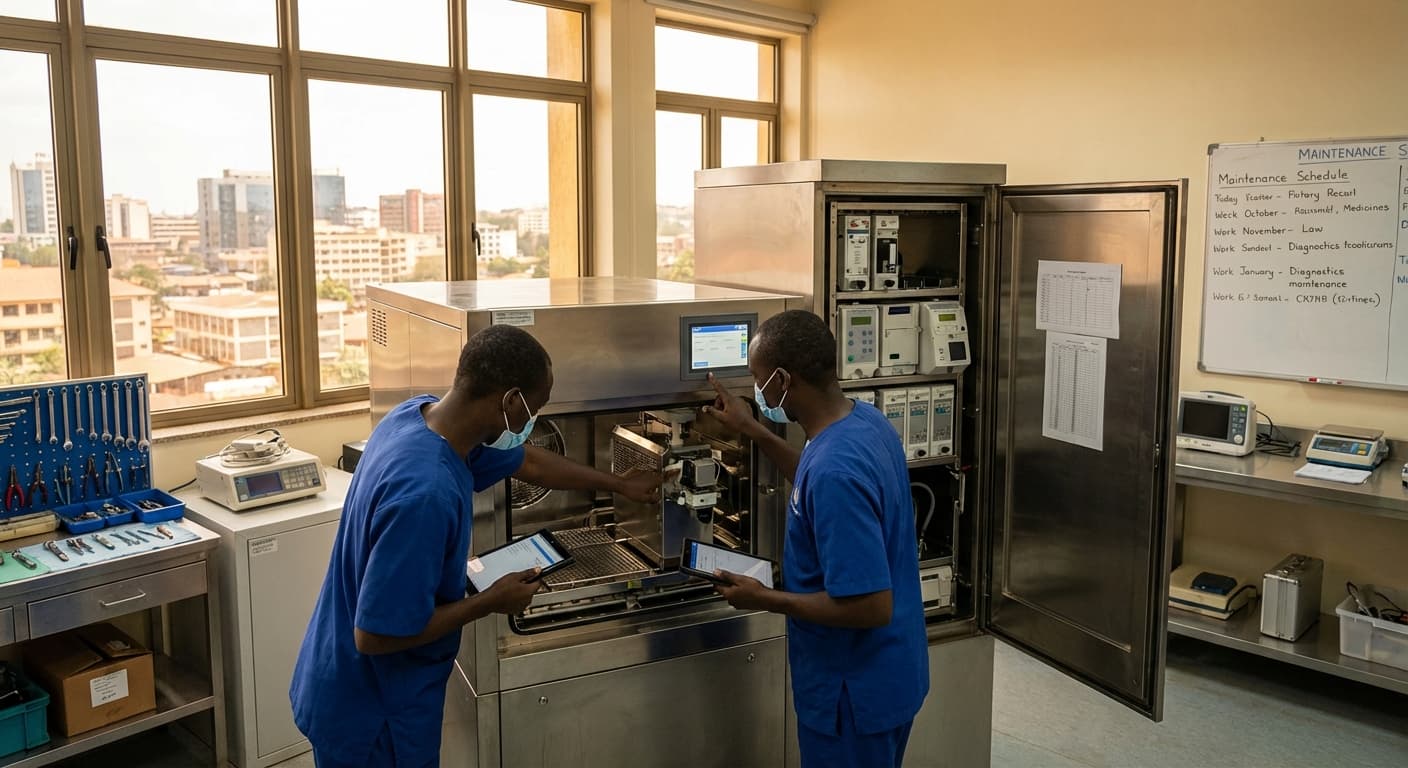
Total Cost of Ownership (TCO) & Lifecycle Budgeting Service in Ghana
Engineering Excellence & Technical Support
Total Cost of Ownership (TCO) & Lifecycle Budgeting Service High-standard technical execution following OEM protocols and local regulatory frameworks.
Predictive Cost Analytics for Infrastructure Projects
Leverage advanced analytics to forecast lifecycle costs of infrastructure assets in Ghana, factoring in local inflation, maintenance cycles, and regulatory changes. Our service provides data-driven insights for informed investment decisions and proactive risk mitigation, ensuring long-term asset viability and financial stability.
Optimized Maintenance & Operations Strategy Development
Implement data-driven maintenance strategies tailored for Ghana's operating environment. We analyze equipment performance, operational demands, and spare parts availability to design optimized maintenance schedules and resource allocation, minimizing downtime and reducing operational expenditures throughout the asset's lifecycle.
Lifecycle Budgeting for Sustainable Energy Investments
Develop comprehensive lifecycle budgets for renewable energy projects in Ghana, encompassing initial capital expenditure, operational costs, maintenance, decommissioning, and potential revenue streams. Our service ensures financial sustainability, attracts investment, and maximizes return on investment by accounting for all cost factors over the project's lifespan.
What Is Total Cost Of Ownership (Tco) & Lifecycle Budgeting Service In Ghana?
Total Cost of Ownership (TCO) and Lifecycle Budgeting (LCB) services in Ghana provide a comprehensive framework for analyzing and managing the financial implications of an asset or investment throughout its entire lifespan. TCO quantifies all direct and indirect costs associated with acquiring, operating, maintaining, and disposing of an asset. LCB, on the other hand, extends this concept to strategic financial planning, enabling organizations to forecast and allocate budgets for all phases of an asset's lifecycle, from inception to retirement.
This service involves detailed cost breakdown, including initial capital expenditure (CAPEX), operational expenditure (OPEX) such as energy consumption, labor, consumables, and maintenance, as well as potential costs for upgrades, repairs, decommissioning, and disposal. It also considers intangible costs like downtime, risk, and residual value.
The primary objective is to enable informed decision-making by revealing the true economic impact of an investment beyond the initial purchase price. This holistic approach facilitates optimization, risk mitigation, and strategic resource allocation, ultimately driving long-term financial sustainability.
| Typical Use Cases | Description of Application | Key Benefits |
|---|---|---|
| Capital Project Evaluation & Justification: | Assessing the long-term financial viability of new infrastructure or major asset acquisitions (e.g., power plants, industrial machinery, large-scale IT systems). | Provides a robust business case for investment, enabling comparison of different project alternatives based on total economic impact. Identifies the most cost-effective solutions over the asset's lifespan. |
| Asset Procurement & Vendor Selection: | Evaluating bids from suppliers not just on initial purchase price, but on the complete cost of ownership, including maintenance, energy consumption, and expected lifespan (e.g., choosing a fleet of vehicles or industrial equipment). | Leads to the selection of assets with lower TCO, reducing long-term operational expenses and maximizing return on investment (ROI). Prevents 'hidden' costs from impacting budgets later. |
| Operational Efficiency Improvement: | Analyzing the cost drivers of existing assets to identify areas for optimization, such as reducing energy consumption, improving maintenance schedules, or extending asset life through proactive interventions (e.g., optimizing building energy management systems). | Drives cost savings through operational enhancements, improved asset performance, and reduced waste. Facilitates data-driven decision-making for operational strategies. |
| Strategic Financial Planning & Budgeting: | Forecasting future capital expenditures and operational costs associated with managing an organization's asset portfolio over multiple fiscal periods (e.g., long-term infrastructure replacement plans). | Enables accurate long-term budgeting, prevents unexpected financial shortfalls, and supports strategic resource allocation. Improves fiscal discipline and long-term financial stability. |
| Risk Management & Decommissioning Planning: | Identifying potential risks and associated costs throughout an asset's lifecycle, including obsolescence, regulatory changes, and end-of-life disposal expenses (e.g., planning for the decommissioning of an industrial facility). | Proactively addresses potential liabilities and financial risks. Ensures responsible and cost-effective asset retirement, minimizing environmental and financial impact. |
Who Needs TCO & Lifecycle Budgeting Services in Ghana?
- Public Sector Entities: Government agencies, ministries, and municipal authorities responsible for infrastructure projects (e.g., roads, water systems, power generation), public transportation, and public facilities. They require LCB for long-term capital planning and ensuring the fiscal responsibility of public assets.
- Private Sector Corporations: Large enterprises across various industries, including manufacturing, mining, oil & gas, telecommunications, and construction. These entities often manage significant capital assets and require TCO/LCB to optimize operational efficiency, manage procurement, and control expenditure.
- Real Estate Developers & Property Managers: Organizations involved in developing, owning, and managing commercial, residential, or industrial properties. TCO/LCB helps in assessing the profitability of developments and managing ongoing operational costs.
- Utility Companies: Power, water, and gas utilities that invest heavily in long-lived infrastructure. TCO/LCB is crucial for asset management, regulatory compliance, and long-term financial planning.
- Transportation & Logistics Companies: Businesses operating fleets of vehicles, ships, or aircraft. TCO/LCB is essential for optimizing fleet acquisition, maintenance, fuel efficiency, and replacement cycles.
- Information Technology (IT) Departments & Procurement Teams: For managing hardware, software, and IT infrastructure investments. TCO/LCB helps in understanding the total cost of ownership for IT solutions, including licensing, support, maintenance, and upgrades.
- Financial Institutions & Investors: To evaluate the financial viability and risk associated with investments in capital-intensive projects or assets.
Who Needs Total Cost Of Ownership (Tco) & Lifecycle Budgeting Service In Ghana?
In Ghana's evolving economic landscape, businesses and organizations across various sectors are increasingly recognizing the strategic importance of meticulously managing their expenditures beyond the initial purchase price. This is where a Total Cost of Ownership (TCO) and Lifecycle Budgeting service becomes invaluable. TCO accounts for all direct and indirect costs associated with an asset or project throughout its entire lifespan, from acquisition and operation to maintenance, repair, and eventual disposal. Lifecycle budgeting extends this concept to a broader organizational or project scope, ensuring that long-term financial sustainability is integrated into strategic decision-making. Understanding and implementing TCO and lifecycle budgeting allows Ghanaian entities to make more informed investment choices, optimize resource allocation, mitigate risks, and ultimately achieve greater financial efficiency and profitability.
| Target Customer Segment | Key Departments/Roles | Why TCO/Lifecycle Budgeting is Crucial |
|---|---|---|
| Manufacturing & Industrial Sector | Operations Management, Finance Department, Procurement, Engineering | Optimizing machinery lifespan, minimizing downtime, predicting maintenance costs, making informed capital expenditure decisions. |
| Telecommunications & IT Companies | IT Management, Network Operations, Finance, Procurement, Project Management | Managing the total cost of infrastructure, software licenses, upgrades, maintenance, and eventual decommissioning of IT assets. |
| Mining & Extractive Industries | Operations Management, Asset Management, Finance, Procurement, Environmental Health & Safety | Accurate forecasting of operating expenses for heavy machinery, exploration equipment, and environmental compliance over many years. |
| Construction & Real Estate Development | Project Management, Finance, Procurement, Facilities Management | Understanding the long-term costs of buildings, infrastructure, and project assets, including maintenance, energy consumption, and repairs. |
| Transportation & Logistics Companies | Fleet Management, Operations Management, Finance, Procurement | Analyzing the complete cost of vehicles (purchase, fuel, maintenance, insurance, resale value) for optimal fleet composition and replacement strategies. |
| Energy & Utilities Sector | Asset Management, Operations, Finance, Engineering, Regulatory Affairs | Planning for the extensive lifespan costs of power plants, distribution networks, and related infrastructure, including upgrades and decommissioning. |
| Government & Public Sector Agencies | Budget Office, Procurement Departments, Asset Management Units, Ministry of Finance | Ensuring responsible allocation of public funds, long-term asset sustainability, and efficient service delivery by understanding the full cost of public infrastructure and services. |
| Financial Services & Banking | Risk Management, Investment Analysis, Finance, IT Department | Evaluating the long-term financial viability of investments, loans, and IT infrastructure, factoring in all associated costs and potential future expenses. |
Who Needs TCO & Lifecycle Budgeting Service in Ghana?
- Organizations with significant capital investments in assets (machinery, vehicles, IT infrastructure).
- Companies undertaking large-scale projects with long-term operational and maintenance implications.
- Government agencies and public sector bodies managing public funds and assets.
- Financial institutions evaluating investments and loan portfolios.
- Service providers offering solutions with ongoing operational components.
- Businesses aiming for enhanced financial planning and risk management.
- Companies undergoing digital transformation or major infrastructure upgrades.
- Entities focused on sustainability and environmental impact alongside financial costs.
Total Cost Of Ownership (Tco) & Lifecycle Budgeting Service Process In Ghana
This document outlines the workflow for our Total Cost of Ownership (TCO) & Lifecycle Budgeting Service Process in Ghana, from initial inquiry through to the final execution of the service. Our approach is designed to be transparent, collaborative, and tailored to the specific needs of Ghanaian businesses and organizations. We aim to provide a comprehensive understanding of the long-term financial implications of assets and projects, enabling informed decision-making and optimized resource allocation.
| Stage | Description | Key Activities | Deliverables | Typical Timeline (Ghana Context) |
|---|---|---|---|---|
| The client expresses interest in our TCO & Lifecycle Budgeting services. | Initial phone call or meeting to understand the client's needs, objectives, and the scope of potential engagement. Discussing the benefits of TCO and lifecycle budgeting in the Ghanaian economic context. | Understanding of client needs, preliminary assessment of suitability. | 1-3 Business Days |
| Formalizing the service offering based on the initial consultation. | Detailed discussion to define project scope, specific assets/projects to be analyzed, data requirements, desired outcomes, and key performance indicators (KPIs). Development of a tailored service proposal outlining methodology, timelines, deliverables, and fees. | Detailed Service Proposal, Scope of Work Document. | 3-7 Business Days |
| Formalizing the engagement and outlining terms and conditions. | Review and negotiation of the service proposal. Signing of a formal Service Level Agreement (SLA) or contract. Establishment of communication protocols and point persons. | Signed Service Agreement/Contract, Payment Schedule. | 2-5 Business Days |
| Gathering all necessary information for TCO and lifecycle budgeting. | Collaborating with the client to collect historical and projected data including acquisition costs, operational expenses (energy, maintenance, labor), disposal costs, salvage value, inflation rates, discount rates, and any relevant Ghanaian economic factors (e.g., import duties, local taxes, currency fluctuations). Data validation and quality assurance. | Organized and validated dataset, Preliminary insights. | 1-4 Weeks (dependent on data availability and complexity) |
| Building the financial model for analysis. | Utilizing specialized software and financial modeling techniques to develop the TCO and lifecycle budget model. Incorporating all gathered data, assumptions, and Ghanaian economic specificities. Running sensitivity analyses. | Draft TCO & Lifecycle Budget Model, Scenario analyses. | 2-4 Weeks |
| Presenting the draft model and findings for client input. | Conducting a workshop with key client stakeholders to present the draft TCO & lifecycle budget model, its assumptions, and initial findings. Gathering feedback, clarifying queries, and making necessary adjustments. | Feedback incorporation, Model refinement. | 1-3 Business Days |
| Delivering the comprehensive analysis and recommendations. | Finalizing the TCO and lifecycle budget report, including detailed analysis, key findings, strategic recommendations, and risk assessments. Presenting the final report and model to client management, highlighting actionable insights for decision-making within the Ghanaian business environment. | Final TCO & Lifecycle Budget Report, Executive Presentation. | 3-5 Business Days |
| Assisting the client in acting on the insights. | Providing ongoing support for the implementation of recommendations. This could include assisting with procurement strategies, maintenance planning, or financial forecasting based on the TCO model. Periodic monitoring of asset performance against the lifecycle budget. | Implementation guidance, Performance tracking reports. | Ongoing (as per agreement) |
| Evaluating the service and identifying areas for improvement. | Conducting a final review meeting to gather client feedback on the service process, deliverables, and overall satisfaction. Identifying lessons learned and potential areas for future collaboration. This helps us continually improve our service delivery in Ghana. | Client satisfaction survey, Lessons learned document. | 1-2 Business Days |
Service Workflow Stages
- Inquiry & Initial Consultation
- Scope Definition & Proposal Development
- Agreement & Contract Finalization
- Data Collection & Analysis
- TCO & Lifecycle Budget Model Development
- Review & Validation Workshop
- Final Report & Presentation
- Implementation Support & Monitoring (Optional)
- Post-Service Review & Feedback
Total Cost Of Ownership (Tco) & Lifecycle Budgeting Service Cost In Ghana
Understanding the Total Cost of Ownership (TCO) and Lifecycle Budgeting for services in Ghana is crucial for effective financial planning and decision-making. TCO encompasses all direct and indirect costs associated with acquiring, implementing, operating, maintaining, and disposing of a service over its entire lifespan. Lifecycle budgeting, by extension, integrates these TCO considerations into the long-term financial projections of an organization or project. In Ghana, the pricing of these services is influenced by a variety of factors, leading to a diverse range of costs.
| Service Type | Estimated Price Range (GHS) | Typical Engagement Size/Complexity |
|---|---|---|
| Initial TCO Assessment (Single Service/Asset) | 2,000 - 8,000 | Small to medium-sized services or assets; standard data availability. |
| Comprehensive TCO Analysis (Multiple Services/Assets) | 7,000 - 25,000+ | Multiple interconnected services or significant assets; requires detailed data gathering and analysis. |
| Lifecycle Budgeting Strategy Development | 10,000 - 30,000+ | Developing long-term financial models; integration with organizational strategy. |
| Ongoing TCO Monitoring & Management (Annual Retainer) | 5,000 - 20,000+ per year | Continuous tracking and reporting of TCO for a portfolio of services/assets. |
| Specialized TCO for Capital Projects (e.g., Infrastructure) | 20,000 - 100,000+ (Project-dependent) | Large-scale projects with long lifecycles and significant investment. |
| TCO Training Workshops (Per Session/Participant) | 1,500 - 5,000 per session | Training for internal teams on TCO principles and methodologies. |
Key Pricing Factors for TCO & Lifecycle Budgeting Services in Ghana
- Scope and Complexity of the Service: The more intricate and extensive the service requiring TCO analysis, the higher the consultant fees will be. This includes the number of assets/services to be evaluated, the depth of analysis required (e.g., detailed breakdown of operational costs, environmental impact, etc.), and the level of customization needed.
- Data Availability and Quality: The ease with which reliable data can be accessed and verified significantly impacts pricing. If extensive data collection or validation is required, it will increase the time and resources needed, thus raising costs.
- Consultant's Expertise and Reputation: Highly experienced consultants or well-established firms with a proven track record in TCO and lifecycle budgeting in Ghana will command higher fees. Their specialized knowledge and ability to deliver accurate and actionable insights are valuable.
- Duration of the Engagement: Longer-term engagements for ongoing lifecycle management and regular TCO reviews will naturally have a higher overall cost than a one-off TCO assessment.
- Industry and Sector: Certain industries in Ghana (e.g., mining, oil & gas, large-scale manufacturing) often have more complex and higher-value assets/services, leading to more substantial TCO considerations and potentially higher service costs.
- Geographic Location within Ghana: While less of a primary driver, if the service engagement requires significant travel and accommodation within Ghana (e.g., to remote operational sites), these logistics costs can be factored into the overall pricing.
- Reporting and Deliverable Requirements: The format and detail of the final reports and deliverables can influence pricing. Comprehensive, multi-format reports with detailed dashboards and presentations will cost more than a basic summary.
- Technology and Tools Used: Consultants utilizing advanced TCO software or specialized analytical tools may have higher base costs, but can often deliver more efficient and insightful analyses.
Affordable Total Cost Of Ownership (Tco) & Lifecycle Budgeting Service Options
Our Affordable Total Cost of Ownership (TCO) & Lifecycle Budgeting services empower organizations to gain complete financial visibility and control over their assets throughout their entire lifespan. We go beyond initial purchase price to encompass all direct and indirect costs, from acquisition and operation to maintenance, upgrades, and eventual disposal. Our value proposition lies in providing strategic insights and practical solutions that significantly reduce your long-term expenditures. We offer flexible service bundles tailored to your specific needs and deliver cost-saving strategies that ensure maximum return on investment.
| Value Bundle | Description | Key Inclusions | Target Audience | Estimated Cost Savings Potential |
|---|---|---|---|---|
| Essential TCO Analysis | Provides a foundational understanding of the true cost of key assets. | Initial TCO calculation for selected assets, operational cost breakdown, basic maintenance cost projection. | Small to medium-sized businesses, individual departments. | 5-10% |
| Comprehensive Lifecycle Budgeting | Encompasses full lifecycle cost management and strategic planning. | Detailed TCO analysis, predictive maintenance planning, upgrade/replacement strategy, disposal cost optimization, risk assessment. | Medium to large enterprises, government agencies, organizations with significant asset portfolios. | 10-20% |
| Strategic Asset Optimization | Focuses on maximizing asset value and minimizing costs through proactive management. | All inclusions of Comprehensive Lifecycle Budgeting, plus performance benchmarking, energy efficiency analysis, vendor negotiation support, technology adoption strategy. | Organizations seeking to achieve industry-leading operational efficiency and cost leadership. | 15-25%+ |
| Custom TCO & Budgeting Solutions | Tailored services to address unique organizational challenges and specific asset types. | Bespoke analysis, specialized industry cost modeling, integration with existing financial systems, ongoing advisory services. | Organizations with highly specialized assets or complex operational environments. | Varies based on scope and complexity |
Key Benefits of Our TCO & Lifecycle Budgeting Services
- Enhanced Financial Predictability and Control
- Optimized Asset Performance and Longevity
- Reduced Operational and Maintenance Expenses
- Informed Decision-Making for Capital Investments
- Minimized Risk of Unexpected Costs
- Improved Resource Allocation and Budget Accuracy
- Extended Asset Lifespans and Higher Residual Values
- Streamlined Procurement and Disposal Processes
Verified Providers In Ghana
Navigating Ghana's healthcare landscape can be daunting, but with verified providers, patients gain access to reliable and high-quality care. Franance Health stands out as a premier choice due to its rigorous credentialing process and commitment to patient well-being. This dedication ensures that all affiliated healthcare professionals and facilities meet stringent standards for expertise, ethics, and operational excellence. Choosing Franance Health means opting for peace of mind, knowing you are in the hands of trusted and qualified medical practitioners.
| Provider Type | Franance Health Verification Criteria | Benefits for Patients |
|---|---|---|
| Doctors (Specialists & General Practitioners) | Valid medical license, postgraduate qualifications, proven experience, adherence to ethical guidelines, continuous professional development. | Accurate diagnosis, effective treatment plans, expert medical advice, access to specialized procedures. |
| Hospitals & Clinics | Accreditation by relevant health bodies, adherence to safety protocols, availability of essential medical equipment, qualified nursing and support staff, efficient administrative processes. | Safe and sterile environment, access to advanced medical technology, comprehensive care under one roof, timely medical attention. |
| Laboratories & Diagnostic Centers | Accreditation, certified technicians, up-to-date equipment, quality control measures, timely and accurate reporting of results. | Reliable diagnostic testing, precise medical insights, quick turnaround for results, informed treatment decisions. |
| Pharmacies | Valid operating license, qualified pharmacists, proper storage of medications, availability of a wide range of pharmaceuticals, adherence to dispensing regulations. | Access to genuine medications, expert advice on drug usage and interactions, safe and responsible dispensing practices. |
Why Franance Health Providers are the Best Choice in Ghana
- Rigorous Credentialing: Franance Health meticulously vets all its healthcare providers, ensuring they meet the highest standards of medical expertise and ethical practice.
- Commitment to Quality: Affiliated providers are dedicated to delivering exceptional patient care, focusing on accurate diagnosis, effective treatment, and patient safety.
- Comprehensive Network: Access a wide range of specialists and facilities across Ghana, covering various medical needs.
- Patient-Centric Approach: Franance Health prioritizes patient experience, ensuring clear communication, personalized care plans, and a comfortable healthcare journey.
- Trust and Reliability: By choosing Franance Health, you are aligning with a network known for its integrity and dependable healthcare services.
Scope Of Work For Total Cost Of Ownership (Tco) & Lifecycle Budgeting Service
This Scope of Work (SOW) outlines the services to be provided for the Total Cost of Ownership (TCO) and Lifecycle Budgeting Service. The objective is to establish a comprehensive understanding of all costs associated with an asset or project from acquisition through disposal, enabling informed decision-making and effective financial planning.
| Phase | Key Activities | Technical Deliverables | Standard Specifications |
|---|---|---|---|
| Phase 1: Planning & Data Gathering | Define TCO/Lifecycle scope and objectives. Identify key stakeholders. Gather historical cost data, operational data, and relevant market information. Define cost categories and sub-categories. | TCO Framework Document, Stakeholder Analysis Report, Data Requirements Specification, Cost Category Taxonomy. | Document outlining clear project goals. Comprehensive list of relevant stakeholders. Detailed list of data points required for analysis. Standardized classification of all cost elements (e.g., CAPEX, OPEX, disposal). |
| Phase 2: Cost Modeling & Analysis | Develop TCO models. Analyze acquisition costs, operational costs (including maintenance, energy, labor), support costs, and end-of-life costs (disposal, decommissioning). Perform sensitivity analysis and scenario planning. | TCO Model(s), Lifecycle Cost Breakdown Report, Sensitivity Analysis Report, Risk Assessment Report. | Parametric models, spreadsheet-based models, or specialized TCO software. Detailed breakdown of costs by lifecycle stage and category. Analysis of impact of variable cost drivers. Identification of potential cost overruns and mitigation strategies. |
| Phase 3: Budgeting & Forecasting | Establish baseline lifecycle budgets. Develop multi-year budget forecasts. Integrate TCO findings into capital and operational budgeting processes. Identify cost optimization opportunities. | Lifecycle Budget Report, Multi-Year Financial Forecast, Cost Optimization Recommendations Report. | Detailed budget outlining projected expenditures for each lifecycle stage. Projections aligned with strategic planning cycles. Actionable strategies for reducing costs without compromising performance or quality. |
| Phase 4: Reporting & Recommendation | Present TCO and lifecycle budget findings to stakeholders. Provide strategic recommendations for asset acquisition, management, and disposal. Develop performance metrics for ongoing cost monitoring. | Final TCO & Lifecycle Budgeting Report, Executive Summary Presentation, Performance Monitoring Metrics. | Comprehensive report detailing methodology, findings, and recommendations. Clear and concise presentation of key insights. Measurable indicators for tracking actual costs against budget. |
| Phase 5: Implementation Support (Optional) | Assist in the implementation of recommended cost optimization strategies. Provide ongoing support for TCO model maintenance and updates. Facilitate training for internal teams on TCO principles. | Implementation Plan, TCO Model Update Log, Training Materials. | Detailed plan for executing cost-saving initiatives. Documentation of changes and refinements to the TCO model. User-friendly materials for knowledge transfer and capacity building. |
Service Overview
- Develop and implement a robust TCO and Lifecycle Budgeting framework.
- Identify and quantify all direct and indirect costs across the entire lifecycle.
- Provide actionable insights for cost optimization and risk mitigation.
- Establish baseline budgets and forecast future expenditures.
- Support strategic asset management and investment decisions.
Service Level Agreement For Total Cost Of Ownership (Tco) & Lifecycle Budgeting Service
This Service Level Agreement (SLA) outlines the response times and uptime guarantees for the Total Cost of Ownership (TCO) & Lifecycle Budgeting Service provided by [Your Company Name]. This service aims to provide clients with accurate, actionable insights into the financial implications of their assets throughout their entire lifecycle, enabling informed decision-making and optimized resource allocation.
| Service Component | Response Time Commitment | Uptime Guarantee | Definition of Incident Severity |
|---|---|---|---|
| Platform Access & Availability | N/A (Continuous) | 99.9% uptime per calendar month | Platform is inaccessible or significantly degraded preventing users from accessing core TCO/budgeting features. |
| New TCO Analysis Request (Standard) | Within 4 business hours | N/A | A request for a standard TCO analysis for an asset or project not previously analyzed or requiring significant updates. |
| New TCO Analysis Request (Complex) | Within 8 business hours | N/A | A request for a TCO analysis involving multiple variables, extensive data collection, or novel asset types. |
| Lifecycle Budget Model Update Request | Within 2 business days | N/A | A request to update or modify an existing lifecycle budget model based on new data or changed assumptions. |
| Data Inquiry/Clarification | Within 1 business day | N/A | A request for clarification on TCO data points, assumptions, or calculation methodologies. |
| Urgent Support Request (Critical Issue) | Within 1 hour | N/A | A situation where core TCO/budgeting functionality is completely unavailable, impacting critical business operations and decision-making. |
| General Inquiry/Consultation | Within 2 business days | N/A | Requests for general advice, strategic guidance, or discussion on TCO/lifecycle budgeting best practices. |
Scope of Service
- Provision of TCO analysis and reporting.
- Development and maintenance of lifecycle budget models.
- Regular updates and reviews of TCO data and budget forecasts.
- Consultation and support regarding TCO and lifecycle budgeting strategies.
- Access to the TCO & Lifecycle Budgeting Service platform (if applicable).
Frequently Asked Questions

Ready when you are
Let's scope your Total Cost of Ownership (TCO) & Lifecycle Budgeting Service in Ghana project in Ghana.

Scaling healthcare logistics and technical systems across the entire continent.