
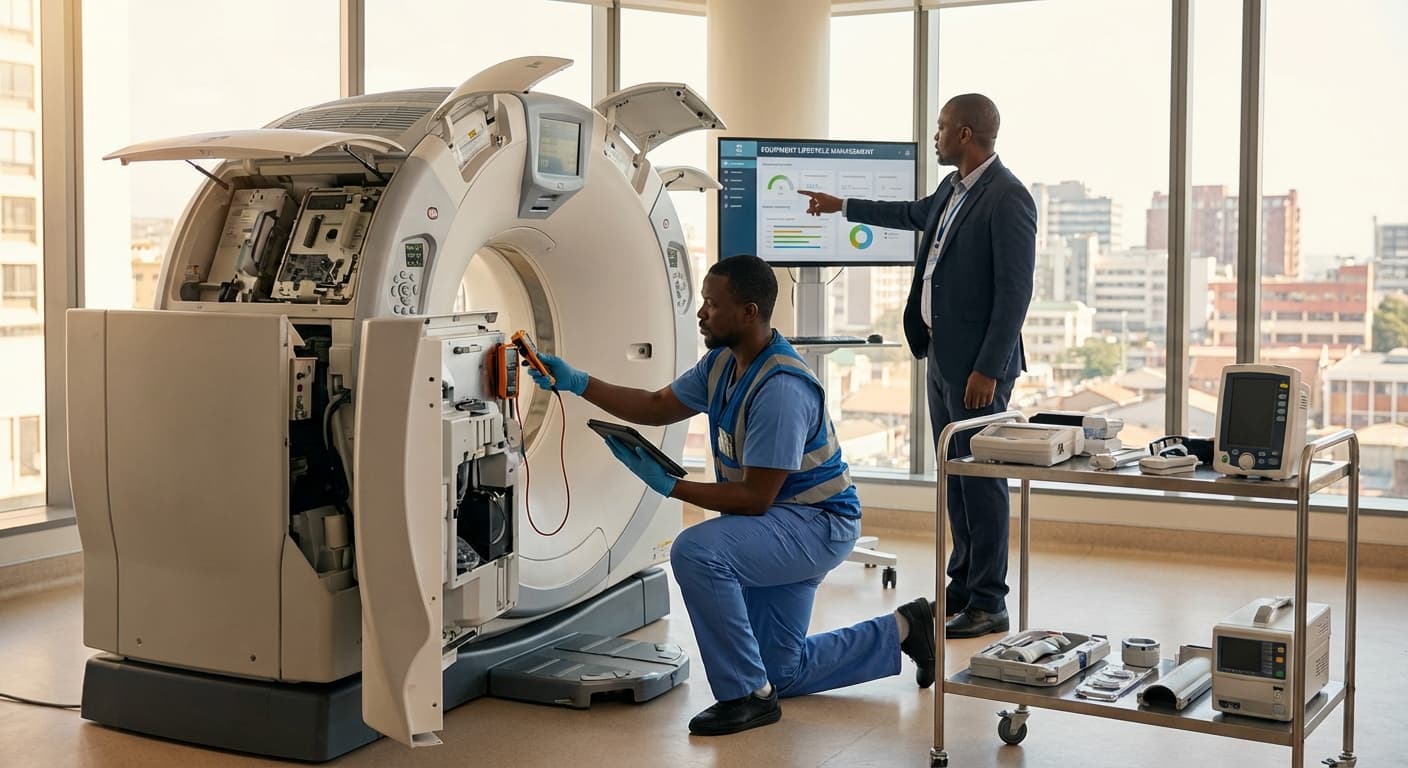
Equipment Replacement Planning & Obsolescence Strategy Service in Ghana
Engineering Excellence & Technical Support
Equipment Replacement Planning & Obsolescence Strategy Service High-standard technical execution following OEM protocols and local regulatory frameworks.
Proactive Asset Lifecycle Management for Ghana's Industrial Backbone
Our service empowers Ghanaian industries to transition from reactive maintenance to a sophisticated, data-driven asset lifecycle management approach. We provide comprehensive analysis of your equipment's condition, performance history, and remaining useful life, enabling strategic replacements and minimizing costly downtime.
Mitigating Obsolescence Risks: Safeguarding Ghana's Operational Continuity
We specialize in identifying and mitigating obsolescence risks for critical equipment across Ghana. Our advanced obsolescence mapping techniques assess component availability, manufacturer support, and potential supply chain disruptions, ensuring your operations remain resilient and competitive.
Optimized Capex & Opex: Driving Economic Efficiency in Ghana's Equipment Investments
Leveraging deep industry insights and predictive analytics, we deliver tailored equipment replacement plans that optimize both Capital Expenditure (Capex) and Operational Expenditure (Opex) for businesses in Ghana. Our strategies ensure you invest wisely, extend asset value, and achieve maximum return on your equipment portfolio.
What Is Equipment Replacement Planning & Obsolescence Strategy Service In Ghana?
Equipment Replacement Planning & Obsolescence Strategy Service in Ghana refers to a structured, proactive approach designed to manage the lifecycle of industrial and commercial assets. It encompasses the systematic evaluation of existing equipment's condition, performance, and remaining useful life, juxtaposed against the risks and costs associated with technological obsolescence. This service aims to optimize capital allocation by ensuring that equipment is replaced or upgraded at the most economically advantageous time, thereby minimizing operational disruptions, reducing unforeseen maintenance expenditures, and maintaining competitive technological parity. The service provides a framework for forecasting future needs, identifying emergent technologies, and developing mitigation strategies for end-of-life (EOL) and end-of-support (EOS) scenarios. It integrates financial analysis, risk assessment, and operational requirements to create a data-driven roadmap for asset management.
| Who Needs This Service? | Typical Use Cases in Ghana | |||||||
|---|---|---|---|---|---|---|---|---|
| Manufacturing Sector: Factories reliant on aging machinery, process control systems, and automation equipment. | Telecommunications Providers: Infrastructure components (e.g., switches, base stations, transmission equipment) facing technological obsolescence and capacity demands. | Energy and Utilities (Power Generation, Oil & Gas): Critical power plant equipment, distribution networks, and exploration/production assets with long lifecycles and high safety implications. | Mining Operations: Heavy machinery, processing plants, and exploration technology requiring regular upgrades for efficiency and safety. | Transportation and Logistics: Fleet management, rail infrastructure, and port equipment facing wear and tear, as well as evolving emission standards. | Healthcare Sector: Diagnostic imaging equipment, laboratory instruments, and patient monitoring systems with rapid technological advancements and stringent regulatory requirements. | Public Infrastructure: Water treatment plants, waste management facilities, and municipal vehicle fleets requiring long-term planning for replacement and modernization. | Large-Scale Agricultural Operations: Mechanization, irrigation systems, and processing equipment. | |
| Reducing Downtime: Proactively identifying and replacing equipment nearing EOL to prevent unexpected breakdowns and production stoppages in manufacturing and mining. | Ensuring Regulatory Compliance: Upgrading older emission-spewing vehicles or outdated safety systems in transportation and industrial settings. | Improving Operational Efficiency: Replacing inefficient legacy machinery with modern, energy-saving, and higher-output alternatives in energy-intensive industries. | Mitigating Cybersecurity Risks: Replacing outdated IT infrastructure and control systems that may no longer receive security patches in telecommunications and financial services. | Maintaining Competitive Advantage: Adopting newer technologies that offer enhanced capabilities or lower operating costs in sectors like telecommunications and manufacturing. | Optimizing Capital Expenditure: Developing phased replacement plans to smooth out capital outflow and avoid large, infrequent expenditures. | Securing Spare Parts: Planning for obsolescence of critical components to ensure continued maintenance and availability of spare parts, especially for specialized or older equipment. | Strategic Technology Adoption: Identifying opportunities to integrate newer technologies that can drive innovation and create new revenue streams. | Asset Decommissioning and Disposal: Planning for the safe and environmentally responsible disposal or sale of obsolete assets. |
Key Components of the Service
- Asset Inventory and Condition Assessment: Detailed cataloging of all relevant equipment, including specifications, installation dates, operational history, and current condition (e.g., through NDT, performance monitoring).
- Performance and Reliability Analysis: Evaluation of historical performance data, failure rates, and mean time between failures (MTBF) to predict future reliability.
- Obsolescence Risk Assessment: Identification of components, software, or entire systems at risk of becoming obsolete due to vendor support discontinuation, lack of spare parts, or technological advancements.
- Remaining Useful Life (RUL) Estimation: Application of predictive modeling techniques (e.g., Weibull analysis, prognostic health management) to estimate the functional lifespan of equipment.
- Total Cost of Ownership (TCO) Analysis: Comprehensive evaluation of all costs associated with owning and operating equipment, including acquisition, installation, maintenance, energy consumption, and disposal.
- Technology Scouting and Forecasting: Research and analysis of emerging technologies and their potential impact on existing and future operational requirements.
- Replacement/Upgrade Strategy Development: Formulation of tailored strategies, including phased replacement schedules, refurbishment options, and capital investment planning.
- Risk Mitigation Planning: Development of contingency plans for dealing with obsolescence-related disruptions, such as sourcing alternative components or implementing workaround solutions.
- Financial Modeling and Justification: Development of business cases and financial models to support capital expenditure requests for equipment replacement or upgrades.
- Implementation and Monitoring: Overseeing the execution of the replacement plan and establishing ongoing monitoring mechanisms.
Who Needs Equipment Replacement Planning & Obsolescence Strategy Service In Ghana?
Equipment Replacement Planning & Obsolescence Strategy Services are crucial for organizations in Ghana that rely on physical assets to operate and generate revenue. These services help businesses proactively manage their equipment lifecycle, minimizing disruptions, optimizing costs, and mitigating risks associated with aging or outdated technology. The primary need stems from the desire to avoid costly breakdowns, ensure operational efficiency, maintain competitiveness, and comply with evolving standards and regulations.
| Target Customer Segment | Key Departments Requiring the Service |
|---|---|
| Manufacturing | Operations Management, Engineering, Maintenance, Procurement, Finance, IT |
| Mining & Extractive Industries | Operations, Mine Engineering, Maintenance, Asset Management, Supply Chain, Finance |
| Oil & Gas | Asset Integrity, Operations, Maintenance & Reliability, Engineering, Procurement, Finance |
| Utilities | Network Operations, Engineering, Maintenance, Asset Management, Customer Service, Finance |
| Transportation & Logistics | Fleet Management, Operations, Maintenance, Engineering, Supply Chain, Finance |
| Healthcare | Medical Equipment Management, Facilities Management, Procurement, Finance, IT |
| Agriculture & Agribusiness | Farm Operations, Processing Plant Management, Maintenance, Procurement, Finance |
| Construction & Infrastructure | Project Management, Plant & Equipment Management, Maintenance, Procurement, Finance |
| Government & Public Sector | Asset Management, Public Works, Procurement, Finance, IT, Defense Procurement |
| Large Commercial Enterprises | Facilities Management, Operations, Procurement, Finance, IT |
Target Customers in Ghana
- Manufacturing Companies (Food & Beverage, Textiles, Automotive, Pharmaceuticals, etc.)
- Mining & Extractive Industries
- Oil & Gas Sector
- Utilities (Electricity, Water, Telecommunications)
- Transportation & Logistics Firms (Aviation, Shipping, Road Freight)
- Healthcare Institutions (Hospitals, Clinics)
- Agriculture & Agribusiness
- Construction & Infrastructure Development Companies
- Government & Public Sector Agencies (Defense, Public Works)
- Large Commercial Enterprises with significant physical assets (e.g., hotels, large retail chains)
Equipment Replacement Planning & Obsolescence Strategy Service Process In Ghana
This document outlines the Equipment Replacement Planning & Obsolescence Strategy Service process for clients in Ghana, detailing the workflow from initial inquiry to final execution. The service aims to help organizations proactively manage their asset lifecycle, mitigate risks associated with outdated equipment, and optimize capital expenditure. The process is designed to be transparent, collaborative, and tailored to the specific needs of each client.
| Stage | Description | Key Activities | Deliverables | Ghana-Specific Considerations |
|---|---|---|---|---|
| Inquiry & Initial Consultation | The client expresses interest in the service. This stage involves understanding their general challenges and objectives. | Initial contact (phone, email, website form), brief discussion of needs, introduction to the service. | Understanding of client's general situation, confirmation of service relevance. | Understanding of local business context, language nuances, and potential initial communication barriers. |
| Needs Assessment & Scope Definition | A detailed understanding of the client's current equipment landscape, operational requirements, and strategic goals is established. | On-site/virtual meetings, interviews with key stakeholders (operations, finance, procurement), review of existing asset registers, definition of specific equipment categories to be covered, identification of key performance indicators (KPIs) for success. | Detailed needs assessment report, agreed-upon scope of work, defined objectives and KPIs. | Understanding of prevalent industries and equipment types in Ghana, awareness of common operational challenges in the local environment. |
| Data Collection & Analysis | Comprehensive data related to the client's equipment is gathered and analyzed to identify obsolescence risks and replacement needs. | Gathering data on equipment age, maintenance history, performance metrics, warranty status, manufacturer support availability, current market value, operational criticality, and relevant regulatory requirements. Analyzing data for trends, failure rates, cost of ownership, and obsolescence indicators. | Comprehensive equipment data report, obsolescence risk assessment, preliminary replacement cost estimates. | Access to relevant local industry standards and regulations, availability of data from local suppliers and service providers. |
| Strategy Development & Recommendation | Based on the analysis, a tailored equipment replacement and obsolescence management strategy is developed. | Developing a phased replacement plan, identifying preferred suppliers and technologies, recommending maintenance optimization strategies, exploring leasing vs. purchasing options, developing a risk mitigation plan for critical equipment. | Detailed Equipment Replacement Plan, Obsolescence Management Strategy, Prioritized Replacement Schedule, Budgetary Recommendations. | Considering import duties, local availability of spare parts and skilled technicians, currency fluctuations, and geopolitical stability. |
| Proposal & Agreement | A formal proposal is presented to the client, outlining the recommended strategy, timelines, costs, and contractual terms. | Presentation of the developed strategy and recommendations, discussion of the proposal, negotiation of terms, signing of the service agreement. | Formal Service Proposal, Signed Service Agreement. | Ensuring payment terms and currency align with local business practices, clarity on legal and contractual obligations within Ghana. |
| Execution & Implementation | The agreed-upon replacement and obsolescence strategies are put into action. | Procurement of new equipment, decommissioning of old equipment, installation and commissioning of new assets, training of personnel, implementation of new maintenance procedures, management of vendor relationships. | Completed equipment replacements, updated asset register, implemented new processes and procedures. | Coordination with local logistics and transportation, engagement with local certified technicians for installation and maintenance, adherence to Ghanaian import and customs regulations. |
| Monitoring & Review | Ongoing monitoring of the implemented strategy and regular reviews to ensure continued effectiveness and make adjustments as needed. | Performance tracking against KPIs, periodic review meetings with the client, assessment of equipment performance and obsolescence trends, recommending further optimizations or strategic adjustments. | Performance reports, updated recommendations, ongoing strategic advisory. | Regular communication channels that work effectively in Ghana, understanding of evolving local economic and technological landscape. |
Service Workflow Stages
- Inquiry & Initial Consultation
- Needs Assessment & Scope Definition
- Data Collection & Analysis
- Strategy Development & Recommendation
- Proposal & Agreement
- Execution & Implementation
- Monitoring & Review
Equipment Replacement Planning & Obsolescence Strategy Service Cost In Ghana
Planning for equipment replacement and developing obsolescence strategies are critical for businesses in Ghana to maintain operational efficiency, manage risk, and optimize capital expenditure. The cost of such a service can vary significantly based on several factors, making it essential for companies to understand these elements to budget effectively. This discussion outlines the key pricing factors and provides estimated cost ranges in Ghanaian Cedi (GHS).
| Service Component | Estimated Cost Range (GHS) | Notes |
|---|---|---|
| Initial Asset Audit & Data Collection (Per Asset/Category) | 50 - 300 GHS | Depends on complexity and data availability. May be part of a larger project fee. |
| Lifecycle Analysis & Obsolescence Forecasting (Per Asset/Category) | 70 - 400 GHS | Requires technical expertise and data modeling. |
| Risk Assessment & Mitigation Strategy Development | 1,000 - 5,000 GHS | Varies based on the number of identified risks and complexity of mitigation. |
| Replacement Planning & Budgeting (Strategic Level) | 2,000 - 15,000 GHS | For a department or a significant segment of assets. Includes financial modeling. |
| Comprehensive Obsolescence Strategy & Roadmap (Organizational) | 10,000 - 50,000+ GHS | For large organizations with diverse asset portfolios. Can be a multi-phase project. |
| Ongoing Advisory & Monitoring Services (Monthly) | 500 - 3,000 GHS | For continuous improvement and updates to the strategy. |
| Specialized Technical Assessment (e.g., for complex machinery) | 150 - 700 GHS (Per Assessment) | Additional fee for deep technical expertise on specific equipment. |
Key Pricing Factors for Equipment Replacement Planning & Obsolescence Strategy Services in Ghana:
- {"title":"Scope of Service:","description":"The breadth and depth of the engagement are primary drivers of cost. This includes whether the service covers a single piece of equipment, an entire department's assets, or the organization's complete fleet. A comprehensive audit of all assets, detailed lifecycle analysis, and complex risk assessments will naturally incur higher fees."}
- {"title":"Complexity of Equipment:","description":"Specialized, high-value, or technologically advanced equipment (e.g., industrial machinery, sophisticated medical devices, IT infrastructure) requires more expertise to assess, predict obsolescence, and plan replacements. The cost will reflect the specialized knowledge and tools needed for these assets."}
- {"title":"Number and Type of Assets:","description":"A larger asset inventory or a diverse range of equipment types will necessitate more extensive data collection, analysis, and reporting. The sheer volume of work directly impacts the consultant's time and resources."}
- {"title":"Data Availability and Quality:","description":"The ease with which service providers can access historical maintenance records, operational data, purchase history, and vendor information significantly influences costs. If extensive data cleanup or collection is required, fees will increase."}
- {"title":"Consultant's Expertise and Reputation:","description":"Highly experienced consultants or specialized firms with a proven track record in asset management and obsolescence planning will command higher fees. Their expertise often translates to more accurate strategies and better outcomes."}
- {"title":"Duration of Engagement:","description":"Whether the service is a one-off project, an ongoing advisory role, or a multi-year strategic planning initiative will affect the total cost. Longer engagements may offer a slightly lower per-unit rate but will have a higher overall price tag."}
- {"title":"Reporting and Deliverables:","description":"The level of detail in reports, the inclusion of detailed financial models, risk matrices, implementation roadmaps, and custom software solutions will influence the final cost."}
- {"title":"Location and Travel Expenses:","description":"If the service provider needs to travel extensively within Ghana to different operational sites, these logistical costs will be factored into the pricing."}
- {"title":"Technology and Tools Used:","description":"The use of advanced asset management software, predictive analytics tools, or simulation platforms by the service provider can add to the cost, but often provides more robust and accurate results."}
Affordable Equipment Replacement Planning & Obsolescence Strategy Service Options
Our Affordable Equipment Replacement Planning & Obsolescence Strategy Service provides proactive solutions to minimize downtime, reduce unexpected costs, and optimize your operational lifespan. By strategically planning for equipment replacement and mitigating the risks of obsolescence, we help you maintain peak performance and avoid costly emergencies. Our services are designed to be accessible and deliver significant return on investment through intelligent planning and resource allocation.
| Cost-Saving Strategy | Description | How Our Service Helps |
|---|---|---|
| Preventative Maintenance Integration: | Investing in regular maintenance significantly extends equipment lifespan and reduces the likelihood of premature failure. | Our planning incorporates optimal maintenance schedules and budgets, aligning them with replacement cycles to maximize equipment utility. |
| Bulk Purchasing & Negotiating Power: | Acquiring replacement equipment in larger quantities or strategically timing purchases can lead to volume discounts and better pricing. | We help aggregate future replacement needs, enabling stronger negotiation leverage and potentially securing better terms from vendors. |
| Phased Replacement & Upgrade Pathways: | Instead of waiting for total failure, strategically replacing or upgrading components can be more cost-effective than a full overhaul. | Our obsolescence strategy identifies components at risk and outlines cost-effective upgrade paths, delaying full replacement costs where feasible. |
| Reduced Emergency Repair Costs: | Unplanned equipment failures lead to expensive rush repairs, overtime, and lost productivity. | By identifying and planning for obsolescence, we significantly reduce the incidence of unexpected breakdowns and associated emergency costs. |
| Optimized Capital Allocation: | Spreading equipment replacement costs over a defined period, rather than facing large, infrequent capital expenditures, improves financial planning. | Our service provides clear, multi-year budget forecasts for equipment replacement, allowing for more efficient capital allocation and improved cash flow management. |
| Extended Equipment Utilization: | Maximizing the useful life of existing equipment before replacement minimizes the total cost of ownership. | We help implement strategies and identify maintenance needs that extend the operational life of your current assets, deferring capital outlay. |
| Minimizing Obsolescence Write-offs: | Holding outdated equipment that can no longer be supported or is inefficient incurs hidden costs and potential write-offs. | Our proactive obsolescence strategy identifies equipment at risk of becoming obsolete, allowing for planned retirement and replacement, avoiding costly write-offs. |
Value Bundles:
- Essential Planning Bundle: Ideal for organizations with a moderate equipment portfolio. Includes foundational obsolescence risk assessment, a basic replacement timeline, and a single budget projection. Focuses on identifying immediate threats and outlining a 3-5 year replacement roadmap.
- Strategic Advantage Bundle: Designed for growing businesses or those with complex equipment needs. Extends the Essential bundle with advanced risk modeling, multi-scenario replacement planning (e.g., phased vs. immediate), detailed cost-benefit analysis for upgrades, and integration with IT asset management. Offers a 5-7 year outlook.
- Total Lifecycle Management Bundle: Our most comprehensive offering, suited for large enterprises or organizations with critical, high-value equipment. Encompasses all elements of the Strategic Advantage bundle, plus proactive lifecycle management, vendor negotiation support for new equipment, end-of-life disposal planning, and ongoing performance monitoring. Provides a 7-10+ year strategic horizon.
- Customized Solution: For unique requirements, we offer bespoke service packages tailored to your specific industry, equipment types, and budget constraints. We can combine elements from our standard bundles or build a completely new solution.
Verified Providers In Ghana
In Ghana's evolving healthcare landscape, identifying reliable and qualified medical professionals is paramount for individuals seeking quality care. Verified providers, those who have undergone rigorous credentialing and adhere to established standards, offer peace of mind and a higher assurance of competence. Franance Health stands out as a premier platform dedicated to connecting Ghanaians with such verified providers. Their commitment to a stringent vetting process ensures that all listed healthcare professionals and facilities meet the highest benchmarks for expertise, ethical practice, and patient safety. Choosing a Franance Health verified provider means opting for transparency, accountability, and ultimately, the best possible healthcare outcomes.
| Feature | Benefit for Patients | Franance Health's Role |
|---|---|---|
| Credential Verification | Ensures providers meet essential qualifications and are legally permitted to practice. | Conducts thorough checks of licenses, certifications, and educational records. |
| Quality Assurance | Guarantees a higher standard of medical practice and patient care. | Assesses experience, specializations, and adherence to ethical codes. |
| Provider Accountability | Promotes responsible and professional conduct within the healthcare system. | Maintains a database of trusted providers and facilitates feedback mechanisms. |
| Informed Choice | Empowers patients to select the most suitable provider for their needs. | Provides detailed profiles and clear information about each verified provider. |
| Reduced Risk | Minimizes the chances of encountering unqualified or unethical practitioners. | Acts as a gatekeeper, ensuring only competent professionals are listed. |
Why Franance Health Verified Providers are the Best Choice:
- Rigorous Credentialing: Franance Health employs a multi-faceted verification process that scrutinizes professional licenses, certifications, educational background, and practice history of all listed providers.
- Commitment to Quality: Beyond basic qualifications, Franance Health assesses providers on their commitment to patient-centered care, continuous professional development, and adherence to ethical guidelines.
- Transparency and Trust: The platform provides users with clear information about a provider's qualifications and specializations, fostering an environment of trust and informed decision-making.
- Access to Expertise: By consolidating verified healthcare professionals, Franance Health simplifies the search for specialized medical services, connecting patients with the right expertise when they need it most.
- Enhanced Patient Safety: The verification process acts as a critical safeguard, minimizing the risk of encountering unqualified or substandard healthcare services.
- Streamlined Healthcare Navigation: Franance Health empowers individuals to navigate Ghana's healthcare system with confidence, knowing they are engaging with accredited and trustworthy practitioners.
Scope Of Work For Equipment Replacement Planning & Obsolescence Strategy Service
This Scope of Work (SOW) outlines the services to be provided for Equipment Replacement Planning & Obsolescence Strategy. The objective is to develop a comprehensive and sustainable strategy for managing equipment lifecycle, minimizing risks associated with obsolescence, and optimizing capital expenditure for replacements. This includes assessing current equipment inventory, identifying critical assets, forecasting future needs, and developing actionable replacement plans and obsolescence mitigation strategies.
| Technical Deliverable | Description | Standard Specification / Format |
|---|---|---|
| Equipment Inventory Database | A comprehensive database detailing all relevant equipment information, including condition assessments, maintenance history, and criticality ratings. | Microsoft Excel or SQL Database. Standardized fields for all equipment parameters. |
| Obsolescence Risk Assessment Report | Analysis of equipment obsolescence risks, identifying equipment at high risk and their potential impact on operations. Includes a roadmap for mitigation. | PDF Document. Clearly defined risk levels (Low, Medium, High), impact analysis, and recommended actions. |
| Equipment Lifecycle Management Policy | Document outlining the organization's approach to managing equipment from acquisition to disposal, including maintenance, repair, and replacement criteria. | Word Document or PDF. Includes sections on acquisition, operation, maintenance, repair, upgrade, and disposal. |
| 5-Year Equipment Replacement Plan | A detailed capital expenditure plan outlining recommended equipment replacements over a five-year period, prioritizing based on criticality, obsolescence, and cost-benefit analysis. | Microsoft Excel or Dedicated Planning Software. Includes projected costs, ROI analysis, and recommended replacement timelines. |
| Obsolescence Mitigation Strategy Document | Outlines specific strategies for addressing identified obsolescence risks, including options for component sourcing, alternative equipment, or vendor partnerships. | PDF Document. Detailed proposals for each high-risk item, including cost and benefit analysis. |
| KPI Dashboard | A visual representation of key performance indicators for tracking the effectiveness of the equipment replacement and obsolescence strategy. | Microsoft Power BI, Tableau, or Excel Dashboard. Defined metrics such as % critical equipment at risk, average equipment age, replacement cycle time. |
| Training Materials & Session Reports | Documentation and reports from training sessions provided to internal teams on the implemented strategy and tools. | PowerPoint Presentations, Handouts, and Session Summary Reports. Tailored to internal audience. |
Key Service Activities
- Develop a detailed inventory of existing equipment, including make, model, age, condition, maintenance history, and criticality.
- Conduct an obsolescence assessment for all critical equipment, identifying current and future risks.
- Define equipment lifecycle management policies and procedures.
- Develop a multi-year capital expenditure plan for equipment replacement, aligned with operational needs and budget constraints.
- Propose obsolescence mitigation strategies, including upgrade, refurbishment, or alternative sourcing options.
- Establish key performance indicators (KPIs) for tracking the effectiveness of the replacement and obsolescence strategy.
- Provide training and knowledge transfer to internal teams on the implemented strategy and tools.
Service Level Agreement For Equipment Replacement Planning & Obsolescence Strategy Service
This Service Level Agreement (SLA) outlines the guaranteed response times and uptime for the Equipment Replacement Planning & Obsolescence Strategy Service. This service aims to proactively manage the lifecycle of your equipment, ensuring optimal performance, mitigating risks associated with obsolescence, and facilitating timely and cost-effective replacement planning. The following metrics define the service's performance commitments.
| Service Component | Response Time (Business Hours) | Uptime Guarantee (%) |
|---|---|---|
| Initial Consultation & Service Kick-off | 2 Business Days | N/A (Initial setup) |
| Request for Obsolescence Report (Standard) | 5 Business Days | 99.5% |
| Request for Replacement Plan (Urgent - Critical Asset) | 2 Business Days | 99.5% |
| Request for Replacement Plan (Standard) | 7 Business Days | 99.5% |
| Inquiry regarding existing data or analysis | 1 Business Day | 99.9% |
| System Availability for Client Access to Dashboards/Reports | N/A | 99.9% |
Service Components
- Equipment Inventory Management & Auditing
- Obsolescence Risk Assessment & Forecasting
- Replacement Planning & Prioritization
- Budgetary Impact Analysis
- Technology Roadmap Integration
- Vendor & Lifecycle Management Support
- Reporting & Performance Metrics
Frequently Asked Questions

Ready when you are
Let's scope your Equipment Replacement Planning & Obsolescence Strategy Service in Ghana project in Ghana.

Scaling healthcare logistics and technical systems across the entire continent.