
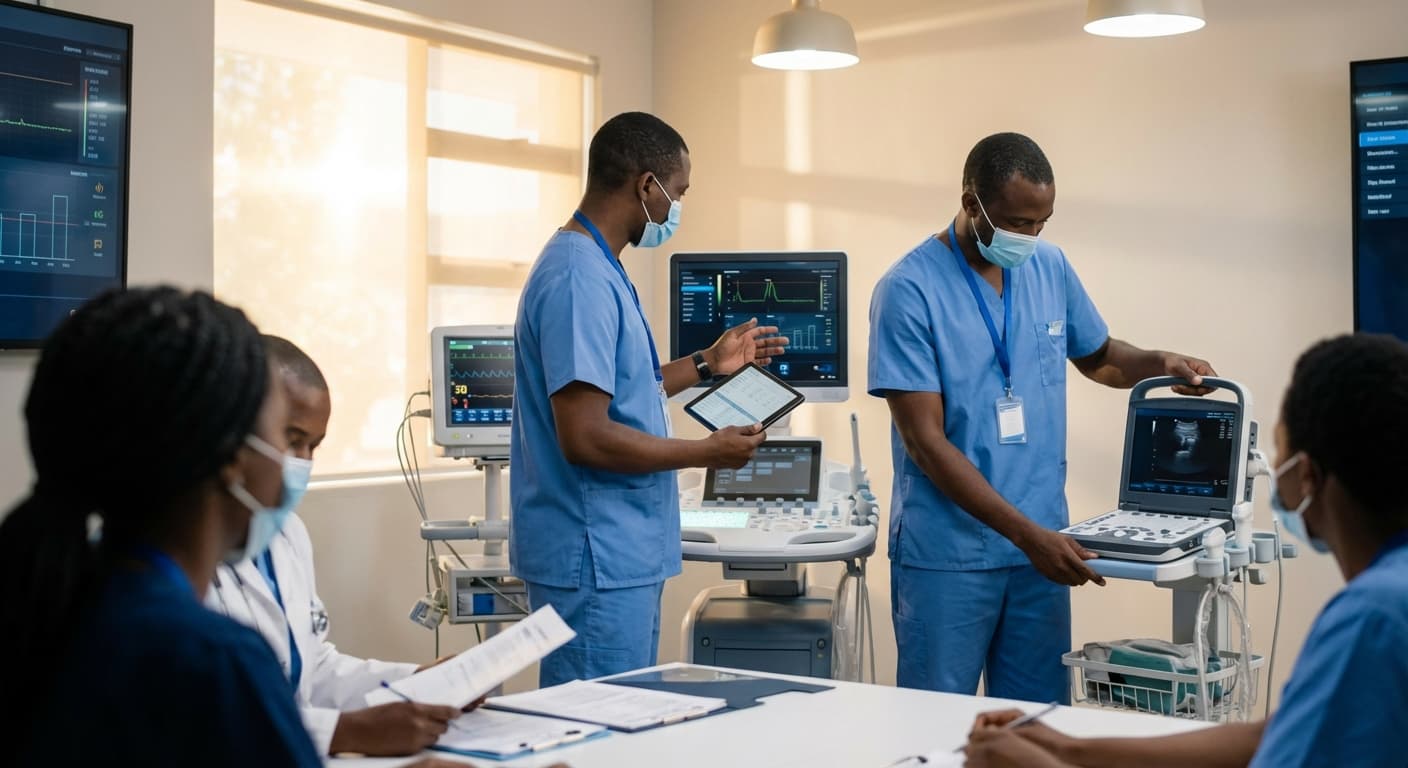
Clinical Needs Assessment for Medical Equipment in Ghana
Engineering Excellence & Technical Support
Clinical Needs Assessment for Medical Equipment High-standard technical execution following OEM protocols and local regulatory frameworks.
Comprehensive Needs Identification Tool
Leveraging a standardized, evidence-based questionnaire adapted to the Ghanaian healthcare context, this tool systematically gathers data on existing equipment inventory, utilization rates, maintenance capacity, and emerging clinical demands across diverse healthcare facilities. This ensures a holistic understanding of current and future medical equipment needs.
Data-Driven Prioritization Framework
Implements a quantitative scoring matrix that weighs factors such as disease burden, patient volume, equipment criticality for essential services, and cost-effectiveness. This objective framework enables the Ghanaian Ministry of Health and regional health directorates to prioritize equipment procurement and allocation based on measurable impact and strategic health goals.
Geospatial Needs Mapping and Equity Analysis
Utilizes Geographic Information Systems (GIS) to visualize equipment distribution and identify underserved regions or specific communities. This allows for targeted interventions to address geographical disparities in healthcare access, ensuring equitable distribution of vital medical equipment across Ghana.
What Is Clinical Needs Assessment For Medical Equipment In Ghana?
A Clinical Needs Assessment for Medical Equipment in Ghana is a systematic and data-driven process designed to evaluate the current and future requirements for medical devices within healthcare facilities. This assessment identifies gaps between existing equipment capabilities and the demands of clinical services, considering factors such as patient demographics, disease prevalence, technological advancements, and national health strategies. The objective is to ensure that healthcare providers have access to appropriate, functional, and sufficient medical equipment to deliver safe, effective, and quality patient care.
| Who Needs This Service? | Typical Use Cases | |||||
|---|---|---|---|---|---|---|
| Ministry of Health (MoH) Ghana: To inform national health policies, resource allocation, and procurement strategies for public healthcare facilities across the country. | Regional and District Health Directorates: To assess and plan for equipment needs within their respective administrative areas, ensuring equitable distribution and optimal utilization. | Public Hospitals and Tertiary Referral Centers: To identify specific equipment requirements for specialized departments, research initiatives, and to replace aging or malfunctioning infrastructure. | District Hospitals and Health Centers: To ascertain the baseline equipment needs for primary and secondary care services, often dealing with resource constraints. | Non-Governmental Organizations (NGOs) and International Development Partners: To guide their targeted interventions and support for healthcare infrastructure development in Ghana. | Private Healthcare Providers and Hospital Groups: To conduct internal assessments for expansion, modernization, or to ensure compliance with evolving service demands and technological advancements. | Medical Training Institutions: To ensure that educational facilities are equipped with modern medical devices for training future healthcare professionals. |
| Procurement Planning: Guiding the development of tender documents, specifications, and evaluation criteria for new equipment purchases. | Equipment Upgrade and Replacement Strategies: Identifying equipment nearing the end of its lifecycle and developing plans for phased replacement or technological upgrades. | New Facility Development or Expansion: Determining the complete equipment suite required for newly constructed hospitals, clinics, or specialized wings. | Response to Disease Outbreaks or Public Health Emergencies: Rapidly assessing equipment needs for managing specific health crises (e.g., ventilators for pandemics, diagnostic tools for emerging diseases). | Optimizing Equipment Utilization and Maintenance: Identifying underutilized or redundant equipment and developing strategies for redeployment or efficient maintenance scheduling. | Securing Funding and Grants: Providing evidence-based justification for equipment acquisition proposals to government bodies, donors, and financial institutions. | Capacity Building Programs: Informing the development of training programs for biomedical engineers and technicians to support the acquired equipment. |
Key Components of a Clinical Needs Assessment for Medical Equipment in Ghana
- Current Equipment Inventory and Status Evaluation: Documenting all existing medical equipment, including its type, model, age, condition, maintenance history, and operational status. This involves site visits, user interviews, and technical inspections.
- Clinical Service Demand Analysis: Quantifying and forecasting the demand for specific medical services, considering patient volume, diagnostic and therapeutic needs, and projected growth rates. This relies on health management information system (HMIS) data, epidemiological statistics, and local health trends.
- Gap Analysis: Identifying discrepancies between the available equipment and the required equipment to meet current and future clinical demands. This includes assessing functional gaps (lack of specific equipment types), capacity gaps (insufficient quantity), and technological gaps (outdated or obsolete equipment).
- Infrastructure and Support System Evaluation: Assessing the availability and suitability of supporting infrastructure, such as power supply, specialized rooms, ventilation, and IT connectivity, as well as the adequacy of biomedical engineering services, maintenance frameworks, and spare parts availability.
- User Needs and Training Requirements: Consulting with clinicians, nurses, technicians, and administrators to understand their operational challenges, preferences, and perceived needs. This also involves identifying existing skill sets and determining training requirements for new or upgraded equipment.
- Budgetary and Financial Considerations: Estimating the capital and operational costs associated with acquiring, installing, maintaining, and disposing of medical equipment, aligning recommendations with available financial resources and funding mechanisms.
- Regulatory and Standards Compliance: Ensuring that proposed equipment meets relevant Ghanaian and international safety, quality, and performance standards.
- Prioritization and Recommendation Development: Ranking identified needs based on clinical impact, cost-effectiveness, urgency, and strategic alignment, and formulating concrete recommendations for equipment procurement, upgrades, or decommissioning.
Who Needs Clinical Needs Assessment For Medical Equipment In Ghana?
Clinical Needs Assessment (CNA) for medical equipment in Ghana is a critical process that ensures healthcare facilities acquire the right tools to effectively and efficiently deliver quality patient care. This assessment identifies current and future equipment requirements based on patient demographics, disease prevalence, service offerings, existing infrastructure, and budget constraints. It is not a one-size-fits-all approach; rather, it is tailored to the specific context of each healthcare provider. Without a proper CNA, facilities risk overspending on unnecessary equipment, under-equipping departments, and ultimately compromising patient outcomes. Therefore, understanding who needs this assessment is vital for strategic procurement and resource allocation within Ghana's diverse healthcare landscape.
| Target Customer Group | Key Departments Requiring CNA | Rationale for CNA |
|---|---|---|
| Public Hospitals (Tertiary, Regional, District) | Emergency Department, Intensive Care Unit (ICU), Operating Theatre, Radiology, Pathology, Maternity, Pediatrics, Cardiology, Oncology, General Wards | High patient volume, diverse service offerings, need for advanced and basic equipment, budget limitations, ensuring equitable access to care across different levels. |
| Private Hospitals and Clinics | Similar to Public Hospitals, depending on specialization (e.g., Ophthalmology, Dentistry, Dermatology, Physiotherapy) | Meeting patient expectations for advanced technology, maintaining competitive advantage, optimizing return on investment, catering to specific patient needs and elective procedures. |
| NGO Health Facilities | Maternal and Child Health, Communicable Disease Control (e.g., TB, HIV), Primary Healthcare Clinics | Addressing specific public health challenges, resource optimization in underserved areas, ensuring sustainability of services, aligning equipment with program goals. |
| Community Health Centers | Basic diagnostics, first aid, maternal care, primary consultations | Ensuring availability of essential equipment for primary care, identifying gaps for referrals, supporting community-based health initiatives, cost-effective solutions. |
| Specialized Medical Centers (e.g., diagnostic labs, imaging centers) | Laboratory (Hematology, Biochemistry, Microbiology), Radiology (X-ray, CT Scan, MRI), Endoscopy Unit, Ultrasound Unit | Acquiring highly specialized and accurate diagnostic equipment, maintaining technological edge, ensuring compliance with quality standards, meeting demand for specific diagnostic services. |
| Medical Training Institutions with Clinical Components | Simulation labs, teaching hospitals affiliated with the institution, specific training departments (e.g., nursing, paramedical) | Providing hands-on training opportunities, ensuring trainees are familiar with current medical technologies, equipping facilities for research and development. |
| Government Health Agencies and Ministries | Procurement departments, national health planning units, disease surveillance units | Informing national procurement strategies, identifying equipment needs for public health programs, ensuring standardization where appropriate, allocating resources effectively across the nation, responding to public health emergencies. |
Who Needs Clinical Needs Assessment for Medical Equipment in Ghana?
- Public Hospitals (Tertiary, Regional, District)
- Private Hospitals and Clinics
- Non-Governmental Organization (NGO) Health Facilities
- Community Health Centers
- Specialized Medical Centers (e.g., diagnostic labs, imaging centers)
- Medical Training Institutions with Clinical Components
- Government Health Agencies and Ministries (for national-level planning and procurement)
Clinical Needs Assessment For Medical Equipment Process In Ghana
This document outlines the workflow for a Clinical Needs Assessment for Medical Equipment (CNA-ME) process in Ghana. The CNA-ME is a critical step in ensuring that healthcare facilities acquire appropriate, functional, and sustainable medical equipment that aligns with clinical needs, patient demographics, and resource availability. The process begins with an inquiry from a requesting entity and culminates in the successful procurement and installation of the identified equipment. It involves multiple stakeholders, including healthcare professionals, hospital administration, Ministry of Health representatives, and equipment suppliers/donors.
| Phase | Key Activities | Responsible Parties | Key Deliverables | Timelines (Illustrative) |
|---|---|---|---|---|
| Formal request for CNA-ME submitted by a healthcare facility or a governmental body. Initial scoping and confirmation of project objectives. | Requesting Facility/Ministry of Health, CNA-ME Coordinator | Project Initiation Document, Scope of Work | 1-2 Weeks |
| Conducting interviews, surveys, and observations with clinical staff. Assessing current service delivery, patient caseloads, and disease burden. Identifying gaps in existing equipment and unmet clinical needs. Prioritizing needs based on impact, urgency, and feasibility. | Clinical Staff, Department Heads, CNA-ME Team, Hospital Administration | List of Unmet Clinical Needs, Prioritized Need Statement | 2-4 Weeks |
| Gathering data on patient demographics, disease prevalence, and current treatment protocols. Reviewing existing equipment inventory, maintenance records, and utilization rates. Analyzing infrastructure capacity (power, space, water). | CNA-ME Team, Data Analysts, Facility Management | Needs Assessment Report (including data analysis), Gap Analysis Report | 3-5 Weeks |
| Defining detailed technical specifications for identified equipment (performance, safety, usability). Considering local context (availability of consumables, spare parts, trained personnel). Benchmarking against international standards and best practices. Validation of specifications with clinical users. | CNA-ME Team, Clinical Specialists, Biomedical Engineers, Procurement Unit | Detailed Equipment Specifications, Technical Data Sheets, Validation Sign-offs | 4-6 Weeks |
| Estimating the total cost of equipment, including purchase, installation, training, and maintenance. Identifying potential funding sources (government budget, donor grants, private sector). Developing a realistic and sustainable budget. | Hospital Administration, Finance Department, Procurement Unit, CNA-ME Coordinator, Potential Funders | Equipment Budget, Funding Proposal (if applicable) | 2-3 Weeks |
| Developing tender documents based on validated specifications. Issuing tenders and evaluating bids. Selecting appropriate suppliers based on technical and financial criteria. Contract negotiation and award. | Procurement Unit, Tender Committee, Ministry of Health, Legal Department | Tender Documents, Bid Evaluation Reports, Procurement Contract | 8-12 Weeks |
| Receiving, inspecting, and unpacking equipment. Installation by qualified technicians. Performance testing and calibration to ensure it meets specifications. Verification of functionality by clinical staff. | Suppliers, Biomedical Engineers, Facility Technicians, Clinical Staff | Installation Reports, Commissioning Certificates, Acceptance Forms | 2-4 Weeks |
| Developing and delivering training programs for clinical users and maintenance personnel. Ensuring proper operation, troubleshooting, and basic maintenance of the equipment. Providing user manuals and support documentation. | Suppliers, Training Specialists, Biomedical Engineers, Clinical Staff, Maintenance Technicians | Training Materials, Training Completion Records, Competency Assessments | 2-3 Weeks (post-installation) |
| Establishing a system for ongoing monitoring of equipment utilization, performance, and maintenance. Collecting feedback from users on equipment effectiveness. Conducting post-implementation reviews to assess impact and identify lessons learned. | Hospital Administration, Ministry of Health, Biomedical Engineering Department, CNA-ME Coordinator | Utilization Reports, Maintenance Logs, Performance Reviews, Impact Assessment Reports | Ongoing (post-installation) |
Clinical Needs Assessment for Medical Equipment (CNA-ME) Workflow
- Inquiry & Initiation
- Needs Identification & Prioritization
- Data Collection & Analysis
- Equipment Specification & Validation
- Budgeting & Funding
- Procurement & Acquisition
- Installation & Commissioning
- Training & Capacity Building
- Monitoring & Evaluation
Clinical Needs Assessment For Medical Equipment Cost In Ghana
This document outlines a clinical needs assessment for medical equipment costs in Ghana. It explores various pricing factors influencing the acquisition of medical devices and provides estimated cost ranges in Ghanaian Cedi (GHS). The assessment acknowledges that actual prices can fluctuate significantly due to market dynamics, supplier negotiations, specific model features, and import duties.
Key Pricing Factors:
- Type and Complexity of Equipment: Basic diagnostic tools are generally less expensive than advanced imaging or surgical systems.
- Brand and Manufacturer Reputation: Well-established brands often command higher prices due to perceived quality and reliability.
- New vs. Refurbished: Refurbished equipment offers a significant cost saving but may come with shorter warranties or limited lifespans.
- Supplier and Distributor: Prices can vary between local distributors, direct imports, and international suppliers.
- Import Duties and Taxes: Ghana levies import duties and taxes on medical equipment, which add to the final cost.
- Warranty and After-Sales Support: Comprehensive warranties and readily available technical support can increase the initial price but reduce long-term operational costs.
- Volume Discounts: Bulk purchases can lead to reduced per-unit costs.
- Technological Advancements: Newer models with cutting-edge technology are typically more expensive.
- Currency Exchange Rates: Fluctuations in the GHS against major international currencies (USD, EUR) directly impact the cost of imported equipment.
- Training and Installation Costs: Often bundled with the equipment purchase, these are crucial for effective utilization.
Estimated Cost Ranges in Ghanaian Cedi (GHS):
These ranges are indicative and subject to change. It's recommended to obtain specific quotes from multiple suppliers for accurate budgeting.
- Basic Diagnostic Equipment: (e.g., Stethoscopes, blood pressure monitors, thermometers)
- Laboratory Equipment: (e.g., Microscopes, centrifuges, basic hematology analyzers)
- Imaging Equipment: (e.g., X-ray machines, ultrasound machines)
- Surgical Equipment: (e.g., Basic surgical instrument sets, anesthesia machines)
- Patient Monitoring Systems: (e.g., Vital signs monitors)
- Sterilization Equipment: (e.g., Autoclaves)
- Hospital Furniture: (e.g., Hospital beds, examination tables)
- Consumables and Disposables: (Note: These are typically recurring costs and not one-time equipment purchases, but are essential to consider in the overall clinical need.)
For precise budgeting, a detailed equipment list with specific model requirements and a thorough market survey of current prices from reputable suppliers in Ghana are essential.
| Category | Indicative Price Range (GHS) | Notes |
|---|---|---|
| Stethoscope | 200 - 800 | Standard clinical use |
| Blood Pressure Monitor (Manual) | 150 - 600 | Sphygmomanometer with stethoscope |
| Digital Thermometer | 100 - 400 | Oral, axillary, or ear |
| Microscope (Compound) | 2,000 - 15,000 | Educational or basic diagnostic use |
| Centrifuge (Benchtop) | 3,000 - 12,000 | For blood, urine separation |
| Basic Hematology Analyzer (2-3 Part) | 30,000 - 150,000 | Semi-automated, depends on brand and throughput |
| X-ray Machine (Stationary, Basic) | 150,000 - 800,000+ | Includes basic imaging capabilities, installation |
| Ultrasound Machine ( portátil, 2D) | 40,000 - 300,000 | Basic diagnostic, depending on probes and features |
| Basic Surgical Instrument Set | 10,000 - 50,000 | General surgery, depends on number and quality of instruments |
| Anesthesia Machine (Basic) | 50,000 - 250,000 | Entry-level, may not include ventilator |
| Vital Signs Monitor (Single Parameter) | 5,000 - 25,000 | ECG, SpO2, NIBP |
| Autoclave (Small/Medium) | 15,000 - 80,000 | For instrument sterilization, capacity varies |
| Hospital Bed (Manual) | 2,000 - 10,000 | Basic adjustable features |
Medical Equipment Categories and Indicative Cost Ranges in Ghana (GHS)
- Basic Diagnostic Equipment
- Laboratory Equipment (Basic)
- Imaging Equipment (Entry-Level)
- Surgical Equipment (Basic Sets)
- Patient Monitoring Systems (Basic)
- Sterilization Equipment (Small/Medium)
- Hospital Beds (Manual)
Affordable Clinical Needs Assessment For Medical Equipment Options
Conducting a thorough clinical needs assessment is crucial for medical facilities to ensure they acquire the right equipment, optimize resource allocation, and control costs. This assessment should identify current and future patient care demands, technological advancements, and budgetary constraints. Affordable assessments can be achieved through internal expertise, collaborative efforts with existing vendors, or by leveraging specialized consultancy services that focus on cost-effectiveness. Key to managing expenditure is understanding 'value bundles' – packages of equipment, services, and training offered at a discounted rate – and implementing strategic cost-saving measures throughout the procurement and lifecycle of medical equipment.
| Value Bundle Component | Description | Potential Cost Savings |
|---|---|---|
| Equipment Purchase | Discounted price for multiple units or integrated systems. | Lower upfront capital expenditure. |
| Installation & Setup | Included in the package, often by manufacturer-certified technicians. | Reduced labor costs, fewer integration issues. |
| Training | Comprehensive training for clinical and technical staff on new equipment. | Improved staff proficiency, reduced errors, optimal equipment utilization. |
| Maintenance & Support | Extended warranties, service contracts, or on-site support included. | Predictable maintenance costs, reduced downtime, fewer unexpected repair bills. |
| Consumables & Accessories | Discounted pricing on essential consumables or compatible accessories. | Lower recurring operational costs. |
| Software Updates & Upgrades | Included access to software patches and firmware upgrades. | Enhanced functionality, improved security, extended equipment relevance. |
Cost-Saving Strategies for Medical Equipment
- Value Bundling: Negotiate for bundled deals that include equipment, installation, training, maintenance, and consumables. This often results in lower overall costs compared to purchasing items individually.
- Leasing vs. Purchasing: Evaluate the financial benefits of leasing equipment, especially for rapidly advancing technologies, to avoid obsolescence and high upfront capital investment.
- Refurbished Equipment: Consider high-quality, certified refurbished medical equipment, which can offer significant cost savings without compromising on performance or reliability for certain applications.
- Phased Procurement: Break down large equipment purchases into smaller, phased acquisitions aligned with budget cycles and demonstrated clinical need, allowing for better financial planning.
- Group Purchasing Organizations (GPOs): Join GPOs to leverage collective buying power and access discounted pricing on a wide range of medical equipment and supplies.
- Vendor Negotiation: Aggressively negotiate prices, payment terms, and extended warranties with multiple vendors to secure the best possible deal.
- Total Cost of Ownership (TCO) Analysis: Go beyond the initial purchase price to consider ongoing costs such as maintenance, consumables, training, energy consumption, and eventual disposal.
- Standardization: Standardize on specific equipment models or brands where clinically appropriate to simplify training, maintenance, and spare parts management, leading to economies of scale.
- Preventive Maintenance Programs: Invest in robust preventive maintenance to reduce costly emergency repairs and extend the lifespan of existing equipment.
- Resource Optimization: Ensure existing equipment is fully utilized and explore options for sharing specialized equipment across departments or even with other facilities.
Verified Providers In Ghana
In Ghana's evolving healthcare landscape, identifying and trusting 'Verified Providers' is paramount for patients seeking quality and reliable medical services. This is where Franance Health distinguishes itself. Franance Health's rigorous credentialing process ensures that all healthcare providers listed on their platform have met stringent standards, encompassing qualifications, experience, ethical conduct, and regulatory compliance. This verification is not merely a formality; it's a commitment to patient safety and well-being. By choosing Franance Health's verified providers, individuals can be assured they are engaging with professionals who are not only skilled and knowledgeable but also adhere to the highest ethical principles, offering peace of mind and fostering confidence in their healthcare journey.
| Provider Type | Franance Health Verification Standards | Benefits for Patients |
|---|---|---|
| Doctors (Specialists & General Practitioners) | Medical Council Registration, Postgraduate qualifications (where applicable), verified practice history, peer reviews. | Access to competent and board-certified physicians; reliable diagnosis and treatment plans. |
| Nurses & Midwives | Nursing & Midwifery Council Registration, relevant certifications, verified experience, background checks. | Skilled and compassionate care from licensed nursing professionals; safe and supportive birthing experiences. |
| Pharmacists | Pharmacy Council Registration, valid practicing license, verification of pharmacy premises and operations. | Accurate dispensing of medications; expert advice on drug interactions and usage; safe medication management. |
| Therapists (Physio, Occupational, etc.) | Relevant professional body registration, verified qualifications and certifications, demonstrated practical skills. | Effective rehabilitation services; improved mobility and daily living functions. |
| Diagnostic Centers & Laboratories | Accreditation from relevant health authorities, compliance with quality control standards, certified technicians and equipment. | Accurate and reliable diagnostic results; timely detection of health conditions. |
| Hospitals & Clinics | Licensing by the Ministry of Health, adherence to facility standards, qualified medical staff, quality assurance protocols. | Comprehensive medical services; a safe and well-equipped healthcare environment; continuity of care. |
Why Franance Health Verified Providers are the Best Choice:
- Rigorous Credentialing: All providers undergo a thorough vetting process.
- Qualified Professionals: Assurance of academic qualifications and practical experience.
- Ethical Conduct: Commitment to patient care and professional integrity.
- Regulatory Compliance: Adherence to Ghanaian healthcare regulations.
- Enhanced Patient Safety: Minimizing risks through verified credentials.
- Improved Healthcare Access: Connecting patients with trusted medical experts.
- Peace of Mind: Confidence in receiving quality medical attention.
- Transparency: Clear information about provider qualifications and specializations.
Scope Of Work For Clinical Needs Assessment For Medical Equipment
This Scope of Work (SOW) outlines the activities required for a comprehensive clinical needs assessment for medical equipment. The primary objective is to identify, prioritize, and specify medical equipment requirements that align with the current and future clinical needs of [Healthcare Facility Name]. This assessment will ensure the acquisition of appropriate, cost-effective, and technologically sound medical equipment, supporting optimal patient care and operational efficiency. The assessment will encompass all relevant clinical departments and specialties.
| Phase | Activities | Key Deliverables | Standard Specifications Considerations |
|---|---|---|---|
| Phase 1: Project Initiation & Planning | Define assessment scope, objectives, and methodology.<br>Establish assessment team and stakeholder engagement plan.<br>Develop detailed project timeline and resource allocation. | Project Charter.<br>Stakeholder Register.<br>Detailed Project Plan. | N/A (Project management related) |
| Phase 2: Data Collection & Analysis | Review existing equipment inventory, maintenance records, and utilization data.<br>Conduct interviews and surveys with clinical staff, department heads, and administrators.<br>Analyze clinical service volumes, patient demographics, and projected growth.<br>Review national and international clinical guidelines and best practices. | Current Equipment Inventory Report.<br>Stakeholder Feedback Summary.<br>Clinical Service Demand Analysis Report.<br>Benchmarking Report. | Alignment with international standards (e.g., IEC, ISO).<br>Compliance with relevant regulatory requirements (e.g., FDA, CE Marking). |
| Phase 3: Gap Identification & Prioritization | Identify discrepancies between existing equipment and current/future clinical needs.<br>Categorize identified needs (e.g., replacement, upgrade, new acquisition).<br>Prioritize needs based on predefined criteria (e.g., patient safety, clinical efficacy, ROI). | Needs Gap Analysis Report.<br>Prioritized List of Equipment Requirements. | Consideration of life cycle cost.<br>Future-proofing of technology. |
| Phase 4: Technical Specification Development | For each prioritized equipment need, develop detailed technical specifications.<br>Define functional requirements, performance characteristics, safety features, and interoperability needs.<br>Specify consumables, accessories, installation, and training requirements.<br>Research and document vendor options and potential solutions. | Detailed Technical Specification Documents (per equipment type).<br>Market Research Report. | Performance standards (e.g., accuracy, speed, resolution).<br>Safety standards (e.g., electrical safety, electromagnetic compatibility - EMC).<br>Usability and ergonomics.<br>Interoperability standards (e.g., HL7, DICOM).<br>Maintainability and serviceability.<br>Environmental requirements (e.g., power, temperature, humidity).<br>Consumable specifications (quality, compatibility, availability). |
| Phase 5: Reporting & Recommendations | Consolidate all findings and present a comprehensive report.<br>Provide recommendations for equipment acquisition strategies, phasing, and budgeting.<br>Outline implementation considerations, including training, maintenance, and IT integration. | Final Clinical Needs Assessment Report.<br>Executive Summary.<br>Recommendations Report.<br>Proposed Budgetary Estimates. | Adherence to accessibility standards where applicable.<br>Sustainability and energy efficiency considerations. |
Key Objectives of the Clinical Needs Assessment
- To identify and document current medical equipment inventory, its condition, utilization, and maintenance status.
- To ascertain existing and projected clinical service demands across all departments.
- To define unmet clinical needs and identify gaps in current equipment provision.
- To research and evaluate appropriate medical equipment technologies and their suitability for the facility's context.
- To establish prioritized equipment requirements based on clinical impact, patient safety, operational efficiency, and financial considerations.
- To develop detailed technical specifications for each identified equipment need.
- To recommend strategies for equipment acquisition, including procurement, leasing, or refurbishment.
- To provide a basis for capital budgeting and strategic planning related to medical equipment.
Service Level Agreement For Clinical Needs Assessment For Medical Equipment
This Service Level Agreement (SLA) outlines the guaranteed response times and uptime for the Clinical Needs Assessment service provided by [Provider Name] for medical equipment. This SLA is intended to ensure timely and effective support for our clients' critical medical equipment requirements.
| Service Component | Response Time Guarantee (Business Hours) | Uptime Guarantee |
|---|---|---|
| Initial Consultation Request (Non-Emergency) | Within 4 business hours | N/A |
| Formal Needs Assessment Report Delivery | Within 10 business days of comprehensive data submission | N/A |
| Urgent Assessment (e.g., critical equipment failure impacting patient care) | Within 2 business hours | N/A |
| Consultation Portal Availability (for submitting requests and accessing reports) | 99.5% | 99.5% |
| Support for Clarifications on Assessment Reports | Within 8 business hours | N/A |
Scope of Service
- Clinical Needs Assessment for new medical equipment procurement.
- Review and validation of existing medical equipment utilization.
- Identification of potential gaps or redundancies in medical equipment inventory.
- Development of technical specifications and functional requirements for medical equipment.
- Assistance with the development of tendering documentation related to medical equipment.
- Consultation on optimal placement and integration of medical equipment within clinical workflows.
Frequently Asked Questions

Ready when you are
Let's scope your Clinical Needs Assessment for Medical Equipment in Ghana project in Ghana.

Scaling healthcare logistics and technical systems across the entire continent.