
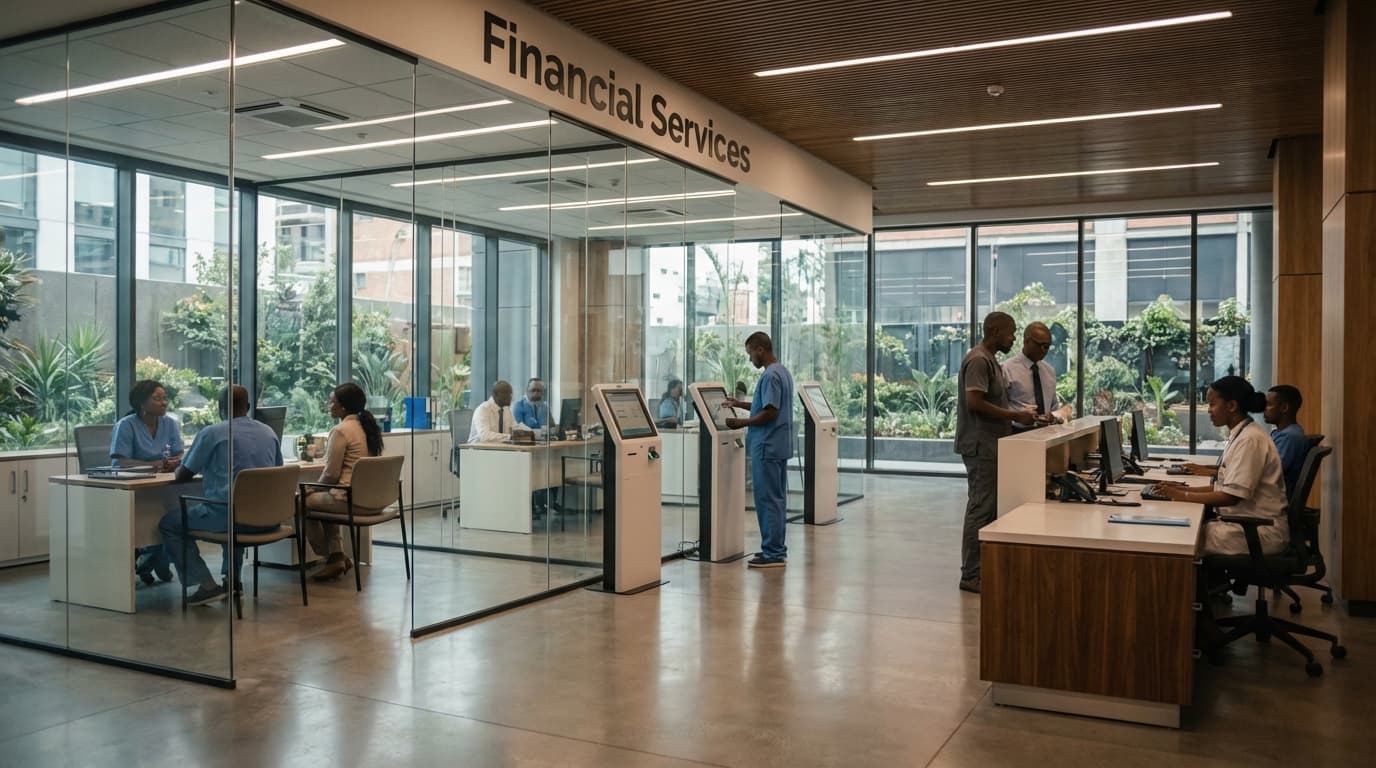
Medical Equipment Financing in Ghana
Engineering Excellence & Technical Support
Leasing and financing solutions for medical equipment High-standard technical execution following OEM protocols and local regulatory frameworks.
Accessible Working Capital
Unlock essential funds for purchasing new medical equipment or upgrading existing machinery. Our financing solutions provide the liquidity needed to maintain operational efficiency and expand service offerings, ensuring your facility remains at the forefront of healthcare delivery in Ghana.
Flexible Repayment Structures
Tailored repayment plans designed to align with your clinic's or hospital's revenue cycles and cash flow. We offer flexible terms, including options for deferred payments or seasonal adjustments, to minimize financial strain and support sustainable growth in Ghana's healthcare sector.
Streamlined Approval Process
A rapid and transparent application and approval process specifically optimized for Ghanaian medical practitioners and institutions. Minimize downtime and acquire critical equipment swiftly with our efficient workflow and expert guidance, ensuring your patients receive timely and advanced care.
What Is Medical Equipment Financing In Ghana?
Medical Equipment Financing in Ghana refers to a specialized financial service that provides capital for the acquisition, upgrade, or replacement of medical machinery, instruments, and technology for healthcare providers within the Ghanaian context. This financing mechanism is designed to alleviate the significant upfront capital expenditure typically associated with procuring advanced medical equipment, thereby enhancing the capacity and quality of healthcare delivery.
| Who Needs Medical Equipment Financing in Ghana? | Typical Use Cases in Ghana | ||||||||
|---|---|---|---|---|---|---|---|---|---|
| Hospitals (Public and Private): Both large-scale institutions and smaller private clinics require financing for a broad spectrum of diagnostic, therapeutic, and surgical equipment. | Diagnostic Imaging: MRI scanners, CT scanners, X-ray machines, ultrasound devices for accurate patient diagnosis. | Specialty Clinics: Facilities focusing on cardiology, oncology, ophthalmology, dentistry, etc., requiring specialized instrumentation. | Therapeutic Equipment: Radiation therapy machines, dialysis machines, physiotherapy equipment for patient treatment. | Surgical Suites: Advanced surgical instruments, operating tables, anesthesia machines, minimally invasive surgical systems. | Laboratories and Diagnostics: Automated analyzers, microscopes, centrifuges, molecular diagnostic equipment for in-vitro testing. | Primary Healthcare Facilities: Basic diagnostic tools, patient monitoring devices, and essential treatment equipment. | Medical Training Institutions: To equip teaching hospitals and laboratories with contemporary medical technology for educational purposes. | Ambulatory Surgery Centers: For specialized surgical equipment and patient recovery apparatus. | Research and Development Facilities: To acquire cutting-edge equipment for medical research. |
Key Components of Medical Equipment Financing
- Asset-Based Lending: The medical equipment itself serves as collateral, reducing risk for the lender and potentially offering more favorable terms.
- Leasing Options: Various lease structures (e.g., operating lease, finance lease) are available, allowing providers to use equipment without outright ownership, often with options for upgrade or purchase at the end of the term.
- Term Loans: Traditional loans with fixed or variable interest rates over a specified repayment period, suitable for outright purchase of equipment.
- Working Capital Integration: Some financing packages may include provisions for associated costs such as installation, maintenance contracts, and initial training.
- Vendor Programs: Partnerships between financial institutions and medical equipment suppliers to streamline the procurement and financing process.
- Repayment Structures: Flexible repayment schedules that can be tailored to the anticipated revenue streams generated by the financed equipment.
Who Needs Medical Equipment Financing In Ghana?
Medical equipment financing in Ghana is a critical service designed to bridge the gap between the need for essential healthcare technology and the financial capacity of various healthcare providers. This type of financing allows hospitals, clinics, and other medical facilities to acquire state-of-the-art equipment, upgrade existing machinery, and expand their service offerings without incurring substantial upfront capital expenditure. It is particularly valuable in a developing economy like Ghana's, where the cost of advanced medical technology can be a significant barrier to access for many citizens. By offering flexible payment plans and tailored financing solutions, it empowers healthcare institutions to invest in the tools necessary to provide high-quality patient care, improve diagnostic capabilities, and enhance treatment outcomes.
| Customer Segment | Key Departments Benefiting | Common Equipment Needs |
|---|---|---|
| Public Hospitals | All departments: Emergency, Surgery, Internal Medicine, Pediatrics, Radiology, Laboratories, Intensive Care Units (ICUs), Operating Theatres | MRI machines, CT scanners, X-ray units, ventilators, anesthesia machines, ultrasound machines, laboratory analyzers, patient monitors, surgical instruments |
| Private Hospitals | Similar to public hospitals, with a focus on specialized services: Cardiology, Neurology, Orthopedics, Urology, Gastroenterology, Dermatology, Fertility Clinics | Advanced imaging equipment, specialized surgical tools, endoscopes, laparoscopes, cardiac catheterization labs, laser treatment devices, fertility equipment |
| Specialty Clinics | Department specific: Cardiology (ECG, echocardiography), Oncology (radiotherapy machines, chemotherapy pumps), Dialysis (hemodialysis machines, water treatment systems) | Highly specialized diagnostic and treatment equipment relevant to their niche |
| Diagnostic Centers | Radiology (X-ray, CT, MRI), Pathology (microscopes, automated analyzers), Ultrasound, Endoscopy | High-resolution imaging machines, sophisticated laboratory diagnostic equipment |
| Primary Healthcare Facilities & Health Posts | Basic diagnostics, patient monitoring, minor procedures: General practice, obstetrics, pediatrics | Basic diagnostic kits, vital signs monitors, small diagnostic imaging equipment, basic surgical instruments |
| NGOs with Healthcare Initiatives | Mobile clinics, community health programs, specialized outreach services | Portable diagnostic equipment, basic treatment tools, vehicles for mobile clinics equipped with medical devices |
| Medical Training Institutions | Anatomy labs, simulation centers, practical training departments | Anatomical models, simulation manikins, basic diagnostic and surgical equipment for hands-on training |
| Government Health Agencies & Ministries | National health programs, disease surveillance, public health interventions | Mass screening equipment, data management systems, specialized equipment for public health campaigns |
Target Customers and Departments for Medical Equipment Financing in Ghana
- Public Hospitals
- Private Hospitals
- Specialty Clinics (e.g., Cardiology, Oncology, Dialysis)
- Diagnostic Centers (e.g., Imaging, Pathology)
- Primary Healthcare Facilities & Health Posts
- Non-Governmental Organizations (NGOs) with Healthcare Initiatives
- Medical Training Institutions (for practical training equipment)
- Government Health Agencies & Ministries
Medical Equipment Financing Process In Ghana
Securing medical equipment financing in Ghana involves a structured process that ensures both the borrower's and lender's interests are protected. This workflow typically begins with an initial inquiry and culminates in the successful acquisition of the equipment. The process can vary slightly depending on the financial institution, but the core stages remain consistent.
| Stage | Description | Key Actors | Documentation/Deliverables |
|---|---|---|---|
| Inquiry & Initial Consultation | Potential borrowers (hospitals, clinics, individual practitioners) express interest in financing medical equipment. This involves understanding their needs, the type of equipment, and the desired financing amount. | Borrower (healthcare provider), Financial Institution (FI) representative | Initial meeting notes, preliminary equipment specifications |
| Application Submission | The borrower formally applies for financing. This requires submitting detailed information about their organization, financial standing, and the specific equipment they intend to acquire. | Borrower, FI Loan Officer | Completed loan application form, business plan, financial statements (audited), pro forma invoices for equipment, proof of ownership/lease of existing facilities |
| Due Diligence & Assessment | The financial institution scrutinizes the borrower's financial health, operational capacity, and the viability of their business. This may involve site visits and interviews. | FI Credit Analysts, Risk Officers, Appraisers | Site visit reports, credit reports, market research, operational assessment |
| Credit & Risk Assessment | A comprehensive evaluation of the borrower's creditworthiness and the associated risks of the loan. This determines the likelihood of repayment and potential default. | FI Credit Committee, Risk Management Department | Credit assessment report, risk rating, loan memo |
| Offer & Negotiation | If the assessment is positive, the FI presents a financing offer detailing the loan amount, interest rate, repayment schedule, collateral requirements, and other terms and conditions. Negotiations may follow. | FI Loan Officer, Borrower | Term sheet, Letter of Offer |
| Documentation & Legal Review | Once the offer is accepted, extensive legal documentation is prepared and reviewed by legal counsel for both parties. This ensures all terms are legally binding. | FI Legal Department, Borrower's Legal Counsel, FI Loan Officer | Loan agreement, security agreements (e.g., chattel mortgage, debenture), promissory note, ancillary legal documents |
| Appraisal & Valuation | An independent valuation of the proposed medical equipment is conducted to determine its market value and ensure it aligns with the loan amount. | Independent Appraiser (appointed by FI), Borrower | Equipment appraisal report |
| Approval & Commitment | The loan is formally approved by the FI's credit committee or relevant authority. A commitment letter is issued to the borrower. | FI Credit Committee, Senior Management | Final loan approval letter, commitment letter |
| Disbursement | Upon fulfillment of all pre-disbursement conditions (e.g., signing of documents, provision of collateral), the loan funds are disbursed. This may be directly to the equipment supplier or to the borrower. | FI Disbursement Department, Borrower | Disbursement instruction, payment confirmation |
| Equipment Procurement & Installation | The borrower procures and installs the medical equipment using the disbursed funds. The FI may require proof of delivery and installation. | Borrower, Equipment Supplier | Delivery notes, installation certificates, invoices |
| Post-Disbursement Monitoring | The financial institution monitors the loan's performance, including timely repayments and adherence to loan covenants. Regular financial reporting from the borrower is often required. | FI Loan Portfolio Manager, Borrower | Repayment schedules, financial performance reports, periodic site visits |
Workflow Stages
- Inquiry & Initial Consultation
- Application Submission
- Due Diligence & Assessment
- Credit & Risk Assessment
- Offer & Negotiation
- Documentation & Legal Review
- Appraisal & Valuation
- Approval & Commitment
- Disbursement
- Equipment Procurement & Installation
- Post-Disbursement Monitoring
Medical Equipment Financing Cost In Ghana
Financing medical equipment in Ghana involves a variety of cost considerations, influenced by several key factors. These factors directly impact the pricing ranges, making it essential for healthcare providers to understand them when seeking capital for equipment acquisition. The availability and terms of financing can significantly affect the overall cost of ownership, extending beyond the initial purchase price of the equipment itself. Factors such as the lender's risk assessment, the economic climate, and specific equipment type play crucial roles.
| Financing Factor | Typical Range in Ghanaian Cedi (GHS) | Notes |
|---|---|---|
| Interest Rates (Annual) | 20% - 35%+ | Highly variable, depending on the lender, borrower's creditworthiness, and economic conditions. Can be higher for unsecured or higher-risk financing. |
| Loan Term (Years) | 1 - 7 years | Shorter terms for basic equipment, longer terms for high-value, long-lifespan machinery. |
| Down Payment (%) | 10% - 30% | Can be negotiated. Higher down payments often lead to better terms. |
| Processing & Arrangement Fees (%) | 1% - 5% of loan amount | Covers administrative and legal costs associated with loan processing. |
| Late Payment Penalties | Varies by lender, often a percentage of the overdue amount or a fixed fee | It's crucial to understand these penalties to avoid unexpected costs. |
Key Pricing Factors for Medical Equipment Financing in Ghana
- Equipment Cost & Type: The fundamental price of the medical equipment itself is the primary driver. Specialized, high-tech, or complex machinery will inherently have a higher financing cost.
- Financing Tenure (Loan Term): Longer repayment periods often translate to lower monthly payments but may result in higher total interest paid over the life of the loan.
- Interest Rates: This is a critical factor. Interest rates in Ghana are influenced by the Bank of Ghana's policy rate, inflation, and the lender's overhead. Rates can vary significantly between financial institutions.
- Down Payment: A larger down payment reduces the principal amount to be financed, thus lowering the overall interest paid and potentially securing more favorable terms.
- Creditworthiness of the Borrower: Healthcare facilities with a strong financial history, consistent revenue streams, and good credit scores will typically qualify for lower interest rates and better financing packages.
- Equipment Lifespan & Depreciation: Lenders assess the expected useful life and rate of depreciation of the equipment to mitigate their risk, which can influence loan terms and interest rates.
- Collateral Requirements: The need for collateral can impact the loan's risk profile for the lender, potentially affecting the interest rate offered.
- Processing & Administrative Fees: Lenders often charge various fees, including application fees, legal fees, valuation fees, and administrative charges, which add to the overall financing cost.
- Inflation and Economic Stability: High inflation and economic uncertainty can lead lenders to increase interest rates to compensate for the erosion of money's value and increased risk.
- Lender Type: Commercial banks, specialized financing companies, and development finance institutions may offer different pricing structures and terms.
Affordable Medical Equipment Financing Options
Acquiring necessary medical equipment can be a significant financial undertaking for healthcare providers, from small clinics to larger hospitals. Fortunately, several affordable financing options exist, along with strategies to maximize cost savings. Understanding value bundles and implementing smart procurement practices can dramatically reduce the overall investment while ensuring access to vital technology.
| Value Bundle Component | Description | Cost-Saving Strategy |
|---|---|---|
| Equipment Package | Bundled purchase of multiple related pieces of equipment at a discounted price. | Negotiate bulk discounts for comprehensive equipment needs rather than purchasing items individually. |
| Service & Maintenance Contract | Included or discounted long-term maintenance, repair, and calibration services. | Compare bundled service costs with separate service contracts; often, bundled deals offer better overall value and predictable budgeting. |
| Training & Support | On-site or remote training for staff on equipment operation and technical support. | Prioritize providers offering robust, included training to minimize downtime and ensure efficient staff utilization of new technology. |
| Extended Warranty | Longer-than-standard warranty periods included in the financing or purchase price. | Factor the cost of an extended warranty into the initial financing; it can be more cost-effective than out-of-warranty repairs. |
| Software & Integration | Bundled software solutions or seamless integration with existing EMR/EHR systems. | Ensure bundled software is compatible with your existing infrastructure to avoid costly customization or replacement needs. |
| Consumables & Accessories | Discounted pricing on essential consumables or accessories required for the equipment's operation. | Inquire about bundled pricing for essential supplies; this can lead to significant ongoing savings. |
Affordable Medical Equipment Financing Options
- Leasing: A popular option where providers rent equipment for a fixed period, often with lower upfront costs than purchasing. This can include operating leases (off-balance sheet) or finance leases (on-balance sheet).
- Loans: Traditional term loans from banks or specialized medical equipment lenders. These offer ownership of the equipment upon repayment but require a larger initial investment and ongoing interest payments.
- Rent-to-Own Agreements: Similar to leasing, but with an option to purchase the equipment at the end of the lease term for a predetermined price. This can be a good stepping stone to ownership.
- Refurbished Equipment: Purchasing pre-owned or certified refurbished equipment can offer substantial savings compared to new models, often with warranties and performance guarantees.
- Government Grants and Programs: Investigate federal, state, and local grants or low-interest loan programs specifically designed for healthcare providers, especially those serving underserved communities.
- Trade-in Programs: Some manufacturers and suppliers offer trade-in options for older equipment, reducing the cost of new purchases.
- Crowdfunding/Donations: For non-profit organizations or specific community-focused initiatives, crowdfunding platforms or direct donation drives can be explored.
Verified Providers In Ghana
In Ghana, ensuring you receive healthcare from verified providers is paramount. Franance Health stands out as a premier platform that not only verifies its healthcare professionals but also champions a commitment to quality, accessibility, and patient well-being. This dedication makes Franance Health a trusted name and the best choice for your healthcare needs.
| Benefit | Franance Health Advantage | Impact on Patient |
|---|---|---|
| Trust and Reliability | Comprehensive credential verification for all listed doctors. | Peace of mind knowing you are consulting a qualified professional. |
| Quality of Service | Partnerships with experienced and reputable medical practitioners. | Access to high-standard medical advice and treatment. |
| Ease of Access | User-friendly platform for searching and booking appointments. | Reduced waiting times and convenient healthcare scheduling. |
| Specialized Care | Wide network of doctors across various medical fields. | Finding the right specialist for specific health concerns. |
| Informed Decision Making | Transparent provider profiles and patient reviews. | Ability to choose a healthcare provider that best suits your needs and preferences. |
Why Franance Health Providers are the Best Choice in Ghana:
- Rigorous Verification Process: Franance Health implements a stringent vetting process for all its affiliated providers. This includes checking medical licenses, qualifications, certifications, and ensuring they adhere to ethical standards and best practices.
- Commitment to Quality Care: Beyond basic verification, Franance Health focuses on partnering with providers who demonstrate a consistent track record of excellent patient care, positive outcomes, and a patient-centric approach.
- Accessibility and Convenience: The platform simplifies the process of finding and booking appointments with trusted healthcare professionals across Ghana, reducing the stress and time often associated with healthcare seeking.
- Diverse Specializations: Franance Health connects you with a wide range of specialists, from general practitioners to highly specialized doctors, ensuring you can find the right expert for any medical condition.
- Patient Empowerment: By providing transparent information about providers and their credentials, Franance Health empowers patients to make informed decisions about their health.
- Upholding Professional Standards: Franance Health actively monitors and encourages the continuous professional development of its providers, ensuring they remain at the forefront of medical advancements.
Scope Of Work For Medical Equipment Financing
This Scope of Work (SOW) outlines the technical deliverables and standard specifications required for medical equipment financing. The financing arrangement will cover the acquisition of specified medical equipment, ensuring it meets current industry standards for performance, safety, and efficacy. The successful financing will facilitate the procurement and deployment of this vital equipment, ultimately enhancing patient care and operational efficiency.
| Equipment Category | Standard Specification Requirement | Key Performance Indicators (KPIs) | Regulatory Compliance | Example Specifications |
|---|---|---|---|---|
| Imaging Equipment (e.g., MRI, CT Scanner) | High resolution, low radiation dose, advanced image processing capabilities. | Image clarity, scan speed, patient throughput, radiation dose reduction. | FDA, CE Mark, relevant ISO standards (e.g., ISO 13485). | Field strength (e.g., 1.5T, 3T for MRI), slice thickness, spatial resolution, acquisition time, contrast enhancement options. |
| Surgical Equipment (e.g., Electrosurgical Units, Robotic Systems) | Precise control, advanced safety features, ergonomic design, compatibility with existing infrastructure. | Cutting/coagulation precision, power output stability, safety alerts, maneuverability (for robots). | FDA, CE Mark, relevant IEC standards (e.g., IEC 60601 series). | Output power range, waveform options, smoke evacuation integration, instrument articulation (for robots), battery life. |
| Diagnostic Monitoring Equipment (e.g., ECG, Pulse Oximeters) | Accurate readings, reliable performance, user-friendly interface, data connectivity. | Accuracy of vital sign measurements, signal-to-noise ratio, battery life, data transmission reliability. | FDA, CE Mark, relevant IEC standards (e.g., IEC 60601 series). | Measurement range (e.g., SpO2, heart rate), waveform display, alarm thresholds, wireless connectivity standards (e.g., Bluetooth, Wi-Fi). |
| Laboratory Analyzers | High throughput, accuracy, precision, minimal reagent consumption, automation capabilities. | Test result accuracy, precision (CV%), sample processing rate, calibration frequency, uptime. | FDA, CE Mark, ISO 15189. | Throughput (tests/hour), linearity, detection limits, sample volume, reagent stability. |
Key Technical Deliverables:
- Detailed Equipment Specifications Document
- Manufacturer's Certifications and Compliance Documentation
- Installation and Commissioning Reports
- User and Maintenance Manuals (Digital and Physical)
- Warranty Certificates
- Training Materials and Schedule for End-Users
- Post-Installation Performance Verification Report
- Service and Maintenance Contracts (if applicable)
Service Level Agreement For Medical Equipment Financing
This Service Level Agreement (SLA) outlines the response times and uptime guarantees for the provision and maintenance of medical equipment financed through [Financing Company Name] to [Healthcare Provider Name]. This SLA is an integral part of the Master Equipment Financing Agreement (MEFA) dated [Date of MEFA].
| Equipment Type | Uptime Guarantee | Response Time (During Business Hours) | Response Time (Outside Business Hours - Emergency) | Resolution Time Target |
|---|---|---|---|---|
| Critical Equipment | 99.5% Uptime | 2 Business Hours | 4 Business Hours | 8 Business Hours |
| Non-Critical Equipment | 98.0% Uptime | 4 Business Hours | Not Guaranteed (Best Effort Response) | 24 Business Hours |
Key Definitions
- Equipment: Medical equipment financed by [Financing Company Name] under the MEFA.
- Uptime: The percentage of time the Equipment is fully operational and available for use as intended.
- Downtime: The period during which the Equipment is not operational and available for use.
- Critical Equipment: Equipment identified in Schedule A of the MEFA as essential for direct patient care and whose failure would significantly impact patient safety or treatment continuity.
- Non-Critical Equipment: Equipment identified in Schedule A of the MEFA as important but whose failure would not immediately jeopardize patient safety or treatment continuity.
- Response Time: The maximum time allowed for [Service Provider Name] (or designated third-party service provider) to acknowledge a reported issue and commence troubleshooting or dispatching a technician.
- Resolution Time: The maximum time allowed to restore the Equipment to its intended operational status.
- Business Hours: 9:00 AM to 5:00 PM, Monday through Friday, excluding public holidays observed in [Region/Country].
Frequently Asked Questions

Ready when you are
Let's scope your Medical Equipment Financing in Ghana project in Ghana.

Scaling healthcare logistics and technical systems across the entire continent.