
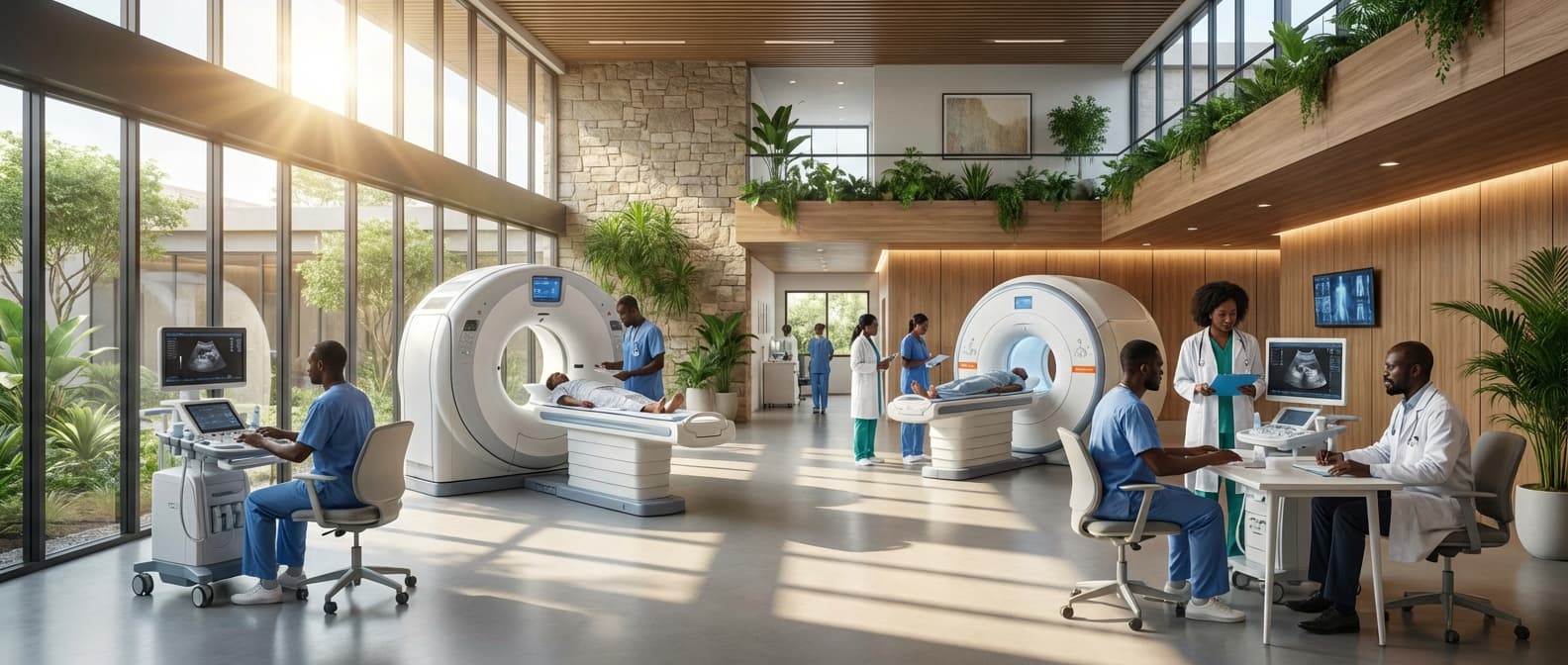
Endoscopy Solutions in Ghana
Engineering Excellence & Technical Support
Advanced endoscopic equipment delivering superior visualization and diagnostic precision for minimally invasive procedures. High-standard technical execution following OEM protocols and local regulatory frameworks.
Advanced Diagnostic Endoscopy Services
Introducing state-of-the-art endoscopic equipment, enabling highly precise visualization and early detection of gastrointestinal and respiratory conditions, empowering Ghanaian healthcare professionals with superior diagnostic capabilities.
Specialized Endoscopy Training & Support
Delivering comprehensive training programs and ongoing technical support for Ghanaian medical teams, ensuring optimal utilization of advanced endoscopy technologies and fostering a skilled local workforce in minimally invasive procedures.
Cost-Effective Endoscopy Solutions
Providing affordable access to cutting-edge endoscopy equipment and consumables, making advanced diagnostic and therapeutic procedures more accessible to a wider patient population across Ghana and improving healthcare outcomes.
What Is Endoscopy Solutions In Ghana?
Endoscopy Solutions in Ghana refer to the provision of diagnostic and therapeutic procedures utilizing endoscopes. An endoscope is a flexible or rigid tube equipped with a light source and a camera, inserted into the body to visualize internal organs and structures. These solutions are crucial for identifying, diagnosing, and treating a wide range of gastrointestinal and other internal medical conditions. The service encompasses the availability of specialized equipment, trained medical professionals (gastroenterologists, surgeons, etc.), and dedicated facilities for performing these minimally invasive procedures.
| Who Needs Endoscopy Solutions in Ghana? | Typical Use Cases | ||||||||
|---|---|---|---|---|---|---|---|---|---|
| Patients presenting with symptoms suggestive of gastrointestinal pathology: This includes symptoms such as persistent abdominal pain, difficulty swallowing (dysphagia), unexplained weight loss, chronic nausea or vomiting, and changes in bowel habits (diarrhea or constipation). | Screening for gastrointestinal cancers: Particularly colorectal cancer screening through colonoscopy for individuals at average or increased risk based on age and family history. | Monitoring and management of chronic gastrointestinal diseases: Such as inflammatory bowel disease (Crohn's disease, ulcerative colitis), peptic ulcer disease, and gastroesophageal reflux disease (GERD). | Evaluation of bleeding: Identifying the source of upper or lower gastrointestinal bleeding and performing endoscopic hemostasis. | Diagnosis and management of liver, biliary, and pancreatic conditions: Utilizing ERCP for conditions like gallstones in the bile ducts, strictures, and pancreatic cancer. | Patients with suspected or confirmed upper gastrointestinal lesions: Requiring biopsy for histological confirmation (e.g., suspected malignancy, Helicobacter pylori infection). | Patients with suspected or confirmed lower gastrointestinal lesions: Requiring biopsy or removal of polyps. | Evaluation of iron deficiency anemia of unknown origin: To rule out occult gastrointestinal blood loss. | Therapeutic interventions for various gastrointestinal conditions: Such as dilation of esophageal or pyloric strictures, removal of foreign bodies, or placement of feeding tubes. | |
| Esophagitis and Esophageal Varices: Diagnosis and management of inflammation of the esophagus and bleeding from swollen veins in the esophagus. | Peptic Ulcer Disease: Diagnosis, assessment of severity, and treatment of ulcers in the stomach and duodenum, including management of bleeding ulcers. | Gastritis and Duodenitis: Diagnosis and evaluation of inflammation in the stomach and duodenum. | Gastrointestinal Bleeding: Identification of bleeding sites in the upper or lower GI tract and endoscopic control of hemorrhage. | Colorectal Polyps: Detection and removal of polyps to prevent progression to colorectal cancer. | Inflammatory Bowel Disease (IBD): Monitoring disease activity, assessing response to treatment, and obtaining biopsies for diagnosis and surveillance. | Biliary and Pancreatic Tract Diseases: Diagnosis and management of gallstones, strictures, tumors, and pancreatitis using ERCP. | Suspected Malignancies: Biopsy of suspicious lesions in the esophagus, stomach, duodenum, colon, or rectum for histological diagnosis. | Foreign Body Ingestion/Inhalation: Retrieval of ingested or inhaled foreign objects from the gastrointestinal tract. | Nutritional Support: Placement of gastrostomy tubes (PEG tubes) for long-term feeding. |
Key Components of Endoscopy Solutions in Ghana
- Diagnostic Endoscopy: Visual examination of the upper gastrointestinal tract (esophagus, stomach, duodenum) via esophagogastroduodenoscopy (EGD), the lower gastrointestinal tract (colon, rectum) via colonoscopy, and the bile ducts and pancreas via endoscopic retrograde cholangiopancreatography (ERCP).
- Therapeutic Endoscopy: Interventions performed during endoscopic procedures, such as polyp removal (polypectomy), bleeding control (hemostasis), stricture dilation, foreign body retrieval, and stenting.
- Specialized Endoscopic Techniques: Including capsule endoscopy for visualizing the small intestine, endoscopic ultrasound (EUS) for detailed imaging and tissue sampling, and advanced therapeutic interventions like endoscopic submucosal dissection (ESD).
- Infrastructure and Personnel: Availability of advanced endoscopic equipment (flexible endoscopes, video processors, light sources, insufflators, biopsy forceps, snares, electrocautery devices), sedation/anesthesia services, and highly skilled endoscopists and support staff.
- Quality Control and Safety: Adherence to strict protocols for disinfection and sterilization of endoscopic equipment, patient safety measures, and continuous professional development for practitioners.
Who Needs Endoscopy Solutions In Ghana?
Endoscopy solutions are critical for diagnosing and treating a wide range of gastrointestinal (GI) and respiratory conditions in Ghana. These advanced medical technologies enable minimally invasive procedures, leading to faster recovery times and improved patient outcomes. The demand for sophisticated endoscopy equipment and services is growing as healthcare facilities strive to offer comprehensive diagnostic capabilities.
| Customer Type | Primary Focus | Typical Endoscopy Needs |
|---|---|---|
| Public Hospitals | Comprehensive patient care, catering to a large population | Broad range of flexible and rigid endoscopes (GI, Pulmonary, ENT), sterilization equipment, training programs |
| Private Hospitals | Advanced diagnostics and specialized treatments, often with a focus on patient comfort and outcomes | High-definition endoscopy systems, advanced therapeutic accessories, integrated endoscopy suites, specialized training |
| Specialty Clinics | Focused expertise in specific areas (e.g., Gastroenterology, Pulmonology) | State-of-the-art diagnostic and therapeutic endoscopes tailored to their specialty, advanced imaging capabilities |
| Diagnostic Centers | Providing diagnostic services to referring physicians and hospitals | Reliable and efficient endoscopy equipment, good imaging quality, robust maintenance services |
| Medical Training Institutions | Training future healthcare professionals | Simulation-based training equipment, entry-level and advanced endoscopy systems for hands-on learning |
Target Customers and Departments for Endoscopy Solutions in Ghana
- {"items":["Hospitals (Public and Private)","Specialty Clinics (Gastroenterology, Pulmonology, ENT, etc.)","Diagnostic Centers","Research Institutions","Medical Training Institutions"],"title":"Target Customers"}
- {"items":[{"needs":"Gastroscopes, Colonoscopes, Duodenoscopes, ERCP scopes for diagnosing and treating conditions like ulcers, gastritis, polyps, cancer, GERD, and inflammatory bowel disease. Endoscopic accessories for biopsy, polypectomy, dilation, and hemostasis are essential.","department":"Gastroenterology"},{"needs":"Bronchoscopes for diagnosing and treating lung diseases, infections, tumors, and airway obstructions. Associated equipment for tissue sampling, fluid aspiration, and therapeutic interventions.","department":"Pulmonology"},{"needs":"Flexible and rigid endoscopes for examining the pharynx, larynx, esophagus, and nasal passages. Used for diagnosing and treating voice disorders, swallowing difficulties, and upper airway pathologies.","department":"Ear, Nose, and Throat (ENT)"},{"needs":"Endoscopic equipment for pre-operative diagnosis, intra-operative guidance, and post-operative management of GI conditions. Laparoscopic towers and instruments can be integrated for combined procedures.","department":"Surgery (General and GI Surgery)"},{"needs":"While not directly performing endoscopy, these departments benefit from clear, high-quality endoscopic imaging for correlation with other diagnostic modalities. Some facilities might integrate endoscopy suites within or adjacent to imaging centers.","department":"Radiology/Diagnostic Imaging"},{"needs":"Rapid access to flexible endoscopes for managing acute GI bleeding, foreign body retrieval, and airway management in critical situations.","department":"Emergency Medicine"},{"needs":"Endoscopic surveillance for early detection and staging of GI and lung cancers. Therapeutic endoscopy for palliative care, such as stenting for malignant obstructions.","department":"Oncology"}],"title":"Key Departments and Their Needs"}
Endoscopy Solutions Process In Ghana
This document outlines the typical workflow for Endoscopy Solutions in Ghana, from the initial inquiry to the final execution of services. It covers key stages, responsible parties, and essential considerations for a smooth and efficient process.
| Stage | Description | Key Activities | Responsible Parties | Typical Timeline (Ghana Context) |
|---|---|---|---|---|
| The process begins when a healthcare facility or individual expresses interest in endoscopy services or equipment. This stage involves understanding the specific requirements. | Receive inquiry (phone, email, in-person), understand service/equipment needs, clarify scope of work, discuss existing infrastructure, and gather preliminary information. | Prospective Client (Hospital/Clinic/Individual), Endoscopy Solutions Sales/Technical Representative | 1-3 Business Days |
| Based on the needs assessment, a detailed quotation and/or proposal is prepared, outlining the proposed solutions, costs, and timelines. | Develop detailed quotation/proposal, include service descriptions, equipment specifications, pricing, payment terms, and projected timelines. Present proposal to client. | Endoscopy Solutions Sales/Technical Team | 2-5 Business Days |
| Once the client accepts the proposal, a formal agreement or contract is drawn up and signed by both parties. | Review and negotiate contract terms, finalize pricing and payment schedule, sign Service Level Agreement (SLA) or purchase agreement. | Endoscopy Solutions Management, Client's Legal/Procurement Department | 3-7 Business Days (can vary based on negotiation complexity) |
| This crucial stage involves logistical planning, equipment preparation, and patient scheduling for the endoscopy procedure or service. | Schedule procedure/service, confirm patient appointments, prepare necessary endoscopy equipment (sterilization, consumables), arrange for qualified personnel (doctors, nurses, technicians), obtain any required permits or approvals. | Endoscopy Solutions Operations Team, Client's Clinical Staff, Patients | 2-10 Business Days (depending on urgency and availability) |
| The actual endoscopy procedure or service delivery takes place at the designated healthcare facility. | Transport equipment (if applicable), set up procedure room, conduct the endoscopy (diagnostic or therapeutic), ensure patient safety and comfort, document procedure details. | Endoscopy Solutions Medical Team (Gastroenterologist, Surgeon, Nurse, Technician), Client's Medical Staff | Per Procedure Basis (hours to a day) |
| Following the procedure, a comprehensive report is generated, and a follow-up is conducted to ensure client satisfaction and address any outstanding issues. | Compile procedure report (findings, recommendations), discuss report with client, provide any necessary post-procedure care instructions, gather client feedback, settle final payments, conduct follow-up support. | Endoscopy Solutions Medical Team, Endoscopy Solutions Management, Client's Medical Staff | 1-5 Business Days |
Endoscopy Solutions Process Workflow in Ghana
- Stage 1: Initial Inquiry and Needs Assessment
- Stage 2: Quotation and Proposal Development
- Stage 3: Agreement and Contract Finalization
- Stage 4: Pre-Procedure Preparations
- Stage 5: Procedure Execution
- Stage 6: Post-Procedure Follow-up and Reporting
Endoscopy Solutions Cost In Ghana
The cost of endoscopy solutions in Ghana can vary significantly based on several key factors. These include the type of endoscopy performed (e.g., upper GI, colonoscopy, bronchoscopy), the complexity of the procedure, the specific hospital or clinic, the experience of the gastroenterologist or specialist, and whether the procedure is diagnostic or therapeutic. Additionally, the need for sedation or anesthesia, the use of biopsy tools, and the laboratory analysis of any tissue samples taken will all contribute to the overall price. While exact figures are not publicly standardized, a general range can be provided, but it's always recommended to obtain a personalized quote from a healthcare provider.
Several factors influence the pricing of endoscopy solutions in Ghana:
- Type of Endoscopy: Different endoscopic procedures target various parts of the body and thus have different equipment and time requirements, leading to price variations.
- Hospital/Clinic Charges: Private hospitals and specialized clinics typically charge more than public hospitals due to differences in overhead, technology, and staffing.
- Specialist Fees: The expertise and demand for experienced gastroenterologists or surgeons will impact the procedural cost.
- Anesthesia/Sedation: The type and duration of sedation or anesthesia required for the patient's comfort and safety add to the overall expense.
- Biopsy and Pathology: If a biopsy is taken during the procedure for further examination, there will be additional costs for sample collection and laboratory analysis.
- Pre-procedure Tests: Some facilities may require pre-endoscopy blood tests or other evaluations, which incur separate charges.
- Post-procedure Care: While usually minimal for routine endoscopies, any specific post-procedure monitoring or medication can affect the final bill.
It is crucial for patients to inquire about all potential costs upfront to avoid unexpected expenses. The prices are usually quoted in Ghanaian Cedi (GHS).
| Endoscopy Type (Estimated Range) | Estimated Cost in GHS |
|---|---|
| Upper GI Endoscopy (Diagnostic) | GHS 800 - GHS 2,500 |
| Colonoscopy (Diagnostic) | GHS 1,200 - GHS 3,500 |
| Upper GI Endoscopy with Biopsy | GHS 1,000 - GHS 3,000 |
| Colonoscopy with Biopsy/Polypectomy | GHS 1,500 - GHS 4,500 |
| Flexible Sigmoidoscopy | GHS 600 - GHS 1,800 |
Endoscopy Solutions Cost in Ghana: Pricing Factors
- Type of Endoscopy (e.g., Upper GI, Colonoscopy, Bronchoscopy)
- Complexity of the Procedure
- Healthcare Facility (Public vs. Private)
- Specialist's Experience and Fees
- Sedation or Anesthesia Requirements
- Biopsy and Pathology Services
- Pre-procedure Medical Tests
- Post-procedure Medications and Monitoring
Affordable Endoscopy Solutions Options
Endoscopy, while a crucial diagnostic tool, can present significant costs for individuals and healthcare systems. Fortunately, several affordable endoscopy solutions and cost-saving strategies are available. Understanding value bundles and implementing smart purchasing and care decisions can lead to substantial savings without compromising the quality of care.
| Strategy | Description | Potential Savings |
|---|---|---|
| Value Bundles | Pre-packaged sets of services for a fixed cost, covering the entire care episode. | Can reduce overall cost by eliminating surprise fees and negotiating a single price. |
| Ambulatory Surgery Centers (ASCs) | Outpatient facilities with lower overhead than hospitals. | Typically 15-30% lower costs than hospital-based procedures. |
| Generic Medications | Using off-patent drug equivalents. | Can save 50-80% on prescription costs. |
| Negotiation & Discount Programs | Directly negotiating prices or participating in provider-offered discount plans. | Variable, but can range from 10-40% depending on the agreement. |
| Health Savings Accounts (HSAs) / FSAs | Tax-advantaged savings accounts for medical expenses. | Reduces the net cost of the procedure through tax savings (e.g., up to 30% depending on tax bracket). |
| Price Comparison | Shopping around for the best price across different facilities. | Potential for significant savings, often thousands of dollars, depending on location and procedure complexity. |
Affordable Endoscopy Solutions & Cost-Saving Strategies
- Value bundles in healthcare are pre-defined packages of services and procedures designed to offer a fixed cost for a specific episode of care. For endoscopy, this might include the procedure itself, pre-operative consultations, anesthesia, post-operative follow-up, and even certain medications.
- Negotiating with healthcare providers or insurance companies for bundled pricing can be more cost-effective than paying for each service individually.
- Exploring out-of-network providers who may offer lower self-pay rates or participate in discount programs.
- Considering ambulatory surgery centers (ASCs) which often have lower overhead costs than hospitals, translating to reduced procedure fees.
- Leveraging generic medications for pre- and post-procedure prescriptions instead of brand-name alternatives.
- Actively inquiring about payment plans or financial assistance programs offered by clinics and hospitals.
- Comparing prices across different facilities and providers for the same endoscopic procedure.
- Utilizing preventive care and screenings to detect issues early, potentially avoiding the need for more complex and expensive procedures later on.
- Understanding your insurance coverage thoroughly, including deductibles, co-pays, and out-of-pocket maximums, to anticipate and manage costs effectively.
- Participating in health savings accounts (HSAs) or flexible spending accounts (FSAs) can provide tax advantages for paying for medical expenses, including endoscopy.
- Seeking second opinions, especially for elective procedures, can sometimes reveal more cost-effective treatment pathways or confirm the necessity of the planned procedure.
- Advocating for yourself as a patient by asking questions about the necessity of every test and procedure and exploring all available options.
Verified Providers In Ghana
In Ghana's dynamic healthcare landscape, identifying trusted and skilled medical professionals is paramount. 'Verified Providers in Ghana' aims to shed light on the rigorous credentialing processes that ensure patient safety and optimal care. This guide specifically examines Franance Health, a prominent organization whose stringent verification standards make their network of providers the best choice for individuals seeking reliable medical services in Ghana. Their commitment to thorough vetting, ongoing assessment, and adherence to ethical practices sets them apart, offering peace of mind to patients.
| Provider Type | Franance Health Verification Criteria | Benefits for Patients |
|---|---|---|
| Doctors (Specialists & General Practitioners) | Medical Council Registration, Postgraduate Qualifications (where applicable), Peer Review, Criminal Background Checks, Practice Audits. | Diagnosis and treatment by qualified and experienced medical professionals, reduced risk of misdiagnosis, access to specialized care. |
| Nurses (Registered & Enrolled) | Nursing and Midwifery Council Registration, Practical Skills Assessment, Professional References, Continuous Professional Development (CPD) records. | Competent and compassionate nursing care, adherence to patient safety protocols, post-operative and chronic care management. |
| Pharmacists | Pharmacy Council Registration, Good Pharmacy Practice (GPP) compliance, Inventory and Dispensing Audits, Continuing Education. | Accurate dispensing of medications, medication safety advice, drug interaction checks, proper storage and handling of pharmaceuticals. |
| Allied Health Professionals (e.g., Physiotherapists, Lab Technicians) | Relevant Professional Body Registration/Certification, Clinical Competency Assessments, Continued Professional Training. | Evidence-based therapeutic interventions, accurate laboratory diagnostics, rehabilitation services, and specialized support. |
| Healthcare Facilities (Hospitals & Clinics) | Ministry of Health Accreditation, Adherence to Clinical Governance Frameworks, Quality Management Systems, Safety and Infection Control Standards. | Safe and well-equipped medical environments, adherence to high standards of care delivery, effective emergency response capabilities. |
Why Franance Health Credentials Matter:
- Rigorous Vetting Process: Franance Health employs a multi-faceted approach to verify the qualifications, experience, and ethical standing of all healthcare professionals within their network.
- Continuous Professional Development: Providers are required to engage in ongoing training and education, ensuring they are up-to-date with the latest medical advancements and best practices.
- Patient-Centric Approach: The verification process prioritizes providers who demonstrate a strong commitment to patient well-being, ethical conduct, and transparent communication.
- Regulatory Compliance: Franance Health ensures all verified providers adhere to Ghanaian healthcare regulations and international standards of quality care.
- Enhanced Patient Safety: The comprehensive credentialing significantly reduces the risk of medical errors and malpractice, prioritizing patient safety above all else.
- Access to Expertise: Franance Health's network connects patients with highly competent and specialized healthcare professionals across various medical disciplines.
Scope Of Work For Endoscopy Solutions
This Scope of Work (SOW) outlines the requirements for the procurement and implementation of advanced endoscopy solutions. The objective is to enhance diagnostic and therapeutic capabilities within our healthcare facilities, ensuring high-quality patient care and operational efficiency. This document details the technical deliverables, standard specifications, and performance expectations for the proposed endoscopy systems, including but not limited to video endoscopes, imaging systems, and related accessories. The solutions must adhere to stringent regulatory standards and interoperability requirements.
| Specification Category | Requirement | Standard/Metric | Notes |
|---|---|---|---|
| Endoscope Type | Gastroscope, Colonoscope, Duodenoscope, Bronchoscope | ISO 60601, FDA, CE Mark | Specific models to be detailed in tender. |
| Image Resolution | Minimum Full HD (1920x1080) or UHD (3840x2160) | Pixels | Higher resolution preferred for enhanced visualization. |
| Field of View (FOV) | Minimum 120° | Degrees | Wide FOV for comprehensive examination. |
| Working Channel Diameter | Sufficient for common therapeutic accessories | mm | Specify minimum diameter for each scope type. |
| Articulation Range | Minimum Angulation: Up/Down (e.g., 200°/100°), Right/Left (e.g., 120°/120°) | Degrees | Crucial for maneuverability. |
| Light Source Intensity | Adjustable, minimum 150W equivalent Xenon or LED | Lumens/Watts | Uniform illumination required. |
| Cleaning & Disinfection | Full automation, cycle time, chemical compatibility | Minutes, chemical compatibility | Must meet HTM 01-06 or equivalent guidelines. |
| Data Storage | Minimum 500 GB HDD or equivalent cloud storage | GB/TB | PACS integration required. DICOM compliance. |
| Interoperability | HL7, DICOM, ONC certification for EHR/PACS integration | Protocols | Seamless data flow is essential. |
| Ergonomics | Lightweight, balanced design, intuitive controls | N/A | Operator comfort and reduced fatigue. |
| Safety Standards | Biocompatibility, electrical safety, infection control | ISO 10993, IEC 60601 | Compliance with all relevant medical device regulations. |
Key Technical Deliverables
- Comprehensive video endoscopy system (e.g., gastroscope, colonoscope, duodenoscope, bronchoscope).
- High-definition (HD) or ultra-high-definition (UHD) imaging processor.
- Light source (LED or Xenon) with adjustable intensity.
- Video monitor with appropriate resolution and size for clinical use.
- Image and video recording and archiving solution (PACS compatible).
- Therapeutic channels for accessory passage (e.g., biopsy forceps, snares, injection needles).
- Automated or semi-automated cleaning and disinfection unit compatible with specified endoscopes.
- Ancillary equipment: insufflation pump, suction unit, irrigation pump, patient sedation monitoring system.
- Full set of compatible endoscopic accessories (e.g., biopsy forceps, cytology brushes, snares, dilators, retrieval devices).
- Installation, configuration, and integration services with existing hospital IT infrastructure.
- Comprehensive training for clinical staff (physicians, nurses, technicians) and biomedical engineers.
- Post-implementation support and maintenance services, including warranty and service level agreements (SLAs).
Service Level Agreement For Endoscopy Solutions
This Service Level Agreement (SLA) outlines the guaranteed response times and uptime for the Endoscopy Solutions provided by [Your Company Name]. This SLA is an integral part of the Master Services Agreement (MSA) between [Your Company Name] and [Customer Name].
| Service Level | Uptime Guarantee | Response Time (Critical Incident) | Response Time (Major Incident) | Response Time (Minor Incident) |
|---|---|---|---|---|
| Endoscopy Solutions | 99.9% | 15 minutes | 1 hour | 4 business hours |
Definitions
- Scheduled Downtime: Planned maintenance or upgrades that are communicated to the Customer at least [Number] ([Number]%) days in advance.
- Emergency Downtime: Unscheduled downtime required to address critical issues impacting service availability.
- Downtime: The period during which the Endoscopy Solutions are unavailable to the Customer, excluding Scheduled Downtime and Customer-caused outages.
- Response Time: The maximum time allowed for [Your Company Name] to acknowledge and begin actively working on a reported incident or request.
- Uptime: The percentage of time the Endoscopy Solutions are available and operational, excluding Scheduled Downtime.
- Critical Incident: A service outage or severe degradation that renders a core functionality of the Endoscopy Solutions unusable for all users.
- Major Incident: A service degradation that significantly impacts a subset of users or a critical functionality, but does not render the entire service unusable.
- Minor Incident: A non-critical issue that has minimal impact on service functionality or performance.
Frequently Asked Questions

Ready when you are
Let's scope your Endoscopy Solutions in Ghana project in Ghana.

Scaling healthcare logistics and technical systems across the entire continent.