
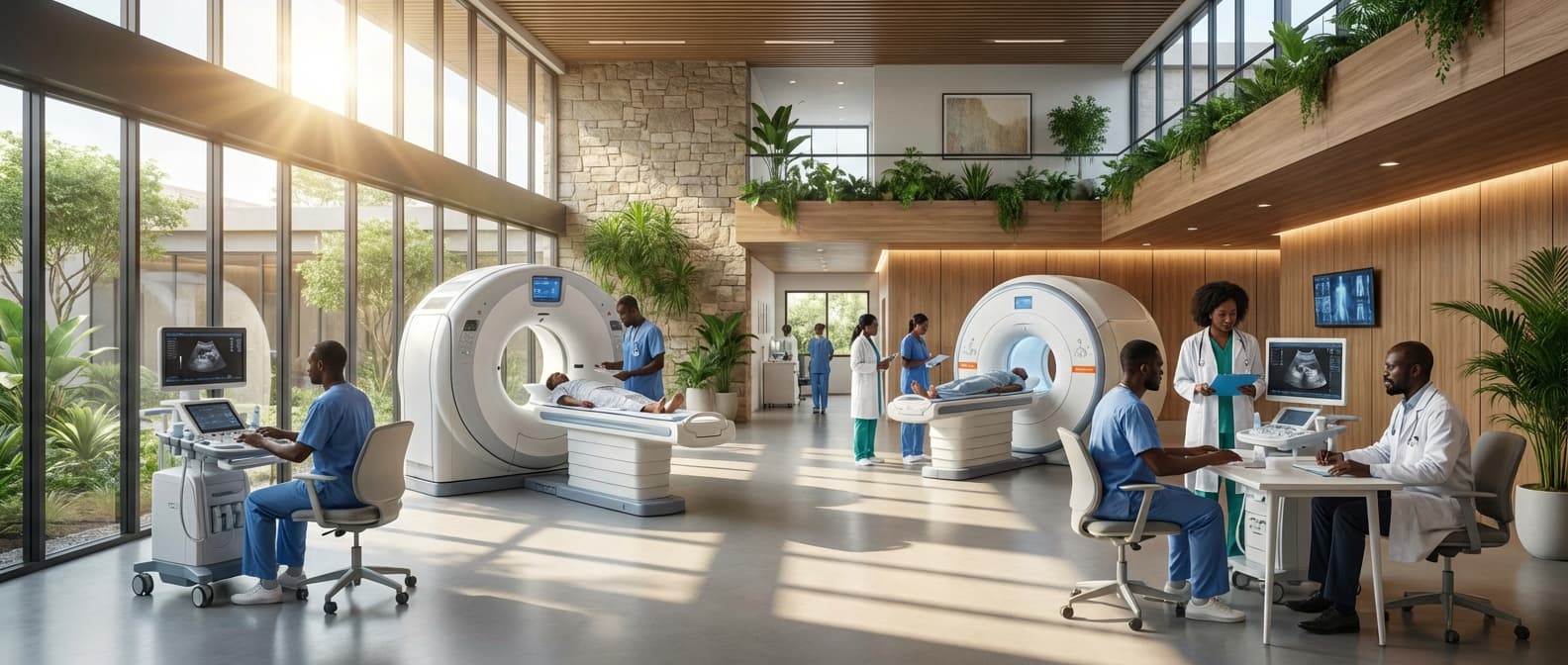
Diagnostic Imaging in Ghana
Engineering Excellence & Technical Support
High-resolution imaging systems including CT scanners, MRI, X-ray, and ultrasound technology for accurate clinical diagnosis. High-standard technical execution following OEM protocols and local regulatory frameworks.
AI-Powered Diagnostic Imaging for Early Disease Detection
Implementing advanced Artificial Intelligence algorithms to analyze medical images (X-rays, CT scans, MRIs) for enhanced accuracy and speed in diagnosing conditions like tuberculosis, malaria, and specific cancers, particularly in resource-limited areas.
Mobile Diagnostic Imaging Units for Rural Access
Deploying fully equipped mobile imaging vans with digital X-ray and ultrasound capabilities to remote and underserved communities, bridging the healthcare gap and ensuring timely diagnosis for populations far from fixed medical facilities.
Tele-Radiology Network for Specialist Consultation
Establishing a robust tele-radiology network connecting district hospitals and clinics to national and international radiologists, enabling remote interpretation of scans and providing expert diagnostic support to local healthcare professionals.
What Is Diagnostic Imaging In Ghana?
Diagnostic imaging in Ghana refers to a spectrum of medical imaging technologies utilized for the non-invasive visualization of internal body structures to aid in the diagnosis, management, and treatment of diseases and injuries. These modalities employ various physical principles, including X-ray radiation, magnetic fields, sound waves, and radioactive tracers, to generate detailed anatomical and physiological information. The service is integral to modern healthcare, enabling clinicians to identify abnormalities, monitor disease progression, and guide therapeutic interventions with enhanced precision. The demand for diagnostic imaging services in Ghana is driven by an increasing burden of both communicable and non-communicable diseases, trauma cases, and a growing awareness of the benefits of early and accurate diagnosis. The accessibility and utilization of these services are influenced by factors such as healthcare infrastructure, the availability of trained personnel, and the cost of technology and consumables.
| Who Needs Diagnostic Imaging? | Typical Use Cases |
|---|---|
| Individuals presenting with symptoms indicative of internal pathology (e.g., pain, swelling, fever, neurological deficits, respiratory distress). | Screening for certain conditions (e.g., mammography for breast cancer, chest X-rays for tuberculosis). |
| Patients undergoing pre-operative assessment to evaluate anatomical structures and identify potential complications. | Monitoring disease progression and response to treatment (e.g., tracking tumor size, assessing healing of fractures). |
| Individuals with suspected fractures, dislocations, or other bone abnormalities. | Diagnosis of infectious diseases (e.g., pneumonia, osteomyelitis). |
| Patients with suspected internal bleeding or organ damage following trauma. | Evaluation of cardiovascular conditions (e.g., assessing heart function, identifying blood clots). |
| Individuals experiencing gastrointestinal disturbances (e.g., abdominal pain, suspected blockages). | Detection and staging of cancers and other neoplastic processes. |
| Patients with neurological symptoms (e.g., headaches, seizures, weakness). | Assessment of musculoskeletal injuries and degenerative conditions. |
| Pregnant women for antenatal assessment of fetal development and maternal pelvic organs. | Guidance for interventional procedures (e.g., biopsies, drainages). |
| Individuals with suspected urinary tract abnormalities. | Evaluation of thyroid and other endocrine gland disorders. |
Key Diagnostic Imaging Modalities Available in Ghana:
- X-ray Radiography (Plain X-rays)
- Computed Tomography (CT) Scans
- Magnetic Resonance Imaging (MRI)
- Ultrasound (Sonography)
- Mammography
- Fluoroscopy
- Nuclear Medicine (e.g., SPECT, PET scans - availability may be limited)
Who Needs Diagnostic Imaging In Ghana?
Diagnostic imaging plays a crucial role in modern healthcare, offering vital insights for diagnosis, treatment planning, and monitoring patient progress. In Ghana, the demand for these services is steadily growing, driven by an increasing burden of non-communicable diseases, trauma cases, and advancements in medical technology. Understanding who needs diagnostic imaging and within which departments it's most utilized is key to optimizing resource allocation and improving patient outcomes.
| Department | Primary Needs for Diagnostic Imaging | Common Imaging Modalities |
|---|---|---|
| Radiology | Diagnosis of fractures, infections, tumors, organ abnormalities, foreign bodies, and assessment of musculoskeletal and skeletal systems. | X-ray, CT Scan, MRI, Ultrasound |
| Internal Medicine | Diagnosis and management of respiratory diseases (pneumonia, COPD), gastrointestinal disorders (ulcers, blockages), cardiovascular conditions (heart enlargement, fluid), and kidney issues. | X-ray (Chest), CT Scan, Ultrasound, MRI |
| Surgery | Pre-operative planning, identification of surgical targets, assessment of trauma severity, post-operative evaluation, and detection of complications. | CT Scan, MRI, Ultrasound, X-ray |
| Obstetrics & Gynecology | Monitoring fetal development, diagnosing pregnancy complications (ectopic pregnancy, placenta previa), evaluating uterine fibroids, ovarian cysts, and assessing pelvic organs. | Ultrasound, MRI |
| Pediatrics | Diagnosis of congenital anomalies, infections, trauma, and growth abnormalities in children. | X-ray, Ultrasound, CT Scan (with reduced radiation protocols) |
| Cardiology | Assessment of heart size and function, detection of blockages in coronary arteries (CT Angiography), and evaluation of heart valve abnormalities. | Echocardiogram (Ultrasound), CT Angiography, MRI |
| Oncology | Staging of cancer, monitoring tumor response to treatment, detection of metastases, and guiding biopsies. | CT Scan, MRI, PET-CT (where available), Ultrasound |
| Emergency Medicine | Rapid diagnosis of life-threatening conditions like head injuries, internal bleeding, organ damage, and severe fractures. | X-ray, CT Scan, Ultrasound |
Target Customers for Diagnostic Imaging in Ghana
- Patients requiring initial diagnosis: Individuals presenting with symptoms that require visualization of internal structures to identify the cause of illness.
- Patients undergoing treatment monitoring: Those whose conditions require regular imaging to assess the effectiveness of their treatment or detect any progression.
- Patients requiring pre-operative assessment: Individuals needing imaging to plan surgical procedures, identify anatomical variations, and assess potential risks.
- Patients with suspected injuries: Individuals involved in accidents or experiencing trauma that may have resulted in fractures, internal bleeding, or organ damage.
- Patients with chronic conditions: Individuals managing long-term illnesses like cancer, cardiovascular disease, or chronic respiratory conditions often require ongoing imaging for management and follow-up.
- Patients undergoing screening programs: Individuals participating in targeted screening for conditions such as breast cancer, lung cancer, or certain vascular diseases.
- Patients referred by general practitioners: Many referrals originate from primary healthcare providers who suspect a condition requiring further investigation.
- Patients referred by specialists: Consultants in various fields regularly request imaging to support their diagnostic and therapeutic decisions.
Diagnostic Imaging Process In Ghana
The diagnostic imaging process in Ghana, while increasingly sophisticated, often involves a distinct workflow. This process typically begins with a patient's initial presentation to a healthcare provider, who, based on their clinical assessment, determines the need for imaging. The referral then moves to the imaging department, where administrative steps are taken before the actual scan is performed. Post-execution, the images are interpreted by a radiologist, and the findings are communicated back to the referring physician for patient management. Challenges can arise at various stages, including access to technology, trained personnel, and the efficient flow of information.
| Stage | Description | Key Personnel Involved | Potential Challenges in Ghana |
|---|---|---|---|
| Inquiry/Referral | A healthcare provider suspects a condition requiring imaging based on patient symptoms and clinical examination. A formal request (referral form) is initiated. | Referring Physician, Nurse, Physician Assistant | Lack of readily available diagnostic tools at primary care level, limited awareness of imaging availability and necessity. |
| Scheduling & Pre-authorization | The patient or their representative contacts the imaging facility to book an appointment. For some procedures or institutions, pre-authorization from insurance or specific departments may be required. | Administrative Staff (Receptionist, Scheduler), Patient/Relative | Long waiting times for appointments, complex or non-existent insurance pre-authorization processes, limited communication channels. |
| Patient Preparation | Depending on the imaging modality and body part, the patient may need to follow specific instructions such as fasting, drinking contrast agents, or changing into a gown. Health education is crucial. | Radiographer/Technologist, Nurse, Patient/Relative | Inadequate patient education leading to non-compliance, limited availability of contrast agents, insufficient staff for thorough preparation. |
| Image Acquisition (Execution) | The patient undergoes the imaging procedure (e.g., X-ray, Ultrasound, CT scan, MRI) performed by a trained radiographer/technologist. This is the core execution phase. | Radiographer/Technologist, Radiologist (for guidance/supervision) | Equipment malfunction or unavailability, power outages, shortage of skilled radiographers/technologists, limited access to advanced modalities (e.g., MRI, advanced CT), high radiation exposure concerns if protocols are not followed. |
| Image Processing & Quality Control | Digital images are processed, and their quality is checked to ensure diagnostic accuracy before interpretation. Older systems might involve film processing. | Radiographer/Technologist, IT Support (for digital systems) | Outdated or slow processing systems, lack of robust quality control mechanisms, insufficient IT infrastructure. |
| Radiological Interpretation | A qualified radiologist reviews the images, looking for abnormalities and formulating a diagnosis based on imaging findings. | Radiologist | Severe shortage of radiologists, heavy workload leading to delays, lack of sub-specialized radiologists. |
| Report Generation | The radiologist dictates or writes a detailed report of their findings and conclusions. This report is crucial for the referring physician. | Radiologist, Reporting Officer/Secretary | Typographical errors, delays in report typing, difficulty in accessing dictation equipment or software. |
| Report Delivery | The final report is delivered to the referring physician, often through secure electronic systems, mail, or direct hand-delivery. | Administrative Staff, Courier/Messenger, Referring Physician | Inefficient or delayed delivery methods, misplacement of reports, poor communication between departments. |
| Follow-up & Patient Management | The referring physician uses the imaging report to make a diagnosis, plan treatment, or order further investigations. | Referring Physician, Patient | Lack of understanding of report findings by referring physician, delayed follow-up appointments, patient's inability to afford further investigations or treatment. |
Diagnostic Imaging Workflow in Ghana
- Patient Presentation & Clinical Suspicion
- Physician Referral for Imaging
- Appointment Scheduling & Pre-authorization (if applicable)
- Patient Preparation
- Image Acquisition (Scanning)
- Image Processing & Quality Control
- Radiological Interpretation
- Report Generation
- Report Delivery to Referring Physician
- Follow-up & Patient Management
Diagnostic Imaging Cost In Ghana
The cost of diagnostic imaging services in Ghana can vary significantly due to several factors. These include the type of imaging modality used (e.g., X-ray, Ultrasound, CT Scan, MRI), the specific body part being scanned, the location of the facility (urban centers generally have higher costs than rural areas), the reputation and equipment sophistication of the imaging center, and the specific protocol or contrast agents used. Public health facilities often offer lower prices due to subsidies, while private hospitals and specialized imaging centers tend to be more expensive. The fluctuating exchange rates and import costs for sophisticated medical equipment and consumables also play a role in the overall pricing. It's crucial for patients to inquire about costs upfront and potentially seek quotations from multiple providers, especially for more complex procedures.
| Imaging Modality | Typical Body Part | Estimated Cost Range (GHS) | Notes |
|---|---|---|---|
| X-ray | Chest (PA View) | 100 - 300 | Basic X-rays are generally the most affordable. |
| X-ray | Limb (e.g., Hand, Foot) | 80 - 250 | Can vary based on the number of views. |
| Ultrasound | Abdomen | 200 - 500 | Includes organs like liver, kidneys, gallbladder. |
| Ultrasound | Pelvic | 200 - 500 | Common for gynecological and urological assessment. |
| Ultrasound | Obstetric (Dating Scan) | 150 - 400 | Focuses on fetal development and pregnancy. |
| CT Scan | Head | 800 - 2000 | Can be higher with contrast. |
| CT Scan | Abdomen/Pelvis | 1000 - 2500 | Often involves contrast agents, increasing cost. |
| CT Scan | Chest | 900 - 2200 | Used for lung and thoracic cavity assessment. |
| MRI Scan | Brain | 1500 - 3500 | More complex and expensive than CT; contrast may be used. |
| MRI Scan | Spine | 1800 - 4000 | Can vary based on the region of the spine scanned (cervical, thoracic, lumbar). |
| MRI Scan | Joint (e.g., Knee, Shoulder) | 1600 - 3800 | Detailed imaging of musculoskeletal structures. |
Common Diagnostic Imaging Services and Estimated Cost Ranges in Ghana (GHS)
- X-ray (Plain Radiography)
- Ultrasound (Abdominal, Pelvic, Obstetric)
- CT Scan (Head, Abdomen/Pelvis, Chest)
- MRI Scan (Brain, Spine, Joints)
Affordable Diagnostic Imaging Options
Accessing affordable diagnostic imaging is a growing concern for many. Fortunately, there are ways to navigate the healthcare system to find cost-effective options. Understanding the concepts of value bundles and implementing smart cost-saving strategies can significantly reduce your out-of-pocket expenses for essential imaging services like X-rays, MRIs, CT scans, and ultrasounds.
| Imaging Service | Potential Cost-Saving Strategy | Notes |
|---|---|---|
| X-Ray | Self-pay discount, Outpatient center comparison | Generally the least expensive imaging modality. |
| Ultrasound | Value bundle inquiry, Independent imaging center | Cost can vary based on the complexity of the exam. |
| CT Scan | Compare prices at multiple centers, Ask about self-pay rates | Can be significantly more expensive than X-rays or ultrasounds. |
| MRI | Explore bundled pricing, Inquire about self-pay discounts | Often the most expensive imaging modality; price variation is substantial. |
| Mammogram | Check for screening mammogram coverage, Utilize hospital financial assistance if applicable | Screening mammograms often have specific coverage guidelines. |
| Bone Density Scan (DEXA) | Confirm insurance coverage, Ask about package deals | Can sometimes be bundled with other services. |
Key Cost-Saving Strategies for Diagnostic Imaging
- Understand Your Insurance Coverage: Before any imaging is performed, thoroughly review your health insurance policy. Know your deductible, copay, coinsurance, and out-of-pocket maximum. Familiarize yourself with in-network versus out-of-network providers, as staying in-network generally results in lower costs.
- Ask for Estimates and Compare Prices: Don't be afraid to call multiple imaging centers and ask for self-pay or uninsured pricing estimates for the specific procedure you need. Prices can vary dramatically between facilities, even within the same geographic area. Leverage online tools and price comparison websites if available.
- Explore 'Value Bundles' or Package Deals: Many imaging centers, especially independent ones or those affiliated with larger hospital systems, offer 'value bundles' for common imaging procedures. These bundles often include the technical cost of the scan (the use of the equipment and facility) and the professional interpretation fee (the radiologist's report). Sometimes, these bundled prices are more advantageous than paying for each component separately, particularly if you are uninsured or have a high deductible.
- Consider 'Outpatient Imaging Centers' vs. Hospital-Based Facilities: Independent outpatient imaging centers are often less expensive than imaging departments within hospitals. Hospitals typically have higher overhead costs, which are passed on to patients. If your doctor recommends imaging, inquire if an outpatient center is an acceptable option.
- Inquire About Self-Pay Discounts: If you are uninsured or have a high deductible that you haven't met, ask about self-pay discounts. Many facilities offer a significant reduction in price for patients who pay in full at the time of service.
- Discuss Alternatives with Your Doctor: Sometimes, a less expensive imaging modality or a different diagnostic approach might be sufficient. Discuss the necessity of a specific scan with your physician and explore if there are any alternative diagnostic pathways that could be considered.
- Utilize Health Savings Accounts (HSAs) or Flexible Spending Accounts (FSAs): If you have an HSA or FSA, these pre-tax dollars can be used to pay for eligible medical expenses, including diagnostic imaging, without incurring taxes.
- Negotiate the Bill: If you receive a bill that seems exceptionally high, don't hesitate to contact the billing department to discuss potential payment plans or see if any adjustments can be made, especially if you can demonstrate financial hardship or have explored other cost-saving measures.
- Look for Accreditation: While not directly a cost-saving measure, accredited imaging facilities often adhere to higher standards of quality and safety. This can provide peace of mind that you are receiving a reliable diagnosis, which can prevent the need for repeat or unnecessary imaging.
Verified Providers In Ghana
Navigating the healthcare landscape in Ghana can be challenging, with a constant need to ensure you're receiving care from qualified and trustworthy professionals. Verified Providers in Ghana offer a crucial solution to this problem, providing a pathway to reliable and high-quality medical services. Franance Health stands out as a prime example of an organization dedicated to this mission, meticulously credentialing healthcare providers to ensure excellence. Their rigorous vetting process goes beyond basic qualifications, assessing experience, ethical conduct, and patient satisfaction. By choosing Franance Health verified providers, individuals gain peace of mind, knowing they are entrusting their well-being to practitioners who meet the highest standards of care and professionalism in Ghana.
| Provider Type | Franance Health Verification Benefits | Example of Services |
|---|---|---|
| Doctors (Specialists & General Practitioners) | Ensures board certification, clean disciplinary records, and proven clinical expertise. Access to specialized care with confidence. | Cardiology, Dermatology, Pediatrics, General Consultations |
| Nurses | Verifies licensure, training, and a commitment to compassionate patient care. Reliable nursing support for various needs. | Post-operative care, wound management, patient education |
| Hospitals & Clinics | Assesses infrastructure, equipment, quality of care standards, and patient safety protocols. Access to well-equipped and well-managed healthcare facilities. | In-patient services, diagnostic imaging, surgical procedures |
| Diagnostic Laboratories | Confirms adherence to quality control measures, accurate testing procedures, and timely reporting of results. Trustworthy diagnostic services. | Blood tests, imaging scans, pathology analysis |
| Pharmacies | Ensures proper dispensing practices, quality of medications, and knowledgeable pharmacists. Safe and reliable access to prescription and over-the-counter drugs. | Medication dispensing, health advice, prescription refills |
Why Franance Health Verified Providers are the Best Choice:
- Rigorous Credentialing Process: Franance Health employs a comprehensive vetting system that scrutinizes qualifications, experience, and ethical standing of healthcare professionals.
- Commitment to Quality Care: Providers are selected based on their demonstrated ability to deliver high-quality medical services and positive patient outcomes.
- Enhanced Patient Safety: Verification ensures that practitioners adhere to established safety protocols and best practices, minimizing risks.
- Trust and Reliability: Choosing a Franance Health verified provider offers a high degree of assurance in the competence and integrity of your healthcare provider.
- Access to Reputable Professionals: Franance Health acts as a gateway to a network of well-respected and skilled healthcare practitioners across Ghana.
- Streamlined Healthcare Navigation: Their verification system simplifies the process of finding trustworthy medical specialists and facilities.
Scope Of Work For Diagnostic Imaging
This Scope of Work (SOW) outlines the requirements for providing diagnostic imaging services. It details the technical deliverables expected from the imaging provider and the standard specifications to ensure quality, safety, and compatibility with existing healthcare infrastructure. The objective is to ensure accurate and timely diagnostic imaging to support patient care and clinical decision-making.
| Imaging Modality | Standard Specifications | Image Quality Requirements | Reporting Turnaround Time |
|---|---|---|---|
| X-ray | Digital radiography (DR) or computed radiography (CR) systems. Resolution: minimum 300 dpi. DICOM compliant. | Clear visualization of anatomical structures. Absence of artifacts. Proper exposure levels. | Routine: 24-48 hours. STAT: 1-4 hours. |
| CT Scan | Multi-detector CT (MDCT) scanner. Slice thickness dependent on clinical indication. DICOM compliant. | High spatial resolution. Minimal noise. Accurate Hounsfield unit measurements. Absence of motion artifacts. | Routine: 24-48 hours. STAT: 1-4 hours. |
| MRI | High-field strength (1.5T or 3T). Advanced pulse sequences. DICOM compliant. | Excellent soft-tissue contrast. High signal-to-noise ratio (SNR). Minimal susceptibility artifacts. Appropriate slice thickness. | Routine: 24-48 hours. STAT: 1-4 hours. |
| Ultrasound | Digital ultrasound systems with Doppler capabilities. DICOM compliant. | Good echogenicity differentiation. Clear visualization of flow dynamics. Absence of clutter. Appropriate transducer selection. | Routine: 24-48 hours. STAT: 1-4 hours. |
| Mammography | Digital mammography (FFDM) or tomosynthesis systems. DICOM compliant. | High resolution for subtle calcifications and masses. Excellent contrast. Reduced scatter radiation. | Routine: 48-72 hours. STAT: 4-8 hours. |
| PET/CT | Integrated PET/CT scanner with appropriate tracer capabilities. DICOM compliant. | Accurate localization and quantification of metabolic activity. Good co-registration with anatomical data. Minimal scatter and attenuation correction artifacts. | Routine: 48-72 hours. STAT: 4-8 hours. |
Technical Deliverables
- High-resolution digital images (DICOM format) of all performed imaging studies.
- Comprehensive radiology reports, including findings, impressions, and recommendations, generated by board-certified radiologists.
- Secure and timely transmission of images and reports to the client's Picture Archiving and Communication System (PACS) or Electronic Health Record (EHR) system.
- Access to a web-based viewer for remote image and report access (if required).
- Archival of all images and reports in compliance with regulatory requirements and client policies.
- Regular system performance reports and uptime metrics.
- On-site or remote technical support for imaging equipment and PACS integration.
- Training for client IT staff on system integration and basic troubleshooting.
- Data backup and disaster recovery plan for all stored imaging data.
- Compliance with all relevant data privacy and security regulations (e.g., HIPAA, GDPR).
Service Level Agreement For Diagnostic Imaging
This Service Level Agreement (SLA) outlines the performance standards and guarantees for diagnostic imaging services provided by [Provider Name] to [Client Name]. It covers critical aspects such as image availability, report turnaround times, and system uptime.
| Service Component | Guaranteed Level | Measurement Method | Remedy for Non-Compliance |
|---|---|---|---|
| Image Availability | 99.9% uptime for PACS access | Monthly uptime percentage calculated from PACS server logs. | 10% service credit for every hour of downtime exceeding the guaranteed level. |
| Routine Report Turnaround Time | 85% of reports delivered within 24 hours of study completion | Measured from the time the study is finalized by the radiologist to the time the report is electronically signed and available in PACS. | For every 10 reports exceeding the 24-hour SLA, a 5% discount on the next monthly invoice. |
| STAT Report Turnaround Time | 95% of STAT reports delivered within 1 hour of radiologist availability | Measured from the time the STAT order is received and the radiologist is notified to the time the report is electronically signed and available in PACS. | For every STAT report exceeding the 1-hour SLA, a $50 credit per report. |
| System Uptime (Imaging Modalities) | 98% operational uptime for all scheduled imaging equipment (MRI, CT, X-ray, Ultrasound) | Measured as the percentage of scheduled operational hours during which the equipment is functional and available for patient scans, excluding scheduled maintenance. | Service credits equivalent to 1/30th of the monthly fee for each day of downtime exceeding the guaranteed level. |
| Response Time to Critical Incidents (System Down) | Within 1 hour for critical system failures affecting multiple modalities or PACS | Time from initial notification to the commencement of troubleshooting by the provider's technical team. | No direct credit, but priority escalation for resolution and potential root cause analysis report. |
| Response Time to Non-Critical Incidents (Minor Issues) | Within 4 business hours for non-critical system issues | Time from initial notification to the commencement of troubleshooting by the provider's technical team. | No direct credit, but commitment to timely resolution within standard business hours. |
Key Service Components
- Image Availability: Ensuring access to acquired images.
- Report Turnaround Time: Guaranteeing timely delivery of diagnostic reports.
- System Uptime: Defining the expected availability of diagnostic imaging equipment and associated IT systems.
- Response Time to Critical Incidents: Specifying the timeframe for addressing urgent issues.
- Data Security and Confidentiality: Maintaining compliance with HIPAA and other relevant regulations.
Frequently Asked Questions

Ready when you are
Let's scope your Diagnostic Imaging in Ghana project in Ghana.

Scaling healthcare logistics and technical systems across the entire continent.