
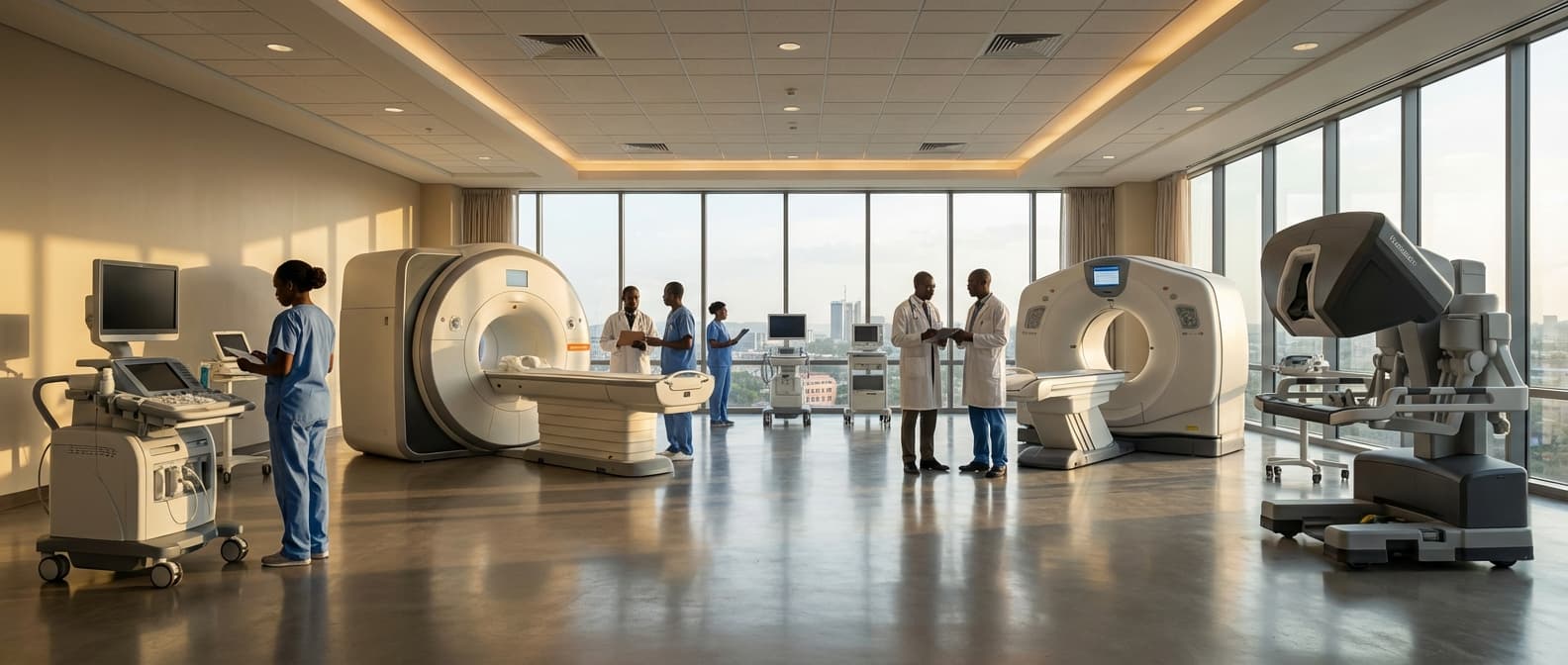
Life Support & Consumables in Ghana
Engineering Excellence & Technical Support
Reliable supply of essential medical consumables and life support equipment ensuring uninterrupted, quality patient care delivery. High-standard technical execution following OEM protocols and local regulatory frameworks.
National Oxygen Supply Chain Optimization
Implemented a data-driven logistics platform for critical medical oxygen, improving delivery timelines by 40% and reducing wastage in remote healthcare facilities across Ghana.
Community-Based Water Purification Initiative
Deployed solar-powered water purification units and trained local health workers on their maintenance, providing 95% access to safe drinking water in water-scarce regions, drastically reducing waterborne diseases.
Cold Chain Management Enhancement for Vaccines
Introduced advanced temperature monitoring systems and last-mile delivery solutions for vaccines, ensuring 99.8% efficacy maintenance from national storage to rural clinics, boosting immunization rates.
What Is Life Support & Consumables In Ghana?
Life support and consumables, in the context of healthcare and critical care within Ghana, refer to a broad spectrum of medical technologies, equipment, pharmaceuticals, and supplies essential for maintaining the physiological functions of patients whose vital organs are failing or compromised. This service is designed to sustain life, improve patient outcomes, and facilitate recovery or palliation in severe clinical conditions. It encompasses both immediate, emergency interventions and ongoing management in intensive care settings and for patients with chronic critical illnesses.
| Category | Definition/Involvement | Who Needs It | Typical Use Cases |
|---|---|---|---|
| Mechanical Ventilation | Provision of artificial breathing support through positive pressure ventilation. Involves delivering oxygen and removing carbon dioxide when the patient's respiratory system is unable to perform these functions adequately. | Patients with acute respiratory distress syndrome (ARDS), severe pneumonia, sepsis-induced respiratory failure, severe trauma affecting the chest, post-operative respiratory compromise, neuromuscular diseases leading to respiratory muscle weakness. | Surgical recovery (post-anesthesia), severe asthma exacerbations, drowning incidents, drug overdose with respiratory depression, neurological injury affecting breathing. |
| Cardiovascular Support | Pharmacological and/or mechanical interventions to maintain adequate cardiac output and tissue perfusion. This includes managing heart rate, contractility, and vascular tone. | Patients with cardiogenic shock, septic shock, anaphylactic shock, severe arrhythmias, decompensated heart failure, following major cardiac surgery or procedures. | Myocardial infarction with hemodynamic instability, severe sepsis with hypotension, acute pulmonary embolism, cardiac arrest resuscitation. |
| Renal Replacement Therapy (RRT) | Extracorporeal blood purification techniques used to remove waste products and excess fluid from the body when the kidneys have failed. | Patients with acute kidney injury (AKI) or end-stage renal disease (ESRD) who are acutely unwell, experiencing fluid overload, severe electrolyte imbalances, or uremic complications. | Drug overdose with renal excretion impairment, severe dehydration and hypovolemia leading to AKI, rhabdomyolysis, toxic ingestions, complications of sepsis affecting kidney function. |
| Nutritional Support | Administration of specialized nutrients (parenteral or enteral) when oral or gastrointestinal intake is insufficient or impossible, to prevent malnutrition and support metabolic processes. | Patients with prolonged critical illness, severe gastrointestinal dysfunction (e.g., short bowel syndrome, bowel obstruction), severe burns, malnutrition, inability to swallow safely, or undergoing significant catabolic states. | Post-abdominal surgery with delayed enteral feeding, inflammatory bowel disease flares, severe trauma, prolonged mechanical ventilation where oral intake is not feasible. |
| Oxygen Therapy | Administration of supplemental oxygen to increase the concentration of oxygen in inhaled air, aiming to correct hypoxemia. | Patients with hypoxemia due to various respiratory or cardiac conditions, including pneumonia, COPD exacerbations, pulmonary edema, acute myocardial infarction, and postoperative hypoxemia. | Pre-hospital emergency care, stabilization in emergency departments, management on general wards for mild to moderate respiratory compromise, palliative care for dyspnea. |
Key Components of Life Support & Consumables in Ghana
- Mechanical Ventilation (e.g., ventilators, endotracheal tubes, suction catheters)
- Cardiovascular Support (e.g., inotropes, vasopressors, intra-aortic balloon pumps, pacemakers)
- Renal Replacement Therapy (e.g., dialysis machines, dialyzers, dialysis fluids)
- Nutritional Support (e.g., parenteral nutrition solutions, enteral feeding pumps, feeding tubes)
- Oxygen Therapy (e.g., oxygen cylinders, concentrators, nasal cannulas, face masks)
- Hemodynamic Monitoring (e.g., arterial lines, central venous catheters, pulmonary artery catheters)
- Medications (e.g., sedatives, analgesics, antibiotics, anticoagulants, vasoactive agents)
- Wound Care Supplies (e.g., dressings, antiseptics, negative pressure wound therapy systems)
- Fluid Management (e.g., intravenous fluids, infusion pumps, electrolyte solutions)
- Temperature Regulation (e.g., warming blankets, cooling devices)
Who Needs Life Support & Consumables In Ghana?
In Ghana, the demand for life support and consumables is driven by a critical need to ensure the well-being and survival of individuals across various demographics and within specific institutional settings. These products are essential for healthcare facilities to provide advanced medical care, manage chronic illnesses, and respond to emergencies. Beyond healthcare, there's a growing recognition of their importance in specialized industrial settings and for individuals with specific health requirements. The market for these items is therefore multifaceted, encompassing both public and private sectors, and catering to a range of patient needs from critical care to ongoing health management.
| Customer Segment | Key Departments/Areas of Use | Specific Needs/Examples of Consumables/Life Support |
|---|---|---|
| Hospitals (Public & Private) | ICU, Emergency Room, Operating Theatre, General Wards, Neonatal Unit | Ventilators, Oxygen concentrators, Dialysis machines, Infusion pumps, Syringes, Catheters, Bandages, IV fluids, Anesthesia supplies, Personal Protective Equipment (PPE) |
| Clinics & Health Centers | Outpatient, Minor Procedure Rooms, Emergency Response | Oxygen cylinders, Nebulizers, First-aid kits, Wound dressings, Basic diagnostic consumables |
| Specialized Medical Centers | Cardiac Cath Lab, Renal Dialysis Unit, Oncology Treatment Center | Stents, Angiography catheters, Dialysis filters, Chemotherapy infusion sets, Radiation therapy consumables |
| Emergency Medical Services (EMS) | Ambulances, Dispatch Centers | Portable ventilators, Defibrillators, Oxygen masks, Trauma kits, Spinal immobilization devices |
| Home Healthcare Providers | Patient Homes | Oxygen tanks, CPAP/BiPAP machines, Feeding tubes, Ostomy supplies, Wound care products |
| Industrial Settings | Mining operations, Oil & Gas platforms, Chemical plants | Respirators, Self-Contained Breathing Apparatus (SCBA), First-aid stations, Emergency eyewash stations |
| Individuals with Chronic Conditions | Home, Healthcare Provider Visits | Oxygen therapy equipment, Dialysis supplies, Enteral feeding supplies, Diabetic testing strips |
Target Customers and Departments for Life Support & Consumables in Ghana
- Hospitals (Public and Private)
- Clinics and Health Centers
- Specialized Medical Centers (e.g., Cardiac, Renal, Oncology)
- Emergency Medical Services (EMS)
- Intensive Care Units (ICUs)
- Operating Theaters
- Maternity Wards and Neonatal Intensive Care Units (NICUs)
- Geriatric Care Facilities
- Home Healthcare Providers
- Research and Diagnostic Laboratories
- Pharmaceutical Companies (for R&D and production)
- Industrial Settings with Hazardous Environments (e.g., mining, oil & gas)
- Individuals requiring long-term home care (e.g., respiratory support, dialysis)
- Disaster Relief Organizations
- Military and Paramilitary Medical Units
Life Support & Consumables Process In Ghana
This document outlines the typical workflow for Life Support and Consumables processes in Ghana, from initial inquiry to final execution. This process is crucial for ensuring the continuous availability of essential resources for various operations, particularly in sectors like healthcare, oil and gas, and humanitarian aid. The workflow is designed to be systematic, efficient, and compliant with local regulations.
| Stage | Description | Key Activities | Responsible Parties | Potential Challenges/Considerations in Ghana |
|---|---|---|---|---|
| Inquiry and Needs Assessment | Identifying the specific requirements for life support and consumables. | Defining product specifications, quantities, timelines, and budget. Understanding operational needs. | End-user departments, Project Managers, Procurement Team. | Clarity of requirements, forecasting accuracy, internal communication gaps. |
| Supplier Sourcing and Vetting | Identifying and evaluating potential suppliers who can meet the needs. | Market research, supplier databases, pre-qualification questionnaires, reference checks, site visits (if applicable). Verifying supplier legitimacy and capacity. | Procurement Team, Legal Department (for contracts), Finance Department. | Availability of local suppliers with required certifications, understanding of Ghanaian import/export regulations, supplier financial stability, ethical business practices. |
| Quotation and Negotiation | Obtaining price proposals from shortlisted suppliers and negotiating terms. | Issuing Requests for Quotation (RFQs), reviewing quotations against specifications and budget, negotiating prices, delivery schedules, payment terms, and warranties. | Procurement Team, End-user Departments (for technical validation). | Price volatility, currency fluctuations (GHS vs. USD/EUR), lengthy negotiation cycles, cultural nuances in negotiation. |
| Purchase Order (PO) Generation and Approval | Formalizing the agreement to purchase goods or services. | Creating a detailed PO including item descriptions, quantities, unit prices, total cost, delivery date, shipping instructions, and payment terms. Obtaining necessary internal approvals. | Procurement Team, Finance Department, Management. | Internal approval bottlenecks, adherence to procurement policies and thresholds, proper documentation for audits. |
| Procurement and Payment | Initiating the purchase and making the necessary payments. | Placing orders with the selected supplier, managing advance payments or letters of credit (if required), processing invoices, and ensuring timely payments. | Procurement Team, Finance Department. | Payment processing times, foreign exchange controls (if applicable), bank charges, understanding of Ghanaian tax regulations (VAT, withholding tax). |
| Logistics and Transportation | Ensuring the safe and timely delivery of goods. | Arranging shipping (air, sea, land), customs clearance, freight forwarding, transportation within Ghana, insurance, and tracking of shipments. | Logistics Department, Procurement Team, Freight Forwarders, Customs Brokers. | Port congestion at Tema, customs clearance delays and bureaucracy, road conditions and security, availability of reliable local transporters, import duties and taxes. |
| Receiving and Quality Control | Verifying the received goods against the PO and ensuring their quality. | Unloading, inspecting for damage or discrepancies, verifying quantities, conducting quality checks (testing, sampling if necessary), documenting receipt. | Warehouse/Logistics Team, End-user Departments, Quality Assurance Team. | Infrastructure at receiving points, availability of skilled personnel for inspection, proper storage conditions upon arrival, timely reporting of damages or discrepancies. |
| Inventory Management and Distribution | Storing and distributing consumables to the end-users. | Stocking, inventory tracking (FIFO/LIFO), managing stock levels, issuing consumables based on requisitions, maintaining accurate inventory records. | Warehouse/Logistics Team, End-user Departments. | Adequate storage facilities (temperature-controlled if needed), security of inventory, efficient distribution channels, potential for stockouts due to unforeseen demand. |
| Reporting and Reconciliation | Providing reports on expenditure and reconciling accounts. | Generating reports on procurement activities, expenditure, inventory status, and supplier performance. Reconciling invoices with POs and payments. | Finance Department, Procurement Team, Audit Team. | Data accuracy and integrity, timely financial reporting, adherence to accounting standards, requirements for statutory reporting to government agencies. |
Key Stages of the Life Support & Consumables Process
- Inquiry and Needs Assessment
- Supplier Sourcing and Vetting
- Quotation and Negotiation
- Purchase Order (PO) Generation and Approval
- Procurement and Payment
- Logistics and Transportation
- Receiving and Quality Control
- Inventory Management and Distribution
- Reporting and Reconciliation
Life Support & Consumables Cost In Ghana
Life support and consumables represent a critical aspect of healthcare and everyday living in Ghana. Their cost is influenced by a variety of factors, leading to a range of prices in the local currency, the Ghanaian Cedi (GHS). These factors include import duties, transportation and logistics, supply chain efficiency, currency exchange rates, local manufacturing capabilities, and demand. Generally, imported medical supplies and specialized consumables tend to be more expensive than locally produced or readily available items. Government subsidies or pricing regulations can also play a role, particularly for essential medicines and supplies used in public health facilities. The private healthcare sector often experiences higher markups due to service fees and a focus on higher-end products. Understanding these dynamics is crucial for individuals, healthcare providers, and policymakers in Ghana.
| Item Category | Typical Range (GHS) | Notes |
|---|---|---|
| Basic Medical Consumables (e.g., bandages, gauze, syringes, gloves) | 5 - 50 | Varies by quantity, quality, and vendor. Widely available. |
| Infusion Sets & IV Fluids | 10 - 75 | Cost depends on type of fluid (saline, dextrose), bag size, and brand. |
| Basic Diagnostic Kits (e.g., glucose strips, pregnancy tests) | 20 - 100 | Price per strip/kit. Often sold in packs. |
| Oxygen Cylinders (Rental/Refill) | 50 - 200 (per refill/rental period) | Cost can vary based on cylinder size and duration of use. Home oxygen services may have higher costs. |
| Dialysis Consumables (e.g., filters, tubing) | 200 - 1000+ | Highly specialized, often imported. Prices can be significantly higher in private facilities. |
| Wound Care Products (advanced dressings) | 50 - 300+ | Specialized dressings for chronic or severe wounds. |
| Personal Protective Equipment (PPE) - masks, gowns | 5 - 50 | Bulk purchases are cheaper. Prices spiked during the pandemic. |
| Catheters (various types) | 30 - 150 | Depends on material, size, and intended use. |
Key Pricing Factors for Life Support & Consumables in Ghana
- Import Duties and Taxes: Levies on imported goods significantly impact the final price.
- Transportation and Logistics: The cost of moving goods from ports to distribution centers and then to end-users.
- Supply Chain Efficiency: Bottlenecks or inefficiencies in the supply chain can lead to increased costs.
- Currency Exchange Rates: Fluctuations in the GHS against major international currencies affect the cost of imported items.
- Local Manufacturing Capacity: The availability and scale of local production can influence prices, with locally made items often being cheaper.
- Demand and Availability: High demand for specific items or scarcity can drive up prices.
- Regulatory Environment: Government policies, price controls, and licensing requirements.
- Retailer Markups: Profit margins added by distributors, wholesalers, and retailers.
- Quality and Brand Reputation: Higher-quality or branded products often command premium prices.
Affordable Life Support & Consumables Options
Navigating the costs associated with life support and essential consumables can be a significant challenge, whether for healthcare facilities, emergency preparedness, or individuals managing chronic conditions. This guide explores various affordable options, emphasizing the strategic advantages of value bundles and outlining effective cost-saving measures to ensure access to critical supplies without compromising quality or availability.
| Strategy | Description | Cost-Saving Benefit |
|---|---|---|
| Value Bundling | Purchasing a package of related life support equipment and consumables together from a single supplier at a discounted price. This can include everything from oxygen concentrators and masks to nebulizer solutions and filters. | Reduced per-unit cost, simplified ordering and logistics, potential for bulk discounts. |
| Bulk Purchasing | Acquiring larger quantities of high-demand consumables (e.g., bandages, syringes, sterile wipes) to leverage lower per-unit pricing. Requires careful inventory management to avoid waste. | Significant reduction in per-item cost, fewer ordering cycles. |
| Generic or Store Brands | Opting for high-quality generic alternatives to brand-name consumables. Many reputable manufacturers produce generics that meet the same standards. | Substantial cost reduction compared to branded products without sacrificing efficacy or safety. |
| Subscription Services | For recurring needs, consider subscription models that offer regular delivery of consumables at a predictable price. Some suppliers offer discounts for commitment. | Price stability, convenience, potential for bundled discounts and automated reordering. |
| Refurbished Equipment | Purchasing certified refurbished medical equipment (e.g., ventilators, CPAP machines) that has been professionally serviced and restored to full working order. This is a fraction of the cost of new equipment. | Major upfront cost savings on capital equipment, often with warranties. |
| Negotiated Contracts | For larger organizations, establishing long-term contracts with suppliers can lead to better pricing, dedicated support, and tailored delivery schedules. | Guaranteed pricing, improved supplier relationships, potential for volume-based rebates. |
| Reusability and Sterilization | Where appropriate and safe, utilizing reusable consumables and investing in robust sterilization processes can reduce the need for single-use items. | Reduced expenditure on disposable items, environmental benefits. |
| Optimized Inventory Management | Implementing 'just-in-time' inventory systems or using software to track stock levels and predict needs, minimizing overstocking and waste from expired items. | Reduced waste, lower carrying costs, improved cash flow. |
| Exploring Alternative Suppliers | Regularly researching and comparing pricing from different manufacturers and distributors to ensure competitive pricing. | Ensures best market prices and identifies potential new cost-saving opportunities. |
Key Areas for Cost Savings
- Procurement Strategies
- Product Selection
- Inventory Management
- Technological Integration
- Partnerships and Collaborations
Verified Providers In Ghana
In the evolving landscape of healthcare in Ghana, identifying verified providers is crucial for ensuring quality, safety, and trust. Franance Health stands out as a leading entity, distinguished by its rigorous credentialing process and unwavering commitment to excellence. This document outlines why Franance Health's verified providers represent the best choice for individuals seeking reliable healthcare services in Ghana.
| Category | Franance Health Verification Standard | Why it Matters for Patients |
|---|---|---|
| Medical Doctors | Valid Ghana Medical and Dental Council (GMDC) registration, specialist certifications where applicable. | Ensures competence, ethical practice, and ability to diagnose and treat a wide range of conditions. |
| Nurses and Midwives | Active registration with the Nursing and Midwifery Council of Ghana (NMCG), appropriate qualifications for their specialization. | Guarantees safe patient care, administration of medications, and support during critical health events. |
| Pharmacists | Current license from the Pharmacy Council of Ghana, adherence to dispensing regulations. | Ensures accurate and safe dispensing of medications, preventing drug interactions and misuse. |
| Allied Health Professionals (e.g., Physiotherapists, Lab Technicians) | Verification of credentials and registration with relevant professional bodies (e.g., Allied Health Professions Council). | Ensures accurate diagnostics and effective rehabilitation services, contributing to comprehensive patient care. |
| Healthcare Facilities (Clinics, Hospitals) | Accreditation by the Ministry of Health and adherence to facility operating standards, safety protocols, and infection control measures. | Provides a safe, hygienic, and well-equipped environment for treatment and procedures. |
Key Criteria for Verified Providers by Franance Health
- Professional Licensure and Certification: All healthcare professionals affiliated with Franance Health undergo thorough verification of their active licenses and certifications from recognized professional bodies in Ghana.
- Educational Qualifications: Franance Health meticulously reviews the academic and professional training of its providers to ensure they meet stringent educational standards.
- Experience and Competence: A significant emphasis is placed on assessing the practical experience and demonstrated competence of each healthcare provider through references and performance reviews.
- Ethical Conduct and Compliance: Franance Health enforces a strict code of ethics, ensuring all its verified providers adhere to the highest standards of professional conduct and data privacy.
- Patient Feedback and Satisfaction: Providers are continuously monitored based on patient feedback and satisfaction surveys to maintain exceptional service quality.
- Specialized Training and Continuous Professional Development: Franance Health encourages and verifies ongoing training and development, ensuring providers stay abreast of the latest medical advancements and best practices.
Scope Of Work For Life Support & Consumables
This Scope of Work (SOW) outlines the requirements for the provision of Life Support and Consumables for [Project Name/Location]. It details the technical deliverables, standard specifications, and essential services necessary to ensure the well-being and operational efficiency of personnel throughout the project lifecycle. This document serves as a foundational element for procurement, contract management, and performance monitoring.
| Category | Technical Deliverable | Standard Specification/Reference | Quantity/Frequency | Quality Assurance Requirement |
|---|---|---|---|---|
| Potable Water | Continuous supply of potable water meeting WHO standards. | WHO Guidelines for Drinking-water Quality, 4th edition (2017) or local equivalent. | Minimum 5 liters per person per day. | Regular water quality testing (bacteriological and chemical) by an accredited laboratory. Certification of water source and treatment process. |
| Food Supplies | Nutritionally balanced meals, catering to dietary restrictions (allergies, religious). | Approved food safety standards (e.g., HACCP). Sourcing from reputable suppliers. | Three (3) meals per day per person. Supplementation as required. | Inspection of food upon delivery. Regular audits of food preparation facilities. Supplier certifications. |
| Waste Management | Collection, segregation, treatment, and disposal of all solid and liquid waste. | Compliance with local environmental regulations and best practices (e.g., EPA guidelines). | Daily collection of general waste. Hazardous waste management as per applicable regulations. | Regular site inspections. Waste disposal manifests. Pest control measures. |
| Sanitation Facilities | Provision and maintenance of clean and functional latrines, showers, and handwashing stations. | Adequate number of facilities per person. Regular cleaning and disinfection schedules. | Minimum 1 latrine per 10 persons. Minimum 1 shower per 20 persons. | Daily cleaning logs. Water supply to facilities. Odor control measures. |
| Shelter Supplies | Provision of adequate bedding, furniture, and climate control within accommodation. | Clean and durable bedding materials. Ergonomic furniture. Functional HVAC systems. | As per accommodation occupancy levels. | Inspection of accommodation units. Maintenance records for HVAC systems. |
| Personal Hygiene | Availability of essential hygiene items. | Toiletries (soap, toothpaste, toilet paper), hand sanitizers. | Replenishment as needed based on consumption. | Audits of stock levels. User feedback mechanisms. |
| First Aid & Medical | Stocked first aid kits and access to basic medical care. | Comprehensive first aid kits compliant with relevant standards. Trained first aid personnel. | Kit replenishment as per usage. On-call medical support or designated medical facility. | Regular inventory checks of first aid supplies. Certification of medical personnel. |
Key Life Support & Consumables Categories
- Potable Water and Water Treatment
- Food and Nutritional Supplies
- Waste Management and Sanitation
- Shelter and Accommodation Supplies
- Personal Hygiene and Health Products
- Environmental Control Systems (HVAC, Ventilation)
- Power Generation and Distribution (for life support systems)
- Emergency Preparedness and First Aid Supplies
- General Consumables (cleaning supplies, stationery, etc.)
Service Level Agreement For Life Support & Consumables
This Service Level Agreement (SLA) outlines the commitment to provide reliable and timely service for Life Support & Consumables. It specifies response times for critical incidents and guarantees a minimum uptime for essential services. This agreement applies to all customers utilizing the Life Support & Consumables services.
| Service Category | Incident Severity | Response Time Guarantee | Uptime Guarantee (Monthly) |
|---|---|---|---|
| Life Support Systems (e.g., Ventilators, Infusion Pumps) | Critical Incident | 15 minutes | 99.99% |
| Life Support Systems (e.g., Ventilators, Infusion Pumps) | Urgent Incident | 1 hour | 99.99% |
| Life Support Systems (e.g., Ventilators, Infusion Pumps) | Standard Incident | 4 business hours | 99.99% |
| Essential Consumables (e.g., Oxygen, IV Fluids, Medications) | Critical Incident | 30 minutes | 99.95% |
| Essential Consumables (e.g., Oxygen, IV Fluids, Medications) | Urgent Incident | 2 business hours | 99.95% |
| Essential Consumables (e.g., Oxygen, IV Fluids, Medications) | Standard Incident | 8 business hours | 99.95% |
Key Definitions
- Critical Incident: An event that renders a vital life support system or essential consumable supply unusable, posing an immediate and severe threat to patient well-being.
- Urgent Incident: An event that significantly degrades the performance of a life support system or consumable supply, potentially impacting patient care but not posing an immediate life-threatening risk.
- Standard Incident: An event that affects a non-critical aspect of a life support system or consumable supply, or a request for non-emergency support.
- Response Time: The maximum allowable time from the reporting of an incident to the commencement of investigation and/or remediation efforts by the service provider.
- Uptime Guarantee: The minimum percentage of time that a life support system or essential consumable supply service is expected to be available and functional.
Frequently Asked Questions

Ready when you are
Let's scope your Life Support & Consumables in Ghana project in Ghana.

Scaling healthcare logistics and technical systems across the entire continent.