
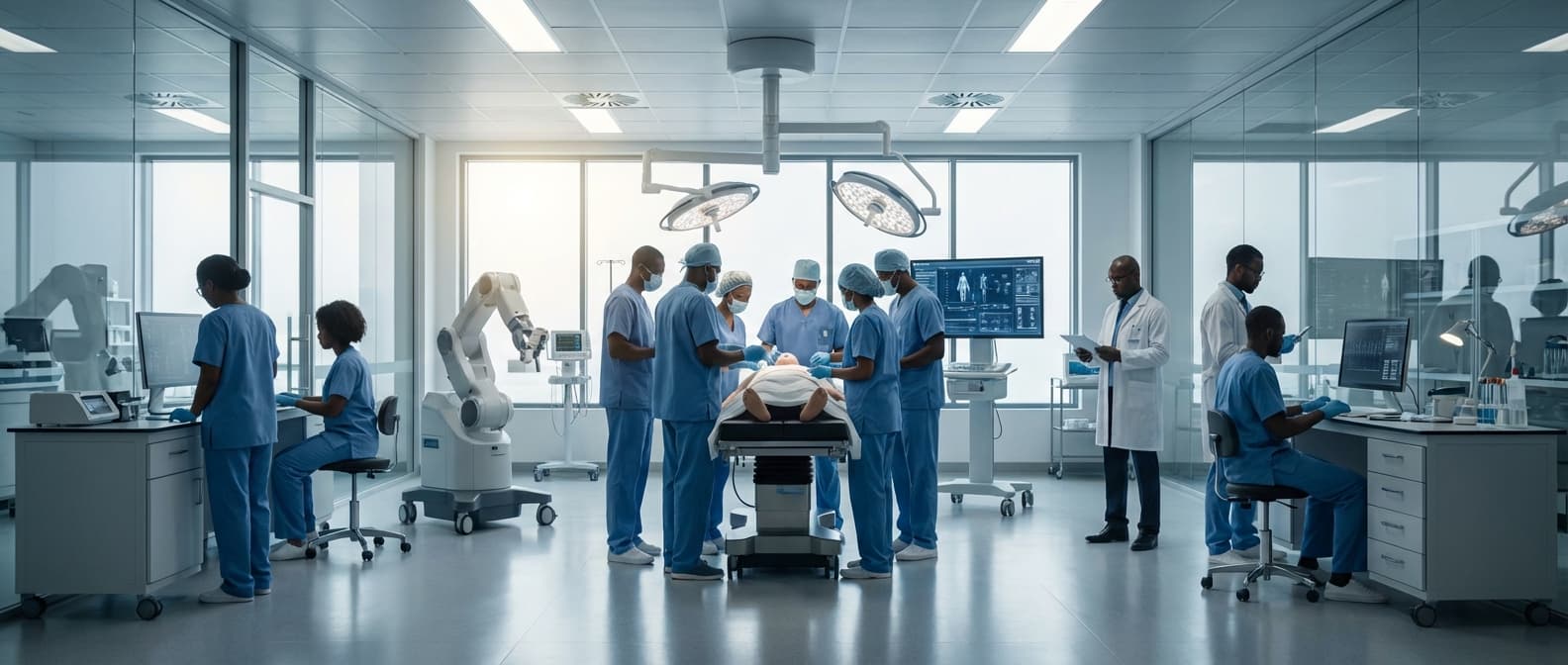
Managed Equipment Service (MES) in Ghana
Engineering Excellence & Technical Support
Long‑term equipment provision with uptime SLAs and lifecycle management. High-standard technical execution following OEM protocols and local regulatory frameworks.
Proactive Maintenance & Uptime Assurance
Leveraging advanced remote monitoring and predictive analytics, our MES in Ghana significantly reduces unplanned downtime for critical medical equipment. Our proactive maintenance schedules ensure optimal performance and extend equipment lifespan, directly impacting patient care continuity and operational efficiency for healthcare facilities.
ISO 13485 Certified Calibration & Compliance
We provide ISO 13485 certified calibration and validation services for a wide range of medical devices in Ghana. This ensures all equipment meets stringent regulatory standards and international quality benchmarks, guaranteeing accurate diagnostics, safe patient treatments, and seamless compliance for our clients.
Expert On-Site Training & Skill Augmentation
Our MES offering includes comprehensive on-site training programs for biomedical technicians and clinical staff in Ghana. We empower local teams with the knowledge and skills to operate and perform basic maintenance on advanced medical equipment, fostering self-sufficiency and enhancing the overall technical capacity within healthcare institutions.
What Is Managed Equipment Service (Mes) In Ghana?
Managed Equipment Service (MES) in Ghana refers to a comprehensive, outsourced business model where a third-party provider assumes responsibility for the acquisition, maintenance, operation, and sometimes even the financing of specialized equipment for an organization. This approach allows the client organization to focus on its core competencies while offloading the complexities associated with procuring, managing, and upgrading its technological infrastructure. MES providers often leverage their expertise and economies of scale to deliver cost-effective and efficient equipment management solutions.
| Who Needs MES in Ghana? | Typical Use Cases for MES in Ghana |
|---|---|
| Healthcare Institutions (Hospitals, Clinics, Diagnostic Centers): Requiring advanced medical imaging equipment, laboratory analyzers, and patient monitoring systems. | Medical imaging departments needing constant availability of MRI, CT scanners, and X-ray machines. |
| Educational Institutions (Universities, Colleges, Research Facilities): Needing specialized laboratory equipment, IT infrastructure, and audio-visual systems for teaching and research. | Universities managing fleets of computers and specialized scientific equipment for various departments. |
| Manufacturing and Industrial Companies: Requiring production machinery, specialized testing equipment, and sophisticated control systems. | Automotive manufacturers utilizing robotic assembly lines and complex quality control systems. |
| Telecommunications and IT Service Providers: Needing network infrastructure, servers, data storage, and end-user devices. | Telecom companies deploying and maintaining vast networks of base stations and data centers. |
| Government Agencies and Public Sector Organizations: Requiring office automation equipment, IT infrastructure, and specialized departmental tools. | Government ministries managing large fleets of computers and secure communication systems. |
| Financial Institutions (Banks, Insurance Companies): Requiring ATMs, secure IT infrastructure, and branch automation equipment. | Banks deploying and maintaining a nationwide network of ATMs. |
Key Components of MES in Ghana:
- Equipment Procurement and Acquisition: The MES provider identifies, sources, and acquires the necessary equipment, often through leasing or outright purchase, aligning with the client's specifications and budgetary constraints.
- Installation and Configuration: Ensuring seamless integration of new equipment into the client's existing IT infrastructure, including setup, network configuration, and software installation.
- Maintenance and Repair: Proactive and reactive maintenance services, including routine checks, preventative measures, and prompt repairs to minimize downtime and ensure optimal equipment performance.
- Upgrades and Replacements: Managing the lifecycle of equipment, including planning and executing timely upgrades or replacements to maintain technological relevance and meet evolving business needs.
- Technical Support and Helpdesk: Providing expert technical assistance to end-users, troubleshooting issues, and resolving operational problems related to the managed equipment.
- Asset Tracking and Management: Implementing robust systems for inventory management, tracking equipment location, usage, and lifecycle status.
- Performance Monitoring and Reporting: Continuously monitoring equipment performance, identifying potential issues, and providing regular reports on usage, uptime, and costs.
- Risk Management and Obsolescence Planning: Proactively addressing risks associated with equipment failure, security vulnerabilities, and technological obsolescence.
Who Needs Managed Equipment Service (Mes) In Ghana?
Managed Equipment Service (MES) in Ghana offers a comprehensive solution for organizations to outsource the management, maintenance, and upgrading of their critical equipment. This frees up internal resources, reduces capital expenditure, and ensures optimal performance and longevity of assets. By leveraging specialized expertise and technology, MES providers in Ghana help businesses across various sectors enhance efficiency, mitigate risks, and achieve their operational goals.
| Department/Function | MES Benefits |
|---|---|
| Biomedical Engineering/Facilities Management (Healthcare) | Ensures equipment availability, compliance with standards, proactive maintenance, cost predictability, and access to latest technologies. |
| Production/Operations (Manufacturing) | Maximizes uptime, reduces breakdowns, improves efficiency, lowers operational costs, and facilitates technology upgrades. |
| IT/Infrastructure Management (Telecoms/IT) | Guarantees network and server reliability, security, scalability, and efficient lifecycle management of IT assets. |
| Maintenance and Engineering (Mining/Industrial) | Enhances equipment longevity, reduces downtime in harsh conditions, optimizes maintenance schedules, and improves safety. |
| Procurement/Asset Management (Government/Public Sector) | Reduces capital expenditure, shifts costs to operational expenses, provides clear visibility of asset performance, and ensures compliance. |
| Laboratory/Technical Services (Education) | Ensures access to functional and up-to-date equipment for teaching and research, reduces burden on internal technical staff. |
Target Customers and Departments for MES in Ghana
- {"title":"Healthcare Sector","description":"Hospitals, clinics, diagnostic centers, and medical research facilities rely heavily on sophisticated medical equipment. MES ensures these life-saving devices are operational, calibrated, and up-to-date, improving patient care and reducing downtime."}
- {"title":"Manufacturing and Industrial Sector","description":"Factories, processing plants, and production lines utilize a wide range of machinery and equipment. MES can optimize production uptime, reduce maintenance costs, and facilitate the adoption of newer, more efficient technologies."}
- {"title":"Telecommunications and IT","description":"Providers of communication services, data centers, and large enterprises with extensive IT infrastructure can benefit from MES for managing network hardware, servers, and other critical IT assets."}
- {"title":"Mining and Extractive Industries","description":"Companies involved in mining and resource extraction operate heavy machinery and specialized equipment in demanding environments. MES ensures the reliability and performance of these assets, minimizing operational disruptions."}
- {"title":"Government and Public Sector","description":"Public institutions, utilities, and government agencies managing diverse fleets of equipment, from vehicles to specialized technical apparatus, can find value in MES for cost control and operational efficiency."}
- {"title":"Educational Institutions","description":"Universities, technical colleges, and research institutions with specialized laboratories and equipment can leverage MES to maintain their assets and provide uninterrupted learning and research opportunities."}
Managed Equipment Service (Mes) Process In Ghana
The Managed Equipment Service (MES) process in Ghana, particularly within the healthcare sector, outlines a comprehensive workflow for procuring, installing, maintaining, and ultimately replacing specialized medical equipment. This service model aims to provide hospitals and clinics with access to state-of-the-art technology and reliable maintenance without the burden of direct ownership and management. The process typically begins with an inquiry from a healthcare facility, followed by detailed needs assessment, proposal development, contract negotiation, equipment sourcing and installation, ongoing service and maintenance, and finally, end-of-life management and potential upgrades. The goal is to ensure continuous availability of functional medical equipment, thereby improving patient care and operational efficiency.
| Phase | Key Activities | Involved Parties | Outcome |
|---|---|---|---|
| Healthcare facility expresses interest in MES. MES provider conducts a detailed assessment of current equipment needs, technological gaps, patient load, and budget. | Healthcare Facility (Procurement/Clinical Dept.), MES Provider (Business Development/Technical Team) | Clear understanding of requirements, scope of service, and initial feasibility. |
| MES provider develops a tailored proposal outlining equipment options, service packages, pricing, and expected outcomes. A formal quotation is provided. | MES Provider (Commercial/Technical Team), Healthcare Facility (Procurement/Finance Dept.) | Detailed proposal and costings for review and evaluation. |
| Parties negotiate terms and conditions, including service levels, payment schedules, contract duration, responsibilities, and performance metrics. Contract is signed. | MES Provider (Legal/Commercial Team), Healthcare Facility (Legal/Procurement Dept.) | Legally binding MES contract. |
| MES provider procures the specified equipment from manufacturers or reputable suppliers, adhering to quality standards. | MES Provider (Procurement Team), Equipment Manufacturers/Suppliers | Acquisition of required medical equipment. |
| Managing the transportation of equipment to Ghana, including import duties, taxes, and regulatory compliance. | MES Provider (Logistics Team), Customs Authorities, Shipping Companies | Equipment successfully cleared and ready for delivery. |
| Professional installation of equipment by trained technicians, followed by rigorous testing and calibration to ensure optimal functionality and safety. | MES Provider (Field Service Engineers/Technicians), Healthcare Facility (Biomedical Eng. Dept.) | Fully installed, tested, and operational equipment. |
| Comprehensive training for clinical staff and biomedical engineers on the operation, basic maintenance, and safety protocols of the new equipment. | MES Provider (Application Specialists/Trainers), Healthcare Facility (Clinical Staff, Biomedical Engineers) | Competent staff trained to utilize and manage equipment effectively. |
| The Service Level Agreement (SLA) becomes active. MES provider performs scheduled preventive maintenance, emergency repairs, and provides spare parts. | MES Provider (Field Service Engineers/Technicians, Support Team), Healthcare Facility (Biomedical Eng. Dept.) | Continuous availability and optimal performance of equipment. |
| Regular monitoring of equipment uptime, response times, and service quality. Periodic reports are provided to the healthcare facility. | MES Provider (Operations/Quality Assurance Team), Healthcare Facility (Management/Biomedical Eng. Dept.) | Transparency on service delivery and equipment performance. |
| MES provider manages the equipment lifecycle, tracks assets, and plans for timely replacement based on contract terms and technological advancements. | MES Provider (Asset Management Team), Healthcare Facility (Finance/Procurement Dept.) | Ensured access to up-to-date technology and minimized obsolescence. |
| At the end of the contract or equipment lifespan, responsible decommissioning, removal, and disposal or recycling of old equipment, with potential for upgrade to new technology. | MES Provider (Service Team), Healthcare Facility (Biomedical Eng. Dept.), Waste Management Services | Safe and compliant removal of end-of-life equipment, and preparation for the next cycle. |
Managed Equipment Service (MES) Workflow in Ghana
- Inquiry & Needs Assessment
- Proposal & Quotation
- Contract Negotiation & Signing
- Equipment Sourcing & Procurement
- Logistics & Custom Clearance
- Installation & Commissioning
- Training
- Service Level Agreement (SLA) Activation & Ongoing Maintenance
- Performance Monitoring & Reporting
- Asset Management & Replacement Planning
- End-of-Life Management & Decommissioning
Managed Equipment Service (Mes) Cost In Ghana
Managed Equipment Service (MES) in Ghana offers a comprehensive solution for healthcare facilities to outsource the procurement, maintenance, and management of medical equipment. This approach can significantly reduce upfront capital expenditure, ensure access to advanced technology, and provide expert technical support, leading to improved patient care and operational efficiency. However, the cost of MES in Ghana is subject to a variety of factors, making it difficult to provide a single definitive price. These factors influence the overall pricing structure and the specific financial commitments of healthcare providers.
| Equipment Category (Examples) | Estimated Annual MES Cost Range (GHS) | Notes |
|---|---|---|
| Basic Diagnostic Equipment (e.g., ECG machines, basic ultrasound, vital signs monitors) | GHS 15,000 - GHS 50,000 | This range depends on the number of units, specific features, and the service level. Includes preventative maintenance, parts, and labor. |
| Mid-Range Imaging (e.g., X-ray machines, advanced ultrasound) | GHS 50,000 - GHS 200,000 | Higher complexity and cost of specialized parts and highly trained technicians drive this range. Assumes good service uptime guarantees. |
| Advanced Imaging (e.g., CT scanners, MRI scanners) | GHS 200,000 - GHS 1,000,000+ | These are significant investments. The cost is heavily influenced by the age of the technology, number of scans performed, and the comprehensiveness of the service contract (including software updates and potential upgrades). |
| Surgical Equipment (e.g., basic surgical sets, anesthesia machines) | GHS 20,000 - GHS 100,000 | Focus here is on ensuring functionality, sterility compliance, and timely repairs. Cost can vary based on the complexity of the procedures supported. |
| Laboratory Equipment (e.g., basic analyzers, microscopes) | GHS 10,000 - GHS 75,000 | Includes calibration, reagent management (if applicable), and routine maintenance for laboratory instruments. |
| Complete Hospital Ward/Department Package (combination of the above) | GHS 500,000 - GHS 5,000,000+ | This represents a comprehensive solution for a significant portion of a hospital's equipment needs. The final price is highly tailored to the facility's specific requirements and scale. |
Key Pricing Factors for MES in Ghana
- Type and Volume of Equipment: The fundamental driver of MES cost is the quantity and complexity of the medical equipment being managed. Basic diagnostic tools will naturally cost less than sophisticated imaging systems (MRI, CT scanners) or specialized surgical equipment. A larger number of devices also increases the overall service fee.
- Service Level Agreements (SLAs): The level of service provided within the MES contract significantly impacts pricing. This includes aspects like response times for repairs, preventative maintenance schedules, guaranteed uptime, availability of spare parts, and the provision of consumables. Higher SLAs with faster response and more comprehensive coverage command higher fees.
- Duration of Contract: MES contracts are typically long-term, ranging from 3 to 10 years or more. Longer contract durations may offer economies of scale, potentially leading to lower annual costs, but also represent a greater overall financial commitment.
- Technology Lifecycle and Obsolescence: Contracts that include regular upgrades or replacements of equipment to keep pace with technological advancements will be priced higher than those where equipment is used for its entire lifespan. The risk of obsolescence is factored into the cost.
- Manufacturer and Brand: Different manufacturers and brands have varying pricing structures for their equipment and associated service contracts. Established global brands often come with higher initial costs but may offer greater reliability and readily available spare parts.
- Geographic Location and Accessibility: While less of a factor for large metropolitan hospitals, for facilities in remote or hard-to-reach areas, the logistical costs associated with equipment delivery, installation, and technician travel can influence the overall MES price.
- Training and Capacity Building: If the MES contract includes training for local healthcare staff on equipment operation and basic troubleshooting, this will be an added cost component.
- Financing and Payment Terms: The structure of payments, whether upfront contributions, deferred payments, or fixed monthly/annual fees, can affect the perceived cost and cash flow for the healthcare facility. Interest rates and financing charges are also factored in.
- Consumables and Disposables: Some MES agreements may include the provision of certain consumables and disposable items. The volume and cost of these items will directly impact the overall service fee.
- Scope of Support (24/7 vs. Business Hours): The availability of technical support, whether it's round-the-clock or limited to business hours, will influence the pricing. 24/7 support is typically more expensive.
Affordable Managed Equipment Service (Mes) Options
Organizations are increasingly seeking efficient and cost-effective solutions for managing their equipment, leading to the rise of Managed Equipment Service (MES) as a valuable strategy. MES providers offer comprehensive support for a wide range of equipment, from IT hardware to specialized medical devices, encompassing procurement, installation, maintenance, upgrades, and disposal. This allows businesses to focus on their core operations without the burden of complex equipment lifecycle management. Value bundles are a key component of affordable MES, offering a pre-packaged set of services designed to meet specific organizational needs at a predictable cost. These bundles often combine standard maintenance with proactive monitoring, software updates, and sometimes even hardware refresh cycles, providing a holistic approach to equipment uptime and performance. Cost-saving strategies within MES are multi-faceted, leveraging economies of scale, vendor negotiation, predictive maintenance to minimize downtime, and the strategic phasing out of legacy equipment. By outsourcing these functions to specialized providers, organizations can often reduce internal operational costs, mitigate risks associated with equipment failure, and ensure compliance with industry standards.
| MES Strategy | Description | Cost-Saving Mechanism |
|---|---|---|
| Value Bundles | Pre-packaged service offerings combining multiple MES components (e.g., maintenance, monitoring, software support). | Predictable pricing, economies of scale through consolidated service delivery. |
| Preventative Maintenance Programs | Scheduled inspections, cleaning, and part replacements to avoid unexpected failures. | Reduces costly emergency repairs and downtime. |
| Remote Monitoring & Diagnostics | Utilizing software to track equipment performance and identify potential issues remotely. | Early detection of problems, reducing the need for on-site technician visits and preventing major failures. |
| Strategic Sourcing & Vendor Negotiation | Leveraging the MES provider's purchasing power and expertise to negotiate better equipment and service rates. | Lower acquisition costs for hardware and reduced service contract prices. |
| Equipment Lifecycle Management | Optimizing the entire lifespan of equipment, from procurement to responsible disposal. | Avoids unnecessary upgrades, minimizes disposal costs, and ensures compliance with environmental regulations. |
| Standardization of Equipment | Implementing a consistent range of equipment across the organization. | Simplifies maintenance, training, and spare parts inventory, leading to operational efficiencies. |
Key Benefits of Affordable Managed Equipment Service (MES)
- Reduced Total Cost of Ownership (TCO) for equipment.
- Improved equipment uptime and reliability through proactive maintenance.
- Access to specialized technical expertise and resources.
- Streamlined equipment procurement, deployment, and disposal processes.
- Enhanced security and compliance through standardized management practices.
- Increased operational efficiency by allowing internal teams to focus on core business functions.
- Predictable budgeting through bundled service offerings.
Verified Providers In Ghana
In Ghana's burgeoning healthcare landscape, identifying truly 'verified providers' is crucial for ensuring quality, safety, and effective medical care. This is where organizations like Franance Health play a pivotal role. By setting stringent credentialing standards and meticulously verifying healthcare professionals and facilities, Franance Health acts as a trusted gatekeeper, assuring patients that they are engaging with legitimate and competent practitioners. Their rigorous vetting process goes beyond basic licensing, often encompassing a comprehensive review of qualifications, experience, ethical standing, and adherence to best practices. Choosing a provider credentialed by Franance Health offers a significant advantage, providing peace of mind and the confidence that you are receiving care from those who have met the highest industry benchmarks.
| Credentialing Aspect | Franance Health's Approach | Patient Benefit |
|---|---|---|
| Professional Qualifications | Verification of degrees, certifications, and specializations from accredited institutions. | Confirms that providers possess the necessary educational background and expertise. |
| Clinical Experience | Assessment of prior work history and documented performance. | Ensures providers have practical, hands-on experience relevant to their specialty. |
| Licensure and Registration | Confirmation of valid and up-to-date professional licenses with relevant regulatory bodies. | Validates that providers are legally permitted to practice in Ghana. |
| Continuous Professional Development (CPD) | Verification of ongoing training and participation in relevant medical education. | Ensures providers remain current with the latest medical advancements and techniques. |
| Ethical Conduct and Background Checks | Thorough review of professional conduct and absence of disciplinary actions. | Safeguards patients by ensuring providers adhere to high ethical standards and have a clean record. |
| Facility Standards (where applicable) | Inspection and assessment of healthcare facility infrastructure, equipment, and hygiene. | Guarantees that services are delivered in a safe, well-equipped, and hygienic environment. |
Why Franance Health Credentials Matter
- Ensures access to qualified and experienced healthcare professionals.
- Guarantees adherence to ethical standards and patient safety protocols.
- Reduces the risk of encountering unqualified or fraudulent practitioners.
- Promotes transparency and builds trust within the healthcare system.
- Facilitates informed decision-making for patients seeking medical services.
Scope Of Work For Managed Equipment Service (Mes)
This Scope of Work (SOW) outlines the responsibilities and expectations for a Managed Equipment Service (MES) provider. The MES provider will be responsible for the comprehensive management of a defined set of medical equipment within the client's facilities. This includes, but is not limited to, acquisition, installation, maintenance, repair, calibration, training, and eventual disposal of the equipment. The objective is to ensure the equipment is consistently available, safe, reliable, and technologically current, meeting the clinical needs of the client while optimizing operational efficiency and cost-effectiveness. This document details the technical deliverables, standard specifications, and performance metrics expected from the MES provider.
| Technical Deliverable | Description | Standard Specification / Performance Metric | Frequency / Response Time | Key Performance Indicator (KPI) |
|---|---|---|---|---|
| Equipment Uptime | Percentage of time equipment is available for clinical use. | = 98% for critical equipment, >= 95% for non-critical equipment. | Continuous monitoring | Monthly Uptime Percentage |
| Response Time to Failure | Time taken by the MES provider to acknowledge and begin addressing a reported equipment failure. | Critical equipment: < 2 hours; Non-critical equipment: < 4 hours. | Upon notification of failure | Average Response Time |
| Repair Completion Time | Time taken to fully repair a failed piece of equipment. | Critical equipment: < 24 hours; Non-critical equipment: < 72 hours. | Upon notification of failure | Average Repair Time |
| Preventive Maintenance (PM) Completion | Successful completion of all scheduled PM tasks for the managed equipment. | 100% of scheduled PMs completed within the designated service window. | As per scheduled PM plan (e.g., quarterly, annually) | PM Completion Rate |
| Calibration Verification | Ensuring all equipment requiring calibration is accurately calibrated and verified. | 100% of required calibrations performed according to manufacturer specifications and regulatory requirements. | As per manufacturer recommendation or regulatory mandate | Calibration Pass Rate |
| Inventory Accuracy | Accuracy of the equipment inventory database maintained by the MES provider. | = 99% accuracy in asset tagging, location, and status. | Quarterly audits | Inventory Accuracy Rate |
| User Training Delivery | Provision of adequate training to end-users on the safe and effective operation of equipment. | All new equipment installations include comprehensive user training. Refresher training available upon request. | Upon installation, and as needed | Number of Training Sessions Conducted |
| Technical Support Availability | Accessibility of technical support for troubleshooting and inquiries. | 24/7 availability for critical equipment issues; Business hours for non-critical. | As required | Average Call/Ticket Resolution Time |
| Parts and Consumables Stock Levels | Availability of essential spare parts and consumables to support repairs and maintenance. | Maintain stock levels for critical components to meet defined response times. | Continuous monitoring and replenishment | Stockout Rate for Critical Parts |
| Reporting and Documentation | Timeliness and accuracy of reports provided to the client. | Monthly performance reports including KPIs, equipment status, and service activities. Detailed service reports for each maintenance event. | Monthly for performance reports; within 7 days of service completion for detailed reports | Report Submission Timeliness |
Key Responsibilities of the MES Provider
- Equipment Lifecycle Management: Overseeing all stages from procurement to disposal.
- Preventive Maintenance: Implementing scheduled maintenance to minimize downtime.
- Corrective Maintenance and Repair: Responding to and resolving equipment failures.
- Calibration and Performance Verification: Ensuring equipment accuracy and reliability.
- Parts and Consumables Management: Maintaining an adequate inventory of necessary parts and consumables.
- Technical Support and Training: Providing expert advice and user training.
- Asset Tracking and Inventory Management: Maintaining an accurate and up-to-date inventory.
- Reporting and Performance Monitoring: Providing regular reports on service performance.
- Compliance and Regulatory Adherence: Ensuring all equipment meets relevant standards.
- Technology Refresh and Upgrades: Proposing and implementing upgrades as needed.
Service Level Agreement For Managed Equipment Service (Mes)
This Service Level Agreement (SLA) outlines the performance standards for Managed Equipment Service (MES) provided by [Your Company Name] to [Client Company Name]. It details the agreed-upon response times for incidents and the guaranteed uptime for the managed equipment.
| Service Level | Description | Target Uptime | Response Time (within Business Hours) | Response Time (outside Business Hours) | Maximum Resolution Time (Standard Incidents) | Maximum Resolution Time (Critical Incidents) |
|---|---|---|---|---|---|---|
| Core Equipment (e.g., Servers, Network Switches) | Essential equipment critical to business operations. | 99.9% | 1 Hour | 4 Hours | 8 Business Hours | 4 Business Hours |
| Supporting Equipment (e.g., Printers, Scanners) | Equipment that supports core operations but is not directly critical. | 99.5% | 2 Hours | 8 Hours | 16 Business Hours | 8 Business Hours |
| Non-Essential Equipment (e.g., Specialized Peripherals) | Equipment with minimal impact on overall business operations. | 99.0% | 4 Hours | 24 Hours | 48 Business Hours | 24 Business Hours |
Key Definitions
- Managed Equipment Service (MES): Refers to the comprehensive management, maintenance, and support of specified equipment as defined in the Master Service Agreement (MSA).
- Downtime: The period during which the managed equipment is unavailable for its intended use due to a failure, malfunction, or planned maintenance that exceeds the allocated maintenance window.
- Uptime: The percentage of time the managed equipment is operational and available for use. Uptime is calculated as (Total Time - Downtime) / Total Time * 100%.
- Incident: Any event that causes, or may cause, an interruption to or a reduction in the quality of the MES.
- Response Time: The maximum time allowed from the reporting of an incident to the initiation of service restoration efforts by [Your Company Name]'s support team.
- Resolution Time: The maximum time allowed to fully resolve an incident and restore the managed equipment to its normal operational state.
- Business Hours: [Specify Business Hours, e.g., 9:00 AM to 5:00 PM Local Time, Monday to Friday, excluding public holidays].
Frequently Asked Questions

Ready when you are
Let's scope your Managed Equipment Service (MES) in Ghana project in Ghana.

Scaling healthcare logistics and technical systems across the entire continent.