
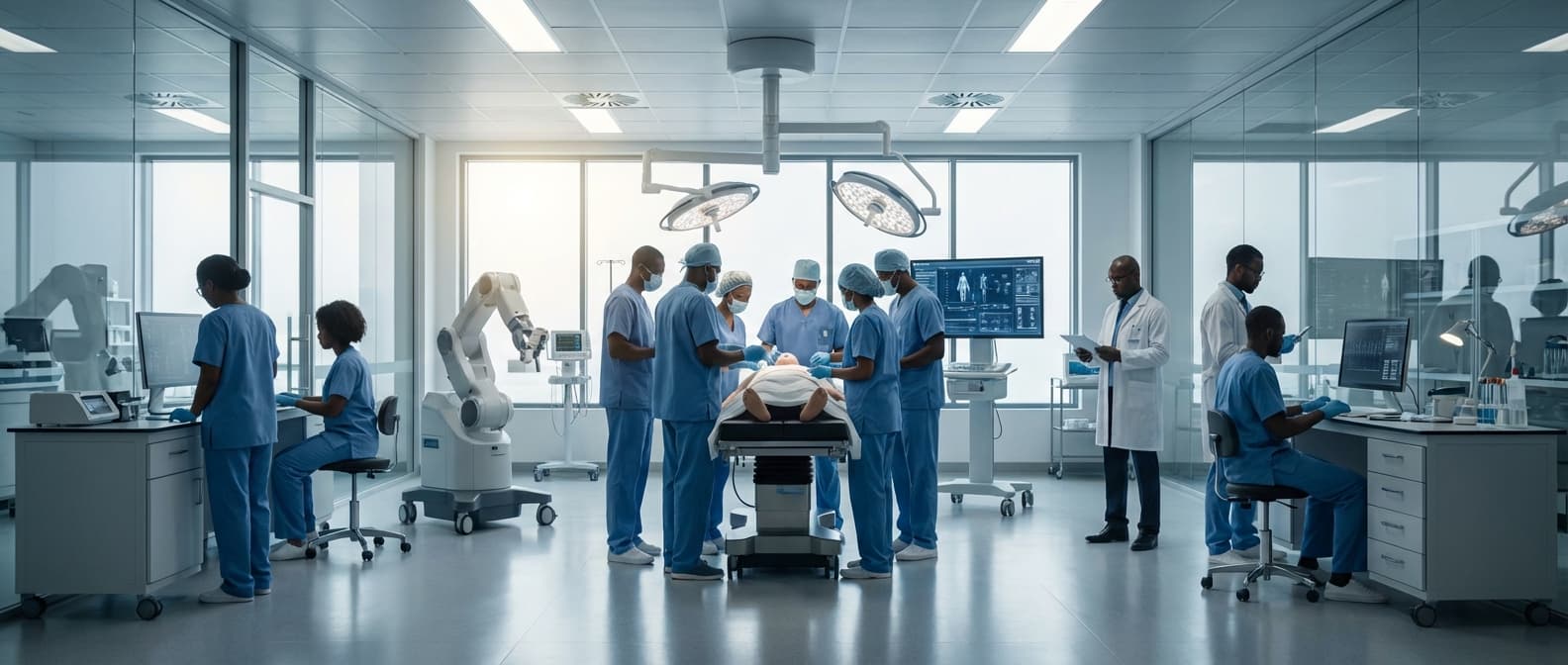
Biomedical Engineering Consulting in Ghana
Engineering Excellence & Technical Support
Equipment selection, procurement and implementation consulting High-standard technical execution following OEM protocols and local regulatory frameworks.
Optimized Medical Equipment Procurement & Integration
We streamline the acquisition of state-of-the-art medical equipment for Ghanaian healthcare facilities, ensuring seamless integration with existing infrastructure and staff training for maximum operational efficiency and patient care.
Biomaterial & Device Regulatory Compliance
Navigating Ghana's regulatory landscape for biomedical devices and biomaterials is complex. We provide expert guidance on compliance, ensuring your innovations meet all local standards for safe and effective deployment.
Healthcare Technology Needs Assessment & Planning
Our team conducts thorough assessments of healthcare technology needs, developing strategic roadmaps for sustainable implementation and resource allocation that align with Ghana's healthcare objectives and budget constraints.
What Is Biomedical Engineering Consulting In Ghana?
Biomedical Engineering Consulting in Ghana refers to the provision of specialized technical expertise and advisory services within the intersection of engineering principles and healthcare. It encompasses a broad spectrum of activities aimed at improving the efficacy, safety, accessibility, and cost-effectiveness of medical technologies, healthcare facilities, and clinical practices within the Ghanaian context. This field leverages engineering methodologies to address challenges in medical device development, maintenance, procurement, and utilization, as well as in the design, management, and optimization of healthcare infrastructure. Consultants provide objective, evidence-based guidance to a diverse clientele, facilitating informed decision-making and driving innovation in the Ghanaian healthcare ecosystem.
| Typical Use Cases | Description | Key Deliverables |
|---|---|---|
| Medical Equipment Procurement and Planning | Assisting healthcare facilities in identifying needs, specifying requirements, evaluating vendors, and making strategic purchasing decisions for medical equipment. | Needs assessment reports, technical specifications, vendor evaluation matrices, procurement strategy documents. |
| Biomedical Equipment Maintenance and Management | Developing and implementing comprehensive preventive and corrective maintenance programs, managing spare parts inventory, and establishing robust asset management systems. | Maintenance program protocols, training manuals, performance metrics dashboards, asset management database structure. |
| Healthcare Facility Design and Optimization | Providing engineering input for the design, renovation, or expansion of hospital departments and facilities to ensure optimal workflow, safety, and integration of medical technologies. | Facility layout recommendations, infrastructure requirements assessment, safety compliance reports, room-specific technical specifications. |
| Regulatory Compliance and Quality Assurance | Advising on adherence to national and international medical device regulations, quality management systems, and accreditation standards. | Regulatory submission guidance, gap analysis reports, standard operating procedure (SOP) development, audit preparation assistance. |
| Medical Technology Assessment and Adoption | Evaluating the clinical utility, economic feasibility, and safety of new medical technologies for adoption by healthcare institutions. | Technology assessment reports, cost-benefit analyses, risk assessment frameworks, implementation roadmaps. |
| Biomedical Engineering Training and Capacity Building | Developing and delivering training programs for healthcare professionals and technical staff on the operation, maintenance, and safe use of medical equipment. | Curriculum development, training modules, hands-on workshop facilitation, competency assessment tools. |
| Medical Device Development and Innovation Support | Providing technical expertise in the design, prototyping, testing, and commercialization of novel medical devices, particularly those addressing local health needs. | Product design reviews, feasibility studies, prototyping guidance, intellectual property strategy. |
| Health Information Technology (HIT) Integration | Consulting on the integration of medical devices with electronic health records (EHR) systems and other health informatics solutions. | System integration plans, data interoperability assessments, cybersecurity recommendations. |
Who Needs Biomedical Engineering Consulting Services in Ghana?
- Government Health Ministries and Agencies: For policy development, regulatory framework establishment, and national healthcare infrastructure planning.
- Public and Private Hospitals: To optimize medical equipment inventory, implement maintenance programs, assess and upgrade facilities, and ensure compliance with standards.
- Research Institutions and Universities: For guidance on setting up and managing biomedical research laboratories, evaluating research equipment, and developing new medical technologies.
- Medical Device Manufacturers and Distributors: To navigate regulatory approvals, conduct market assessments, provide technical support, and develop localized product strategies.
- Non-Governmental Organizations (NGOs) and International Development Agencies: For project planning, needs assessments, equipment procurement and deployment, and capacity building in healthcare settings.
- Startup Companies in the MedTech Sector: For product design and development, regulatory strategy, intellectual property protection, and market entry planning.
- Insurance Providers: For evaluating the cost-effectiveness of medical technologies and reimbursement strategies.
Who Needs Biomedical Engineering Consulting In Ghana?
Biomedical Engineering Consulting in Ghana is a crucial service for a variety of organizations and individuals aiming to improve healthcare delivery, optimize medical device management, and navigate the complex regulatory landscape. These consultants bring specialized knowledge and experience to address challenges that may not be adequately covered by in-house expertise.
| Target Customer | Key Departments & Needs |
|---|---|
| Hospitals and Healthcare Facilities | Biomedical Engineering Departments (equipment maintenance, calibration, procurement, safety); Clinical Departments (technology assessment, adoption of new devices, user training); Administration/Management (asset management, cost optimization, strategic planning for medical infrastructure); Procurement Departments (specifications, vendor evaluation, contract negotiation). |
| Medical Device Manufacturers and Distributors | Quality Assurance/Regulatory Affairs (compliance with Ghanaian regulations, market access); Sales and Marketing (technical support, product understanding); Service and Maintenance Departments (training local technicians, troubleshooting complex issues); Product Development (feedback on local market needs and usability). |
| Government Ministries and Regulatory Bodies | Ministry of Health (policy development, healthcare infrastructure planning, medical device standardization); Food and Drugs Authority (FDA) (device registration, post-market surveillance, import regulations, compliance audits); Ministry of Finance (budgetary allocation for medical equipment); Public Works/Infrastructure Departments (planning for new healthcare facilities). |
| Research Institutions and Universities | Research Laboratories (equipment selection, optimization, maintenance, troubleshooting for research projects); Academic Departments (curriculum development for biomedical engineering, practical training, research support); Technology Transfer Offices (commercialization of biomedical innovations). |
| Non-Governmental Organizations (NGOs) | Program Management (needs assessment for medical equipment in underserved areas, procurement and installation of donated equipment, capacity building for local staff, project evaluation); Logistics and Operations (ensuring appropriate maintenance and utilization of medical devices in challenging environments). |
| Investment Firms and Funding Agencies | Due Diligence (technical assessment of healthcare projects and proposed medical equipment investments); Risk Management (evaluating the technical viability and operational capacity of healthcare ventures); Portfolio Management (advising on technology acquisition and infrastructure development for funded projects). |
| Individual Clinicians and Healthcare Professionals | Specialty Clinics (selecting appropriate diagnostic or therapeutic equipment for specific patient populations); Individual Practitioners (understanding the technical specifications and limitations of medical devices for safe and effective use). |
Target Customers for Biomedical Engineering Consulting in Ghana
- Hospitals and Healthcare Facilities (Public and Private)
- Medical Device Manufacturers and Distributors
- Government Ministries and Regulatory Bodies
- Research Institutions and Universities
- Non-Governmental Organizations (NGOs) involved in healthcare
- Investment Firms and Funding Agencies
- Individual Clinicians and Healthcare Professionals
Biomedical Engineering Consulting Process In Ghana
The biomedical engineering consulting process in Ghana, like in many other regions, follows a structured workflow designed to address the specific needs of clients in the healthcare sector. This process typically begins with an initial inquiry and culminates in the successful execution and delivery of the consulting services. This workflow ensures clarity, efficiency, and a client-centric approach to solving complex biomedical engineering challenges.
| Stage | Description | Key Activities | Deliverables/Outcomes |
|---|---|---|---|
| Initial Inquiry & Needs Assessment | The client contacts the consulting firm with a specific problem or requirement. | Understanding the client's goals, challenges, and desired outcomes. Initial consultations and site visits (if applicable). | Clear understanding of the client's needs, preliminary problem definition. |
| Proposal Development & Scoping | Based on the needs assessment, a detailed proposal is prepared. | Defining the scope of work, objectives, methodology, timelines, budget, and deliverables. Identifying potential risks and mitigation strategies. | Formal consulting proposal, detailed scope of work, cost estimate. |
| Contract Negotiation & Agreement | The client reviews the proposal, and negotiations take place. | Discussing and agreeing on terms, conditions, payment schedules, intellectual property rights, and confidentiality. Signing of the formal consulting agreement. | Signed consulting contract, mutually agreed-upon terms. |
| Project Planning & Team Assembly | Once the contract is signed, detailed project planning commences. | Forming the consulting team with relevant expertise, developing a detailed project plan, assigning roles and responsibilities, and establishing communication protocols. | Detailed project plan, assembled consulting team, communication matrix. |
| Information Gathering & Analysis | The consulting team gathers all necessary information and data. | Conducting surveys, interviews, site inspections, reviewing existing documentation, and performing technical analyses. | Collected data, diagnostic reports, analysis findings. |
| Solution Design & Development | Developing tailored solutions based on the analysis. | Conceptualizing and designing solutions, developing prototypes (if applicable), and conducting preliminary feasibility studies. | Proposed solutions, design specifications, conceptual models. |
| Implementation & Execution | Putting the designed solutions into practice. | Procurement of equipment, installation, integration of systems, configuration, and deployment of solutions. | Implemented systems, installed equipment, integrated technologies. |
| Testing, Validation & Quality Assurance | Ensuring the solutions meet the specified requirements and function correctly. | Conducting performance testing, functional testing, user acceptance testing (UAT), and implementing quality control measures. | Test reports, validation certificates, quality assurance documentation. |
| Training & Knowledge Transfer | Equipping the client's personnel with the necessary skills to operate and maintain the implemented solutions. | Developing training materials, conducting training sessions, and providing user manuals. | Trained personnel, user manuals, operational guides. |
| Project Closure & Documentation | Formally concluding the project and handing over all final deliverables. | Submitting final reports, project documentation, and any residual materials. Conducting a project review meeting. | Final project report, comprehensive documentation, project completion certificate. |
| Post-Project Support & Follow-up | Providing ongoing support to the client after project completion. | Addressing any post-implementation issues, offering maintenance support, and evaluating the long-term impact of the solutions. | Ongoing client satisfaction, addressed issues, long-term project success. |
Biomedical Engineering Consulting Workflow in Ghana
- Initial Inquiry & Needs Assessment
- Proposal Development & Scoping
- Contract Negotiation & Agreement
- Project Planning & Team Assembly
- Information Gathering & Analysis
- Solution Design & Development
- Implementation & Execution
- Testing, Validation & Quality Assurance
- Training & Knowledge Transfer
- Project Closure & Documentation
- Post-Project Support & Follow-up
Biomedical Engineering Consulting Cost In Ghana
Biomedical Engineering consulting in Ghana can vary significantly in cost, influenced by a multitude of factors. These factors often dictate the complexity, duration, and expertise required for a project. Understanding these elements is crucial for organizations seeking to budget effectively for specialized biomedical engineering services within the Ghanaian context. Pricing is typically presented in Ghanaian Cedi (GHS).
| Service Type | Typical Pricing Range (GHS) | Notes |
|---|---|---|
| Initial Consultation/Needs Assessment | 1,500 - 4,000 | For a few hours to a day. Focus on understanding client needs. |
| Equipment Selection & Procurement Advisory | 5,000 - 15,000 | Can vary based on the number and complexity of equipment. |
| Feasibility Studies/Project Planning | 8,000 - 25,000+ | For smaller to medium-sized projects. Larger projects will be significantly higher. |
| Installation & Commissioning Supervision (per project) | 10,000 - 30,000+ | Depends on the scale and complexity of the installation. |
| Equipment Validation & Verification | 7,000 - 20,000+ per device/system | Pricing is per device or system, can be higher for complex medical imaging. |
| Training & Capacity Building (per session/module) | 3,000 - 8,000 | For a half-day or full-day session for a specific group. |
| Regulatory Compliance (FDA Ghana) Advisory | 6,000 - 18,000+ | Varies based on the complexity of the product/service and the regulatory pathway. |
| Comprehensive Project Management (e.g., Facility Design) | Negotiable (often a percentage of project cost or a significant fixed fee) | Extensive scope, typically for large infrastructure projects. |
| Hourly Consulting Rate (Senior Consultant) | 300 - 800 | Used for ad-hoc advice or when scope is not clearly defined initially. |
Key Pricing Factors for Biomedical Engineering Consulting in Ghana
- Scope and Complexity of the Project: A straightforward consultation on equipment maintenance will differ in price from a comprehensive project involving the design and implementation of a new medical facility's infrastructure, including sterilization, ventilation, and diagnostic imaging systems. The number of systems, their interconnectedness, and the level of innovation involved are key determinants.
- Consultant's Expertise and Experience: Highly specialized consultants with years of experience, advanced degrees, and a proven track record of successful projects in Ghana or similar African healthcare environments will command higher fees. The reputation of the consulting firm also plays a role.
- Duration of the Engagement: Projects requiring extensive on-site presence, research, analysis, and reporting will naturally incur higher costs over time compared to short-term advisory roles.
- Geographic Location within Ghana: While major cities like Accra and Kumasi might have a slightly higher cost of living, influencing consultant travel and accommodation, the primary driver is often the remoteness of the project site. Travel expenses, logistical challenges, and potential security considerations for remote areas can add to the overall cost.
- Specific Services Required: The nature of the service dictates the pricing. This can range from feasibility studies, needs assessments, technology selection, procurement support, installation and commissioning supervision, validation and verification, training, to regulatory compliance advice (e.g., for medical device registration with the Food and Drugs Authority - FDA Ghana).
- Equipment and Technology Involved: Consulting on highly advanced or specialized medical equipment (e.g., MRI machines, linear accelerators) will generally be more expensive than consulting on basic laboratory or patient monitoring devices due to the specialized knowledge and potential risks involved.
- Regulatory and Compliance Requirements: Navigating complex regulatory landscapes, such as those set by the FDA Ghana, often requires specialized knowledge and can increase the scope and cost of a consulting project. This includes understanding local standards, import regulations, and operational guidelines.
- Urgency of the Project: Projects with tight deadlines or requiring immediate intervention may incur premium charges due to the need for expedited resource allocation and potentially overtime work.
Affordable Biomedical Engineering Consulting Options
Navigating the complexities of biomedical engineering can be a significant undertaking for startups and established companies alike. Accessing expert advice is crucial for product development, regulatory compliance, market entry, and innovation. Fortunately, there are several affordable biomedical engineering consulting options available, often packaged into flexible "value bundles" or employing strategic cost-saving measures. These approaches aim to deliver high-impact expertise without the prohibitive overhead of traditional, large-scale consulting firms.
| Cost-Saving Strategy | Description | Impact on Affordability |
|---|---|---|
| Flexible Engagement Models | Offering options beyond traditional retainer contracts, such as project-based fixed fees, milestone payments, or on-demand hourly support for smaller tasks. This allows clients to scale their engagement based on immediate needs. | Reduces commitment and allows for cost control by paying only for services rendered or specific project outcomes. |
| Leveraging Niche Expertise | Engaging specialized consultants or smaller, focused firms that excel in specific areas (e.g., a particular regulatory requirement, a niche technology). This avoids the overhead of larger, multi-disciplinary firms. | Often results in more competitive pricing due to lower overhead and a highly targeted skill set. |
| Remote and Virtual Consulting | Utilizing video conferencing, cloud-based collaboration tools, and digital document sharing to conduct consultations and project work. This significantly reduces travel and associated expenses. | Minimizes overhead costs for both the consultant and the client, making services more accessible. |
| Phased Project Approach | Breaking down large projects into smaller, manageable phases with defined deliverables and costs for each phase. This allows for iterative development and continuous assessment of value. | Enables clients to control spending and adapt their budget as the project progresses, avoiding large upfront investments. |
| Knowledge Transfer and Training | Consultants can be engaged not just to 'do' but to 'teach.' This can involve training internal teams on specific engineering principles, regulatory processes, or quality management systems, building internal capacity. | Reduces future reliance on external consultants by empowering the client's internal team, leading to long-term cost savings. |
| Standardized Methodologies and Templates | Consultants who employ pre-developed frameworks, templates, and best practices for common tasks can deliver services more efficiently. | Reduces the time and resources required for project execution, translating into lower costs for the client. |
| Partnerships and Alliances | Some consulting firms may form alliances with other specialized service providers (e.g., testing labs, IP attorneys) to offer integrated solutions at a bundled discount. | Provides a more comprehensive service offering at a potentially reduced overall price compared to sourcing each service independently. |
Understanding Value Bundles in Biomedical Engineering Consulting
- {"title":"What are Value Bundles?","description":"Value bundles are pre-defined packages of consulting services designed to address specific project phases or recurring needs. They offer a streamlined and cost-effective way to access specialized expertise for a defined scope of work. Instead of paying for ad-hoc hourly rates for every small task, bundles provide a predictable cost and a clear set of deliverables."}
- {"title":"Common Bundle Examples","description":"Bundles often cater to distinct stages of product development or operational requirements. They can include services like early-stage feasibility studies, regulatory pathway assessment, design verification and validation planning, clinical trial support, or post-market surveillance strategy."}
- {"title":"Benefits of Bundles","description":"Bundles offer predictability in budgeting, often at a lower overall cost than individual service procurement. They ensure a comprehensive approach to a specific challenge, drawing on integrated expertise. Clients also benefit from faster engagement and a clearer understanding of the expected outcomes."}
Verified Providers In Ghana
In Ghana's evolving healthcare landscape, identifying truly verified and reputable medical providers is paramount. Franance Health stands out as a beacon of trust, offering a curated network of healthcare professionals and institutions that have undergone rigorous credentialing and verification processes. This commitment to quality assurance ensures that patients seeking care through Franance Health can do so with confidence, knowing they are engaging with genuine experts dedicated to their well-being. Their comprehensive verification methodology not only validates professional licenses and qualifications but also assesses practice standards, patient feedback mechanisms, and adherence to ethical guidelines. This multi-faceted approach distinguishes Franance Health from other platforms and solidifies their position as the premier choice for accessing trusted healthcare in Ghana.
| Credentialing Aspect | Franance Health's Approach | Patient Benefit |
|---|---|---|
| Professional Licenses & Certifications | Thoroughly validated against official Ghanaian regulatory bodies. | Guarantees practitioners are legally qualified and certified to practice. |
| Academic & Clinical Qualifications | Verified transcripts, degrees, and specialist training completion. | Ensures providers have the necessary knowledge and expertise. |
| Practice History & Reputation | Background checks and assessment of disciplinary records. | Filters out practitioners with a history of malpractice or poor conduct. |
| Facility Accreditation & Standards | Evaluation of clinic/hospital accreditations, equipment, and safety protocols. | Confirms that facilities meet essential quality and safety benchmarks. |
| Patient Review & Testimonial Verification | Systematic collection and verification of patient feedback. | Provides real-world insights into provider patient experiences and satisfaction. |
| Ethical Conduct & Compliance | Assessment of adherence to medical ethics and regulatory guidelines. | Upholds patient rights and ensures responsible medical practice. |
Why Franance Health Credentials Represent the Best Choice in Ghana:
- Rigorous Verification Process: Franance Health employs a stringent, multi-stage credentialing system that goes beyond basic license checks.
- Professional Competence Validation: Ensuring all listed providers possess the necessary qualifications, certifications, and experience in their respective fields.
- Adherence to Ethical Standards: Verifying that practitioners and facilities uphold the highest ethical principles in patient care and medical practice.
- Quality of Care Assessment: Evaluating the operational standards and patient safety protocols of healthcare institutions.
- Patient Feedback Integration: Incorporating verified patient testimonials and satisfaction metrics into the vetting process.
- Commitment to Transparency: Providing clear and accessible information about provider credentials and verification status.
- Extensive Network of Trusted Providers: Offering a wide range of medical specialties and healthcare services through a carefully vetted network.
- Peace of Mind for Patients: Enabling individuals to make informed decisions with the assurance of accessing reliable and high-quality healthcare.
Scope Of Work For Biomedical Engineering Consulting
This Scope of Work (SOW) outlines the consulting services to be provided by [Consulting Firm Name] (hereinafter referred to as "Consultant") to [Client Name] (hereinafter referred to as "Client") for the development and validation of a novel biomedical device. The project aims to address [briefly describe the problem the device solves]. This SOW details the technical deliverables, standard specifications, and overall project objectives.
| Phase | Key Activities | Technical Deliverables | Standard Specifications (Examples) |
|---|---|---|---|
| Phase 1: Concept & Design | Requirements gathering, system architecture design, component selection, preliminary risk assessment, user interface (UI)/user experience (UX) design. | Detailed System Requirements Document, System Architecture Design Document, Component Selection Report, Preliminary Hazard Analysis Report, UI/UX Design Specifications. | ISO 13485 (Quality Management Systems for Medical Devices), IEC 60601 (Medical electrical equipment - Basic safety and essential performance), ISO 14971 (Application of risk management to medical devices), Usability Engineering standards (e.g., IEC 62366). |
| Phase 2: Prototype Development | Hardware and software development, PCB design and fabrication, initial sub-system integration and testing, firmware development. | Functional Prototype (Hardware & Software), Bill of Materials (BOM), Schematic Diagrams, PCB Layout Files, Firmware Codebase, Sub-system Test Reports. | Component datasheets and specifications, IPC standards for PCB assembly, relevant software development lifecycle standards (e.g., ISO/IEC 12207). |
| Phase 3: Verification & Validation (V&V) | Protocol development for verification and validation testing, execution of verification tests (e.g., performance, electrical safety, biocompatibility), execution of validation tests (e.g., clinical validation, usability validation). | V&V Test Protocols, V&V Test Reports (including raw data), Design Verification Test Summary, Design Validation Test Summary, Risk Management File Update. | ISO 10993 (Biological evaluation of medical devices), IEC 60601 (Specific standards for electrical safety and EMC), relevant performance standards for the specific device type, clinical investigation guidelines. |
| Phase 4: Regulatory & Manufacturing Support | Development of technical file/design dossier, creation of manufacturing procedures, guidance on regulatory submission strategy, support during regulatory review. | Technical File/Design Dossier, Manufacturing Process Instructions, Device Master Record (DMR) elements, Regulatory Submission Strategy Document. | Good Manufacturing Practices (GMP) guidelines, specific regional regulatory requirements (e.g., FDA 21 CFR Part 820, EU MDR 2017/745), quality system documentation requirements. |
| Phase 5: Project Management & Reporting | Regular progress meetings, status reporting, issue tracking and resolution, final project report. | Project Status Reports, Meeting Minutes, Final Project Report, Lessons Learned Document. | Project management methodologies (e.g., Agile, Waterfall), clear communication protocols. |
Project Objectives
- To design and develop a functional prototype of the [Biomedical Device Name].
- To conduct comprehensive verification and validation (V&V) testing to demonstrate the device's safety and efficacy.
- To develop a detailed technical file and manufacturing documentation suitable for regulatory submission.
- To provide expert guidance on regulatory pathways and compliance requirements (e.g., FDA, CE Mark).
- To ensure the device meets all relevant industry standards and best practices.
Service Level Agreement For Biomedical Engineering Consulting
This Service Level Agreement (SLA) outlines the response times and uptime guarantees provided by [Consulting Company Name] (hereinafter referred to as "Consultant") for biomedical engineering consulting services to [Client Name] (hereinafter referred to as "Client"). This SLA is incorporated by reference into the Master Service Agreement (MSA) dated [Date of MSA].
| Service Level | Response Time Guarantee (Initial Acknowledgment) | Resolution Time Target | Uptime Guarantee (for managed systems/platforms, if applicable) |
|---|---|---|---|
| Critical Issue (e.g., patient safety risk, complete system failure) | Within 2 business hours | Within 8 business hours (target) | 99.9% (if Consultant manages system/platform) |
| High Priority Issue (e.g., significant operational impact, performance degradation) | Within 4 business hours | Within 24 business hours (target) | 99.5% (if Consultant manages system/platform) |
| Medium Priority Issue (e.g., minor functional impact, non-critical feature malfunction) | Within 8 business hours | Within 3 business days (target) | N/A (for non-managed systems/platforms) |
| Low Priority Issue (e.g., informational request, minor documentation clarification) | Within 24 business hours | Within 5 business days (target) | N/A (for non-managed systems/platforms) |
Scope of Services Covered
- On-site technical support for biomedical equipment.
- Remote troubleshooting and problem resolution.
- Development and review of technical documentation.
- System integration and validation support.
- Regulatory compliance consulting.
- New equipment procurement and installation advice.
Frequently Asked Questions

Ready when you are
Let's scope your Biomedical Engineering Consulting in Ghana project in Ghana.

Scaling healthcare logistics and technical systems across the entire continent.