
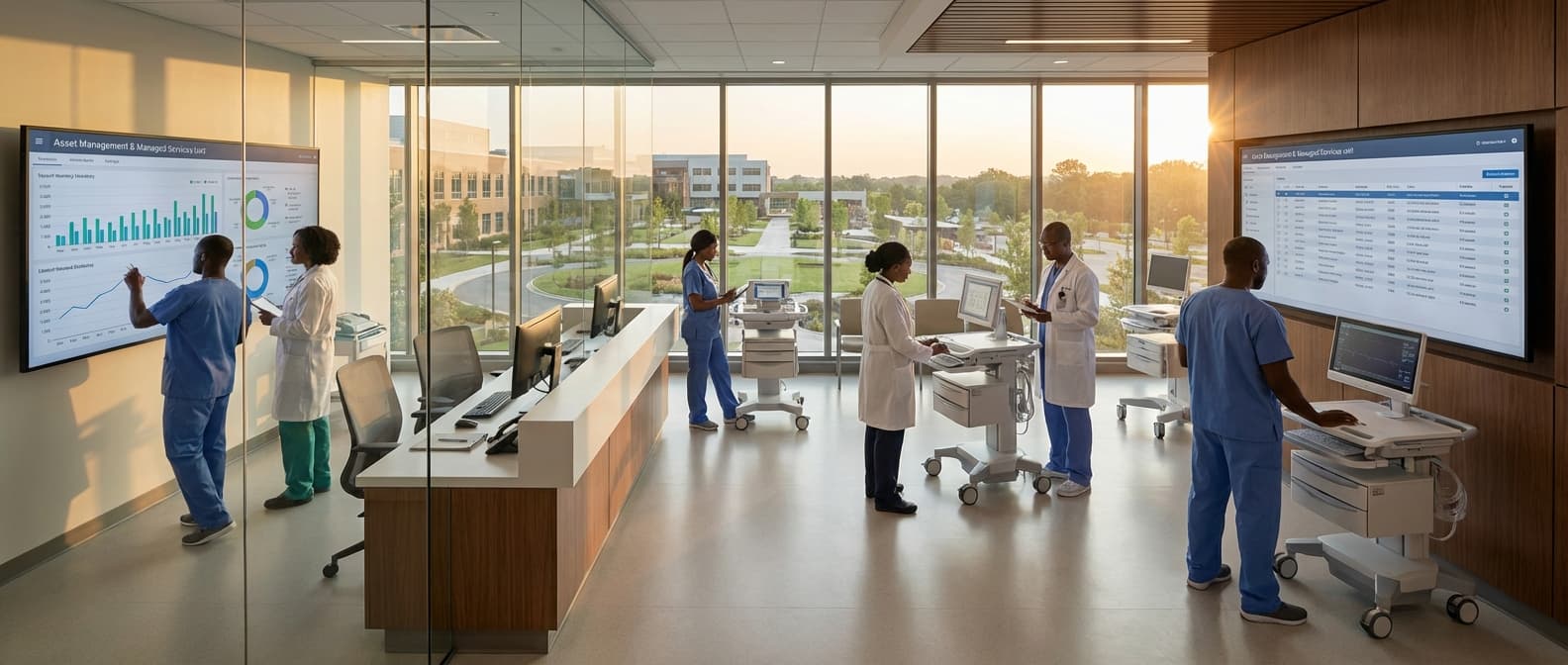
Maintenance KPI Reporting Service (Uptime/MTBF/MTTR) in Ghana
Engineering Excellence & Technical Support
Maintenance KPI Reporting Service (Uptime/MTBF/MTTR) High-standard technical execution following OEM protocols and local regulatory frameworks.
Optimized Uptime Reporting
Leverage our service to gain real-time, granular insights into equipment uptime across your Ghanaian operations. Our automated data collection and analysis provides an accurate, verifiable view of availability, enabling proactive identification of bottlenecks and minimizing unplanned downtime.
Accelerated MTBF Analysis
Drastically reduce the time spent calculating Mean Time Between Failures (MTBF). Our platform streamlines fault logging and diagnostic data aggregation, empowering your maintenance teams in Ghana with faster, data-driven insights to predict and prevent recurring equipment failures.
Streamlined MTTR Reduction
Sharpen your Mean Time To Repair (MTTR) strategies with our comprehensive reporting. By analyzing repair times, spare parts usage, and technician response, our service highlights inefficiencies and best practices, enabling your Ghanaian maintenance crews to resolve issues faster and more cost-effectively.
What Is Maintenance Kpi Reporting Service (Uptime/mtbf/mttr) In Ghana?
Maintenance KPI Reporting Service (Uptime/MTBF/MTTR) in Ghana refers to a specialized offering that focuses on the systematic collection, analysis, and presentation of key performance indicators (KPIs) related to the operational availability and reliability of physical assets and systems within Ghanaian organizations. These KPIs are critical for evaluating the effectiveness of maintenance strategies, identifying performance bottlenecks, and driving continuous improvement in asset management. The service involves configuring data acquisition methods (e.g., SCADA integration, manual input, IoT sensor data), establishing data warehousing solutions, developing analytical models to calculate Uptime, Mean Time Between Failures (MTBF), and Mean Time To Repair (MTTR), and delivering comprehensive, actionable reports through dashboards, scheduled reports, or ad-hoc analysis. The objective is to provide stakeholders with data-driven insights to optimize maintenance schedules, reduce unplanned downtime, enhance resource allocation, and ultimately improve overall operational efficiency and profitability.
| Who Needs This Service? | Typical Use Cases | ||||||
|---|---|---|---|---|---|---|---|
| Manufacturing & Industrial Sectors: Companies operating factories, processing plants, and production lines where asset reliability directly impacts output and cost. | Energy & Utilities: Power generation facilities, water treatment plants, and distribution networks that require high uptime for essential services. | Mining & Extractive Industries: Operations reliant on heavy machinery and complex infrastructure with significant downtime costs. | Telecommunications: Providers of mobile, internet, and broadcast services where network availability is paramount. | Transportation & Logistics: Fleet operators (e.g., airlines, shipping companies, road haulage) managing vehicle and equipment reliability. | Real Estate & Facilities Management: Large building complexes, shopping malls, and commercial properties managing HVAC, elevators, and other critical systems. | Healthcare Institutions: Hospitals and clinics requiring continuous operation of medical equipment and life support systems. | Information Technology (IT) Infrastructure: Organizations managing servers, data centers, and network equipment to ensure service continuity. |
| Downtime Reduction: Identifying recurring failure patterns to implement preventative maintenance and minimize unplanned outages. | Maintenance Cost Optimization: Allocating maintenance resources effectively by focusing on high-impact assets and proactive interventions, rather than reactive repairs. | Asset Performance Improvement: Understanding the true performance of assets to inform procurement decisions and optimize operational parameters. | Service Level Agreement (SLA) Monitoring: Ensuring compliance with contractual uptime guarantees for customers or internal stakeholders. | Root Cause Analysis (RCA): Facilitating structured investigations into equipment failures to prevent recurrence. | Predictive Maintenance Implementation: Using historical failure data and trends to forecast potential issues and schedule maintenance before failure occurs. | Resource Planning & Scheduling: Optimizing the deployment of maintenance technicians and spare parts based on predicted needs. | Strategic Asset Management: Providing data for long-term planning related to asset lifecycle management, upgrades, and replacements. |
Key Components of the Service:
- Data Acquisition & Integration: Establishing robust mechanisms to capture relevant operational and maintenance data from various sources (e.g., Enterprise Asset Management (EAM) systems, Supervisory Control and Data Acquisition (SCADA) systems, IoT platforms, manual logs).
- KPI Calculation Engine: Implementing algorithms and logic to accurately compute Uptime (percentage of operational time), MTBF (average time between failures), and MTTR (average time to restore service after failure).
- Data Storage & Management: Utilizing secure and scalable databases or data lakes to store historical and real-time performance data.
- Reporting & Visualization: Developing interactive dashboards, scheduled reports, and analytical tools that present KPIs in an easily digestible and actionable format.
- Performance Analysis & Recommendations: Providing expert interpretation of KPI trends, identifying root causes of failures, and offering data-backed recommendations for maintenance strategy optimization.
- Benchmarking (Optional): Comparing organizational KPIs against industry standards or historical performance to identify areas for improvement.
Who Needs Maintenance Kpi Reporting Service (Uptime/mtbf/mttr) In Ghana?
In Ghana, any organization that relies on the consistent and efficient operation of its assets, machinery, or infrastructure can significantly benefit from a Maintenance KPI Reporting Service focused on Uptime, Mean Time Between Failures (MTBF), and Mean Time To Repair (MTTR). These metrics are crucial for optimizing maintenance strategies, reducing operational costs, and ensuring business continuity. The service helps businesses move from reactive firefighting to proactive, data-driven maintenance planning.
| Target Customer Segment | Key Departments Benefiting | Why Uptime/MTBF/MTTR Reporting is Crucial |
|---|---|---|
| Manufacturing | Production, Maintenance, Operations Management, Quality Control | Minimizing production downtime, identifying recurring equipment failures, optimizing spare parts inventory, ensuring consistent product output. |
| Mining | Mine Operations, Maintenance Engineering, Safety, Asset Management | Maximizing ore extraction, reducing unplanned stoppages of heavy machinery, improving safety by predicting failures, extending asset lifespan. |
| Oil and Gas | Production, Operations, Maintenance, Integrity Management | Ensuring continuous extraction and processing, preventing costly leaks or equipment damage, optimizing offshore/onshore operational efficiency, meeting regulatory compliance. |
| Utilities (Power/Water) | Operations, Maintenance, Network Management, Planning | Ensuring uninterrupted service delivery, minimizing customer outages, optimizing repair crew deployment, forecasting maintenance needs and budget. |
| Telecommunications | Network Operations, Field Maintenance, IT Infrastructure | Maintaining high network availability and service quality, rapidly restoring service after outages, optimizing technician dispatch for repairs. |
| Logistics & Transportation | Fleet Management, Operations, Maintenance, Supply Chain | Maximizing vehicle availability for deliveries, reducing transit delays due to breakdowns, optimizing maintenance schedules for fleets, lowering fuel consumption through efficient operations. |
| Healthcare Facilities | Facilities Management, Biomedical Engineering, Operations | Ensuring critical medical equipment is always operational, minimizing disruptions to patient care, optimizing maintenance budgets for essential services. |
Target Customers in Ghana
- Manufacturing Companies
- Mining Operations
- Oil and Gas Sector
- Power Generation and Distribution Utilities
- Telecommunications Providers
- Logistics and Transportation Companies
- Food and Beverage Processors
- Construction Firms
- Healthcare Facilities
- Large-Scale Agricultural Operations
- Water Treatment and Supply Companies
- Aviation and Port Authorities
Maintenance Kpi Reporting Service (Uptime/mtbf/mttr) Process In Ghana
This document outlines the workflow for engaging and executing a Maintenance KPI Reporting Service focused on Uptime, Mean Time Between Failures (MTBF), and Mean Time To Repair (MTTR) within the Ghanaian industrial and commercial landscape. The process is designed to be transparent, efficient, and to deliver actionable insights for clients seeking to optimize their operational reliability and reduce downtime.
| Stage | Description | Key Activities | Responsible Party | Deliverables | Typical Timeline (Ghana Context) |
|---|---|---|---|---|---|
| Client expresses interest in understanding and improving their equipment's uptime, MTBF, and MTTR. | Receive inquiry (phone, email, website). Conduct initial consultation to understand client's industry, assets, current reporting practices, and specific goals. Identify key stakeholders. | Service Provider (Sales/Consulting Team) | Understanding of client's needs, preliminary scope definition. | 1-3 business days |
| Formalizing the service offering based on the assessed needs. | Develop a detailed proposal outlining the scope of work, methodologies, KPIs to be tracked, reporting frequency, technology requirements, pricing, and service level agreements (SLAs). Present proposal to the client. Negotiate terms and finalize contract/agreement. | Service Provider (Sales/Technical Team), Client (Procurement/Operations) | Signed proposal/contract, agreed scope of work. | 3-7 business days |
| Gathering the necessary historical and real-time operational data. | Identify data sources (e.g., CMMS, SCADA, ERP, manual logs, sensor data). Define data points required for Uptime, MTBF, and MTTR (e.g., failure events, repair times, operational hours). Establish secure data access and integration methods. Cleanse and validate incoming data. | Service Provider (Data Engineers/Analysts), Client (IT/Maintenance Department) | Access to relevant data sources, initial data set for analysis. | 1-2 weeks (can vary significantly based on client's data infrastructure) |
| Processing collected data to derive meaningful metrics. | Apply defined formulas for Uptime (%), MTBF (hours/cycles), and MTTR (hours/minutes). Analyze trends, identify common failure modes, root causes of downtime, and repair bottlenecks. Benchmark against industry standards (if applicable). | Service Provider (Data Analysts/Maintenance Experts) | Calculated KPI values, initial trend analysis, identification of potential issues. | 1-2 weeks |
| Presenting the findings in a clear and actionable format. | Develop comprehensive reports, dashboards, and visualizations. Reports typically include: Executive Summary, KPI performance (historical and current), trend analysis, identified failure patterns, recommendations for improvement. Deliver reports electronically and/or in person. | Service Provider (Reporting Specialists/Analysts) | Formal KPI reports, dashboards, presentations. | 2-5 business days |
| Collaborating with the client to interpret results and plan interventions. | Conduct review meetings to discuss report findings. Facilitate discussions on root causes and potential solutions. Jointly develop action plans with specific owners and timelines for improvement initiatives (e.g., preventive maintenance optimization, spare parts management, training). | Service Provider (Consultants/Analysts), Client (Management/Maintenance Team) | Agreed-upon action plan, identified areas for improvement. | 1-3 business days |
| Ensuring continuous improvement and sustained performance. | Provide ongoing data collection and reporting as per agreement. Monitor progress of action plans. Offer continued analysis and strategic advice. Conduct periodic reviews to assess the effectiveness of implemented changes and identify new opportunities. Offer training and capacity building. | Service Provider (Account Manager/Technical Team), Client (Maintenance/Operations) | Regular updated reports, performance tracking, ongoing consultative support. | Continuous (based on service agreement) |
Key Stages of the Maintenance KPI Reporting Service Workflow
- Initial Inquiry and Needs Assessment
- Proposal Development and Agreement
- Data Collection and Integration
- KPI Calculation and Analysis
- Report Generation and Delivery
- Review and Action Planning
- Ongoing Monitoring and Support
Maintenance Kpi Reporting Service (Uptime/mtbf/mttr) Cost In Ghana
The cost of a Maintenance KPI Reporting Service focusing on Uptime, Mean Time Between Failures (MTBF), and Mean Time To Repair (MTTR) in Ghana can vary significantly depending on several factors. These services are crucial for optimizing operational efficiency, minimizing downtime, and ensuring the longevity of assets. When seeking such a service, businesses in Ghana should consider the scope of reporting, the complexity of their operations, the level of data analysis required, and the provider's expertise.
| Service Level/Complexity | Estimated Monthly Cost (GHS) | Typical Inclusions |
|---|---|---|
| Basic Reporting (Uptime Focused) | 2,000 - 5,000 | Monthly Uptime reports, basic failure logs, simple dashboards. |
| Standard Reporting (Uptime, MTBF, MTTR - Basic) | 5,000 - 15,000 | Weekly/Monthly Uptime, MTBF, and MTTR reports; data integration from limited sources; basic trend analysis. |
| Advanced Reporting (Comprehensive KPIs with Analysis) | 15,000 - 40,000+ | Real-time dashboards, detailed MTBF/MTTR analysis by asset/component, root cause analysis support, predictive insights, multiple data source integration, customized reporting formats, regular review meetings. |
| Enterprise/Custom Solutions | 40,000+ | Highly customized solutions, complex integrations, dedicated analyst support, predictive maintenance modeling, full-spectrum operational intelligence, tailored training programs. |
Key Pricing Factors for Maintenance KPI Reporting Services in Ghana:
- Scope of KPIs:
- The number and complexity of KPIs to be reported (e.g., basic uptime vs. detailed MTTR by component type).
- Data Source Integration:
- The number and type of data sources that need to be integrated (e.g., SCADA systems, ERP, manual logs, IoT sensors).
- Reporting Frequency and Detail:
- How often reports are generated (daily, weekly, monthly, quarterly) and the level of detail required (summary dashboards vs. in-depth analytical reports).
- Software/Platform Used:
- Whether the service provider uses proprietary software, off-the-shelf solutions, or custom-built platforms. The licensing and customization costs of these will be factored in.
- Level of Analysis and Actionable Insights:
- Basic data aggregation vs. advanced analytics, predictive maintenance insights, and recommendations for improvement.
- Provider's Expertise and Reputation:
- Established providers with a proven track record and specialized expertise may command higher fees.
- On-site vs. Remote Service:
- Whether the service requires on-site data collection, analysis, or support, or if it can be delivered entirely remotely.
- Customization and Bespoke Solutions:
- The extent to which the reporting and analysis need to be tailored to specific business needs and existing workflows.
- Contract Duration and Volume:
- Longer-term contracts or a larger volume of assets/reports can sometimes lead to discounted pricing.
- Support and Training:
- The level of ongoing support, training for client personnel, and system maintenance included in the service.
Affordable Maintenance Kpi Reporting Service (Uptime/mtbf/mttr) Options
Our Affordable Maintenance KPI Reporting Service provides crucial insights into your operational efficiency through key metrics like Uptime, Mean Time Between Failures (MTBF), and Mean Time To Repair (MTTR). We understand that businesses of all sizes need to optimize their maintenance strategies without breaking the bank. This service is designed to deliver actionable data that empowers you to reduce downtime, improve reliability, and lower overall maintenance costs. We offer flexible value bundles tailored to your specific needs and provide expert cost-saving strategies to maximize your return on investment.
| Value Bundle | Key Features | Ideal For | Estimated Monthly Cost (USD) |
|---|---|---|---|
| Basic Insights | Monthly reporting on Uptime, MTBF, and MTTR for up to 5 assets. Standardized report templates. Email support. | Small businesses, startups, or teams with limited assets. | $75 - $150 |
| Standard Operations | Weekly/Monthly reporting for up to 20 assets. Customizable dashboards. Email and limited chat support. Basic trend analysis. | Medium-sized businesses, manufacturing facilities, or growing operations. | $175 - $350 |
| Proactive Management | Weekly/Bi-weekly reporting for unlimited assets. Advanced analytics and predictive insights. Priority email and chat support. Dedicated account manager. Custom report generation. | Large enterprises, critical infrastructure, or businesses prioritizing predictive maintenance. | $400 - $800+ |
Key Maintenance KPIs Explained:
- Uptime: The percentage of time a piece of equipment or system is operational and available for use. Higher uptime directly translates to increased productivity and revenue.
- Mean Time Between Failures (MTBF): The average time a piece of equipment operates successfully between breakdowns. A higher MTBF indicates greater reliability and less unexpected downtime.
- Mean Time To Repair (MTTR): The average time it takes to repair a piece of equipment after a failure. A lower MTTR minimizes the duration of downtime, getting your operations back online faster.
Verified Providers In Ghana
In Ghana's evolving healthcare landscape, identifying genuinely qualified and trustworthy medical service providers is paramount. Franance Health has emerged as a leading entity, rigorously vetting and certifying healthcare professionals and facilities across the nation. This commitment to verification ensures that patients receive care of the highest standard, backed by expertise, ethical practice, and regulatory compliance. Choosing a Franance Health-verified provider means opting for peace of mind and superior health outcomes.
| Provider Type | Franance Health Verification Criteria | Benefits for Patients |
|---|---|---|
| Doctors (Specialists & General Practitioners) | Valid Medical License, Board Certification, Clean Disciplinary Record, Continued Medical Education (CME) Attendance | Access to qualified expertise, accurate diagnoses, effective treatment plans, and specialized care. |
| Hospitals & Clinics | Accreditation, Compliance with Health Regulations, Qualified Medical Staff, Adequate Facilities & Equipment, Patient Safety Protocols | Safe environment, access to a range of services, reliable equipment, and professional medical teams. |
| Laboratories & Diagnostic Centers | Accreditation (e.g., ISO), Qualified Technicians, Calibrated Equipment, Quality Control Measures | Accurate and reliable test results, crucial for effective diagnosis and treatment. |
| Pharmacies | Valid Pharmacy License, Qualified Pharmacists, Proper Storage of Medications, Dispensing Accuracy | Access to safe, authentic medications, and expert advice on prescriptions and drug interactions. |
Why Franance Health Verification Matters
- Ensures adherence to stringent medical and ethical standards.
- Guarantees that providers possess current and valid professional licenses.
- Promotes patient safety through rigorous background checks.
- Facilitates access to a network of specialists and advanced facilities.
- Boosts transparency and trust in the healthcare system.
- Supports continuous professional development and quality improvement.
Scope Of Work For Maintenance Kpi Reporting Service (Uptime/mtbf/mttr)
This Scope of Work (SOW) outlines the requirements for a Maintenance KPI Reporting Service focused on Uptime, Mean Time Between Failures (MTBF), and Mean Time To Repair (MTTR). The service will provide regular, standardized reports to enable effective monitoring, analysis, and improvement of maintenance performance and asset reliability. This document details the technical deliverables, standard specifications, and reporting frequencies.
| Deliverable | Description | Technical Specification | Frequency | Format |
|---|---|---|---|---|
| Initial Data Integration & Validation | Establish a secure connection to the client's existing Computerized Maintenance Management System (CMMS) or other relevant data sources (e.g., SCADA, IoT platforms). Validate data accuracy and completeness for historical performance. | Secure API integration or SFTP data transfer. Data validation protocols including range checks, consistency checks, and outlier detection. Minimum data retention period of 2 years for historical analysis. | Once (post contract initiation) | N/A (One-time setup) |
| Uptime Reporting | Report on the operational availability of critical assets and systems. Calculations will consider planned and unplanned downtime. | Percentage (%) calculation. Granularity at asset, asset group, and system levels. Inclusion of planned maintenance downtime in separate calculation or clearly delineated. | Weekly, Monthly, Quarterly | PDF, Excel, CSV, Dashboard (URL) |
| MTBF Reporting | Report on the reliability of assets by calculating the average time between failures. | Calculation: (Total Uptime - Number of Failures) / Number of Failures. Analysis by asset, asset group, and failure mode. Trend analysis over time. | Monthly, Quarterly, Annually | PDF, Excel, CSV, Dashboard (URL) |
| MTTR Reporting | Report on the efficiency of maintenance response and repair processes. | Calculation: Total Downtime / Number of Failures. Analysis by asset, asset group, and repair type. Identification of bottlenecks. | Monthly, Quarterly, Annually | PDF, Excel, CSV, Dashboard (URL) |
| Executive Summary Dashboard | A high-level visual representation of key KPI trends, insights, and actionable recommendations. | Interactive dashboard accessible via secure web link. Key metrics at a glance. Ability to drill down into specific asset groups or time periods. Real-time or near real-time data refresh. | Continuous (Updated Daily/Weekly) | Web-based Dashboard (URL) |
| Root Cause Analysis (RCA) Support Data | Provide raw or summarized data to support client-led root cause analysis of recurring failures. | Detailed logs of failures, repair times, parts used, and technician notes. Ability to filter and export data based on specific failure modes or asset types. | On-demand | Excel, CSV |
| Data Security and Privacy | Ensure all data handled is protected in accordance with industry best practices and applicable regulations. | Encryption of data in transit and at rest. Role-based access control. Regular security audits. Compliance with relevant data privacy regulations (e.g., GDPR, CCPA). | Ongoing | N/A |
| Report Annotation and Commentary | Include narrative explanations and insights within reports to clarify trends, identify anomalies, and suggest areas for improvement. | Standardized comment templates and sections for explaining deviations, highlighting successes, and recommending actions. Qualitative assessment alongside quantitative data. | Included in all periodic reports | PDF, Web-based Dashboard (URL) |
Key Performance Indicators (KPIs) Covered
- Uptime: The percentage of time that an asset or system is operational and available for use.
- Mean Time Between Failures (MTBF): The average time elapsed between a repairable component or system failure and the next failure.
- Mean Time To Repair (MTTR): The average time it takes to repair a failed component or system and return it to operational status.
Service Level Agreement For Maintenance Kpi Reporting Service (Uptime/mtbf/mttr)
This Service Level Agreement (SLA) outlines the performance metrics, response times, and uptime guarantees for the Maintenance KPI Reporting Service (hereinafter referred to as 'the Service'). The Service provides reporting on critical maintenance Key Performance Indicators (KPIs) including Uptime, Mean Time Between Failures (MTBF), and Mean Time To Repair (MTTR).
| Service Metric | SLA Target | Measurement Period | Definition |
|---|---|---|---|
| Uptime | 99.9% | Monthly | Percentage of time the Service is accessible and functional for report generation and access. |
| MTBF | = 30 days | Monthly | Average duration between documented unplanned interruptions to the Service. |
| MTTR | <= 4 hours | Per Incident | Average time elapsed from the reporting of an unplanned interruption to the Service's restoration to operational status. |
Key Performance Indicators (KPIs) Covered
- Uptime: The percentage of time the Service is available and operational.
- Mean Time Between Failures (MTBF): The average time between unplanned downtimes of the Service.
- Mean Time To Repair (MTTR): The average time it takes to restore the Service after an unplanned downtime.
Frequently Asked Questions

Ready when you are
Let's scope your Maintenance KPI Reporting Service (Uptime/MTBF/MTTR) in Ghana project in Ghana.

Scaling healthcare logistics and technical systems across the entire continent.