
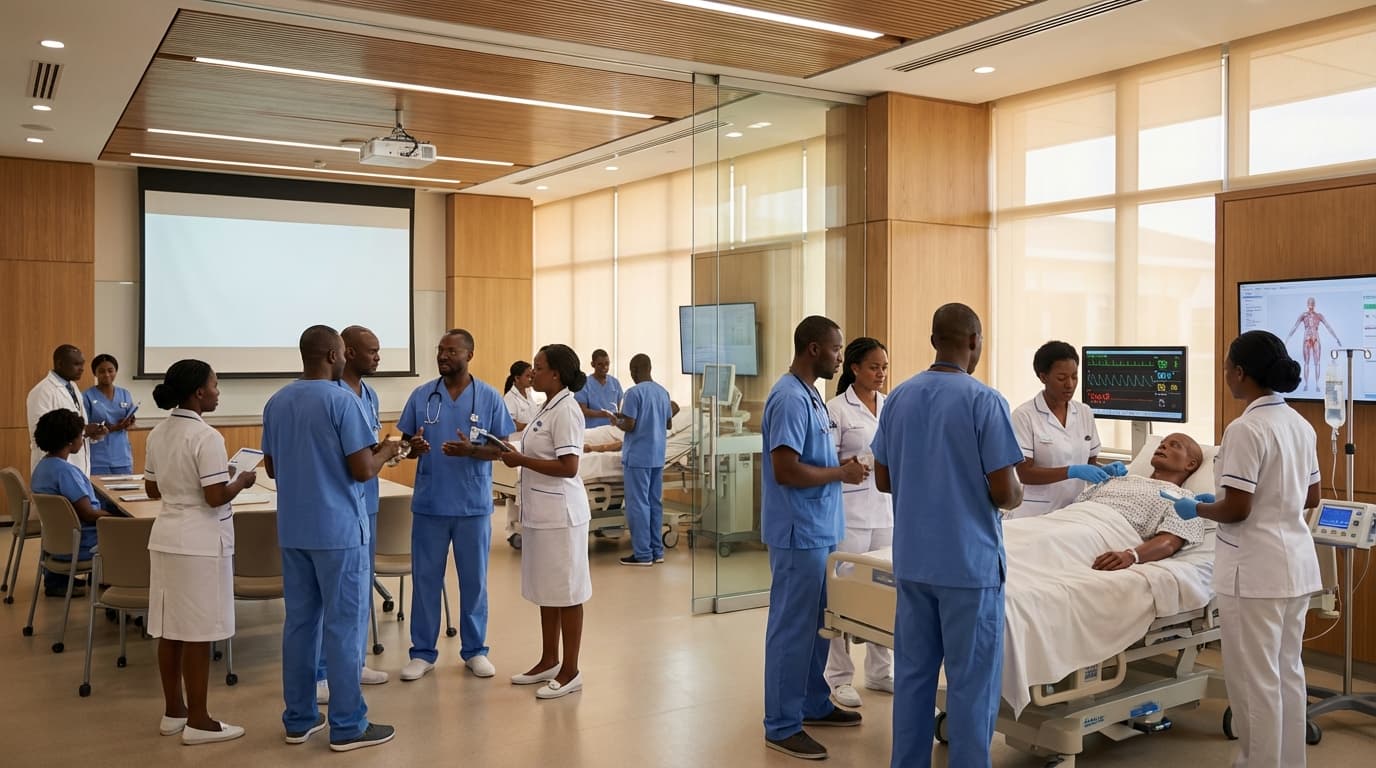
Equipment Training & Education in Gambia
Engineering Excellence & Technical Support
Comprehensive equipment training and certification programs High-standard technical execution following OEM protocols and local regulatory frameworks.
Certified Equipment Operator Program
Empowering Gambian workforce with accredited training in safe and efficient operation of heavy machinery, ensuring compliance with international safety standards and boosting local employment opportunities in the construction and agriculture sectors.
Digital Maintenance & Troubleshooting Workshops
Providing hands-on training in the latest diagnostic tools and digital maintenance protocols for agricultural and industrial equipment, enabling local technicians to perform advanced repairs, reduce downtime, and extend equipment lifespan.
Agricultural Equipment Sustainability Initiative
Focusing on best practices for the operation, maintenance, and energy efficiency of modern agricultural machinery, aimed at enhancing crop yields, reducing operational costs for farmers, and promoting sustainable agricultural development across Gambia.
What Is Equipment Training & Education In Gambia?
Equipment training and education in The Gambia refers to the structured process of imparting knowledge, skills, and competencies necessary for the safe, efficient, and effective operation, maintenance, and troubleshooting of specific machinery, tools, and apparatus. This service is crucial for enhancing workforce productivity, minimizing operational risks, and ensuring the longevity and optimal performance of acquired equipment. It encompasses theoretical instruction, practical hands-on sessions, and ongoing professional development tailored to the unique technological and operational contexts prevalent in The Gambia.
| Who Needs It | Typical Use Cases/Sectors | ||||||
|---|---|---|---|---|---|---|---|
| Operators: Individuals directly responsible for the daily functioning of machinery and equipment. | Agriculture: Training on tractors, harvesters, irrigation systems, processing machinery (e.g., rice mills, shelling machines). | Construction: Training on excavators, bulldozers, cranes, concrete mixers, power tools. | Manufacturing & Industry: Training on production line machinery, packaging equipment, specialized industrial tools, quality control apparatus. | Healthcare: Training on medical diagnostic equipment (e.g., X-ray machines, laboratory analyzers), patient care devices. | Transportation & Logistics: Training on vehicle maintenance, loading/unloading equipment (e.g., forklifts), port machinery. | Information Technology (IT): Training on server hardware, network infrastructure, specialized software systems, telecommunications equipment. | Energy Sector: Training on generator operation and maintenance, solar panel installation and repair, grid infrastructure equipment. |
| Maintenance Technicians: Personnel tasked with the upkeep, repair, and servicing of equipment. | Service Providers: Companies offering equipment repair, installation, and technical support services. | Supervisors & Management: To understand operational capabilities, safety implications, and training requirements. | Vocational Training Institutions: To equip students with practical skills for future employment. | NGOs & Development Agencies: For projects involving the deployment and utilization of specialized equipment in areas like health, water, sanitation, and agriculture. |
Key Components of Equipment Training & Education in The Gambia
- Needs Assessment and Curriculum Development: Identifying specific training gaps and designing tailored educational programs based on equipment type, user experience, and organizational objectives.
- Theoretical Instruction: Covering principles of operation, safety protocols, regulatory compliance, and diagnostic procedures.
- Practical Application and Skill Development: Hands-on training with actual equipment, emphasizing correct usage, calibration, minor repairs, and emergency response.
- Maintenance and Troubleshooting: Training on routine preventive maintenance, fault identification, and basic repair techniques to reduce downtime and reliance on external technicians.
- Safety and Hazard Management: Comprehensive modules on identifying and mitigating risks associated with equipment operation, including personal protective equipment (PPE) usage and emergency procedures.
- Documentation and Record Keeping: Training on proper log keeping, maintenance records, and reporting mechanisms.
- Assessment and Certification: Evaluating acquired knowledge and skills through practical tests and theoretical examinations, leading to the issuance of certificates of competence.
- Ongoing Professional Development: Refresher courses, advanced training for specialized equipment, and updates on new technologies or operational procedures.
Who Needs Equipment Training & Education In Gambia?
Equipment training and education are crucial for a wide range of individuals and organizations in The Gambia. Ensuring proper operation, maintenance, and safety of equipment directly impacts productivity, efficiency, and the longevity of valuable assets. This training is not a luxury but a necessity for those who interact with, manage, or rely on machinery and technological tools in various sectors.
| Sector/Industry | Target Customers | Key Departments/Roles |
|---|---|---|
| Agriculture | Farmers, farm managers, agricultural extension officers, mechanics specializing in farm machinery | Farm Operations, Machinery Maintenance, Extension Services |
| Construction | Construction workers, site supervisors, equipment operators (excavators, bulldozers, cranes), mechanics | Site Management, Equipment Operations, Maintenance and Repair |
| Manufacturing/Industry | Factory workers, machine operators, maintenance technicians, quality control personnel | Production, Maintenance, Quality Assurance |
| Healthcare | Medical technicians, nurses, biomedical engineers, laboratory staff | Diagnostic Imaging, Laboratory Services, Medical Equipment Maintenance, Patient Care |
| Transportation/Logistics | Drivers (trucks, buses, heavy vehicles), fleet managers, logistics coordinators, mechanics | Fleet Management, Vehicle Maintenance, Operations, Supply Chain |
| Energy (Power & Renewables) | Power plant operators, technicians (solar, wind), maintenance engineers, grid operators | Operations, Maintenance, Engineering, Renewable Energy Installation |
| Mining & Natural Resources | Equipment operators, mine technicians, maintenance staff, safety officers | Operations, Maintenance, Safety, Geology |
| Information Technology (IT) | IT support staff, network administrators, data center technicians, cybersecurity professionals | IT Support, Network Operations, Data Management, Security Operations |
| Government & Public Services | Municipal workers, public works staff, emergency responders, civil servants managing public assets | Public Works, Waste Management, Emergency Services, Infrastructure Management |
| Hospitality & Tourism | Hotel maintenance staff, kitchen equipment operators, event technicians | Facilities Management, Culinary Operations, Event Management |
| Education & Training Institutions | Vocational training instructors, technical college lecturers, university professors in engineering and sciences | Technical Departments, Engineering Faculties, Vocational Training Centers |
Target Customers and Departments for Equipment Training & Education in The Gambia
- Individuals seeking to enhance their skill sets and improve employability in technical fields.
- Businesses and organizations aiming to optimize operational efficiency and reduce equipment downtime.
- Government agencies responsible for managing public infrastructure and services.
- Educational institutions looking to equip students with practical, industry-relevant skills.
Equipment Training & Education Process In Gambia
The Equipment Training & Education Process in Gambia is designed to ensure that individuals and organizations have the necessary knowledge and skills to safely and effectively operate and maintain various types of equipment. This process typically begins with an initial inquiry and progresses through needs assessment, curriculum development, scheduling, training delivery, and finally, post-training evaluation and certification. The aim is to enhance operational efficiency, reduce accidents, and prolong the lifespan of equipment within Gambian industries and institutions.
| Stage | Description | Key Activities | Responsible Parties | Output |
|---|---|---|---|---|
| Inquiry and Initial Contact | The process begins when a potential client (individual, company, or government agency) expresses interest in equipment training. | Contacting the training provider, expressing interest, preliminary information exchange. | Client (inquirer), Training Provider's Sales/Inquiry Department. | Initial understanding of client's interest, contact details gathered. |
| Needs Assessment and Scope Definition | Detailed understanding of the client's specific training requirements, existing knowledge, and equipment. | On-site visits (if applicable), interviews with stakeholders, review of equipment manuals, identification of skill gaps. | Training Provider's Technical/Training Needs Assessor, Client's Representatives (e.g., managers, operators). | Detailed training needs report, identified equipment, target audience, desired learning outcomes. |
| Curriculum Development and Customization | Designing or adapting training materials to meet the identified needs and specific equipment. | Developing training modules, practical exercises, assessment tools, incorporating safety protocols specific to Gambia. | Training Provider's Curriculum Developers, Subject Matter Experts (SMEs). | Tailored training manuals, presentations, practical demonstration guides, assessment questionnaires. |
| Trainer Identification and Preparation | Selecting qualified and experienced trainers and ensuring they are familiar with the curriculum and equipment. | Identifying internal or external trainers, conducting trainer-the-trainer sessions, ensuring trainer competency. | Training Provider's Training Manager, HR Department. | List of qualified trainers, trainer briefing documents. |
| Scheduling and Logistics | Arranging dates, times, locations, and necessary resources for the training. | Coordinating with the client on preferred dates, booking training venues, arranging for equipment for practical sessions, travel arrangements for trainers/participants. | Training Provider's Logistics Coordinator, Client's Representative. | Confirmed training schedule, venue booking, equipment allocation, participant list. |
| Training Delivery and Execution | The actual delivery of the training program. | Conducting theoretical sessions (lectures, presentations), practical demonstrations, hands-on exercises, Q&A sessions. | Certified Trainers, Participants. | Trained individuals, practical skill demonstration. |
| Assessment and Evaluation | Measuring the participants' understanding and acquired skills. | Written tests, practical skill assessments, observation of performance, feedback forms from participants. | Trainers, Assessment Officers. | Assessment results, participant feedback summary. |
| Certification and Documentation | Issuing formal recognition of successful completion of the training. | Reviewing assessment results, preparing certificates, maintaining training records. | Training Provider's Administration Department, Certification Body (if applicable). | Certificates of completion, training attendance records, assessment reports. |
| Post-Training Support and Follow-up | Providing ongoing support and monitoring the long-term impact of the training. | Answering follow-up questions, offering refresher courses, conducting impact assessments, troubleshooting any implementation challenges. | Training Provider's Support Team, Client's Operational Staff. | Improved equipment operation and maintenance, client satisfaction, potential for future training engagements. |
Key Stages of the Equipment Training & Education Process
- Inquiry and Initial Contact
- Needs Assessment and Scope Definition
- Curriculum Development and Customization
- Trainer Identification and Preparation
- Scheduling and Logistics
- Training Delivery and Execution
- Assessment and Evaluation
- Certification and Documentation
- Post-Training Support and Follow-up
Equipment Training & Education Cost In Gambia
This report outlines the pricing factors and typical cost ranges for equipment training and education in The Gambia, denominated in Gambian Dalasi (GMD). The cost of such training is influenced by several key variables, including the complexity of the equipment, the duration and depth of the training program, the qualification and experience of the trainers, the location where the training is conducted, and whether specialized materials or equipment are required. Demand and supply dynamics within the local market also play a significant role. For specialized or highly technical equipment, the costs tend to be higher due to the need for expert instructors and potentially imported training materials. Conversely, general equipment operation or basic maintenance training may be more accessible and affordable.
| Training Type/Equipment Category | Typical Duration | Estimated Cost Range (GMD) |
|---|---|---|
| Basic Operational Skills (e.g., General Office Equipment, Basic Agricultural Tools) | 1-3 Days | 5,000 - 15,000 |
| Intermediate Technical Skills (e.g., Construction Equipment Operation, Small-Scale Industrial Machinery) | 3-7 Days | 15,000 - 40,000 |
| Advanced Technical/Specialized Equipment (e.g., Medical Devices, Heavy Machinery, IT Infrastructure) | 1-4 Weeks (or modular) | 40,000 - 150,000+ |
| Health & Safety Training (e.g., Forklift Operation, Workshop Safety) | 1-5 Days | 7,000 - 25,000 |
| Software & IT Equipment Training (e.g., CRM, ERP Systems, Networking Hardware) | 2-10 Days | 10,000 - 60,000 |
| Maintenance & Repair Training (Basic to Intermediate) | 3-7 Days | 12,000 - 35,000 |
Key Pricing Factors for Equipment Training & Education in The Gambia
- Equipment Complexity: Highly specialized or technical equipment training (e.g., medical machinery, advanced industrial equipment) commands higher fees than training on common tools or basic machinery.
- Training Duration & Depth: Longer courses and more in-depth theoretical and practical sessions naturally increase the overall cost.
- Trainer Expertise & Qualifications: Experienced and certified trainers, especially those with international recognition, will charge more.
- Location of Training: Training conducted at the client's site might incur additional travel and accommodation costs for trainers. Training at dedicated training centers could have their own facility fees.
- Training Materials & Resources: Costs associated with manuals, digital resources, simulations, or consumable materials used during training.
- Group Size & Customization: Larger groups might benefit from economies of scale, while highly customized training programs tailored to specific organizational needs can be more expensive.
- Certification & Assessment: Inclusion of formal certification exams and assessments will add to the cost.
- Market Demand & Competition: The availability of training providers and the demand for specific skills influence pricing.
Affordable Equipment Training & Education Options
Acquiring the necessary skills to operate and maintain equipment is crucial for safety, efficiency, and productivity. Fortunately, there are numerous affordable equipment training and education options available. Understanding value bundles and implementing cost-saving strategies can significantly reduce the financial burden of professional development. Value bundles often combine multiple training modules, certifications, or resources at a discounted price, providing a more comprehensive learning experience for a lower overall cost. Cost-saving strategies involve leveraging free resources, exploring group discounts, utilizing government or industry grants, and choosing online or hybrid learning formats which often have lower overhead costs.
| Strategy | Description | Potential Savings |
|---|---|---|
| Value Bundles | Purchasing multiple training courses or certifications together at a discounted rate. Often includes supplementary materials or extended access. | 15-30% or more compared to purchasing individually. |
| Group Discounts | Enrolling multiple employees from the same organization. Training providers often offer tiered discounts based on the number of participants. | 10-25% depending on group size. |
| Early Bird Registration | Registering for courses or workshops well in advance of the start date to secure a lower price. | 5-15%. |
| Online/Hybrid Learning | Choosing courses delivered online or in a blended format, reducing travel and accommodation costs associated with in-person training. | Significant savings on travel, lodging, and often tuition. |
| Government & Industry Grants | Exploring grants and funding opportunities from local, state, or federal governments, as well as industry-specific organizations, to offset training costs. | Can cover a substantial portion or even all training expenses. |
| Utilize Free Resources | Leveraging free online tutorials, manufacturer-provided documentation, and open-source learning materials for foundational knowledge. | Zero direct cost for introductory learning. |
| Certification Renewal Options | When renewing certifications, look for bundled renewal packages or online renewal options which can be more cost-effective than full re-training. | Can be 10-20% cheaper than initial certification. |
| Negotiate Custom Packages | For larger organizations, working with training providers to develop a custom training package tailored to specific needs can sometimes lead to better pricing. | Negotiable, potential for significant savings. |
Affordable Equipment Training & Education Options
- Online Courses & Webinars
- Community College & Vocational Schools
- Manufacturer-Provided Training
- Industry Association Workshops
- On-the-Job Training Programs
- Apprenticeships
- Free Online Resources (e.g., YouTube, manufacturer manuals)
- Government & Non-Profit Training Initiatives
Verified Providers In Gambia
Finding reliable healthcare providers is paramount for individuals and organizations operating in or visiting The Gambia. Verified providers not only ensure quality of care but also offer peace of mind. Among these, Franance Health stands out as a leading organization, distinguished by its rigorous credentialing process and unwavering commitment to patient well-being. This document outlines why Franance Health's verified providers represent the best choice for healthcare needs in The Gambia.
| Service Area | Key Differentiators for Franance Health Verified Providers | Benefits for Patients |
|---|---|---|
| Medical Expertise | Thorough vetting of qualifications, experience, and specializations. | Access to highly skilled and competent medical professionals. |
| Patient Safety | Adherence to strict safety protocols and quality management systems. | Reduced risk of medical errors and improved health outcomes. |
| Accessibility | Strategically located clinics and hospitals with clear appointment systems. | Convenient access to timely medical care. |
| Trust and Reliability | Franance Health's established reputation and endorsement. | Confidence in receiving trustworthy and dependable healthcare services. |
| Cost-Effectiveness | Transparent pricing and potential for negotiated rates through the Franance Health network. | Value for money and avoidance of unexpected medical expenses. |
Why Choose Franance Health Verified Providers?
- Rigorous Credentialing Process: Franance Health employs a multi-stage verification process for all its healthcare partners. This includes extensive background checks, validation of professional licenses and certifications, review of medical malpractice history, and assessment of clinical expertise and experience.
- Commitment to Quality Standards: Verified providers are held to the highest international and national standards of healthcare delivery. Franance Health regularly monitors and evaluates their performance to ensure ongoing compliance and continuous improvement.
- Patient-Centric Approach: Franance Health prioritizes patient safety, satisfaction, and accessibility. Their verified providers are known for their compassionate care, clear communication, and dedication to addressing individual patient needs.
- Comprehensive Network: The network comprises a diverse range of specialists and general practitioners across various medical disciplines, ensuring that patients can find the appropriate care for their specific health concerns.
- Ethical Practices and Transparency: Franance Health champions ethical medical practices and demands transparency from its providers. Patients can expect clear information regarding diagnoses, treatment options, and costs.
- Continuous Professional Development: The organization encourages and supports ongoing training and professional development for its verified providers, ensuring they remain up-to-date with the latest medical advancements and best practices.
Scope Of Work For Equipment Training & Education
This Scope of Work (SOW) outlines the requirements for providing comprehensive training and educational services for the specified equipment. The objective is to ensure that the client's personnel gain the necessary knowledge and practical skills to operate, maintain, and troubleshoot the equipment effectively and safely. This SOW details the technical deliverables and standard specifications to be adhered to throughout the training program.
| Deliverable | Description | Standard Specification | Format/Medium | Owner (Client/Vendor) |
|---|---|---|---|---|
| Training Curriculum Development | Creation of a structured training program tailored to the specific equipment and client's needs. | Comprehensive, modular, and progressive learning path covering all specified objectives. | Digital Document (PDF/Word) and Online Platform Access | Vendor |
| Training Materials (Participant) | Handouts, manuals, visual aids, and exercises for trainees. | Clear, concise, and technically accurate content, including diagrams and illustrations. Language: English. | Printed Handouts and Digital Access (PDF) | Vendor |
| Training Materials (Instructor) | Instructor guides, presentation slides, and lesson plans. | Detailed instructions for facilitators, including time allocation for each module and assessment methods. | Digital Document (PDF/PowerPoint) | Vendor |
| Hands-on Training Sessions | Practical, supervised sessions on the actual equipment or a fully representative simulation. | Minimum of X hours per module, with a trainee-to-instructor ratio not exceeding Y:1. All exercises must be directly relevant to operational tasks. | On-site/Remote Practical Sessions | Client/Vendor (depending on agreement) |
| Competency Assessment | Evaluation of trainee knowledge and skills through quizzes, practical tests, and observation. | Pass/Fail criteria defined in the curriculum. Assessments should be objective and measurable. | Written Tests, Practical Demonstrations, Observation Checklists | Vendor |
| Certification of Completion | Issuance of certificates to trainees who successfully meet the competency assessment requirements. | Certificates must include trainee name, course title, date, and vendor signature. Valid for [Duration, if applicable]. | Digital Certificate (PDF) and/or Printed Certificate | Vendor |
| Post-Training Support Plan | Outline of support mechanisms available to trainees after the formal training period. | Includes access to online FAQs, dedicated support email/phone line for [Duration], and optional refresher sessions. | Digital Document (PDF) and Communication Channels | Vendor |
| Training Report | Summary of training activities, attendance, assessment results, and feedback. | Detailed report including number of trainees, modules covered, pass rates, and recommendations for improvement. | Digital Document (PDF) | Vendor |
Key Training Objectives
- Familiarize trainees with the fundamental principles of operation for the equipment.
- Provide hands-on training for routine operation, setup, and configuration.
- Educate on preventive maintenance procedures, schedules, and best practices.
- Develop troubleshooting skills for common operational issues and minor repairs.
- Ensure understanding of all safety regulations and protocols related to equipment use.
- Cover advanced features and functionalities as applicable to specific roles.
- Provide documentation and resources for ongoing learning and reference.
Service Level Agreement For Equipment Training & Education
This Service Level Agreement (SLA) outlines the guaranteed response times and uptime for the Equipment Training & Education services provided by [Your Company Name] to [Client Company Name]. This SLA is an appendix to the Master Services Agreement (MSA) dated [Date of MSA].
| Service Component | Service Level Objective (SLO) | Measurement | Escalation |
|---|---|---|---|
| Online Training Module Availability | 99.5% Uptime | Percentage of time the online training platform is accessible and functional. Measured monthly. Excludes scheduled maintenance. | If uptime falls below 99.5% for two consecutive months, a review of infrastructure and procedures will be conducted, and a credit of 5% of the monthly training subscription fee will be applied. |
| Live Virtual Training Session Availability | 99.9% Availability | Percentage of scheduled live virtual training sessions that commence within 15 minutes of the scheduled start time. Measured per session. | If a session is more than 15 minutes late, the client will be notified of the delay and provided with an updated start time. If a session is canceled with less than 24 hours' notice, a make-up session will be scheduled at no additional cost. |
| Technical Support Response Time (Training Platform) | 4 Business Hours | Time from initial client contact (email, portal ticket) to acknowledgement of the issue by the support team for non-critical platform access/functionality issues. | For critical issues affecting multiple users or preventing access to scheduled training, the response time will be 1 Business Hour. If the initial response time is not met, the issue will be automatically escalated to a senior support engineer. |
| Training Material Update Availability | Within 5 Business Days | Timeframe for making updated training materials (e.g., revised manuals, new module versions) available after notification from the equipment manufacturer or as agreed upon for updates. | If updates are critical for operational safety or compliance, efforts will be made to expedite the availability. Client will be notified if there are unforeseen delays. |
Scope of Services
- On-demand online training modules for specified equipment.
- Live virtual instructor-led training sessions.
- On-site equipment training (as per separate agreement/quote).
- Access to training documentation and user manuals.
- Technical support for training platform access and functionality.
Frequently Asked Questions

Ready when you are
Let's scope your Equipment Training & Education in Gambia project in Gambia.

Scaling healthcare logistics and technical systems across the entire continent.