
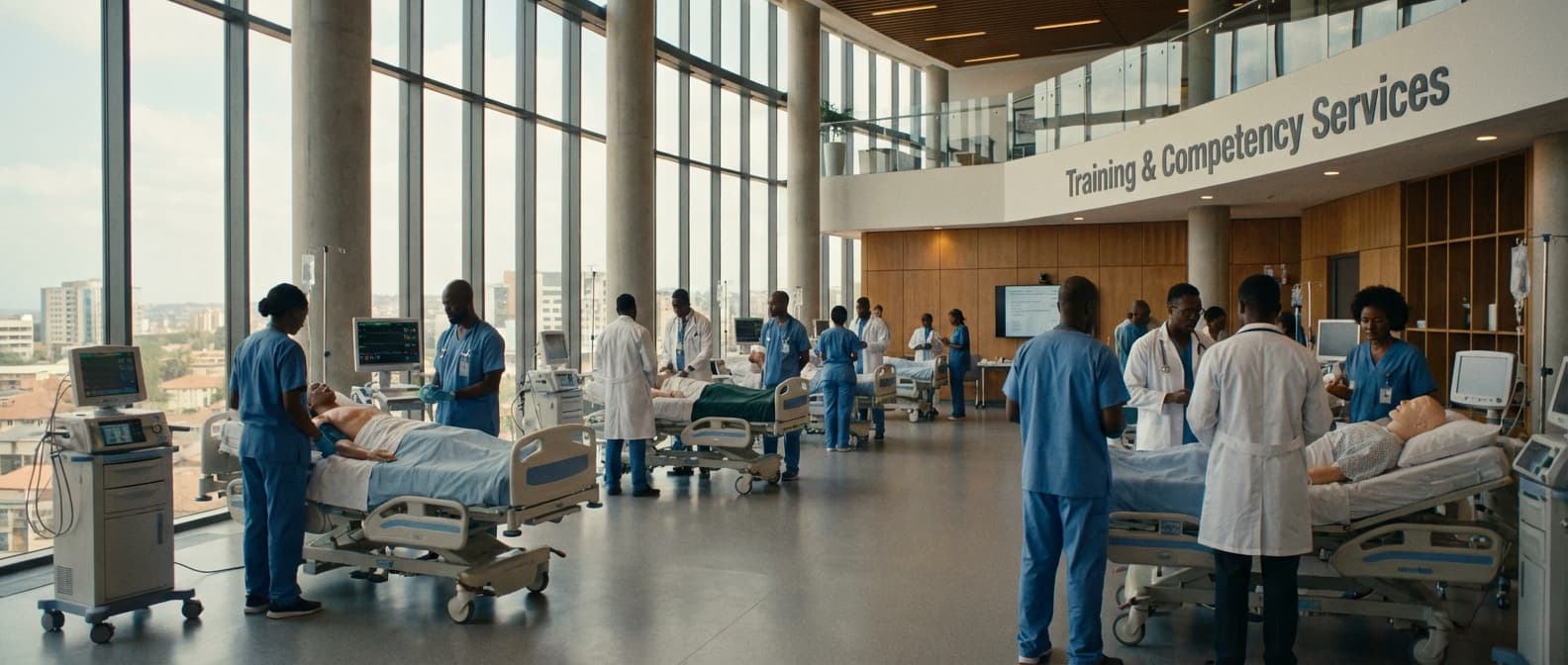
MRI Operator Training Service (Radiographers) in Gambia
Engineering Excellence & Technical Support
MRI Operator Training Service (Radiographers) High-standard technical execution following OEM protocols and local regulatory frameworks.
Advanced MRI Protocol Mastery
Comprehensive training on a wide range of MRI protocols, from basic neuroimaging to advanced cardiac and musculoskeletal scans. Our curriculum focuses on optimizing image quality and patient comfort, tailored for the specific needs and equipment available in Gambian healthcare settings.
Patient Safety & Contrast Administration
In-depth training on MRI safety protocols, including screening, artifact reduction, and effective management of claustrophobic or anxious patients. Specialized modules cover safe and efficient contrast agent administration, emergency preparedness, and adverse reaction management.
Image Interpretation Fundamentals & Quality Assurance
Develop a strong foundation in basic MRI image interpretation relevant to common pathologies encountered in The Gambia. Training includes practical exercises on image critique, artifact identification, and implementing quality assurance measures to ensure diagnostic accuracy and efficient workflow.
What Is Mri Operator Training Service (Radiographers) In Gambia?
MRI Operator Training Service (Radiographers) in The Gambia refers to specialized educational programs designed to equip radiographers with the theoretical knowledge and practical skills required to safely and effectively operate Magnetic Resonance Imaging (MRI) scanners. This service is crucial for ensuring high-quality diagnostic imaging services are available and performed by competent professionals within the Gambian healthcare system. The training focuses on the principles of MRI physics, image acquisition protocols, patient safety, contraindications, artifact recognition and reduction, and the interpretation of basic MRI findings. It aims to develop proficient operators capable of performing a wide range of MRI examinations across various anatomical regions.
| Who Needs MRI Operator Training Service | Typical Use Cases |
|---|---|
| Newly graduated radiographers in The Gambia seeking specialization in advanced imaging modalities. | Acquisition of skills to operate MRI scanners in public and private healthcare facilities. |
| Existing radiographers with experience in other imaging modalities (e.g., X-ray, CT) who need to transition to MRI operation. | Establishing new MRI services or expanding existing ones within hospitals and specialized diagnostic centers. |
| Radiographers working in departments where MRI services are being introduced or upgraded. | Providing diagnostic imaging for neurological conditions (e.g., stroke, tumors, multiple sclerosis). |
| Radiographers employed by government health initiatives or non-governmental organizations aiming to enhance diagnostic capabilities. | Assessing musculoskeletal injuries and degenerative conditions. |
| Radiographers seeking to maintain and update their proficiency in MRI operation through continuing professional development. | Imaging of the cardiovascular system and abdominal organs. |
| Radiographers in remote or underserved areas where access to specialized training is limited. | Detecting and staging of oncological conditions. |
| Evaluating gastrointestinal and genitourinary pathologies. | |
| Pre-surgical planning and post-treatment follow-up. |
Key Components of MRI Operator Training Service for Radiographers in The Gambia:
- Principles of Nuclear Magnetic Resonance (NMR): Understanding the physics behind MRI signal generation, including magnetic fields, radiofrequency pulses, and signal detection.
- MRI Hardware and Software Operation: Familiarization with specific MRI scanner components, console operation, pulse sequences, and image reconstruction techniques.
- Patient Preparation and Safety: Comprehensive training on screening for contraindications (e.g., ferromagnetic implants, pacemakers), patient positioning, monitoring, and management of claustrophobia and contrast agents.
- Image Acquisition Protocols: Development and application of standardized protocols for different anatomical areas (e.g., brain, spine, musculoskeletal, abdominal) and clinical indications.
- Image Quality Assurance and Artifact Management: Techniques for optimizing image quality, identifying common artifacts, and implementing strategies for their reduction or elimination.
- Radiation Safety (though MRI is non-ionizing, understanding electromagnetic field safety is critical): Best practices for minimizing exposure to strong magnetic fields and RF energy for both patients and personnel.
- Basic Interpretation and Reporting Support: While not intended to produce MRI radiologists, the training includes foundational knowledge for recognizing normal anatomy and common pathologies to assist in preliminary assessment and communication with radiologists.
- Ethical and Legal Considerations: Understanding patient consent, data privacy (HIPAA equivalent), and professional conduct within the context of MRI examinations.
- Hands-on Clinical Practice: Supervised practical sessions on operational MRI scanners, allowing trainees to apply learned principles under expert guidance.
Who Needs Mri Operator Training Service (Radiographers) In Gambia?
The demand for specialized MRI operator training for radiographers in The Gambia is driven by the increasing need for advanced diagnostic imaging services and the desire to enhance the skills of existing healthcare professionals. While The Gambia's healthcare infrastructure is developing, access to sophisticated imaging technologies like MRI is crucial for accurate diagnosis, treatment planning, and patient management. This training is vital for ensuring that these services are delivered effectively and efficiently by qualified personnel.
| Target Customer Group | Specific Departments/Roles | Reason for Training Need |
|---|---|---|
| Public Hospitals | Radiology Department, Diagnostic Imaging Unit | To operate existing MRI machines, improve diagnostic accuracy, and manage increasing patient loads. |
| Private Hospitals & Clinics | Radiology Department, MRI Suite | To offer advanced diagnostic services, compete in the healthcare market, and ensure patient safety. |
| Diagnostic Centers | Imaging Technologists, Radiographers | To utilize new MRI equipment, provide specialized scans, and meet demand for outsourced imaging. |
| Government Health Initiatives | Ministry of Health Officials, Hospital Administrators | To strategically develop national imaging capacity, ensure standardized training, and allocate resources effectively. |
| Future Healthcare Facilities | Radiographers (pre-employment training) | To prepare for the acquisition and operation of MRI technology in upcoming medical facilities. |
Target Customers and Departments for MRI Operator Training Service (Radiographers) in Gambia
- Hospitals with Existing MRI Facilities: These institutions are the primary beneficiaries, as they require skilled operators to maximize the use of their current equipment and ensure high-quality imaging.
- Hospitals Planning to Acquire MRI Technology: Facilities in the process of purchasing or installing MRI scanners will need to train their radiographers in advance to be ready for operation upon installation.
- Government Healthcare Institutions: Public hospitals and clinics that serve the majority of the population are key targets, especially those designated as referral centers or with a mandate to expand diagnostic capabilities.
- Private Healthcare Providers and Diagnostic Centers: As the private healthcare sector grows in The Gambia, private facilities offering or planning to offer MRI services will require specialized training for their staff.
- Tertiary Healthcare and Referral Hospitals: These facilities often handle complex cases and require advanced imaging techniques, making MRI operator training essential for their radiographers.
- Radiology Departments: This is the core department where MRI is typically located. Training radiographers within these departments is paramount.
- Diagnostic Imaging Units: Broader departments that encompass various imaging modalities, including MRI, will benefit from enhanced radiographer skills.
- Medical Imaging Training Institutions: While primarily for ongoing professional development, these institutions might also seek training for their instructors or for integration into their curriculum.
- Ministry of Health and Social Welfare: The government body responsible for national health policy and infrastructure development may identify critical needs for MRI operator training and sponsor such programs.
Mri Operator Training Service (Radiographers) Process In Gambia
This document outlines the typical workflow for an MRI Operator Training Service (Radiographers) in Gambia, from the initial inquiry to the successful execution of the training program. The process is designed to be comprehensive, ensuring that participants receive high-quality, relevant, and practical training that meets the needs of healthcare facilities in Gambia.
| Phase | Key Activities | Responsible Parties | Deliverables/Outcomes |
|---|---|---|---|
| Phase 1: Inquiry and Needs Assessment | Initial contact from interested healthcare facility or individual radiographers. Discussion of training needs, specific MRI systems, desired learning outcomes, and participant numbers. Clarification of existing skill levels and experience. Site visit (if necessary) to assess current facilities and equipment. | Client (Healthcare Facility/Radiographers), Training Provider | Understanding of client's training requirements. Identification of potential training gaps. Initial scope of training defined. |
| Phase 2: Proposal Development and Negotiation | Development of a detailed training proposal including curriculum outline, duration, location, trainers' profiles, methodology, proposed dates, and costs. Submission of proposal to the client. Negotiation of terms, conditions, and pricing. Contract finalization. | Training Provider, Client | Formal training proposal. Agreed-upon contract and service level agreement. |
| Phase 3: Training Design and Customization | Refinement of the curriculum based on client feedback and identified needs. Development of training materials (presentations, handouts, case studies, practical exercises). Customization of content to specific MRI scanner models used in Gambia. Identification and sourcing of any specialized equipment or simulation tools. | Training Provider (Instructional Designers, Subject Matter Experts) | Tailored curriculum and training modules. Comprehensive training materials. Schedule of training sessions. |
| Phase 4: Pre-Training Preparations | Confirmation of participant list and their background details. Logistical arrangements: venue booking, accommodation (if required), travel arrangements for trainers. Equipment setup and testing at the training venue. Communication of pre-training information to participants (schedule, prerequisites, materials). Procurement of any necessary consumables or patient simulation materials. | Training Provider, Client | Confirmed participant roster. Secured training venue and logistics. Ready training environment. Informed participants. |
| Phase 5: Training Execution | Delivery of theoretical lectures and interactive sessions. Hands-on practical training on MRI scanners (simulated or actual, depending on arrangements). Case study analysis and group discussions. Competency-based assessments (written, practical, oral). Demonstration of advanced techniques and protocols. | Lead Trainer, Assistant Trainers, Participants | Successful completion of training modules. Demonstrated understanding of MRI principles and operation. Acquisition of practical scanning skills. Completion of assessments. |
| Phase 6: Post-Training Evaluation and Support | Collection of feedback from participants and the client regarding the training. Analysis of assessment results. Issuance of certificates of completion. Provision of ongoing support: Q&A sessions, follow-up consultations, access to supplementary resources. Post-training evaluation report summarizing outcomes and recommendations. | Training Provider, Client, Participants | Training evaluation report. Certificates of completion. Enhanced skills and confidence of radiographers. Established channel for ongoing support. |
MRI Operator Training Service (Radiographers) Process in Gambia
- Phase 1: Inquiry and Needs Assessment
- Phase 2: Proposal Development and Negotiation
- Phase 3: Training Design and Customization
- Phase 4: Pre-Training Preparations
- Phase 5: Training Execution
- Phase 6: Post-Training Evaluation and Support
Mri Operator Training Service (Radiographers) Cost In Gambia
The cost of MRI operator training for radiographers in The Gambia can vary significantly based on several factors. These include the reputation and accreditation of the training institution, the duration and depth of the program, the level of certification offered, and the inclusion of practical, hands-on experience with MRI equipment. Furthermore, the specific modules covered (e.g., basic principles, advanced techniques, specific imaging protocols, patient safety) will influence the overall price. The economic climate and the demand for such specialized training within The Gambia can also play a role in pricing.
| Training Type/Level | Estimated Cost Range (GMD) | Notes |
|---|---|---|
| Basic MRI Principles & Operation (Short Course/Workshop) | 15,000 - 30,000 | Typically 1-2 weeks, focusing on fundamentals and basic safety. |
| Intermediate MRI Operator Training (Comprehensive Course) | 40,000 - 80,000 | Often 4-8 weeks, covering a broader range of protocols and practical application. |
| Advanced MRI Techniques & Protocol Specialization | 60,000 - 120,000+ | Duration varies, focusing on specific areas like neuro, musculoskeletal, or abdominal MRI. May involve specialized equipment access. |
| On-site Training (for healthcare facilities) | Varies (negotiable) | Cost is highly dependent on the number of trainees, duration, and specific needs of the facility. Includes travel and accommodation for trainers. |
Key Pricing Factors for MRI Operator Training in The Gambia:
- Training Institution's Reputation and Accreditation
- Program Duration and Curriculum Depth
- Certification Level Offered
- Inclusion of Practical/Hands-on Training
- Specialized Modules and Advanced Techniques
- Faculty Expertise and Experience
- Location and Overhead Costs of the Training Facility
- Government Subsidies or Funding Opportunities (if applicable)
- Demand for Trained MRI Operators in the Local Market
Affordable Mri Operator Training Service (Radiographers) Options
This service provides specialized MRI operator training for radiographers, focusing on practical skills, safety protocols, and advanced imaging techniques. Our goal is to equip radiographers with the confidence and expertise to operate MRI scanners efficiently and safely, enhancing diagnostic accuracy and patient care. We offer flexible training modules that can be customized to individual needs and institutional requirements, ensuring cost-effectiveness and maximum return on investment.
| Training Module | Key Features | Potential Cost Savings |
|---|---|---|
| Basic MRI Operator Fundamentals | Introduction to MRI physics, safety protocols, basic image acquisition, patient positioning. | Reduces initial training time for new radiographers; lowers risk of safety incidents. |
| Intermediate MRI Techniques | Advanced pulse sequences, contrast administration, artifact reduction, common clinical applications. | Enhances diagnostic quality; reduces need for repeat scans; improves workflow efficiency. |
| Advanced MRI Applications & Troubleshooting | Specialized sequences (e.g., fMRI, DTI), quantitative imaging, problem-solving for image quality issues. | Increases staff versatility; improves departmental capabilities; reduces reliance on external specialists for troubleshooting. |
| On-Site Equipment-Specific Training | Hands-on training with your specific MRI scanner model, including software and hardware features. | Maximizes utilization of existing equipment; reduces travel costs for trainers; ensures immediate applicability. |
| Remote/Online Theory Modules | Flexible learning for physics, safety, and theoretical concepts, accessible anytime, anywhere. | Reduces time away from clinical duties; eliminates travel and accommodation expenses; allows self-paced learning. |
| Train-the-Trainer Program | Equips experienced staff to mentor and train junior colleagues effectively. | Creates a sustainable internal training resource; significantly reduces long-term external training expenditure. |
Value Bundles and Cost-Saving Strategies
- Tiered Training Packages: Offering basic, intermediate, and advanced modules, allowing institutions to select the level of training that best suits their current staff skill sets and future needs. This avoids over-training and unnecessary expenses.
- On-site vs. Remote Training: Providing both on-site training for hands-on experience with specific equipment and remote/online modules for theoretical knowledge and flexible learning. On-site training can be more cost-effective when multiple staff members require the same training simultaneously, while remote options save on travel and accommodation.
- Train-the-Trainer Programs: Empowering experienced radiographers within an institution to train new hires or junior staff, creating a sustainable internal training program and reducing ongoing external training costs.
- Group Discounts: Offering reduced per-person rates for larger groups of radiographers attending training sessions, encouraging collaborative learning and cost-sharing.
- Customized Curriculum Development: Tailoring training content to specific MRI scanner models, common pathologies encountered, and departmental workflows. This ensures relevance and efficiency, minimizing time spent on extraneous material.
- Early Bird Registration Incentives: Providing discounts for early sign-ups to training courses, encouraging proactive planning and securing training slots at a lower cost.
- Bundled Software & Protocol Training: Integrating training on specific MRI software functionalities and protocol optimization alongside operator training, offering a comprehensive package that improves workflow efficiency and reduces manual errors.
- Partnership Programs: Collaborating with medical imaging equipment manufacturers or distributors to offer bundled training services with scanner purchases or maintenance contracts, often at a significantly discounted rate.
- Continuing Education Credits: Ensuring all training modules are accredited for continuing education credits, adding inherent value to the training and fulfilling professional development requirements without additional cost.
- Pre-assessment and Skill Gap Analysis: Offering an initial assessment to identify specific skill gaps in your radiographers. This allows for targeted training, avoiding redundant modules and optimizing training investment.
Verified Providers In Gambia
In the rapidly evolving healthcare landscape of Gambia, identifying reliable and accredited medical service providers is paramount for ensuring quality patient care. Franance Health stands out as a leading organization dedicated to verifying and promoting the credentials of healthcare professionals and facilities across the nation. Their rigorous vetting process ensures that patients can trust the expertise and ethical standards of the providers they choose. This commitment to transparency and excellence makes Franance Health a crucial resource for anyone seeking dependable healthcare in Gambia.
| Provider Type | Key Credentials Verified by Franance Health | Benefits of Choosing Franance Health Certified Providers |
|---|---|---|
| Hospitals & Clinics | Accreditation by recognized bodies (e.g., Ministry of Health, international standards), adherence to hygiene protocols, qualified medical staff, up-to-date equipment. | Access to state-of-the-art facilities, reduced risk of infections, professional and compassionate care. |
| Specialist Doctors | Medical license, board certifications, postgraduate qualifications, proven track record of successful treatments, ethical conduct. | Expert diagnosis and treatment for specific conditions, personalized medical advice, reliable healthcare outcomes. |
| General Practitioners | Medical license, registration with the Gambia Medical and Dental Council, ongoing professional development, patient-centric approach. | Comprehensive primary healthcare services, early detection of illnesses, continuous health monitoring. |
| Diagnostic Laboratories | Accreditation, quality control measures, qualified technicians, adherence to international laboratory standards, accurate and timely results. | Reliable diagnostic testing, accurate disease identification, effective treatment planning. |
| Pharmacies | Licensing, proper drug storage and handling, availability of essential medicines, qualified pharmacists. | Access to safe and effective medications, professional pharmaceutical advice, assurance of drug authenticity. |
Why Franance Health Credentials Matter:
- Ensures Patient Safety and Trust
- Promotes High Standards of Care
- Facilitates Access to Qualified Professionals
- Upholds Ethical Medical Practices
- Drives Improvement in the Healthcare Sector
Scope Of Work For Mri Operator Training Service (Radiographers)
This Scope of Work (SOW) outlines the requirements for providing comprehensive MRI Operator Training services specifically tailored for Radiographers. The objective is to equip radiographers with the necessary theoretical knowledge and practical skills to safely and effectively operate MRI scanners, ensuring high-quality diagnostic imaging and patient care. This SOW details the technical deliverables and adheres to standard specifications in medical imaging training.
| Deliverable | Description | Standard Specification / Requirement | Timeline |
|---|---|---|---|
| Training Curriculum Development | A detailed and comprehensive curriculum covering all key training modules. | Aligned with international standards (e.g., ARRT, ISMRM guidelines), evidence-based practices, and specific scanner manufacturer recommendations. Includes learning objectives, assessment methods, and learning outcomes. | Within 2 weeks of contract signing |
| Training Materials | Provision of high-quality, up-to-date training materials for participants. | Includes presentation slides, lecture notes, reference guides, case studies, and online learning resources. Materials must be accessible electronically and/or in print. Language: English (or specified alternative). | Ongoing throughout the training period |
| Theoretical Training Sessions | Interactive lectures and discussions covering MRI physics, safety, protocols, and patient care. | Delivered by certified and experienced MRI technologists/physicists. Sessions to include Q&A opportunities and knowledge checks. Minimum 30% of total training time dedicated to theory. | As per agreed training schedule |
| Practical/Hands-on Training | Supervised practical sessions on actual MRI scanners. | Participants will perform image acquisition under direct supervision of an experienced instructor. Focus on patient positioning, protocol selection, scan execution, and basic troubleshooting. Must adhere to strict patient safety protocols and hospital policies. Minimum 70% of total training time dedicated to practical application. | As per agreed training schedule |
| Competency Assessment | Evaluation of radiographers' understanding and practical skills. | Includes written examinations, practical skills assessments (demonstrating competency in various scan types and safety procedures), and case study analysis. Passing score of 80% required for each assessment. | End of each module and final comprehensive assessment |
| Training Report | A comprehensive report detailing the training conducted. | Includes attendance records, assessment results for each participant, feedback summary, and recommendations for further development. Report to be submitted electronically in PDF format. | Within 1 week of training completion |
| Certification | Issuance of certificates of completion. | Certificates to clearly state the training program title, participant's name, duration, key modules covered, and the issuing organization. Should be verifiable. | Upon successful completion of all assessments |
| Instructor Qualifications | Qualified and experienced MRI trainers. | Instructors must possess relevant certifications (e.g., ARRT in MRI), a minimum of 5 years of hands-on MRI experience, and proven training/teaching capabilities. Proof of qualifications to be provided. | Prior to commencement of training |
| Equipment and Facility Access | Access to functional MRI scanners and a suitable training environment. | The training provider will specify requirements for scanner make/model and training space. The client will provide access to these facilities. All safety and operational protocols of the facility must be adhered to. | Throughout the training duration |
Key Training Modules
- MRI Physics and Principles
- MRI Scanner Operation and Safety
- Image Acquisition Techniques and Protocols
- Patient Care and Communication in MRI
- Contrast Agent Administration and Safety
- Artifact Recognition and Troubleshooting
- Quality Assurance and Quality Control (QA/QC) in MRI
- Introduction to Advanced MRI Techniques (e.g., fMRI, Spectroscopy - optional)
- Legal and Ethical Considerations in MRI
Service Level Agreement For Mri Operator Training Service (Radiographers)
This Service Level Agreement (SLA) outlines the guaranteed response times and uptime for the MRI Operator Training Service provided to radiographers. It defines the standards of service the provider commits to delivering and the remedies available in case of failure to meet these standards.
| Service Component | KPI | Target | Measurement Method | Remedy for Failure |
|---|---|---|---|---|
| MRI Operator Training Platform (Online Portal) | Uptime Guarantee | 99.5% (measured monthly) | Monitoring tools tracking platform accessibility and functionality. | For every 2 hours of unplanned downtime beyond the guaranteed uptime in a given month, a credit of 5% of the monthly subscription fee will be applied. |
| Online Training Modules & Simulations | Availability | 99.8% (measured monthly) | Automated checks for module loading and simulation responsiveness. | For every 1 hour of unplanned unavailability of training content beyond the guaranteed availability in a given month, a credit of 2% of the monthly subscription fee will be applied. |
| Technical Support (Email & Chat) | Initial Response Time | Within 2 business hours during support hours. | Timestamping of received support requests and initial response. | If the initial response target is missed by more than 1 business hour, a credit of 1% of the monthly subscription fee will be applied. |
| Technical Support (Phone) | Initial Response Time | Within 30 minutes during support hours. | Timestamping of incoming calls and connection to a support agent. | If the initial response target is missed by more than 15 minutes, a credit of 1% of the monthly subscription fee will be applied. |
| Bug Fixes & Platform Updates | Resolution Time (Critical Issues) | Within 8 business hours of confirmation. | Tracking of reported critical issues and deployment of fixes. | For every 4 hours of delay in resolving a critical issue beyond the target, a credit of 3% of the monthly subscription fee will be applied. |
| Bug Fixes & Platform Updates | Resolution Time (Non-Critical Issues) | Within 48 business hours of confirmation. | Tracking of reported non-critical issues and deployment of fixes. | For every 24 hours of delay in resolving a non-critical issue beyond the target, a credit of 0.5% of the monthly subscription fee will be applied. |
Key Performance Indicators (KPIs)
- Response Time: The maximum time allowed for acknowledging and initiating action on a reported issue or request.
- Uptime Guarantee: The minimum percentage of time the MRI Operator Training Service is expected to be available and fully functional.
- Training Material Availability: The minimum percentage of time the online training portal and its content are accessible.
- Technical Support Availability: The hours during which technical support is available to assist with platform issues.
Frequently Asked Questions

Ready when you are
Let's scope your MRI Operator Training Service (Radiographers) in Gambia project in Gambia.

Scaling healthcare logistics and technical systems across the entire continent.