
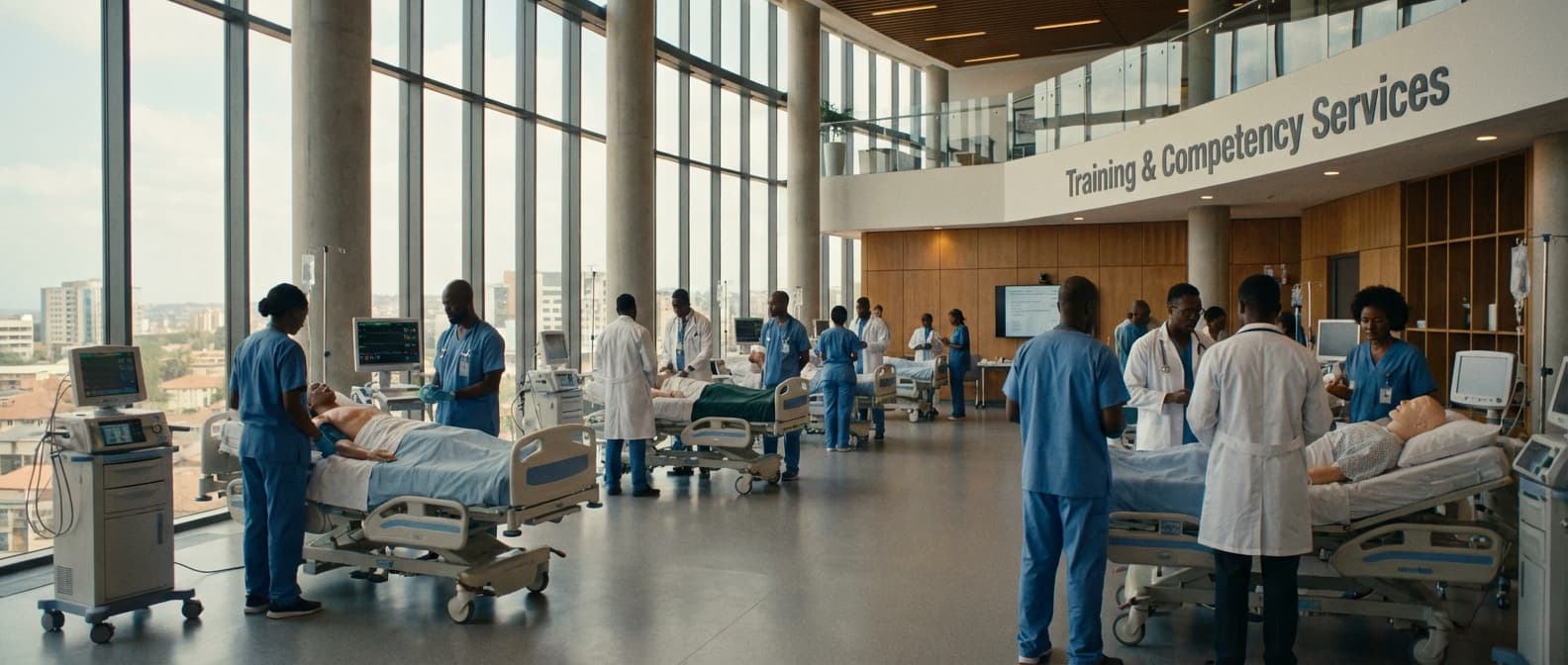
CT Operator Training Service (Radiographers) in Gambia
Engineering Excellence & Technical Support
CT Operator Training Service (Radiographers) High-standard technical execution following OEM protocols and local regulatory frameworks.
Advanced Imaging Techniques
Master state-of-the-art CT scanning protocols, including advanced imaging modalities and contrast administration, to enhance diagnostic accuracy for Gambian healthcare professionals.
Radiation Safety & Dose Optimization
Implement rigorous radiation safety standards and optimize patient dose management, ensuring the well-being of both patients and radiographers in accordance with international best practices.
Hands-on Clinical Application
Gain practical, real-world experience with CT equipment through supervised clinical sessions, focusing on image acquisition, post-processing, and interpretation relevant to common pathologies in The Gambia.
What Is Ct Operator Training Service (Radiographers) In Gambia?
The CT Operator Training Service (Radiographers) in The Gambia refers to a specialized educational program designed to equip qualified radiographers with the requisite knowledge and practical skills to safely and effectively operate Computed Tomography (CT) scanners. This service is crucial for ensuring diagnostic imaging quality, patient safety, and adherence to international standards within the Gambian healthcare sector. The training encompasses theoretical instruction on CT physics, anatomy, physiology, radiation protection principles, image acquisition protocols, artifact recognition and reduction, and post-processing techniques. It also involves extensive hands-on practical training on CT equipment, covering patient positioning, scanning parameters, contrast media administration guidelines, and emergency procedures. The objective is to enable radiographers to independently perform CT examinations across various clinical applications and to interpret image quality.
| Who Needs CT Operator Training? | Typical Use Cases | |||||
|---|---|---|---|---|---|---|
| Qualified Radiographers: Licensed or certified radiographers seeking to specialize in CT imaging or update their skills. | Diagnostic Imaging Departments: Hospitals, clinics, and imaging centers equipped with CT scanners. | New CT Scanner Installations: Training for personnel responsible for operating newly acquired CT equipment. | Healthcare Professionals involved in Imaging Support: Technicians responsible for equipment maintenance and basic troubleshooting. | Public and Private Healthcare Facilities: To enhance diagnostic capabilities and service provision. | ||
| Trauma Imaging: Rapid assessment of head injuries, spinal trauma, and thoracoabdominal injuries. | Oncology Imaging: Staging, treatment planning, and follow-up of various cancers (e.g., lung, liver, colorectal). | Neurological Imaging: Evaluation of stroke, tumors, infections, and degenerative diseases of the brain. | Abdominal and Pelvic Imaging: Diagnosis of appendicitis, diverticulitis, pancreatitis, renal calculi, and gynecological conditions. | Cardiovascular Imaging: Assessment of coronary artery disease, aortic aneurysms, and pulmonary embolism (with specialized protocols). | Musculoskeletal Imaging: Evaluation of complex fractures, joint pathologies, and soft tissue abnormalities. | Interventional Radiology Support: Guidance for biopsies, drainages, and ablations. |
Key Components of CT Operator Training Service
- CT Physics and Principles: Understanding X-ray generation, attenuation, CT number scale, spatial resolution, contrast resolution, and noise.
- Anatomy and Physiology: Detailed review of relevant anatomical structures for cross-sectional imaging.
- Radiation Protection: Principles of ALARA (As Low As Reasonably Achievable), dose optimization strategies, shielding, and regulatory compliance.
- CT Imaging Protocols: Development and application of standardized protocols for different anatomical regions and pathologies.
- Image Acquisition Techniques: Patient preparation, positioning, gantry angulation, collimation, and scan parameter selection.
- Contrast Media Administration: Understanding types of contrast agents, administration routes, potential adverse reactions, and management.
- Artifact Recognition and Reduction: Identifying common CT artifacts (e.g., beam hardening, motion, streak) and implementing corrective measures.
- Image Post-processing and Analysis: Windowing, leveling, multiplanar reconstructions (MPR), 3D rendering, and preliminary image assessment.
- Quality Assurance and Control (QA/QC): Routine checks, calibration procedures, and performance evaluation of CT equipment.
- Patient Safety and Management: Ethical considerations, informed consent, contraindications, and management of specific patient populations (e.g., pediatric, elderly, claustrophobic).
- Emergency Procedures: Recognition and initial management of contrast reactions and other patient emergencies.
- Documentation and Reporting: Accurate recording of patient data, scan parameters, and image findings.
Who Needs Ct Operator Training Service (Radiographers) In Gambia?
Radiographers in The Gambia, particularly those working with CT scanners, require specialized training to ensure accurate diagnosis, patient safety, and optimal equipment utilization. This training is crucial for both experienced professionals seeking to enhance their skills and new entrants to the field. The demand for such services stems from the increasing adoption of CT technology in healthcare facilities across the country.
| Customer Segment | Key Departments/Areas of Need | Specific Training Requirements | |
|---|---|---|---|
| Public Hospitals (Government-funded) | Radiology Departments, CT Scan Units | Basic and advanced CT operation, image acquisition protocols, patient preparation and safety, quality assurance, troubleshooting, cross-sectional anatomy interpretation (basic level). | May include training on specific makes/models of CT scanners in use. |
| Private Hospitals & Clinics | Diagnostic Imaging Centers, Radiology Units | Advanced CT techniques (e.g., contrast administration, specific protocols for various pathologies), post-processing and image manipulation, radiation safety for operators and patients, quality control, workflow optimization. | Emphasis on efficiency and specialized imaging protocols. |
| Mission Hospitals | Radiology Departments | Fundamental CT operation, patient care and communication, emergency protocols, basic maintenance and troubleshooting. Training may be more focused on foundational skills due to resource constraints. | Tailored to common pathologies and available equipment. |
| Radiology Departments (General) | All CT operators | Refresher courses, introduction to new technologies, best practices in patient positioning and contrast injection, understanding of CT artifacts and their mitigation. | Ongoing professional development. |
| Diagnostic Imaging Centers | CT Technologists, Radiographers | Specialized CT protocols (e.g., CT angiography, cardiac CT, interventional CT), advanced dose reduction techniques, understanding of emerging CT technologies. | Focus on specialized diagnostic services. |
| Medical Training Institutions | Radiography Students, Faculty | Introduction to CT principles and technology, hands-on training on simulators or actual equipment (where available), curriculum development support for CT modules. | Building the future workforce. |
Target Customers & Departments for CT Operator Training Service (Radiographers) in The Gambia:
- Public Hospitals (Government-funded)
- Private Hospitals & Clinics
- Mission Hospitals
- Radiology Departments
- Diagnostic Imaging Centers
- Medical Training Institutions
Ct Operator Training Service (Radiographers) Process In Gambia
This document outlines the comprehensive workflow for providing CT Operator Training Services (Radiographers) in The Gambia, from the initial client inquiry to the successful execution of the training program. The process is designed to ensure clear communication, tailored training, and efficient delivery.
| Phase | Key Activities | Responsible Party | Deliverables/Outcomes | Timeline (Estimated) |
|---|---|---|---|---|
| Receive inquiry from potential client (hospital, clinic, Ministry of Health). Conduct initial discussion to understand basic needs, objectives, and desired outcomes. Provide preliminary information on services offered. | Training Service Provider | Initial understanding of client requirements. Client awareness of service offerings. | 1-3 Business Days |
| Conduct a detailed needs assessment (may involve on-site visit or detailed questionnaires). Identify specific CT equipment used, current skill levels of radiographers, desired competencies, and any regulatory requirements. Develop a tailored training proposal outlining curriculum, duration, methodology, trainers, budget, and schedule. | Training Service Provider (with client input) | Detailed needs assessment report. Comprehensive training proposal. | 1-2 Weeks |
| Client reviews and approves the training proposal. Negotiate terms, pricing, and payment schedule. Draft and sign a formal training agreement/contract. | Client & Training Service Provider | Signed training agreement/contract. | 1 Week |
| Based on the finalized proposal, develop the detailed curriculum, learning materials (presentations, handouts, practical exercises), and assessment tools. Finalize the selection of qualified trainers. | Training Service Provider | Detailed curriculum and syllabus. Training materials. Identified trainers. | 2-3 Weeks |
| Coordinate training dates and venue with the client. Arrange travel and accommodation for trainers (if applicable). Ensure availability of CT scanners and necessary equipment for practical sessions. Communicate pre-training requirements to participants (e.g., prerequisite knowledge, required documents). | Training Service Provider & Client | Confirmed training schedule and venue. Arranged logistics. Participant pre-training briefing. | 2-4 Weeks (prior to training start) |
| Conduct theoretical sessions (lectures, discussions, case studies). Facilitate practical sessions (hands-on scanning, image acquisition, quality control). Provide opportunities for Q&A and problem-solving. Monitor participant engagement and progress. | Training Service Provider (Trainers) | Interactive training sessions. Practical skill development. | Duration varies based on program (e.g., 1-4 weeks) |
| Conduct theoretical assessments (quizzes, written exams). Evaluate practical competency through observed performance on CT scanners. Gather feedback from participants on the training program and trainers. Provide feedback to the client on participant progress. | Training Service Provider | Assessment results. Participant feedback report. Progress reports for client. | Concurrent with and immediately after training |
| Issue certificates of completion to successful participants. Provide a comprehensive training report to the client. Offer post-training support (e.g., follow-up consultations, access to resources, refresher courses as per agreement). | Training Service Provider | Certificates of completion. Final training report. Post-training support plan. | 1-2 Weeks (after assessment completion) |
CT Operator Training Service (Radiographers) Workflow in Gambia
- Inquiry and Initial Consultation
- Needs Assessment and Proposal Development
- Agreement and Contract Finalization
- Training Program Design and Customization
- Logistics and Pre-Training Preparations
- Training Delivery and Execution
- Assessment and Evaluation
- Certification and Post-Training Support
Ct Operator Training Service (Radiographers) Cost In Gambia
The cost of CT Operator Training for Radiographers in Gambia can vary significantly based on several factors. These include the training provider (e.g., government institutions, private training centers, or international organizations), the duration and intensity of the program, the curriculum covered (basic vs. advanced imaging techniques), and the inclusion of practical, hands-on experience with CT scanners. Geographic location within Gambia and the specific facilities offering the training can also influence costs due to overhead and resource availability. Furthermore, the level of qualification and accreditation of the training program will impact its price. It's important to note that public health initiatives or partnerships with NGOs might offer subsidized or free training opportunities, significantly altering the price range.
Pricing Factors:
- Training Provider: Public institutions might be more affordable than private ones.
- Program Duration & Intensity: Longer, more comprehensive courses will generally cost more.
- Curriculum Depth: Advanced modules or specialized CT applications will increase the price.
- Practical/Hands-on Experience: Access to functional CT scanners for training is a significant cost driver.
- Accreditation & Certification: Recognized certifications often come with a higher fee.
- Location & Facilities: Operating costs in different regions can affect pricing.
- Sponsorships & Subsidies: Government or NGO funding can drastically reduce out-of-pocket costs.
- Inclusion of Materials: Textbooks, software access, and other learning resources can be bundled or charged separately.
- Assessment & Examination Fees: Costs associated with final evaluations and certification.
| Factor | Impact on Cost | Typical Range (GMD) |
|---|---|---|
| Training Provider (Public vs. Private) | Private providers generally higher. | GMD 5,000 - 60,000+ |
| Program Duration (Days/Weeks) | Longer duration = higher cost. | Short courses (3-5 days): GMD 5,000 - 15,000; Extended courses (2-4 weeks): GMD 15,000 - 60,000+ |
| Practical/Hands-on Component | Essential for CT; significant cost factor. | Integrated into overall course fee; highly variable but crucial for higher-end courses. |
| Accreditation & Certification | Recognized certifications often add to the price. | Included in higher-tier training packages. |
| Curriculum Scope (Basic vs. Advanced) | Advanced topics (e.g., CT angiography, dose reduction techniques) increase cost. | Basic: GMD 5,000 - 15,000; Advanced: GMD 30,000 - 60,000+ |
| Sponsorship/Subsidies | Can drastically reduce out-of-pocket expenses. | GMD 0 - 5,000 (for administrative fees) |
Typical Cost Ranges (GMD - Gambian Dalasi)
- Basic CT Operator Training (short courses, theoretical focus): GMD 5,000 - 15,000
- Intermediate CT Operator Training (includes some practical sessions): GMD 15,000 - 30,000
- Advanced/Specialized CT Operator Training (in-depth, extensive hands-on): GMD 30,000 - 60,000+
- Subsidized/Government-sponsored programs: May range from GMD 0 (fully funded) to a nominal administrative fee (e.g., GMD 1,000 - 5,000).
Affordable Ct Operator Training Service (Radiographers) Options
This document outlines affordable CT operator training services specifically designed for radiographers. We understand the importance of specialized CT training for career advancement and enhanced patient care. Our services focus on delivering high-quality education through flexible and cost-effective options, including value bundles and strategic cost-saving measures. By investing in our training, radiographers can gain essential skills, improve diagnostic accuracy, and remain competitive in the evolving field of medical imaging. We offer a range of programs catering to different experience levels, ensuring a tailored learning experience.
| Training Option | Description | Typical Duration | Value Bundle Benefits | Estimated Cost Range (USD) |
|---|---|---|---|---|
| Online Basic CT Principles | Foundational knowledge of CT technology, radiation safety, and basic cross-sectional anatomy. | 4-8 weeks (self-paced) | Includes online modules, quizzes, and access to a basic anatomy library. | $400 - $700 |
| Online Advanced CT Protocols & Artifacts | In-depth understanding of various CT scan protocols for different body regions and common artifact management. | 6-10 weeks (self-paced) | Includes advanced protocol simulations, case studies, and instructor Q&A sessions. | $600 - $1000 |
| Blended Learning: Essentials + Simulation | Combines online foundational modules with scheduled in-person simulation sessions for practical scanning experience. | 8-12 weeks (part-time) | Includes online modules, personalized simulation feedback, and a certificate of completion. | $1200 - $2000 |
| Comprehensive CT Operator Certification Prep | Intensive training designed to prepare radiographers for CT certification exams (e.g., ARRT CT). | 10-16 weeks (part-time) | Includes all online modules, practice exams, review sessions, and a dedicated study guide. | $1000 - $1600 |
| Customizable Institutional Training | Tailored training programs for healthcare facilities, focusing on specific equipment and clinical needs. | Variable (based on scope) | On-site or remote delivery, curriculum customization, group discounts, and dedicated account management. | Contact for Quote |
Key Features of Our Affordable CT Operator Training:
- Comprehensive curriculum covering CT physics, anatomy, protocols, image acquisition, and artifact reduction.
- Flexible learning formats including online modules, blended learning, and in-person workshops.
- Experienced instructors with extensive CT and radiologic technology backgrounds.
- Hands-on simulation opportunities (where applicable) to practice scanning techniques.
- Certification preparation to help candidates pass CT certification exams.
- Ongoing support and access to updated training materials.
Verified Providers In Gambia
In the evolving landscape of healthcare in Gambia, identifying reliable and credentialed providers is paramount for ensuring quality patient care. Franance Health stands out as a leading organization, meticulously vetting its network of healthcare professionals and facilities. Their rigorous credentialing process goes beyond basic qualifications, focusing on a holistic assessment of expertise, ethical practice, and patient-centered approaches. This commitment to verification ensures that when you choose a Franance Health-affiliated provider, you are selecting a healthcare professional or facility that has met the highest standards of competence and integrity. This detailed examination of their credentials highlights why Franance Health represents the best choice for accessible and trustworthy healthcare in Gambia.
| Provider Type | Franance Health Verified Benefits | Why it Matters for Patients |
|---|---|---|
| Doctors and Specialists | Access to highly qualified and experienced medical professionals across various specialties. Assurance of up-to-date knowledge and skills. | Confidently receive expert diagnosis and treatment, knowing your doctor has passed stringent vetting. Reduced risk of medical errors and improved health outcomes. |
| Hospitals and Clinics | Partnerships with facilities adhering to strict safety protocols, quality management systems, and excellent patient care standards. | Receive care in a safe, clean, and well-equipped environment. Trust in the hospital's ability to provide comprehensive and high-quality medical services. |
| Diagnostic Centers | Ensured use of advanced technology and adherence to quality control measures for accurate and reliable diagnostic testing. | Obtain precise and trustworthy results for medical tests, leading to more accurate diagnoses and effective treatment plans. |
| Pharmaceutical Services | Verification of legitimate pharmacies dispensing authentic and quality medications. | Guarantee that you are receiving safe and effective prescribed medications, free from counterfeiting or substandard products. |
Key Aspects of Franance Health's Credentialing Process
- Rigorous Verification of Medical Licenses and Certifications: Ensuring all practitioners hold valid and up-to-date professional licenses and specialized certifications.
- Thorough Background Checks: Including criminal record checks and verification of past professional conduct.
- Peer Review and Reference Checks: Gathering feedback from colleagues and supervisors to assess clinical skills and professional reputation.
- Evaluation of Experience and Expertise: Assessing the depth and breadth of a provider's experience in relevant medical fields.
- Commitment to Continuing Medical Education (CME): Verifying that providers are actively engaged in ongoing learning to stay abreast of the latest medical advancements.
- Patient Satisfaction and Feedback Mechanisms: Incorporating patient reviews and feedback into the ongoing assessment of provider performance.
- Adherence to Ethical Standards and Best Practices: Ensuring all affiliated providers uphold the highest ethical principles in their practice.
- Facility Accreditation and Safety Standards: For healthcare facilities, verifying compliance with national and international safety and quality accreditation standards.
Scope Of Work For Ct Operator Training Service (Radiographers)
This Scope of Work (SOW) outlines the requirements for providing CT Operator Training Services specifically for Radiographers. The training program aims to enhance the proficiency of radiographers in operating CT scanners, ensuring safe, efficient, and high-quality diagnostic imaging. This SOW details the technical deliverables and standard specifications expected from the training provider.
| Deliverable | Description | Standard Specification / Requirement |
|---|---|---|
| Training Curriculum | A detailed, structured curriculum covering all aspects of CT operation relevant to radiographers. | Must include modules on: CT physics & image formation, patient preparation & positioning, scanner operation (hardware & software), image acquisition parameters (kVp, mAs, pitch, slice thickness, etc.), contrast media administration & safety, artifact recognition & reduction, protocol selection & optimization, emergency procedures, radiation safety & dosimetry, quality assurance & control, post-processing techniques (basic MPR/3D), documentation & reporting standards. Curriculum to be submitted for review and approval prior to commencement. |
| Training Materials | All necessary educational materials for trainees. | Includes: comprehensive training manual (digital or hard copy), presentation slides, case studies, practical exercise guides, reference materials. Materials to be clear, concise, accurate, and up-to-date with current best practices and relevant imaging standards. |
| Training Delivery (Theoretical) | Instruction on the theoretical aspects of CT imaging. | Delivered by qualified and experienced CT specialists/educators. Sessions to be interactive, utilizing visual aids (presentations, videos). Minimum theoretical training hours to be specified based on program depth. |
| Training Delivery (Practical/Hands-on) | Supervised hands-on experience with CT scanners. | Conducted on actual CT scanner(s) at the client's facility or an approved training site. Trainees to perform various scan protocols under direct supervision. Ratio of trainees to instructors to be a maximum of X:1 (to be defined based on client needs). Access to scanner time and phantom for practice to be guaranteed. |
| Competency Assessment | Evaluation of trainee knowledge and practical skills. | Includes: written examinations (multiple choice, short answer), practical skills assessment (demonstration of procedures, protocol selection), and potentially scenario-based evaluations. Pass mark to be clearly defined. Feedback to be provided to each trainee. |
| Certification | Issuance of certificates upon successful completion. | Certificates to clearly state the name of the trainee, the training provider, the course title (e.g., 'CT Operator Training for Radiographers'), date of completion, and duration. Certificates to be professionally designed and printed/digitally issued. |
| Post-Training Support | Ongoing support and troubleshooting. | Provision of a designated contact person for a defined period (e.g., 30-60 days) post-training to answer queries and provide remote assistance regarding scanner operation and protocols. |
| Trainer Qualifications | Experienced and certified professionals. | Instructors must possess relevant academic qualifications (e.g., Bachelor's or Master's in Radiography/Medical Imaging), extensive practical experience in CT imaging, and demonstrated experience in adult education/training. Proof of qualifications and experience to be provided. |
| Reporting | Documentation of training activities and outcomes. | Includes: attendance records, assessment results, summary reports on overall trainee performance, and feedback from trainees. Reports to be submitted to the client at agreed intervals. |
Key Training Objectives
- Develop a comprehensive CT operator training curriculum tailored for radiographers.
- Deliver theoretical and practical training sessions on CT physics, principles, and equipment operation.
- Equip radiographers with advanced scanning techniques and protocol optimization skills.
- Emphasize patient safety, radiation protection, and quality assurance in CT imaging.
- Provide hands-on experience with various CT scanner models (if applicable).
- Assess trainee competency through theoretical and practical evaluations.
- Offer post-training support and troubleshooting assistance.
Service Level Agreement For Ct Operator Training Service (Radiographers)
This Service Level Agreement (SLA) outlines the guaranteed response times and uptime for the CT Operator Training Service provided to radiographers. The objective is to ensure timely access to training resources and reliable service delivery to support the professional development of CT operators.
| Service Component | Response Time (Business Hours) | Uptime Guarantee |
|---|---|---|
| Access to Online Training Modules | 1 Business Hour | 99.5% |
| CT Simulation Software Access | 2 Business Hours | 99.0% |
| Technical Support (Issue Resolution) | 4 Business Hours (Acknowledgement)<br>8 Business Hours (Resolution Target) | N/A (Resolution dependent on issue complexity, but availability of support is guaranteed during business hours) |
| Live Webinar/Virtual Classroom Sessions | 15 Minutes (Prior to Session Start) | 99.5% (Availability of platform) |
| Instructor/Mentor Q&A Forum Access | 24 Business Hours (Response from Instructor/Mentor) | 99.0% (Platform availability) |
Key Service Metrics
- Response Time: The maximum time allowed for the CT Operator Training Service to acknowledge and begin addressing a reported issue.
- Uptime Guarantee: The percentage of time the CT Operator Training Service is available and fully functional for end-users.
- Support Channels: The designated methods for users to report issues and request assistance (e.g., email, ticketing system, dedicated support line).
Frequently Asked Questions

Ready when you are
Let's scope your CT Operator Training Service (Radiographers) in Gambia project in Gambia.

Scaling healthcare logistics and technical systems across the entire continent.