
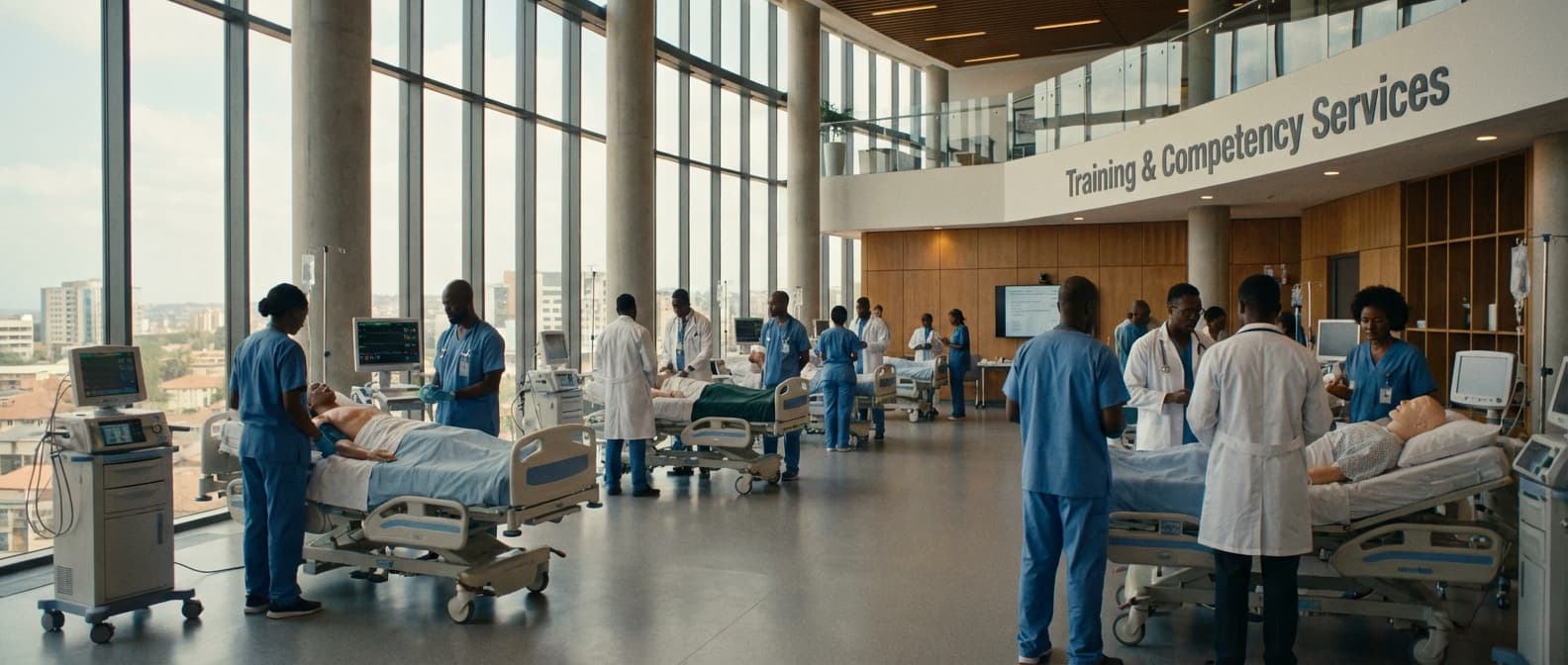
Biomedical Engineering First-Line Support Training Service in Gambia
Engineering Excellence & Technical Support
Biomedical Engineering First-Line Support Training Service High-standard technical execution following OEM protocols and local regulatory frameworks.
Essential Biomedical Equipment Calibration & Maintenance
Master the fundamental principles and practical techniques for calibrating and performing preventative maintenance on critical biomedical devices, ensuring their accuracy, reliability, and longevity for frontline healthcare delivery in The Gambia.
Diagnostic Imaging System Troubleshooting Fundamentals
Gain proficiency in identifying and resolving common issues with X-ray, ultrasound, and other diagnostic imaging systems, enabling rapid restoration of vital diagnostic capabilities in remote and resource-limited settings.
Sterilization & Disinfection Equipment Support
Develop the skills to maintain and troubleshoot autoclaves, sterilizers, and other critical infection control equipment, safeguarding patient safety and upholding stringent hygiene standards in Gambian healthcare facilities.
What Is Biomedical Engineering First-line Support Training Service In Gambia?
Biomedical Engineering First-Line Support Training Service in Gambia refers to a specialized training program designed to equip individuals with the foundational knowledge and practical skills necessary to perform initial troubleshooting, routine maintenance, and basic repair of medical equipment. This service is crucial for ensuring the operational readiness and longevity of healthcare technology within the Gambian context, where access to specialized technical expertise may be limited.
| Who Needs This Service? | Typical Use Cases | ||||||||
|---|---|---|---|---|---|---|---|---|---|
| Biomedical Engineering Technicians (Junior Level): Individuals entering the field of biomedical engineering who require foundational skills to support existing technical teams. | Healthcare Facility Maintenance Staff: Personnel responsible for the general upkeep of a health facility who may be tasked with basic medical equipment management. | Clinical Staff (Nurses, Doctors): To understand basic operational checks, identify obvious malfunctions, and report issues promptly, thereby reducing downtime. | NGO/Missionary Healthcare Workers: Individuals operating in remote areas with limited access to dedicated biomedical engineering support, requiring them to perform basic troubleshooting. | Government Health Ministry Personnel: To facilitate the capacity building of technical staff at regional and district health facilities across the country. | Vocational Training Institutions: As a curriculum component for students pursuing careers in healthcare technology maintenance. | ||||
| Initial response to equipment alarms or error messages. | Performing daily/weekly functional checks on critical medical devices. | Replacing consumables (e.g., printer paper, filter cartridges) on medical equipment. | Cleaning and disinfecting medical devices according to manufacturer specifications. | Identifying and reporting persistent equipment failures to senior biomedical engineers or external service providers. | Conducting basic power-on self-tests and ensuring equipment is ready for clinical use. | Responding to minor physical damage (e.g., loose cables, cracked casings) and performing basic cosmetic repairs. | Assisting senior engineers with more complex diagnostic procedures by performing preliminary checks. | Ensuring proper storage and handling of medical equipment when not in use. | Verification of basic calibration status through simple diagnostic routines provided by the manufacturer. |
Key Components of Biomedical Engineering First-Line Support Training:
- Equipment Identification and Classification: Training on recognizing different types of medical devices, their intended use, and basic classification systems.
- Fundamental Principles of Medical Device Operation: Understanding the core scientific and engineering principles underpinning common medical equipment (e.g., electrical safety, fluid dynamics, basic signal processing).
- Preventive Maintenance Procedures: Instruction on scheduled checks, cleaning protocols, calibration verification, and routine inspection of medical devices to prevent failures.
- Basic Troubleshooting Techniques: Development of systematic approaches to identify common faults, symptoms analysis, and initial diagnostic steps for a range of medical equipment.
- Minor Repair and Component Replacement: Training on safely performing simple repairs, such as replacing fuses, batteries, or other easily accessible components, using appropriate tools and following safety guidelines.
- Safety Protocols and Standards: Emphasis on electrical safety, patient safety, infection control, and adherence to relevant national and international standards for medical device handling and maintenance.
- Documentation and Reporting: Training on maintaining accurate records of maintenance activities, repairs performed, and reporting procedures for equipment malfunctions or critical incidents.
- Use of Diagnostic Tools and Test Equipment: Familiarization with basic tools such as multimeters, oscilloscopes, and specialized medical equipment test jigs for troubleshooting and verification.
- Ergonomics and Handling Procedures: Proper techniques for moving, installing, and handling medical equipment to prevent damage and ensure user safety.
Who Needs Biomedical Engineering First-line Support Training Service In Gambia?
Biomedical Engineering First-Line Support Training Service in Gambia is crucial for a range of healthcare facilities and personnel. This training equips individuals with the fundamental skills to perform routine maintenance, troubleshooting, and minor repairs on medical equipment, ensuring their optimal functioning and patient safety. The target customers are primarily those directly involved in the operation and maintenance of medical devices within the Gambian healthcare system.
| Target Customer/Department | Key Roles/Reasons for Training | Impact of Training |
|---|---|---|
| Hospitals (Public & Private) | Biomedical Engineering Departments, Clinical Engineering Teams, IT Departments, Nursing Supervisors, Department Heads (e.g., Radiology, Laboratory, ICU) | Reduced equipment downtime, improved patient care, extended equipment lifespan, cost savings on external repair services, enhanced safety protocols. |
| District Hospitals & Health Centers | Designated Technicians, Clinical Officers, Nurses-in-Charge | Increased self-sufficiency in basic maintenance, faster resolution of minor issues, improved access to functional equipment in remote areas. |
| Ministry of Health | Health Facility Managers, Procurement Officers, Biomedical Engineering Unit Staff | Standardized maintenance practices, better asset management, improved capacity building for the national healthcare infrastructure, informed decision-making for equipment acquisition. |
| Medical Training Institutions (e.g., Gambia Technical Training Institute) | Instructors, Students in Biomedical Technology and related fields | Enhanced curriculum relevance, practical skills development for future biomedical technicians, graduates better prepared for the workforce. |
| NGOs and International Aid Organizations | Field Technicians, Project Managers responsible for healthcare initiatives | Sustainable operation of donated medical equipment, effective utilization of resources, enhanced impact of health programs. |
| Private Clinics and Diagnostic Centers | Technicians, Clinic Administrators | Reliable equipment performance, reduced operational disruptions, improved diagnostic accuracy, enhanced patient trust. |
Target Customers and Departments:
- Healthcare Facilities
- Government Ministries
- Non-Governmental Organizations (NGOs)
- Private Healthcare Providers
- Educational and Research Institutions
Biomedical Engineering First-line Support Training Service Process In Gambia
This document outlines the standard workflow for the Biomedical Engineering First-Line Support Training Service in Gambia, detailing the process from initial inquiry to the successful execution of the training.
| Stage | Description | Key Activities | Deliverables/Outcomes | Responsible Party |
|---|---|---|---|---|
| The initial contact from a potential client (e.g., Ministry of Health, hospital administration, NGO) expressing interest in the first-line support training service. | Client contacts the service provider via email, phone, or official letter. Initial information gathering about training needs. | Acknowledgement of inquiry. Potential for an initial brief discussion. | Client, Service Provider |
| A detailed evaluation of the client's specific training requirements, current skill levels, existing equipment, and desired learning outcomes. | Conducting meetings, surveys, or site visits. Identifying specific equipment types, common issues, and skill gaps. Defining target audience demographics. | Detailed training needs assessment report. List of priority equipment and topics for training. | Service Provider (with client input) |
| Creation of a tailored training proposal based on the needs assessment, outlining the scope, curriculum, methodology, duration, personnel, and cost of the training. | Developing curriculum modules. Identifying qualified trainers. Estimating resources and budget. Defining training schedule and logistics. Specifying assessment methods. | Comprehensive training proposal document, including syllabus, trainer profiles, budget, and timeline. | Service Provider |
| Formalization of the training engagement through a signed contract or Memorandum of Understanding (MOU) outlining terms and conditions. | Review and negotiation of the proposal. Signing of the agreement. Deposit or initial payment may be required. | Signed contract/MOU. Confirmed training dates and location. | Client, Service Provider |
| Logistical arrangements and preparation of all materials required for the training session. | Securing training venue. Arranging audio-visual equipment. Preparing training manuals and handouts. Confirming trainer availability. Pre-event communication with participants. | Ready training environment. Printed/digital training materials. Confirmed logistics. | Service Provider (with client support for venue/participant access) |
| Delivery of the first-line support training program to the identified participants. | Conducting theoretical sessions. Hands-on practical demonstrations. Case studies and problem-solving exercises. Interactive Q&A sessions. Practical assessments. | Trained participants. Completion of training modules. Initial skill demonstration. | Service Provider |
| Providing ongoing support and resources to reinforce learning and address any immediate post-training queries. | Follow-up technical support (limited duration). Access to online resources or forums. Answering specific equipment-related questions. | Improved participant confidence. Resolution of immediate post-training issues. | Service Provider |
| Assessing the effectiveness of the training and providing a report to the client. | Collecting participant feedback through evaluation forms. Assessing knowledge and skill improvement (e.g., post-training tests). Analyzing training outcomes against initial objectives. Submitting a final training report. | Training evaluation report. Recommendations for future training. Certificate of completion for participants. | Service Provider (with client review) |
Biomedical Engineering First-Line Support Training Service Process in Gambia
- Objective: To provide comprehensive first-line support training for biomedical engineering personnel in Gambia, enhancing their ability to maintain and troubleshoot essential medical equipment, thereby improving healthcare delivery.
- Target Audience: Biomedical engineers, technicians, and relevant healthcare professionals in Gambia responsible for the initial maintenance and troubleshooting of medical devices.
- Service Provider: [Insert name of training service provider/organization]
- Key Stages: Inquiry, Needs Assessment, Proposal Development, Agreement, Training Execution, Post-Training Support, and Evaluation.
Biomedical Engineering First-line Support Training Service Cost In Gambia
Providing first-line support training for biomedical engineers in Gambia involves several key considerations that influence the overall cost. These factors range from the scope and duration of the training to the expertise of the trainers and the resources utilized. Understanding these elements is crucial for budgeting and selecting a training provider that meets specific needs and financial constraints. The local currency for transactions in Gambia is the Gambian Dalasi (GMD).
| Training Service Component | Estimated Cost Range (GMD) | Notes |
|---|---|---|
| Basic First-Line Support (e.g., 2-3 days) | 15,000 - 30,000 GMD | Covers fundamental troubleshooting, basic preventive maintenance, and safe operating procedures for common equipment. |
| Intermediate First-Line Support (e.g., 5 days) | 30,000 - 60,000 GMD | Includes more in-depth diagnostics, common repair techniques, and understanding of diagnostic tools. May involve specific equipment categories. |
| Advanced First-Line Support/Specialized Modules (e.g., 7-10 days) | 60,000 - 120,000+ GMD | Focuses on specific complex equipment (e.g., imaging, critical care), advanced diagnostic software, or manufacturer-specific training. Cost can vary significantly based on specialization. |
| Trainer Fees (per day, for external trainers) | 5,000 - 15,000 GMD | Varies based on experience, specialization, and whether they are local or international. |
| Training Materials & Manuals (per participant) | 1,000 - 3,000 GMD | Includes printed or digital courseware. |
| Facility Rental (if not provided by client, per day) | 2,000 - 5,000 GMD | Depends on size, equipment, and amenities. |
| Equipment/Simulation Usage (if applicable, per program) | 5,000 - 20,000 GMD | For hands-on practical sessions with specific biomedical devices. |
| Travel & Accommodation (for trainers, if applicable) | Variable (dependent on distance and duration) | Includes flights, local transport, and hotel expenses. |
| Certification Fees (if applicable) | Variable (dependent on accreditation body) | Separate costs for official certification exams and issuance. |
Key Factors Influencing Biomedical Engineering First-Line Support Training Costs in The Gambia
- Training Curriculum & Scope: The complexity and breadth of the topics covered are paramount. Basic troubleshooting and maintenance will be less expensive than specialized training on advanced diagnostic equipment or specific manufacturer protocols.
- Training Duration: Longer training programs naturally incur higher costs due to extended trainer time, facility usage, and participant engagement.
- Trainer Expertise & Qualifications: Highly experienced biomedical engineers with specialized knowledge, certifications, or a strong track record will command higher fees.
- Training Delivery Method: On-site training, virtual/online sessions, or a blended approach will have different cost structures. On-site often includes travel and accommodation for trainers.
- Participant Numbers: The cost per participant can decrease with larger groups due to economies of scale, but the overall project cost will increase.
- Training Materials & Resources: The provision of comprehensive manuals, practical kits, simulation equipment, or access to online learning platforms will add to the expense.
- Location & Logistics: If training is conducted at a remote facility, or requires travel to different regions within Gambia, transportation, accommodation, and per diems for trainers and participants will be factored in.
- Accreditation & Certification: If the training leads to a recognized certification, there may be additional fees associated with the accreditation body.
- Provider Type: Training offered by academic institutions, specialized training companies, or directly by equipment manufacturers can have varying pricing models.
- Customization Needs: Tailoring the training content to specific institutional equipment or workflows will likely increase the cost compared to a standardized program.
Affordable Biomedical Engineering First-line Support Training Service Options
Providing effective and affordable first-line biomedical engineering support is crucial for healthcare facilities to ensure patient safety, equipment uptime, and cost-efficiency. This service focuses on the initial point of contact for device issues, encompassing troubleshooting, basic repairs, preventive maintenance checks, and user training. Investing in well-trained first-line support significantly reduces the reliance on more expensive, specialized technicians for common problems, thereby optimizing resource allocation and minimizing patient care disruptions.
| Value Bundle Option | Key Features | Target Audience | Estimated Cost Savings (Percentage) | Cost-Saving Strategies Explained |
|---|---|---|---|---|
| Basic Skills Certification | Covers fundamental troubleshooting, PM checks, and safety. Online modules with practical simulation. Certificate upon successful completion. | New hires, hospital support staff, clinical end-users needing basic device familiarity. | 15-25% | Reduces the need for senior technicians on routine issues, faster resolution of common problems, empowers users for initial diagnostics. |
| Device-Specific Competency Pack | Focuses on a specific category of high-volume devices (e.g., infusion pumps, vital signs monitors). Includes hands-on training with real or simulated equipment. | Biomedical technicians transitioning to first-line roles, clinical departments with high device usage. | 20-35% | Minimizes downtime for critical equipment, allows for faster in-house repairs of frequently used devices, reduces external service contract reliance for specific equipment types. |
| Integrated Support Training Program | Comprehensive program combining basic skills, device-specific modules, and introduction to IT integration. Blended learning approach (online and in-person). | New biomedical engineering departments, facilities looking to establish a robust internal support system. | 25-40% | Significantly lowers overall service costs by internalizing a large portion of support, improves staff retention through skill development, enhances operational efficiency through streamlined workflows. |
| Customizable On-Demand Training | Tailored training modules based on facility-specific equipment inventory and identified support gaps. Flexible scheduling and delivery methods. | Facilities with unique equipment fleets or specific training needs. | Variable (depends on customization) | Addresses the most pressing and costly issues first, ensures training relevance, avoids paying for unnecessary modules, promotes continuous learning and adaptation. |
Key Components of Affordable First-Line Biomedical Engineering Support Training:
- Core Biomedical Principles and Safety Standards
- Common Medical Device Identification and Functionality
- Basic Troubleshooting Methodologies (e.g., power issues, connectivity problems, error code interpretation)
- Preventive Maintenance Fundamentals (cleaning, visual inspections, battery checks)
- Safe Handling and Storage of Medical Equipment
- User Training and Competency Assessment Techniques
- Documentation and Reporting Procedures
- Introduction to Biomedical Information Systems (if applicable)
- Regulatory Compliance Basics (e.g., FDA, HIPAA)
Verified Providers In Gambia
In The Gambia's evolving healthcare landscape, identifying trustworthy and competent medical service providers is paramount. Franance Health has emerged as a leading entity, distinguished by its rigorous credentialing process and unwavering commitment to patient well-being. This dedication ensures that all providers associated with Franance Health meet the highest standards of medical expertise, ethical practice, and patient-centered care. Choosing Franance Health means opting for a network of verified professionals who are not only skilled but also deeply invested in delivering exceptional healthcare experiences.
| Credential Aspect | Franance Health Verification Standard | Benefit to Patients |
|---|---|---|
| Medical Licenses & Certifications | Verified with relevant national and international bodies. | Ensures practitioners are legally qualified and adhere to professional regulations. |
| Educational Background | Thorough review of degrees, diplomas, and specialized training from accredited institutions. | Confirms a strong foundational knowledge and specialized skills. |
| Clinical Experience | Assessment of years in practice, areas of focus, and case management history. | Guarantees practical application of knowledge and proven treatment capabilities. |
| Professional Reputation & Ethics | Reference checks and review of any disciplinary records. | Upholds high moral and professional conduct, building trust and patient confidence. |
| Specialization Confirmation | Verification of board certifications and continuing education in their respective fields. | Provides access to specialized care from experts in specific medical disciplines. |
Why Franance Health Credentials Represent the Best Choice:
- Rigorous Vetting: Franance Health employs a multi-stage verification process for all its healthcare professionals. This includes thorough background checks, verification of academic qualifications and professional licenses, and an assessment of clinical experience and specialization.
- Commitment to Excellence: We only partner with providers who demonstrate a consistent track record of patient satisfaction, adherence to best practices, and a commitment to continuous professional development.
- Specialized Expertise: Our network encompasses a diverse range of medical specialists, ensuring that patients can access the specific expertise they require, from general practitioners to surgeons and allied health professionals.
- Ethical Practice Standards: All Franance Health providers adhere to a strict code of ethics, prioritizing patient confidentiality, informed consent, and compassionate care.
- Patient-Centric Approach: We believe in empowering patients with accessible, high-quality healthcare. Our verified providers are dedicated to understanding individual needs and delivering personalized treatment plans.
- Reliability and Trust: The Franance Health credential signifies a stamp of approval, offering patients the peace of mind that comes with knowing they are in capable and trustworthy hands.
- Seamless Access to Care: By choosing Franance Health, patients benefit from a streamlined process for finding and booking appointments with qualified healthcare professionals across The Gambia.
Scope Of Work For Biomedical Engineering First-line Support Training Service
This Scope of Work (SOW) outlines the requirements for a Biomedical Engineering First-Line Support Training Service. The objective is to equip biomedical engineering technicians with the foundational knowledge and practical skills necessary to effectively perform first-line support for medical devices. This includes initial troubleshooting, basic maintenance, calibration verification, and accurate documentation, ensuring patient safety and device uptime. The training will cover common medical device categories, safety protocols, and the use of diagnostic tools.
| Module/Topic | Learning Objectives | Key Skills/Knowledge Covered | Duration (Estimated) | Assessment Method |
|---|---|---|---|---|
| Introduction to Biomedical Engineering Support | Understand the role of first-line support in healthcare. | Device lifecycle, patient safety principles, ethical considerations. | 2 hours | Quiz |
| Medical Device Fundamentals & Categories | Identify common medical device classifications. | Basic principles of operation for general medical equipment (e.g., patient monitors, infusion pumps, ventilators). | 4 hours | Practical identification exercise, Quiz |
| Basic Troubleshooting & Diagnostic Techniques | Apply systematic troubleshooting methodologies. | Identifying common faults, error codes, basic hardware checks, understanding user manuals. | 6 hours | Scenario-based problem-solving, Practical simulation |
| Preventive Maintenance & Calibration Verification | Perform basic preventive maintenance tasks. | Visual inspections, cleaning procedures, function checks, verifying calibration status. | 4 hours | Practical demonstration, Checklist verification |
| Safety Protocols & Electrical Safety | Understand and apply electrical safety principles. | Risk assessment, grounding, insulation, patient leakage current, use of electrical safety analyzers. | 3 hours | Quiz, Practical safety check exercise |
| Documentation & Reporting | Accurately record service activities. | Service reports, logbooks, incident reporting, use of Computerized Maintenance Management Systems (CMMS) - basic overview. | 2 hours | Mock report writing, Scenario-based documentation |
| Introduction to Specialty Devices (Optional/Tiered) | Gain basic awareness of specialized medical equipment. | Brief overview of imaging devices, surgical instruments, laboratory equipment (as applicable to the client's needs). | Variable (per specialty) | Brief quiz |
Technical Deliverables and Standard Specifications
- Comprehensive training curriculum and materials (digital and/or print).
- Qualified and experienced trainers with a strong background in biomedical engineering and adult education.
- Hands-on practical training sessions utilizing actual or simulated medical equipment.
- Post-training assessments and evaluations (quizzes, practical exams).
- Certificate of completion for successful participants.
- Detailed training reports including attendance, assessment results, and feedback.
- Access to a secure online platform for training resources and support materials.
- Adherence to relevant industry standards (e.g., ISO 13485, FDA regulations, local healthcare regulations).
Service Level Agreement For Biomedical Engineering First-line Support Training Service
This Service Level Agreement (SLA) outlines the response times and uptime guarantees for the Biomedical Engineering First-Line Support Training Service. This SLA is designed to ensure timely and effective support for users undergoing this critical training program.
| Service Component | Response Time Guarantee | Uptime Guarantee | Escalation Path |
|---|---|---|---|
| General Training Platform Access & Login Issues | Within 2 business hours | 99.5% during scheduled training hours | Level 2 Biomedical Engineering Support Team |
| Technical Glitches within Training Modules (e.g., video playback, interactive element failure) | Within 4 business hours | 99.5% during scheduled training hours | Level 2 Biomedical Engineering Support Team, then IT Department |
| Assistance with Training Material Navigation | Within 1 business hour | N/A (User guidance) | Self-service FAQs, then Level 1 Support |
| Urgent System Outages affecting training delivery | Within 1 business hour | N/A (Focus on immediate resolution) | Immediate escalation to IT Operations & Biomedical Engineering Management |
Scope of Service
- Provision of first-line support for the Biomedical Engineering training platform and associated materials.
- Troubleshooting of technical issues encountered during training sessions.
- Guidance on accessing and navigating training modules.
- Assistance with basic account and login problems.
Frequently Asked Questions

Ready when you are
Let's scope your Biomedical Engineering First-Line Support Training Service in Gambia project in Gambia.

Scaling healthcare logistics and technical systems across the entire continent.