
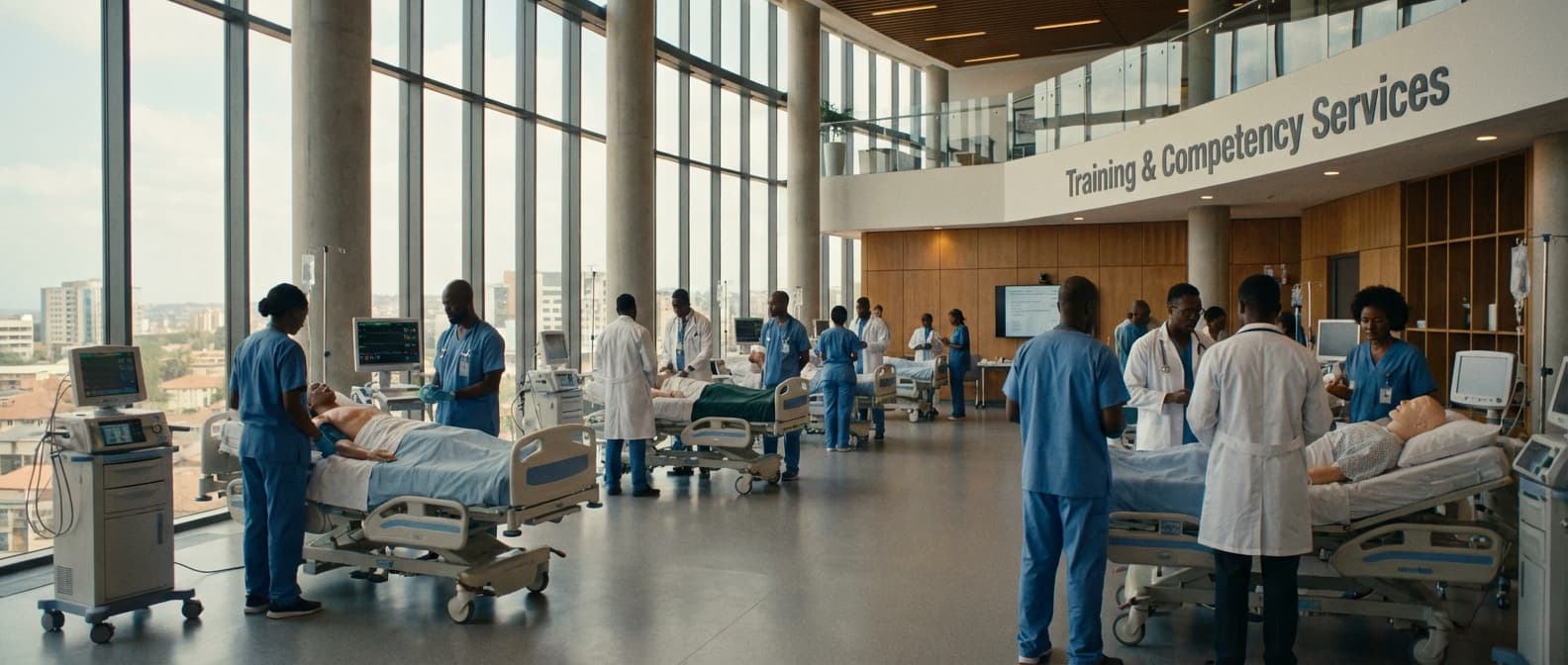
Anesthesia Workstation User Training Service in Gambia
Engineering Excellence & Technical Support
Anesthesia Workstation User Training Service High-standard technical execution following OEM protocols and local regulatory frameworks.
Advanced Ventilation Modes Mastery
Master the latest ventilation modes on your anesthesia workstation, including Pressure Support, Volume Control, and PRVC, with hands-on simulation and practical case studies tailored for Gambian clinical settings. Our training ensures optimal patient ventilation and safety.
Monitoring & Alarm Management Proficiency
Gain expertise in interpreting vital signs, waveform analysis, and proactive alarm management on your anesthesia workstation. Learn to identify critical changes and respond effectively, enhancing patient safety and reducing the risk of adverse events.
System Setup & Troubleshooting Techniques
Become proficient in the proper setup, calibration, and routine maintenance of your anesthesia workstation. Our training covers essential troubleshooting steps to quickly resolve common technical issues, ensuring minimal downtime and continuous patient care.
What Is Anesthesia Workstation User Training Service In Gambia?
Anesthesia Workstation User Training Service in Gambia refers to specialized educational programs designed to equip healthcare professionals with the knowledge and practical skills necessary for the safe and effective operation of modern anesthesia workstations. These services are crucial for ensuring optimal patient safety during surgical and procedural interventions requiring anesthetic management. The training typically covers the fundamental principles of anesthesia delivery, the functional components of the workstation, advanced features, troubleshooting, and adherence to infection control protocols. It aims to foster competency in setting up, calibrating, monitoring, and managing anesthetic gases, ventilation parameters, and associated monitoring devices. The service is delivered by qualified instructors, often in collaboration with medical device manufacturers or specialized training institutions, and may include theoretical sessions, hands-on simulations, and clinical case discussions. The ultimate objective is to enhance the proficiency of anesthesiologists, nurse anesthetists, and other relevant medical personnel in utilizing anesthesia workstations to their full potential, thereby improving patient outcomes and operational efficiency within the Gambian healthcare system.
| Target Audience | Needs Addressed | Typical Use Cases |
|---|---|---|
| Anesthesiologists | Advanced understanding of workstation functionalities, optimization of anesthetic delivery, interpretation of complex monitoring data, and troubleshooting of emergent issues. | Routine surgical procedures, complex anesthesias (e.g., cardiac, neurosurgery), managing critically ill patients, and implementing new anesthetic techniques. |
| Nurse Anesthetists | Comprehensive knowledge of workstation operation, patient monitoring, basic troubleshooting, and ensuring safe anesthetic administration under supervision or independently. | General surgery, obstetric anesthesia, outpatient procedures, and supporting anesthesiologists in complex cases. |
| Anesthesia Technicians/Biomedical Engineers | Proficiency in workstation setup, calibration, preventive maintenance, routine servicing, and initial troubleshooting of hardware and software malfunctions. | Ensuring workstation readiness, performing regular maintenance checks, responding to equipment failure alerts, and assisting clinical staff with technical queries. |
| Medical Students/Residents (Anesthesiology Training) | Foundational knowledge of workstation components, basic operation, and simulation of common anesthetic scenarios. | Part of their structured training curriculum, learning to operate equipment in a supervised environment before independent practice. |
Key Components of Anesthesia Workstation User Training Service
- Workstation hardware and software familiarization
- Principles of anesthetic gas delivery and vaporizers
- Ventilation modes and settings
- Integrated monitoring (e.g., SpO2, EtCO2, NIBP, ECG)
- Alarm management and troubleshooting
- Safety features and checklists
- Preventive maintenance and basic troubleshooting
- Infection control and sterilization procedures
- Emergency procedures and workstation response
- Review of relevant clinical guidelines and best practices
Who Needs Anesthesia Workstation User Training Service In Gambia?
Anesthesia workstation user training is crucial for ensuring safe and effective patient care in a healthcare setting. In Gambia, this specialized training is essential for healthcare professionals operating sophisticated anesthesia delivery systems, particularly as medical technology advances. The service caters to individuals and institutions responsible for administering anesthesia, ensuring they possess the knowledge and skills to utilize these complex machines with proficiency and confidence. This minimizes the risk of errors, optimizes patient outcomes, and enhances the overall quality of surgical and procedural care.
| Target Customer Group | Specific Departments/Roles | Key Needs & Benefits |
|---|---|---|
| Anesthesiologists | Operating Theatres, Surgical Suites | Proficient operation of ventilators, vaporizers, and monitoring systems; advanced ventilation techniques; troubleshooting; emergency management. |
| Anesthesia Residents and Trainees | Operating Theatres, Simulation Labs | Foundational knowledge and hands-on practice with workstation components; understanding of safety protocols; development of clinical skills. |
| Certified Registered Nurse Anesthetists (CRNAs) / Nurse Anesthetists | Operating Theatres, Surgical Suites | Safe operation and monitoring of anesthesia delivery; understanding of drug administration integration; patient assessment and management. |
| Anesthesia Technicians / Biomedical Engineers | Biomedical Engineering Departments, Anesthesia Departments | Routine maintenance, calibration, and troubleshooting of anesthesia workstations; ensuring equipment functionality and safety; preventative maintenance. |
| Medical Equipment Suppliers & Distributors | Sales & Technical Support Teams | Product demonstration expertise; providing effective post-sale user training to clients; ensuring customer satisfaction and product adoption. |
Target Customers and Departments for Anesthesia Workstation User Training in Gambia:
- Hospitals (Government, Private, and Non-Profit)
- Surgical Centers
- Maternity Wards and Delivery Rooms
- Intensive Care Units (ICUs) where advanced ventilation is required
- Emergency Departments
- Academic and Teaching Hospitals involved in medical education
Anesthesia Workstation User Training Service Process In Gambia
This document outlines the standard workflow for the Anesthesia Workstation User Training Service Process in Gambia, covering the journey from initial client inquiry to the successful execution of the training.
| Phase | Step | Description | Key Activities | Deliverables | Responsible Party |
|---|---|---|---|---|---|
| Inquiry & Pre-Qualification | Initial Inquiry | Potential client expresses interest in anesthesia workstation user training. | Client contacts training provider via phone, email, or website. | Expression of interest, initial needs assessment. | Client, Training Provider |
| Inquiry & Pre-Qualification | Needs Assessment & Consultation | Understanding the client's specific training requirements. | Detailed discussion of client's current equipment, user skill levels, number of trainees, desired outcomes, available dates, and budget. | Needs assessment report, preliminary training scope, initial proposal outline. | Training Provider, Client |
| Proposal & Agreement | Proposal Development | Creation of a tailored training proposal based on the needs assessment. | Defining training modules, duration, content, methodology (theory, practical, simulation), trainer qualifications, venue requirements, and cost breakdown. | Formal Training Proposal. | Training Provider |
| Proposal & Agreement | Proposal Review & Negotiation | Client reviews the proposal and negotiates terms if necessary. | Discussions on scope adjustments, pricing, payment terms, and scheduling. | Clarified proposal, mutually agreed terms. | Client, Training Provider |
| Proposal & Agreement | Contract/Agreement Signing | Formalization of the training service agreement. | Signing of the contract by authorized representatives of both parties. | Signed Service Agreement/Contract. | Client, Training Provider |
| Preparation & Logistics | Training Material Development/Customization | Ensuring training materials are relevant and up-to-date. | Reviewing existing materials, customizing content to specific workstation models and local protocols, translating if necessary. | Finalized training manuals, presentations, case studies, assessment tools. | Training Provider |
| Preparation & Logistics | Trainer Assignment & Briefing | Selecting and preparing qualified trainers. | Assigning trainers with expertise in the specific workstations, briefing them on the client's needs and training objectives. | Assigned trainers, trainer briefing notes. | Training Provider |
| Preparation & Logistics | Logistics & Scheduling | Coordinating all practical aspects of the training. | Confirming training dates, booking venue, arranging workstation availability (on-site or dedicated training units), travel and accommodation for trainers, participant registration. | Confirmed training schedule, venue booking, equipment logistics plan, participant list. | Training Provider, Client |
| Execution | Pre-Training Communication | Informing participants about the training details. | Sending out participant invitations, agenda, pre-reading materials, and logistical information. | Participant notifications, confirmed attendance. | Training Provider, Client |
| Execution | Training Delivery (Theory & Practical) | Conducting the training sessions as per the agreed curriculum. | Lectures, interactive discussions, hands-on practice with the anesthesia workstations, scenario-based simulations, Q&A sessions. | Successful delivery of training modules, active participant engagement. | Training Provider (Trainer) |
| Execution | Assessment & Evaluation | Measuring the effectiveness of the training and participant comprehension. | Administering theoretical knowledge tests, practical skill assessments, and collecting participant feedback. | Completed assessment forms, feedback questionnaires. | Training Provider (Trainer) |
| Post-Execution | Reporting & Certification | Documenting training outcomes and issuing certificates. | Compiling a training report summarizing attendance, assessment results, and key learnings. Issuing certificates of completion to successful participants. | Training Report, Certificates of Completion. | Training Provider |
| Post-Execution | Post-Training Support | Providing ongoing assistance to users. | Offering limited post-training technical support, answering queries, and potentially scheduling follow-up sessions if required. | Resolved queries, ongoing user support. | Training Provider |
| Post-Execution | Service Review & Feedback | Gathering feedback on the overall training service. | Conducting a post-service review with the client to discuss satisfaction, identify areas for improvement, and explore future training needs. | Client satisfaction feedback, service improvement recommendations. | Training Provider, Client |
Anesthesia Workstation User Training Service Process in Gambia
- The process ensures that healthcare professionals in Gambia receive comprehensive and standardized training on the safe and effective operation of anesthesia workstations.
- This workflow is designed to be clear, efficient, and customer-centric, facilitating accessibility and quality of training.
- Key stakeholders include the training provider (e.g., equipment supplier, specialized training company), the client (e.g., Ministry of Health, hospital administration), and the end-users (anesthesiologists, anesthetists, nurses).
Anesthesia Workstation User Training Service Cost In Gambia
Providing user training for anesthesia workstations in Gambia involves several key cost considerations. The price of such a service is not fixed and can vary significantly based on a multitude of factors. These include the complexity and specific model of the anesthesia workstation requiring training, the duration and intensity of the training program, the qualifications and experience of the trainers, the location of the training (on-site at a hospital versus a dedicated training facility), and the number of participants. Additional costs might be incurred for training materials, travel and accommodation for trainers if they are external, and potential administrative fees. The overall market demand for these specialized training services within Gambia also plays a role in price determination. It's crucial for healthcare facilities to obtain detailed quotes from potential training providers to understand the full scope of services included and associated costs.
| Cost Component | Typical Cost Range (GMD) | Notes |
|---|---|---|
| Basic User Training (1-2 days) | 10,000 - 25,000 | Covers essential operation, safety features, and basic troubleshooting for a single workstation model. |
| Advanced/Specialized Training (3-5 days) | 25,000 - 60,000 | Includes in-depth features, specific clinical applications, advanced troubleshooting, and potentially simulation exercises. May involve multiple workstations. |
| Per-Participant Fee (for group training) | 2,000 - 7,500 | Often applied on top of a base training fee, especially for larger groups. |
| Trainer Travel & Accommodation (if external) | 5,000 - 20,000+ | Highly dependent on origin of trainer and duration of stay. Can be a significant portion of the total cost. |
| Customized Training Development | 15,000 - 40,000 | For highly specific needs or new workstation models requiring curriculum creation. |
| Certification/Assessment Fees | 1,000 - 5,000 | If formal certification or competency assessment is included. |
Factors Influencing Anesthesia Workstation User Training Costs in Gambia
- Anesthesia Workstation Model and Complexity
- Training Program Duration and Intensity
- Trainer Qualifications and Experience
- Training Location (On-site vs. Off-site)
- Number of Participants
- Training Materials and Resources
- Trainer Travel and Accommodation (if applicable)
- Administrative and Logistical Fees
- Market Demand for Specialized Training
Affordable Anesthesia Workstation User Training Service Options
Acquiring and effectively utilizing an anesthesia workstation is a significant investment for healthcare facilities. To maximize this investment and ensure patient safety, comprehensive user training is paramount. This service focuses on providing affordable anesthesia workstation user training options, emphasizing value bundles and cost-saving strategies.
| Cost-Saving Strategy | Description | Benefit |
|---|---|---|
| Remote Training Options | Leveraging virtual platforms for initial training, Q&A sessions, and ongoing support, reducing travel and accommodation costs. | Significant reduction in direct expenses and increased flexibility for scheduling. |
| Group Training Discounts | Offering reduced per-participant rates when multiple staff members from the same facility attend training sessions. | Lower overall training expenditure for the facility. |
| Online Learning Modules & Resources | Providing self-paced access to recorded lectures, interactive simulations, and comprehensive documentation, supplementing live training. | Cost-effective for knowledge reinforcement and onboarding new staff without additional trainer fees. |
| Train-the-Trainer Programs | Investing in a select group of internal trainers who can then educate the rest of the staff, reducing reliance on external trainers. | Long-term cost savings and greater control over training continuity. |
| Bundled Service Packages | Combining multiple training needs (e.g., basic, advanced, refresher) into a single package at a discounted rate. | Economies of scale and predictable training costs. |
| Early Bird Registration Discounts | Incentivizing facilities to book training sessions well in advance of the event. | Secures lower pricing and helps manage training provider scheduling. |
| Partnerships with Manufacturers/Distributors | Exploring training services offered as part of the workstation purchase agreement or through certified partners. | Potentially lower or included training costs, especially for new equipment. |
| Subscription-Based Training Access | Offering ongoing access to a library of training materials and updates for a recurring fee. | Continuous learning and budget-friendly for regular skill updates. |
Key Value Bundles for Anesthesia Workstation User Training:
- {"title":"Basic User Training Bundle","description":"Covers fundamental operation, patient setup, ventilation modes, and basic troubleshooting. Ideal for new staff or those transitioning to a specific workstation model. Includes initial on-site or remote training session and access to online learning modules."}
- {"title":"Advanced User Training Bundle","description":"Expands on basic training with in-depth coverage of advanced ventilation modes, waveform analysis, complex troubleshooting, and integration with other patient monitoring systems. Includes basic bundle components plus specialized workshops and scenario-based simulations."}
- {"title":"Train-the-Trainer Bundle","description":"Empowers key personnel within your facility to become internal trainers. This bundle includes comprehensive advanced training for selected individuals, along with curriculum materials, assessment tools, and ongoing support to facilitate in-house training programs."}
- {"title":"Refresher & Compliance Bundle","description":"Designed for existing users to maintain proficiency, address software updates, and ensure ongoing compliance with best practices and regulatory requirements. Offers periodic online refreshers, webinars, and access to updated training materials."}
- {"title":"Customized Workflow Integration Bundle","description":"Tailored training that focuses on how the anesthesia workstation integrates with your specific clinical workflows, patient populations, and institutional protocols. This bundle is highly personalized and may involve on-site observation and workflow analysis."}
Verified Providers In Gambia
In the burgeoning healthcare landscape of Gambia, identifying and trusting verified providers is paramount for individuals seeking quality medical care. Among these trusted entities, Franance Health stands out due to its rigorous credentialing process and unwavering commitment to patient well-being. This document outlines the significance of verified providers, the specific credentials held by Franance Health, and why these factors position them as the optimal choice for healthcare services in Gambia.
| Credential Type | Description | Franance Health Compliance |
|---|---|---|
| Professional Licenses | Mandatory licenses issued by the relevant Gambian Ministry of Health and national medical councils, confirming a provider's legal right to practice. | All Franance Health practitioners possess current and valid professional licenses, verified with the Gambian regulatory bodies. |
| Educational Qualifications | Verification of degrees, diplomas, and certifications from accredited medical institutions, both local and international. | Franance Health meticulously validates the educational backgrounds of all its medical professionals. |
| Board Certifications | Specialized certifications obtained after completing rigorous training and passing examinations in their respective medical fields. | Many Franance Health specialists hold recognized board certifications, indicating advanced expertise. |
| Continuing Professional Development (CPD) | Evidence of ongoing learning and training to stay updated with the latest medical advancements, techniques, and research. | Franance Health mandates and tracks regular CPD for all its staff, ensuring they are at the forefront of medical knowledge. |
| Criminal Background Checks | Thorough background checks to ensure the safety and integrity of healthcare providers. | Comprehensive background checks are a standard part of Franance Health's vetting process. |
| Professional References | Verification of past performance and ethical conduct through references from previous employers and senior medical professionals. | Franance Health seeks and evaluates professional references to assess a candidate's character and competence. |
| Malpractice Insurance | Adequate professional liability insurance to protect both patients and providers. | All Franance Health providers are covered by robust malpractice insurance policies. |
Why Franance Health is the Best Choice
- Rigorous Credentialing: Franance Health's providers undergo a comprehensive vetting process that goes beyond basic qualifications.
- Commitment to Excellence: Their focus on continuous professional development and adherence to international best practices ensures high-quality care.
- Patient-Centric Approach: Franance Health prioritizes patient safety, comfort, and positive outcomes.
- Trust and Reliability: The verified status assures patients that they are receiving care from competent and ethical professionals.
- Accessibility and Affordability: While maintaining high standards, Franance Health strives to make quality healthcare accessible to a wider population.
Scope Of Work For Anesthesia Workstation User Training Service
This Scope of Work (SOW) outlines the requirements for providing comprehensive user training services for Anesthesia Workstations. The training will equip clinical users with the necessary knowledge and skills to operate the anesthesia workstation safely and effectively, ensuring optimal patient care and workflow efficiency. This document details the technical deliverables, standard specifications, and training methodologies to be employed.
| Technical Deliverable | Description | Standard Specifications / Requirements |
|---|---|---|
| Training Curriculum & Materials | Development and delivery of a comprehensive, modular training curriculum and supporting materials. | Curriculum must cover all listed Training Objectives. Materials to include: comprehensive training manual, user guides, quick reference cards, presentation slides, case studies, and simulation scenarios. Materials should be provided in both digital and printable formats. Language: English (or specified language). Copyright and intellectual property clearly defined. |
| Trainer Qualifications | Provision of certified and experienced anesthesia professionals to deliver the training. | Trainers must possess a minimum of 5 years of clinical experience in anesthesia. Certified as a trainer by the workstation manufacturer or a recognized anesthesia training body. Excellent communication and presentation skills. Knowledge of adult learning principles. Background checks may be required. |
| Training Delivery Methodology | Implementation of a blended learning approach combining theoretical instruction and practical hands-on sessions. | Methodology to include: classroom-based lectures, interactive demonstrations, hands-on practice on functional workstations (or high-fidelity simulators), and supervised practical exercises. Simulation scenarios replicating common and critical clinical situations. Emphasis on active learning and Q&A. |
| Training Schedule & Logistics | Development and execution of a mutually agreed-upon training schedule and management of training logistics. | Flexible scheduling to accommodate hospital operations. Training sessions to be of appropriate duration for effective learning (e.g., 4-8 hours per session). Provider to confirm venue suitability (if applicable) or confirm remote access requirements. Coordination with hospital clinical and administrative staff. |
| Competency Assessment | Evaluation of participant comprehension and skill proficiency through formal and informal assessments. | Assessments to include: pre-training knowledge assessment, in-session quizzes, practical skills evaluation checklist, and post-training competency validation. Clear pass/fail criteria. Feedback mechanism for participants to assess training effectiveness. |
| Post-Training Support | Provision of ongoing support and resources to trainees after the formal training period. | Access to a dedicated support hotline or email for technical and clinical queries for a defined period (e.g., 30-90 days post-training). Provision of updated training materials as workstation software or features evolve. Option for refresher courses or advanced training modules. |
| Reporting & Documentation | Comprehensive reporting on training delivery, participant progress, and overall training effectiveness. | Regular progress reports (e.g., weekly). Final training report including attendance records, assessment results, identified knowledge gaps, and recommendations. Certificates of completion issued to all successful participants. All documentation to be provided in electronic format. |
Training Objectives
- Understand the fundamental principles of anesthesia delivery using the workstation.
- Operate all key features and functionalities of the anesthesia workstation.
- Perform pre-use checks and maintenance procedures.
- Configure patient-specific ventilation modes and settings.
- Monitor patient vital signs and anesthesia delivery parameters.
- Respond effectively to common alarms and troubleshooting scenarios.
- Understand the principles of gas scavenging and waste gas management.
- Be proficient in infection control and cleaning procedures for the workstation.
- Utilize advanced features (if applicable) such as integrated vaporizers, ventilators, and monitoring systems.
- Understand the importance of documentation and record-keeping related to anesthesia delivery.
Service Level Agreement For Anesthesia Workstation User Training Service
This Service Level Agreement (SLA) outlines the guaranteed response times and uptime for the Anesthesia Workstation User Training Service provided by [Your Company Name] to [Client Name]. This SLA aims to ensure efficient support and continuous availability of the training platform, minimizing disruption to user onboarding and skill development.
| Severity Level | Definition | Target Response Time | Target Resolution Time | Uptime Guarantee |
|---|---|---|---|---|
| Critical (Severity 1) | Complete outage of the Anesthesia Workstation User Training Service, rendering it unusable for all users. Significant impact on critical training operations. | 15 minutes | 4 hours | 99.9% |
| High (Severity 2) | Major functionality of the Anesthesia Workstation User Training Service is impaired for a significant number of users, but a workaround may exist. Impact on important training activities. | 1 hour | 8 business hours | 99.5% |
| Medium (Severity 3) | Minor functionality is impaired for a limited number of users, or a non-critical feature is unavailable. Minor impact on training. | 4 business hours | 2 business days | 99.0% |
| Low (Severity 4) | General inquiries, feature requests, or minor cosmetic issues with no immediate impact on training functionality. Lowest priority. | 1 business day | 5 business days | N/A (Continuous availability expected) |
Key Service Level Objectives
- Response Times: Define the maximum time allowed for [Your Company Name] to acknowledge and begin addressing reported incidents or requests related to the Anesthesia Workstation User Training Service.
- Uptime Guarantees: Specify the minimum percentage of time the Anesthesia Workstation User Training Service is expected to be available for users.
- Severity Levels: Categorize incidents based on their impact on the training service and user operations to prioritize response efforts.
- Exclusions: Clearly state any circumstances or events for which the response time and uptime guarantees do not apply.
Frequently Asked Questions

Ready when you are
Let's scope your Anesthesia Workstation User Training Service in Gambia project in Gambia.

Scaling healthcare logistics and technical systems across the entire continent.