
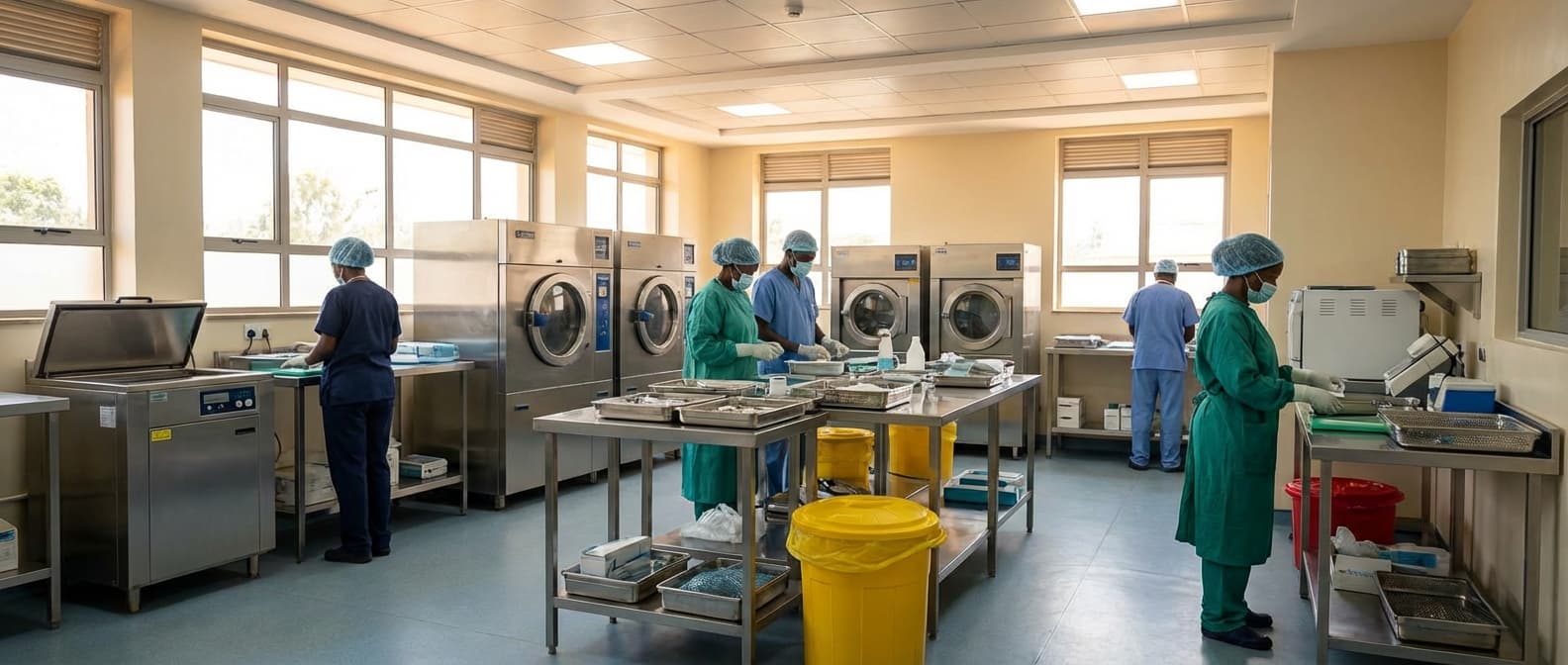
Medical Equipment Decontamination Service (Pre-Repair/Pre-Relocation) in Gambia
Engineering Excellence & Technical Support
Medical Equipment Decontamination Service (Pre-Repair/Pre-Relocation) High-standard technical execution following OEM protocols and local regulatory frameworks.
Advanced Bio-Decontamination
Utilizing state-of-the-art chemical and vaporized hydrogen peroxide (VHP) techniques to eliminate pathogens from critical medical devices, ensuring maximum safety before repair or relocation.
Comprehensive Validation & Certification
Rigorous multi-stage validation processes and independent certification to guarantee complete decontamination efficacy, providing auditable proof of safety for your valuable medical assets.
Secure & Compliant Handling
Expert handling and secure transportation protocols for decontaminated equipment, adhering to international standards to maintain integrity and prevent re-contamination during transit within Gambia.
What Is Medical Equipment Decontamination Service (Pre-repair/pre-relocation) In Gambia?
Medical Equipment Decontamination Service (Pre-Repair/Pre-Relocation) in The Gambia refers to the specialized process of rendering medical devices safe for handling by technicians, transport personnel, or during relocation activities. This service is critical for mitigating the risks associated with biological and chemical contamination inherent in medical environments, ensuring the health and safety of all involved parties and preventing cross-contamination of other equipment or environments. It is a mandatory preliminary step before any repair, maintenance, or relocation of a medical device can commence.
| Who Needs the Service? | Typical Use Cases | Rationale for Service |
|---|---|---|
| Hospitals and Clinics | Sending equipment for manufacturer repair or third-party servicing. | Prevents technician exposure to bloodborne pathogens, viruses, and bacteria. Ensures facility's compliance with safety regulations. |
| Diagnostic Laboratories | Relocating sensitive analytical instruments or diagnostic equipment to a new facility. | Minimizes the risk of spreading infectious agents during transit. Protects new environments from contamination. |
| Medical Device Manufacturers/Distributors | Receiving returned equipment for repair or refurbishment. | Safeguards their service engineers and workshop personnel. Prevents contamination of their repair infrastructure. |
| Healthcare Facilities undergoing Renovation/Relocation | Moving equipment between departments or to temporary locations. | Ensures a hygienic transition and prevents potential environmental contamination of the new workspace. |
| Medical Equipment Maintenance Companies | Handling equipment brought to their workshops for servicing. | Protects their technicians, workshop environment, and other equipment from biohazards. |
Key Components of Medical Equipment Decontamination Service
- Initial Assessment: Identification of potential contaminants, device type, and materials.
- Cleaning: Removal of gross soil, debris, and visible organic matter using appropriate detergents and water.
- Disinfection/Sterilization: Application of validated chemical agents or physical methods (e.g., autoclaving for sterilizable components) to eliminate or reduce microbial load to safe levels.
- Rinsing and Drying: Thorough removal of cleaning and disinfecting agents and ensuring the device is dry to prevent microbial growth and corrosion.
- Packaging: Secure containment of the decontaminated device in appropriate, labeled packaging for transport or repair.
- Documentation: Recording of decontamination procedures, chemicals used, and confirmation of completion.
Who Needs Medical Equipment Decontamination Service (Pre-repair/pre-relocation) In Gambia?
In The Gambia, the need for medical equipment decontamination services, particularly before repair or relocation, is critical for several key reasons. These services ensure the safety of technicians, prevent cross-contamination between facilities, and maintain the integrity of the equipment during transit and handling. This process is essential for prolonging the lifespan of medical devices, guaranteeing accurate diagnostics and treatments, and ultimately safeguarding patient well-being. Without proper decontamination, the risk of spreading infections, damaging sensitive equipment with residues, and posing health hazards to personnel is significantly elevated. Therefore, entities managing or utilizing medical equipment, especially in a healthcare setting, are prime candidates for these specialized services.
| Target Customer Type | Key Departments/Units Requiring Service | Specific Needs Addressed | Examples of Equipment |
|---|---|---|---|
| Hospitals (Public & Private) | Sterilization & CSSD (Central Sterile Supply Department) Biomedical Engineering Department Infection Prevention and Control Unit Various Clinical Departments (e.g., Radiology, Surgery, ICU, Laboratory) | Safe handling and transport of equipment for repair/relocation. Preventing nosocomial infections. Protecting sensitive internal components during transport. Ensuring technician safety. | MRI machines, CT scanners, X-ray units, ultrasound machines, ventilators, anesthesia machines, surgical microscopes, endoscopes, laboratory analyzers, dialysis machines. |
| Clinics and Health Centers | Nursing Staff Administrative Staff responsible for asset management | Maintaining operational readiness. Preventing equipment downtime. Ensuring patient safety in smaller facilities. | Blood pressure monitors, thermometers, basic diagnostic kits, portable ultrasound, minor surgical instruments, autoclaves. |
| Diagnostic Laboratories | Laboratory Technicians Lab Management | Preventing cross-contamination of samples and reagents. Ensuring accurate test results. Safe disposal or transfer of potentially biohazardous equipment. | Microscopes, centrifuges, PCR machines, ELISA readers, automated analyzers, incubators. |
| Medical Research Institutions | Researchers Laboratory Managers | Maintaining the integrity of research equipment. Preventing contamination of experimental setups. Safe handling of specialized research instruments. | Flow cytometers, mass spectrometers, advanced imaging systems, DNA sequencers. |
| Government Health Ministries and Agencies | Procurement and Logistics Departments Public Health Units | Managing the national medical equipment inventory. Ensuring equitable distribution and maintenance of equipment across the country. Public health preparedness. | Broad range of equipment from primary healthcare to specialized facilities. |
| NGOs and International Aid Organizations | Program Managers Logistics Coordinators | Ensuring functionality of donated or procured equipment in remote areas. Training local staff on equipment maintenance and safety. Long-term sustainability of healthcare infrastructure. | Mobile clinics, diagnostic tools for outreach programs, essential medical devices for underserved communities. |
| Private Medical Equipment Suppliers & Service Providers | Field Service Technicians Workshop Managers | Ensuring the safety of their technicians during site visits and workshop repairs. Protecting their own facilities from contamination. Providing a complete service package to clients. | All types of medical equipment they service or sell. |
Target Customers and Departments for Medical Equipment Decontamination Service (Pre-Repair/Pre-Relocation) in The Gambia:
- Hospitals (Public and Private)
- Clinics and Health Centers
- Diagnostic Laboratories
- Medical Research Institutions
- Government Health Ministries and Agencies
- Non-Governmental Organizations (NGOs) involved in healthcare
- Private Medical Equipment Suppliers and Service Providers
- International Aid Organizations with healthcare programs
Medical Equipment Decontamination Service (Pre-repair/pre-relocation) Process In Gambia
This document outlines the standard operating procedure for the Medical Equipment Decontamination Service (Pre-Repair/Pre-Relocation) in The Gambia. This process ensures that medical equipment is safely decontaminated before being sent for repair or relocation, mitigating risks of cross-contamination and protecting personnel.
| Stage | Description | Responsible Party | Key Activities | Documentation Requirements |
|---|---|---|---|---|
| The process begins when a healthcare facility or individual inquiries about the decontamination service for medical equipment slated for repair or relocation. | Healthcare Facility/Individual & Decontamination Service Provider | Submit decontamination request form. Provide details of equipment (type, model, intended use, known contaminants). Discuss urgency and special requirements. | Decontamination Request Form (completed) |
| Upon acceptance of the request, the service provider schedules the decontamination service and arranges for transportation if required. | Decontamination Service Provider | Confirm service availability. Schedule appointment. Arrange for pick-up/drop-off or on-site service. Communicate schedule to the client. | Service Confirmation Letter/Email |
| The healthcare facility prepares the equipment for decontamination according to guidelines. | Healthcare Facility | Isolate equipment. Remove loose accessories. Disassemble as much as practically possible without compromising integrity. Ensure no biohazardous materials remain visibly attached. | Pre-Decontamination Checklist (internal) |
| The trained technicians perform the decontamination using approved methods and agents. | Decontamination Service Provider | Inspect equipment visually. Select appropriate decontamination agent and method (e.g., chemical disinfection, autoclaving for heat-stable items). Execute decontamination process according to SOPs. Ensure complete coverage and contact time. | Decontamination Log Sheet (detailed) |
| The effectiveness of the decontamination is verified, and all records are meticulously maintained. | Decontamination Service Provider | Visually inspect equipment for cleanliness. If applicable, conduct microbial testing or use indicator strips. Complete the decontamination log. Issue a decontamination certificate. | Decontamination Log Sheet (signed), Decontamination Certificate |
| The decontaminated equipment is released back to the healthcare facility or handed over for repair/relocation. | Decontamination Service Provider & Healthcare Facility | Transfer decontaminated equipment to the client or designated repair/relocation service. Obtain client's signature confirming receipt. Invoice for services rendered. | Equipment Handover Form (signed), Invoice |
Key Stages of Medical Equipment Decontamination
- Inquiry and Initial Assessment
- Decontamination Scheduling and Logistics
- Pre-Decontamination Preparation
- Decontamination Process Execution
- Post-Decontamination Verification and Documentation
- Equipment Release and Handover
Medical Equipment Decontamination Service (Pre-repair/pre-relocation) Cost In Gambia
Providing accurate cost estimates for medical equipment decontamination services in The Gambia requires a nuanced understanding of several key factors. This service, crucial before equipment repair or relocation, ensures the safe handling and transportation of potentially biohazardous materials. The pricing is influenced by the type and complexity of the equipment, the level of contamination, the urgency of the service, and the provider's operational costs. While official price lists are not readily available, industry experience and discussions with local service providers suggest a range of costs. It is highly recommended to obtain personalized quotes for specific requirements.
| Service Type (Indicative) | Estimated Cost Range (GMD) | Notes |
|---|---|---|
| Basic Surface Decontamination (Small Equipment, Low Contamination) | 1,500 - 3,000 | Covers external cleaning and disinfection of minor medical tools or diagnostic devices. |
| Standard Decontamination (Medium Equipment, Moderate Contamination) | 3,000 - 7,500 | Suitable for standard laboratory equipment, smaller imaging devices, or general patient care equipment with moderate use. |
| Intensive Decontamination (Large/Complex Equipment, High Contamination) | 7,500 - 20,000+ | Applies to larger medical machinery (e.g., incubators, patient monitors, surgical lights), or equipment with suspected significant bioburden. May involve some disassembly. |
| Specialized/Emergency Decontamination | Quote-Based (Potentially higher than standard rates) | For highly specialized equipment or urgent needs requiring immediate response and advanced protocols. |
Key Factors Influencing Medical Equipment Decontamination Costs in The Gambia:
- Type and Size of Equipment: Larger, more complex, or specialized medical equipment (e.g., MRI machines, large surgical microscopes) will naturally incur higher decontamination costs due to increased material usage, time, and potentially specialized cleaning agents.
- Level of Contamination: The extent and nature of contamination are paramount. Equipment with minor surface contamination will be less expensive to decontaminate than equipment with significant bioburden or known exposure to highly infectious agents. This can influence the type and quantity of disinfectants and the labor required.
- Urgency of Service: Emergency or same-day decontamination services typically command a premium due to the need for immediate resource allocation and potential overtime for technicians.
- Scope of Decontamination: Whether the service includes only surface cleaning or deeper internal cleaning, dismantling for thorough decontamination, or specialized sterilization processes will impact the overall cost.
- Provider's Overhead and Expertise: The experience, accreditations, insurance, and overhead costs of the decontamination service provider (e.g., specialized training, disposal of biohazardous waste) will be factored into their pricing.
- Location and Accessibility: The distance to the equipment's location within The Gambia can influence transportation costs for the decontamination team and their equipment. Remote areas might incur additional charges.
- Required Documentation: If specific certifications or detailed decontamination reports are required for regulatory or logistical purposes, these might be included in the service cost or billed separately.
- Specialized Cleaning Agents and Equipment: The use of specific, hospital-grade disinfectants, autoclaves, or other specialized decontamination equipment will add to the cost.
Affordable Medical Equipment Decontamination Service (Pre-repair/pre-relocation) Options
Our affordable medical equipment decontamination service provides a crucial step before repairs or relocation, ensuring safety, compliance, and cost-efficiency. By proactively decontaminating equipment, you mitigate risks associated with biohazards, protect your staff and the environment, and prevent cross-contamination. This service is designed to be budget-friendly, offering flexible options to suit various needs and financial considerations.
| Bundle Name | Included Services | Target Equipment Type | Ideal For | Estimated Cost Savings |
|---|---|---|---|---|
| Essential Decon (Basic) | Surface disinfection of non-critical areas, removal of general contaminants. | Non-invasive devices, smaller diagnostic tools. | Routine pre-repair/relocation of less complex equipment. | 10-15% compared to individual services. |
| Comprehensive Decon (Standard) | Includes Essential Decon plus deeper cleaning of accessible internal components, air filter sanitization. | Monitoring devices, infusion pumps, portable imaging equipment. | Standard pre-repair/relocation for most equipment. | 15-20% compared to individual services. |
| Biohazard Shield (Advanced) | Includes Comprehensive Decon plus specialized biohazard neutralization protocols, sterile packaging options. | Surgical instruments, laboratory equipment, patient-worn devices with known biohazard exposure. | High-risk decontamination needs, strict compliance requirements. | 20-25% compared to individual services. |
| Relocation Ready Bundle | Comprehensive Decon + secure packaging and labeling for transport. | All equipment types requiring relocation. | Minimizing downtime and risk during facility moves. | Bundled pricing offers a 10% discount on individual service components. |
| Repair Prep Package | Essential Decon + minor exterior cleaning and documentation of initial condition. | Equipment awaiting repair. | Streamlining the repair process and reducing technician exposure. | Bundled pricing offers a 5% discount on individual service components. |
Value Bundles & Cost-Saving Strategies
- Tiered Service Packages: We offer pre-defined bundles of decontamination services (e.g., basic surface cleaning, deep disinfection, specialized biohazard removal) that provide better value than individual services.
- Volume Discounts: The more equipment you need decontaminated within a single service request, the lower the per-unit cost.
- Scheduled Maintenance Agreements: Establish ongoing decontamination schedules for your high-use equipment to receive preferential rates and predictable budgeting.
- Off-Peak Scheduling: Inquire about discounts for scheduling decontamination during less busy periods.
- Partnership Programs: For healthcare facilities with regular decontamination needs, we offer exclusive partnership programs with additional cost benefits and priority service.
- DIY Support Kits (Limited Scope): For non-critical or routine cleaning, we can offer guidance and provide approved cleaning supplies at a reduced cost, allowing for some self-service on less hazardous items.
- Combined Service Offers: Bundle decontamination with other related services like equipment cleaning, basic inventory, or minor cosmetic repairs for a package discount.
Verified Providers In Gambia
In Gambia, ensuring you are accessing healthcare services from verified providers is paramount for your well-being and peace of mind. Verified providers adhere to specific standards of quality, ethics, and professionalism, guaranteeing a higher level of care. Among these reputable organizations, Franance Health stands out due to its rigorous credentialing process and unwavering commitment to excellence. This document outlines why Franance Health credentials represent the best choice for healthcare in The Gambia.
| Aspect of Care | Franance Health Verified Provider | Unverified Provider |
|---|---|---|
| Professional Qualifications | Thoroughly screened and validated through Franance Health's credentialing process. | May lack comprehensive verification of educational background and licensing. |
| Ethical Standards | Bound by a code of conduct that prioritizes patient well-being and integrity. | No guaranteed adherence to specific ethical guidelines. |
| Quality of Service | Demonstrated commitment to providing high-quality, up-to-date medical care. | Quality can be inconsistent and unpredictable. |
| Patient Safety | Adheres to stringent safety protocols and best practices, minimizing risks. | Potential for overlooked safety measures and increased risk. |
| Accountability | Subject to ongoing review and accountability mechanisms by Franance Health. | Limited recourse or accountability in case of issues. |
| Reputation and Trust | Represents a trusted and reliable source of healthcare services. | May lack established reputation or trustworthiness. |
What Franance Health Credentials Signify
- Rigorous Qualification Checks: Franance Health meticulously vets all healthcare professionals and facilities, ensuring they meet stringent national and international standards for education, training, and experience.
- Adherence to Ethical Practices: Credentials from Franance Health indicate a commitment to patient-centered care, transparency, and the highest ethical conduct.
- Commitment to Quality Improvement: Verified providers actively participate in continuous professional development and quality improvement initiatives, staying abreast of the latest medical advancements.
- Patient Safety Focus: Franance Health's vetting process prioritizes patient safety, ensuring that all accredited providers adhere to strict safety protocols and best practices.
- Legal and Regulatory Compliance: Credentials signify that the provider is fully compliant with all Gambian healthcare regulations and licensing requirements.
Scope Of Work For Medical Equipment Decontamination Service (Pre-repair/pre-relocation)
This Scope of Work (SOW) outlines the requirements for a Medical Equipment Decontamination Service, specifically for equipment requiring pre-repair or pre-relocation decontamination. This service ensures that medical devices are rendered safe for handling by repair technicians or for transport to new locations, mitigating the risk of biological contamination and cross-infection. The service provider shall adhere to industry best practices, regulatory guidelines (e.g., CDC, OSHA, local health department regulations), and the specific protocols outlined herein. The objective is to provide a comprehensive decontamination process that effectively removes or inactivates bioburden on the specified medical equipment.
| Section | Description | Technical Deliverables | Standard Specifications |
|---|---|---|---|
| Upon notification, the service provider will assess the equipment to be decontaminated. This includes identifying the type of equipment, its intended use, and any known or suspected contamination risks. | Decontamination Request Form completion, Equipment Inventory Log, Risk Assessment Report. | Service provider must have a documented process for receiving and logging decontamination requests. Risk assessment must consider patient population, medical procedures performed, and potential biohazards. Adherence to institutional policies regarding PPE and access control. |
| The service provider will perform a thorough decontamination of the specified medical equipment using approved methods and agents. | Decontamination Treatment Record, Disinfection Efficacy Report (if applicable). | Use of EPA-registered, FDA-approved disinfectants and sterilants appropriate for the equipment materials and type of bioburden. Procedures must follow manufacturer's instructions for use (IFU) for both the equipment and the decontamination agents. Specific attention to crevices, ports, and other difficult-to-reach areas. Environmental controls (ventilation, containment) as required by the decontamination agents and process. Minimum contact times and concentrations must be met. Pre-cleaning steps (e.g., removal of gross soil) must be performed prior to high-level disinfection or sterilization. |
| All chemicals, consumables, and equipment used for decontamination must meet specified standards. | Material Safety Data Sheets (MSDS/SDS) for all chemicals used, Certificate of Analysis (CoA) for critical reagents (if applicable). | Only approved disinfectants, sterilants, and cleaning agents shall be used. These must be compatible with the medical equipment materials to prevent damage. All materials must be stored, handled, and disposed of according to safety regulations. Use of single-use, sterile consumables where appropriate. Verification of expiration dates for all agents. |
| All personnel performing decontamination services must be adequately trained and qualified. | Training Records, Competency Assessments, Proof of Certification (if required). | Personnel must have completed training in infection control, hazardous material handling, safe use of disinfectants/sterilants, and specific equipment decontamination protocols. Proof of ongoing training and competency assessment. Adherence to all relevant safety certifications and licensing. |
| All biohazardous waste generated during the decontamination process must be managed and disposed of appropriately. | Waste Manifests, Certificates of Destruction (if applicable). | Compliance with all local, state, and federal regulations for biohazardous waste disposal. Proper segregation, labeling, packaging, and transportation of waste. Use of licensed medical waste disposal contractors. |
| Comprehensive documentation of the entire decontamination process is required. | Final Decontamination Certificate, Decontamination Log, Equipment Status Report (e.g., 'Decontaminated for Repair', 'Decontaminated for Relocation'). | Each decontamination event must be logged with details including equipment ID, date/time of service, personnel performing the service, decontamination method used, agents/materials employed, and outcome. A final certificate or report confirming decontamination must be provided. Documentation must be clear, accurate, and auditable. Digital or hard copy submission as per agreement. |
| The service provider must implement a quality control program to ensure the effectiveness and safety of their services. | Quality Assurance Plan, Incident Reports, Corrective Action Reports. | Regular audits of decontamination processes, equipment calibration records, and personnel training. A process for reporting and investigating any incidents or deviations from protocol. Continuous improvement initiatives based on QA data. |
| Procedures for handling equipment after decontamination to maintain its sterile/disinfected state. | Covered Equipment Transport Documentation (if applicable). | Equipment should be handled with appropriate PPE and, if necessary, protected with sterile covers or barriers during transport to repair or relocation sites to prevent recontamination. |
Key Objectives of Decontamination Service
- To eliminate or significantly reduce the presence of infectious agents (bacteria, viruses, fungi, prions) on medical equipment surfaces.
- To ensure the safety of personnel involved in equipment repair, maintenance, or relocation.
- To prevent the spread of healthcare-associated infections (HAIs).
- To comply with all relevant health and safety regulations.
- To provide clear documentation of the decontamination process and its effectiveness.
Service Level Agreement For Medical Equipment Decontamination Service (Pre-repair/pre-relocation)
This Service Level Agreement (SLA) outlines the terms and conditions for pre-repair and pre-relocation decontamination services for medical equipment. It specifies response times and uptime guarantees to ensure efficient and safe handling of medical devices.
| Service Level Objective | Description | Target | Measurement |
|---|---|---|---|
| Response Time (Critical Equipment) | Time from service request to commencement of decontamination for critical medical equipment (e.g., life support, diagnostic imaging) | Within 2 Business Hours | Clock time from ticket creation to technician arrival and start of service. |
| Response Time (Standard Equipment) | Time from service request to commencement of decontamination for standard medical equipment (e.g., patient monitors, infusion pumps) | Within 4 Business Hours | Clock time from ticket creation to technician arrival and start of service. |
| Decontamination Completion Time | Maximum time allocated for the decontamination process itself, depending on equipment complexity and contamination level. | As per agreed scope per service ticket (typically 1-4 hours) | Time from commencement of decontamination to certification of completion. |
| Uptime Guarantee (Decontamination Related) | Minimum percentage of operational time for equipment, factoring in decontamination delays. | 99.5% (excluding scheduled downtime) | Calculated as (Total Scheduled Operational Hours - Decontamination Downtime Hours) / Total Scheduled Operational Hours. |
Key Definitions
- Decontamination: The process of eliminating or reducing to an acceptable level, microorganisms, or other harmful substances from medical equipment, rendering it safe for subsequent repair or relocation.
- Equipment Downtime: The period during which medical equipment is unavailable for its intended clinical use due to the need for decontamination, repair, or relocation.
- Response Time: The maximum allowable time from the initiation of a service request to the commencement of decontamination activities at the designated location.
- Uptime Guarantee: A commitment to minimize the duration of equipment downtime attributable to the decontamination process.
- Business Hours: Monday to Friday, 8:00 AM to 5:00 PM, excluding public holidays.
Frequently Asked Questions

Ready when you are
Let's scope your Medical Equipment Decontamination Service (Pre-Repair/Pre-Relocation) in Gambia project in Gambia.

Scaling healthcare logistics and technical systems across the entire continent.