
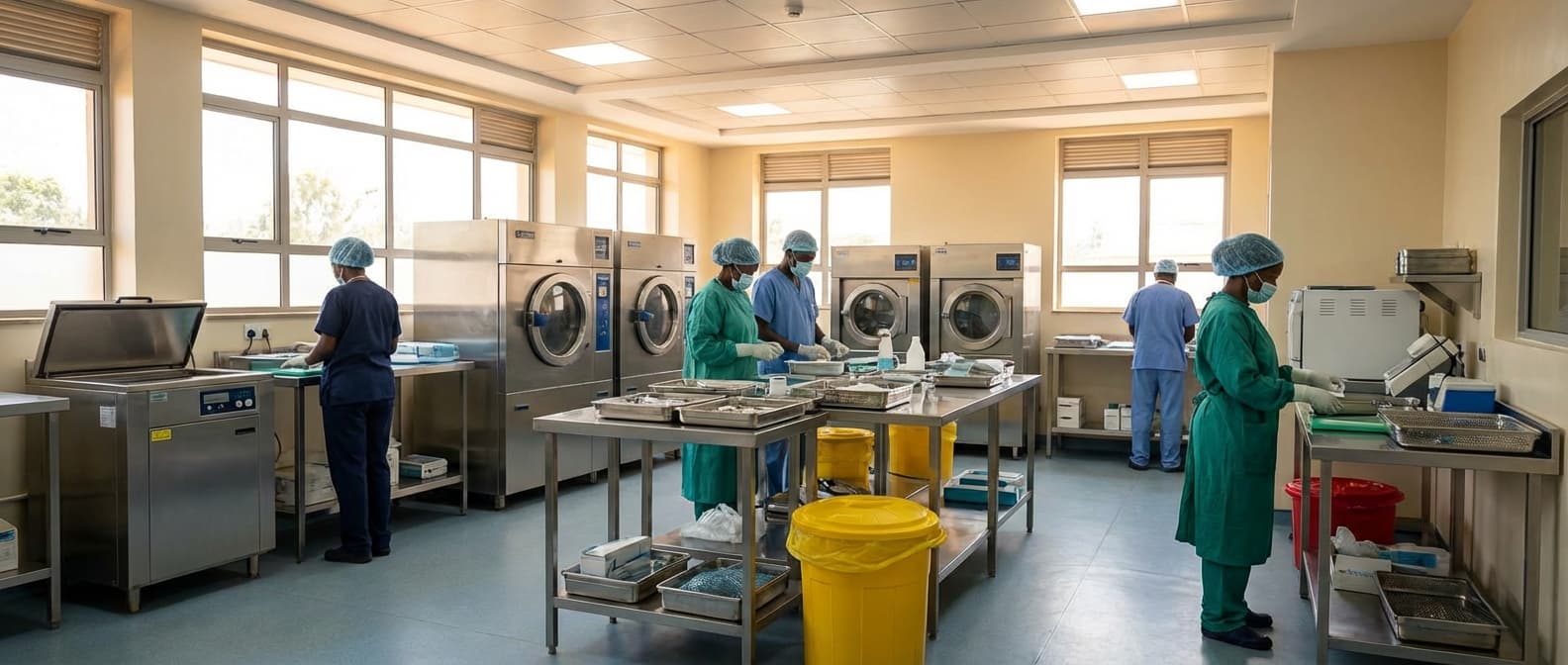
Infection-Control Readiness Support Service for Reusable Equipment in Gambia
Engineering Excellence & Technical Support
Infection-Control Readiness Support Service for Reusable Equipment High-standard technical execution following OEM protocols and local regulatory frameworks.
Sterilization Validation & Monitoring
Ensures rigorous validation of sterilization processes for all reusable medical equipment, including steam, chemical, and low-temperature methods. We implement robust daily, weekly, and monthly monitoring protocols using biological and chemical indicators to guarantee microbial inactivation and patient safety.
Advanced Disinfection Protocols
Provides comprehensive training and implementation of best-practice disinfection protocols for high-risk and semi-critical reusable items. This includes guideline adherence for pre-cleaning, detergent selection, contact times, and appropriate disinfectant agents, significantly reducing cross-contamination risks.
Equipment Lifecycle Management & Decontamination
Offers expert support in establishing and maintaining equipment decontamination workflows, from initial receipt to final storage. This includes detailed checklists for manual cleaning, automated washing/disinfection, and proper handling of contaminated instruments, ensuring optimal equipment lifespan and consistent infection prevention.
What Is Infection-control Readiness Support Service For Reusable Equipment In Gambia?
Infection-Control Readiness Support Service for Reusable Equipment in The Gambia refers to a specialized consultancy and operational assistance program designed to ensure that healthcare facilities in The Gambia have robust systems and practices in place for the safe and effective reprocessing and sterilization of reusable medical equipment. This service aims to mitigate the risk of healthcare-associated infections (HAIs) by verifying and enhancing the adherence to established infection prevention and control (IPC) guidelines throughout the entire lifecycle of reusable instruments and devices.
| Target Audience | Needs Addressed | Typical Use Cases |
|---|---|---|
| Public and private hospitals and clinics in The Gambia | Inadequate infrastructure for sterilization, lack of trained personnel, inconsistent adherence to reprocessing guidelines, risk of transmitting infectious agents via inadequately reprocessed equipment. | Pre-implementation assessment for new surgical units, regular compliance audits for existing departments (e.g., operating rooms, dental clinics, laboratories), post-outbreak investigation requiring reinforcement of IPC measures, support for facilities adopting new reprocessing technologies. |
| Non-governmental organizations (NGOs) and international aid agencies involved in healthcare development in The Gambia | Need for external expertise to ensure sustainability of IPC programs, verification of the effectiveness of donated equipment, support in establishing national IPC standards and training modules. | Development of national guidelines for reusable medical device reprocessing, training of trainers for wider dissemination of IPC knowledge, support for mobile health clinics or field hospitals with limited infrastructure, assessment of readiness for specific medical procedures requiring sterile instruments. |
| Ministry of Health and Social Welfare, The Gambia | Need for technical assistance in developing and enforcing national IPC policies, capacity building for regional health teams, ensuring standardized and safe reprocessing practices across the healthcare system. | Development of a national framework for reusable equipment reprocessing, accreditation and licensing requirements for healthcare facilities regarding IPC, evaluation of national procurement strategies for sterilization equipment, response to national public health emergencies requiring enhanced IPC. |
Key Components of the Service:
- Assessment of existing reprocessing infrastructure, including the availability and functionality of equipment (e.g., sterilizers, washer-disinfectors, drying cabinets).
- Evaluation of current reprocessing protocols and Standard Operating Procedures (SOPs) against national and international IPC standards (e.g., WHO guidelines, CDC recommendations).
- Training and capacity building for healthcare personnel involved in the decontamination, cleaning, disinfection, and sterilization of reusable medical devices.
- Development or refinement of SOPs tailored to the specific context and resources of Gambian healthcare facilities.
- Auditing and validation of sterilization processes, including chemical and biological indicator monitoring.
- Provision of technical advice on the selection, maintenance, and calibration of reprocessing equipment.
- Support in establishing a comprehensive inventory management system for reusable equipment and associated supplies.
- Guidance on waste management protocols related to contaminated reusable equipment.
- Facilitation of quality improvement initiatives and ongoing monitoring of reprocessing practices.
Who Needs Infection-control Readiness Support Service For Reusable Equipment In Gambia?
This document outlines the critical need for Infection-Control Readiness Support Services specifically for reusable medical equipment in The Gambia. Ensuring proper reprocessing and sterilization of reusable items is paramount to preventing healthcare-associated infections (HAIs) and safeguarding patient safety. This service aims to bolster the existing infection control capacity within Gambian healthcare facilities by providing expert guidance, training, and practical support.
| Facility Type | Primary Need for Support | Key Reusable Equipment Examples | Potential Impact of Support |
|---|---|---|---|
| Primary Healthcare Facilities | Basic reprocessing training, access to standard protocols, maintenance of simple equipment | Syringes, thermometers, speculums, basic surgical instruments | Reduced transmission of infections at community level, improved patient trust |
| District Hospitals | Advanced reprocessing techniques, equipment validation, workflow optimization, staff supervision | Surgical kits, endoscopes, delivery instruments, diagnostic equipment | Lower rates of surgical site infections, improved patient outcomes |
| Regional Hospitals | Comprehensive training, quality assurance programs, troubleshooting complex equipment, supply chain management for reprocessing materials | Large surgical sets, laparoscopic equipment, specialized diagnostic tools | Enhanced capacity to manage complex procedures safely, reduced risk of outbreaks |
| Tertiary/Specialized Hospitals | Advanced sterilization technologies, compliance with international standards, risk assessment, training of trainers | Complex surgical instrumentation, implantable devices (if reusable), high-risk endoscopic equipment | Establishment of national benchmarks for infection control, reduced patient mortality from HAIs |
| Ministry of Health | Policy development support, national training framework, monitoring and evaluation, resource allocation guidance | N/A (Systemic support) | Nationwide improvement in infection control standards, sustainable practices, reduced burden of HAIs |
Target Customers and Departments for Infection-Control Readiness Support Service for Reusable Equipment in The Gambia
- {"point":"Primary Healthcare Facilities (Health Posts and Centers)","details":"These facilities often have limited resources and may lack dedicated infection control personnel. Reusable equipment, such as syringes, surgical instruments, and diagnostic tools, is commonly used and requires robust reprocessing protocols to prevent disease transmission."}
- {"point":"District Hospitals","details":"District hospitals serve a larger population and handle a wider range of medical procedures. They often manage significant volumes of reusable medical equipment, making them a high priority for readiness support to maintain effective infection control standards."}
- {"point":"Regional Hospitals","details":"As referral centers, regional hospitals see complex cases and utilize a vast array of reusable equipment. Strong infection control practices are essential to prevent outbreaks and manage the higher patient loads."}
- {"point":"Tertiary/Specialized Hospitals (e.g., Edward Francis Small Teaching Hospital)","details":"These major hospitals are crucial for advanced medical care and training. Ensuring their infection control readiness for reusable equipment is vital for setting national standards and preventing the spread of infections within a complex healthcare environment."}
- {"point":"Maternity and Child Health Facilities","details":"These facilities are particularly vulnerable due to the delicate nature of their patient population. Proper sterilization of instruments used in childbirth and pediatric care is non-negotiable."}
- {"point":"Operating Theaters/Surgical Units","details":"Central to this service, these departments rely heavily on sterile reusable surgical instruments. Support in maintaining optimal sterilization processes, equipment maintenance, and staff training is critical."}
- {"point":"Sterilization and Central Sterile Supply Departments (CSSDs)","details":"These are the operational hubs for reprocessing reusable equipment. Direct support for CSSD staff in implementing best practices, managing workflow, and ensuring the functionality of sterilization equipment is a key focus."}
- {"point":"Nursing Departments","details":"Nurses are on the frontline of patient care and often handle the initial cleaning and preparation of reusable equipment. Training them on correct procedures and the importance of infection control is essential."}
- {"point":"Laboratory Departments","details":"While some laboratory equipment is disposable, many diagnostic tools and sample collection devices are reusable. Ensuring their proper cleaning and sterilization prevents cross-contamination and ensures accurate results."}
- {"point":"Ministry of Health (Infection Prevention and Control Unit/Department)","details":"The national MoH plays a crucial role in setting policies and overseeing healthcare standards. The support service can contribute to capacity building within the MoH to ensure sustainable and widespread implementation of infection control practices for reusable equipment."}
- {"point":"Healthcare Training Institutions","details":"Integrating comprehensive training on the reprocessing of reusable equipment into the curriculum of medical and nursing schools will foster a generation of healthcare professionals with strong infection control knowledge."}
Infection-control Readiness Support Service For Reusable Equipment Process In Gambia
This document outlines the workflow for the Infection-Control Readiness Support Service for Reusable Equipment Processes in The Gambia. This service aims to enhance the capacity of healthcare facilities to safely reprocess reusable medical equipment, thereby improving patient safety and preventing healthcare-associated infections (HAIs). The workflow details the steps from initial inquiry to the final execution and follow-up of the support service.
| Phase | Stage | Description | Key Activities | Deliverables | Responsible Party |
|---|---|---|---|---|---|
| Phase 1: Inquiry & Needs Assessment | Initial Inquiry | Healthcare facility expresses interest in support for their reusable equipment processing. This can be through direct contact, referrals, or outreach programs. | Contact initiation, expression of interest, preliminary understanding of needs. | Acknowledgement of inquiry, initial contact established. | Healthcare Facility, Ministry of Health (MoH), Implementing Partner (IP) |
| Phase 1: Inquiry & Needs Assessment | Needs Assessment Visit | A team from the Implementing Partner visits the facility to conduct a comprehensive assessment of their current reusable equipment processing practices, infrastructure, and resources. | Observation of workflow, staff interviews, review of existing protocols and documentation, assessment of equipment and supplies, identification of gaps and challenges. | Needs Assessment Report, Gap Analysis. | Implementing Partner (IP), Healthcare Facility Staff |
| Phase 2: Planning & Proposal Development | Develop Support Plan | Based on the needs assessment, a tailored support plan is developed, outlining specific interventions, timelines, and required resources. | Defining training modules, identifying equipment needs, establishing supervision schedules, outlining advocacy efforts. | Draft Support Plan. | Implementing Partner (IP) |
| Phase 2: Planning & Proposal Development | Proposal Submission & Approval | The proposed support plan is submitted to the Ministry of Health and the healthcare facility for review and approval. | Formal proposal presentation, discussion of plan, securing buy-in. | Approved Support Plan, Signed Memorandum of Understanding (MoU) or Agreement. | Implementing Partner (IP), Ministry of Health (MoH), Healthcare Facility Management |
| Phase 3: Service Execution | Capacity Building & Training | Conducting workshops, on-the-job training, and simulations for healthcare staff on infection prevention and control (IPC) principles for reusable equipment. | Training on disinfection, sterilization, handling, storage, waste management, and IPC protocols. | Trained staff, Training materials, Competency assessments. | Implementing Partner (IP), Healthcare Facility Staff |
| Phase 3: Service Execution | Technical Support & Mentorship | Providing hands-on technical assistance, on-site mentorship, and troubleshooting for specific equipment or process challenges. | Supervision of reprocessing activities, problem-solving, guidance on best practices. | Improved reprocessing practices, resolved technical issues. | Implementing Partner (IP), Healthcare Facility Staff |
| Phase 3: Service Execution | Equipment & Supply Support (if applicable) | Facilitating the procurement or donation of essential equipment and supplies for effective reusable equipment processing. | Needs assessment for equipment/supplies, procurement support, distribution. | Functional equipment and adequate supplies at the facility. | Implementing Partner (IP), MoH, Donors/Suppliers |
| Phase 3: Service Execution | Development/Revision of SOPs | Assisting the facility in developing or revising Standard Operating Procedures (SOPs) for reusable equipment processing. | Guidance on SOP structure, content review, ensuring alignment with national guidelines. | Revised/New SOPs for reusable equipment reprocessing. | Implementing Partner (IP), Healthcare Facility Staff |
| Phase 4: Reporting & Follow-up | Monitoring & Evaluation | Regular monitoring of implemented activities and evaluation of their impact on the facility's IPC readiness for reusable equipment. | Data collection on key performance indicators (KPIs), observation of process adherence, feedback collection. | Progress reports, M&E data. | Implementing Partner (IP), Healthcare Facility Staff |
| Phase 4: Reporting & Follow-up | Final Reporting | Submission of a comprehensive final report detailing the services provided, outcomes achieved, lessons learned, and recommendations for sustainability. | Report compilation, data analysis, dissemination of findings. | Final Project Report, Recommendations for Sustainability. | Implementing Partner (IP) |
| Phase 4: Reporting & Follow-up | Post-Service Support & Sustainability Planning | Ongoing remote support or follow-up visits as needed to ensure sustained implementation and address any emerging challenges. Planning for long-term ownership by the facility. | Follow-up calls, virtual consultations, planning for in-country champions, integration into facility-level work plans. | Sustained IPC practices, established local champions, integration into routine facility operations. | Implementing Partner (IP), Healthcare Facility Staff, MoH |
Infection-Control Readiness Support Service Workflow for Reusable Equipment Process in The Gambia
- Phase 1: Inquiry & Needs Assessment
- Phase 2: Planning & Proposal Development
- Phase 3: Service Execution
- Phase 4: Reporting & Follow-up
Infection-control Readiness Support Service For Reusable Equipment Cost In Gambia
Providing Infection-Control Readiness Support Services for Reusable Medical Equipment in Gambia involves a complex pricing structure influenced by several key factors. These factors determine the overall cost, which can vary significantly based on the scope and intensity of the support provided. Understanding these elements is crucial for healthcare facilities in Gambia seeking to budget effectively for these essential services and ensure patient safety. The goal is to offer accessible and sustainable solutions that align with the country's healthcare infrastructure and economic realities.
| Service Component | Estimated Price Range (GMD) | Notes |
|---|---|---|
| Initial Assessment & Gap Analysis (per facility) | 5,000 - 15,000 | Covers site visit, equipment inventory, basic protocol review. |
| Basic Training Workshop (per session, per group) | 10,000 - 30,000 | Focuses on general hygiene, handwashing, basic disinfection. Scalable based on participants. |
| Specialized Equipment Training (per module) | 15,000 - 50,000 | For complex sterilization, endoscope reprocessing, etc. May include practical sessions. |
| Development of SOPs/Guidelines | 20,000 - 75,000 | Customized Standard Operating Procedures based on facility needs. |
| On-site Equipment Maintenance & Calibration Support (per day) | 8,000 - 25,000 | Excludes parts. Focus on preventative maintenance. |
| Supply Chain Management Consultation (per month) | 7,000 - 20,000 | Assistance with sourcing and managing infection control consumables. |
| Ongoing Monitoring & Auditing (quarterly, per facility) | 25,000 - 100,000 | Includes site visits, data collection, reporting. Varies by facility size. |
| Comprehensive Package (e.g., 1 year) | 100,000 - 500,000+ | Bundle of services, tailored to the facility's specific needs. Significant variability. |
Key Pricing Factors for Infection-Control Readiness Support Service for Reusable Equipment in Gambia
- Scope of Services: The breadth and depth of the support offered are primary cost drivers. This can range from initial assessments and gap analysis to training, equipment maintenance, supply chain management for disinfectants and sterilants, and ongoing monitoring and evaluation.
- Number and Type of Equipment: Facilities with a larger volume and wider variety of reusable medical equipment (e.g., surgical instruments, endoscopes, respiratory equipment) will incur higher costs due to the increased complexity and resources required for their effective infection control.
- Frequency of Support: Whether the service is a one-time intervention, periodic (e.g., quarterly, annually), or continuous/on-demand will impact the total expenditure. Ongoing support generally represents a higher long-term investment but ensures sustained compliance.
- Training Intensity and Customization: The level of training provided, including the number of personnel trained, the duration of training sessions, and the extent to which training materials are customized to specific equipment and facility protocols, will influence costs. Specialized training for complex equipment will be more expensive.
- Logistics and Travel: For services requiring on-site presence, travel and accommodation costs for support personnel within Gambia will be factored in. This is particularly relevant for remote or hard-to-reach health facilities.
- Supplies and Consumables: If the service includes the provision or management of infection control supplies (e.g., disinfectants, sterilants, personal protective equipment), the cost of these consumables will be directly incorporated into the pricing.
- Technology and Equipment: The use of specialized diagnostic tools or monitoring equipment for assessing sterilization effectiveness or equipment condition can add to the overall service cost.
- Provider Expertise and Reputation: Service providers with specialized expertise, extensive experience in healthcare settings, and a strong reputation may command higher fees.
- Reporting and Documentation: The complexity and frequency of reporting on infection control practices, compliance audits, and recommendations will also influence pricing.
- Government Regulations and Compliance: Adherence to national infection control guidelines and any associated certification or accreditation processes can add to the service requirements and thus the cost.
Affordable Infection-control Readiness Support Service For Reusable Equipment Options
Our Affordable Infection-Control Readiness Support Service for Reusable Equipment Options is designed to empower healthcare facilities with robust infection prevention protocols while managing costs effectively. We understand the critical need to maintain sterile reusable equipment without overburdening budgets. This service offers a comprehensive approach, focusing on prevention, education, and streamlined processes to ensure compliance, patient safety, and operational efficiency. Our value bundles are meticulously crafted to provide tailored solutions, integrating essential infection control practices into your existing workflows. We prioritize cost-saving strategies by minimizing waste, optimizing resource allocation, and leveraging economies of scale through our service offerings. Our expert team provides guidance on best practices, regulatory compliance, and the implementation of advanced technologies for cleaning, disinfection, and sterilization, all while keeping affordability at the forefront.
| Value Bundle Tier | Included Services | Target Facility Size | Estimated Cost Savings Potential | Pricing Model |
|---|---|---|---|---|
| Basic Readiness | SOP Development, Staff Training (initial module), Basic Risk Assessment | Small Clinics, Outpatient Centers | 10-15% (reduced reprocessing errors, improved compliance) | Annual Subscription |
| Standard Readiness | All Basic services + Advanced Staff Training, Equipment Recommendation, Quarterly Audits | Medium-Sized Hospitals, Specialized Clinics | 15-20% (optimized workflows, reduced equipment downtime, fewer reprocessing failures) | Tiered Annual Subscription / Per-Procedure Model |
| Comprehensive Readiness | All Standard services + Ongoing Monitoring, Technology Integration Support, Custom Protocol Development, 24/7 Support Hotline | Large Hospitals, Integrated Health Systems | 20-25%+ (significant reduction in infection rates, optimized supply chain, enhanced operational efficiency) | Customized Contract / Performance-Based Pricing |
Key Components of Our Reusable Equipment Infection Control Readiness Service
- Comprehensive risk assessment and gap analysis for reusable equipment processing.
- Development and implementation of standardized operating procedures (SOPs) for cleaning, disinfection, and sterilization.
- On-site and remote staff training on infection control best practices and regulatory requirements.
- Guidance on selecting and implementing appropriate equipment and technologies.
- Regular audits and monitoring to ensure ongoing compliance and identify areas for improvement.
- Troubleshooting and support for any infection control challenges related to reusable equipment.
- Access to updated information on emerging pathogens and evolving infection control guidelines.
Verified Providers In Gambia
In Gambia, ensuring you're receiving care from verified providers is paramount for your health and well-being. Franance Health stands out as a trusted name, distinguished by its rigorous credentialing process and unwavering commitment to quality. This ensures that every healthcare professional associated with Franance Health has undergone thorough vetting, meeting the highest standards of expertise, ethics, and patient care. Choosing Franance Health means opting for a level of assurance and excellence that is truly unmatched in the Gambian healthcare landscape.
| Credential Type | Franance Health Verification Standard | Patient Benefit |
|---|---|---|
| Medical Licenses | Mandatory, thoroughly checked with relevant authorities | Ensures providers are legally authorized to practice |
| Educational Degrees & Diplomas | Verified with issuing institutions | Confirms formal training and expertise |
| Professional Certifications | Validated for current relevance and validity | Indicates specialized skills and advanced knowledge |
| Work Experience | Verified through employer references and documentation | Demonstrates practical application of skills and experience |
| Criminal Background Checks | Conducted to ensure a safe environment | Protects patient safety and trust |
| References & Performance Reviews | Scrutinized for consistent quality and positive feedback | Guarantees a high standard of patient care and satisfaction |
Why Franance Health Credentials Matter:
- Rigorous Verification: Franance Health implements a multi-stage credentialing process that goes beyond basic requirements, including verification of educational qualifications, professional licenses, and past performance.
- Experienced Professionals: Only seasoned and competent healthcare practitioners with a proven track record are selected, ensuring you receive care from the most capable hands.
- Ethical Standards: Franance Health vets providers for their adherence to the highest ethical codes of conduct, guaranteeing patient-centered and trustworthy care.
- Continuous Monitoring: We don't stop at initial verification. Franance Health engages in ongoing performance monitoring to maintain the highest quality of service.
- Patient Safety First: The core of our credentialing process is ensuring your safety. Verified providers have demonstrated a commitment to best practices and patient well-being.
Scope Of Work For Infection-control Readiness Support Service For Reusable Equipment
This Scope of Work (SOW) outlines the services to be provided for Infection-Control Readiness Support for Reusable Equipment. The service aims to ensure that all reusable medical equipment within the client's facility is handled, cleaned, disinfected, and sterilized according to best practices and regulatory standards, thereby minimizing the risk of healthcare-associated infections (HAIs). The service includes assessment, consultation, policy development, training, and the provision of standard specifications for technical deliverables related to infection control processes.
| Deliverable | Description | Standard Specification / Key Features | Purpose |
|---|---|---|---|
| Infection Control Readiness Assessment Report | A comprehensive report detailing the current state of infection control practices for reusable equipment, identifying gaps and areas for improvement. | Includes facility walkthrough, observation of practices, review of existing documentation, and interviews with key personnel. Benchmarked against relevant guidelines (e.g., CDC, AAMI, local regulations). | To establish a baseline and inform the development of targeted interventions. |
| Reusable Equipment Infection Control Manual | A detailed manual outlining standardized policies and procedures for the entire lifecycle of reusable equipment, from point-of-use cleaning to sterile storage. | Covers: Point-of-use cleaning, manual cleaning, automated cleaning (washer-disinfectors), disinfection methods (high-level, intermediate), sterilization methods (steam, low-temperature, etc.), packaging, sterile storage, handling, and inventory management. Includes flowcharts and decision trees. | To provide a clear, consistent, and compliant framework for all staff involved in reusable equipment reprocessing. |
| Staff Training Modules | A series of educational modules designed to train healthcare professionals on infection control principles and specific procedures for reusable equipment. | Includes theoretical content, practical demonstrations, case studies, and competency assessments. Modules cover: microbiology fundamentals, mode of transmission, HAI prevention, specific equipment cleaning/disinfection/sterilization techniques, PPE usage, and documentation. | To ensure staff competence and adherence to established protocols. |
| Equipment Validation and Performance Reports | Documentation and reports related to the performance and validation of reprocessing equipment (e.g., washer-disinfectors, sterilizers). | Includes: Manufacturer specifications, installation qualification (IQ), operational qualification (OQ), performance qualification (PQ) protocols and reports, routine monitoring logs (e.g., biological/chemical indicators), and maintenance records. Recommendations for equipment upgrades or replacements. | To verify that equipment functions as intended and achieves the required level of decontamination/sterilization. |
| Standard Operating Procedures (SOPs) for Specific Equipment | Tailored SOPs for the cleaning, disinfection, and sterilization of critical or high-risk reusable medical devices. | Each SOP specifies: device description, manufacturer's instructions for use (IFU) summary, point-of-use cleaning, manual/automated cleaning parameters, disinfection/sterilization agent and parameters, drying, packaging, storage, and shelf-life. Includes visual aids. | To ensure correct and safe reprocessing of specialized medical devices. |
| Auditing and Performance Monitoring Framework | A framework for ongoing auditing and performance monitoring of infection control practices related to reusable equipment. | Includes: Audit tool development, frequency of audits, sampling methodology, data collection methods, reporting mechanisms, and root cause analysis process for identified deviations. KPIs for infection control performance. | To ensure sustained compliance and continuous improvement. |
Key Service Areas
- Assessment of current infection control practices for reusable equipment.
- Development and refinement of policies and procedures for cleaning, disinfection, and sterilization.
- Staff training and competency assessment on infection control protocols.
- Guidance on selection, use, and maintenance of equipment for reprocessing.
- Development of standard specifications for technical deliverables.
Service Level Agreement For Infection-control Readiness Support Service For Reusable Equipment
This Service Level Agreement (SLA) outlines the response times and uptime guarantees for the Infection-Control Readiness Support Service (ICRSS) for Reusable Equipment. This service ensures that all critical reusable medical equipment is maintained at the highest standards of cleanliness and functionality, minimizing the risk of Healthcare-Associated Infections (HAIs).
| Service Component | Response Time Target (Business Hours) | Uptime Guarantee | Escalation Protocol |
|---|---|---|---|
| Critical Equipment Failure (e.g., sterilization unit malfunction impacting immediate patient care) | 1 Hour | 99.9% Uptime (excluding scheduled maintenance) | Immediate on-site dispatch of a certified technician. |
| Non-Critical Equipment Failure (e.g., minor issue with a non-essential cleaning device) | 4 Business Hours | 99.5% Uptime (excluding scheduled maintenance) | Remote diagnosis and scheduling of on-site visit within 24 business hours. |
| Routine Maintenance & Calibration (scheduled) | As per scheduled maintenance plan | N/A (planned downtime) | Advance notification provided at least 7 days prior to scheduled maintenance. |
| Proactive Monitoring & Alerts | Real-time notifications to client's designated IT/Biomedical department | 100% (service availability) | Automated alerts triggered by system anomalies. |
| Expert Consultation & Support | Within 2 Business Hours of request | N/A (service availability) | Dedicated support line and email accessible during business hours. |
Scope of Service
- On-site support for immediate troubleshooting of infection control equipment failures.
- Remote monitoring and proactive maintenance of critical reusable equipment.
- Prompt replacement or repair of malfunctioning infection control components.
- Regular audits and reporting on equipment readiness and compliance.
- Access to expert consultation on infection control best practices related to reusable equipment.
Frequently Asked Questions

Ready when you are
Let's scope your Infection-Control Readiness Support Service for Reusable Equipment in Gambia project in Gambia.

Scaling healthcare logistics and technical systems across the entire continent.