
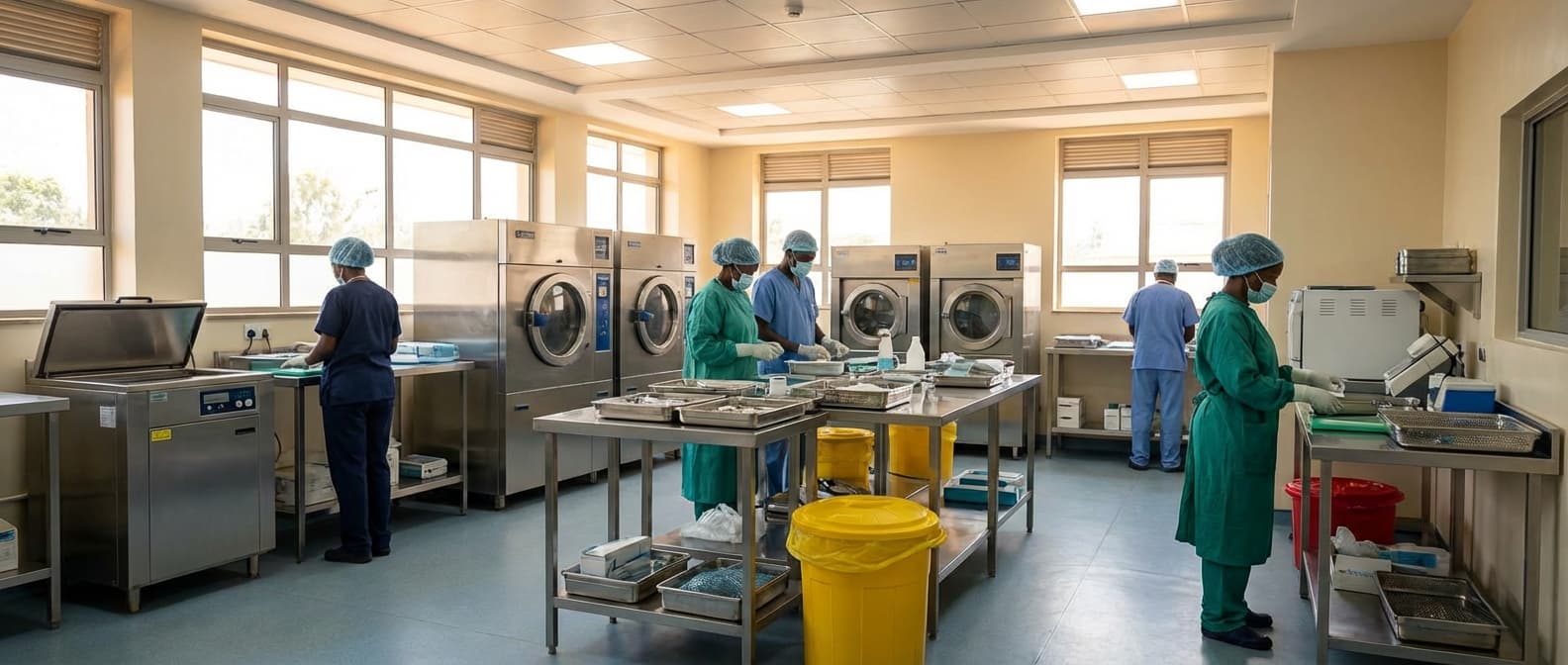
Endoscope Reprocessing Equipment Support Service in Gambia
Engineering Excellence & Technical Support
Endoscope Reprocessing Equipment Support Service High-standard technical execution following OEM protocols and local regulatory frameworks.
Rapid Response & Expertise for Uptime Maximization
Our specialized technical team provides swift on-site support and remote diagnostics for all endoscope reprocessing equipment in Gambian healthcare facilities. We prioritize minimizing downtime, ensuring your critical reprocessing workflows remain uninterrupted and patient safety is upheld.
Preventative Maintenance & Longevity Assurance
We offer tailored preventative maintenance programs for your endoscope reprocessing equipment, adhering to international standards and manufacturer recommendations. This proactive approach identifies and addresses potential issues before they escalate, extending equipment lifespan and reducing costly emergency repairs.
Compliance, Training & Performance Optimization
Gain peace of mind with our expert guidance on regulatory compliance and best practices for endoscope reprocessing. We provide comprehensive training for your biomedical and nursing staff, empowering them to operate and maintain equipment efficiently and safely, ultimately optimizing reprocessing performance and infection control.
What Is Endoscope Reprocessing Equipment Support Service In Gambia?
Endoscope reprocessing equipment support services in The Gambia refer to the provision of technical assistance, maintenance, repair, and validation for automated endoscope reprocessors (AERs) and associated equipment. These services are critical for ensuring that flexible endoscopes are safely and effectively cleaned and disinfected between patient uses, thereby preventing the transmission of healthcare-associated infections (HAAs). The service encompasses a range of activities, from routine preventative maintenance and calibration to emergency repairs and performance validation, all aimed at maintaining the operational integrity and compliance of the reprocessing workflow.
| Who Needs the Service | Typical Use Cases | |||
|---|---|---|---|---|
| Hospitals with Endoscopy Units | Routine preventative maintenance checks on AERs to ensure optimal performance and reduce downtime. | Emergency repair services for AERs that have malfunctioned during a critical period, impacting patient care. | Validation of AER cycles after installation or repair to confirm effective disinfection protocols. | Calibration of AERs to ensure accurate temperature, pressure, and chemical concentration readings. |
| Specialized Clinics (Gastroenterology, Pulmonology, Urology, etc.) | Troubleshooting and resolving error codes displayed on AERs. | Procurement and installation of new AER units. | Technical support for integrated endoscopy reprocessing systems. | Annual service contracts for comprehensive equipment oversight. |
| Government Health Facilities | Ensuring the reliability of reprocessing equipment in public healthcare settings to maintain infection control standards. | Logistical support for accessing and servicing equipment in remote or underserved areas. | Training programs for biomedical engineers and technicians responsible for equipment maintenance. | |
| Private Healthcare Providers | Minimizing financial losses associated with equipment downtime through prompt repair. | Ensuring compliance with evolving healthcare regulations and accreditation requirements. | Access to specialized knowledge and diagnostic tools for complex equipment issues. |
Key Aspects of Endoscope Reprocessing Equipment Support Service
- Preventative Maintenance: Scheduled inspections, cleaning, lubrication, and component replacement to prevent equipment failure.
- Corrective Maintenance & Repair: Diagnosis and repair of malfunctions or breakdowns to restore equipment functionality.
- Calibration & Validation: Ensuring the equipment operates within manufacturer specifications and meets regulatory standards (e.g., efficacy of disinfection cycles).
- Spare Parts Management: Sourcing and stocking of genuine or equivalent spare parts for timely repairs.
- Technical Consultation: Expert advice on equipment selection, installation, operation, and troubleshooting.
- Training: Providing training for clinical and technical staff on the proper use and maintenance of the equipment.
- Performance Monitoring: Tracking equipment uptime, repair history, and maintenance schedules.
- Compliance Support: Assisting facilities in adhering to national and international guidelines for endoscope reprocessing.
Who Needs Endoscope Reprocessing Equipment Support Service In Gambia?
Endoscope reprocessing equipment is crucial for maintaining hygiene and preventing the spread of infections in healthcare settings. In Gambia, facilities that perform endoscopic procedures require robust support services to ensure their equipment functions optimally and adheres to stringent sterilization standards. This includes routine maintenance, emergency repairs, calibration, and the supply of necessary consumables and spare parts.
| Department | Specific Needs for Endoscope Reprocessing Equipment Support | Key Personnel Involved |
|---|---|---|
| Gastroenterology | Maintenance and repair of flexible gastrointestinal endoscopes (gastroscopes, colonoscopes), automated endoscope reprocessors (AERs), drying and storage cabinets. Ensuring optimal cleaning and disinfection cycles. Calibration of imaging components. | Gastroenterologists, Endoscopy Nurses, Biomedical Engineers/Technicians |
| Pulmonology | Support for bronchoscopes, related AERs, and associated accessories. Ensuring complete disinfection to prevent cross-contamination between patients. Regular checks for leaks and functional integrity. | Pulmonologists, Respiratory Therapists, Endoscopy Nurses, Biomedical Engineers/Technicians |
| Urology | Service for rigid and flexible urological endoscopes (cystoscopes, ureteroscopes), AERs, and cleaning solutions. Maintaining the sterility of instruments used in delicate procedures. Calibration of fiber optics. | Urologists, Urology Nurses, Biomedical Engineers/Technicians |
| Gynecology | Support for gynecological endoscopes (hysteroscopes), AERs, and sterilization consumables. Ensuring timely and effective reprocessing to maintain patient safety. | Gynecologists, Gynecological Nurses, Biomedical Engineers/Technicians |
| Sterilization/CSSD (Central Sterile Supply Department) | Overall management and maintenance of all endoscope reprocessing equipment within the hospital. Training of staff on proper usage and troubleshooting. Inventory management of spare parts and consumables. | CSSD Manager, Biomedical Engineers/Technicians, Sterilization Technicians |
| Infection Prevention and Control (IPC) | Ensuring adherence to reprocessing protocols and standards. Providing technical support for validation of cleaning and disinfection processes. Auditing reprocessing effectiveness. | IPC Officer/Nurse, Biomedical Engineers/Technicians, Department Heads |
Target Customers and Departments Requiring Endoscope Reprocessing Equipment Support Service in Gambia
- Hospitals: Both public and private hospitals that house endoscopy units.
- Specialty Clinics: Clinics focusing on gastroenterology, pulmonology, urology, and gynecology where endoscopic procedures are common.
- Diagnostic Centers: Facilities that offer specialized diagnostic procedures involving endoscopes.
- Government Health Facilities: Including teaching hospitals, regional hospitals, and health centers that may have basic or advanced endoscopy capabilities.
- Non-Governmental Organizations (NGOs) Healthcare Projects: Organizations implementing health programs that involve the use of endoscopic equipment.
Endoscope Reprocessing Equipment Support Service Process In Gambia
This document outlines the Endoscope Reprocessing Equipment Support Service Process within the Gambian healthcare context. It details the workflow from the initial client inquiry to the successful execution of the support service, ensuring proper functioning and maintenance of vital endoscope reprocessing equipment. The process is designed to be efficient, transparent, and to meet the specific needs of healthcare facilities in Gambia.
| Stage | Description | Key Activities | Responsible Party | Deliverables | Timeline (Indicative) |
|---|---|---|---|---|---|
| The process begins when a healthcare facility in Gambia identifies a need for support for their endoscope reprocessing equipment. | Client contacts the service provider (e.g., via phone, email, website). Provider acknowledges receipt of inquiry. | Healthcare Facility (Client), Service Provider | Initial contact made, inquiry logged. | Within 24-48 hours of inquiry. |
| Understanding the specific issue, equipment model, and required service level. | Service provider gathers details about the equipment, problem description, and urgency. May involve preliminary remote troubleshooting. Provider prepares a detailed quotation outlining services, parts, and costs. | Service Provider, Healthcare Facility (Client) | Detailed understanding of the issue, formal quotation. | 1-3 business days after initial contact. |
| Formalizing the engagement and agreeing on a service schedule. | Client reviews and accepts the quotation. A service agreement or work order is generated. Service provider and client agree on the date and time for the on-site visit. | Healthcare Facility (Client), Service Provider | Signed service agreement/work order, confirmed service schedule. | 1-2 business days after quotation acceptance. |
| The service technician travels to the facility to assess the equipment. | Service technician arrives at the facility. Conducts thorough diagnosis of the endoscope reprocessing equipment. Identifies the root cause of the problem. | Service Provider (Technician) | Diagnosis report, identification of required parts/repairs. | As per agreed schedule. |
| Performing the necessary actions to restore equipment functionality. | If parts are required, the technician may need to order them or have them on hand. Technician performs the repair or preventive maintenance as per standard operating procedures. Updates the client on progress. | Service Provider (Technician) | Repaired/maintained equipment, updated client. | Duration varies based on complexity and parts availability. |
| Ensuring the equipment is functioning optimally and safely. | Technician conducts comprehensive testing of the equipment using appropriate test loads and protocols. Verifies that all reprocessing cycles are completed correctly and parameters are within specifications. | Service Provider (Technician) | Successful test results, verification report. | Part of the execution phase. |
| Formal handover and confirmation from the client. | Client reviews the work performed and test results. Client signs off on the completion of the service. Technician provides a service report detailing work done, parts used, and test results. | Healthcare Facility (Client), Service Provider (Technician) | Client sign-off, comprehensive service report. | Upon completion of testing. |
| Billing for the services rendered. | Service provider issues an invoice based on the agreed quotation and service report. Client processes payment according to agreed terms. | Service Provider, Healthcare Facility (Client) | Final invoice, payment received. | Within 5-10 business days of service completion. |
| Ensuring client satisfaction and continuous improvement. | Service provider may follow up with the client to ensure the equipment is performing as expected. Gathers feedback on the service experience to identify areas for improvement. | Service Provider, Healthcare Facility (Client) | Client satisfaction confirmed, feedback recorded for improvement. | 1-2 weeks after payment. |
Endoscope Reprocessing Equipment Support Service Workflow in Gambia
- Inquiry & Initial Contact
- Needs Assessment & Quotation
- Service Agreement & Scheduling
- On-site Visit & Diagnosis
- Repair/Maintenance Execution
- Testing & Verification
- Client Sign-off & Documentation
- Invoicing & Payment
- Follow-up & Feedback
Endoscope Reprocessing Equipment Support Service Cost In Gambia
Providing comprehensive support services for endoscope reprocessing equipment in Gambia involves a range of costs influenced by several key factors. These factors include the type and complexity of the equipment (e.g., automated endoscope reprocessors, washer-disinfectors, drying cabinets), the scope of the service contract (e.g., preventive maintenance, on-demand repairs, parts replacement, calibration, training), the service provider's operational overhead, geographical location within Gambia (affecting travel and logistics), and the availability of skilled technicians and spare parts locally. Due to the nascent nature of specialized medical equipment support in many developing nations like Gambia, costs can be higher than in more established markets, often reflecting the need for imported parts and specialized expertise.
| Service Type/Component | Estimated Cost Range (GMD - Gambian Dalasi) | Notes |
|---|---|---|
| Annual Preventive Maintenance (per unit) | 15,000 - 40,000 GMD | Covers routine checks, cleaning, and minor adjustments. Price varies by equipment model. |
| On-Demand Repair Call-out Fee | 7,500 - 20,000 GMD | Includes initial assessment and diagnostic. Excludes parts and labor beyond the initial visit. |
| Hourly Labor Rate (Technician) | 2,500 - 6,000 GMD/hour | Rates can be higher for specialized technicians or emergency call-outs. |
| Cost of Common Spare Parts (e.g., filters, seals, pumps) | 5,000 - 30,000+ GMD | Highly dependent on the specific part and if it's an OEM or compatible part. Import duties may apply. |
| Full Service Contract (Annual, comprehensive) | 50,000 - 150,000+ GMD | Includes scheduled maintenance, a set number of call-outs, and potentially some parts. Price scales with equipment value and complexity. |
| Equipment Calibration | 10,000 - 25,000 GMD | Ensuring the equipment meets performance standards. |
| Staff Training on Equipment Operation/Maintenance | 15,000 - 50,000 GMD | Per session, depending on duration and complexity. |
Key Pricing Factors for Endoscope Reprocessing Equipment Support Service in Gambia:
- Equipment Type & Complexity: More advanced and automated systems generally incur higher support costs.
- Service Contract Scope: Comprehensive, multi-year contracts with guaranteed response times will be more expensive than ad-hoc repair services.
- Preventive Maintenance Schedules: Regular scheduled maintenance is crucial for longevity and can be bundled into service packages.
- On-Demand Repairs & Emergency Services: Unscheduled repairs, especially those requiring urgent attention, often carry higher labor and part costs.
- Spare Parts Availability & Cost: Genuine OEM parts can be expensive and may require importation, significantly impacting overall cost.
- Technician Expertise & Availability: Access to trained and certified technicians, potentially requiring international travel, adds to the expense.
- Logistics & Travel: Costs associated with reaching facilities in various regions of Gambia.
- Service Provider Overhead: The operational costs of the service company (salaries, office space, tools, etc.).
- Service Level Agreements (SLAs): Guaranteed response times and resolution targets influence pricing.
- Training & Certification: If the service includes training for hospital staff, this will be an additional cost.
Affordable Endoscope Reprocessing Equipment Support Service Options
Ensuring the effective and compliant reprocessing of endoscopes is critical for patient safety and operational efficiency. This document outlines affordable endoscope reprocessing equipment support service options, focusing on value bundles and cost-saving strategies to help healthcare facilities optimize their budgets without compromising quality or safety. Investing in the right support services can prevent costly downtime, extend equipment lifespan, and reduce the risk of compliance issues.
| Service Option | Description | Value Proposition | Cost-Saving Potential | |
|---|---|---|---|---|
| Preventive Maintenance Contracts | Scheduled inspections, cleaning, calibration, and minor repairs to identify and address potential issues before they become major problems. | Reduces unexpected breakdowns, extends equipment life, ensures optimal performance, and maintains compliance. | Lower overall repair costs compared to reactive emergency services. Predictable budgeting. Avoids revenue loss due to equipment downtime. | |
| Comprehensive Service Agreements (Value Bundles) | Bundles typically include preventive maintenance, priority repair response, parts coverage, and sometimes training or remote diagnostics. Often tiered based on coverage level. | Holistic support for multiple pieces of equipment. Streamlined vendor management. Enhanced uptime guarantees. Proactive issue resolution. | Volume discounts. Reduced administrative overhead. Predictable annual costs. Potential for bundled discounts on multiple services or equipment. | |
| On-Demand Repair Services | Service provided on an as-needed basis for unexpected equipment failures. Technicians dispatched to diagnose and repair the issue. | Addresses immediate problems and minimizes downtime when it occurs. | Pay-as-you-go model can be cost-effective for facilities with low failure rates. No long-term commitment. | However, costs can escalate with frequent repairs, and response times may be slower than with contract services. |
| Refurbished Equipment & Parts | Purchasing or utilizing certified refurbished endoscopes or replacement parts. These are typically less expensive than new options but are rigorously tested. | Significant upfront cost reduction compared to new equipment. Environmentally friendly. | Lower acquisition costs for equipment and spare parts. Can be a budget-friendly alternative for non-critical or backup units. | |
| Managed Services/Outsourcing | Outsourcing all or part of the endoscope reprocessing function, including equipment maintenance and operation, to a third-party service provider. | Frees up internal resources. Access to specialized expertise and technology. Compliance assurance. | Potential for fixed monthly fees. Eliminates the need for in-house training and capital investment in specialized staff. Predictable operational costs. | |
| Remote Monitoring & Diagnostics | Utilizing technology to remotely monitor equipment performance, identify potential issues, and perform basic diagnostics without a physical site visit. | Early detection of problems. Faster troubleshooting. Reduced need for on-site technician visits. | Lower cost for initial problem assessment. Can prevent minor issues from escalating into costly repairs. Reduces travel costs for technicians. | |
| Equipment Training & Certification | Ensuring staff are adequately trained on proper equipment operation, cleaning, and maintenance. Offering certification programs for technicians. | Reduces user error, which can lead to equipment damage or premature wear. Improves efficiency and compliance. | Minimizes costly repairs due to improper use. Extends equipment lifespan. Prevents regulatory fines associated with improper reprocessing. |
Key Challenges in Endoscope Reprocessing Support
- High cost of specialized equipment and maintenance.
- Need for certified technicians and adherence to strict regulatory standards.
- Risk of equipment failure leading to procedure delays and patient safety concerns.
- Difficulty in forecasting and managing ongoing service expenses.
- Ensuring access to spare parts and timely repairs.
Verified Providers In Gambia
In Gambia's evolving healthcare landscape, ensuring access to reliable and high-quality medical services is paramount. Verified providers stand out as beacons of trust, offering a commitment to excellence that benefits patients directly. Among these, Franance Health has established itself as a premier healthcare entity, consistently demonstrating a dedication to patient well-being and adherence to the highest professional standards. This section explores what makes Franance Health credentials a strong indicator of their superior service in Gambia.
| Credential/Indicator | Franance Health's Commitment | Patient Benefit |
|---|---|---|
| National Medical Board Licensing | All practicing physicians and nurses at Franance Health hold current and valid licenses issued by the Gambia Medical and Dental Council. | Ensures all healthcare professionals meet the minimum required qualifications and are authorized to practice, guaranteeing a baseline of competence. |
| International Health Standards Adherence (e.g., WHO guidelines) | Franance Health actively incorporates international best practices and guidelines in its operational protocols and patient care pathways. | Provides access to healthcare that aligns with global standards of safety, efficacy, and patient rights, offering peace of mind to patients. |
| Specialist Certifications | Key medical personnel at Franance Health possess specialized certifications in their respective fields (e.g., Cardiology, Pediatrics, Surgery). | Guarantees access to expert medical advice and treatment for complex health conditions, reducing the need for overseas referrals. |
| Ongoing Professional Development | Franance Health invests in continuous training and development programs for its staff, keeping them abreast of the latest medical advancements and technologies. | Ensures patients receive care that is up-to-date with modern medical knowledge and techniques, leading to better health outcomes. |
| Patient Feedback Mechanisms | Franance Health implements structured systems for collecting and acting upon patient feedback, demonstrating a commitment to responsiveness. | Empowers patients by giving them a voice in their care and ensures that the services provided are continuously refined to meet patient needs and expectations. |
Why Franance Health Credentials Matter in Gambia
- Accreditation and Compliance: Verified providers, like Franance Health, typically undergo rigorous accreditation processes by recognized national and international bodies. This ensures adherence to stringent safety, quality, and ethical guidelines.
- Skilled and Qualified Professionals: Franance Health's credentials often reflect a commitment to employing highly trained and experienced medical professionals, including doctors, nurses, and specialists, who are licensed and continuously upskill.
- State-of-the-Art Facilities and Equipment: Achieving and maintaining verified status often necessitates investment in modern medical equipment and well-maintained facilities, enabling accurate diagnosis and effective treatment.
- Patient-Centered Care Philosophy: Verified providers prioritize patient comfort, privacy, and communication. This translates to a more positive and effective healthcare experience for all individuals seeking care.
- Ethical Practices and Transparency: Credentials assure patients that Franance Health operates with integrity, offering clear communication regarding treatment options, costs, and outcomes, fostering trust and informed decision-making.
- Continuous Improvement and Quality Assurance: The pursuit of and maintenance of verified status implies a commitment to ongoing quality improvement initiatives, regularly reviewing and enhancing their services.
Scope Of Work For Endoscope Reprocessing Equipment Support Service
This Scope of Work (SOW) outlines the requirements for Endoscope Reprocessing Equipment Support Services. This service is critical to ensuring the safe and effective reprocessing of flexible endoscopes, directly impacting patient safety and operational efficiency within healthcare facilities. The service encompasses preventative maintenance, corrective repairs, calibration, validation, and technical consultation for a range of endoscope reprocessing equipment, including but not limited to automated endoscope reprocessors (AERs), washer-disinfectors, drying and storage cabinets, leak testing devices, and associated accessories. The objective is to maintain equipment in optimal working condition, minimize downtime, and ensure compliance with relevant regulatory standards and manufacturer guidelines. Technical deliverables will focus on verifiable performance, documented service history, and adherence to stringent quality control measures. Standard specifications will define the performance benchmarks, testing protocols, and documentation requirements for all service activities.
| Technical Deliverable | Description | Standard Specification / Benchmark | Verification Method |
|---|---|---|---|
| Preventative Maintenance (PM) Report | Detailed record of all PM activities performed on specified equipment, including cleaning, lubrication, inspection of components, and replacement of wear parts. | PM performed according to manufacturer's recommended schedule (e.g., semi-annually, annually). All identified wear parts replaced. Functional checks completed successfully. | Signed and dated PM report by certified technician. Equipment operational logs updated. |
| Corrective Maintenance (CM) Report | Documentation of all unscheduled repairs, including diagnosis, parts used, labor hours, and a description of the issue and resolution. | Repairs completed within agreed-upon response times (e.g., within 24-48 business hours). Equipment restored to full operational status. Root cause analysis provided for recurring issues. | Signed and dated CM report by certified technician. Equipment operational logs updated. Client sign-off on repair completion. |
| Calibration Certificate | Certification of calibration for critical measurement devices and parameters within the reprocessing equipment (e.g., temperature, pressure, flow rates, disinfectant concentration sensors). | Calibration performed using NIST-traceable standards. Calibration intervals as per manufacturer recommendations or regulatory requirements. Accuracy within specified tolerances (e.g., ± X% for temperature). | Calibration certificate issued with unique serial numbers, calibration dates, next due dates, and technician's signature. Equipment functionality verified post-calibration. |
| Validation Report (IQ/OQ/PQ) | Documentation of Installation Qualification (IQ), Operational Qualification (OQ), and Performance Qualification (PQ) for new installations or significant equipment modifications. This validates that the equipment is installed correctly, operates as intended, and consistently performs according to specifications in the user's environment. | IQ: Verification of installation against manufacturer and site requirements. OQ: Testing of operational parameters within defined ranges. PQ: Demonstrating consistent performance with actual loads and conditions for a specified period. | Comprehensive validation reports signed by certified validation engineer and client representative. All test protocols and results documented. |
| Service History Log | Centralized repository of all service activities (PM, CM, calibration, validation) for each piece of equipment. | Log maintained in a secure, easily accessible format (e.g., electronic database, logbook). Includes date of service, technician, type of service, findings, and actions taken. | Regular updates to the service history log. Availability for audit by client and regulatory bodies. |
| Technical Consultation / Training | Provision of expert advice on equipment operation, troubleshooting, preventative maintenance best practices, and updates on regulatory changes impacting reprocessing. | Consultation provided by experienced, manufacturer-certified technicians. Training sessions tailored to the facility's specific equipment and staff needs. | Meeting minutes, training materials, and feedback forms from training sessions. |
| Equipment Performance Report | Summary report detailing the overall performance, uptime, and trends for specified equipment over a defined period. | Report generated quarterly or semi-annually. Includes key metrics like mean time between failures (MTBF), mean time to repair (MTTR), and planned vs. unplanned downtime. | Formal report document with analysis and recommendations. |
| Compliance Documentation Review | Review of existing reprocessing protocols and equipment logs to ensure alignment with current regulatory standards (e.g., AAMI, CDC, FDA, local health department regulations). | Review conducted by a qualified professional. Identification of any gaps and provision of recommendations for improvement. | Written report summarizing findings and recommendations. |
Key Endoscope Reprocessing Equipment Covered
- Automated Endoscope Reprocessors (AERs)
- Washer-Disinfectors (WDs)
- Endoscope Drying and Storage Cabinets
- Leak Testing Devices
- Endoscope Flushing and Cleaning Devices
- High-Level Disinfection (HLD) Monitoring Systems
- Associated Consumables and Accessories related to reprocessing
Service Level Agreement For Endoscope Reprocessing Equipment Support Service
This Service Level Agreement (SLA) outlines the terms and conditions for the support services provided for endoscope reprocessing equipment. It defines response times, escalation procedures, and uptime guarantees to ensure the efficient and reliable operation of critical reprocessing systems.
| Incident Severity Level | Description | Target Response Time | Target Resolution Time |
|---|---|---|---|
| Critical (P1) | Complete system failure, loss of reprocessing capability, patient safety at immediate risk. | 1 Hour (from confirmed report) | 4 Business Hours (initial resolution or workaround) |
| High (P2) | Significant functional degradation impacting multiple reprocessing cycles, potential for delays. | 2 Business Hours (from confirmed report) | 8 Business Hours (initial resolution or workaround) |
| Medium (P3) | Minor functional issues impacting a single cycle or specific feature, no immediate impact on patient safety. | 4 Business Hours (from confirmed report) | 2 Business Days (initial resolution or workaround) |
| Low (P4) | Cosmetic issues, feature requests, or general inquiries. | 1 Business Day (acknowledgement) | As per agreed project timelines |
Key Performance Indicators
- Guaranteed response times for technical support incidents based on severity.
- Defined uptime percentages for critical endoscope reprocessing equipment.
- Procedures for incident classification and escalation.
- Reporting mechanisms for service performance.
Frequently Asked Questions

Ready when you are
Let's scope your Endoscope Reprocessing Equipment Support Service in Gambia project in Gambia.

Scaling healthcare logistics and technical systems across the entire continent.