
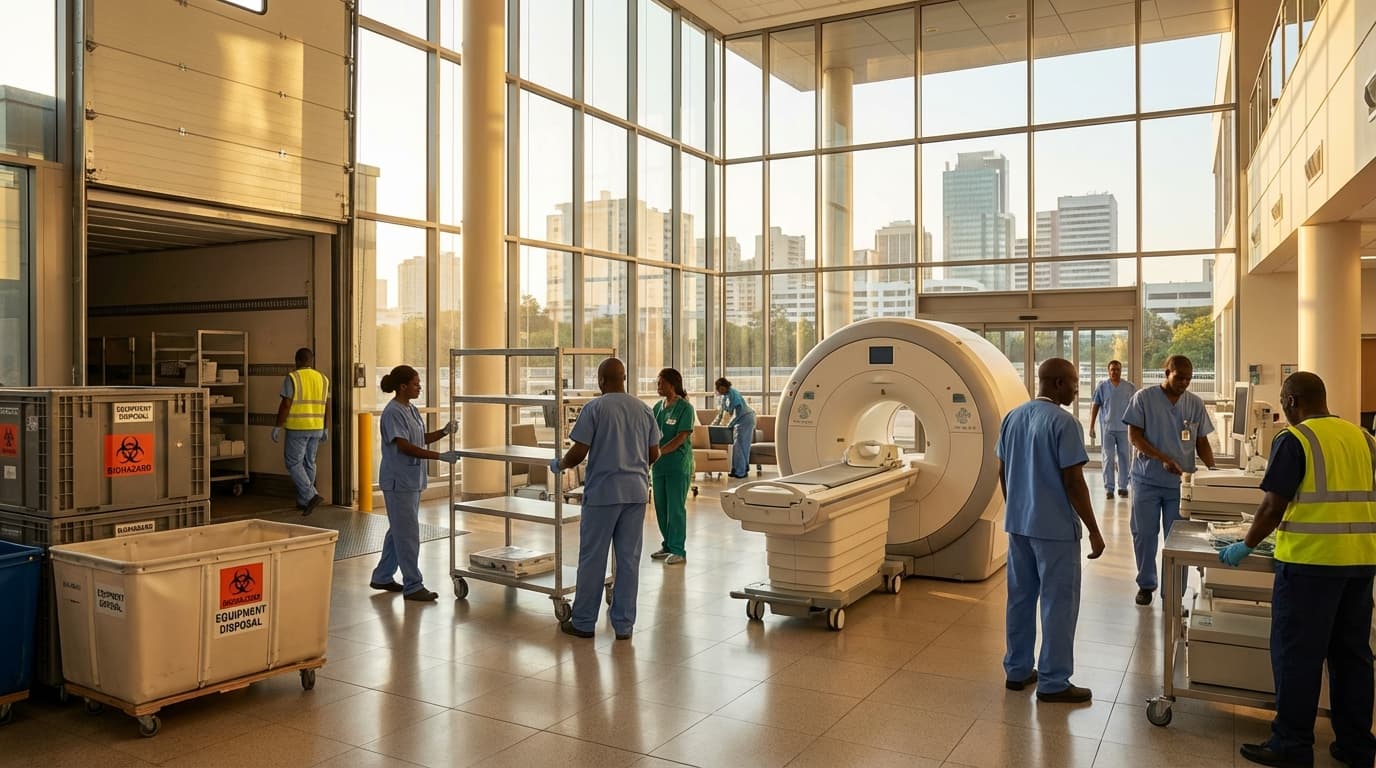
Site Restoration Service After Equipment Removal in Gambia
Engineering Excellence & Technical Support
Site Restoration Service After Equipment Removal High-standard technical execution following OEM protocols and local regulatory frameworks.
Precision Excavation & Decontamination
Leveraging advanced geotechnical analysis and specialized equipment, we meticulously excavate contaminated soil and debris generated by equipment removal. Our process ensures complete removal of hazardous materials, preventing long-term environmental impact and safeguarding local groundwater resources.
Native Species Re-vegetation & Soil Stabilization
We employ a data-driven approach to select and re-introduce native Gambian flora, crucial for restoring ecological balance and biodiversity. This also includes advanced soil stabilization techniques to prevent erosion and create a sustainable, self-sufficient ecosystem post-restoration.
Community Engagement & Compliance Assurance
Our commitment extends beyond technical execution. We actively involve local Gambian communities in the restoration process, fostering knowledge transfer and ensuring long-term site stewardship. Rigorous adherence to national environmental regulations guarantees successful project closure and compliance.
What Is Site Restoration Service After Equipment Removal In Gambia?
Site restoration after equipment removal in The Gambia refers to the comprehensive process of returning a disturbed land area to its pre-installation or a functionally equivalent state following the deconstruction and removal of industrial, commercial, or heavy machinery and associated infrastructure. This service is critical for environmental compliance, site reusability, and mitigating long-term ecological impacts. It encompasses a range of activities aimed at rehabilitating the land surface, subsurface, and surrounding ecosystems that may have been impacted during the equipment's operational life and subsequent removal. The objective is to prevent soil erosion, contamination, and habitat degradation, thereby ensuring the site's safety and environmental integrity for future land use.
| Who Needs Site Restoration Service? | Typical Use Cases in The Gambia |
|---|---|
| Industrial facility operators (e.g., manufacturing plants, processing facilities) | Decommissioning of agricultural processing machinery (e.g., rice mills, cashew processing units) |
| Mining and extractive industries | Removal of heavy machinery from construction sites and infrastructure projects |
| Energy sector companies (e.g., power generation, oil and gas exploration) | Decommissioning of port and harbor equipment (e.g., cranes, conveyor systems) |
| Logistics and warehousing operations | Restoration of land previously occupied by vehicle maintenance depots or repair workshops |
| Government agencies responsible for public infrastructure | Removal of outdated or obsolete equipment from public facilities |
Key Components of Site Restoration After Equipment Removal
- Site Assessment and Planning: Initial evaluation of the site's condition, identification of contamination, and development of a detailed restoration plan based on regulatory requirements and site-specific challenges.
- Decontamination and Waste Management: Removal and proper disposal of residual chemicals, oils, lubricants, and any hazardous materials associated with the equipment and its operation. This can include soil and groundwater remediation.
- Surface Reinstatement: Repair of physical damage to the land surface, including filling excavations, leveling uneven terrain, and restoring original topography where feasible.
- Soil Stabilization and Erosion Control: Implementation of measures to prevent soil loss due to wind and water, such as regrading, revegetation, mulching, and the installation of erosion control blankets.
- Revegetation and Landscaping: Reintroduction of native or appropriate vegetation to re-establish ground cover, improve aesthetics, and support local biodiversity.
- Demolition and Disposal of Ancillary Structures: Removal and responsible disposal of foundations, support structures, pipelines, and other infrastructure associated with the removed equipment.
- Monitoring and Verification: Post-restoration monitoring to ensure the effectiveness of the implemented measures and compliance with regulatory standards.
Who Needs Site Restoration Service After Equipment Removal In Gambia?
Site restoration services are crucial after equipment removal in Gambia for a variety of entities that have had heavy machinery, industrial components, or other operational equipment taken off their premises. This process is essential for returning the land to a safe, usable, and environmentally sound condition, often to meet regulatory requirements, prepare for new developments, or simply reclaim the space. The need for these services spans both the public and private sectors, with specific departments within larger organizations also being key clients.
| Customer Type | Specific Departments Involved | Reasons for Requiring Restoration |
|---|---|---|
| Industrial Facilities and Factories | Operations, Facilities Management, Environmental Health & Safety (EHS) | Removing old machinery, decommissioning production lines, preparing for upgrades or sale of the property. |
| Mining and Extraction Companies | Operations, Environmental Management, Reclamation Teams | Closing mine sites, removing large-scale mining equipment, restoring land after mineral extraction. |
| Construction Companies | Project Management, Site Operations, Decommissioning Teams | Clearing temporary construction equipment, demolishing temporary structures, preparing sites for handover or new construction. |
| Oil and Gas Companies | Facilities Engineering, Environmental Compliance, Asset Retirement | Decommissioning rigs, removing processing equipment, restoring well sites or refinery areas. |
| Agricultural Operations | Farm Management, Estate Management | Removing large agricultural machinery, old storage facilities, or irrigation systems. |
| Government Agencies and Municipalities | Public Works, Environmental Protection Agencies, Land Management Departments | Clearing redundant infrastructure (e.g., old government depots), restoring land after public works projects, managing leased government land. |
| Real Estate Developers | Development, Project Management, Site Acquisition | Acquiring land with existing industrial or commercial equipment that needs removal, preparing sites for new residential or commercial builds. |
| Utility Companies | Operations, Infrastructure Management, Environmental Services | Removing retired power generation equipment, decommissioning substations, clearing old transmission infrastructure sites. |
Target Customers and Departments Requiring Site Restoration
- Industrial Facilities and Factories
- Mining and Extraction Companies
- Construction Companies
- Oil and Gas Companies
- Agricultural Operations
- Government Agencies and Municipalities
- Real Estate Developers
- Utility Companies
Site Restoration Service After Equipment Removal Process In Gambia
This document outlines the workflow for site restoration services following equipment removal in Gambia. Our comprehensive process ensures a smooth transition from initial contact to successful site remediation, adhering to all relevant environmental and safety standards.
| Phase | Description | Key Activities | Deliverables | Typical Timeline (Gambia Context) |
|---|---|---|---|---|
| Inquiry & Initial Assessment | Client contacts us to discuss site restoration needs post-equipment removal. | Receive inquiry, gather preliminary information on site size, equipment type, and desired outcome. | Initial understanding of project scope. | 1-2 Business Days |
| Proposal & Agreement | Based on initial assessment, we prepare a detailed proposal outlining scope, methods, timeline, and costs. | Site visit (optional for remote assessment), detailed cost breakdown, service level agreement (SLA) creation. | Formal Proposal, Signed Contract/Agreement. | 3-7 Business Days |
| Site Survey & Planning | Comprehensive assessment of the site to identify specific restoration requirements. | Detailed site mapping, soil testing, identification of existing infrastructure, hazard assessment, development of a detailed restoration plan. | Detailed Site Survey Report, Restoration Plan. | 5-10 Business Days |
| Permitting & Approvals | Securing necessary permits and approvals from Gambian authorities. | Liaising with relevant ministries (e.g., Environment, Land), application submission, follow-up. | Approved Permits and Licenses. | Varies greatly (7-30+ Business Days, depending on authorities) |
| Equipment Removal | The client is responsible for the safe and complete removal of all equipment. | Confirmation of equipment removal completion. | Client confirmation of equipment removal. | Pre-requisite for restoration |
| Site Preparation & Demolition | Clearing the site of any remaining debris and structures related to the removed equipment. | Removal of foundations, concrete pads, pipelines, temporary structures, and general debris. | Cleared site ready for further remediation. | 2-5 Business Days (depending on site complexity) |
| Hazardous Material Abatement | Identification and safe removal of any hazardous materials present due to equipment operation or storage. | Testing for contaminants (e.g., oil, chemicals), safe containment and disposal of identified hazardous substances. | Certified hazardous material removal documentation. | 3-7 Business Days (if hazardous materials are present) |
| Soil Remediation & Contaminant Removal | Addressing any soil contamination resulting from spills or leaks. | Excavation and off-site treatment/disposal of contaminated soil, in-situ treatment methods (if feasible). | Clean soil reports, waste manifests. | 5-15 Business Days (depending on contamination levels) |
| Ground Leveling & Grading | Restoring the site to a safe and functional ground level. | Removal of uneven surfaces, filling of holes, grading for proper drainage to prevent erosion. | Levelled and graded site. | 2-4 Business Days |
| Waste Disposal & Recycling | Ensuring all removed materials are disposed of or recycled responsibly. | Segregation of waste, transportation to approved landfills or recycling facilities. | Waste disposal receipts, recycling certificates. | Concurrent with other phases |
| Revegetation & Landscaping | Restoring vegetation cover to prevent erosion and enhance the site's appearance. | Soil amendment, planting of native species (grasses, shrubs, trees), mulching. | Planted and established vegetation (initial stage). | 3-7 Business Days (planting phase, establishment takes longer) |
| Final Inspection & Sign-off | A joint inspection to confirm all restoration objectives have been met. | Walk-through with client and relevant authorities, addressing any minor outstanding issues. | Final Restoration Certificate, Project Completion Sign-off. | 1-2 Business Days |
| Post-Restoration Monitoring | Follow-up assessments to ensure the long-term success of the restoration efforts. | Periodic site visits to monitor vegetation health, erosion control, and soil stability. | Monitoring reports. | As per agreement (e.g., 3-6 months) |
Site Restoration Service Workflow
- Inquiry & Initial Assessment
- Proposal & Agreement
- Site Survey & Planning
- Permitting & Approvals
- Equipment Removal (Pre-requisite)
- Site Preparation & Demolition
- Hazardous Material Abatement (if applicable)
- Soil Remediation & Contaminant Removal
- Ground Leveling & Grading
- Waste Disposal & Recycling
- Revegetation & Landscaping
- Final Inspection & Sign-off
- Post-Restoration Monitoring
Site Restoration Service After Equipment Removal Cost In Gambia
Restoring a site after equipment removal in Gambia involves various factors that influence the final cost. The process typically includes clearing debris, leveling the ground, re-vegetation, and any necessary landscaping. The scale of the operation, the type of equipment removed, the condition of the site post-removal, and the desired end-state of the restoration all play a significant role in pricing. Companies offering these services will assess the complexity and duration of the project to provide an accurate quote. Local labor costs, material availability, and disposal fees for removed equipment and debris are also key determinants. Accessibility of the site can also impact logistics and therefore cost.
| Restoration Scope | Estimated Cost Range (GMD) | Notes |
|---|---|---|
| Basic Debris Clearance and Leveling (Small Site) | 15,000 - 40,000 | Focus on removing loose debris and rough leveling. |
| Standard Site Restoration (Medium Site) | 40,000 - 100,000 | Includes debris removal, professional leveling, and basic re-seeding. |
| Comprehensive Site Restoration (Large Site) | 100,000 - 300,000+ | Involves extensive debris management, advanced leveling, professional landscaping, and potentially soil remediation. |
| Specialized Restoration (e.g., contaminated soil) | Variable (Highly dependent on scope) | Costs will increase significantly due to specialized testing and remediation techniques. |
| Additional Landscaping/Re-vegetation | 10,000 - 50,000+ | Depends on the type of plants, complexity of design, and area to be covered. |
Key Pricing Factors for Site Restoration in Gambia:
- Site Size and Scale of Restoration:
- Type and Volume of Debris:
- Ground Condition and Leveling Requirements:
- Re-vegetation and Landscaping Needs:
- Accessibility of the Site:
- Material and Labor Costs:
- Disposal Fees:
- Permits and Environmental Compliance:
- Urgency of the Restoration:
Affordable Site Restoration Service After Equipment Removal Options
After equipment removal, site restoration is a crucial step. This process ensures the land is returned to a safe, functional, and aesthetically pleasing state. Our affordable site restoration service offers flexible options to meet your budget and project needs. We focus on providing value through expertly bundled services and strategic cost-saving measures, minimizing your overall expenditure without compromising on quality or environmental responsibility.
| Cost-Saving Strategy | Description | Benefit |
|---|---|---|
| Bulk Material Disposal Coordination | We consolidate and coordinate the removal of all site debris, including concrete, asphalt, and metal, to optimize transportation costs and reduce tipping fees. | Lower waste disposal expenses and fewer trips to the landfill. |
| Strategic Resource Allocation | Our experienced team meticulously plans the restoration process, ensuring the right equipment and personnel are deployed efficiently, minimizing idle time and unnecessary labor. | Reduced labor costs and faster project completion. |
| Native and Drought-Resistant Plant Selection | For revegetation, we prioritize local, native, and drought-resistant species that require less water, maintenance, and are better suited to the local climate. | Lower long-term maintenance costs and improved ecological sustainability. |
| Phased Restoration Planning | If your site is large or has multiple stages of equipment removal, we can implement a phased restoration approach, allowing you to budget and manage costs incrementally. | Improved cash flow management and more controlled spending. |
| Reclamation of Usable Materials | Where feasible, we identify and reclaim materials like topsoil or gravel that can be reused on-site or repurposed, reducing the need for new material purchases. | Reduced material procurement costs. |
| Preventative Erosion Control | Implementing cost-effective erosion control measures early on prevents more expensive damage and remediation later. | Avoidance of costly repairs due to erosion and sediment runoff. |
Value Bundles for Site Restoration
- Basic Cleanup Bundle: Ideal for minor disturbance sites. Includes debris removal, basic grading, and seeding/sodding of the affected area.
- Standard Restoration Bundle: Suitable for moderate equipment removal. Encompasses thorough debris and material removal, site leveling, soil amendment, erosion control measures, and reseeding/resodding.
- Comprehensive Environmental Bundle: For sites requiring detailed remediation. Includes all elements of the Standard Bundle, plus soil testing, hazardous material identification and removal, and advanced revegetation techniques.
- Customizable Bundles: We can tailor packages to your specific requirements, combining services from different bundles to create the most cost-effective solution for your unique site.
Verified Providers In Gambia
Navigating the healthcare landscape in any country can be challenging, and for those seeking reliable medical services in The Gambia, identifying verified and reputable providers is paramount. Franance Health stands out as a leading example of such a provider, distinguished by its commitment to quality, patient-centered care, and adherence to stringent credentials. This document outlines why choosing Franance Health, with its verified credentials, represents the best option for your healthcare needs in The Gambia.
| Provider Aspect | Verification Requirement | Franance Health's Commitment |
|---|---|---|
| Licensing and Permits | Mandatory government-issued licenses for all facilities and practitioners. | Franance Health operates with all necessary and up-to-date licenses from the Gambian Ministry of Health. |
| Medical Staff Expertise | Demonstrable qualifications, registrations, and ongoing professional development. | Franance Health employs a team of highly skilled and continuously trained medical professionals, including specialists in various fields. |
| Quality Assurance | Implementation of internal quality control measures and adherence to best medical practices. | Franance Health has established robust internal quality assurance systems and actively pursues the adoption of international best practices. |
| Patient Rights and Confidentiality | Respect for patient autonomy, informed consent, and strict adherence to confidentiality. | Franance Health places a high priority on upholding patient rights, ensuring informed consent, and maintaining absolute confidentiality. |
| Infrastructure and Facilities | Safe, clean, and well-equipped facilities conducive to quality healthcare. | Franance Health's facilities are designed to be modern, safe, and equipped with necessary medical infrastructure. |
Key Credentials of Verified Providers in The Gambia (and Franance Health's Strengths)
- Accreditation and Licensing: Verified providers will possess valid licenses from the Gambian Ministry of Health and other relevant regulatory bodies. Franance Health ensures all its facilities and medical professionals are fully licensed and compliant.
- Professional Qualifications of Staff: Medical personnel should hold recognized degrees, certifications, and be registered with their respective professional councils. Franance Health employs highly qualified and experienced doctors, nurses, and specialists.
- Adherence to International Standards: Leading healthcare institutions often align with or are accredited by international quality standards (e.g., ISO certifications, JCI accreditation). While JCI accreditation might be aspirational for many in The Gambia, Franance Health demonstrates a commitment to implementing best practices that mirror international quality benchmarks.
- Patient Safety Protocols: Robust protocols for infection control, medication management, and patient identification are crucial. Franance Health prioritizes patient safety through comprehensive and regularly updated protocols.
- Transparent Fee Structures and Billing: Patients should be able to understand the costs of services clearly. Franance Health is committed to transparent billing practices.
- Positive Patient Feedback and Testimonials: A history of positive patient experiences and testimonials is a strong indicator of quality care. Franance Health consistently receives positive feedback for its compassionate and effective services.
- Investment in Technology and Equipment: Up-to-date medical technology and equipment are essential for accurate diagnosis and effective treatment. Franance Health invests in modern medical equipment to enhance diagnostic and treatment capabilities.
Scope Of Work For Site Restoration Service After Equipment Removal
This Scope of Work (SOW) outlines the requirements for site restoration services following the complete removal of specified equipment from the designated project site. The objective is to return the site to a safe, functional, and aesthetically acceptable condition, meeting all relevant environmental and regulatory standards. This SOW details the tasks to be performed, the technical deliverables expected, and the standard specifications to be adhered to.
| Task Description | Scope of Work Details | Technical Deliverables | Standard Specifications/References |
|---|---|---|---|
| Equipment Demolition & Removal | Complete dismantling and removal of all above-ground and below-ground equipment, including but not limited to: structures, foundations, concrete pads, piping, cabling, anchors, and any associated appurtenances. Safe disconnection of utilities. | Detailed equipment removal log. Photographic documentation of pre- and post-removal conditions. Waste manifests for disposal. | OSHA regulations for demolition and construction. Site-specific safety plan. Client-approved demolition methodology. |
| Excavation & Backfilling | Excavation and removal of all equipment foundations, anchors, and disturbed soil. Backfilling with approved fill material (e.g., native soil, crushed aggregate) and compaction to specified densities. Excavated areas to be restored to original grade or agreed-upon final elevation. | Compaction test reports (e.g., ASTM D1556, D698, D2922). As-built drawings showing final grades. Soil analysis reports for fill material. | ASTM D1556 (Standard Test Method for Density of Soil In-Place by the Sand-Cone Method). ASTM D698 (Standard Test Methods for Laboratory Compaction Characteristics of Soil Using Modified Effort). Local soil and grading ordinances. |
| Surface Restoration | Repair or replacement of damaged concrete, asphalt, or other surface materials. This may include patching, overlaying, or complete reconstruction as necessary to match existing conditions. | Photographic documentation of repairs. Material certifications for repair materials. As-built drawings of repaired areas. | Relevant ASTM standards for concrete and asphalt repair. Manufacturer's specifications for repair materials. Local public works standards. |
| Soil Stabilization & Erosion Control | Implementation of measures to prevent soil erosion and ensure long-term site stability. This may include grading, seeding, mulching, or other approved erosion control methods. | Erosion control plan. Photographic documentation of installed measures. Inspection reports on effectiveness. | EPA guidelines for erosion control. Local stormwater management regulations. BMPs (Best Management Practices) for erosion and sediment control. |
| Waste Management & Disposal | Proper segregation, transportation, and disposal of all removed equipment, debris, and contaminated materials in accordance with all applicable regulations. This includes hazardous and non-hazardous waste. | Waste disposal manifests. Hazardous waste determination documentation. Certificates of disposal from licensed facilities. | RCRA (Resource Conservation and Recovery Act) regulations. State and local environmental regulations. DOT (Department of Transportation) regulations for hazardous material transport. |
| Final Grading & Site Cleanup | Final grading to ensure proper drainage and to match the surrounding topography. Removal of all construction debris, tools, and equipment. Site to be left in a clean and orderly condition. | Final site inspection report. Photographic documentation of the completed site. | Local grading ordinances. Client-specific site cleanup requirements. |
| Vegetation Establishment (If Applicable) | Re-establishment of vegetation in disturbed areas using specified seed mixes, sod, or other approved methods to achieve a uniform and healthy ground cover. | Seed mix certifications. Documentation of planting dates and methods. Vegetation coverage reports. | Local horticultural standards. Client-approved seed mixes and planting techniques. |
Key Objectives of Site Restoration
- Removal of all residual equipment components, including foundations, anchors, piping, and cabling.
- Backfilling and compaction of any excavated areas to original grade or specified elevations.
- Repair or replacement of damaged surfaces, including concrete, asphalt, or natural ground cover.
- Stabilization of soil to prevent erosion and ensure long-term integrity.
- Disposal of all removed materials in accordance with local, state, and federal regulations.
- Final site grading and surface restoration to match surrounding undisturbed areas.
- Vegetation establishment or re-establishment where applicable and specified.
- Compliance with all environmental protection measures and permits.
Service Level Agreement For Site Restoration Service After Equipment Removal
This Service Level Agreement (SLA) outlines the response times and uptime guarantees for site restoration services provided by [Your Company Name] after the removal of [Specify Equipment Type, e.g., telecommunications equipment, solar panels, construction machinery] from customer sites. This SLA aims to ensure a prompt and efficient restoration process, minimizing disruption and maintaining the integrity of the site.
| Service Component | Severity Level | Response Time (during Business Hours) | Response Time (outside Business Hours) | Restoration Completion Time Guarantee |
|---|---|---|---|---|
| Site Restoration Initiation Post-Equipment Removal | Critical (e.g., significant safety hazard, major environmental impact) | 1 Hour | 2 Hours | 48 Hours |
| Site Restoration Initiation Post-Equipment Removal | High (e.g., significant disruption to site usability, visual blight) | 4 Hours | 8 Hours | 72 Hours |
| Site Restoration Initiation Post-Equipment Removal | Medium (e.g., minor aesthetic issues, minor inconvenience) | 8 Business Hours | N/A (will be addressed during next Business Hours) | 5 Business Days |
| Remediation of Minor Surface Imperfections (post-restoration) | Standard | 24 Business Hours | N/A (will be addressed during next Business Hours) | 5 Business Days |
Key Definitions
- Site Restoration: The process of returning a site to its agreed-upon condition following the removal of equipment, which may include grading, landscaping, soil remediation, debris removal, and resurfacing.
- Equipment Removal: The physical dismantling and extraction of specified equipment from the customer's premises.
- Incident: Any event that deviates from the agreed-upon service level, including delayed response times, extended restoration periods, or failure to meet restoration standards.
- Downtime: The period during which the site is unusable or significantly impaired due to the restoration process not meeting the agreed-upon timelines or quality.
- Response Time: The maximum allowable time for [Your Company Name] to acknowledge and begin addressing a reported incident after notification.
- Restoration Completion Time: The maximum allowable time for the site restoration process to be fully completed and meet agreed-upon standards.
- Business Hours: Standard operating hours, typically Monday to Friday, 9:00 AM to 5:00 PM [Specify Time Zone], excluding public holidays.
Frequently Asked Questions

Ready when you are
Let's scope your Site Restoration Service After Equipment Removal in Gambia project in Gambia.

Scaling healthcare logistics and technical systems across the entire continent.