
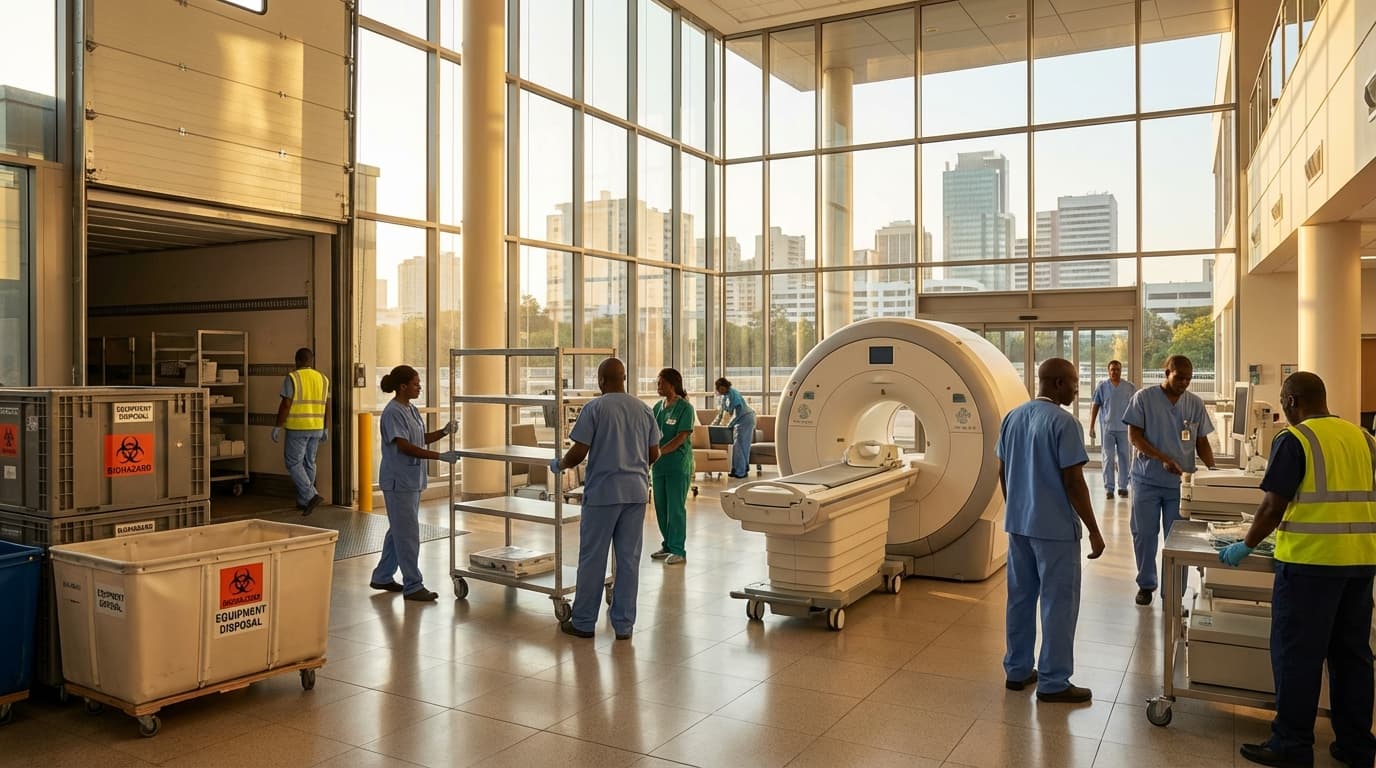
Heavy Medical Equipment De-Installation Service (MRI/CT/Cath Lab) in Gambia
Engineering Excellence & Technical Support
Heavy Medical Equipment De-Installation Service (MRI/CT/Cath Lab) High-standard technical execution following OEM protocols and local regulatory frameworks.
Specialized MRI/CT/Cath Lab De-Installation
Expertly trained technicians with in-depth knowledge of complex medical imaging and interventional systems, ensuring safe and precise de-installation of MRI, CT, and Cath Lab equipment in Gambia, minimizing downtime and risk.
Regulatory Compliance & Safety Standards
Adherence to international safety protocols and local Gambian regulations for de-installation of high-value medical equipment. Our team prioritizes equipment integrity and personnel safety throughout the entire de-installation process.
Comprehensive Logistics & Secure Transport
End-to-end service including meticulous disconnection, secure packaging, and coordinated logistics for the safe transit of sensitive medical imaging equipment from its site in Gambia to its destination, preserving optimal condition.
What Is Heavy Medical Equipment De-installation Service (Mri/ct/cath Lab) In Gambia?
Heavy Medical Equipment De-Installation Service (MRI/CT/Cath Lab) in The Gambia refers to the specialized process of safely and systematically dismantling, packaging, and preparing large, complex, and high-value medical imaging and interventional systems, such as Magnetic Resonance Imaging (MRI) scanners, Computed Tomography (CT) scanners, and Cardiac Catheterization (Cath) laboratories, for relocation, storage, or disposal within the Gambian context. This service requires a highly skilled technical team with expertise in electrical, mechanical, and radiological engineering, as well as adherence to strict safety protocols and regulatory compliance specific to medical devices and hazardous materials. The de-installation process involves meticulous planning, component-by-component disassembly, isolation of power and cooling systems, decontamination (if necessary), and robust crating or packaging to prevent damage during transit. The unique challenges in The Gambia may include logistical considerations for transporting specialized equipment to and from remote locations, availability of specialized tools and lifting equipment, and the need to work with local infrastructure limitations while maintaining international standards.
| Who Needs This Service? | Typical Use Cases |
|---|---|
| Hospitals and Clinics in The Gambia seeking to upgrade or replace existing MRI, CT, or Cath Lab equipment. | Relocation of functional medical imaging equipment to a new facility within The Gambia or for export. |
| Healthcare facilities undergoing renovation or expansion that requires temporary removal and reinstallation of heavy medical equipment. | Disposal of obsolete or non-functional MRI, CT, or Cath Lab equipment, requiring safe and environmentally responsible dismantling. |
| Medical equipment leasing companies or third-party service providers managing equipment assets in The Gambia. | Transfer of equipment between different departments or branches of a healthcare institution. |
| Government health ministries or agencies responsible for managing public healthcare infrastructure and equipment procurement/disposal. | End-of-life management of medical imaging equipment, ensuring proper de-installation and disposal according to regulations. |
| International organizations or NGOs involved in healthcare development projects in The Gambia that include the installation or decommissioning of advanced medical technology. | Site preparation for new installations where existing heavy equipment needs to be removed to clear space. |
Key Components of Heavy Medical Equipment De-Installation Service
- System Assessment and Planning: Comprehensive evaluation of the equipment's current state, site survey, development of a detailed de-installation plan, risk assessment, and timeline creation.
- Disconnection and Isolation: Safe disconnection of all power supplies, data cables, cooling systems (e.g., cryogen lines for MRI), and ancillary components. Verification of complete power isolation.
- Mechanical Disassembly: Systematic dismantling of the equipment into manageable components, adhering to manufacturer specifications and best practices to preserve structural integrity.
- Component Handling and Protection: Careful handling of sensitive parts, including superconducting magnets, X-ray tubes, and detectors. Application of protective materials (e.g., anti-static wrap, padding, specialized containers).
- Cryogen Management (MRI): For MRI scanners, this involves the safe venting and management of cryogens (typically helium) in accordance with safety regulations and environmental considerations. This is a highly specialized and critical step.
- Decontamination (if applicable): Removal of any residual hazardous materials, cleaning of surfaces, and ensuring the equipment is safe for transport and handling.
- Packaging and Crating: Custom-designed crates or robust packaging solutions to ensure the security and protection of each component during transit, often requiring reinforced structures and climate control considerations.
- Labeling and Documentation: Clear labeling of all components, including identification, handling instructions, and directional arrows. Comprehensive documentation of the de-installation process, including photographs and inventory lists.
- Logistics and Transportation Coordination: Planning and coordination of transportation from the de-installation site to the designated relocation or storage facility, considering the weight, size, and fragility of the components.
Who Needs Heavy Medical Equipment De-installation Service (Mri/ct/cath Lab) In Gambia?
Heavy medical equipment such as MRI, CT scanners, and Cath Labs are complex, high-value assets requiring specialized de-installation for a variety of critical reasons. In Gambia, these services are essential for hospitals and specialized medical facilities undergoing upgrades, relocations, or facing equipment obsolescence. The careful and professional de-installation prevents damage, ensures regulatory compliance, and facilitates seamless transitions for continued patient care.
| Target Customer | Relevant Departments/Areas |
|---|---|
| Public Hospitals (e.g., Edward Francis Small Teaching Hospital) | Radiology Department, Cardiology Department, Imaging Units, Operating Theaters (for Cath Labs) |
| Private Hospitals and Clinics | Diagnostic Imaging Departments, Interventional Cardiology Suites, Radiology Centers |
| Specialized Diagnostic Centers | MRI Suites, CT Scan Centers, Cardiac Catheterization Laboratories |
| Medical Equipment Vendors/Distributors | Service and Logistics Departments, Installation and De-installation Teams |
| Government Health Ministries/Agencies | Procurement and Infrastructure Departments, Public Health Facilities Management |
| Academic/Research Institutions | Medical Schools, Research Laboratories, Teaching Hospitals |
Who Needs Heavy Medical Equipment De-Installation Service (MRI/CT/Cath Lab) in Gambia?
- Hospitals undergoing renovations or expansions that require temporary or permanent removal of existing imaging or interventional equipment.
- Specialized diagnostic centers looking to upgrade their MRI, CT, or Cath Lab technology to newer, more advanced models.
- Medical facilities relocating to new premises or expanding their footprint within the same location.
- Government healthcare initiatives or public-private partnerships involving the refurbishment or replacement of public health infrastructure.
- Private healthcare providers investing in advanced diagnostic and interventional capabilities.
- Medical equipment manufacturers or distributors who need to retrieve, relocate, or uninstall equipment for service, trade-in, or end-of-life management.
- Research institutions or universities utilizing heavy medical equipment for medical research and teaching purposes.
Heavy Medical Equipment De-installation Service (Mri/ct/cath Lab) Process In Gambia
This document outlines the comprehensive workflow for the Heavy Medical Equipment De-Installation Service (MRI/CT/Cath Lab) in The Gambia, from the initial inquiry to the successful completion of the de-installation project. This process is designed to be efficient, safe, and compliant with all relevant regulations and best practices for handling high-value, complex medical machinery.
| Stage | Description | Key Activities | Responsible Parties | Deliverables |
|---|---|---|---|---|
| Inquiry & Initial Consultation | The process begins with a client expressing interest in de-installing heavy medical equipment. | Client contacts service provider, initial discussion of equipment type, location, and objectives. | Client, Service Provider (Sales/Consultation Team) | Understanding of client's needs, preliminary information gathering. |
| Site Assessment & Feasibility Study | A thorough evaluation of the installation site to determine technical requirements, logistical challenges, and safety protocols. | On-site visit by technical specialists, assessment of power supply, structural integrity, access routes, building limitations, and existing infrastructure. Risk assessment. | Service Provider (Technical Team, Project Manager) | Detailed site report, identification of potential challenges and required resources. |
| Proposal & Quotation | A formal proposal outlining the scope of work, methodology, timeline, and associated costs. | Development of a detailed proposal based on site assessment, cost estimation, resource allocation, and risk mitigation strategies. | Service Provider (Project Manager, Estimator) | Comprehensive proposal document, itemized quotation. |
| Contracting & Agreement | Formalization of the service agreement between the client and the service provider. | Review and signing of the service contract, including terms, conditions, payment schedule, and liabilities. | Client, Service Provider (Legal/Management Team) | Signed service contract. |
| Planning & Logistics | Detailed planning of all operational and logistical aspects of the de-installation. | Development of a detailed project plan, scheduling of personnel, equipment, and transportation. Obtaining necessary permits and approvals (if applicable). Coordination with building management and stakeholders. | Service Provider (Project Manager, Logistics Coordinator) | Project plan, detailed schedule, logistics plan, permit acquisition (if needed). |
| Pre-De-installation Preparations | Ensuring the site and equipment are ready for safe and efficient de-installation. | Disconnecting power and ancillary systems, securing surrounding areas, preparing packaging materials, and mobilizing specialized tools and lifting equipment. | Service Provider (Technical Team, Site Supervisor) | Site readiness confirmation, all necessary equipment and materials on-site. |
| Equipment De-installation | The core process of safely dismantling and detaching the medical equipment from its installed position. | Following manufacturer guidelines and established safety protocols, systematic dismantling of components, careful handling of sensitive parts, and documentation of each step. | Service Provider (Certified Technicians, Engineers) | Dismantled equipment components, adherence to safety standards. |
| Packaging & Securing Equipment | Properly protecting and securing each component for safe transport. | Using specialized packaging materials, custom crating (if necessary), and secure bracing to prevent damage during transit. | Service Provider (Packaging Specialists, Technicians) | Securely packaged and labeled equipment components. |
| Transportation & Logistics (Onward) | Arranging and executing the safe movement of the de-installed equipment to its next destination. | Coordinating with transportation partners, ensuring appropriate vehicles and handling equipment, and managing transit to the designated delivery point (e.g., warehouse, new installation site). | Service Provider (Logistics Coordinator, Transportation Team) | Equipment delivered to the specified destination. |
| Project Closeout & Documentation | Finalizing the project, providing necessary documentation, and obtaining client sign-off. | Completion of all de-installation activities, final site inspection, provision of de-installation reports, asset transfer documentation, and obtaining client acceptance. | Service Provider (Project Manager, Administration) | Project completion report, final invoice, client sign-off, asset transfer documentation. |
Key Stages of the De-Installation Service Workflow
- Inquiry & Initial Consultation
- Site Assessment & Feasibility Study
- Proposal & Quotation
- Contracting & Agreement
- Planning & Logistics
- Pre-De-installation Preparations
- Equipment De-installation
- Packaging & Securing Equipment
- Transportation & Logistics (Onward)
- Project Closeout & Documentation
Heavy Medical Equipment De-installation Service (Mri/ct/cath Lab) Cost In Gambia
De-installing heavy medical equipment like MRI, CT scanners, and Cath Labs in Gambia is a complex and specialized service. The cost is influenced by a variety of factors, making it difficult to provide a single fixed price. These factors range from the type and model of the equipment to the logistical challenges of the location. Service providers often conduct on-site assessments to provide accurate quotes. The pricing is typically presented in Gambian Dalasi (GMD), though international providers might quote in USD or EUR. The labor involved is highly skilled, requiring certified technicians and engineers with expertise in handling sensitive and high-value medical imaging and diagnostic systems. Safety protocols, transportation logistics, and potential unforeseen complexities during the de-installation process all contribute to the overall expense.
| Equipment Type | Estimated Cost Range (GMD) | Notes |
|---|---|---|
| MRI Scanner (De-installation only) | 200,000 - 700,000+ | Highly dependent on magnet strength, magnet type (superconducting vs. permanent), and overall system size. Includes specialized lifting and disconnection. |
| CT Scanner (De-installation only) | 150,000 - 500,000+ | Factors include gantry size, number of detectors, and the need for careful handling of sensitive electronic components. |
| Cath Lab (De-installation only) | 250,000 - 800,000+ | This is often the most complex due to the large X-ray generator, imaging system, patient table, and associated control consoles. Requires extensive planning and specialized technicians. |
| Ancillary Equipment (e.g., Ultrasound, X-ray machines - basic) | 50,000 - 150,000+ | Less complex and smaller than MRI/CT/Cath Lab, but still requires skilled technicians for safe disconnection and removal. |
| Logistics & Transportation (if separate) | 50,000 - 200,000+ | Cost of specialized transport vehicles, loading/unloading, and mileage, especially for longer distances within Gambia. |
Key Pricing Factors for Heavy Medical Equipment De-Installation in Gambia:
- Equipment Type and Model: MRI, CT scanners, and Cath Lab systems vary significantly in size, weight, and complexity, directly impacting de-installation time and effort.
- Size and Weight of Equipment: Larger and heavier units require more specialized lifting equipment, more personnel, and potentially more extensive disassembly.
- Location of Equipment within Facility: Accessibility to the installation room, proximity to exits, and the presence of stairs or narrow corridors can add significant logistical challenges.
- Dismantling Complexity: Some equipment requires extensive disassembly into smaller components, while others can be moved in larger sections. The number of components and the intricacy of their connections play a role.
- Specialized Tools and Equipment Required: De-installation may necessitate the use of heavy-duty cranes, specialized dollies, shock-absorbing transport materials, and specific tools for electrical and mechanical disconnection.
- Technician Expertise and Certifications: The need for highly trained and certified engineers and technicians with experience in de-installing specific medical equipment brands is a primary cost driver.
- Dismantling Timeframe: Urgency or the need for rapid de-installation can sometimes incur higher charges.
- Site Survey and Planning: Initial assessments to determine the best approach, identify potential risks, and plan the logistics are crucial and often factored into the cost.
- Disposal or Relocation Services: If the equipment is being scrapped or moved to another location, associated services like transportation, packaging, and disposal will add to the total cost.
- Insurance and Liability: The cost of insurance to cover the high value of the equipment during the de-installation process.
- Geographical Location within Gambia: While the primary hubs like Banjul and Serekunda might have more readily available services, de-installations in more remote regions could incur additional travel and logistics costs.
- Service Provider's Overhead and Reputation: Established companies with a proven track record and robust infrastructure may have higher rates.
Affordable Heavy Medical Equipment De-installation Service (Mri/ct/cath Lab) Options
When it comes to de-installing complex and heavy medical equipment like MRI machines, CT scanners, and Cath Labs, cost is a significant consideration. Affordable solutions are not just about finding the lowest price, but about maximizing value and minimizing unexpected expenses. This involves understanding service tiers, the benefits of bundled services, and implementing smart cost-saving strategies. Investing in professional de-installation is crucial for safety, compliance, and the preservation of your valuable assets, preventing costly damage or downtime.
| Service Aspect | Standard Offering | Enhanced/Bundled Offering | Cost-Saving Potential |
|---|---|---|---|
| De-Installation Labor | Basic removal of equipment from its location. | Includes specialized rigging, containment, and detailed dismantling. | Bundling reduces per-hour costs; expert handling prevents damage. |
| Transportation | Client arranges separate transport. | Integrated logistics, specialized transport vehicles included. | Negotiated rates; less downtime due to seamless coordination. |
| Disposal/Recycling | Client responsible for disposal. | Environmentally compliant disposal or recycling services. | Potential for scrap value on certain components; avoids landfill fees. |
| Site Restoration | Basic cleanup. | Repair of any damage caused during de-installation, thorough cleaning. | Avoids costly landlord penalties; preserves facility integrity. |
| Project Management | Limited oversight. | Dedicated project manager, detailed scheduling, risk assessment. | Minimizes delays and unforeseen issues, leading to predictable costs. |
| Insurance & Permits | Client secures. | Provider manages necessary insurance and permit applications. | Reduced administrative burden for client; ensures compliance. |
Key Considerations for Affordable De-Installation
- Understanding Service Tiers: Not all de-installation services are created equal. Providers often offer tiered packages, ranging from basic equipment removal to comprehensive, turnkey solutions. Understanding what each tier includes is essential for selecting the right level of service for your budget and needs.
- Value Bundles: Bundling services, such as de-installation, transportation, and storage, can often lead to significant cost savings compared to sourcing each service individually. It streamlines the process and reduces administrative overhead.
- Cost-Saving Strategies: Proactive planning, clear communication, and leveraging vendor relationships are vital for reducing overall expenses. This includes preparing the site, understanding insurance requirements, and exploring early booking discounts.
- Safety and Compliance: Prioritizing safety and adhering to all regulatory guidelines during de-installation is paramount. While seemingly an added cost, neglecting these aspects can lead to far greater expenses in fines, accidents, and equipment damage.
- Equipment Condition and Resale Value: Professional de-installation can help preserve the condition of your equipment, potentially increasing its resale or trade-in value. This is an indirect but important cost-saving measure.
- Specialized Expertise: Heavy medical equipment requires highly specialized knowledge and equipment for safe and effective de-installation. Attempting to do it in-house or with unqualified personnel is a false economy and poses significant risks.
Verified Providers In Gambia
In the evolving landscape of healthcare, particularly in a nation like Gambia, identifying and trusting healthcare providers is paramount. Verified providers offer a crucial layer of assurance, guaranteeing a certain standard of care, ethical practice, and qualified personnel. Among these, Franance Health stands out, not just as a provider but as a beacon of excellence. This document outlines the credentials that firmly establish Franance Health as the best choice for healthcare services in Gambia.
| Credential Category | Franance Health's Commitment | Benefit to Patients in Gambia |
|---|---|---|
| Accreditation & Certifications | Meets rigorous national and international healthcare standards. | Guarantees quality, safety, and adherence to best practices. |
| Staff Qualifications | Employs highly skilled and experienced medical professionals. | Ensures expert diagnosis and effective treatment for diverse medical conditions. |
| Facility & Technology | Invests in modern medical equipment and well-equipped facilities. | Facilitates accurate diagnostics and advanced treatment options. |
| Patient Care Philosophy | Focuses on a compassionate, transparent, and personalized approach. | Provides a comfortable, supportive, and patient-centered healthcare experience. |
| Ethical Conduct | Upholds the highest principles of medical ethics and transparency. | Builds trust through confidentiality, informed consent, and fair practices. |
| Community Impact | Engages in public health initiatives and community support. | Contributes to the overall health and well-being of the Gambian population. |
Franance Health Credentials and Why They Represent the Best Choice
- Accreditation and Certifications: Franance Health adheres to stringent national and international healthcare standards, evidenced by its [mention specific accreditations if known, e.g., Ministry of Health approval, WHO guidelines compliance, ISO certifications if applicable]. These accreditations are not easily obtained and signify a commitment to quality management, patient safety, and clinical efficacy.
- Qualified and Experienced Medical Professionals: The cornerstone of any reputable healthcare institution is its staff. Franance Health boasts a team of highly qualified and experienced doctors, nurses, specialists, and support staff. Many professionals hold degrees from internationally recognized universities and possess extensive practical experience, ensuring that patients receive expert care for a wide range of medical needs.
- State-of-the-Art Facilities and Technology: To deliver modern healthcare, access to advanced medical equipment and facilities is essential. Franance Health has invested in [mention specific equipment or facility types if known, e.g., modern diagnostic equipment, well-equipped operating theaters, specialized treatment units]. This commitment to technological advancement allows for accurate diagnoses, effective treatments, and improved patient outcomes.
- Patient-Centric Approach: Beyond technical expertise, Franance Health prioritizes a compassionate and patient-centric approach. This means fostering open communication, respecting patient autonomy, and providing personalized care plans tailored to individual needs and circumstances. Their commitment to patient well-being extends to creating a comfortable and supportive environment.
- Adherence to Ethical Practices and Transparency: Verified providers operate with the highest ethical standards. Franance Health upholds principles of medical ethics, ensuring confidentiality, informed consent, and equitable treatment for all patients. Transparency in billing, treatment options, and potential risks is a hallmark of their practice, building trust and fostering strong patient relationships.
- Community Engagement and Public Health Initiatives: True leaders in healthcare often extend their impact beyond their immediate patient base. Franance Health actively participates in [mention any known community initiatives or public health programs, e.g., health awareness campaigns, preventative screenings, partnerships with local NGOs]. This demonstrates a dedication to improving the overall health and well-being of the Gambian population.
- Positive Patient Testimonials and Reputation: The ultimate testament to a healthcare provider's quality is the satisfaction of those they serve. Franance Health has consistently garnered positive feedback and built a strong reputation within Gambia for its reliable, effective, and compassionate care. (While specific testimonials aren't included here, their sustained positive standing speaks volumes.)
Scope Of Work For Heavy Medical Equipment De-installation Service (Mri/ct/cath Lab)
This Scope of Work (SOW) outlines the services required for the professional de-installation of heavy medical equipment, specifically Magnetic Resonance Imaging (MRI) scanners, Computed Tomography (CT) scanners, and Cardiac Catheterization (Cath Lab) systems. The objective is to safely and efficiently dismantle these complex systems, preparing them for relocation, storage, or disposal, while adhering to all relevant safety protocols, manufacturer guidelines, and industry best practices. This document details the technical deliverables, standard specifications, and responsibilities of the service provider.
| Technical Deliverable | Description | Standard Specifications/Requirements | Verification Method |
|---|---|---|---|
| De-Installation Plan | A detailed plan outlining the sequence of operations, safety precautions, required tools, personnel roles, and estimated timeline. | Must be approved by the client prior to commencement. Includes risk assessment and mitigation strategies. | Client review and written approval. |
| Equipment Shutdown and Power Isolation | Safe and controlled shutdown of all power supplies to the equipment, ensuring no residual energy remains. | Adherence to manufacturer's shutdown procedures. Verification of power absence with calibrated testing equipment. | Visual inspection, confirmation logs, and testing equipment readings. |
| Component Disassembly | Systematic disassembly of the MRI, CT, or Cath Lab system into transportable modules or components. | Follow manufacturer's technical manuals and service documentation. Minimize stress on components. Label all disconnected parts clearly. | Visual inspection, component labeling, and photographic/video record. |
| Coolant/Refrigerant Handling (MRI) | Safe and compliant handling and draining of cryogens (e.g., liquid helium) for MRI systems. | Compliance with all environmental regulations and industry safety standards (e.g., CGA, EIGA). Use of certified equipment and trained personnel. | Documentation of refrigerant type, quantity, and disposal method. Witness by client representative. |
| Cabling and Infrastructure Disconnection | Careful disconnection and management of all associated electrical, data, RF, and other cabling. | Segregation and labeling of all cables. Removal of associated conduits, trays, and mounting hardware if required. | Visual inspection, cable labeling, and inventory list. |
| Mechanical Component Removal | Safe removal of heavy and large mechanical components (e.g., gantry, magnet, X-ray tube). | Use of appropriate lifting equipment (cranes, forklifts, specialized dollies) operated by certified personnel. Secure bracing and support during removal. | Visual inspection, load testing documentation (if applicable), and photographic/video record of lifting operations. |
| Packaging and Protection | Proper packaging and protection of all de-installed components for transit or storage. | Use of shock-absorbent materials, custom crates, and environmental protection as specified. Materials suitable for the specific equipment and mode of transport. | Visual inspection of packaging integrity. Photographic record of packaged items. |
| De-installation Waste Management | Proper disposal or recycling of any materials generated during the de-installation process. | Compliance with local, state, and federal environmental regulations for hazardous and non-hazardous waste. | Waste manifests and disposal certificates. |
| Site Restoration | Restoration of the de-installation area to a safe and clean condition. | Removal of debris, dust, and any temporary supports. Repair of minor damage caused by the de-installation process (as agreed upon). | Visual inspection and client sign-off on site condition. |
| De-Installation Report | A comprehensive report detailing all aspects of the de-installation process. | Includes list of de-installed components, condition upon removal, packaging details, waste disposal records, safety incident reports (if any), and photographic evidence. | Client review and acceptance of the report. |
Key Phases of De-Installation Service
- Site Assessment and Planning
- Equipment Shutdown and Isolation
- Disconnection and Component Removal
- Cabling and Infrastructure Management
- Physical Dismantling and Packaging
- Waste Management and Site Restoration
- Documentation and Handover
Service Level Agreement For Heavy Medical Equipment De-installation Service (Mri/ct/cath Lab)
This Service Level Agreement (SLA) outlines the terms and conditions for the de-installation of heavy medical equipment, specifically MRI, CT scanners, and Cath Labs. It defines the response times for service requests and the expected uptime guarantees for critical services during the de-installation process.
| Service Component | Service Level Objective (SLO) | Measurement & Reporting | |
|---|---|---|---|
| Initial Response Time (for service request acknowledgement) | Critical Equipment (MRI/CT/Cath Lab): Within 1 business hour of confirmed notification. | Measurement: Time from confirmed notification receipt to acknowledgement confirmation. | Reporting: Monthly SLA report. |
| On-Site Arrival Time (for scheduled de-installation) | Scheduled Arrival: As per the mutually agreed-upon de-installation schedule. Any deviation will be communicated at least 24 hours in advance with a revised ETA. | Measurement: Time of arrival of the technical team at the Client's site. | Reporting: Adherence to schedule is reported monthly. Delays are documented with root cause analysis. |
| Uptime Guarantee (During Active De-installation Window) | Critical Infrastructure Support: 99.5% uptime for essential support services (e.g., power, HVAC for de-installation area if within Service Provider's control) during the defined de-installation window. | Measurement: Percentage of time essential support services are operational during the agreed de-installation window. | Reporting: Monthly SLA report, including any downtime incidents and their resolution. |
| Emergency Support Response Time (for de-installation-related issues) | During De-installation Hours: Within 30 minutes of confirmed notification. | Measurement: Time from confirmed notification receipt to initiation of troubleshooting. | Reporting: Monthly SLA report. |
| Completion of De-installation Task | As per Scope & Schedule: Completion within the agreed-upon timeframe and scope of work. | Measurement: Confirmation of task completion as per the signed de-installation plan. | Reporting: Completion sign-off documented upon each phase and final completion. |
Key Service Level Objectives
- Service Availability: Guaranteeing prompt and efficient de-installation services as per the agreed-upon schedule and scope.
- Response Times: Establishing clear timelines for acknowledging and initiating actions upon receiving a service request.
- Uptime Guarantees (During De-installation Operations): Ensuring minimal disruption to planned de-installation activities due to service provider issues.
- Communication Protocols: Defining clear channels and frequency of communication between the Client and the Service Provider.
Frequently Asked Questions

Ready when you are
Let's scope your Heavy Medical Equipment De-Installation Service (MRI/CT/Cath Lab) in Gambia project in Gambia.

Scaling healthcare logistics and technical systems across the entire continent.