
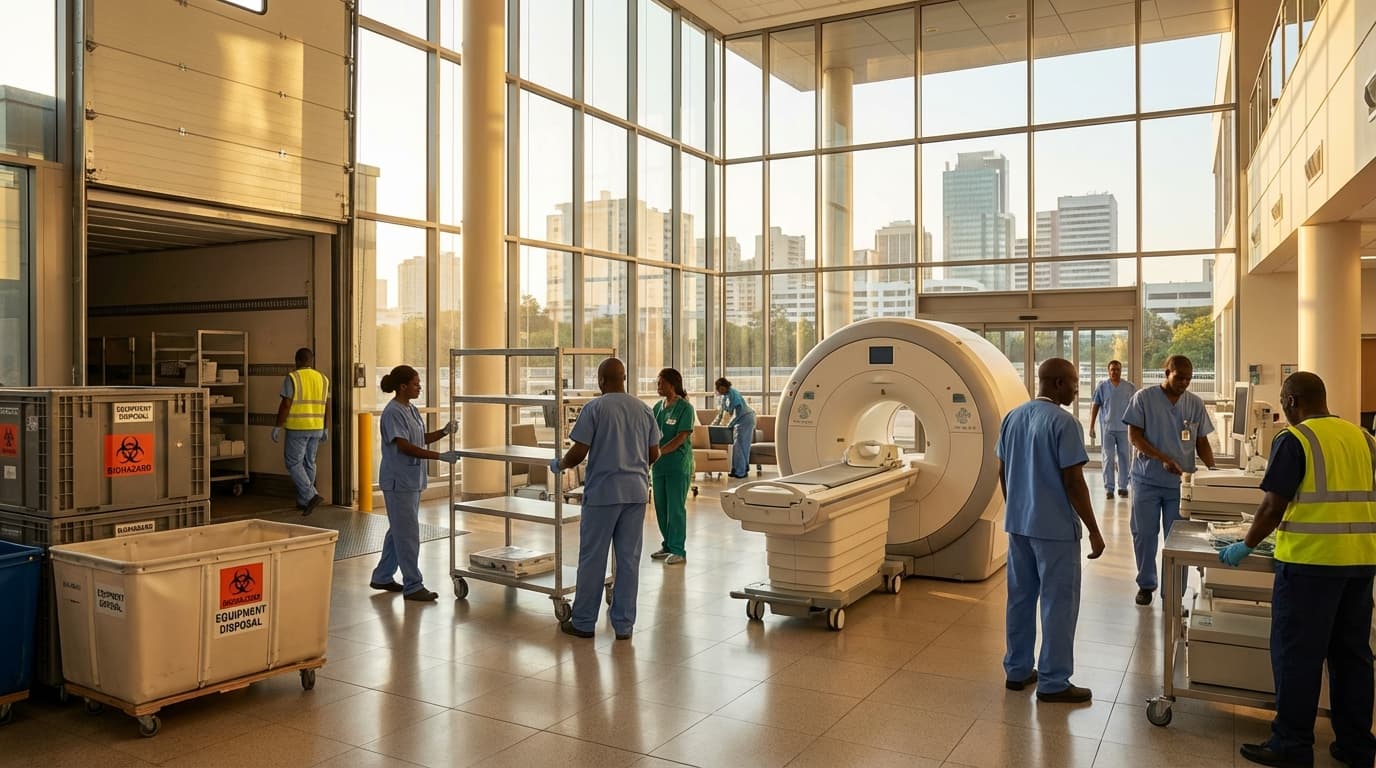
Decommissioning Service for Medical Devices in Gambia
Engineering Excellence & Technical Support
Decommissioning Service for Medical Devices High-standard technical execution following OEM protocols and local regulatory frameworks.
Specialized Decontamination & Waste Management
Our comprehensive service includes meticulous decontamination of medical devices according to international standards, ensuring complete neutralization of biohazards and hazardous materials. We then manage the responsible disposal of these components, adhering to strict environmental regulations specific to The Gambia, preventing any ecological impact.
Regulatory Compliance & Asset Tracking
We ensure full compliance with all Gambian healthcare regulations and licensing requirements for medical device decommissioning. Our robust asset tracking system provides a transparent and auditable chain of custody from initial removal to final disposal, offering peace of mind and complete documentation for your facility.
Responsible Lifecycle Management & Resource Recovery
Beyond disposal, we implement environmentally sound practices to maximize resource recovery. Where feasible, we facilitate the safe salvaging of reusable parts and the recycling of materials, contributing to a circular economy and potentially offsetting decommissioning costs, while always prioritizing the responsible retirement of obsolete or non-functional medical equipment.
What Is Decommissioning Service For Medical Devices In Gambia?
Decommissioning service for medical devices in The Gambia refers to the systematic and safe process of retiring a medical device from active clinical use. This involves a series of technical, administrative, and environmental procedures designed to ensure that the device is no longer operational, its data is securely managed, and its disposal or repurposing adheres to regulatory and environmental standards. The primary objective is to prevent unauthorized use, protect patient data, and mitigate any potential health or environmental hazards associated with the device.
| Who Needs Decommissioning Service | Typical Use Cases | |||||
|---|---|---|---|---|---|---|
| Healthcare Facilities: Hospitals, clinics, diagnostic centers, and private medical practices operating in The Gambia that have medical devices reaching the end of their operational lifespan or are being upgraded/replaced. | Medical Device Manufacturers/Distributors: Companies in The Gambia that have returned, recalled, or obsolete medical devices that require proper disposal. | Government Health Agencies: For devices managed by public health programs or held in centralized storage that are no longer required or are outdated. | Research Institutions: Facilities utilizing medical devices for research purposes that have concluded their studies and need to dispose of equipment. | Financial Institutions (Leasing Companies): Companies that lease medical equipment and need to manage the end-of-lease disposal of devices. | ||
| End-of-Life Devices: Devices that have reached their projected lifespan, are no longer functional, or are prohibitively expensive to repair. | Technology Upgrades: Replacement of older medical technology with newer, more advanced systems (e.g., upgrading from older X-ray machines to digital radiography). | Facility Relocation or Closure: When a healthcare facility or department is being moved or shut down, all associated medical equipment must be decommissioned. | Regulatory Changes: Devices that no longer meet current safety or efficacy standards mandated by regulatory bodies. | Data Security Incidents: Devices containing sensitive patient data that are no longer in use and need to have that data irretrievably removed. | Repurposing of Devices: While less common for true decommissioning, sometimes devices are retired from primary use and slated for training or educational purposes after proper disablement and data removal. | Product Recalls: Devices that have been recalled by the manufacturer due to safety concerns. |
Key Components of Medical Device Decommissioning:
- Data Sanitization/Destruction: Secure erasure or physical destruction of all sensitive patient and operational data stored on the device. This is critical for compliance with data privacy regulations.
- Functional Disablement: Rendering the device permanently inoperable through physical or logical means, preventing any subsequent activation or use.
- Decontamination: Thorough cleaning and disinfection of the device to remove biohazardous materials or contaminants, especially for devices that came into contact with patients.
- Asset Management Update: Updating inventory records to reflect the device's retired status, including its disposal method and date.
- Environmental Disposal/Recycling: Managing the end-of-life of the device in an environmentally responsible manner, adhering to local and international regulations for e-waste and hazardous materials.
- Documentation: Maintaining comprehensive records of the entire decommissioning process, including evidence of data destruction and disposal.
- Regulatory Compliance Verification: Ensuring that all decommissioning activities meet the requirements of relevant national (e.g., Ministry of Health and Social Welfare regulations) and international standards.
Who Needs Decommissioning Service For Medical Devices In Gambia?
Decommissioning services for medical devices in The Gambia are essential for organizations and departments responsible for the safe and compliant disposal of end-of-life or obsolete medical equipment. This ensures patient safety, environmental protection, and adherence to regulatory standards. The primary consumers of these services are entities that utilize and manage medical devices throughout their lifecycle. This includes both public and private healthcare providers, as well as organizations involved in medical equipment management and disposal.
| Department/Unit | Specific Decommissioning Needs | Key Concerns |
|---|---|---|
| Radiology/Imaging | X-ray machines, CT scanners, MRI machines, ultrasound equipment | Radiation safety, data security (imaging data), proper disposal of hazardous components |
| Surgery/Operating Theatres | Surgical instruments, anesthesia machines, patient monitors, electro-surgical units | Sterilization protocols, biohazard waste management, data security (patient vital signs) |
| Intensive Care Units (ICUs) / Critical Care | Ventilators, defibrillators, advanced patient monitoring systems | High-sensitivity equipment, data integrity, environmental considerations |
| Laboratory Services | Blood analyzers, microscopes, centrifuges, PCR machines | Chemical and biological waste disposal, hazardous material handling |
| Pharmacy | Compounding equipment, automated dispensing systems | Chemical residue management, data security (prescription information) |
| Sterilization & Central Sterile Supply Department (CSSD) | Autoclaves, sterilizers | Disposal of internal components and chemicals |
| Biomedical Engineering Department | Internal maintenance and repair teams, asset management | Oversight of decommissioning process, inventory management, regulatory compliance |
| Administration/Procurement | Asset tracking, contract management for decommissioning services | Budgeting, vendor selection, compliance documentation |
| IT Department (in healthcare settings) | Medical devices with integrated IT systems (e.g., EKG machines, patient monitors with connectivity) | Data sanitization and secure deletion of patient data |
Target Customers and Departments in The Gambia Requiring Medical Device Decommissioning Services:
- {"title":"Hospitals (Public & Private)","description":"Hospitals are the largest consumers of medical devices and therefore have a significant need for decommissioning services. This includes all departments within a hospital setting."}
- {"title":"Clinics & Health Centers","description":"Smaller healthcare facilities, including rural clinics and urban health centers, also manage medical devices that require proper decommissioning as they age or become non-functional."}
- {"title":"Diagnostic Laboratories","description":"Laboratories that utilize specialized medical equipment for diagnostic purposes will need decommissioning services for these devices."}
- {"title":"Medical Research Institutions","description":"Organizations involved in medical research that employ various medical devices will require decommissioning when equipment is no longer needed or has reached its end of life."}
- {"title":"Government Health Ministries/Agencies","description":"National health authorities responsible for overseeing healthcare infrastructure, procurement, and disposal policies will engage decommissioning services for centrally managed or disposed of equipment."}
- {"title":"Medical Equipment Suppliers & Distributors (for returns/obsolete stock)","description":"Companies that supply and distribute medical devices may require decommissioning services for returned, damaged, or obsolete stock they no longer intend to sell."}
- {"title":"Non-Governmental Organizations (NGOs) involved in healthcare","description":"NGOs operating health programs or providing medical equipment in The Gambia will need decommissioning services for their deployed devices."}
Decommissioning Service For Medical Devices Process In Gambia
The decommissioning of medical devices in The Gambia involves a structured process to ensure safe, environmentally sound, and compliant disposal. This workflow outlines the typical stages from the initial inquiry to the final execution of the decommissioning service.
| Stage | Description | Key Activities | Responsible Parties | Expected Outcome |
|---|---|---|---|---|
| The process begins when a healthcare facility or organization identifies the need to decommission one or more medical devices. This involves understanding the scope, number, and types of devices. | Contacting decommissioning service providers, providing a preliminary list of devices, discussing general requirements and timelines. | Client (Healthcare Facility), Decommissioning Service Provider | Understanding of the client's needs and initial scope of work. |
| A detailed assessment of the devices and their location is crucial. This helps in planning the logistics and ensuring the safety of the decommissioning process. | On-site visit by the service provider, physical inspection of devices, verification of device models and serial numbers, assessment of accessibility and power requirements, identification of any potential hazards. | Decommissioning Service Provider (with Client's cooperation) | Accurate inventory of devices, identification of any specific challenges, confirmation of feasibility. |
| Based on the site survey and identified needs, the service provider submits a formal proposal outlining the scope of work, methodology, timelines, and associated costs. | Preparation of a detailed proposal including services offered, equipment to be used, safety protocols, disposal methods, waste management plan, and a transparent quotation. | Decommissioning Service Provider | A comprehensive proposal and a clear quotation for the decommissioning service. |
| Upon acceptance of the proposal, a formal contract is established, outlining the terms and conditions, responsibilities of each party, payment schedule, and liability. | Review and signing of the contract by both the client and the service provider, confirmation of service level agreements. | Client, Decommissioning Service Provider | A legally binding agreement defining the scope and terms of service. |
| Detailed planning of the decommissioning activities to minimize disruption to the healthcare facility's operations. | Developing a step-by-step work plan, coordinating with the client for access and operational downtime, scheduling personnel and equipment, obtaining any necessary permits. | Decommissioning Service Provider (in collaboration with Client) | A finalized schedule and a detailed operational plan. |
| Ensuring all necessary preparations are made before commencing on-site work, including safety checks and equipment readiness. | Gathering tools and equipment, ensuring personnel are trained and equipped with Personal Protective Equipment (PPE), communicating with facility staff about upcoming activities, securing the work area. | Decommissioning Service Provider | Readiness for safe and efficient on-site execution. |
| The core of the service, involving the safe dismantling and removal of the medical devices from the facility. | Following the planned procedure, safe dismantling of devices, proper handling of hazardous materials (if any), secure packaging for transport, removal of devices from the premises. | Decommissioning Service Provider | Safely decommissioned and removed medical devices. |
| Transporting the decommissioned devices to a designated facility for responsible disposal or recycling, adhering to environmental regulations. | Loading devices onto appropriate transport, ensuring secure transit, delivering devices to licensed recycling centers or certified disposal facilities, tracking the chain of custody. | Decommissioning Service Provider | Responsible and compliant disposal or recycling of medical devices. |
| Providing comprehensive documentation of the entire process for compliance and record-keeping purposes. | Issuing certificates of decommissioning and disposal, providing waste transfer notes, submitting reports detailing the devices decommissioned, methods used, and disposal locations. | Decommissioning Service Provider | Official records and certifications confirming the service completion and compliance. |
| Ensuring client satisfaction and addressing any outstanding concerns. | Seeking client feedback, addressing any queries or issues, providing final invoices and payment processing. | Decommissioning Service Provider, Client | Client satisfaction and closure of the service engagement. |
Decommissioning Service for Medical Devices Process in Gambia: Workflow
- Initial Inquiry and Needs Assessment
- Site Survey and Device Identification
- Proposal and Quotation
- Contractual Agreement
- Planning and Scheduling
- Pre-Decommissioning Preparation
- On-Site Execution (Dismantling & Removal)
- Transportation and Disposal/Recycling
- Documentation and Certification
- Post-Service Follow-up
Decommissioning Service For Medical Devices Cost In Gambia
Decommissioning medical devices in Gambia involves a range of costs influenced by several key factors. These services are crucial for ensuring patient safety, environmental protection, and compliance with regulations when medical equipment reaches its end-of-life. The pricing is not standardized and can vary significantly based on the complexity of the device, the service provider, and the specific requirements of the decommissioning process.
| Device Category | Estimated Cost Range (GMD) | Notes |
|---|---|---|
| Small Diagnostic Equipment (e.g., BP monitors, thermometers, basic lab equipment) | 1,500 - 5,000 | Relatively straightforward; often involves data wiping and basic disposal. |
| Mid-Range Imaging/Laboratory Equipment (e.g., X-ray machines, basic ultrasound, PCR machines) | 7,000 - 25,000 | May involve specialized handling, de-gassing, or removal of specific components. |
| Large/Complex Imaging Systems (e.g., CT scanners, MRI machines, advanced analytical instruments) | 30,000 - 150,000+ | Significant costs due to complexity, potential hazardous materials (e.g., refrigerants, magnets), and specialized disassembly/transport. |
| Ancillary Medical Equipment (e.g., hospital beds, patient lifts, basic surgical tools) | 1,000 - 7,000 | Costs depend on the volume and material type; may include metal recycling. |
Key Pricing Factors for Medical Device Decommissioning in Gambia
- Type and Complexity of the Medical Device: Larger, more complex, or highly specialized equipment (e.g., MRI machines, CT scanners, advanced laboratory analyzers) will generally incur higher decommissioning costs due to the specialized knowledge, tools, and potential for hazardous materials involved.
- Condition of the Device: Devices that are significantly damaged or contain hazardous materials (e.g., mercury, radioactive isotopes, biological contaminants) will require more extensive handling, specialized disposal, and potentially higher safety protocols, thus increasing costs.
- Decommissioning Scope: This can range from simple power-down and data wiping to complete disassembly, decontamination, and environmentally sound disposal or recycling. The more comprehensive the scope, the higher the cost.
- Transportation and Logistics: The distance from the healthcare facility to the decommissioning or disposal site, as well as the logistical challenges of moving heavy or sensitive equipment, will impact the overall price.
- Environmental Disposal/Recycling Fees: Specific fees are often associated with the proper disposal or recycling of medical waste, especially for hazardous components. These fees are determined by licensed waste management facilities.
- Data Security and Destruction: For devices containing patient data, the cost of secure data erasure or physical destruction of storage media needs to be factored in, ensuring compliance with privacy regulations.
- Certification and Documentation: Some clients may require certificates of decommissioning or disposal. The process of generating and providing this documentation can add to the service cost.
- Service Provider's Overhead and Expertise: Different companies will have varying operational costs, insurance, and levels of trained personnel. More experienced and certified providers may command higher rates.
- Regulatory Compliance: Adherence to Gambian environmental and health regulations is mandatory and can influence the required procedures and, consequently, the cost.
Affordable Decommissioning Service For Medical Devices Options
Decommissioning medical devices is a critical and often overlooked aspect of healthcare facility management. It involves safely removing, storing, and disposing of or transferring outdated, broken, or replaced medical equipment while ensuring compliance with regulatory standards and protecting sensitive patient data. Finding affordable decommissioning services is crucial to managing operational budgets effectively. This often involves exploring various options that offer value through well-defined service packages and strategic cost-saving measures.
| Decommissioning Option | Description | Value Proposition | Potential Cost Savings |
|---|---|---|---|
| Standard Decommissioning Package | Includes basic services like physical removal, asset tagging, and eco-friendly disposal/recycling of non-sensitive equipment. | Provides a baseline for compliance and environmental responsibility at a predictable cost. | Lower upfront cost compared to comprehensive services. Bulk discounts may apply. |
| Data Sanitization & Destruction Bundle | Combines standard decommissioning with certified data wiping (e.g., DoD 5220.22-M) or physical destruction for devices containing patient data. | Ensures HIPAA compliance and protects against data breaches, mitigating significant legal and reputational risks. | Prevents costly data breach remediation and fines. Bundling often offers a discount over separate data destruction services. |
| Asset Recovery & Resale Service | Includes secure decommissioning, data sanitization, and assessment of working devices for resale or donation, with revenue sharing. | Offsets decommissioning costs through the value recovered from functional equipment. | Potential for significant cost reduction or even a net gain, depending on the value of the assets. |
| On-Demand & Project-Based Service | Flexible service for specific projects or irregular decommissioning needs, tailored to the scope and timeline. | Cost-effective for smaller or infrequent decommissioning tasks, avoiding long-term contract commitments. | Pay only for the services needed, avoiding overhead of a dedicated internal team or a large retainer. |
| Managed Decommissioning Program | Comprehensive, ongoing service for all decommissioning needs, including regular audits, reporting, and lifecycle management. | Provides consistent compliance, operational efficiency, and strategic planning for medical device retirement. | Long-term cost savings through streamlined processes, bulk purchasing power, and proactive risk management. |
Key Considerations for Affordable Medical Device Decommissioning
- Regulatory Compliance: Ensuring all decommissioning activities adhere to HIPAA, FDA, and other relevant regulations is paramount and can avoid costly fines.
- Data Security: Protecting patient data stored on devices is non-negotiable and requires secure wiping or physical destruction methods.
- Environmental Responsibility: Choosing eco-friendly disposal or recycling methods aligns with sustainability goals and can sometimes reduce waste management costs.
- Asset Tracking and Inventory Management: Maintaining accurate records of decommissioned devices for asset management and potential resale or donation.
- Scope of Service: Clearly defining what services are included in the decommissioning package to avoid hidden costs.
Verified Providers In Gambia
In The Gambia, identifying verified healthcare providers is crucial for ensuring quality and safety. Franance Health stands out as a leading organization in this regard, not only for its rigorous vetting process but also for its commitment to elevating healthcare standards across the nation. This document outlines Franance Health's credentials and explains why they represent the best choice for patients seeking reliable medical care in The Gambia.
| Key Benefit for Patients | Franance Health's Contribution | Why it's the Best Choice |
|---|---|---|
| Trust and Reliability | Rigorous vetting and continuous monitoring of all providers. | Ensures you are treated by qualified and ethical healthcare professionals. |
| Quality Healthcare | Adherence to international standards and best practices. | Access to medical services that meet global benchmarks. |
| Patient Safety | Emphasis on safety protocols and ethical conduct during vetting. | Reduced risk of medical errors and unethical practices. |
| Improved Access to Care | Building a network of trusted providers across The Gambia. | Easier to find and access high-quality medical services when you need them. |
| Peace of Mind | A transparent and accountable healthcare network. | Confidence that your health is in capable and trustworthy hands. |
Franance Health Credentials and Standards
- {"title":"Comprehensive Provider Vetting","description":"Franance Health employs a multi-stage vetting process for all healthcare professionals and facilities wishing to join their network. This includes verification of medical licenses, professional certifications, educational background, and a thorough background check to ensure ethical practices."}
- {"title":"Adherence to International Standards","description":"The organization is committed to aligning its standards with internationally recognized healthcare best practices. This ensures that patients receive care that meets global benchmarks for quality, safety, and efficacy."}
- {"title":"Continuous Quality Monitoring","description":"Franance Health doesn't stop at initial verification. They implement ongoing quality assurance measures, including patient feedback mechanisms, regular facility audits, and performance reviews of healthcare professionals to maintain high standards."}
- {"title":"Focus on Patient Welfare","description":"A core tenet of Franance Health's mission is patient advocacy and well-being. Their verified providers are expected to demonstrate a strong commitment to patient-centered care, transparency, and ethical treatment."}
- {"title":"Partnerships with Reputable Institutions","description":"Franance Health actively collaborates with established and reputable healthcare institutions, both within The Gambia and internationally, to share knowledge, best practices, and to ensure their network is at the forefront of medical advancements."}
Scope Of Work For Decommissioning Service For Medical Devices
This Scope of Work (SOW) outlines the requirements for decommissioning services for medical devices. The objective is to ensure safe, secure, and compliant removal of medical equipment from service, including data sanitization, physical removal, and proper disposal or resale.
| Phase | Activities | Technical Deliverables | Standard Specifications/Requirements |
|---|---|---|---|
| Device identification and inventory, Site assessment, Decommissioning plan development, Risk assessment, Stakeholder coordination | Detailed inventory report, Site survey report, Approved decommissioning plan, Risk mitigation strategy, Communication plan | Accurate device identification (model, serial number, asset tag), Identification of power, network, and utility connections, Compliance with facility access protocols, Adherence to planned downtime windows. |
| Data extraction, Data wiping/destruction, Verification of data sanitization | Data sanitization certificates, Verification reports for each device | Compliance with NIST SP 800-88 Rev. 1 or equivalent standards for media sanitization, Use of certified data wiping software/hardware, Secure handling of any removable storage media. |
| Power down and disconnection, Disassembly (if required), Removal from location, Packaging and transport | Photographic evidence of device status before and after removal, Decommissioning logs, Chain of custody documentation | Safe and controlled disconnection of power and utilities, Minimizing physical damage to the device and facility, Use of appropriate lifting and transport equipment, Adherence to biohazard handling protocols if applicable. |
| Asset disposition based on condition and organizational policy, Environmental disposal for non-functional devices, Preparation for resale/refurbishment | Certificate of destruction (for disposed devices), Resale agreement/invoice (for sold devices), Refurbishment report | Compliance with EPA and local environmental regulations for electronic waste disposal, Use of certified e-waste recyclers, Functionality testing and calibration for resale/refurbishment candidates. |
| Final decommissioning report, Asset disposition tracking, Record keeping | Comprehensive final report, Digital and/or physical record archive | Auditable trail of all activities, Timely submission of all required documentation, Secure storage of records for a defined retention period. |
Key Objectives of Decommissioning Service:
- Ensure patient safety and data privacy during and after decommissioning.
- Comply with all relevant regulatory requirements (e.g., HIPAA, FDA, local environmental regulations).
- Minimize disruption to ongoing clinical operations.
- Maximize value recovery through resale or refurbishment where applicable.
- Provide auditable documentation for all decommissioning activities.
Service Level Agreement For Decommissioning Service For Medical Devices
This Service Level Agreement (SLA) outlines the guaranteed response times and uptime during the decommissioning of medical devices. It is intended to ensure a timely, secure, and compliant process, minimizing disruption to the client's operations.
| Service Component | Response Time (Business Hours) | Uptime Guarantee (Monthly) |
|---|---|---|
| Initial Contact & Issue Acknowledgment (for critical issues impacting decommissioning schedule) | 2 Hours | N/A |
| Commencement of Remediation for Critical Issues | 4 Business Hours | N/A |
| Status Updates for Ongoing Decommissioning Projects (upon client request) | 8 Business Hours | N/A |
| Scheduling of On-site Decommissioning Activities (after initial site assessment & approval) | 3 Business Days | N/A |
| Availability of Decommissioning Personnel & Equipment for Scheduled Activities | N/A | 99.5% |
| Data Sanitization Service Availability | N/A | 99.8% |
| Secure Disposal/Resale Logistics Coordination | N/A | 99.5% |
Key Definitions
- Decommissioning Service: The complete process of safely and securely removing medical devices from service, including data sanitization, physical dismantling, and disposal/resale as per regulatory requirements and client specifications.
- Downtime: Any period during which the Decommissioning Service is unavailable or significantly degraded, preventing the commencement or continuation of agreed-upon decommissioning tasks.
- Scheduled Downtime: Pre-announced periods of unavailability for planned maintenance or upgrades, communicated to the Client at least 72 hours in advance.
- Unscheduled Downtime: Any Downtime not classified as Scheduled Downtime.
- Response Time: The maximum time allowed for the service provider to acknowledge and begin addressing a reported issue or request.
- Uptime: The percentage of time the Decommissioning Service is available and operational, excluding Scheduled Downtime.
Frequently Asked Questions

Ready when you are
Let's scope your Decommissioning Service for Medical Devices in Gambia project in Gambia.

Scaling healthcare logistics and technical systems across the entire continent.