
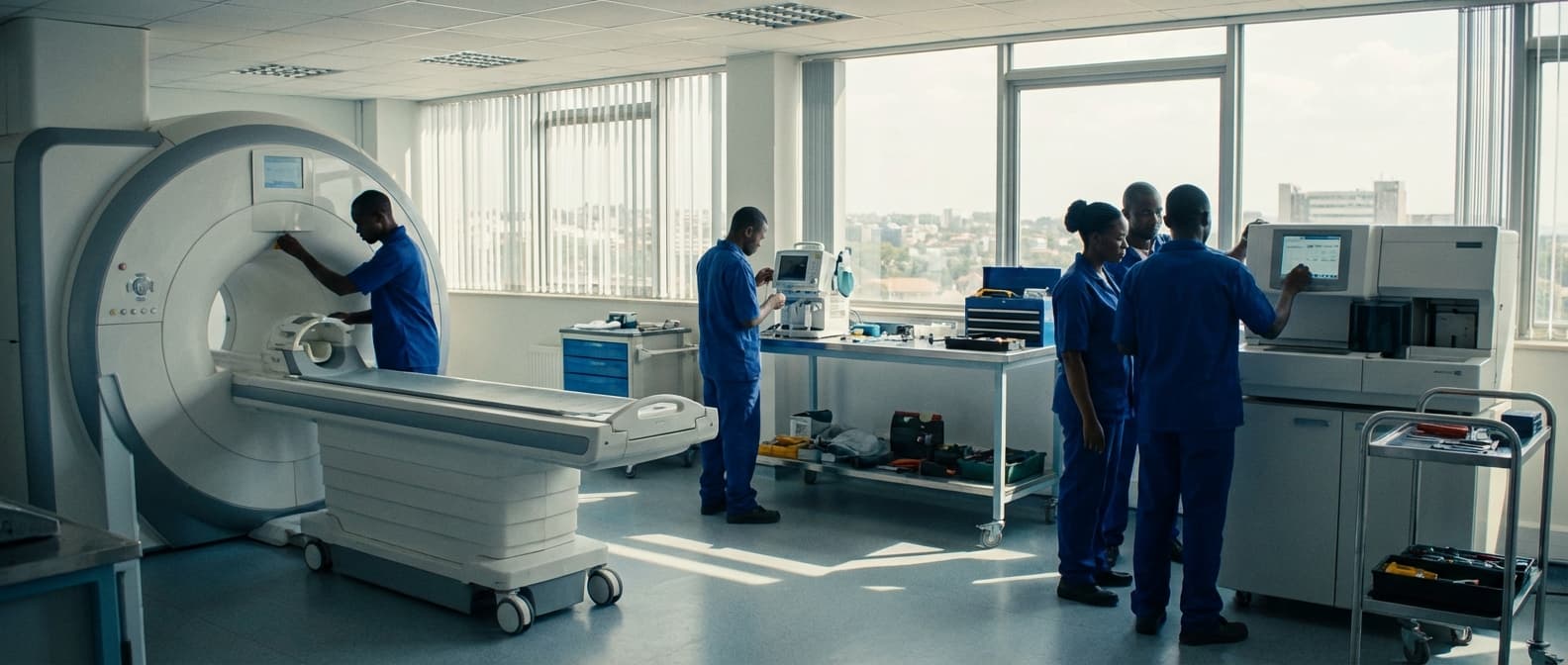
Planned Shutdown Coordination Service for Critical Equipment in Gambia
Engineering Excellence & Technical Support
Planned Shutdown Coordination Service for Critical Equipment High-standard technical execution following OEM protocols and local regulatory frameworks.
Optimized Shutdown Scheduling for Uninterrupted Operations
Leveraging advanced scheduling algorithms, our service precisely plans and coordinates critical equipment shutdowns in Gambia, minimizing downtime and ensuring business continuity for key industries.
Expert Resource Mobilization and Management
We meticulously manage the mobilization of specialized technical teams, spare parts, and equipment required for planned shutdowns, ensuring all resources are in place and aligned for efficient execution in Gambia's unique operational environment.
Risk Mitigation and Performance Enhancement
Our proactive approach identifies potential risks during planned shutdowns of critical assets in Gambia, implementing robust mitigation strategies and ensuring that maintenance activities contribute to improved long-term equipment performance and reliability.
What Is Planned Shutdown Coordination Service For Critical Equipment In Gambia?
Planned Shutdown Coordination Service for Critical Equipment in Gambia refers to a specialized operational and management function dedicated to the meticulous planning, scheduling, and execution of temporary deactivations of critical infrastructure and equipment across various sectors within The Gambia. This service is paramount for ensuring the continued reliability, safety, and efficiency of essential services by proactively addressing maintenance, upgrade, or replacement requirements. It aims to minimize disruption to ongoing operations, public services, and economic activities by carefully orchestrating these downtime periods. The service encompasses a holistic approach, integrating technical engineering assessments with logistical, safety, and stakeholder communication strategies.
| Entity/Sector | Reason for Needing the Service | Typical Use Cases |
|---|---|---|
| National Power Utility (e.g., National Water and Electricity Company - NAWEC) | Ensuring grid stability, preventing cascading failures, and facilitating upgrades to power generation, transmission, and distribution infrastructure. | Scheduled overhauls of turbines/generators, replacement of aged transmission lines, substation maintenance, installation of new grid components. |
| Water and Sanitation Authorities | Maintaining the integrity and efficiency of water treatment plants, pumping stations, and distribution networks to ensure uninterrupted supply of safe drinking water and effective wastewater management. | Cleaning and inspection of reservoirs, repair of major pipelines, upgrades to filtration systems, replacement of pump components. |
| Telecommunications Providers | Performing necessary maintenance and upgrades on base stations, data centers, and core network infrastructure to guarantee service availability and introduce new technologies. | Software updates for network equipment, hardware replacements, fiber optic cable splicing and testing, antenna system maintenance. |
| Major Industrial Facilities (e.g., Ports, Manufacturing Plants, Mining Operations) | Minimizing production downtime, ensuring the safety of personnel, and maintaining the operational readiness of critical machinery and processing units. | Overhaul of heavy machinery (cranes, conveyor belts), calibration of process control systems, inspection and repair of industrial boilers/reactors, replacement of wear parts. |
| Government Infrastructure Agencies (e.g., Road and Bridge Authorities) | Conducting essential repairs and upgrades to vital transportation arteries to ensure public safety and facilitate economic movement. | Structural inspections and repairs of bridges, resurfacing of major roadways, maintenance of traffic control systems. |
Key Components of Planned Shutdown Coordination Service:
- Scope Definition and Justification: Clearly identifying the critical equipment requiring shutdown, the rationale (e.g., preventive maintenance, corrective maintenance, upgrades, regulatory compliance), and the expected duration.
- Risk Assessment and Mitigation: Identifying potential risks associated with the shutdown (e.g., operational impact, safety hazards, environmental concerns) and developing comprehensive mitigation strategies.
- Detailed Scheduling and Sequencing: Developing a precise timeline for all shutdown activities, including isolation, de-energization, dismantling, maintenance/replacement, re-assembly, testing, and re-energization. This involves understanding interdependencies between different equipment and processes.
- Resource Allocation and Management: Coordinating the deployment of necessary personnel (engineers, technicians, safety officers, support staff), specialized tools, spare parts, and materials.
- Stakeholder Communication and Engagement: Proactively informing and consulting with all affected stakeholders, including operational departments, regulatory bodies, end-users, and the public, about the planned shutdown schedule, its impact, and expected recovery times.
- Safety Protocol Development and Enforcement: Establishing and rigorously enforcing strict safety procedures, permits-to-work, and emergency response plans tailored to the specific shutdown activities.
- Quality Assurance and Verification: Implementing procedures to ensure that all maintenance or upgrade work performed during the shutdown meets required technical standards and specifications.
- Post-Shutdown Analysis and Reporting: Conducting a thorough review of the shutdown execution, documenting lessons learned, and generating reports to inform future planning and operational improvements.
Who Needs Planned Shutdown Coordination Service For Critical Equipment In Gambia?
Planned Shutdown Coordination Services are crucial for organizations in The Gambia that rely heavily on critical equipment for their operations. These services ensure that scheduled downtime for maintenance, upgrades, or repairs is managed efficiently and with minimal disruption to business continuity. Without effective coordination, unexpected downtime can lead to significant financial losses, reputational damage, and safety hazards.
| Industry Sector | Key Equipment Requiring Coordinated Shutdowns | Primary Departments Involved |
|---|---|---|
| Power Generation | Turbines, Generators, Transformers, Control Systems | Operations, Maintenance, Engineering, HSE |
| Water Treatment | Pumps, Filtration Systems, Chemical Dosing Equipment, Control Panels | Operations, Maintenance, HSE |
| Telecommunications | Base Stations, Core Network Equipment, Data Centers, Fiber Optic Infrastructure | Operations, Maintenance, IT/IS, Engineering |
| Oil and Gas | Pumps, Compressors, Refining Units, Storage Tanks, Safety Systems | Operations, Maintenance, Engineering, HSE, Logistics |
| Mining | Crushers, Conveyors, Processing Plants, Heavy Machinery | Operations, Maintenance, Engineering, HSE, Logistics |
| Hospitals | MRI Machines, CT Scanners, X-Ray Machines, Operating Room Equipment, Backup Generators | Operations, Biomedical Engineering, Maintenance, HSE, IT/IS |
Target Customers and Departments in The Gambia:
- {"items":["Power Generation and Distribution","Water Treatment and Supply","Telecommunications (Mobile and Internet Providers)","Oil and Gas (Refineries, Storage, and Distribution)","Mining Operations","Large-Scale Agriculture and Food Processing"],"title":"Industries with Critical Infrastructure:"}
- {"items":["Operations Department: Responsible for the day-to-day running of facilities and equipment.","Maintenance Department: Oversees the upkeep and repair of all machinery and systems.","Engineering Department: Involved in upgrades, modifications, and new installations.","Health, Safety, and Environment (HSE) Department: Ensures all shutdown activities comply with safety regulations.","IT/IS Department: For companies with critical IT infrastructure and data centers.","Supply Chain and Logistics Department: Manages the movement of goods and materials, which can be affected by downtime.","Finance and Procurement Department: Involved in budgeting for maintenance and acquiring necessary parts or external services."],"title":"Key Departments within these Organizations:"}
- {"items":["Hospitals and Healthcare Facilities (especially for critical medical equipment like MRI machines, generators).","Large Manufacturing Plants.","Government Ministries and Agencies with essential service delivery responsibilities (e.g., transportation authorities, meteorological services).","Financial Institutions with critical data centers and ATM networks."],"title":"Other Potential Customers:"}
Planned Shutdown Coordination Service For Critical Equipment Process In Gambia
The Planned Shutdown Coordination Service for Critical Equipment Process in Gambia outlines a structured workflow designed to minimize disruption and maximize efficiency when critical equipment requires scheduled downtime for maintenance, upgrades, or repairs. This service ensures all stakeholders are informed, resources are allocated effectively, and safety protocols are rigorously followed. The process begins with an initial inquiry and culminates in the successful execution and post-shutdown review.
| Phase | Key Activities | Responsible Party | Deliverables/Outcomes |
|---|---|---|---|
| Inquiry & Initial Assessment | Client submits request, preliminary discussion of needs. | Client, Coordination Team | Understanding of shutdown requirement, initial feasibility. |
| Scope Definition & Planning Meeting | Detailed discussion on equipment, duration, objectives, dependencies. | Coordination Team, Client | Agreed-upon scope of work, preliminary schedule. |
| Risk Assessment & Mitigation Plan | Identification of hazards, development of safety and emergency protocols. | Coordination Team, Safety Specialists | Comprehensive risk register, detailed mitigation strategy. |
| Resource Mobilization & Scheduling | Procurement of personnel, tools, parts; detailed activity timeline. | Coordination Team, Procurement, Logistics | Secured resources, finalized project schedule. |
| Stakeholder Communication & Notification | Formal advisories to all relevant parties, regular updates. | Coordination Team, Communications Department | Informed stakeholders, established communication channels. |
| Pre-Shutdown Briefing & Site Preparation | Briefing sessions, site readiness checks, safety implementation. | Coordination Team, Site Management, Safety Officers | Trained personnel, prepared and safe work environment. |
| Shutdown Execution & Monitoring | Implementation of shutdown activities, progress tracking, issue management. | Coordination Team, On-site Supervisors, Technicians | Successful execution of planned tasks, timely progress updates. |
| Equipment Restart & Testing | Functional checks, performance validation, safety verification. | Technicians, Engineers, Quality Assurance | Fully operational and tested critical equipment. |
| Post-Shutdown Review & Documentation | Lessons learned session, performance analysis, report compilation. | Coordination Team, Client, Project Manager | Project report, documented findings, lessons learned register. |
| Handover & Closeout | Formal return of equipment, final documentation submission, project closure. | Coordination Team, Client | Client acceptance, complete project handover, closed project file. |
Planned Shutdown Coordination Service Workflow (Gambia)
- Inquiry & Initial Assessment: The process starts when a client (e.g., a power plant, industrial facility, or utility company in Gambia) submits an inquiry for a planned shutdown of critical equipment.
- Scope Definition & Planning Meeting: A dedicated coordination team engages with the client to clearly define the scope of the shutdown, including the specific equipment, duration, objectives (maintenance, repair, upgrade), and any dependencies.
- Risk Assessment & Mitigation Plan: A comprehensive risk assessment is conducted to identify potential hazards and operational challenges during the shutdown. A detailed mitigation plan is developed, outlining safety procedures, emergency response protocols, and contingency measures.
- Resource Mobilization & Scheduling: The coordination team identifies and secures all necessary resources, including skilled personnel (engineers, technicians, safety officers), specialized tools, spare parts, and temporary infrastructure. A detailed schedule is developed, incorporating all activities and ensuring efficient sequencing.
- Stakeholder Communication & Notification: All relevant stakeholders are formally notified of the planned shutdown well in advance. This includes internal departments, external contractors, regulatory bodies, and potentially affected communities or businesses. Regular updates are provided throughout the planning phase.
- Pre-Shutdown Briefing & Site Preparation: A pre-shutdown briefing is conducted with all involved personnel to review the scope, schedule, safety procedures, and individual responsibilities. The physical site is prepared, ensuring clear access, necessary safety signage, and appropriate containment measures.
- Shutdown Execution & Monitoring: The shutdown commences according to the approved schedule. The coordination team actively monitors the progress of all activities, tracks resource utilization, and manages any unforeseen issues. Regular progress reports are shared with the client.
- Equipment Restart & Testing: Once maintenance or repair activities are completed, the critical equipment undergoes rigorous testing and validation to ensure it is functioning correctly and safely according to specifications.
- Post-Shutdown Review & Documentation: Following the successful restart, a post-shutdown review meeting is held to discuss lessons learned, performance against objectives, and any deviations from the plan. Comprehensive documentation of the entire process, including reports, test results, and maintenance records, is compiled and submitted to the client.
- Handover & Closeout: The critical equipment is formally handed back to the client, with all necessary documentation and assurances of operational readiness. The project is officially closed out.
Planned Shutdown Coordination Service For Critical Equipment Cost In Gambia
Coordinating planned shutdowns for critical equipment in Gambia involves several factors that influence the overall cost. These factors range from the complexity of the equipment and the duration of the shutdown to the availability of specialized personnel and the required safety protocols. Effective coordination is crucial to minimize downtime, ensure safety, and optimize resource allocation, all of which contribute to the final pricing.
Key pricing factors include:
- Equipment Complexity and Type: The more intricate and specialized the critical equipment (e.g., power generation turbines, complex industrial machinery, sophisticated IT infrastructure), the higher the coordination effort and potential costs. This is due to the need for specialized knowledge, intricate planning, and potentially unique safety procedures.
- Shutdown Duration: Longer planned shutdowns naturally incur higher coordination costs due to extended personnel engagement, resource allocation, and potential impact on operational continuity.
- Scope of Work: The extent of the planned maintenance, repairs, or upgrades during the shutdown significantly impacts the coordination effort. A simple inspection will cost less to coordinate than a major overhaul requiring multiple teams and specialized contractors.
- Personnel Requirements: The number of technicians, engineers, safety officers, supervisors, and support staff needed for the coordination and execution of the shutdown directly affects labor costs.
- Specialized Skills and External Contractors: If specialized skills not available in-house are required, the engagement of external contractors will add to the overall expense. This includes their mobilization, expertise, and potentially higher hourly rates.
- Safety and Compliance Requirements: Adhering to strict safety regulations and compliance standards (e.g., industry-specific, government mandates) necessitates additional planning, training, equipment, and personnel, all contributing to the cost.
- Logistics and Site Access: Costs associated with site access, transportation of personnel and equipment, accommodation (if required), and ensuring a safe working environment for all involved personnel.
- Emergency Preparedness and Contingency Planning: Developing and implementing robust emergency response plans and having contingency measures in place add to the coordination effort and associated costs.
- Technology and Tools: Utilization of advanced planning software, diagnostic tools, or specialized equipment for monitoring and control during the shutdown can influence the pricing.
- Project Management Overhead: The cost of project managers, planners, schedulers, and administrative support dedicated to the shutdown coordination.
Pricing Ranges in Gambian Dalasi (GMD):
It's challenging to provide exact figures without specific project details. However, based on the aforementioned factors, a general range for planned shutdown coordination services for critical equipment in Gambia can be estimated. These estimates are indicative and can vary significantly.
- Small-Scale/Routine Shutdowns: For less complex equipment or shorter durations with minimal external involvement, costs might range from 20,000 GMD to 75,000 GMD.
- Medium-Scale/Standard Shutdowns: For moderately complex equipment, standard maintenance cycles, and a moderate number of personnel, the cost could range from 75,000 GMD to 250,000 GMD.
- Large-Scale/Complex Shutdowns: For major overhauls of highly critical or complex machinery, involving extensive personnel, specialized contractors, and longer durations, costs can range from 250,000 GMD to 1,000,000 GMD or more.
These ranges are for the coordination service itself and do not typically include the cost of parts, major repairs, or the operational impact of downtime.
| Shutdown Scale/Complexity | Estimated Cost Range (GMD) |
|---|---|
| Small-Scale/Routine Shutdowns | 20,000 - 75,000 |
| Medium-Scale/Standard Shutdowns | 75,000 - 250,000 |
| Large-Scale/Complex Shutdowns | 250,000 - 1,000,000+ |
Key Pricing Factors for Planned Shutdown Coordination Services in Gambia
- Equipment Complexity and Type
- Shutdown Duration
- Scope of Work
- Personnel Requirements
- Specialized Skills and External Contractors
- Safety and Compliance Requirements
- Logistics and Site Access
- Emergency Preparedness and Contingency Planning
- Technology and Tools
- Project Management Overhead
Affordable Planned Shutdown Coordination Service For Critical Equipment Options
Our Affordable Planned Shutdown Coordination Service is designed to minimize downtime and maximize efficiency for critical equipment maintenance. We offer flexible value bundles and implement strategic cost-saving measures to ensure your planned shutdowns are both effective and budget-friendly. Understanding the intricate process of planned shutdowns, we focus on proactive planning, streamlined execution, and robust communication to prevent costly oversights and delays. By leveraging our expertise, you can reduce unexpected repair costs, extend equipment lifespan, and ensure operational continuity.
| Cost-Saving Strategy | Description | Benefit |
|---|---|---|
| Proactive Scheduling & Buffer Time | Meticulously planning shutdowns well in advance and incorporating buffer time for unforeseen issues. | Reduces overtime costs, avoids expedited shipping fees, and prevents costly production delays. |
| Optimized Resource Allocation | Ensuring the right personnel and equipment are available at the right time, avoiding over-staffing or idle resources. | Minimizes labor costs and rental expenses. |
| Bulk Procurement & Vendor Negotiation | Consolidating procurement of parts and services, and negotiating favorable rates with trusted vendors. | Achieves discounts on materials and labor, improving overall budget adherence. |
| Preventive Maintenance Integration | Aligning planned shutdowns with ongoing preventive maintenance schedules to address multiple needs concurrently. | Reduces the frequency of separate shutdowns and associated costs. |
| Technology-Assisted Coordination | Utilizing digital tools for real-time tracking, communication, and documentation. | Improves efficiency, reduces manual errors, and enhances transparency. |
| Post-Shutdown Performance Review | Analyzing shutdown outcomes to identify areas for future improvement and cost reduction. | Drives continuous cost optimization and operational excellence. |
Value Bundles for Planned Shutdown Coordination
- Basic Shutdown Planning: Includes initial assessment, basic scheduling, and communication protocols.
- Standard Shutdown Management: Encompasses comprehensive planning, resource allocation, on-site coordination, and basic risk assessment.
- Premium Shutdown Optimization: Offers advanced planning, detailed risk mitigation, specialized vendor management, post-shutdown analysis, and performance reporting.
- Customizable Bundles: Tailor services to your specific equipment, operational needs, and budget constraints.
Verified Providers In Gambia
When seeking healthcare services in Gambia, particularly those that require a high degree of trust and specialized expertise, identifying verified providers is paramount. Franance Health stands out as a leading entity in this regard. This document outlines the credentials that solidify Franance Health's position as a top-tier healthcare provider, ensuring patient safety, quality of care, and ethical practices.
| Credential Type | Description | Significance for Patients |
|---|---|---|
| International Accreditation | Recognition by organizations like Joint Commission International (JCI) or similar bodies. | Guarantees adherence to the highest global standards in patient care, safety, and operational efficiency. |
| Board Certification of Medical Staff | Physicians and specialists have passed rigorous examinations in their areas of expertise. | Ensures that practitioners possess advanced knowledge, skills, and a proven level of competence in their specialty. |
| Advanced Medical Technology | Investment in the latest diagnostic imaging, surgical equipment, and treatment modalities. | Facilitates accurate diagnoses, minimally invasive procedures, and more effective treatment outcomes. |
| ISO Certifications | Compliance with International Organization for Standardization (ISO) standards for quality management systems. | Demonstrates a commitment to consistent quality, efficiency, and customer satisfaction in all operational aspects. |
| Continuous Professional Development (CPD) | Mandatory participation of staff in ongoing training and educational programs. | Ensures that healthcare professionals stay abreast of the latest medical advancements and best practices. |
| Patient Safety Culture | Implementation of proactive measures to identify and mitigate risks, fostering an environment where safety is prioritized. | Minimizes the likelihood of medical errors and ensures a secure and protected healthcare experience. |
Why Franance Health Credentials Matter
- International Accreditation and Recognition: Franance Health actively pursues and maintains accreditations from reputable international healthcare organizations. This signifies adherence to global standards of quality, safety, and operational excellence, often exceeding local regulatory requirements.
- Board-Certified Medical Professionals: The core of any exceptional healthcare facility lies in its medical staff. Franance Health employs a team of physicians, surgeons, and specialists who are not only highly experienced but also board-certified in their respective fields. This certification is a rigorous process that validates their expertise and commitment to continuing education.
- Advanced Technological Infrastructure: To provide cutting-edge medical care, a provider must invest in modern technology. Franance Health is equipped with state-of-the-art diagnostic and treatment equipment, ensuring accurate diagnoses and effective interventions. This commitment to technology is often a direct reflection of their dedication to providing the best possible patient outcomes.
- Robust Quality Assurance and Safety Protocols: Beyond accreditations, Franance Health implements stringent internal quality assurance programs and safety protocols. These are continuously monitored and updated to prevent medical errors, ensure patient well-being, and maintain the highest standards of hygiene and infection control.
- Patient-Centric Approach and Ethical Practice: Verified providers like Franance Health prioritize a patient-centric approach, emphasizing clear communication, informed consent, and compassionate care. Their ethical framework is designed to protect patient rights and confidentiality, fostering a trusting relationship between patients and their healthcare providers.
- Specialized Service Offerings: Franance Health often distinguishes itself through its specialized service offerings, catering to specific medical needs that may be underserved elsewhere. Their focus on niche areas demonstrates a deeper level of expertise and commitment within those fields.
Scope Of Work For Planned Shutdown Coordination Service For Critical Equipment
This Scope of Work (SOW) outlines the services required for the comprehensive coordination of planned shutdowns for critical equipment. The objective is to minimize downtime, ensure safety, and maintain operational efficiency during scheduled maintenance and repair activities. This SOW details the technical deliverables and standard specifications expected from the service provider.
| Category | Technical Deliverables | Standard Specifications / Requirements | ||||||
|---|---|---|---|---|---|---|---|---|
| Shutdown Planning & Scheduling | Detailed shutdown plan for each critical equipment. | Includes scope of work, duration, resource requirements, risk assessment, and contingency plans. Must align with operational schedules and production targets. Utilize project management software for scheduling (e.g., Primavera P6, MS Project). | Shutdown schedule outlining specific tasks, dependencies, and timelines. | Master schedule approved by all relevant departments (Operations, Maintenance, Engineering, Safety). | Pre-shutdown meeting minutes and action items. | Documentation of all meetings and decisions made during the planning phase. | Risk management plan. | Identification of potential risks (technical, safety, logistical), mitigation strategies, and assigned responsibilities. |
| Resource Management | Resource plan (personnel, tools, materials). | Detailed breakdown of required human resources (internal and external), specialized tools, and spare parts. Ensures availability and timely procurement. | Vendor/contractor management plan. | Criteria for vendor selection, performance monitoring, and contract adherence. Ensures qualified and compliant service providers. | Material and spare parts tracking system. | Inventory management and just-in-time delivery mechanisms to avoid delays. | ||
| Safety & Environmental Management | Site-specific safety plan for shutdown activities. | Adherence to all relevant local, national, and company safety regulations (e.g., OSHA, HAZOP studies). Includes permit-to-work system, lockout/tagout procedures, emergency response plans. | Job Safety Analysis (JSA) for all critical tasks. | Detailed analysis of hazards associated with each task and proposed control measures. | Environmental impact assessment and mitigation plan. | Procedures for waste management, spill prevention, and emissions control during the shutdown. | ||
| Execution & Monitoring | Daily progress reports. | Summary of completed tasks, any deviations from the plan, upcoming activities, and critical issues. Includes photographic evidence where applicable. | Real-time issue tracking and resolution log. | Systematic recording and rapid resolution of any problems encountered during the shutdown. | Quality control and inspection reports. | Verification of completed work against specifications and standards. Includes sign-offs by relevant personnel. | On-site coordination meetings. | Regular (daily/shift-wise) meetings to discuss progress, address issues, and re-align plans. |
| Post-Shutdown Activities | Post-shutdown review meeting minutes. | Analysis of lessons learned, identification of best practices, and recommendations for future shutdowns. | Final shutdown report. | Comprehensive document detailing all aspects of the shutdown, including achieved outcomes, budget adherence, safety statistics, and overall performance. Must include a detailed equipment status report. | As-built documentation updates. | Incorporation of any changes made to equipment or systems during the shutdown into official documentation. | ||
| Documentation & Reporting | Standardized reporting templates. | All reports (progress, safety, quality, final) must adhere to pre-defined templates for consistency and clarity. | Digital archiving of all shutdown-related documents. | Secure and organized storage of all plans, reports, permits, and correspondence for future reference and audits. |
Key Objectives
- Ensure minimal unplanned downtime.
- Maintain the highest safety standards during shutdown operations.
- Optimize resource allocation and scheduling.
- Facilitate effective communication among all stakeholders.
- Guarantee timely and quality completion of planned maintenance tasks.
- Provide detailed reporting and documentation.
Service Level Agreement For Planned Shutdown Coordination Service For Critical Equipment
This Service Level Agreement (SLA) outlines the responsibilities and guarantees for the Planned Shutdown Coordination Service for Critical Equipment. This service aims to minimize disruption and ensure efficient coordination of scheduled maintenance and upgrades for essential infrastructure.
| Service Element | Response Time Guarantee | Uptime Guarantee (N/A for planned shutdowns, but applies to the coordination service itself) |
|---|---|---|
| Initial consultation request acknowledgement | 2 Business Hours | 99.9% |
| Provision of preliminary shutdown plan draft | 4 Business Days (post-request) | 99.9% |
| Availability of dedicated coordination manager during shutdown window | Immediate (24/7 during scheduled shutdown) | N/A |
| Real-time status updates (upon request, maximum frequency of every 30 minutes) | Within 15 minutes of request | 99.9% |
| Issue escalation acknowledgement | 1 Business Hour | 99.9% |
| Post-shutdown report delivery | 2 Business Days (post-reintegration) | 99.9% |
Key Service Components
- Pre-shutdown planning and consultation
- Coordination of shutdown windows with all affected stakeholders
- Development and communication of detailed shutdown schedules
- Real-time monitoring and reporting during the shutdown period
- Post-shutdown verification and re-integration support
- Escalation procedures for critical issues
Frequently Asked Questions

Ready when you are
Let's scope your Planned Shutdown Coordination Service for Critical Equipment in Gambia project in Gambia.

Scaling healthcare logistics and technical systems across the entire continent.