
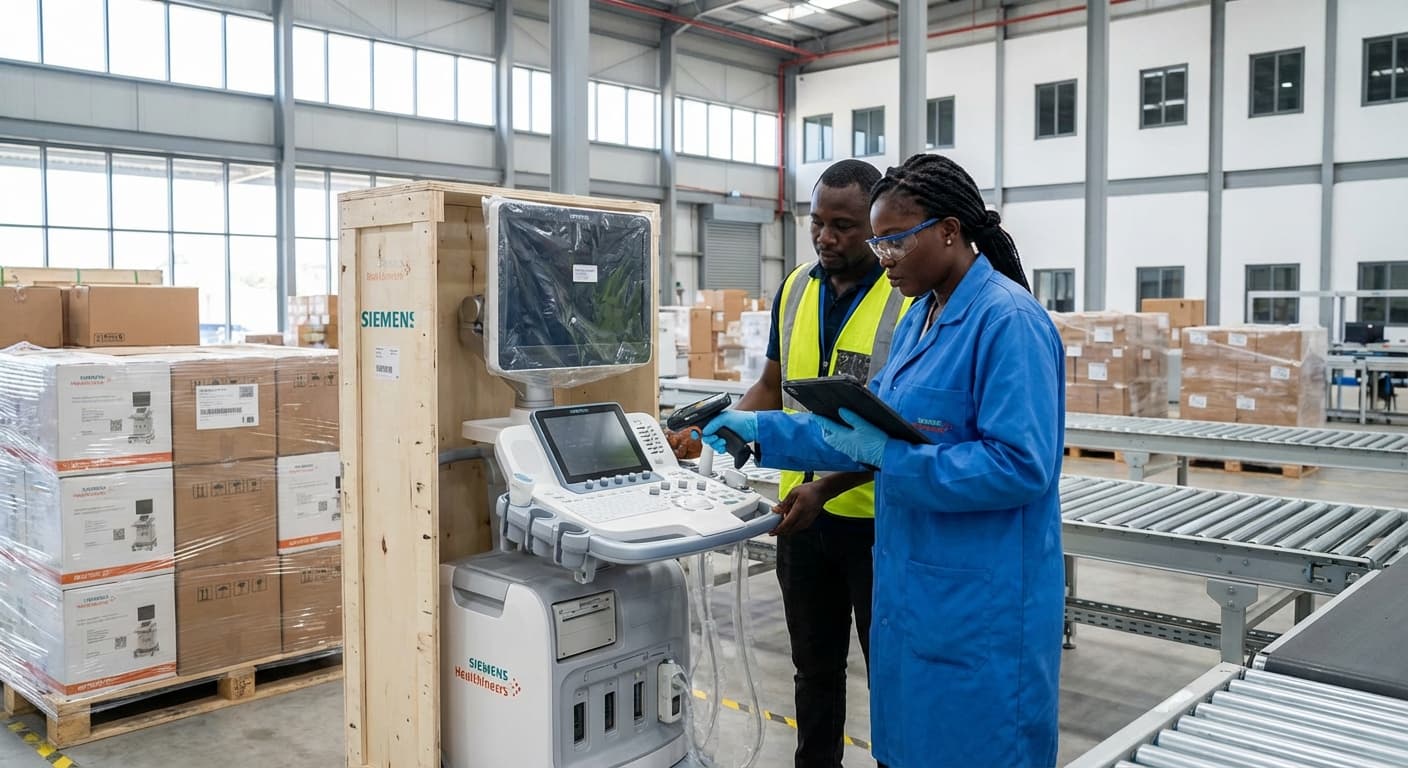
Warehouse Receiving Inspection Service (Medical Equipment) in Gambia
Engineering Excellence & Technical Support
Warehouse Receiving Inspection Service (Medical Equipment) High-standard technical execution following OEM protocols and local regulatory frameworks.
ISO 13485 Certified Quality Assurance
Our receiving inspection service adheres to rigorous ISO 13485 standards, ensuring the highest level of quality control for all medical equipment. This guarantees that every device meets critical safety, efficacy, and regulatory compliance requirements before entering your facility.
On-Site & Remote Inspection Capabilities
We offer flexible inspection solutions including on-site assessments at the port of entry or warehousing facility, as well as secure remote inspection protocols for a streamlined and efficient receiving process, minimizing downtime and logistical challenges.
Comprehensive Documentation & Traceability
Our service provides meticulous, digital documentation of every inspection, including detailed condition reports, photographic evidence, and compliance checks. This ensures complete traceability and auditable records crucial for regulatory bodies and inventory management.
What Is Warehouse Receiving Inspection Service (Medical Equipment) In Gambia?
Warehouse Receiving Inspection Service for Medical Equipment in The Gambia refers to a specialized quality assurance process conducted upon the arrival of medical devices and supplies at a designated storage facility. This service is critical for ensuring that incoming medical equipment meets predefined specifications, regulatory standards, and is free from damage or defects prior to integration into the supply chain or distribution network.
| Who Needs This Service | Typical Use Cases |
|---|---|
| Hospitals and Healthcare Facilities (public and private) | Receiving bulk orders of medical consumables (e.g., syringes, bandages), diagnostic kits, and capital equipment (e.g., X-ray machines, patient monitors). |
| Medical Equipment Suppliers and Distributors | Upon arrival of imported medical devices from international manufacturers before distribution to end-users. |
| Government Procurement Agencies (e.g., Ministry of Health) | Inspecting large consignments of medical supplies for public health programs and national stockpiles. |
| Non-Governmental Organizations (NGOs) and International Aid Organizations | Receiving donated or procured medical equipment for humanitarian projects and health initiatives. |
| Third-Party Logistics (3PL) Providers managing medical supply chains | Integrating received medical equipment into their inventory systems and ensuring quality before onward movement. |
Service Components and Scope
- Receipt Verification: Confirmation of delivery against purchase orders, packing lists, and invoices, ensuring correct quantities, item codes, and manufacturer details.
- Physical Inspection: Detailed examination for visible damage, corrosion, tampering, or any signs of compromise during transit.
- Documentation Review: Verification of accompanying documents such as certificates of origin, conformity certificates, quality control reports, user manuals, and warranty information.
- Functional Testing (where applicable): Basic operational checks to ascertain if the equipment is in a working state, without performing extensive clinical validation.
- Labeling and Packaging Assessment: Ensuring that labels are legible, accurate, and compliant with local and international standards, and that packaging provides adequate protection.
- Lot/Serial Number Traceability: Recording and verifying unique identifiers for inventory management and recall purposes.
- Compliance Checks: Preliminary verification against relevant Gambian regulatory requirements for medical devices (e.g., Ministry of Health, Medicines Control Agency).
Who Needs Warehouse Receiving Inspection Service (Medical Equipment) In Gambia?
In The Gambia, where the healthcare sector is actively developing and relying on a steady supply of quality medical equipment, a robust warehouse receiving inspection service is crucial. This service ensures that all incoming medical equipment meets stringent quality, safety, and functional standards before it enters the supply chain and reaches healthcare facilities. This is vital for patient safety, operational efficiency, and maintaining the integrity of healthcare delivery.
| Target Customer/Department | Specific Needs and Benefits | |
|---|---|---|
| Hospitals (Public & Private) | Ensure procured equipment is functional, safe for patient use, and meets specifications to avoid treatment delays or errors. Reduces risk of faulty equipment leading to patient harm or costly repairs. Improves inventory management by confirming received items match orders. | Relevant Departments: Procurement, Biomedical Engineering, Central Stores, Clinical Departments (e.g., Surgery, Radiology) |
| Clinics and Health Centers | Verify the quality and functionality of essential medical devices for primary healthcare delivery. Prevents the use of substandard equipment in remote or under-resourced areas. Ensures compliance with basic medical standards. | Relevant Departments: Clinic Management, Procurement Officers (if applicable), Nursing Staff |
| Diagnostic Centers (Laboratories, Imaging Facilities) | Guarantee the accuracy and reliability of diagnostic equipment. Essential for precise test results and patient diagnosis. Avoids misdiagnosis due to equipment malfunction. | Relevant Departments: Laboratory Management, Radiology Department, Procurement, Technical Staff |
| Ministry of Health and Social Welfare | Oversee the quality of medical equipment procured for the national health system. Ensure public funds are spent on reliable and safe equipment. Uphold national healthcare standards and regulations. Facilitate national stock management and emergency preparedness. | Relevant Departments: Procurement Unit, Medical Stores, Quality Assurance Department, National Health Directorate |
| Other Government Agencies (e.g., Prison Services, Military Medical Units) | Ensure specialized medical equipment for their personnel meets required standards for efficacy and safety. Compliance with specific operational needs. | Relevant Departments: Medical Services Branch, Procurement, Logistics |
| Non-Governmental Organizations (NGOs) & Charities | Validate the quality of donated or procured medical equipment for their projects and clinics. Ensure accountability of donor funds. Maintain a reputation for delivering quality healthcare services. | Relevant Departments: Program Management, Logistics, Procurement, Medical Coordinators |
| Medical Equipment Suppliers & Distributors | Facilitate the smooth import and distribution of medical equipment. Offer a value-added service to their clients by assuring the quality of their stock upon arrival. Mitigate risks of returns or complaints due to faulty equipment. | Relevant Departments: Warehousing, Logistics, Sales, Quality Control |
| Procurement & Logistics Companies | Provide an independent and professional inspection service as part of their offering to clients in the healthcare sector. Enhance their credibility and ensure client satisfaction by guaranteeing the quality of goods handled. | Relevant Departments: Operations, Logistics Management, Procurement Services, Quality Assurance |
Who Needs Warehouse Receiving Inspection Service (Medical Equipment) in Gambia?
- Healthcare Institutions (Hospitals, Clinics, Diagnostic Centers)
- Government Ministries and Agencies
- Non-Governmental Organizations (NGOs) and Charities
- Medical Equipment Suppliers and Distributors
- Procurement and Logistics Companies
Warehouse Receiving Inspection Service (Medical Equipment) Process In Gambia
This document outlines the comprehensive workflow for a Warehouse Receiving Inspection Service for Medical Equipment in The Gambia, covering the process from initial client inquiry through the successful execution of the inspection. The service ensures that incoming medical equipment meets specified quality, safety, and compliance standards before being accepted into storage.
| Phase | Stage/Activity | Description | Key Deliverables/Outputs | Responsible Party/Parties |
|---|---|---|---|---|
| Initial Contact | Client (e.g., Ministry of Health, hospital, NGO) contacts the inspection service provider with a requirement for receiving inspection of medical equipment. | Inquiry details, contact information, initial scope of work. | Client, Inspection Service Provider |
| Needs Assessment & Scope Definition | Detailed discussion to understand the type of equipment, quantity, origin, relevant standards (national/international), and specific client requirements. | Defined scope of inspection, list of equipment to be inspected, agreed-upon standards. | Inspection Service Provider, Client |
| Proposal Generation | Based on the defined scope, a detailed quotation is prepared, outlining services, timelines, fees, and terms and conditions. | Formal quotation/proposal. | Inspection Service Provider |
| Client Review & Acceptance | Client reviews the quotation and negotiates if necessary. Upon agreement, the client formally accepts the proposal. | Signed agreement/contract. | Client, Inspection Service Provider |
| Scheduling & Logistics | Coordination of inspection dates and times with the client, warehouse personnel, and shipment arrival schedule. Arranging for inspection team, equipment, and access. | Confirmed inspection schedule, logistical arrangements. | Inspection Service Provider, Client, Warehouse Manager |
| Documentation Review (Pre-Shipment) | If applicable, review of pre-shipment documents provided by the supplier (e.g., packing lists, certificates of origin, quality certificates, user manuals). | Initial understanding of equipment specifications and documentation. | Inspection Service Provider |
| Arrival & Site Verification | Inspection team arrives at the designated warehouse. Verification of site conditions, security, and availability of the equipment. | Confirmation of site readiness. | Inspection Team, Warehouse Personnel |
| Visual Inspection & Identification | Physical examination of the equipment for damage, correct model/serial numbers against documentation, and general appearance. | Record of visual findings, photographic evidence of any damage. | Inspection Team |
| Documentation Verification (On-Receipt) | Verification of all accompanying documents (packing lists, invoices, quality certificates, manuals, warranty cards) against the delivered equipment. | Checked documentation list, discrepancies noted. | Inspection Team |
| Functional Testing (Basic) | Performing basic operational checks to ensure the equipment powers on and operates as expected, without extensive diagnostic procedures unless specified. | Record of functional test results. | Inspection Team |
| Compliance & Standards Check | Assessing if the equipment meets relevant national (e.g., Ministry of Health guidelines) and international standards, including safety features and labeling. | Compliance assessment against agreed standards. | Inspection Team |
| Sampling & Special Tests (If Required) | If stipulated in the scope, conducting sampling for specific tests or requesting specialized testing by accredited laboratories. | Samples collected, test requests submitted. | Inspection Team, Client, Accredited Lab |
| Draft Report Preparation | Compilation of all findings, observations, test results, and photographic evidence into a draft inspection report. | Draft inspection report. | Inspection Team |
| Client Review & Feedback | The draft report is submitted to the client for review. The client provides feedback or requests clarifications. | Client feedback, clarification requests. | Client, Inspection Service Provider |
| Final Report Issuance | A final, comprehensive inspection report is issued, detailing all findings, any non-conformities, and recommendations (e.g., acceptance, rejection, repair, further action). | Final Inspection Report, Certificate of Inspection (if applicable). | Inspection Service Provider |
| Non-Conformity Resolution | If non-conformities are identified, the inspection service provider may assist in facilitating discussions between the client and the supplier for resolution. | Resolution plan for non-conformities. | Inspection Service Provider, Client, Supplier |
| Re-inspection (If Required) | If corrective actions are taken, a follow-up inspection may be conducted to verify their effectiveness. | Report on re-inspection findings. | Inspection Team |
| Project Closure | Finalizing all documentation, invoicing, and confirming client satisfaction. | Closed project file, final invoice. | Inspection Service Provider, Client |
Warehouse Receiving Inspection Service Workflow (Medical Equipment) in The Gambia
- Inquiry and Needs Assessment
- Quotation and Agreement
- Pre-Inspection Planning
- On-Site Inspection Execution
- Reporting and Documentation
- Follow-up and Closure
Warehouse Receiving Inspection Service (Medical Equipment) Cost In Gambia
The cost of warehouse receiving inspection services for medical equipment in The Gambia can vary significantly based on several factors. These services are crucial for ensuring the quality, safety, and compliance of incoming medical devices before they enter the supply chain or are deployed to healthcare facilities. Pricing is typically determined on a per-inspection basis, project basis, or through a retainer agreement, depending on the volume and frequency of inspections required.
Key Pricing Factors:
- Type and Complexity of Medical Equipment: High-tech, complex, or sensitive medical equipment (e.g., MRI machines, ventilators, advanced diagnostic kits) will incur higher inspection costs due to the specialized knowledge, tools, and time required for thorough assessment. Simpler equipment like stethoscopes or basic surgical instruments will be less expensive to inspect.
- Quantity of Equipment: Inspection service providers often offer tiered pricing based on the volume of items being inspected. A larger consignment may benefit from a lower per-unit cost, while smaller, ad-hoc inspections might have higher minimum charges.
- Scope of Inspection: The depth and breadth of the inspection are primary cost drivers. This can range from a basic visual check for damage and correct documentation to a comprehensive inspection including functional testing, calibration verification, and an assessment of regulatory compliance (e.g., WHO guidelines, local Ministry of Health regulations).
- Location of Warehouse: Accessibility of the warehouse can impact costs. Remote or difficult-to-reach locations might incur additional travel and logistical charges for the inspectors.
- Urgency of Service: Rush or same-day inspection services will typically command a premium over standard turnaround times.
- Inspector Qualifications and Experience: Highly specialized or certified inspectors (e.g., biomedical engineers) with extensive experience in medical equipment will generally charge higher rates.
- Reporting Requirements: The complexity and detail of the inspection report required can influence the cost. Detailed reports with photographic evidence, test results, and recommendations will take more time to compile.
- Provider Reputation and Overhead: Established and reputable inspection service providers with significant overhead (e.g., office space, advanced equipment, insurance) may have higher pricing structures compared to smaller, independent operators.
- Negotiation and Contractual Agreements: For regular clients or large-volume contracts, there is often room for negotiation on pricing. Retainer agreements can also offer cost savings.
Estimated Cost Ranges in Gambian Dalasi (GMD):
It's important to note that these are broad estimates and actual costs can fluctuate. Obtaining specific quotes from multiple service providers is essential for accurate budgeting.
- Basic Visual Inspection (per item/small batch): GMD 200 - GMD 800
- Standard Inspection (including basic functional checks, documentation review for moderate complexity equipment): GMD 800 - GMD 3,000 per item/small batch
- Comprehensive/Specialized Inspection (for high-tech or complex equipment, including detailed testing and compliance checks): GMD 3,000 - GMD 10,000+ per item/small batch
- Project-Based Pricing: For larger projects involving multiple types of equipment and extensive inspection scope, costs can be negotiated on a project basis, potentially ranging from GMD 15,000 to GMD 100,000+ depending on the scale.
- Retainer Agreements: For ongoing needs, monthly or annual retainer fees can be established, often offering a discounted per-inspection rate.
Note: The Gambian Dalasi (GMD) exchange rate against major currencies should be considered when comparing these estimates to international service costs.
| Service Type | Estimated Cost Range (GMD) |
|---|---|
| Basic Visual Inspection (per item/small batch) | 200 - 800 |
| Standard Inspection (moderate complexity, functional checks) | 800 - 3,000 per item/small batch |
| Comprehensive/Specialized Inspection (high-tech, detailed testing) | 3,000 - 10,000+ per item/small batch |
| Project-Based Pricing (large scale) | Negotiable (e.g., 15,000 - 100,000+) |
Factors Influencing Warehouse Receiving Inspection Costs in The Gambia
- Type and Complexity of Medical Equipment
- Quantity of Equipment
- Scope of Inspection (visual, functional, calibration, compliance)
- Location of Warehouse (accessibility)
- Urgency of Service (standard vs. rush)
- Inspector Qualifications and Experience
- Reporting Requirements (detail level)
- Provider's Reputation and Overhead Costs
- Negotiation and Contractual Agreements (retainers, volume discounts)
Affordable Warehouse Receiving Inspection Service (Medical Equipment) Options
Securing reliable and cost-effective warehouse receiving inspection services for medical equipment is crucial for maintaining product integrity, ensuring compliance, and preventing costly errors. This guide outlines affordable options, focusing on value bundles and strategic cost-saving measures. By understanding these approaches, healthcare providers and distributors can optimize their receiving processes without compromising quality.
| Cost-Saving Strategy | Description | Potential Benefit |
|---|---|---|
| Negotiate Volume Discounts | Commit to a higher volume of inspections over a specific period to secure lower per-unit costs. | Reduced per-inspection fee, predictable budgeting. |
| Outsource vs. In-House | Evaluate the total cost of ownership for in-house inspections (staff, training, equipment, facilities) versus outsourcing to a specialized provider. | Lower overhead, access to expertise, focus on core competencies. |
| Standardize Inspection Protocols | Work with your provider to establish clear, standardized inspection checklists and procedures to improve efficiency and reduce ambiguity. | Faster inspection times, consistent quality, fewer re-inspections. |
| Leverage Technology | Utilize digital inspection tools, mobile apps, and automated reporting to streamline the process and reduce manual effort. | Improved accuracy, reduced paperwork, faster data entry and retrieval. |
| Long-Term Contracts | Enter into longer-term service agreements for greater rate stability and potential discounts. | Price protection, enhanced relationship with provider. |
| Partner with Specialized Providers | Seek out providers with expertise specifically in medical equipment inspection, as they may have more efficient processes and specialized knowledge. | Higher quality inspections, fewer compliance issues, reduced risk. |
| Off-Peak Scheduling | If possible, schedule less critical inspections during off-peak hours or days to potentially negotiate lower rates. | Reduced service costs for non-urgent needs. |
Understanding Value Bundles
- {"title":"Tiered Inspection Packages","description":"Service providers often offer tiered packages based on the complexity and volume of inspections. Basic tiers might cover visual checks and documentation verification, while premium tiers include detailed functional testing, calibration verification, and sample-based quality control."}
- {"title":"Bundled Services","description":"Look for providers who bundle receiving inspections with other warehouse services like storage, inventory management, or order fulfillment. This can lead to volume discounts and streamlined operations."}
- {"title":"Subscription Models","description":"Some services offer subscription-based models, providing a set number of inspections per month or year at a discounted rate. This is ideal for organizations with predictable inbound volumes."}
- {"title":"Technology Integration Bundles","description":"Providers may offer packages that include the integration of their inspection software with your existing ERP or WMS systems. This can enhance efficiency and data accuracy, representing a long-term value."}
Verified Providers In Gambia
In Gambia's burgeoning healthcare landscape, identifying verified and credentialed providers is paramount for ensuring quality and trustworthy medical services. Franance Health stands out as a beacon of excellence, meticulously vetting its network of healthcare professionals and facilities. This commitment to verification not only safeguards patient well-being but also instills confidence in the healthcare ecosystem.
| Credential Type | Franance Health Verification | Patient Benefit |
|---|---|---|
| Medical Licenses | Verified for authenticity and validity | Ensures providers are legally authorized to practice. |
| Specialist Certifications | Confirmed through recognized medical boards | Guarantees expertise in specific medical fields. |
| Professional Experience | Assessed through documented work history and references | Provides confidence in practical skill and application. |
| Facility Accreditation | Checked against established healthcare standards (e.g., sanitation, equipment) | Ensures a safe and well-equipped environment for treatment. |
| Continuing Medical Education (CME) | Confirmation of ongoing professional development | Indicates providers are up-to-date with the latest medical advancements. |
Why Franance Health Credentials Represent the Best Choice:
- Rigorous Verification Process: Franance Health employs a multi-layered vetting system, scrutinizing the qualifications, licenses, and certifications of all associated healthcare providers. This ensures that only legitimate and competent professionals are part of their network.
- Commitment to Quality Standards: Beyond basic licensing, Franance Health assesses adherence to international and national quality of care benchmarks. This means patients can expect a higher standard of treatment and patient experience.
- Patient Safety as a Priority: The verification process includes background checks and a review of any past disciplinary actions, prioritizing patient safety and minimizing risks associated with unqualified practitioners.
- Access to Reputable Facilities: Franance Health extends its verification to healthcare facilities, ensuring they meet established standards for hygiene, equipment, and operational efficiency, further enhancing the quality of care received.
- Transparency and Trust: By clearly communicating their credentialing standards, Franance Health builds a foundation of transparency and trust with patients, empowering them to make informed healthcare decisions.
- Streamlined Healthcare Navigation: Patients accessing services through Franance Health can do so with the assurance that they are connecting with verified professionals, simplifying the often-complex process of finding reliable healthcare.
Scope Of Work For Warehouse Receiving Inspection Service (Medical Equipment)
This Scope of Work outlines the requirements for a professional Warehousing Receiving Inspection Service for medical equipment. The service provider will be responsible for ensuring that all incoming medical equipment meets pre-defined quality, safety, and documentation standards before being accepted into the client's warehouse. This includes visual inspection, functional checks (where applicable and safe), verification of documentation, and reporting of any discrepancies or non-conformities. The service aims to minimize the risk of accepting faulty, incomplete, or non-compliant medical equipment, thereby safeguarding patient safety and operational efficiency.
| Technical Deliverable | Description | Standard Specification/Requirement | Acceptance Criteria |
|---|---|---|---|
| Receiving Inspection Report (RIR) | A comprehensive report detailing the outcome of each inspection for every received item. | Must include: Date of inspection, Item description, Quantity received, Quantity inspected, Serial numbers (if applicable), Condition upon arrival, Identified discrepancies/non-conformities (with photographic evidence), Compliance with documentation requirements, Quarantine status (if applicable), Inspector's name and signature/electronic identifier. | RIR accurately reflects the condition and compliance of the received items. All identified discrepancies are clearly documented. Photographic evidence supports all findings. |
| Non-Conformance Report (NCR) | A separate, detailed report for any item found to be non-conforming. | Must include: Reference to RIR, specific non-conformance description, root cause analysis (preliminary, if possible), recommended corrective actions, proposed disposition (e.g., return to vendor, quarantine, repair). | NCR provides a clear and actionable description of the non-conformance. Recommended actions are appropriate and aligned with client's procedures. |
| Visual Inspection Checklist | A standardized checklist used for all visual inspections. | Must cover: Packaging integrity, absence of external damage (scratches, dents, punctures), correct labeling and identification, presence of accessories and consumables, apparent manufacturing defects. | Checklist is completed thoroughly for every inspected item. All marked items are addressed in the RIR. |
| Documentation Verification Log | A record of all verified documentation accompanying the shipment. | Must include: Document type (e.g., Certificate of Analysis, User Manual, FDA Approval), Document identifier (e.g., batch number, version number), Date of issue, Expiry date (if applicable), Compliance with specific client requirements or regulatory standards (e.g., ISO 13485, FDA 21 CFR Part 820). | All critical documents are present and verified. Any missing or non-compliant documents are flagged in the RIR. |
| Basic Functional Check (if applicable) | A preliminary check of core functionalities to ensure the equipment is not grossly defective. | Specific checks will be defined per equipment type, but generally include: Power on/off capability, basic user interface response, absence of critical error messages during startup. (Note: This is NOT a comprehensive performance or calibration check). | Equipment powers on as expected. Basic functions operate without obvious faults. No critical error messages are displayed. |
| Quarantine Tag/Label | A clear and unambiguous physical tag or label applied to non-conforming or suspect items. | Must include: 'QUARANTINE' in bold lettering, Item identifier, Date of quarantine, Reason for quarantine, Inspector's identifier. | All items requiring quarantine are clearly and visibly tagged. Quarantine status is also reflected in the RIR. |
| Digital Photographs | High-resolution digital images capturing the condition of received items and any identified defects. | Must include: Overall view of the item, Close-ups of any damages or defects, Images of labels and identification markings, Images of documentation (if applicable). | Photographs are clear, well-lit, and accurately depict the condition of the item. Photos are attached to relevant reports. |
Key Objectives
- Verify the accuracy of incoming shipments against purchase orders and packing lists.
- Conduct thorough visual inspections to identify any damage, defects, or signs of tampering.
- Perform basic functional checks to ensure essential operational parameters are met (if safe and feasible without specialized calibration).
- Confirm the presence and accuracy of all required documentation (e.g., certificates of analysis, user manuals, calibration certificates, regulatory compliance documents).
- Identify and document any discrepancies, damages, or non-conformities with detailed reports.
- Ensure adherence to all relevant regulatory standards and client-specific quality requirements.
Service Level Agreement For Warehouse Receiving Inspection Service (Medical Equipment)
This Service Level Agreement (SLA) outlines the guaranteed response times and uptime for the Warehouse Receiving Inspection Service (Medical Equipment). This SLA is an integral part of the Master Services Agreement (MSA) between [Your Company Name] and [Client Company Name].
| Issue Severity | Uptime Guarantee | Response Time Guarantee | Resolution Time Target |
|---|---|---|---|
| Critical Issue | 99.9% Uptime | Within 30 minutes during Service Hours | Within 4 business hours |
| Major Issue | 99.5% Uptime | Within 2 business hours during Service Hours | Within 1 business day |
| Minor Issue | 98.0% Uptime | Within 4 business hours during Service Hours | Within 3 business days |
Key Service Metrics & Guarantees
- Scope of Service: This SLA specifically covers the receiving inspection of medical equipment upon arrival at [Client Company Name]'s designated warehouse facilities. This includes visual inspection for damage, verification of quantity against shipping manifests, and initial categorization based on pre-defined criteria.
- Service Hours: The Warehouse Receiving Inspection Service will be available during the following hours: Monday to Friday, 8:00 AM to 6:00 PM Local Time, excluding [List of Observed Holidays].
- Definitions:
- Critical Issue: An issue that prevents the accurate and timely processing of incoming medical equipment, posing an immediate risk to supply chain operations or patient safety.
- Major Issue: An issue that significantly impacts the efficiency of the receiving inspection process but does not immediately halt all operations.
- Minor Issue: An issue that has a minimal impact on the receiving inspection process and can be addressed during regular business hours without significant disruption.
- Uptime: The percentage of time the Warehouse Receiving Inspection Service is available and operational during the agreed-upon Service Hours.
- Response Time: The maximum time allowed for [Your Company Name] to acknowledge and begin actively addressing a reported issue.
- Resolution Time: The maximum time allowed for [Your Company Name] to resolve a reported issue to a mutually agreed-upon satisfactory state.
Frequently Asked Questions

Ready when you are
Let's scope your Warehouse Receiving Inspection Service (Medical Equipment) in Gambia project in Gambia.

Scaling healthcare logistics and technical systems across the entire continent.