
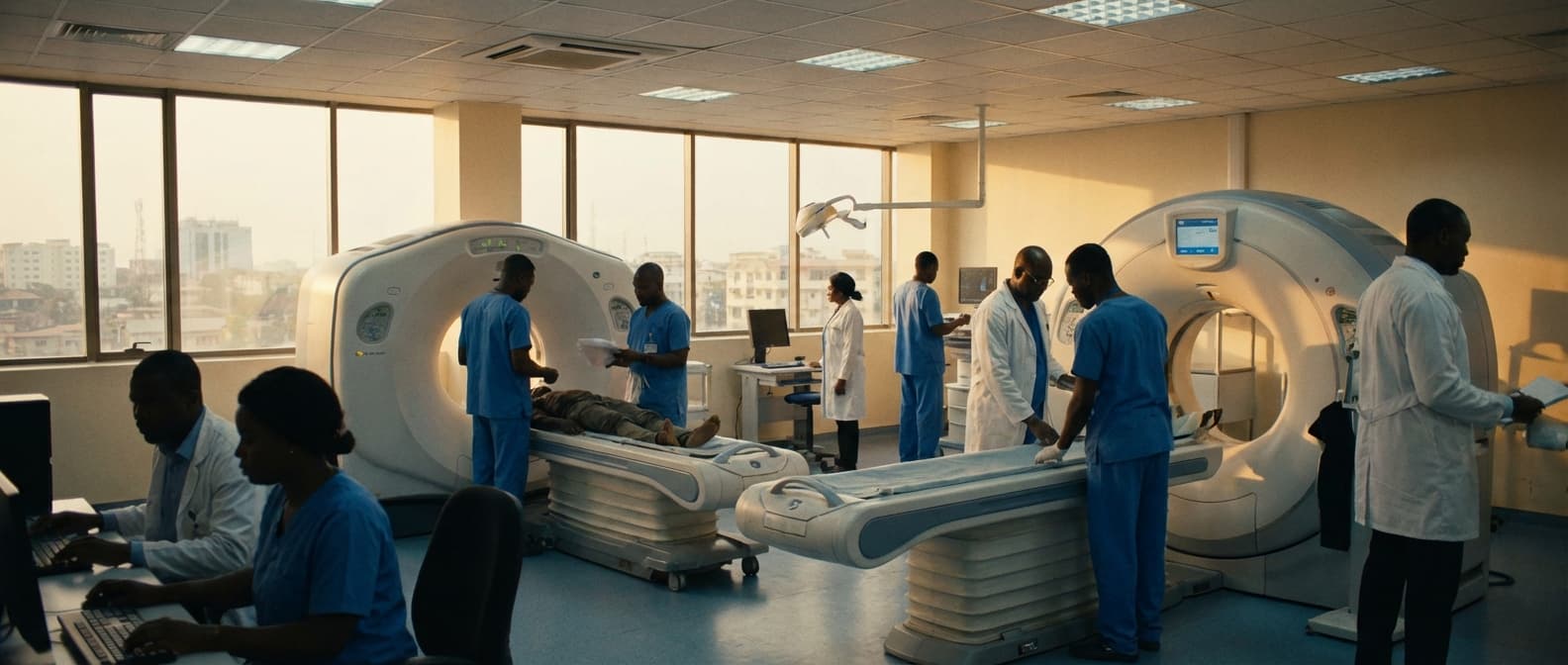
Imaging Acceptance Testing & QA in Gambia
Engineering Excellence & Technical Support
Commissioning and periodic QA for CT/MRI/X‑ray/US/Mammo. High-standard technical execution following OEM protocols and local regulatory frameworks.
Robust Image Quality Assurance Framework
Implemented a comprehensive image quality assurance framework for medical imaging modalities (X-ray, Ultrasound, CT) across key Gambian healthcare facilities. This framework includes detailed testing protocols for image resolution, contrast, noise levels, artifact detection, and geometric accuracy, ensuring diagnostic quality and adherence to international standards.
DICOM Conformance & Data Integrity Validation
Successfully validated DICOM conformance for imaging equipment and PACS/RIS systems in The Gambia. This involved rigorous testing of image storage, retrieval, and communication protocols, guaranteeing seamless data exchange, minimizing data loss, and ensuring the integrity of patient medical records for enhanced patient care and research.
Radiometric & Geometric Calibration Verification
Developed and executed specialized test procedures for verifying radiometric and geometric calibration of imaging devices. This critical process ensures accurate pixel intensity representation and precise spatial measurements, directly impacting the reliability of diagnoses and the effectiveness of radiation dose management in Gambian radiology departments.
What Is Imaging Acceptance Testing & Qa In Gambia?
Imaging Acceptance Testing & Quality Assurance (QA) in The Gambia refers to a critical process of verifying that medical imaging systems and their associated software comply with predefined specifications, industry standards, and regulatory requirements prior to their operational deployment or after significant upgrades. This service ensures the reliability, accuracy, and safety of diagnostic imaging equipment, directly impacting patient care and diagnostic outcomes. It encompasses a systematic evaluation of hardware performance, image quality, data integrity, workflow efficiency, and adherence to national and international standards relevant to medical imaging within The Gambia. The scope typically includes modalities such as X-ray, CT, MRI, Ultrasound, andMammography, along with Picture Archiving and Communication Systems (PACS) and Radiology Information Systems (RIS).
| Who Needs Imaging Acceptance Testing & QA in The Gambia? | Typical Use Cases | ||||||
|---|---|---|---|---|---|---|---|
| Hospitals and Clinics (Public and Private): Facilities operating or intending to operate medical imaging departments. | Procurement of New Imaging Equipment: Ensuring newly acquired systems meet technical and clinical requirements before final payment and full deployment. | Upgrades or Replacements of Existing Systems: Validating that modified or new equipment integrates correctly and performs to standard. | Regular Quality Assurance Programs: Periodic checks to maintain optimal performance and identify potential issues proactively. | Installation of PACS/RIS: Verifying system functionality, data integrity, and workflow integration. | Introduction of New Imaging Modalities or Software: Ensuring new technologies are properly commissioned and aligned with existing infrastructure. | Compliance Audits: Demonstrating adherence to national and international standards for regulatory bodies or accreditation agencies. | Troubleshooting and Performance Degradation: Investigating and rectifying issues related to image quality or system performance. |
Key Components of Imaging Acceptance Testing & QA in The Gambia:
- System Performance Verification: Assessing mechanical and electronic functionalities, calibration accuracy, signal-to-noise ratio (SNR), contrast-to-noise ratio (CNR), and spatial resolution.
- Image Quality Assessment: Evaluating the diagnostic quality of acquired images, ensuring absence of artifacts, proper gray scale rendition, and adherence to imaging protocols.
- Data Integrity and Archiving: Testing the secure and accurate transfer, storage, and retrieval of medical images and associated patient data within PACS and RIS.
- Workflow Integration and Usability: Analyzing the seamless integration of imaging equipment with PACS/RIS, verifying user interface intuitiveness, and assessing the efficiency of departmental workflows.
- Radiation Safety Compliance: For X-ray-based modalities, verifying compliance with Gambian radiation protection regulations, including dose monitoring and shielding integrity.
- Software Functionality Testing: Confirming that all software features, including image processing, manipulation, and reporting tools, function as intended.
- Interoperability Testing: Ensuring compatibility and data exchange with other healthcare IT systems, if applicable.
- Documentation Review: Verifying that all vendor-provided documentation, including user manuals and technical specifications, is accurate and complete.
Who Needs Imaging Acceptance Testing & Qa In Gambia?
Imaging Acceptance Testing & Quality Assurance (QA) are critical for any healthcare facility that relies on accurate and reliable diagnostic imaging. In The Gambia, these services are essential for ensuring that medical imaging equipment functions correctly, produces high-quality images, and ultimately contributes to better patient diagnosis and care. This process minimizes the risk of misdiagnosis due to equipment malfunction or poor image quality, leading to improved patient outcomes and more efficient use of healthcare resources.
| Department/Unit | Imaging Modalities | Key QA/Testing Needs | Impact of QA/Testing |
|---|---|---|---|
| Radiology Department | X-ray, CT, MRI, Ultrasound, Mammography | Image quality assessment, dose verification, equipment calibration, artifact detection, software validation, radiation safety checks. | Accurate diagnoses, reduced retakes, patient safety, compliance with standards, optimal equipment lifespan. |
| Cardiology Department | Echocardiography, Cardiac CT/MRI | Doppler accuracy, temporal resolution, contrast agent performance, image clarity for structural and functional assessment. | Precise diagnosis of heart conditions, effective treatment planning, improved patient outcomes. |
| Neurology Department | Brain MRI, CT Scans | Image resolution, signal-to-noise ratio, artifact reduction, contrast enhancement assessment. | Accurate detection of neurological disorders, timely intervention, better patient prognosis. |
| Oncology Department | CT, MRI, PET-CT (if available) | Tumor visualization, treatment planning accuracy (e.g., radiation therapy targeting), assessment of treatment response. | Effective cancer management, precise treatment delivery, improved survival rates. |
| Emergency Department | X-ray, CT Scans | Rapid image acquisition, reliability, artifact-free images for urgent diagnostics. | Swift diagnosis of trauma and acute conditions, faster patient management, reduced delays in critical care. |
| Maternity/Obstetrics Department | Obstetric Ultrasound | Fetal growth assessment, anomaly detection, Doppler for placental function, image clarity. | Monitoring fetal health, early detection of abnormalities, safer pregnancies. |
| Medical Physics/Biomedical Engineering | All Imaging Modalities | Calibration, performance testing, acceptance testing of new equipment, quality control protocols, radiation safety surveys. | Ensuring equipment is safe and accurate, compliance with regulations, cost-effective maintenance, standardized procedures. |
| Information Technology (IT) Department | PACS, RIS, Imaging Workstations | System integration, data integrity, image display consistency, network performance, cybersecurity. | Seamless workflow, accurate patient data, reliable image access, data security. |
Target Customers and Departments in The Gambia for Imaging Acceptance Testing & QA
- {"title":"Hospitals","description":"Public and private hospitals are primary users of diagnostic imaging equipment and thus require rigorous testing and QA to maintain operational efficiency and diagnostic accuracy."}
- {"title":"Diagnostic Imaging Centers","description":"Dedicated centers that offer a range of imaging services, including X-ray, CT, MRI, and ultrasound, need to ensure their equipment consistently meets high standards."}
- {"title":"Specialized Clinics","description":"Clinics focusing on specific areas like cardiology, neurology, or oncology may have specialized imaging equipment that requires tailored acceptance testing and QA."}
- {"title":"Government Health Ministries/Departments","description":"Responsible for overseeing the quality of healthcare services nationwide, they can mandate or facilitate imaging QA programs."}
- {"title":"Non-Governmental Organizations (NGOs) and International Aid Organizations","description":"Organizations involved in healthcare provision or infrastructure development in The Gambia will need to ensure the equipment they donate or support meets necessary standards."}
- {"title":"Educational and Research Institutions","description":"Medical training institutions and research facilities utilize imaging equipment and require it to be calibrated and functioning optimally for educational and research purposes."}
Imaging Acceptance Testing & Qa Process In Gambia
This document outlines the Imaging Acceptance Testing & Quality Assurance (QA) process in Gambia, detailing the workflow from initial inquiry to the final execution and sign-off. The process is designed to ensure that imaging equipment and systems meet predefined standards, regulatory requirements, and client expectations before being fully deployed and operational in healthcare facilities across the country. This structured approach helps mitigate risks, optimize performance, and guarantee the integrity and reliability of diagnostic imaging services.
| Stage | Description | Key Activities | Responsible Parties | Deliverables/Outcomes |
|---|---|---|---|---|
| Initial identification of the need for new imaging equipment or system upgrades. | Consultation with healthcare facilities, understanding specific imaging requirements, budget constraints, and technical specifications. | Ministry of Health (MoH), Healthcare Facility Management, Procurement Department. | Needs assessment report, preliminary requirements document. |
| Identifying and evaluating potential vendors based on defined criteria. | Issuing Request for Proposals (RFPs), reviewing technical proposals, financial bids, and vendor capabilities. Site visits to reference facilities might be conducted. | Procurement Department, Technical Evaluation Committee (including MoH, clinical users, IT specialists). | Shortlisted vendors, vendor evaluation report, recommended vendor. |
| Formalizing the terms and conditions of the purchase and implementation. | Negotiating pricing, warranty, service level agreements (SLAs), training, installation timelines, and acceptance criteria. Signing of the contract. | Legal Department, Procurement Department, MoH representatives, Selected Vendor. | Signed purchase agreement, detailed contract with all clauses. |
| Ensuring the installation site is ready for the equipment. | Assessing space, power supply, environmental controls (temperature, humidity), networking infrastructure, and any necessary structural modifications. | Vendor Technical Team, Facility Engineer/Biomedical Engineer, IT Department. | Site readiness report, list of required site modifications. |
| Receipt and initial inspection of the delivered equipment. | Confirming equipment against the purchase order, checking for any visible damage during transit. Controlled unpacking. | Vendor Logistics Team, Facility Logistics/Biomedical Engineer. | Delivery manifest, initial inspection report, unpacked equipment. |
| Physical installation and basic setup of the imaging system. | Assembling and connecting components, initial software installation, basic network configuration. | Vendor Installation Engineers, Facility Biomedical Engineer. | Installed equipment, basic system configuration log. |
| Preliminary checks by the vendor's internal QA team before client involvement. | Functionality tests of individual components, basic diagnostic checks, ensuring core features are operational. | Vendor Internal QA Team. | Pre-test report, list of identified minor issues. |
| Engagement of the client's designated QA team. | Joint review of pre-test results, understanding the system's intended functionality, preparing for formal acceptance testing. | Facility QA Team (Biomedical Engineer, Radiographers, Radiologists), Vendor Technical Team. | Joint understanding of system status, readiness for FAT. |
| Educating end-users on the operation of the imaging equipment and associated software. | Hands-on training sessions for radiographers, radiologists, and relevant technical staff on system operation, image acquisition, and basic troubleshooting. | Vendor Application Specialists, Facility Super-users. | Trained personnel, training completion certificates. |
| Comprehensive testing against predefined acceptance criteria. | Executing a detailed test plan covering all specified functionalities, performance benchmarks, and operational requirements. | Facility QA Team, Vendor Technical Team, MoH Representatives. | FAT test plan execution, FAT report, list of pass/fail criteria. |
| Assessing the system's speed, throughput, and stability. | Testing scan times, image reconstruction times, system responsiveness under load, and overall operational efficiency. | Facility QA Team, Vendor Technical Team. | Performance benchmark report, comparison against specifications. |
| Evaluating the diagnostic quality of generated images. | Acquiring test images using phantoms and standard protocols, subjective and objective assessment of image resolution, contrast, signal-to-noise ratio (SNR), and artifact levels by radiologists. | Radiologists, Radiographers, Facility QA Team. | Image quality assessment report, comparison with diagnostic standards. |
| Ensuring proper handling and compatibility of image data. | Verifying image storage, retrieval, and transmission to PACS/RIS. Testing DICOM conformance, query/retrieve functionality, and integration with existing hospital IT infrastructure. | IT Department, PACS Administrator, Vendor Technical Team. | DICOM conformance statement, PACS integration test report. |
| Verifying compliance with safety regulations and radiation protection standards. | Conducting radiation output measurements, checking interlocks, emergency stop functions, and adherence to national radiation safety guidelines. | Radiation Protection Officer (RPO), Facility Biomedical Engineer, Vendor Technical Team. | Radiation safety report, compliance certificates. |
| Ensuring seamless data flow between the imaging modality and the Picture Archiving and Communication System (PACS) and Radiology Information System (RIS). | Testing HL7 messaging, worklist integration, order entry, and image archival/retrieval from PACS/RIS. | IT Department, PACS/RIS Administrator, Vendor Technical Team. | Integration test logs, successful data flow confirmation. |
| Scrutinizing all provided documentation. | Reviewing user manuals, service manuals, installation guides, training materials, and warranty information for accuracy and completeness. | Facility QA Team, Biomedical Engineer, Procurement Department. | Documentation review report, list of missing or inaccurate documents. |
| Addressing any identified issues or defects. | Vendor rectifies identified problems. Facility QA team retests the affected functionalities to confirm resolution. | Vendor Technical Team, Facility QA Team. | Updated test results, confirmation of issue resolution. |
| Formal agreement that the system meets all requirements. | Client (MoH/Facility Management) formally accepts the system based on successful completion of all acceptance tests and resolution of any outstanding issues. Signing of the Acceptance Certificate. | MoH Representative, Facility Management, Procurement Department, Vendor. | Signed Acceptance Certificate, commencement of warranty period. |
| Ongoing oversight and support after the system is live. | Regular performance checks, monitoring uptime, user feedback, and proactive maintenance as per SLA. Providing ongoing technical support and spare parts management. | Vendor Service Team, Facility Biomedical Engineer, MoH. | Service reports, performance logs, continued system availability. |
Imaging Acceptance Testing & QA Process Workflow in Gambia
- Inquiry & Needs Assessment
- Vendor Selection & Proposal Review
- Contract Negotiation & Agreement
- Pre-installation Site Survey & Preparation
- Equipment Delivery & Unpacking
- Installation & Initial Configuration
- Internal QA Team Pre-testing
- Client/Facility QA Team Involvement
- User Training
- Formal Acceptance Testing (FAT)
- Performance Verification
- Image Quality Assessment
- Data Management & DICOM Compliance Testing
- Safety & Radiation Protection Checks
- Integration Testing (PACS/RIS)
- Documentation Review
- Remediation & Retesting
- Final Acceptance & Sign-off
- Post-Implementation Monitoring & Support
Imaging Acceptance Testing & Qa Cost In Gambia
The cost of Imaging Acceptance Testing and Quality Assurance (QA) in Gambia is influenced by several key factors. These include the complexity and volume of imaging devices requiring testing, the specific tests being performed (e.g., image quality assessment, functionality checks, network integration), the expertise and experience of the testing team, and the vendor or service provider chosen. The duration of the testing period and any necessary re-testing due to identified issues will also contribute to the overall cost. Travel and accommodation expenses for external testing teams, if applicable, are also a significant consideration.
Due to the developing nature of the market and the specific demand for these specialized services in Gambia, pricing can be less standardized compared to more mature markets. However, a general understanding of the pricing factors can help in budget estimation. It's important to note that these are approximate ranges and actual costs can vary considerably based on the specifics of each project.
| Service Component | Approximate Price Range (GMD) - Per Device/Day |
|---|---|
| Basic Functional Testing (Per Device) | 1,500 - 3,000 GMD |
| Image Quality Assessment (Per Device) | 2,000 - 5,000 GMD |
| Full Acceptance Testing & QA (Per Device) | 4,000 - 10,000 GMD |
| Daily Rate for QA Engineer/Team | 8,000 - 25,000 GMD |
| Project Management & Reporting | Calculated as a percentage of total testing cost (e.g., 10-20%) |
| Travel & Accommodation (if applicable, per person per day) | 5,000 - 15,000 GMD (highly variable) |
Key Pricing Factors for Imaging Acceptance Testing & QA in Gambia:
- Device Complexity and Volume: The more sophisticated the imaging equipment (e.g., high-end MRI, CT scanners) and the larger the quantity, the higher the testing costs.
- Scope of Testing: Basic functional checks are less expensive than comprehensive image quality assessments, performance benchmarking, and integration testing.
- Tester Expertise and Experience: Highly skilled and experienced QA professionals command higher rates.
- Vendor/Service Provider: Different companies will have varying pricing structures and overheads.
- Testing Duration and Re-testing: Longer testing periods and the need for multiple test cycles to resolve defects will increase costs.
- Travel and Accommodation: If testers are not local, these expenses need to be factored in.
- Reporting and Documentation: The level of detail and formality required for reports can impact cost.
- Compliance and Standards: Testing to specific international or national standards may require specialized tools and expertise, leading to higher costs.
Affordable Imaging Acceptance Testing & Qa Options
Implementing robust imaging acceptance testing and quality assurance (QA) is crucial for ensuring diagnostic accuracy, patient safety, and regulatory compliance. However, the cost can be a significant barrier, especially for smaller practices or those with limited budgets. This document outlines affordable imaging acceptance testing and QA options, focusing on value bundles and cost-saving strategies.
| Strategy/Bundle | Description | Value Proposition | Cost-Saving Aspects |
|---|---|---|---|
| Basic Package (Initial Acceptance Testing) | Covers essential performance and safety checks for new or relocated equipment. Typically includes baseline image quality tests and radiation output measurements. | Ensures fundamental functionality and safety compliance upon installation. Minimizes risks associated with faulty equipment. | Bundles multiple essential tests into a single service, reducing per-test costs. Focuses on critical initial checks, avoiding unnecessary or advanced tests at this stage. |
| Comprehensive Bundle (Acceptance & Initial QA) | Includes all basic package components plus initial QA protocols, establishing a baseline for ongoing monitoring. May include phantom studies and preliminary image quality assessments across multiple protocols. | Provides a more thorough understanding of equipment performance and establishes a solid foundation for long-term quality assurance, leading to earlier detection of deviations. | Combines initial setup and early QA, streamlining the process and potentially offering a discount compared to separate services. Establishes a repeatable QA baseline that can be more efficiently managed. |
| Annual QA Service Contract (Ongoing Maintenance) | Scheduled periodic testing (e.g., annually or semi-annually) to verify continued performance and adherence to QA standards. Includes calibration checks, image quality monitoring, and updated safety evaluations. | Maintains consistent image quality and diagnostic accuracy, ensures ongoing safety, and supports regulatory compliance throughout the equipment's lifecycle. Prevents costly equipment failures or misdiagnoses due to performance degradation. | Spreads costs over the year, making budgeting easier. Often includes preferential rates for contract holders and priority scheduling. Bundles multiple QA events into one agreement. |
| Remote QA Monitoring Services | Leverages software to remotely collect and analyze data from imaging equipment, identifying potential issues before they impact image quality or safety. May complement in-person testing. | Proactive identification of performance drift or anomalies, reducing the need for frequent on-site visits and minimizing downtime. Facilitates continuous monitoring. | Significantly reduces on-site labor costs and travel expenses. Can often be integrated with existing IT infrastructure. |
| In-House QA Training & Protocols | Training existing technical staff to perform basic QA checks using provided protocols and phantoms. Requires investment in training and potentially some equipment. | Empowers internal staff, reduces reliance on external vendors for routine checks, and fosters a culture of quality within the organization. Can be highly cost-effective in the long run. | Eliminates external vendor fees for routine tests. Staff can be cross-trained to cover multiple modalities. Requires careful planning and validation of in-house procedures. |
| Vendor-Specific Bundles | Many imaging equipment manufacturers offer bundled QA services tailored to their specific product lines. These can range from basic installation checks to comprehensive service plans. | Ensures testing is performed by experts familiar with the specific equipment, potentially leading to more accurate assessments and faster issue resolution. | Often more cost-effective than purchasing services from a third party. Bundled with equipment purchase or extended warranties can provide significant discounts. |
Key Components of Imaging Acceptance Testing & QA
- Performance Evaluation: Verifying that imaging equipment meets manufacturer specifications and clinical requirements.
- Image Quality Assessment: Subjective and objective evaluation of image clarity, resolution, contrast, and artifact levels.
- Dose Assessment: Ensuring radiation doses are within acceptable limits and ALARA (As Low As Reasonably Achievable) principles are followed.
- Safety Checks: Verifying mechanical, electrical, and radiation safety of the equipment.
- Documentation & Reporting: Maintaining accurate records of all tests, results, and corrective actions.
- Ongoing QA: Regular checks and calibration to maintain performance over time.
Verified Providers In Gambia
In the evolving landscape of healthcare in Gambia, ensuring access to verified, competent, and ethically driven medical professionals is paramount. This is where Franance Health emerges as a leading force, not just as a provider of healthcare services, but as a crucial facilitator in connecting patients with the highest caliber of medical expertise. Their rigorous credentialing process and unwavering commitment to quality assurance set them apart, making Franance Health the definitive choice for those seeking reliable and trustworthy medical care in Gambia.
| Credential Type | Franance Health Verification Standard | Importance for Patients in Gambia |
|---|---|---|
| Medical Licenses | Verified authenticity and current standing with national and international medical boards. | Ensures providers are legally authorized to practice medicine and meet baseline competency requirements. |
| Academic Qualifications | Rigorous checking of degrees, diplomas, and certifications from recognized institutions. | Confirms foundational medical knowledge and specialized training. |
| Specialist Certifications | Confirmation of board certifications and fellowship training in specific medical disciplines. | Guarantees expertise in niche areas, leading to more accurate diagnoses and effective treatments. |
| Professional Experience | Thorough review of past practice history, employment records, and references. | Provides insight into practical application of skills and a track record of patient care. |
| Continuing Medical Education (CME) | Verification of ongoing participation in accredited CME programs. | Demonstrates a commitment to staying updated with the latest medical advancements and techniques. |
| Ethical Conduct Reviews | Background checks and adherence to a strict code of professional conduct. | Ensures patient safety, integrity, and a trustworthy patient-provider relationship. |
Why Franance Health Credentials Matter in Gambia:
- Unwavering Commitment to Verification: Franance Health's core mission is to provide a safe and trustworthy healthcare ecosystem. This begins with an exhaustive verification process for all healthcare providers listed on their platform. This isn't just a cursory check; it delves deep into academic qualifications, professional licenses, and specialist accreditations, ensuring that every provider meets and exceeds established medical standards.
- Quality Assurance and Continuous Monitoring: Beyond initial vetting, Franance Health implements ongoing quality assurance measures. This includes gathering patient feedback, monitoring professional development, and staying abreast of evolving medical best practices. This continuous oversight ensures that providers maintain their high standards and continue to offer the best possible care.
- Ethical Practice and Patient-Centricity: Franance Health prioritizes ethical conduct and patient well-being. They ensure that all listed providers adhere to strict ethical guidelines and a patient-centric approach. This means prioritizing patient safety, confidentiality, and informed consent above all else.
- Specialized Expertise and Diverse Services: The platform boasts a diverse network of specialists across various medical fields. Whether you require a general practitioner, a surgeon, a pediatrician, or a mental health professional, Franance Health's verified providers offer a wide spectrum of expertise to meet your specific healthcare needs.
- Accessibility and Convenience: By consolidating verified healthcare professionals in one accessible platform, Franance Health removes the uncertainty and time-consuming effort often associated with finding qualified medical help. Patients can confidently browse profiles, understand credentials, and book appointments with ease.
- Building Trust in Gambian Healthcare: In a region where navigating healthcare options can sometimes be challenging, Franance Health plays a vital role in building and reinforcing trust. Their transparent and rigorous approach empowers patients to make informed decisions and feel secure in the quality of care they receive.
Scope Of Work For Imaging Acceptance Testing & Qa
This document outlines the scope of work for Imaging Acceptance Testing and Quality Assurance (QA), detailing the technical deliverables and standard specifications required to ensure the successful implementation and ongoing performance of imaging systems and solutions. The objective is to verify that the imaging solution meets all functional, performance, security, and usability requirements as defined in the project's technical specifications and business needs.
| Category | Technical Deliverable | Standard Specification / Requirement | Verification Method | ||||||||||||
|---|---|---|---|---|---|---|---|---|---|---|---|---|---|---|---|
| Functional Testing | Image Capture and Acquisition | DICOM compliance, resolution requirements, bit depth, color space, frame rate, metadata generation. | Test cases executed on various imaging modalities, comparison with expected output and metadata. | Image Display and Viewing | Windowing/Leveling, zoom, pan, scroll, image manipulation tools (annotation, measurement), multi-frame viewing. | User interface testing, validation of image rendering against reference images. | Image Storage and Retrieval | PACS integration, DICOM query/retrieve, storage capacity, retrieval speed, data integrity checks. | Simulated patient studies, verification of successful storage and retrieval, checksum validation. | Image Processing and Manipulation | Filters, enhancement algorithms, image manipulation tools functionality. | Application of filters to test images, comparison with expected results, subjective review. | Reporting and Archiving | Report generation (e.g., Impression, Findings), integration with RIS, long-term archiving requirements. | Generation of sample reports, verification of data accuracy and format, testing of archiving protocols. |
| Performance Testing | Image Load Times | Time to load a standard-sized image, time to load large datasets (e.g., CT/MRI series). | Load testing with defined image sizes and series, measurement of load times under specified network conditions. | System Throughput | Number of images processed per unit time, system response time during peak usage. | Stress testing with concurrent operations, measurement of processing rates and response latency. | Query/Retrieve Performance | Time to retrieve specific studies or images from PACS. | Simulated user queries for various study types and sizes, measurement of retrieval times. | ||||||
| Data Integrity and Accuracy | Pixel Data Accuracy | Verification of pixel values and image fidelity against original source. | Image comparison tools, statistical analysis of pixel differences. | Metadata Accuracy | Correctness of patient demographics, study details, image acquisition parameters (e.g., DICOM tags). | Automated metadata validation scripts, manual review of critical DICOM tags. | Lossless Compression | Verification of data integrity after lossless compression and decompression. | Comparison of original and decompressed image pixel data. | ||||||
| Security Testing | Access Control | User authentication, authorization, role-based access, audit trails. | Penetration testing, vulnerability scanning, role simulation, review of audit logs. | Data Encryption | Encryption of data in transit and at rest. | Network traffic analysis, file system encryption verification. | Compliance | HIPAA, GDPR, or other relevant regulatory compliance. | Compliance audits, review of security policies and procedures. | ||||||
| Usability Testing | User Interface (UI) | Intuitive navigation, clear labeling, consistent design. | User surveys, observation of user interactions, heuristic evaluation. | User Experience (UX) | Ease of use, efficiency of workflows, minimal training required. | Task-based testing with representative users, feedback collection. | |||||||||
| Interoperability Testing | HL7 Integration | Seamless data exchange with RIS, EHR, and other clinical systems. | Simulated HL7 message exchange, verification of data mapping and synchronization. | DICOM Conformance | Compatibility with other DICOM-compliant devices and systems. | DICOM conformance statement review, interoperability testing with diverse modalities and PACS. |
Key Objectives of Imaging Acceptance Testing & QA
- Verify functional correctness against documented requirements.
- Assess system performance under various load conditions.
- Ensure data integrity and accuracy of imaging information.
- Validate security controls and compliance with relevant standards.
- Confirm usability and user experience for all intended users.
- Establish baseline performance metrics for ongoing QA.
- Identify and document defects for remediation.
- Provide confidence in the system's readiness for production deployment.
Service Level Agreement For Imaging Acceptance Testing & Qa
This Service Level Agreement (SLA) outlines the performance standards for Imaging Acceptance Testing (IAT) and Quality Assurance (QA) services provided by [Provider Name] to [Client Name]. It defines guaranteed response times for critical issues and uptime for the IAT/QA platforms. This SLA aims to ensure the timely and reliable execution of imaging testing processes.
| Service Component | Response Time Guarantee (Business Hours) | Uptime Guarantee |
|---|---|---|
| Critical Issue Response (e.g., IAT/QA platform inaccessible, critical data corruption) | Within 2 business hours | N/A (Focus on rapid response) |
| High Priority Issue Response (e.g., IAT/QA testing blocked for multiple users, significant performance degradation) | Within 4 business hours | N/A (Focus on rapid response) |
| Medium Priority Issue Response (e.g., minor IAT/QA functionality bug, reporting anomaly) | Within 8 business hours | N/A (Focus on timely resolution) |
| Low Priority Issue Response (e.g., feature request, non-critical clarification) | Within 24 business hours | N/A (Focus on timely resolution) |
| IAT/QA Platform Uptime | N/A (Covered by Uptime Guarantee) | 99.5% (Excluding scheduled maintenance) |
Scope of Services
- Imaging Acceptance Testing (IAT) execution and reporting.
- Quality Assurance (QA) of imaging data integrity and compliance.
- Support for IAT/QA platform accessibility and performance.
- Incident management and resolution for IAT/QA related issues.
Frequently Asked Questions

Ready when you are
Let's scope your Imaging Acceptance Testing & QA in Gambia project in Gambia.

Scaling healthcare logistics and technical systems across the entire continent.