
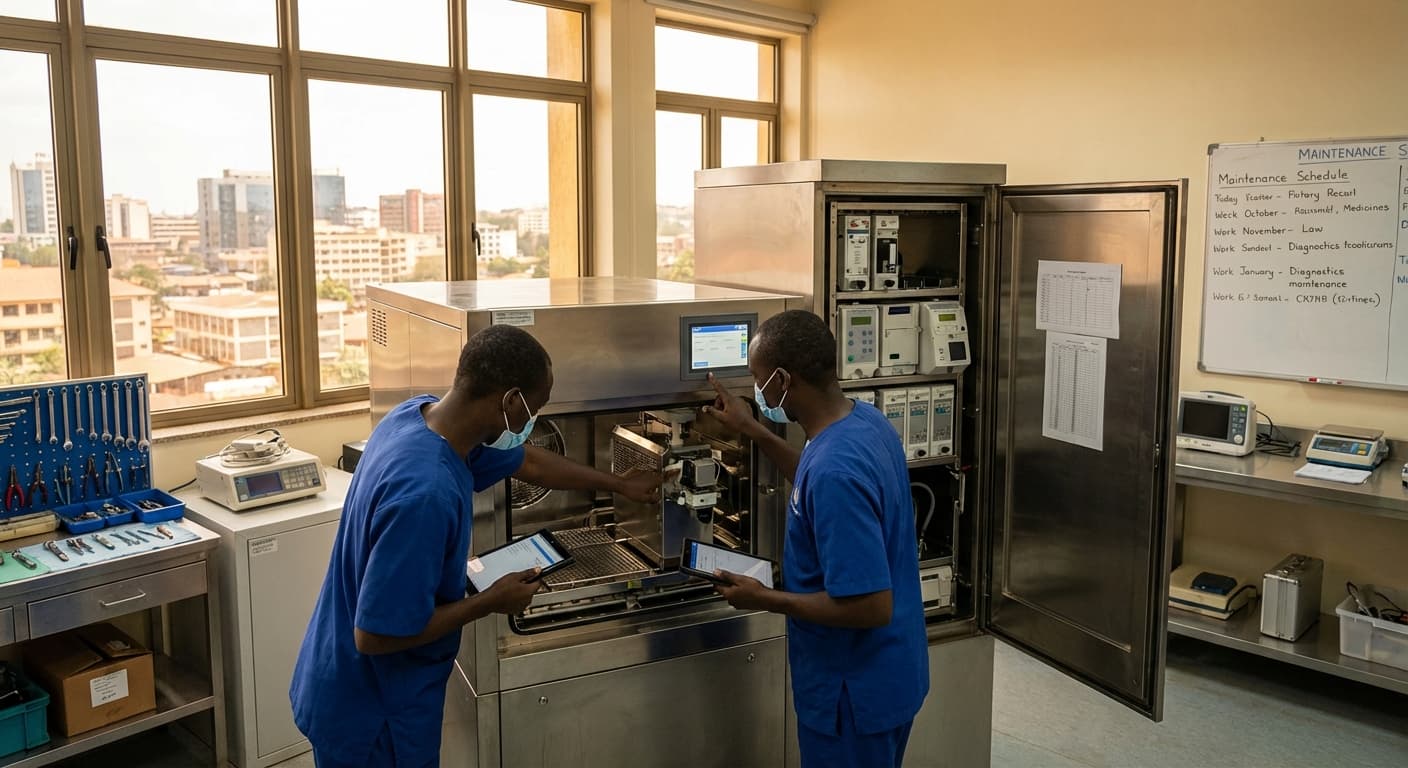
Total Cost of Ownership (TCO) & Lifecycle Budgeting Service in Gambia
Engineering Excellence & Technical Support
Total Cost of Ownership (TCO) & Lifecycle Budgeting Service High-standard technical execution following OEM protocols and local regulatory frameworks.
Predictive Maintenance & Asset Longevity
Leveraging advanced data analytics and IoT sensor integration, our TCO service identifies potential equipment failures *before* they occur. This proactive approach minimizes costly unplanned downtime, extends asset lifecycles, and optimizes maintenance schedules, ultimately reducing the total cost of ownership for your critical infrastructure in Gambia.
Energy & Resource Efficiency Optimization
We conduct detailed audits to pinpoint energy and resource consumption inefficiencies across your operations in Gambia. Our TCO & Lifecycle Budgeting service provides actionable strategies for implementing energy-efficient technologies and optimizing resource utilization, leading to significant cost savings and a reduced environmental footprint throughout the asset's life.
Lifecycle Risk Assessment & Mitigation
Our service incorporates comprehensive risk assessments at every stage of an asset's lifecycle, from procurement to disposal. We analyze potential financial, operational, and regulatory risks specific to the Gambian context, developing robust mitigation plans to prevent unexpected expenditures and ensure predictable lifecycle budgeting for your investments.
What Is Total Cost Of Ownership (Tco) & Lifecycle Budgeting Service In Gambia?
Total Cost of Ownership (TCO) and Lifecycle Budgeting services in The Gambia refer to a comprehensive financial and strategic framework designed to assess and manage all direct and indirect costs associated with an asset, system, or project throughout its entire lifespan. This goes beyond the initial acquisition cost to encompass acquisition, operation, maintenance, support, and eventual disposal. Lifecycle budgeting systematically plans and allocates financial resources for each phase of an asset's existence, ensuring that long-term financial implications are understood and accounted for. This approach facilitates informed decision-making, risk mitigation, and optimized resource allocation within organizations operating in The Gambia.
| Who Needs This Service? | Typical Use Cases in The Gambia |
|---|---|
| Government Agencies and Public Sector Entities (e.g., ministries, municipalities, state-owned enterprises) | Procurement and budgeting for major infrastructure projects (e.g., roads, power generation, water treatment plants). Budgeting for fleet management of government vehicles. Long-term financial planning for public buildings and facilities. Acquisition and management of IT systems for public service delivery. |
| Businesses and Commercial Enterprises (e.g., manufacturing, telecommunications, banking, tourism) | Evaluating the long-term cost-effectiveness of new equipment or technology investments. Strategic planning for capital expenditure across multiple facilities. Optimizing operational costs for production lines or service delivery platforms. Managing the lifecycle of essential business assets (e.g., generators, vehicles, office equipment). |
| Non-Governmental Organizations (NGOs) and Development Agencies | Ensuring sustainable funding and operational efficiency for development projects. Budgeting for the acquisition and maintenance of field equipment and vehicles. Managing the lifecycle of donated assets. Assessing the long-term financial viability of programs and initiatives. |
| Educational Institutions and Healthcare Providers | Planning for capital investments in academic facilities, laboratories, and medical equipment. Managing the total cost of IT infrastructure and educational software. Ensuring long-term budget stability for operational and maintenance needs. |
Key Components of TCO & Lifecycle Budgeting Services:
- Acquisition Cost Analysis: Evaluating procurement expenses, including purchase price, taxes, duties, installation, and initial configuration.
- Operational Cost Management: Quantifying costs related to day-to-day usage, such as energy consumption, consumables, labor, and software licensing.
- Maintenance and Support Budgeting: Projecting expenses for routine servicing, repairs, upgrades, patches, and technical assistance.
- Downtime and Risk Assessment: Estimating financial impacts of potential system failures, performance degradation, and security breaches.
- End-of-Life Planning: Budgeting for decommissioning, disposal, asset recovery, and potential environmental compliance costs.
- Financing and Depreciation Analysis: Incorporating costs associated with capital financing, interest, and asset depreciation over its lifespan.
- Scenario Planning and Sensitivity Analysis: Developing financial models for various future scenarios and assessing cost variations under different assumptions.
- Performance Metrics and Benchmarking: Establishing key performance indicators (KPIs) for cost-effectiveness and benchmarking against industry standards.
Who Needs Total Cost Of Ownership (Tco) & Lifecycle Budgeting Service In Gambia?
In The Gambia, businesses and organizations of all sizes are increasingly recognizing the critical importance of understanding the full financial impact of their assets and investments over their entire lifespan. Total Cost of Ownership (TCO) and Lifecycle Budgeting are no longer niche concepts but essential tools for strategic financial planning, risk mitigation, and maximizing return on investment. Organizations that acquire, operate, maintain, and eventually dispose of assets, whether physical (e.g., machinery, vehicles, buildings) or digital (e.g., software, IT infrastructure), stand to benefit significantly from these services. This comprehensive approach allows for informed decision-making, preventing unexpected costs and ensuring long-term financial stability.
| Target Customers/Organizations | Key Departments Benefiting |
|---|---|
| Manufacturing Companies | Operations, Finance, Procurement, Engineering |
| Transportation & Logistics Firms | Fleet Management, Finance, Operations |
| Construction Companies | Project Management, Finance, Procurement |
| Hospitality Sector (Hotels, Resorts) | Facilities Management, Finance, Procurement |
| Agricultural Enterprises | Operations, Finance, Equipment Management |
| Telecommunication Providers | IT Operations, Finance, Network Engineering |
| Financial Institutions | IT Department, Facilities Management, Finance |
| Government Ministries (e.g., Public Works, Transport, Health) | Procurement, Finance, Asset Management, Planning |
| Educational Institutions (Universities, Schools) | Facilities Management, IT Department, Finance |
| Healthcare Providers (Hospitals, Clinics) | Facilities Management, IT Department, Procurement |
| Non-Governmental Organizations (NGOs) | Operations, Finance, Program Management |
| Energy and Utilities Companies | Operations, Engineering, Finance, Procurement |
Who Needs TCO & Lifecycle Budgeting Services in The Gambia?
- Businesses and organizations that make significant capital investments in assets.
- Entities that operate and maintain assets for extended periods.
- Organizations aiming to optimize operational efficiency and reduce waste.
- Companies seeking to improve financial forecasting and budgeting accuracy.
- Government agencies responsible for public infrastructure and services.
- Non-profit organizations managing donor-funded projects and assets.
- Start-ups and growing businesses looking to establish sound financial practices from the outset.
Total Cost Of Ownership (Tco) & Lifecycle Budgeting Service Process In Gambia
This document outlines the service process for Total Cost of Ownership (TCO) and Lifecycle Budgeting in The Gambia, from initial inquiry to final execution. The aim is to provide a clear and structured approach for clients seeking to understand and manage the full financial implications of their assets and projects over their entire lifespan.
| Phase | Key Activities | Deliverables | Responsible Party | Timeline (Indicative) |
|---|---|---|---|---|
| Phase 1: Inquiry & Initial Consultation | Client expresses interest. Initial discussion to understand the client's general needs, the asset/project in question, and the desired outcomes of TCO/Lifecycle Budgeting. Clarification of service scope and preliminary pricing. | Understanding of client needs, preliminary service scope, preliminary pricing proposal. | Service Provider, Client | 1-3 Business Days |
| Phase 2: Needs Assessment & Scope Definition | Detailed engagement with the client to gather specific objectives, identify key stakeholders, define the asset/project lifecycle stages, and understand reporting requirements. Formalizing the service agreement and detailed scope of work. | Detailed needs assessment report, signed Service Level Agreement (SLA) and Scope of Work (SOW). | Service Provider, Client | 3-7 Business Days |
| Phase 3: Data Collection & Analysis | Systematic gathering of all relevant cost data across the defined lifecycle stages (acquisition, operation, maintenance, disposal). This includes initial purchase costs, energy consumption, maintenance schedules, repair records, training, consumables, and decommissioning costs. Data validation and preliminary analysis. | Organized and validated cost data repository, initial data analysis findings. | Service Provider | 7-21 Business Days (Varies by complexity) |
| Phase 4: TCO & Lifecycle Budget Development | Application of TCO methodologies and lifecycle budgeting principles to the collected data. Development of projected costs for each lifecycle stage, including consideration of inflation, depreciation, and potential risks. Creation of financial models and budget forecasts. | Draft Total Cost of Ownership (TCO) report, draft Lifecycle Budget, financial models. | Service Provider | 10-25 Business Days (Varies by complexity) |
| Phase 5: Presentation & Validation | Presentation of the TCO report and Lifecycle Budget to the client. Discussion of findings, assumptions, and recommendations. Opportunity for client feedback and validation of the developed models and forecasts. | Finalized TCO report and Lifecycle Budget, presentation meeting minutes, client acceptance. | Service Provider, Client | 3-5 Business Days |
| Phase 6: Implementation & Monitoring Support | Assistance with integrating the TCO/Lifecycle Budget into the client's financial planning and decision-making processes. Setting up systems for ongoing cost tracking and monitoring against the budget. Providing guidance on best practices for cost management. | Integration plan, established monitoring framework, guidance documentation. | Service Provider, Client | Ongoing (As agreed in SLA) |
| Phase 7: Review & Optimization | Periodic review of actual costs against the lifecycle budget. Identification of variances and areas for potential cost savings or efficiency improvements. Updates to the TCO/Lifecycle Budget based on real-world performance and changing market conditions. | Periodic performance review reports, updated TCO/Lifecycle Budget, optimization recommendations. | Service Provider, Client | Periodic (Quarterly/Annually, as agreed) |
Service Workflow: TCO & Lifecycle Budgeting in The Gambia
- Phase 1: Inquiry & Initial Consultation
- Phase 2: Needs Assessment & Scope Definition
- Phase 3: Data Collection & Analysis
- Phase 4: TCO & Lifecycle Budget Development
- Phase 5: Presentation & Validation
- Phase 6: Implementation & Monitoring Support
- Phase 7: Review & Optimization
Total Cost Of Ownership (Tco) & Lifecycle Budgeting Service Cost In Gambia
Determining the Total Cost of Ownership (TCO) and Lifecycle Budgeting for services in Gambia involves a comprehensive assessment of various cost components over the entire lifespan of an asset or service. This approach moves beyond the initial purchase price to include all direct and indirect expenses associated with acquiring, operating, maintaining, and eventually disposing of a service. Pricing factors are influenced by the complexity of the service, the technology involved, the vendor's pricing models, regulatory requirements, and the specific economic conditions within Gambia. Service providers often adopt a tiered pricing structure, with basic packages offering essential services and premium options including enhanced support, customization, and advanced features. The duration of the service contract also plays a significant role, with longer commitments often leading to discounted rates. Furthermore, the availability of local expertise and support infrastructure can impact costs, as can the need for specialized training or integration with existing systems. Geographical considerations within Gambia, such as remote locations requiring additional logistical arrangements, can also add to the overall TCO.
| Service Type / Complexity | Estimated TCO Range (GMD - Gambian Dalasi) | Typical Contract Duration |
|---|---|---|
| Basic IT Support & Maintenance (e.g., small office) | 50,000 - 200,000 GMD | 1-3 years |
| Cloud-Based Software Subscription (e.g., CRM, ERP - SMB) | 75,000 - 300,000 GMD (annual) | 1-5 years |
| Custom Software Development & Implementation | 200,000 - 1,000,000+ GMD | 1-5 years (development phase + ongoing support) |
| Managed IT Services (comprehensive) | 150,000 - 750,000 GMD (annual) | 3-5 years |
| Infrastructure as a Service (IaaS) / Platform as a Service (PaaS) (mid-size) | 100,000 - 500,000 GMD (annual) | 3-5 years |
| Specialized Consulting Services (e.g., digital transformation) | 75,000 - 400,000 GMD (project-based) | Project duration (weeks to months) |
Key Pricing Factors for TCO & Lifecycle Budgeting Services in The Gambia
- Service Complexity and Scope: The more intricate and comprehensive the service, the higher the TCO will be. This includes the number of features, integration requirements, and customization needs.
- Technology and Infrastructure: The underlying technology used for the service (e.g., cloud-based, on-premise, custom software) and any required hardware or network infrastructure will significantly impact costs.
- Vendor Pricing Models: Different service providers will have varied pricing structures, including subscription fees, one-time setup costs, usage-based charges, and tiered service levels.
- Service Level Agreements (SLAs): The level of guaranteed uptime, support response times, and performance metrics defined in the SLA will influence the price.
- Implementation and Integration Costs: This includes the cost of deploying the service, migrating data, and integrating it with existing systems and workflows.
- Training and Change Management: The cost of training personnel to effectively use and manage the service is a crucial component of TCO.
- Ongoing Maintenance and Support: This covers regular updates, patches, technical support, and troubleshooting throughout the service lifecycle.
- Security and Compliance: Costs associated with ensuring data security, privacy, and compliance with relevant Gambian and international regulations.
- Licensing and Subscriptions: Recurring fees for software licenses, platform access, or content subscriptions.
- Disposal and Decommissioning Costs: Although often overlooked, the cost of securely removing or transitioning away from a service at the end of its lifecycle needs to be factored in.
- Local Economic Conditions: Inflation rates, currency fluctuations (though generally stable with the Dalasi), and the overall cost of doing business in The Gambia will influence pricing.
- Vendor Reputation and Experience: Established vendors with a proven track record may command higher prices due to perceived reliability and expertise.
- Geographical Location and Logistics: Services requiring physical presence or delivery in remote areas of The Gambia may incur additional travel and logistical expenses.
Affordable Total Cost Of Ownership (Tco) & Lifecycle Budgeting Service Options
Our Affordable Total Cost of Ownership (TCO) & Lifecycle Budgeting Service empowers organizations to make smarter, more cost-effective decisions throughout the entire lifespan of their assets and projects. We go beyond initial purchase price to uncover all associated costs, including acquisition, operation, maintenance, disposal, and potential end-of-life expenses. By providing comprehensive TCO analysis and robust lifecycle budgeting, we enable you to optimize resource allocation, identify hidden expenses, and achieve significant long-term savings.
| Value Bundle | Description | Included Services | Target Audience | Cost-Saving Strategies Emphasized |
|---|---|---|---|---|
| Essentials TCO Analysis | A foundational service providing core TCO calculations for a specific asset or project. | Initial TCO assessment, identification of primary cost categories (acquisition, operation, maintenance), basic financial modeling. | Small to medium-sized businesses, individual project managers. | Benchmarking against industry standards, identifying high-impact cost drivers, optimizing purchase options. |
| Comprehensive Lifecycle Budgeting | An in-depth service that maps out all costs and potential savings across the entire lifecycle. | Detailed TCO analysis, operational cost optimization, maintenance scheduling, risk assessment, disposal cost forecasting, scenario planning. | Medium to large enterprises, government agencies, organizations with complex asset portfolios. | Preventative maintenance programs, energy efficiency improvements, vendor negotiation strategies, alternative technology evaluation, optimized end-of-life management. |
| Strategic TCO & Sustainability Integration | Combines TCO analysis with sustainability goals and ESG (Environmental, Social, and Governance) considerations. | Full lifecycle budgeting, environmental impact assessment, social cost consideration, circular economy principles integration, carbon footprint analysis, sustainable sourcing recommendations. | Forward-thinking organizations committed to ESG principles, industries with high environmental impact. | Investing in energy-efficient assets, reducing waste, extending product life, promoting responsible supply chains, leveraging green financing options. |
| Customized TCO Solutions | Tailored to your unique organizational needs and specific project requirements. | Flexible scope based on client needs, specialized analysis for niche industries or complex technologies, bespoke reporting and dashboards. | Organizations with highly specific or unique operational environments, R&D projects, custom manufacturing. | Deep dive into industry-specific cost factors, development of unique cost-saving methodologies, optimization for proprietary technologies. |
Key Benefits of Our TCO & Lifecycle Budgeting Services:
- Proactive identification of cost drivers.
- Informed procurement and investment decisions.
- Optimized operational efficiency.
- Reduced risk of budget overruns.
- Extended asset lifespan and performance.
- Improved financial forecasting and control.
- Enhanced sustainability and environmental responsibility.
- Strategic planning for future capital expenditures.
Verified Providers In Gambia
In Gambia, discerning patients seek healthcare providers who not only offer excellent medical care but also possess verifiable credentials. Franance Health stands out as a premier choice due to its rigorous vetting process, ensuring all affiliated medical professionals meet the highest standards of expertise, ethical practice, and patient safety. This commitment to verification provides an invaluable layer of trust and confidence for individuals navigating the healthcare landscape in Gambia. By choosing Franance Health, patients are assured of access to qualified and reputable medical practitioners, making their healthcare journey smoother and more secure.
| Provider Type | Franance Health Advantage | Why it's the Best Choice |
|---|---|---|
| General Practitioners | Franance Health verifies their licenses, experience, and patient reviews, ensuring you see a competent and well-regarded doctor for your everyday health needs. | Access to reliable primary care professionals who are thoroughly vetted for their diagnostic skills and patient interaction. |
| Specialist Physicians (e.g., Cardiologists, Dermatologists) | We confirm their board certifications, specialized training, and hospital affiliations to guarantee you are treated by a true expert in their field. | Confidence in receiving specialized treatment from highly qualified and experienced specialists, minimizing the risk of misdiagnosis or ineffective treatment. |
| Surgeons | Franance Health scrutinizes surgical qualifications, experience in specific procedures, and safety records to ensure the highest standard of surgical care. | Trustworthy surgical expertise backed by verified credentials, promoting safer procedures and better outcomes. |
| Dentists | Our verification process includes checking dental degrees, licenses, and any specializations in areas like orthodontics or periodontics. | Access to skilled and licensed dental professionals for comprehensive oral health care, from routine check-ups to complex procedures. |
| Other Healthcare Professionals (Nurses, Therapists, etc.) | We extend our verification to all allied health professionals, ensuring they meet professional standards and are committed to patient well-being. | Holistic patient care with the assurance that all members of the healthcare team are qualified and ethical. |
Key Aspects of Franance Health's Verification Process:
- Thorough background checks and credential verification for all medical professionals.
- Ensuring compliance with Gambian medical licensing and regulatory requirements.
- Assessment of professional experience, specializations, and ongoing education.
- Commitment to ethical practice and patient-centered care.
- Regular performance reviews and feedback mechanisms.
Scope Of Work For Total Cost Of Ownership (Tco) & Lifecycle Budgeting Service
This Scope of Work (SOW) outlines the services to be provided for a comprehensive Total Cost of Ownership (TCO) and Lifecycle Budgeting assessment. The objective is to establish a robust framework for understanding and managing all direct and indirect costs associated with an asset, system, or project throughout its entire lifespan, from acquisition to disposal. This includes identifying, quantifying, and projecting costs across various lifecycle phases. The service will provide actionable insights to inform strategic decision-making, optimize resource allocation, and enhance long-term financial planning.
| Phase | Key Activities | Technical Deliverables | Standard Specifications |
|---|---|---|---|
| Define project scope, objectives, and success criteria. Establish project team roles and responsibilities. Develop a detailed project plan. Identify key stakeholders and their requirements. Define data sources and access protocols. | Project Charter, Project Plan, Stakeholder Register, Communication Plan, Data Collection Plan | Deliverables to be reviewed and approved by the Client within 5 business days of submission. Project plan to include clear timelines, milestones, and resource allocation. Communication plan to define frequency and format of updates. |
| Design or adapt a TCO model tailored to the Client's specific context and asset/system. Define all relevant cost categories (e.g., acquisition, operation, maintenance, support, disposal). Establish cost allocation methodologies. Define key performance indicators (KPIs) for TCO. | TCO Framework Document, Cost Category Definitions, Cost Allocation Methodology, TCO KPI Definitions | Framework to be comprehensive, logical, and aligned with industry best practices. Cost categories to be granular enough for accurate tracking. Methodology to be transparent and defensible. KPIs to be SMART (Specific, Measurable, Achievable, Relevant, Time-bound). |
| Break down the asset/system lifecycle into distinct phases (e.g., planning, design, acquisition, implementation, operation, maintenance, decommissioning, disposal). Identify all direct and indirect costs associated with each phase. | Lifecycle Phase Definition Document, Comprehensive Cost Register (per phase) | Phases to be clearly defined and mutually exclusive. Cost register to include detailed descriptions of each cost item, estimated cost, and justification. Data validation process for cost accuracy. |
| Gather relevant cost data from various sources (e.g., historical records, vendor quotes, industry benchmarks, expert interviews). Validate the accuracy, completeness, and consistency of collected data. | Data Collection Log, Data Validation Report, Data Repository Structure | Data sources to be documented. Validation methods to include cross-referencing, outlier analysis, and expert review. Data to be stored in a secure and organized manner, accessible by authorized personnel. |
| Develop and populate the TCO model with validated data. Perform detailed cost analysis for each lifecycle phase. Identify key cost drivers and their impact. Conduct sensitivity analysis and scenario planning. | TCO Model Spreadsheet/Software, Cost Analysis Report, Sensitivity Analysis Report, Scenario Analysis Report | Model to be robust, transparent, and auditable. Analysis to identify significant cost variances and potential optimization areas. Reports to include clear visualizations and interpretation of findings. |
| Identify potential risks that could impact lifecycle costs. Quantify the financial impact of identified risks. Develop mitigation strategies and contingency plans. Estimate contingency reserves. | Risk Register, Risk Impact Assessment, Contingency Plan, Contingency Reserve Estimate | Risks to be categorized and prioritized. Impact assessment to be quantitative where possible. Mitigation strategies to be practical and actionable. Contingency planning to align with project risk appetite. |
| Develop long-term lifecycle budget projections based on the TCO model and analysis. Forecast future costs with appropriate assumptions and confidence levels. Integrate TCO insights into the Client's existing budgeting processes. | Lifecycle Budget Forecast Report, Integration Recommendations | Forecasts to be presented with clear assumptions and time horizons. Integration recommendations to be practical and address potential challenges. |
| Prepare comprehensive reports summarizing findings, analyses, and recommendations. Present results to stakeholders. Provide actionable insights for cost optimization, investment decisions, and risk management. | Final TCO & Lifecycle Budgeting Report, Executive Summary, Presentation Slides | Reports to be clear, concise, and tailored to the audience. Recommendations to be specific, prioritized, and accompanied by expected benefits. Presentation to facilitate understanding and discussion. |
| Conduct knowledge transfer sessions to ensure the Client can maintain and utilize the TCO framework and models. Finalize project documentation. Conduct a project post-mortem and lessons learned session. | Knowledge Transfer Documentation, Project Closure Report, Lessons Learned Report | Knowledge transfer materials to be comprehensive and easy to understand. Project closure to confirm all deliverables have been met and accepted. |
Key Service Areas
- TCO Framework Development & Customization
- Lifecycle Cost Modeling & Analysis
- Data Collection & Validation Strategy
- Cost Driver Identification & Quantification
- Risk Assessment & Contingency Planning
- Scenario Analysis & Sensitivity Modeling
- Budgetary Projection & Forecasting
- Reporting & Presentation
- Recommendations & Best Practices
Service Level Agreement For Total Cost Of Ownership (Tco) & Lifecycle Budgeting Service
This Service Level Agreement (SLA) outlines the response times and uptime guarantees for the Total Cost of Ownership (TCO) & Lifecycle Budgeting Service. This service provides clients with expert analysis, modeling, and ongoing support to understand, manage, and optimize the total cost of their assets and investments throughout their entire lifecycle.
| Service Component | Response Time (Business Hours) | Uptime Guarantee |
|---|---|---|
| Initial TCO Model Development & Delivery | 5 Business Days | N/A (Project-based delivery) |
| Requests for TCO Model Revisions/Updates | 2 Business Days | 99.5% |
| Lifecycle Budget Creation & Initial Delivery | 7 Business Days | N/A (Project-based delivery) |
| Requests for Lifecycle Budget Revisions/Updates | 3 Business Days | 99.5% |
| Financial Forecasting & Scenario Planning Requests | 3 Business Days | 99.5% |
| Risk Assessment & Mitigation Strategy Reports | 4 Business Days | 99.5% |
| Performance Reporting & Optimization Recommendations | 2 Business Days (for scheduled reports) | 99.5% |
| General Inquiries & Technical Support | 4 Business Hours | 99.8% |
Scope of Services
- TCO Analysis and Modeling: Development of comprehensive TCO models based on client-specific data and industry benchmarks.
- Lifecycle Budgeting: Creation and maintenance of detailed budgets for the entire lifecycle of assets, including acquisition, operation, maintenance, and disposal costs.
- Financial Forecasting and Scenario Planning: Projections of future costs under various operational and market scenarios.
- Risk Assessment and Mitigation Strategies: Identification of potential cost-related risks and development of strategies to mitigate them.
- Performance Reporting and Optimization Recommendations: Regular reporting on TCO performance and actionable recommendations for cost reduction and value enhancement.
- Consultation and Support: Expert advice and support on TCO and lifecycle budgeting best practices.
Frequently Asked Questions

Ready when you are
Let's scope your Total Cost of Ownership (TCO) & Lifecycle Budgeting Service in Gambia project in Gambia.

Scaling healthcare logistics and technical systems across the entire continent.