
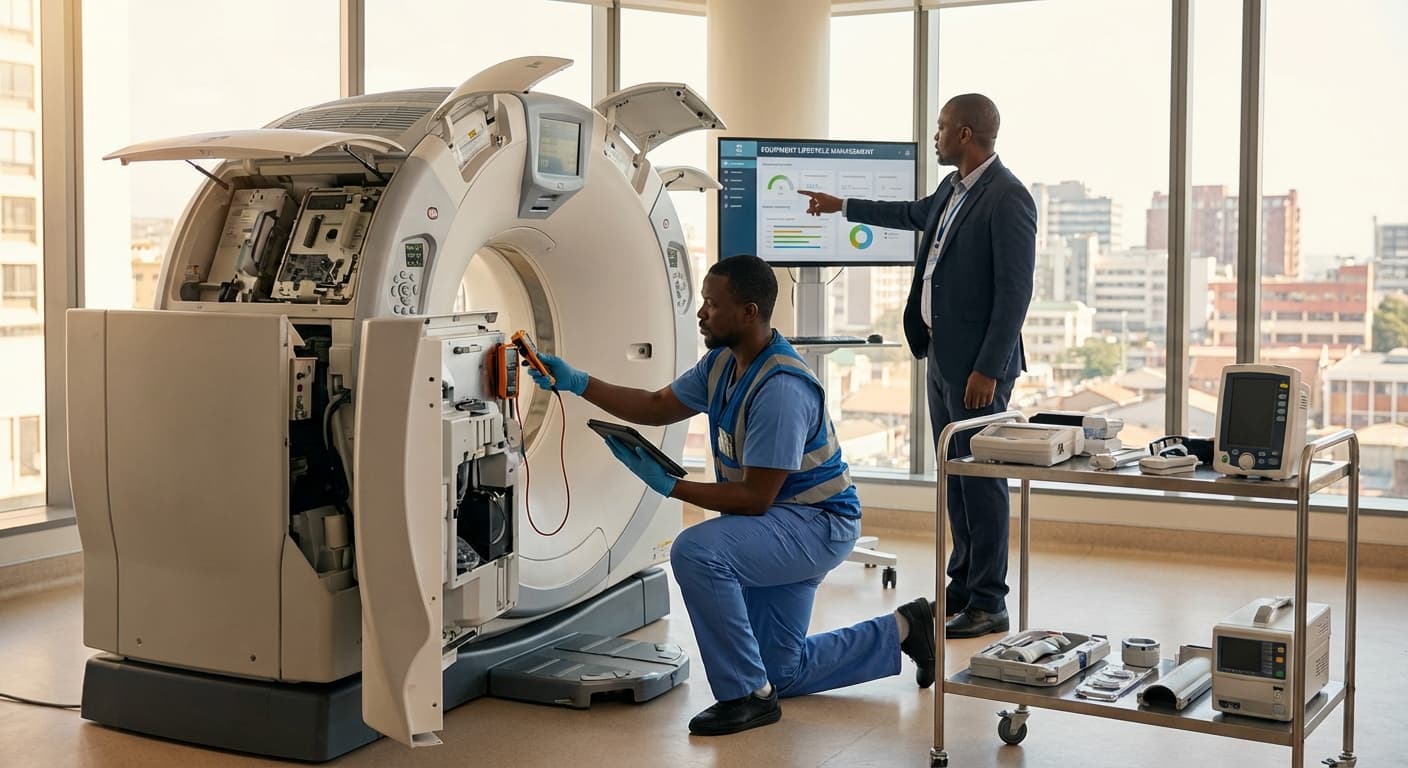
Equipment Replacement Planning & Obsolescence Strategy Service in Gambia
Engineering Excellence & Technical Support
Equipment Replacement Planning & Obsolescence Strategy Service High-standard technical execution following OEM protocols and local regulatory frameworks.
Proactive Obsolescence Mitigation
Leverage advanced predictive analytics and a comprehensive global component database to identify potential obsolescence risks in your critical equipment long before they impact operations, ensuring uninterrupted service continuity in The Gambia.
Optimized Lifecycle Costing
Our service provides granular lifecycle cost analysis for your existing and potential replacement equipment. We factor in acquisition, maintenance, energy consumption, and end-of-life disposal costs, delivering data-driven recommendations for maximum ROI within the Gambian economic landscape.
Strategic Sourcing & Risk Management
We implement robust strategic sourcing methodologies and supply chain risk assessments tailored for The Gambia's unique import/export environment. This ensures reliable access to critical spare parts and timely replacement of outdated equipment, safeguarding your operational integrity.
What Is Equipment Replacement Planning & Obsolescence Strategy Service In Gambia?
Equipment Replacement Planning (ERP) and Obsolescence Strategy (OS) services in The Gambia are critical functions for organizations to ensure operational continuity, mitigate risks associated with aging assets, and optimize capital expenditure. ERP focuses on forecasting and scheduling the timely and cost-effective replacement of physical assets. Obsolescence Strategy specifically addresses the inevitable decline in the technological, economic, or functional viability of equipment. This service aims to proactively manage the lifecycle of equipment, from acquisition through to disposal or replacement, considering factors such as performance degradation, availability of spare parts, maintenance costs, safety regulations, and the emergence of superior technologies.
| Who Needs This Service? | Typical Use Cases |
|---|---|
| Manufacturing Companies: Industries reliant on heavy machinery, production lines, and automation systems. | Automated manufacturing plant upgrade to incorporate Industry 4.0 technologies, requiring replacement of legacy machinery. |
| Telecommunications Providers: Companies managing extensive networks of switches, antennas, and transmission equipment. | Phasing out 2G network infrastructure to upgrade to 5G, necessitating replacement of outdated base stations and core network components. |
| Energy and Utilities Sector: Organizations operating power plants, distribution grids, and water treatment facilities. | Replacing aging turbines in a hydroelectric power station to improve efficiency and comply with new environmental standards. |
| Transportation and Logistics Firms: Businesses managing fleets of vehicles, material handling equipment, and infrastructure. | Developing a long-term strategy for replacing an aging fleet of trucks and cargo handling machinery due to increased maintenance costs and fuel inefficiency. |
| Healthcare Institutions: Hospitals and clinics with complex medical equipment, diagnostic tools, and IT infrastructure. | Planning the replacement cycle for MRI and CT scanners to leverage advancements in imaging technology and patient care capabilities. |
| Government Agencies and Public Infrastructure: Entities responsible for maintaining public assets like transportation networks, public buildings, and essential services. | Managing the planned replacement of aging municipal vehicles and public works equipment to ensure service delivery continuity. |
| Any organization with significant capital investment in physical assets that are subject to degradation, technological advancement, or regulatory changes. | Proactive replacement of IT servers and network infrastructure nearing end-of-support and posing cybersecurity risks. |
Key Components of ERP & Obsolescence Strategy Service
- Asset Inventory and Condition Assessment: Comprehensive cataloging of all equipment, including its age, condition, maintenance history, and performance metrics.
- Lifecycle Cost Analysis: Evaluation of total cost of ownership (TCO) for each asset, encompassing purchase price, operational expenses, maintenance, and eventual disposal costs.
- Risk Assessment and Prioritization: Identification and quantification of risks associated with equipment failure, obsolescence, and non-compliance, followed by prioritization for intervention.
- Demand Forecasting and Capacity Planning: Predicting future equipment needs based on business growth, technological advancements, and regulatory changes.
- Replacement Schedule Development: Creation of a phased and optimized schedule for equipment replacement, balancing capital allocation with operational requirements.
- Obsolescence Management: Developing strategies to mitigate the impact of technological, functional, or support obsolescence, including end-of-life (EOL) planning and alternative sourcing.
- Technology Scouting and Evaluation: Monitoring emerging technologies and their potential impact on existing equipment and future investment decisions.
- Financial Planning and Budgeting: Integrating ERP and OS into the organization's capital budgeting process to secure necessary funding.
- Disposal and Decommissioning Planning: Establishing protocols for the environmentally responsible and compliant disposal or sale of obsolete equipment.
Who Needs Equipment Replacement Planning & Obsolescence Strategy Service In Gambia?
Equipment replacement planning and obsolescence strategy services are crucial for any organization in Gambia that relies on critical machinery, technology, or infrastructure to maintain its operations, ensure safety, and remain competitive. These services help organizations proactively manage the lifecycle of their assets, mitigating the risks associated with aging equipment, technological advancements, and component scarcity. This prevents costly breakdowns, unexpected replacement expenses, and potential disruptions to service delivery.
| Industry/Sector | Potential Target Customers | Key Departments Involved |
|---|---|---|
| Manufacturing & Industrial | Large-scale factories (e.g., textiles, food processing, cement), agro-industrial companies. | Operations, Maintenance, Engineering, Procurement, Finance, IT |
| Telecommunications | Mobile network operators, internet service providers, broadcast stations. | Network Operations, Engineering, IT Infrastructure, Procurement, Finance |
| Energy & Utilities | Power generation companies, water and sanitation authorities, oil and gas exploration/service companies. | Operations, Maintenance, Engineering, Asset Management, Procurement, HSE (Health, Safety, Environment) |
| Healthcare | Hospitals (public and private), large clinics, diagnostic centers. | Biomedical Engineering, Facilities Management, IT, Procurement, Administration |
| Transportation & Logistics | Airlines, shipping companies, large fleet operators, port authorities. | Fleet Management, Maintenance, Operations, IT, Procurement |
| Mining & Extractive Industries | Mining companies, quarry operators. | Operations, Maintenance, Engineering, Procurement, HSE |
| Government & Public Sector | Ministries (e.g., Works, Health, Transport, Communications), public utilities, state-owned enterprises. | Procurement, Technical Departments (corresponding to their sector), Asset Management, Finance |
| Banking & Financial Services | Large banks, financial institutions with significant IT infrastructure. | IT Operations, Infrastructure Management, Procurement, Risk Management |
Target Customers & Departments in Gambia
- Organizations with significant capital investments in equipment and infrastructure.
- Businesses operating in sectors with rapid technological evolution.
- Companies that prioritize operational continuity and risk mitigation.
- Entities subject to stringent safety and regulatory compliance.
Equipment Replacement Planning & Obsolescence Strategy Service Process In Gambia
This service process outlines the workflow for Equipment Replacement Planning & Obsolescence Strategy in Gambia. It details the steps from the initial client inquiry to the final execution of the replacement plan and implementation of the obsolescence strategy. The goal is to ensure organizations in Gambia can proactively manage their equipment lifecycle, minimize disruptions, and optimize resource allocation.
| Phase | Stage | Description | Key Activities | Deliverables | Responsible Party |
|---|---|---|---|---|---|
| Initiation | Inquiry & Initial Consultation | The client expresses interest in the service. A preliminary discussion to understand their general needs and objectives. | Initial contact, introductory meeting, understanding client's pain points. | Service proposal outline, preliminary scope definition. | Client, Service Provider |
| Planning | Needs Assessment & Scoping | Detailed understanding of the client's current equipment, operational requirements, and strategic goals. | Interviews with stakeholders, site visits (if applicable), review of existing documentation. | Detailed Scope of Work (SOW), project objectives, identified key performance indicators (KPIs). | Service Provider, Client |
| Planning | Data Collection & Analysis | Gathering comprehensive data on all relevant equipment, including purchase dates, specifications, maintenance history, and operational performance. | Surveys, interviews, review of maintenance logs, operational data analysis. | Data repository of equipment information, initial performance metrics. | Service Provider, Client |
| Analysis | Equipment Inventory & Condition Assessment | Creating a detailed inventory of all existing equipment and assessing its current condition, functionality, and remaining useful life. | Physical inspection, testing, performance benchmarking. | Detailed equipment inventory, condition report for each asset. | Service Provider |
| Analysis | Obsolescence Risk Assessment | Identifying equipment that is at risk of becoming obsolete due to technological advancements, lack of support, or regulatory changes. | Market research, vendor consultation, technology trend analysis. | Obsolescence risk report, prioritized list of at-risk equipment. | Service Provider |
| Strategy Development | Replacement Strategy Development | Formulating a strategic plan for replacing or upgrading equipment based on condition, obsolescence risk, and operational needs. | Defining replacement criteria, lifecycle cost analysis, scenario planning. | Equipment replacement strategy document, phased replacement roadmap. | Service Provider, Client |
| Strategy Development | Budgeting & Financial Planning | Developing realistic budgets for equipment replacement, including capital expenditure, installation, and training costs. | Cost estimation, funding source identification, ROI analysis. | Capital expenditure budget, financial justification for replacements. | Service Provider, Client |
| Strategy Development | Vendor & Technology Evaluation | Researching and evaluating potential vendors and technologies that meet the defined replacement strategy and budget. | RFP/RFQ process, vendor demonstrations, reference checks. | Shortlisted vendors, technology recommendations report. | Service Provider, Client |
| Implementation | Implementation Planning | Detailed planning for the procurement, installation, and commissioning of new equipment. | Project scheduling, resource allocation, risk mitigation plan. | Detailed project implementation plan, communication plan. | Service Provider, Client |
| Execution | Execution & Procurement | The procurement of selected new equipment from approved vendors. | Placing orders, managing contracts, tracking delivery. | Procured equipment, signed purchase agreements. | Service Provider, Client |
| Execution | Installation & Commissioning | The physical installation and testing of new equipment to ensure it functions as intended. | Site preparation, installation, testing, calibration. | Installed and commissioned equipment, operational sign-off. | Service Provider, Vendors, Client |
| Execution | Decommissioning & Disposal | Safely and responsibly decommissioning and disposing of old or obsolete equipment. | Asset deactivation, data sanitization, environmentally sound disposal. | Disposal certificates, updated asset register. | Service Provider, Client |
| Post-Execution | Training & Knowledge Transfer | Providing training to staff on the operation and maintenance of new equipment. | Training material development, training sessions, user manuals. | Trained personnel, updated operating procedures. | Service Provider, Vendors, Client |
| Post-Execution | Post-Implementation Review & Monitoring | Evaluating the success of the replacement project against defined KPIs and identifying lessons learned. | Performance review meetings, data analysis of new equipment performance. | Post-implementation review report, lessons learned document. | Service Provider, Client |
| Ongoing | Ongoing Obsolescence Management | Establishing a continuous process for monitoring equipment lifecycle and anticipating future obsolescence. | Regular inventory reviews, technology watch, proactive planning cycles. | Updated obsolescence management strategy, continuous improvement roadmap. | Service Provider, Client |
Equipment Replacement Planning & Obsolescence Strategy Service Process
- Inquiry & Initial Consultation
- Needs Assessment & Scoping
- Data Collection & Analysis
- Equipment Inventory & Condition Assessment
- Obsolescence Risk Assessment
- Replacement Strategy Development
- Budgeting & Financial Planning
- Vendor & Technology Evaluation
- Implementation Planning
- Execution & Procurement
- Installation & Commissioning
- Decommissioning & Disposal
- Training & Knowledge Transfer
- Post-Implementation Review & Monitoring
- Ongoing Obsolescence Management
Equipment Replacement Planning & Obsolescence Strategy Service Cost In Gambia
Planning for equipment replacement and developing obsolescence strategies are critical for businesses in Gambia to ensure operational continuity, mitigate risks, and optimize capital expenditure. The cost of such a service is influenced by a variety of factors, and the ranges provided are indicative and subject to negotiation based on the specific project scope and provider.
Key Pricing Factors for Equipment Replacement Planning & Obsolescence Strategy Services in Gambia:
- Scope and Complexity of Equipment: The number, type, criticality, and complexity of the equipment to be analyzed will significantly impact the cost. A comprehensive audit of an entire manufacturing plant will be more expensive than assessing a small fleet of vehicles.
- Data Availability and Quality: The ease with which the service provider can access accurate data on equipment age, maintenance history, performance logs, and market availability of replacements will affect the time and cost involved. Poorly documented assets increase investigation time.
- Level of Detail and Sophistication: Whether the plan is a basic inventory and timeline or a detailed financial model incorporating total cost of ownership (TCO), return on investment (ROI) calculations, and risk assessments will determine the effort required.
- Provider Expertise and Reputation: Established consulting firms or specialized service providers with a proven track record in asset management and industrial engineering will typically command higher fees than smaller, less experienced entities.
- Engagement Duration and Deliverables: The length of the project, the frequency of consultations, and the nature of the final deliverables (e.g., written report, interactive dashboard, training sessions) all play a role.
- Geographic Reach and Site Visits: If the service requires extensive site visits across different locations within Gambia, travel and accommodation costs will be factored in.
- Market Conditions and Demand: The general economic climate and the demand for such specialized services within Gambia can influence pricing.
- Integration with Existing Systems: If the obsolescence strategy needs to integrate with existing enterprise resource planning (ERP) or asset management systems, additional technical expertise might be required.
- Regulatory and Compliance Considerations: Industries with specific regulatory requirements (e.g., for food production, mining) may necessitate a more rigorous and costly planning process.
| Service Component | Description | Estimated Price Range (GMD) |
|---|---|---|
| Initial Consultation & Scoping | Understanding business needs, existing assets, and project goals. | GMD 5,000 - GMD 20,000 |
| Asset Inventory & Data Collection | Gathering information on equipment age, condition, maintenance history, and specifications. | GMD 15,000 - GMD 80,000 (depending on asset volume) |
| Obsolescence Assessment | Evaluating the risk of equipment becoming obsolete based on age, technology, and manufacturer support. | GMD 25,000 - GMD 150,000 |
| Replacement Strategy Development | Defining criteria for replacement, identifying potential replacement options, and creating a phased approach. | GMD 40,000 - GMD 200,000 |
| Financial Analysis (TCO, ROI) | Calculating the total cost of ownership for existing and potential replacement equipment, and assessing investment returns. | GMD 50,000 - GMD 300,000 |
| Risk Mitigation Planning | Identifying and planning for risks associated with equipment failure or obsolescence. | GMD 20,000 - GMD 100,000 |
| Report Generation & Presentation | Compiling findings, recommendations, and actionable plans. | GMD 10,000 - GMD 50,000 |
Estimated Cost Ranges (in Gambian Dalasi - GMD)
- Basic Inventory & Timeline Development: GMD 20,000 - GMD 75,000
- Standard Obsolescence Assessment & Replacement Strategy: GMD 75,000 - GMD 250,000
- Comprehensive TCO Analysis & Financial Modeling: GMD 250,000 - GMD 750,000+
- Full-Scale Asset Management Program Development (including obsolescence): GMD 750,000 - GMD 2,000,000+
Affordable Equipment Replacement Planning & Obsolescence Strategy Service Options
Our Affordable Equipment Replacement Planning & Obsolescence Strategy Service is designed to help organizations proactively manage their asset lifecycle, minimizing disruption and maximizing ROI. We offer flexible value bundles tailored to different organizational needs and budgets, coupled with insightful cost-saving strategies. This approach ensures you can plan for equipment upgrades and replacements efficiently, avoiding costly emergency purchases and the operational inefficiencies associated with outdated technology.
| Cost-Saving Strategy | Description | Value Bundle Alignment |
|---|---|---|
| Bulk Purchasing Discounts | Leveraging anticipated replacements to negotiate better prices through consolidated orders. | Proactive Management Bundle, Strategic Lifecycle Bundle |
| Extended Warranties & Maintenance | Investing in longer-term support for existing equipment to delay replacement and reduce unexpected repair costs. | Essential Planning Bundle, Proactive Management Bundle |
| Refurbishment & Upgrade Options | Evaluating the cost-effectiveness of refurbishing or upgrading existing assets instead of full replacement. | Proactive Management Bundle, Strategic Lifecycle Bundle |
| Phased Replacement Scheduling | Spreading capital expenditure over time by replacing equipment in planned stages, avoiding large, sudden financial outlays. | All Bundles |
| Total Cost of Ownership (TCO) Analysis | Understanding not just the purchase price but also operational, maintenance, and disposal costs to make informed replacement decisions. | Proactive Management Bundle, Strategic Lifecycle Bundle |
| Vendor Consolidation & Negotiation | Streamlining vendor relationships and using aggregated purchasing power for better terms. | Proactive Management Bundle, Strategic Lifecycle Bundle |
| Early Warning System for Obsolescence | Proactive identification of end-of-life or unsupported equipment to enable planned, cost-effective replacements. | All Bundles |
Service Value Bundles
- {"title":"Essential Planning Bundle","description":"Ideal for small to medium-sized businesses. Includes a baseline assessment of critical equipment, a 3-year replacement roadmap, and basic obsolescence risk identification."}
- {"title":"Proactive Management Bundle","description":"A comprehensive solution for growing businesses. Encompasses detailed equipment inventory, a 5-year detailed replacement plan, risk mitigation strategies, and vendor negotiation support."}
- {"title":"Strategic Lifecycle Bundle","description":"For larger enterprises with complex asset portfolios. Includes full asset lifecycle analysis, predictive obsolescence modeling, customized replacement strategies, total cost of ownership (TCO) analysis, and continuous monitoring."}
Verified Providers In Gambia
In The Gambia, ensuring you are engaging with verified healthcare providers is paramount for receiving safe and effective medical services. Franance Health stands out as a leader in this regard, upholding rigorous credentialing standards that not only meet but often exceed regulatory requirements. Their commitment to verification is a cornerstone of their practice, providing patients with the peace of mind that comes from knowing they are in the hands of qualified and trustworthy professionals. This dedication to excellence makes Franance Health the best choice for your healthcare needs in The Gambia.
| Credential Type | Franance Health Verification Process | Patient Benefit |
|---|---|---|
| Medical Licenses | Scrutinized official documentation from relevant Gambian and international medical boards. | Ensures practitioners are legally authorized to practice medicine. |
| Educational Degrees & Diplomas | Verification of authenticity with the issuing institutions. | Confirms a solid foundation of medical knowledge and training. |
| Specialty Certifications | Validation of recognized certifications from reputable specialty boards. | Guarantees expertise in specific medical fields. |
| Professional Experience | Background checks and reference verification from previous employers. | Confirms practical skills and a proven track record. |
| Continuing Medical Education (CME) | Regular submission and verification of CME records. | Ensures providers stay current with the latest medical advancements and techniques. |
Why Franance Health Credentials Matter
- Rigorous vetting process for all medical practitioners.
- Verification of educational qualifications and licenses.
- Confirmation of specialized training and certifications.
- Ongoing monitoring of professional conduct and performance.
- Commitment to ethical healthcare practices and patient safety.
Scope Of Work For Equipment Replacement Planning & Obsolescence Strategy Service
This Scope of Work (SOW) outlines the services to be provided for Equipment Replacement Planning & Obsolescence Strategy. The objective is to develop a comprehensive and actionable strategy that ensures the reliable operation of critical equipment, minimizes risks associated with obsolescence, and optimizes capital expenditure for replacements. The service will involve detailed analysis of existing equipment, forecasting future needs, and establishing a framework for proactive replacement and obsolescence management.
| Technical Deliverable | Description | Standard Specification / Format |
|---|---|---|
| Equipment Inventory & Condition Report | Detailed listing of all existing equipment, including make, model, serial number, installation date, maintenance history, and current condition assessment. | Digital database (e.g., SQL, Excel), accompanying photographic evidence, and a summary report in PDF format. |
| Obsolescence Risk Register | A prioritized list of equipment at risk of obsolescence, detailing the nature of the risk (e.g., end-of-life support, availability of spare parts, performance degradation) and potential impact. | Digital spreadsheet (e.g., Excel) with risk scoring and mitigation action references. PDF summary report. |
| Equipment Replacement Plan (Short-term & Long-term) | Phased plan outlining recommended equipment replacements over a defined period (e.g., 1, 3, 5, 10 years), including budget estimates, lead times, and justification for each replacement. | Digital spreadsheet (e.g., Excel) with detailed timelines and financial projections. Comprehensive PDF report with executive summary. |
| Lifecycle Cost Analysis (LCCA) Report | Analysis of the total cost of ownership for selected equipment, considering acquisition, operation, maintenance, and disposal costs over its lifecycle. Comparison of different replacement options. | Digital spreadsheet (e.g., Excel) for detailed calculations. PDF report presenting findings, assumptions, and recommendations. |
| Technology & Obsolescence Strategy Document | A consolidated document detailing the overall strategy for managing equipment obsolescence, including proactive measures, vendor management, spare parts strategy, and alternative solutions. | Comprehensive PDF document, including executive summary, technical appendices, and visual aids (e.g., process flows, charts). |
| Business Case for Capital Investment | Justification for proposed capital expenditures related to equipment replacement, including ROI analysis, risk reduction benefits, and operational improvements. | Formal business case document in PDF format, aligned with organizational financial reporting standards. |
| Implementation Roadmap | A detailed, phased plan for executing the equipment replacement and obsolescence mitigation strategies, including key milestones, responsibilities, and resource requirements. | Gantt chart (e.g., Microsoft Project, Smartsheet) and accompanying PDF summary report. |
| Performance Monitoring Dashboard | A framework and initial setup for tracking key performance indicators (KPIs) related to equipment reliability, obsolescence status, and replacement plan adherence. | Digital dashboard (e.g., Power BI, Tableau) or a detailed Excel template for KPI tracking. Documentation on KPI definitions and reporting frequency. |
Key Service Components
- Current State Assessment: Comprehensive inventory and condition assessment of all relevant equipment.
- Obsolescence Risk Analysis: Identification and quantification of risks associated with aging and obsolete equipment.
- Replacement Forecasting & Planning: Development of short-term and long-term equipment replacement plans.
- Lifecycle Cost Analysis: Evaluation of total cost of ownership for existing and potential replacement equipment.
- Technology Scouting & Trend Analysis: Research and assessment of emerging technologies and their potential impact on future equipment needs.
- Obsolescence Mitigation Strategies: Development of strategies to manage and mitigate obsolescence risks.
- Business Case Development: Justification for recommended replacement strategies and investments.
- Implementation Roadmap: A phased plan for executing the recommended replacement and obsolescence strategies.
- Performance Monitoring & Review Framework: Establishment of metrics and processes for ongoing evaluation.
Service Level Agreement For Equipment Replacement Planning & Obsolescence Strategy Service
This Service Level Agreement (SLA) outlines the performance commitments and guarantees for the Equipment Replacement Planning & Obsolescence Strategy Service. It defines the expected response times for service requests and the uptime guarantees for the associated platform and support.
| Service Component | Response Time Target (Business Hours) | Resolution Time Target (Business Hours) | Uptime Guarantee |
|---|---|---|---|
| Critical Incident (Service Unavailability) | 1 Hour | 4 Business Hours | 99.9% Monthly |
| High Priority Incident (Significant functionality impaired) | 2 Business Hours | 8 Business Hours | 99.9% Monthly |
| Medium Priority Incident (Minor functionality impaired, workaround available) | 4 Business Hours | 24 Business Hours | 99.9% Monthly |
| Low Priority Incident (Information request, enhancement request) | 8 Business Hours | 48 Business Hours | N/A (Best Effort) |
| Equipment Replacement Planning (ERP) Module Access | N/A (Continuous Access) | N/A | 99.9% Monthly |
| Obsolescence Strategy Management (OSM) Module Access | N/A (Continuous Access) | N/A | 99.9% Monthly |
| Reporting & Analytics Platform Availability | N/A (Continuous Access) | N/A | 99.9% Monthly |
Key Service Areas
- Equipment Replacement Planning (ERP)
- Obsolescence Strategy Management (OSM)
- Support and Maintenance
- Reporting and Analytics
Frequently Asked Questions

Ready when you are
Let's scope your Equipment Replacement Planning & Obsolescence Strategy Service in Gambia project in Gambia.

Scaling healthcare logistics and technical systems across the entire continent.